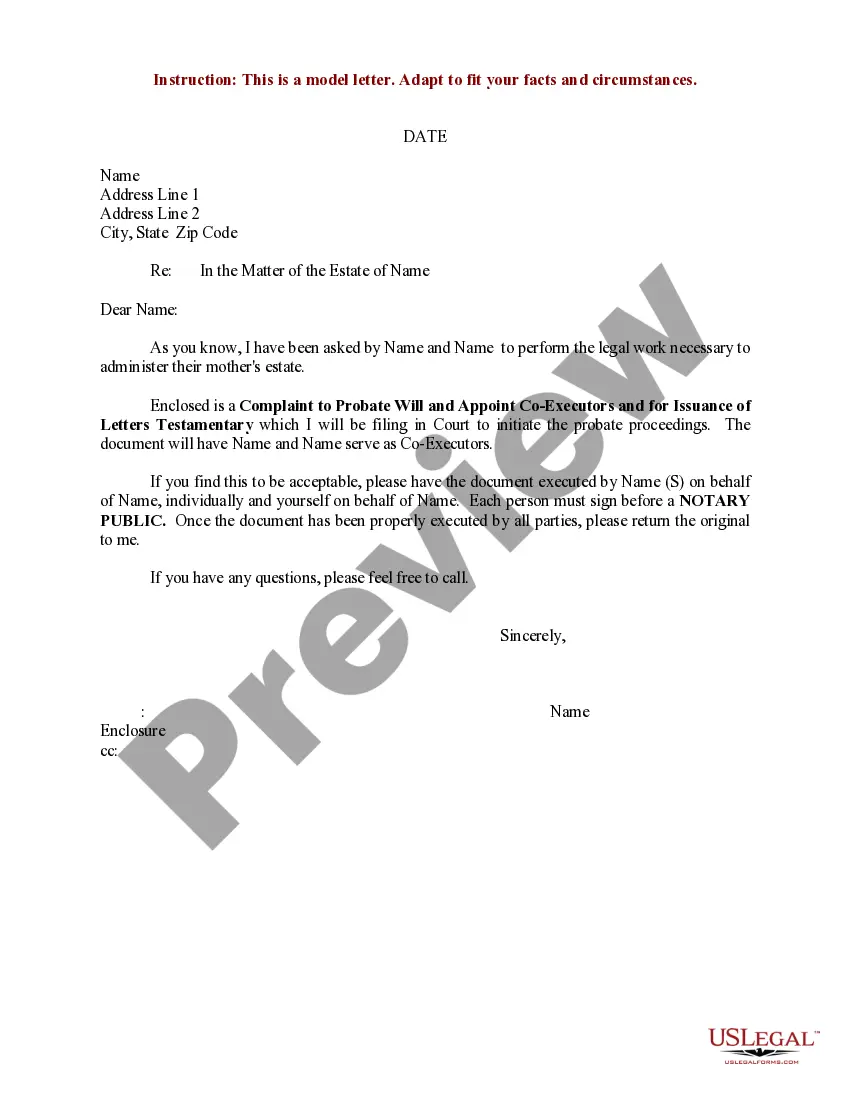
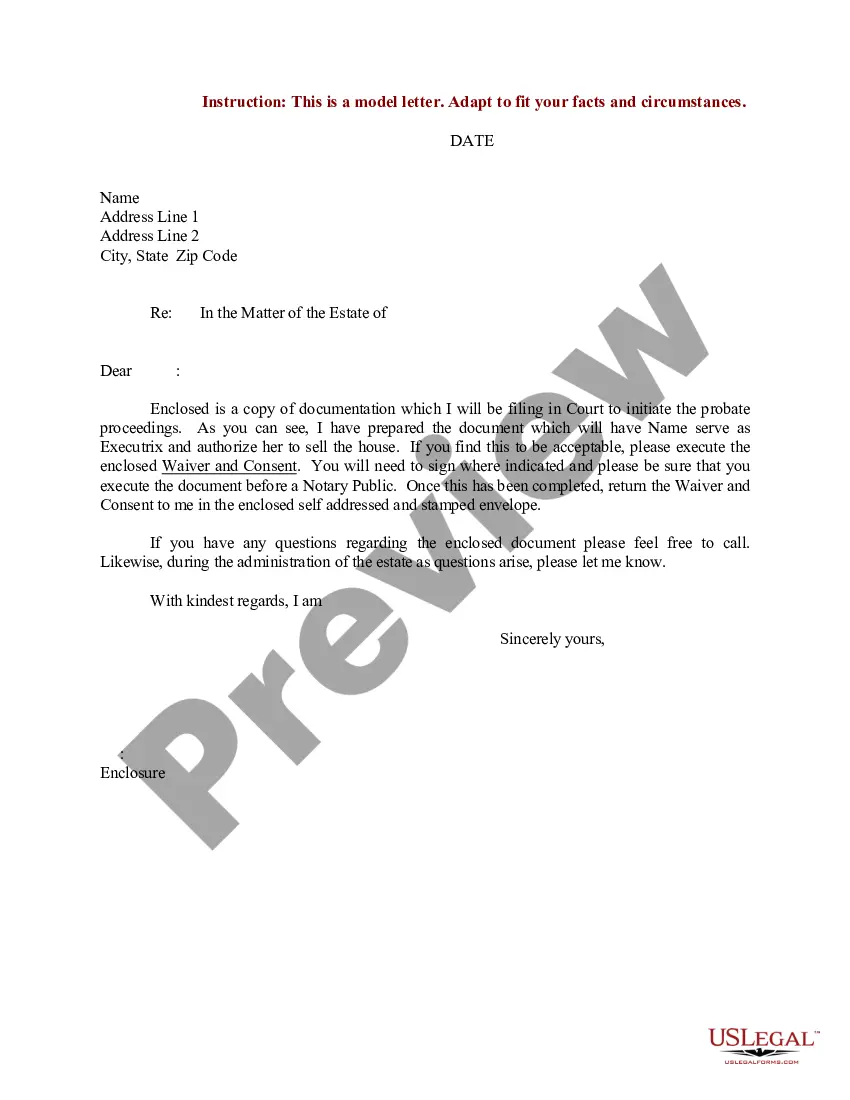
Kings New York Sample Letter for Initial Probate Proceedings - Request to Execute Documents
Description
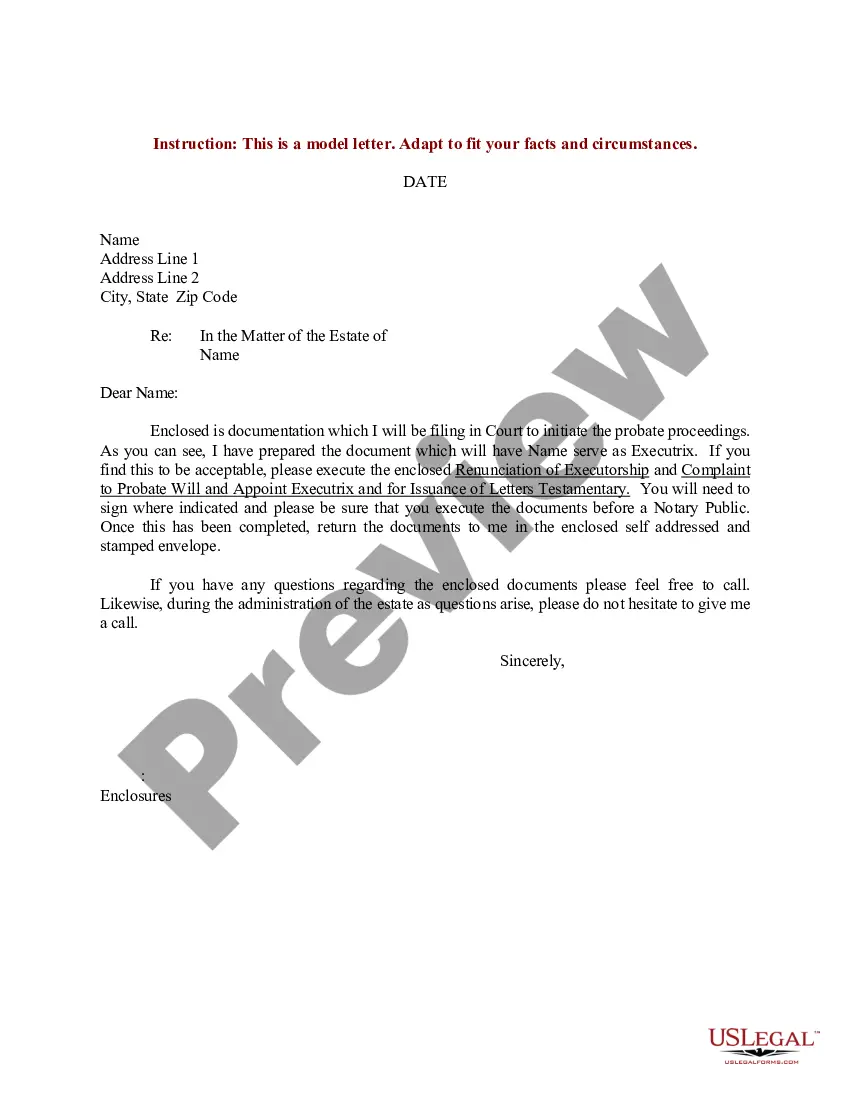
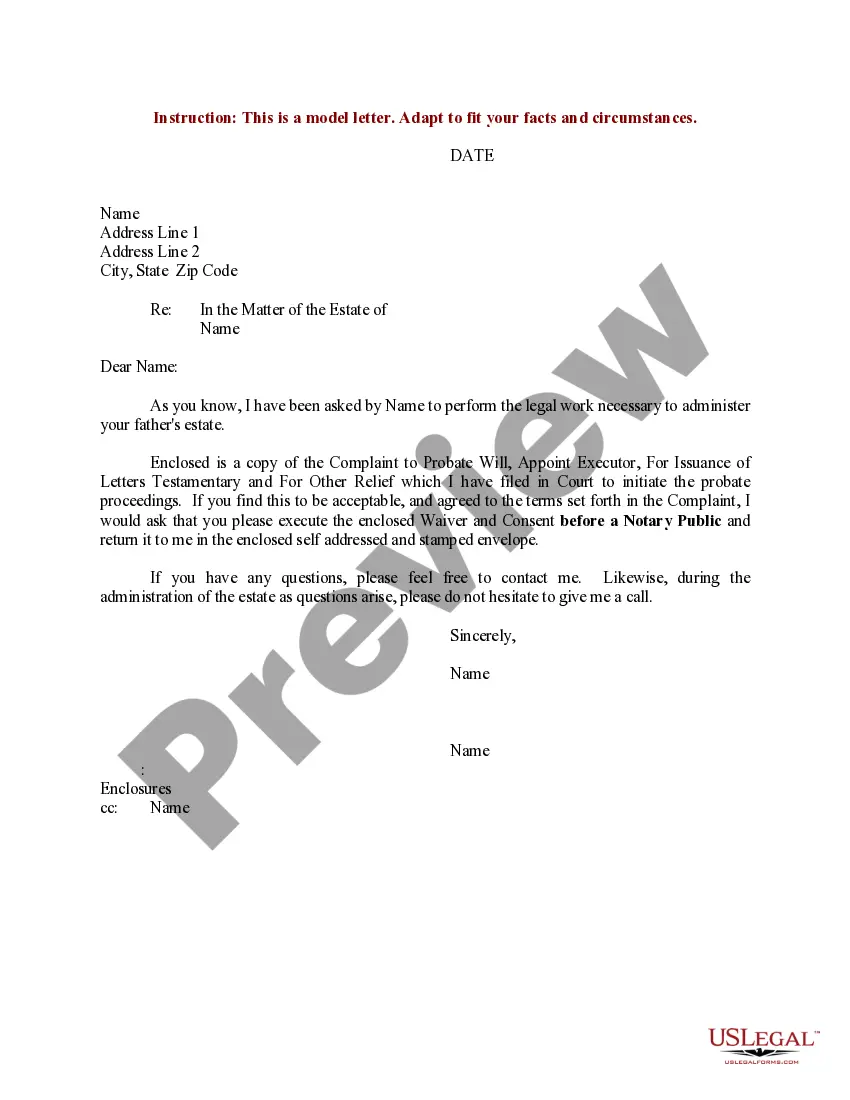
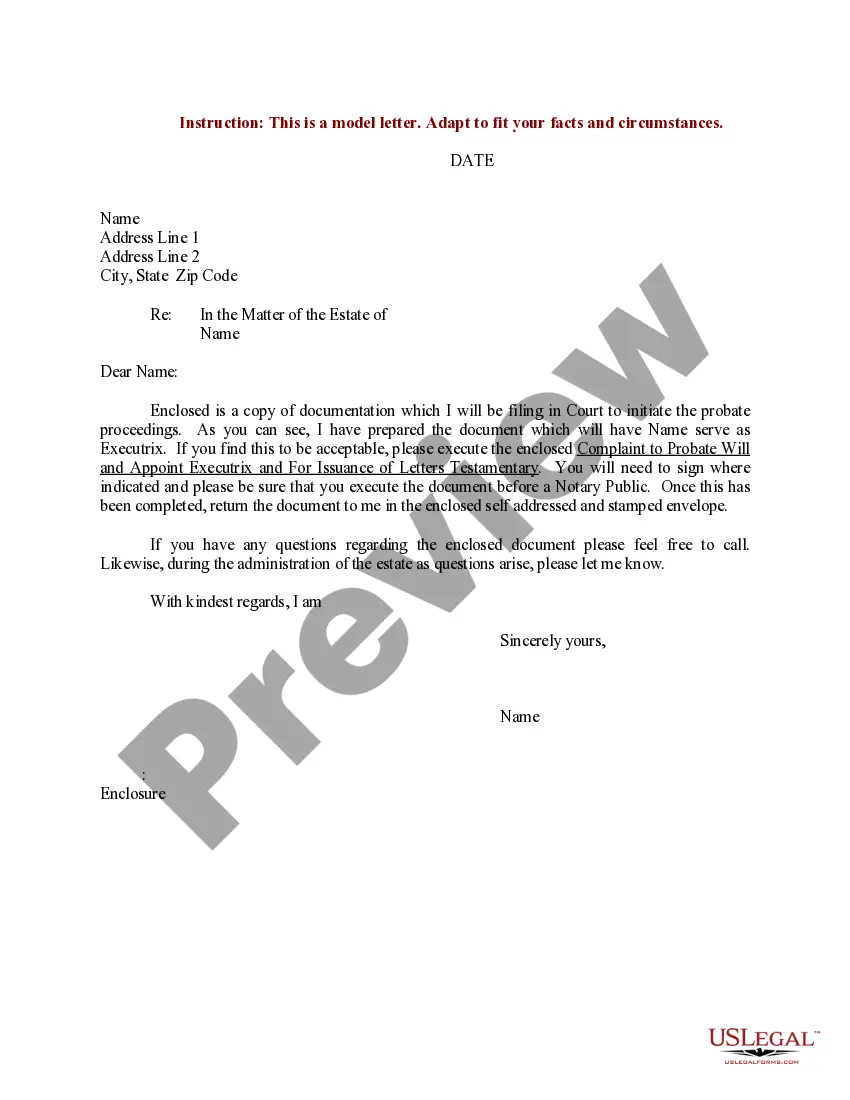
How to fill out Sample Letter For Initial Probate Proceedings - Request To Execute Documents?
Drafting documentation, such as the Kings Sample Letter for Initial Probate Procedures - Request to Execute Documents, to oversee your legal matters can be a challenging and lengthy endeavor.
Numerous situations necessitate an attorney's assistance, which often makes this undertaking quite unaffordable.
Nonetheless, you can take charge of your legal issues by handling them independently. US Legal Forms is here to assist you.
Here’s what you should do before downloading the Kings Sample Letter for Initial Probate Procedures - Request to Execute Documents: Ensure that your document complies with your state or county, as the regulations for drafting legal documents can differ from one state to another. Gather more information about the form by previewing it or reviewing a quick introduction. If the Kings Sample Letter for Initial Probate Procedures - Request to Execute Documents isn’t what you were searching for, use the header to discover another option. Log In or create an account to start using our service and obtain the document. Everything appear satisfactory on your side? Click the Buy now button and choose the subscription plan. Select the payment method and provide your payment details. Your template is ready. You can proceed to download it. It’s easy to locate and purchase the necessary document with US Legal Forms. Thousands of businesses and individuals are already enjoying our extensive library. Subscribe today to explore more benefits you can obtain with US Legal Forms!
- Our platform offers over 85,000 legal templates designed for diverse scenarios and life situations.
- We ensure that each document adheres to the regulations of every state, so you do not need to worry about potential legal compliance issues.
- If you are already acquainted with our site and possess a subscription with US, you know how simple it is to obtain the Kings Sample Letter for Initial Probate Procedures - Request to Execute Documents template.
- Simply Log In to your account, download the form, and tailor it to your requirements.
- Have you misplaced your form? Don’t fret. You can locate it in the My documents section within your account - whether on desktop or mobile.
- The process for onboarding new users is equally straightforward!
Form popularity
FAQ
Place your name, address and phone number at the top of the letter, followed by the date, then the name, address and phone number of the individual or agency handling your deceased relative's estate.
Preparing a Letter of Last Instructions Instructions about the funeral, memorial service, and preferred disposition of the body. Your loved one should also include any specific instructions for clergy and funeral directors. Location of his or her will. Names of friends and relatives who should be informed of the death.
Give the letter a personal touch and address each of your heirs and beneficiaries personally. Tell them any last wishes you may have or any hopes you have for their future. Write as clearly as possible. Use specific details and avoid using shorthand.
When a personal representative of an estate is undertaking an action pertaining to the estate that he feels may result in personal liability to him if the outcome is not as planned, the personal representative may file a Petition for Instructions from the court seeking approval for his actions.
(d) Special notice may be requested of: (1) Any one or more of the matters in subdivision (c) by describing the matter or matters. (2) All the matters in subdivision (c) by referring generally to "the matters described in subdivision (c) of Section 2700 of the Probate Code" or by using words of similar meaning.
The final distribution of probate is the transfer of title and assets to the heirs and beneficiaries named in the decedent's estate. This takes place after the probate has been fully administered and the judge signs off that the estate is settled and can be distributed.
Most assets can be distributed by preparing a new deed, changing the account title, or by giving the person a deed of distribution. For example: To transfer a bank account to a beneficiary, you will need to provide the bank with a death certificate and letters of administration.
Here are some things to consider when drafting a letter to your executor or trustee. Your thoughts about wealth.Describe key players in the family.What matters to you?Give your trustee the power to make decisions, even when that means saying no.
A letter of instruction is a cheat sheet for anyone involved in settling your affairs. Unlike a will, this letter has no legal authority. However, it can provide an easy-to-understand explanation of your overall estate plan to your executor and lay out your wishes to your family for things not covered by the will.
The California petition for final distribution gives the court a detailed history of the probate case. More specifically, it explains why the estate is ready to close and outlines the distributions to beneficiaries.