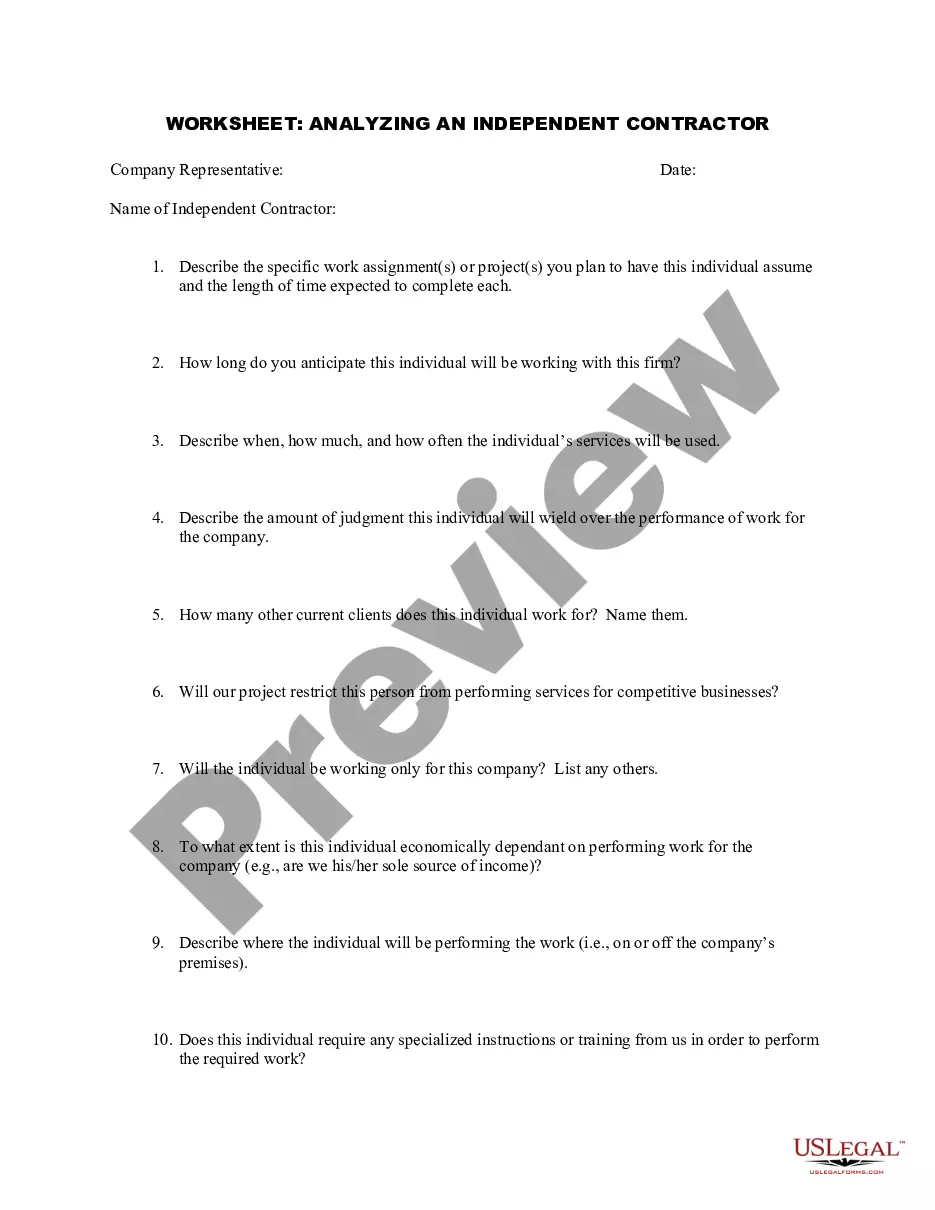
Montgomery Maryland Worksheet - Contingent Worker
Description
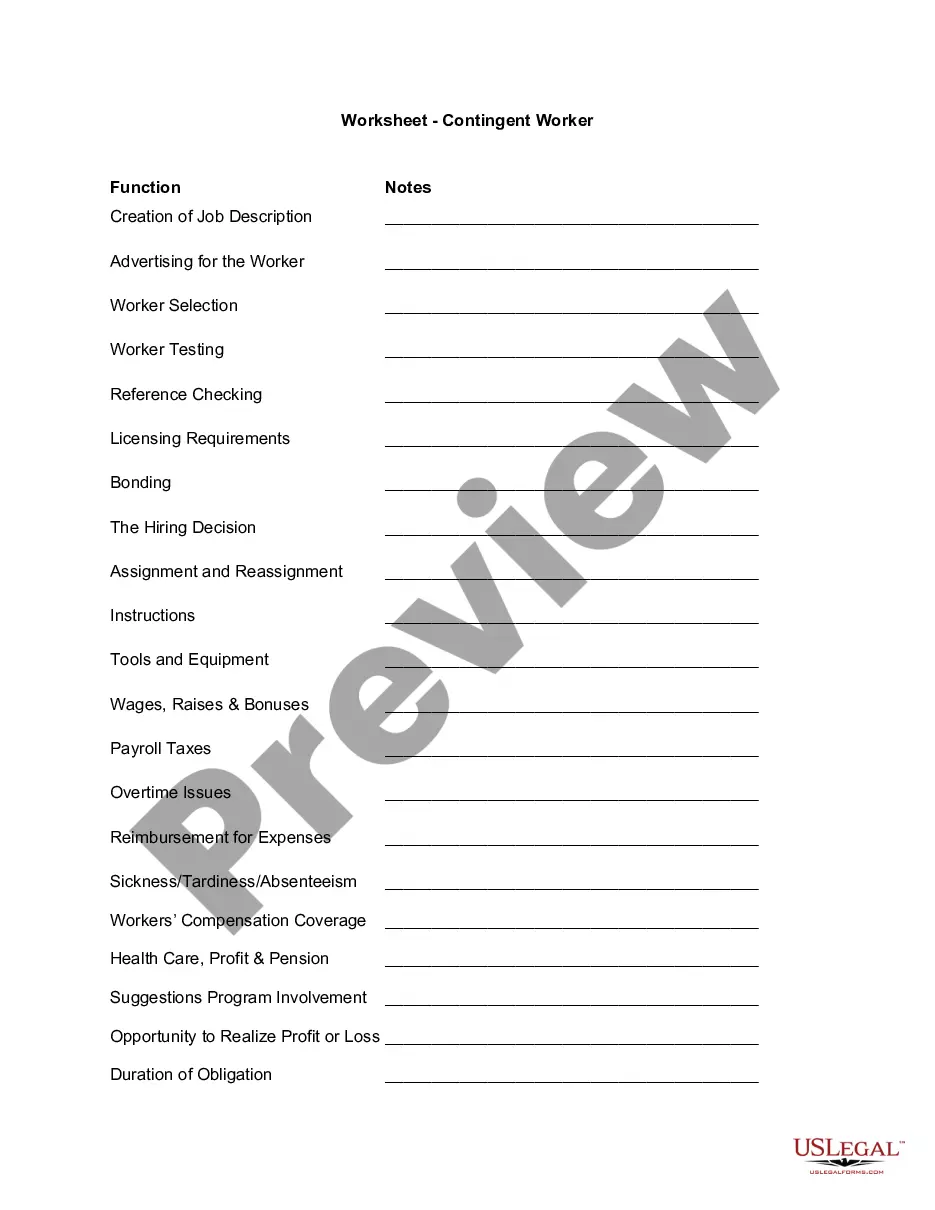
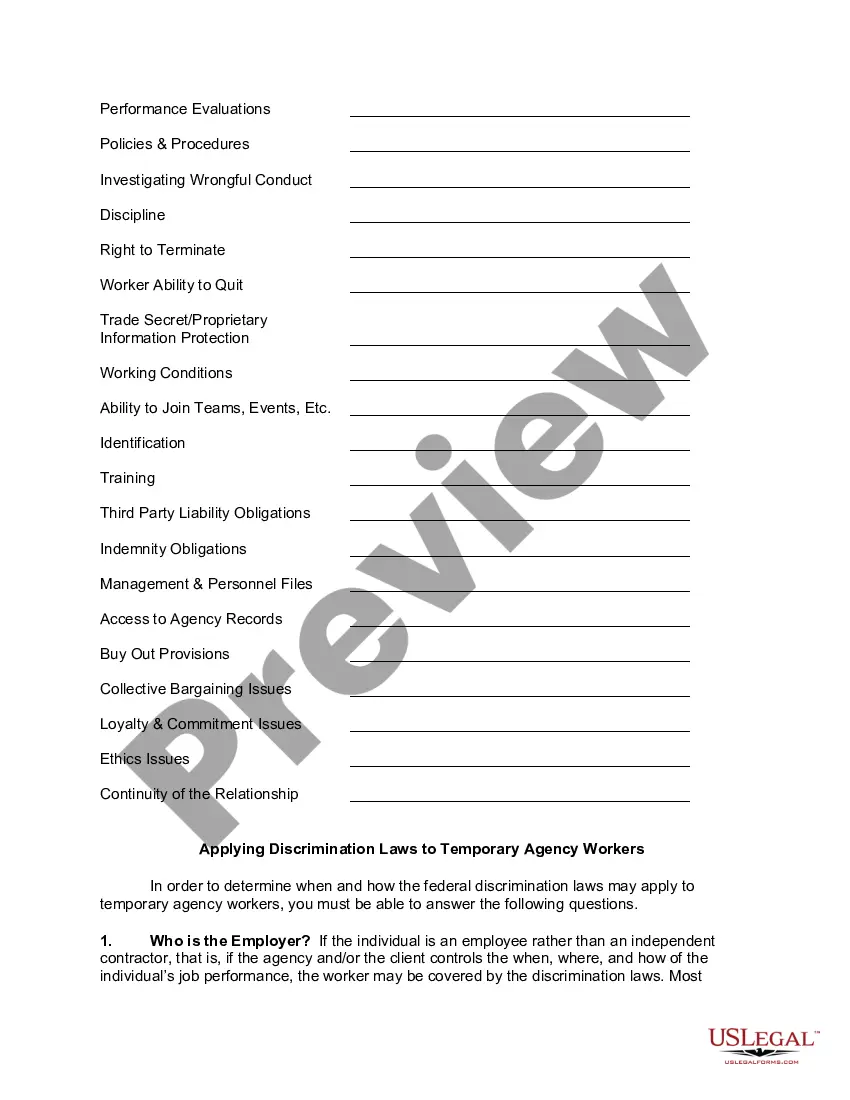
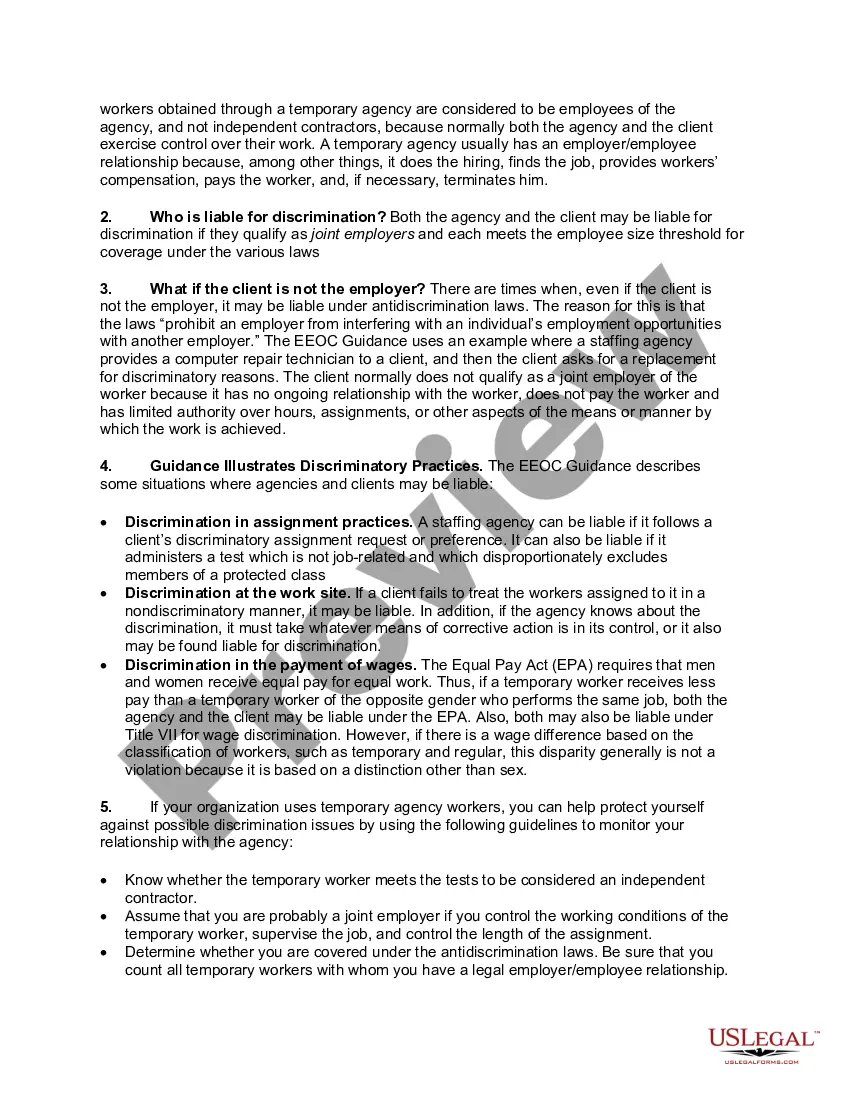

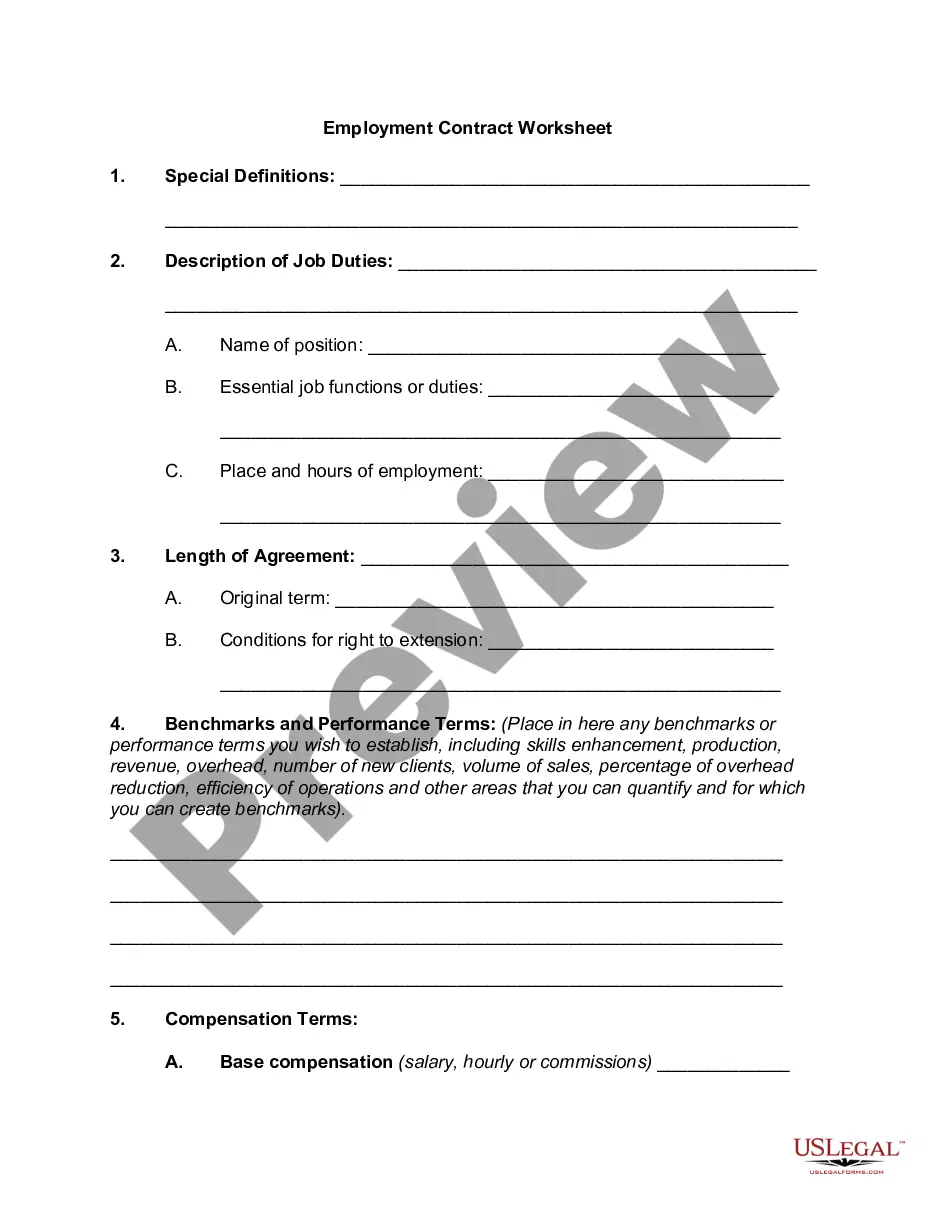


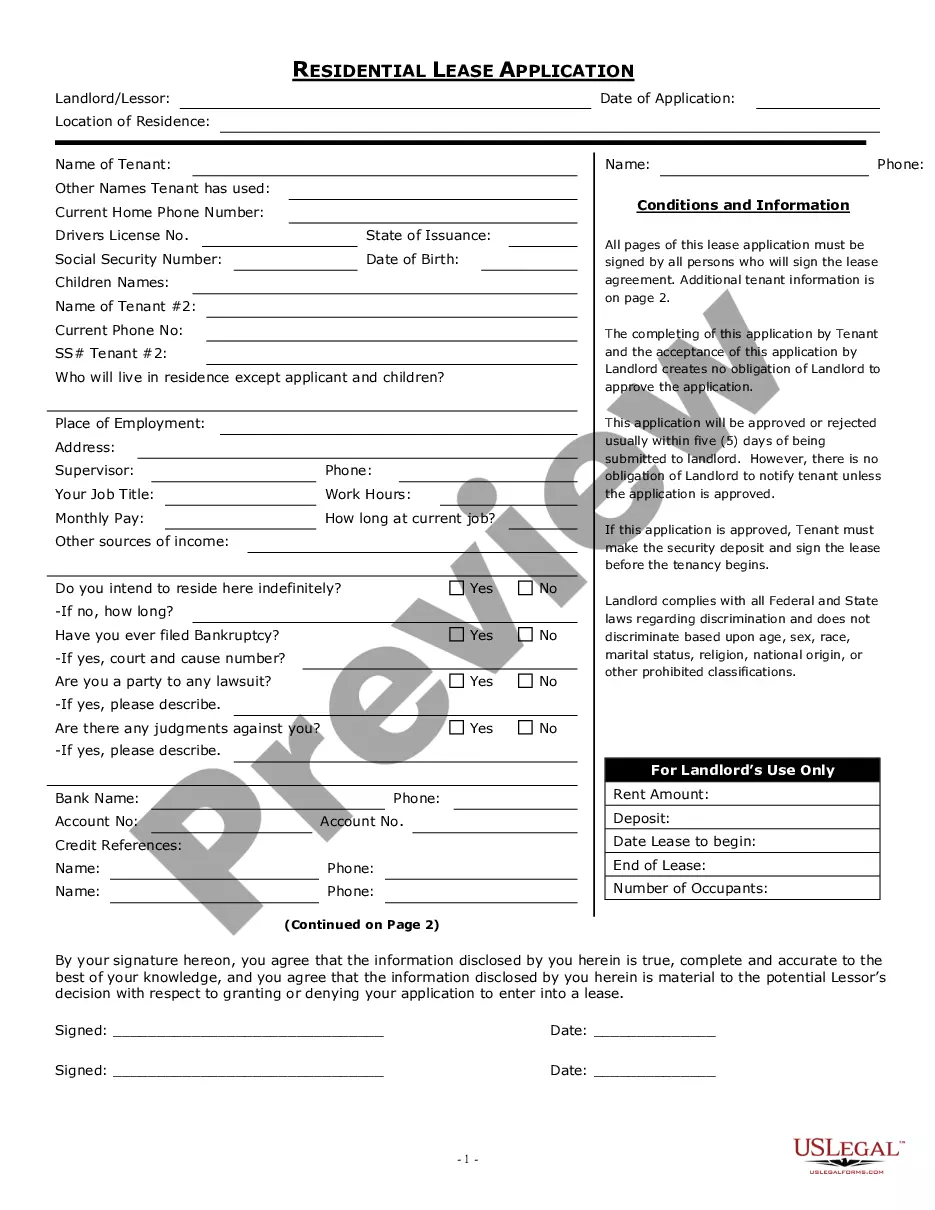
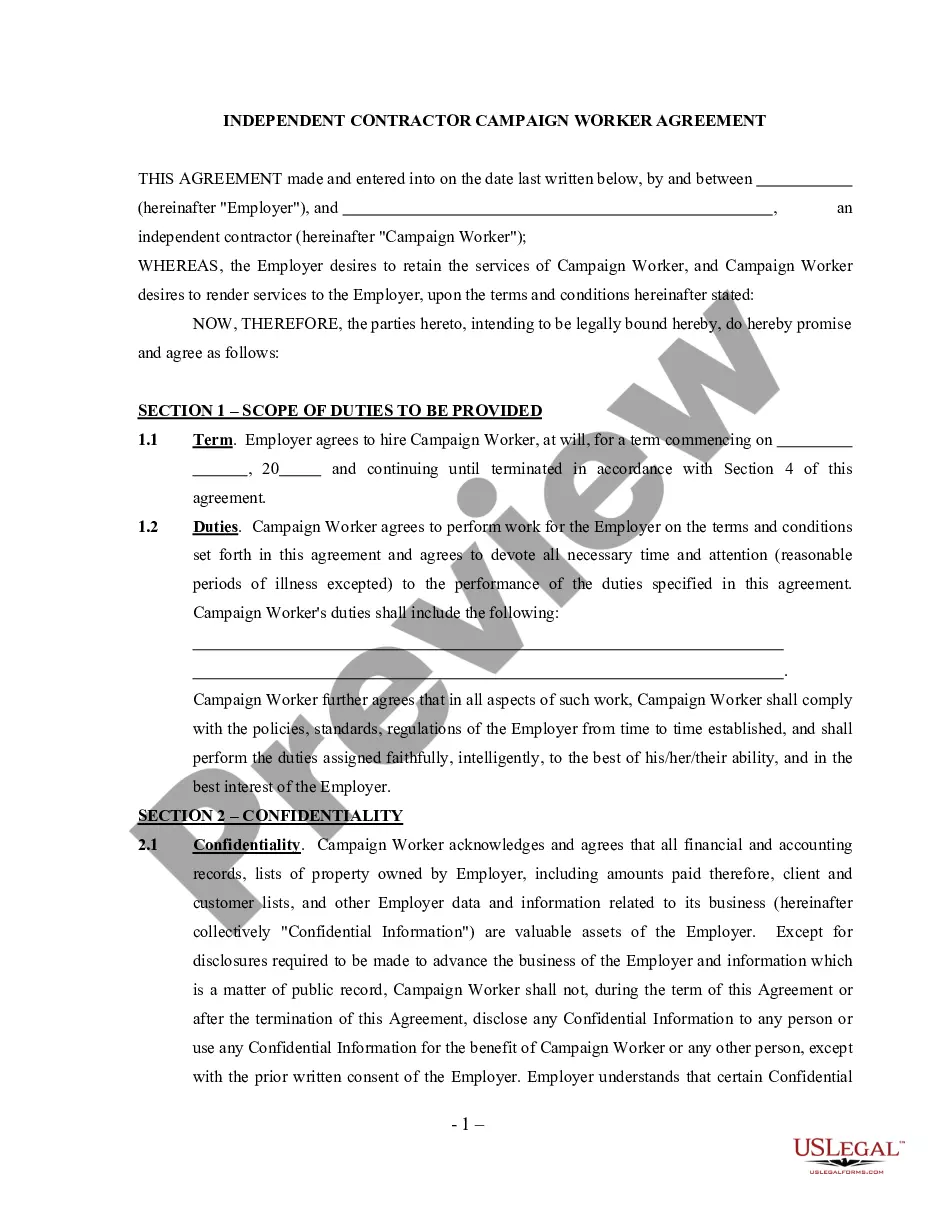
How to fill out Worksheet - Contingent Worker?
Whether you intend to launch your business, enter into an agreement, apply for your identification renewal, or settle family-related legal matters, you must prepare certain documentation in accordance with your local laws and regulations.
Finding the appropriate documents may consume a great deal of time and effort unless you utilize the US Legal Forms library.
The service offers users over 85,000 expertly drafted and validated legal templates for any personal or business situation. All documents are organized by state and area of application, making the selection of a copy such as Montgomery Worksheet - Contingent Worker quick and straightforward.
Forms provided by our library can be reused. With an active subscription, you can access all of your previously acquired documents at any time in the My documents tab of your profile. Stop wasting time on an endless quest for current official documentation. Join the US Legal Forms platform and maintain your paperwork in order with the most extensive online form library!
- Ensure the template meets your specific needs and complies with state law requirements.
- Review the form description and examine the Preview if available on the page.
- Utilize the search tab at the top to input your state and find additional templates.
- Click Buy Now to acquire the document once you've located the appropriate one.
- Choose the subscription plan that best fits your needs to continue.
- Log in to your account and pay for the service using a credit card or PayPal.
- Download the Montgomery Worksheet - Contingent Worker in your desired file format.
- Print the document or fill it out and sign it electronically using an online editor to save time.
Form popularity
FAQ
Converting a contingent worker to an employee in Workday is straightforward. First, ensure that you review the worker’s performance and qualifications against your company's criteria. You can then follow the prescribed steps in Workday to change their employment status, making sure to complete any necessary documentation outlined in the Montgomery Maryland Worksheet - Contingent Worker to maintain compliance.
What Are the Types of Contingent Workers? Temporary contingent workers. Though these contingent workers are employed by a staffing agency, they typically work onsite at their temporary work assignments.Consultants.Independent contractors.
Click start to begin. Answer the required questions indicated by a red asterisk. And make anyMoreClick start to begin. Answer the required questions indicated by a red asterisk. And make any additional edits as you follow the arrow through the process click on the edit icon.
A contingent worker is someone who works for an organization without being hired as their employee. Contingent workers may provide their services under a contract, temporarily, or on an as-needed basis.
A contingent workforce consists of freelancers, independent contractors and consultants who are not on the company's payroll because they are not full-time employees of the organization. Organizations can hire a contingent worker directly or from a staffing agency.
A contingent workforce is a labor pool whose members are hired by an organization on an on-demand basis. A contingent workforce consists of freelancers, independent contractors and consultants who are not on the company's payroll because they are not full-time employees of the organization.
A contingent workforce is a labor pool that consists of people who are hired by an organization for a fixed period of time, often on a project basis. Many, if not most, organizations today have a workforce that is a mix of contingent and non-contingent workers.
As a category, contingent workers may include temporary employees, part-time employees, independent contract workers, employees of the temporary help industry ("temps"), consultants, seasonal employees, and interns. In contrast, full-time, permanent employees frequently are referred to as core employees.
Contingent workers are individuals hired by a company to do role- or project-based work on its behalf, but not as traditional employees. They could include independent contractors, consultants, freelancers, temps, or other outsourced labor such as gig workers.
The US Labor Department defines this in terms of who is responsible for the taxes. When a company hires a worker, temporary or permanent, they must take care of their taxes. However, when independent contingent workers are hired, they do not become employees and thus, have to take care of their own taxes.