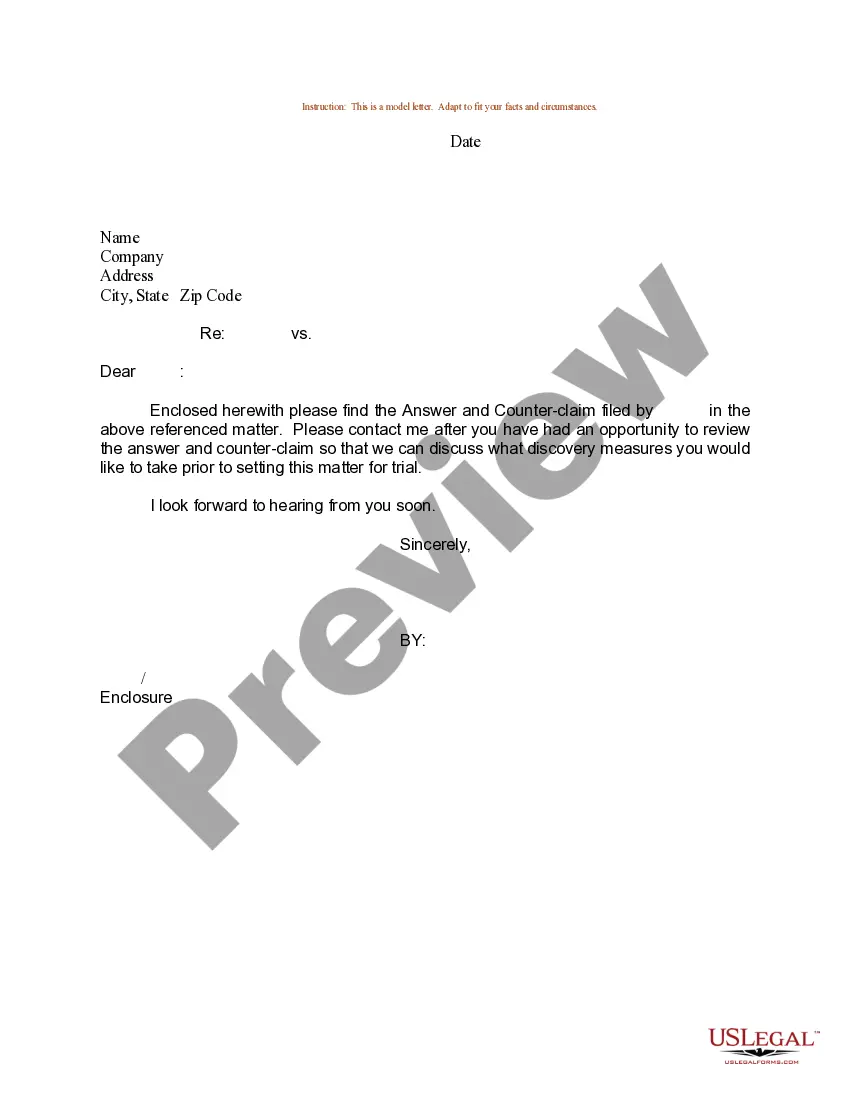
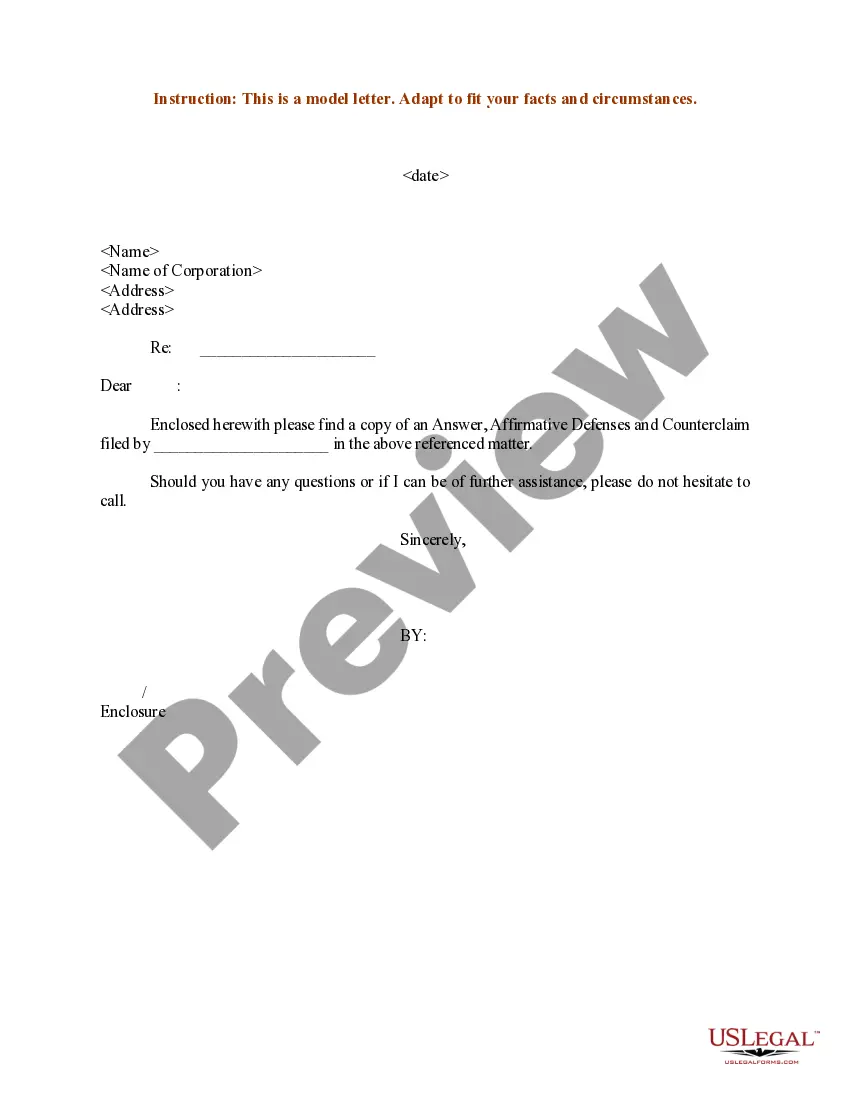
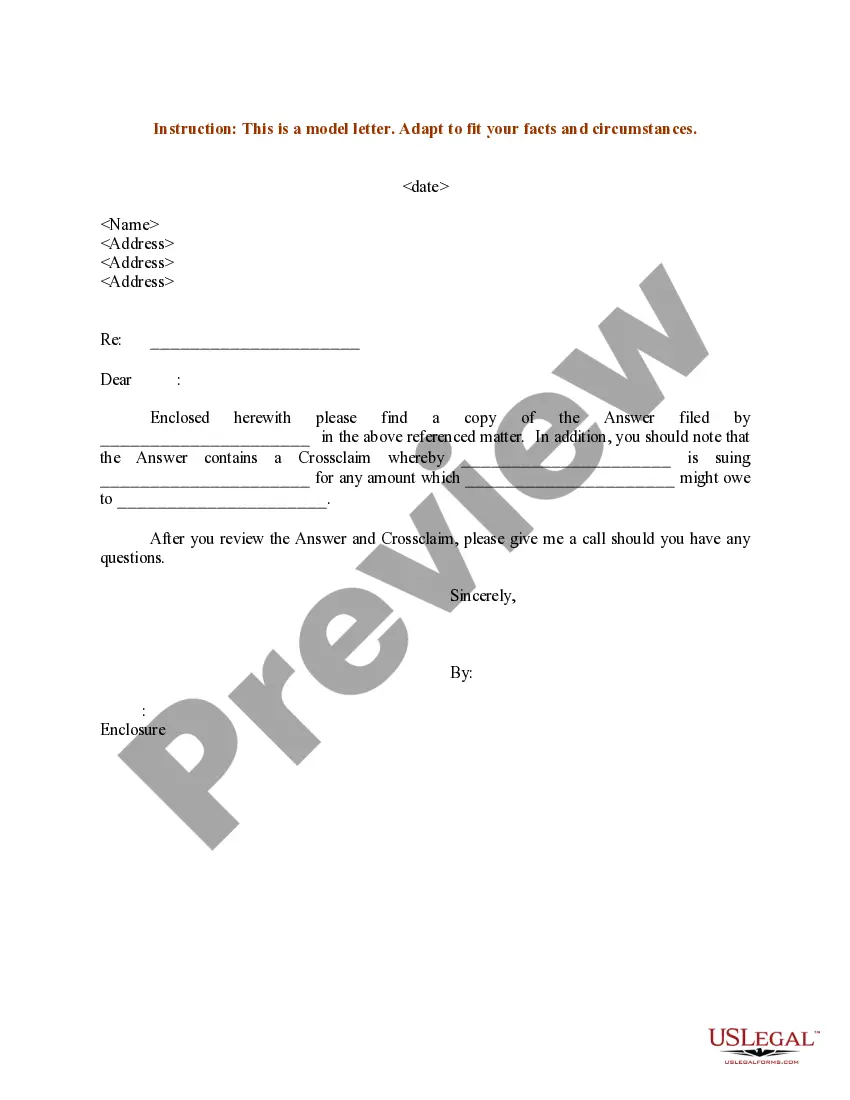
Wayne Michigan Sample Letter for Answer and Counterclaim
Description
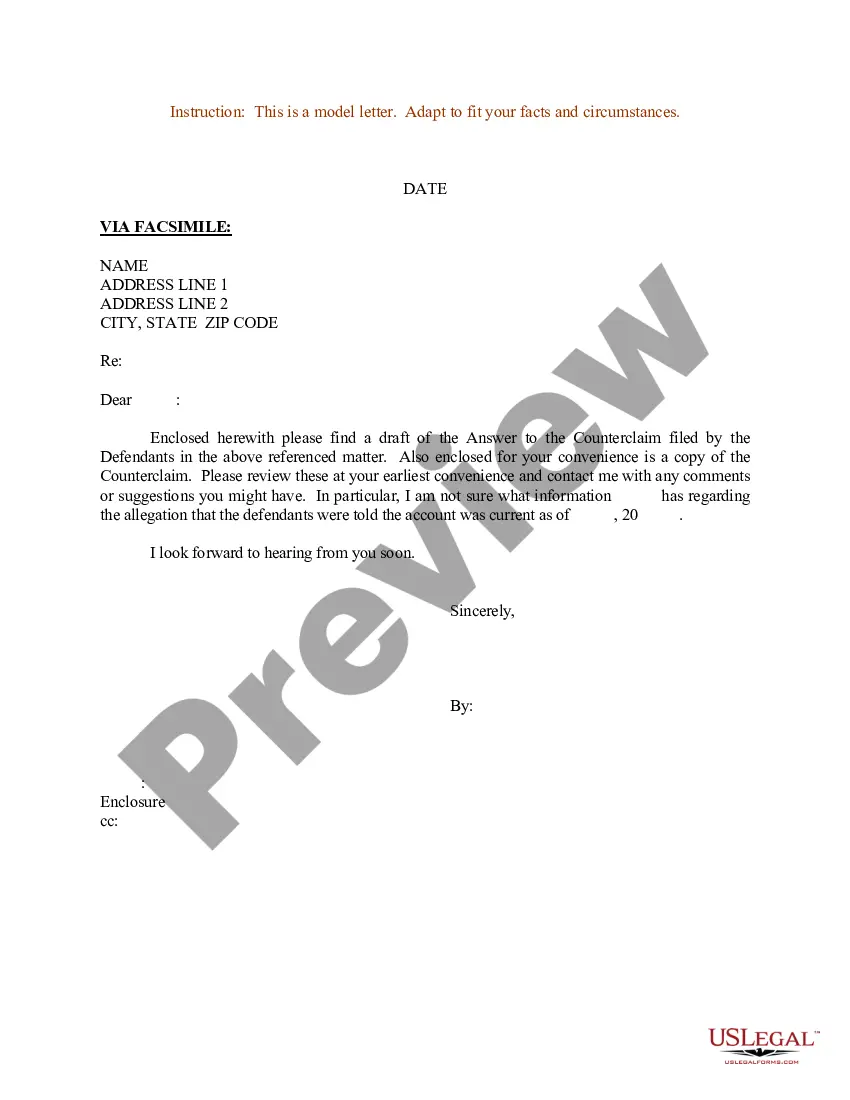
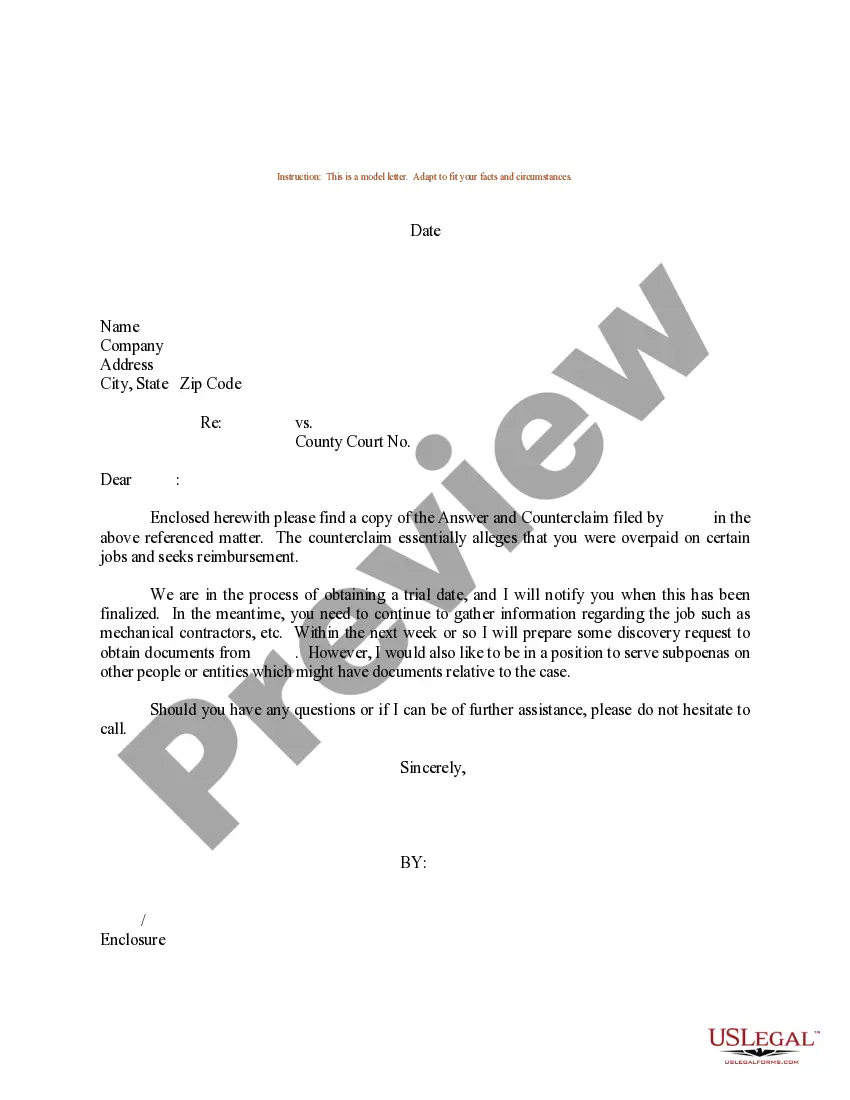
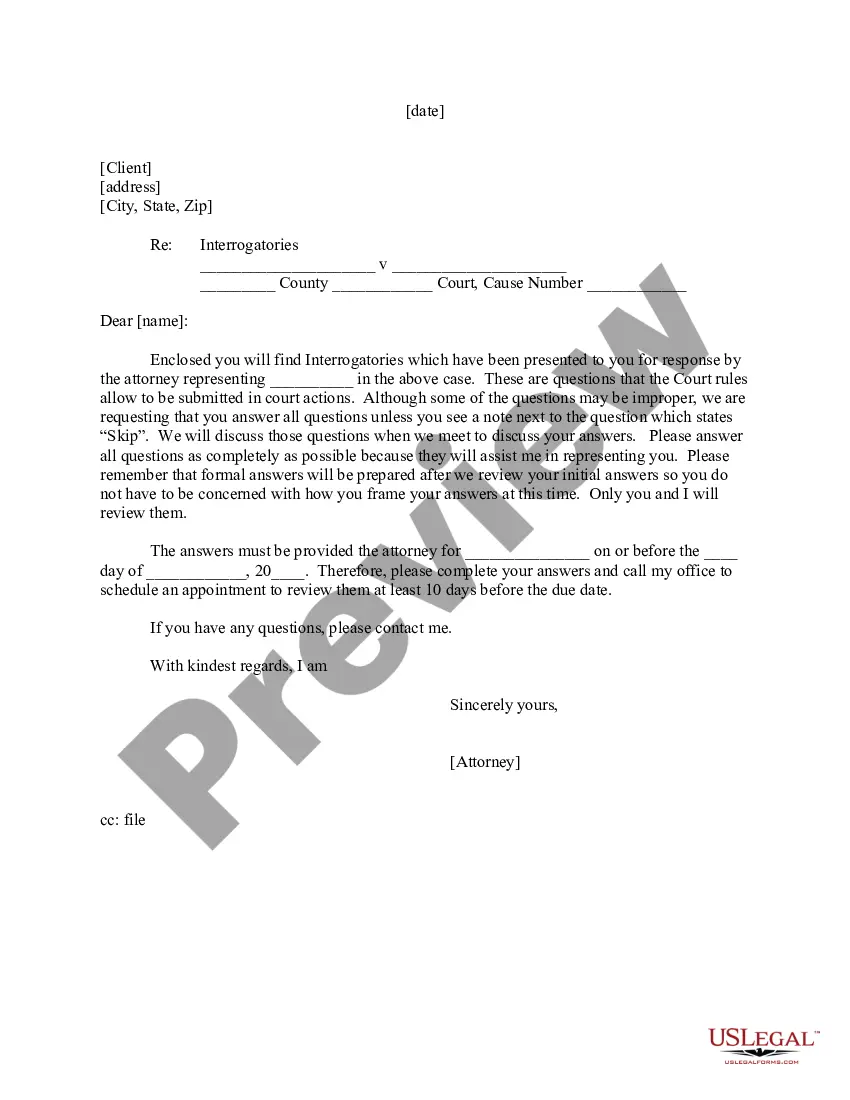







How to fill out Sample Letter For Answer And Counterclaim?
Generating documentation, such as the Wayne Sample Letter for Answer and Counterclaim, to oversee your legal issues is a tough and time-consuming endeavor.
Numerous circumstances necessitate an attorney’s participation, which also renders this undertaking costly.
Nevertheless, you can take your legal concerns into your own hands and manage them by yourself.
The onboarding process for new users is quite simple! Here’s what you should do before downloading the Wayne Sample Letter for Answer and Counterclaim.
- US Legal Forms is here to assist you.
- Our platform features over 85,000 legal templates designed for various situations and life events.
- We ensure that every document complies with the laws of each state, alleviating your worries regarding possible legal issues related to compliance.
- If you're already familiar with our services and have a subscription with US, you understand how straightforward it is to obtain the Wayne Sample Letter for Answer and Counterclaim form.
- Just Log In to your account, download the template, and tailor it to your requirements.
- Have you misplaced your document? No problem. You can locate it in the My documents section of your account - accessible on both desktop and mobile.
Form popularity
FAQ
The Answer. The defendant's response to a complaint is called the answer. The answer contains the defendant's version of the events leading to the lawsuit and may be based on the contents of the complaint. The filing of the answer is one option that the defendant has in deciding how to respond to the complaint.
How do I file an Answer? You appear and answer by filing a written answer with the same court where the complaint was filed and serving the plaintiff with that answer. There is no fee for filing an answer.
Defendants sometimes choose to ignore the letter of claim. By ignoring the letter, the defendant may think the problem will go away. Or maybe they are playing for time. If the defendant fails to acknowledge the letter of claim, your solicitor can apply to the court for an order that forces the defendant to respond.
If you're up against your first lawsuit, here are a few tips that will hopefully make life easier: Get a Competent Lawyer Now.Go Crazy (But Not Too Crazy)Turn to Your Support System.Learn How Lawsuits Work.Remain Calm.Be Extra Frugal. Don't Forget to Rebuild.
Examples of counterclaims include: After a bank has sued a customer for an unpaid debt, the customer counterclaims (sues back) against the bank for fraud in procuring the debt. The court will sort out the different claims in one lawsuit (unless the claims are severed).
The answer is the part that responds to the plaintiff's allegations; the counterclaim is where the defendant has a chance to set forth his or her own allegations, and request his or her own relief.
Be brief. Answer the allegations in the complaint with one or two sentences. Again remember that the statements you make in your answer can be used as admissions against you. Your response to the allegations in the complaint may admit part of the statement in the specific paragraph and deny part.
Write your answer Only tell the court that you agree, disagree or you do not know if the statement is true. Lawyers usually write "the Defendant admits...," if you agree with the statement. They write "Defendant denies...," if you disagree with the statement.
File both the original defence (with any supporting documents and affidavit(s) of service) and a copy for yourself and each defendant, with the court in person or by mail, or file the defence and documents online using the Small Claims Court Submissions Online portal at .
You should respond to the counterclaim as though it were a Statement of Claim and you were drafting a Defence: respond to every paragraph you can do this paragraph by paragraph if necessary; deny any allegations of fact that you do not admit you will be deemed to admit facts that you forget to plead to; and.