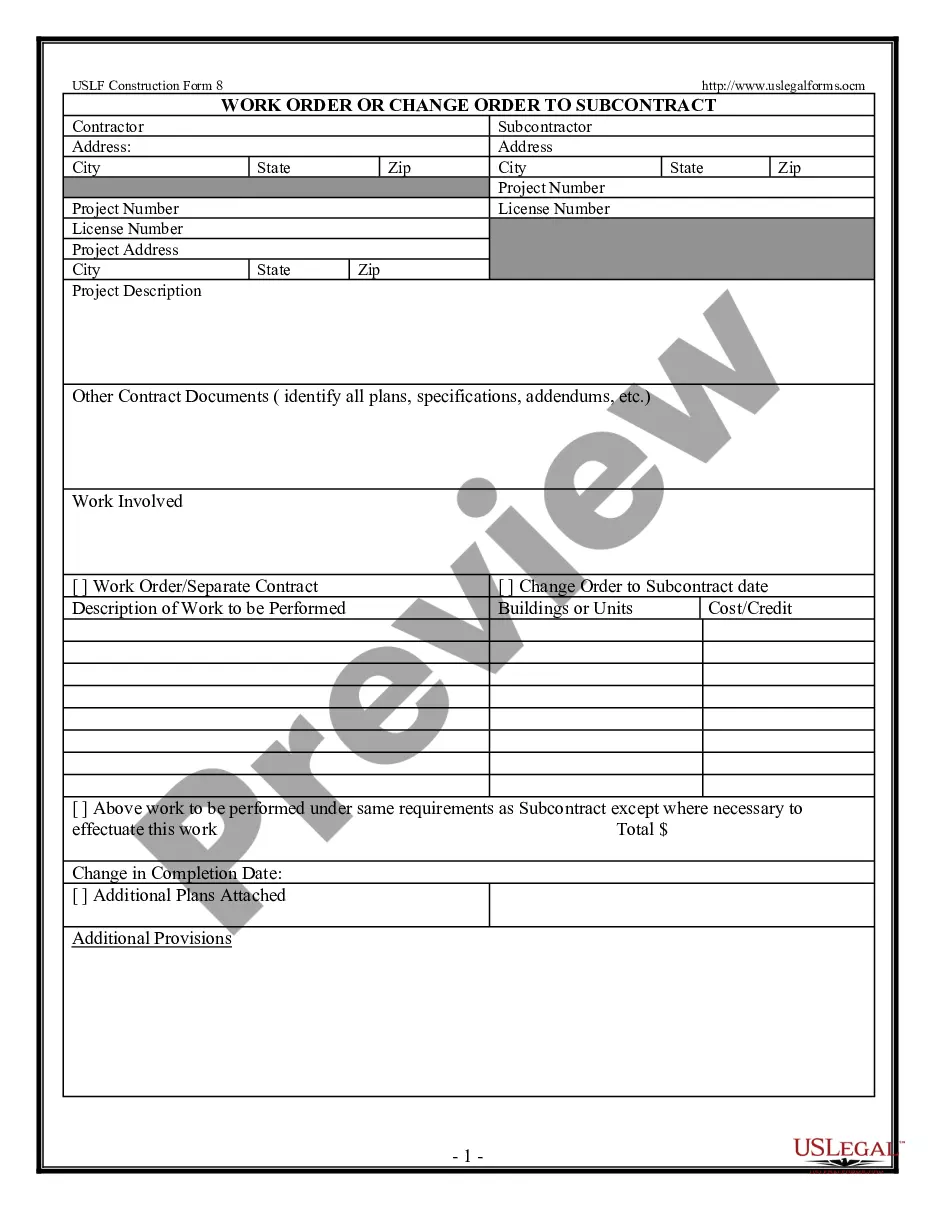
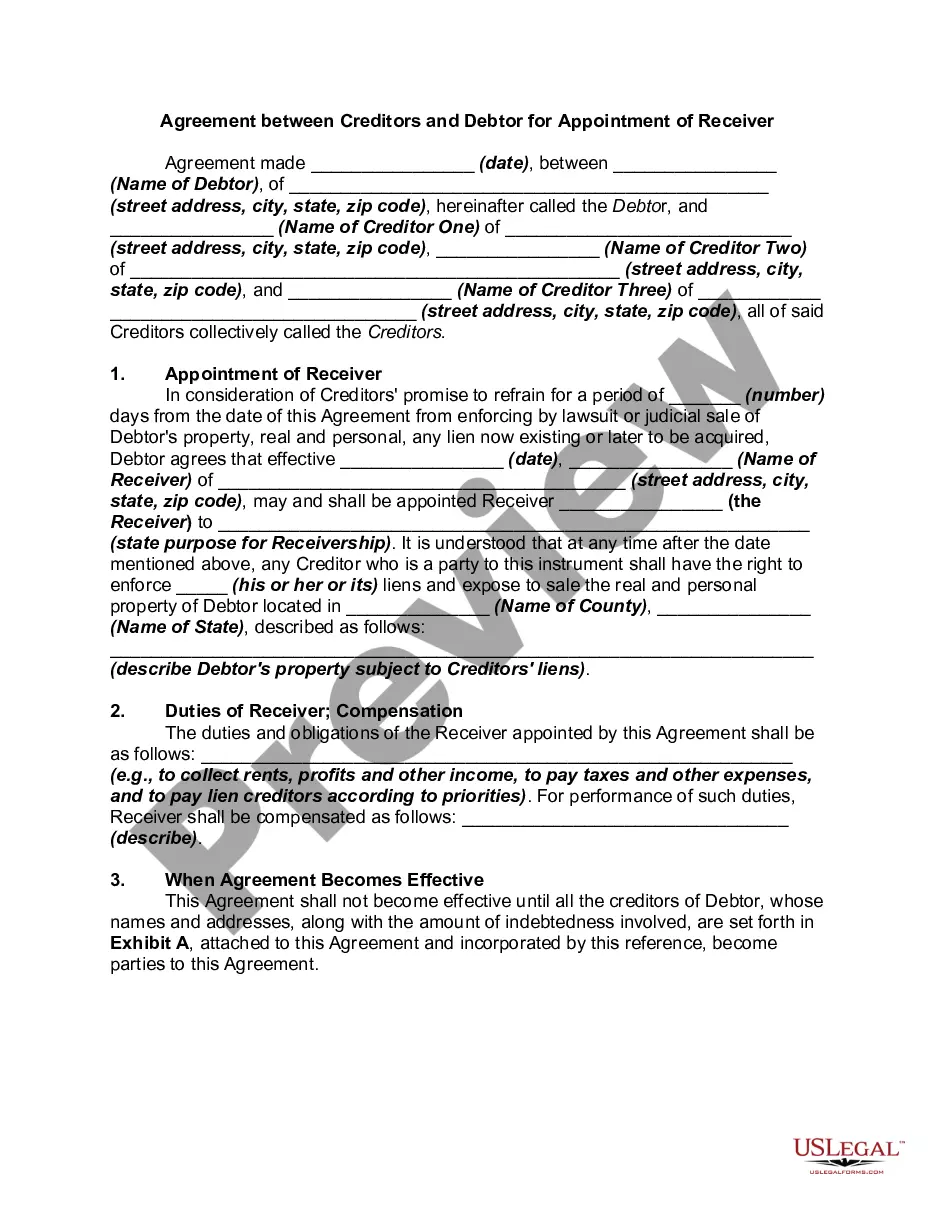
Riverside California Agreement between Creditors and Debtor for Appointment of Receiver

State:
Multi-State
County:
Riverside
Control #:
US-03283BG
Format:
Word; 
Rich Text
Instant download

Description

A receiver is a person authorized to take custody of another's property in a receivership and to apply and use it for certain purposes. Receivers are either court receivers or non-court receivers.


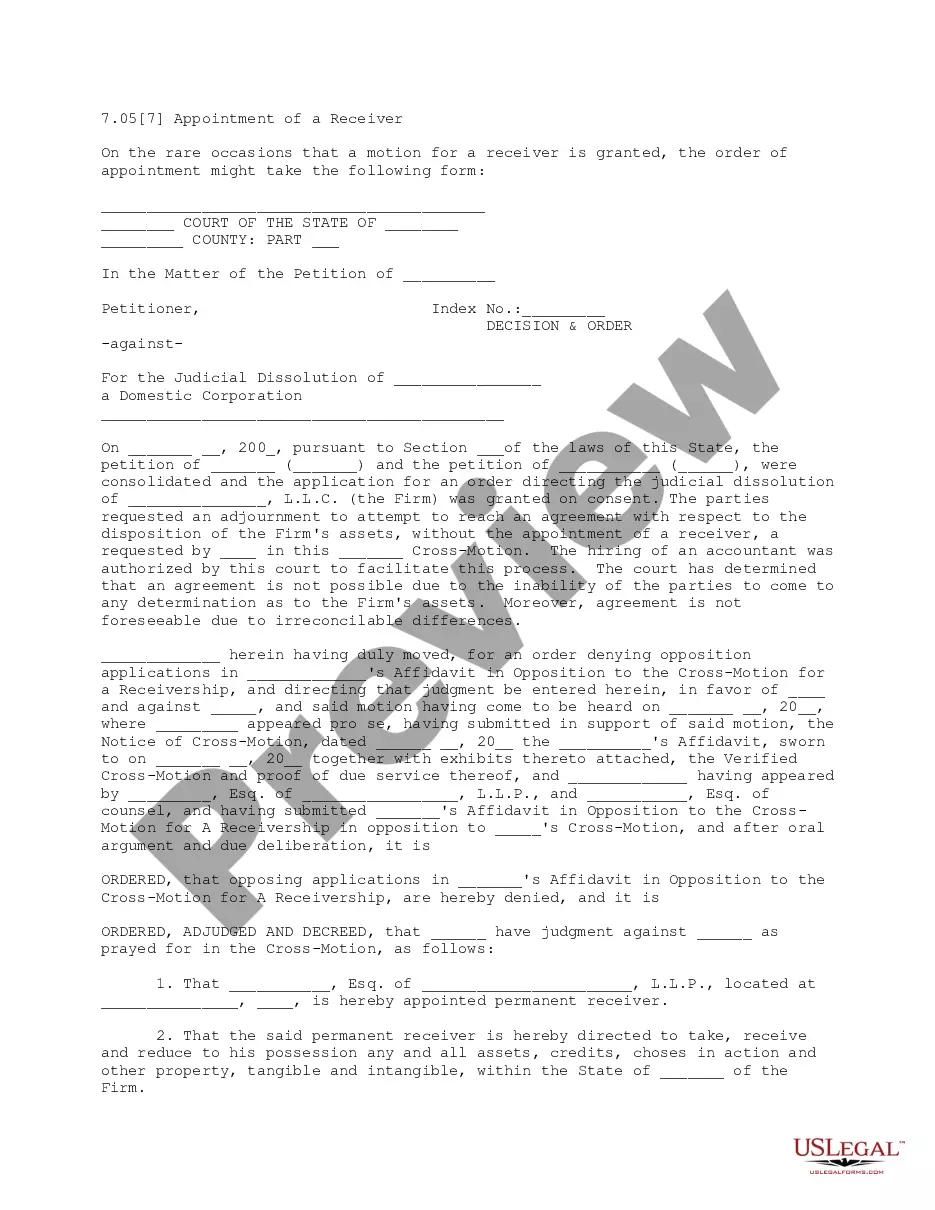
Appointment of a receiver may be by agreement of the debtor and his or her creditors. The receiver takes custody of the property, business, rents and profits of an insolvent person or entity, or a party whose property is in dispute.


This form is a generic example that may be referred to when preparing such a form for your particular state. It is for illustrative purposes only. Local laws should be consulted to determine any specific requirements for such a form in a particular jurisdiction.
Free preview
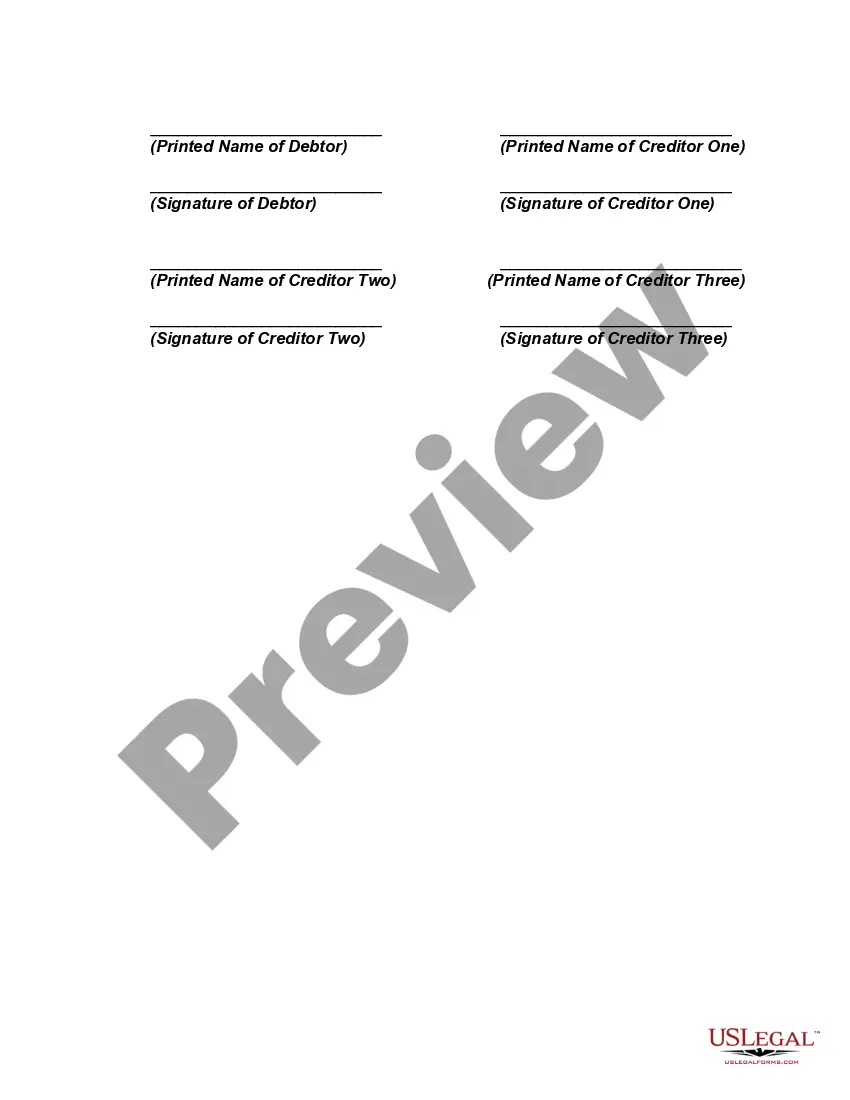
  • Preview Agreement between Creditors and Debtor for Appointment of Receiver
  • Preview Agreement between Creditors and Debtor for Appointment of Receiver

How to fill out Agreement Between Creditors And Debtor For Appointment Of Receiver?

Creating documents for business or personal requirements is always a significant responsibility.

When formulating a contract, a public service application, or a power of attorney, it's critical to consider all federal and state laws of the relevant jurisdiction.

Nevertheless, small counties and even municipalities also have legislative rules that you must think about.

The fantastic aspect of the US Legal Forms library is that all the documents you've ever obtained are never lost - you can access them in your profile within the My documents tab at any time. Join the platform and swiftly acquire verified legal forms for any situation with just a few clicks!

  1. All these aspects make it challenging and time-consuming to produce Riverside Agreement between Creditors and Debtor for Appointment of Receiver without professional help.
  2. You can easily avoid unnecessary expenses on attorneys for drafting your documents by creating a legally valid Riverside Agreement between Creditors and Debtor for Appointment of Receiver independently, utilizing the US Legal Forms online library.
  3. It is the largest online collection of state-specific legal templates that are professionally verified, so you can be confident in their legitimacy when selecting a sample for your county.
  4. Previously subscribed users only need to Log In to their accounts to download the necessary form.
  5. In case you don't have a subscription yet, follow the step-by-step guide below to acquire the Riverside Agreement between Creditors and Debtor for Appointment of Receiver.
  6. Browse the page you've opened and check if it contains the sample you require.
  7. To do this, use the form description and preview if these features are available.

Form popularity

FAQ

To obtain a court-appointed receiver, you need to file a petition with the appropriate court detailing the reasons for requesting a receiver. This petition should outline how a receiver would protect the assets or address specific issues within the disputed matter. In many cases, referencing the Riverside California Agreement between Creditors and Debtor for Appointment of Receiver can strengthen your case. Legal assistance can help streamline this process.

1) What is a court-appointed receiver? A court appoints a receiver to protect property controlled by a person sued in a court case. The SEC typically recommends the appointment of a receiver in cases in which the SEC fears a company or an individual may dissipate or waste corporate property and assets.

A Receiver is an officer appointed by the Court who is given custody of specified assets with direction to liquidate them and distribute the proceeds. A Court order is typically required to appoint a Receiver, and the terms of the order describe the Receiver's duties and powers.

1) A neutral person (often a professional trustee) appointed by a court to manage a party's legal interests in a court proceeding.

A court appoints a receiver to protect property controlled by a person sued in a court case. The SEC typically recommends the appointment of a receiver in cases in which the SEC fears a company or an individual may dissipate or waste corporate property and assets.

The receiver is a neutral, legally-appointed professional who is entrusted to manage a company's operations, finances, and property in the event that they default on their loan payments. The main goals of receivership are to: Repay debts to creditors. Negotiate with creditors to secure lower interest rates.

(b) A court may appoint a receiver for a corporation on the petition of one or more stockholders of the corporation. (2) appointment of a receiver over all or part of the marital estate in a suit filed under Title 1 or 5, Family Code. Acts 1985, 69th Leg., ch. 959, Sec.

D. Notwithstanding the grant or denial of any power or duty prescribed in this chapter, the receiver has those rights, powers, privileges, immunities and duties authorized or imposed from time to time in specific cases by order of the court.

After a judgment is granted, many creditors may seek to file an Application of Appointment of a Receiver. The court may appoint a receiver with the authority to take possession of the non-exempt property, sell it, and pay the proceeds to the judgment creditor to the extent required to satisfy the judgment.

A receiver is a court-appointed officer who acts as a neutral to manage assets (real property or personal property) or even manage businesses as going concerns when they are the subject of a legal dispute. A receiver can also be appointed to act as a liquidator of such assets or businesses.

Interesting Questions

Trusted and secure by over 3 million people of the world’s leading companies

Riverside California Agreement between Creditors and Debtor for Appointment of Receiver