Saint Paul Minnesota Emergency Action Plan Checklist - EAP

State:
Multi-State
City:
Saint Paul
Control #:
US-03056BG
Format:
Word; 
Rich Text
Instant download

Description

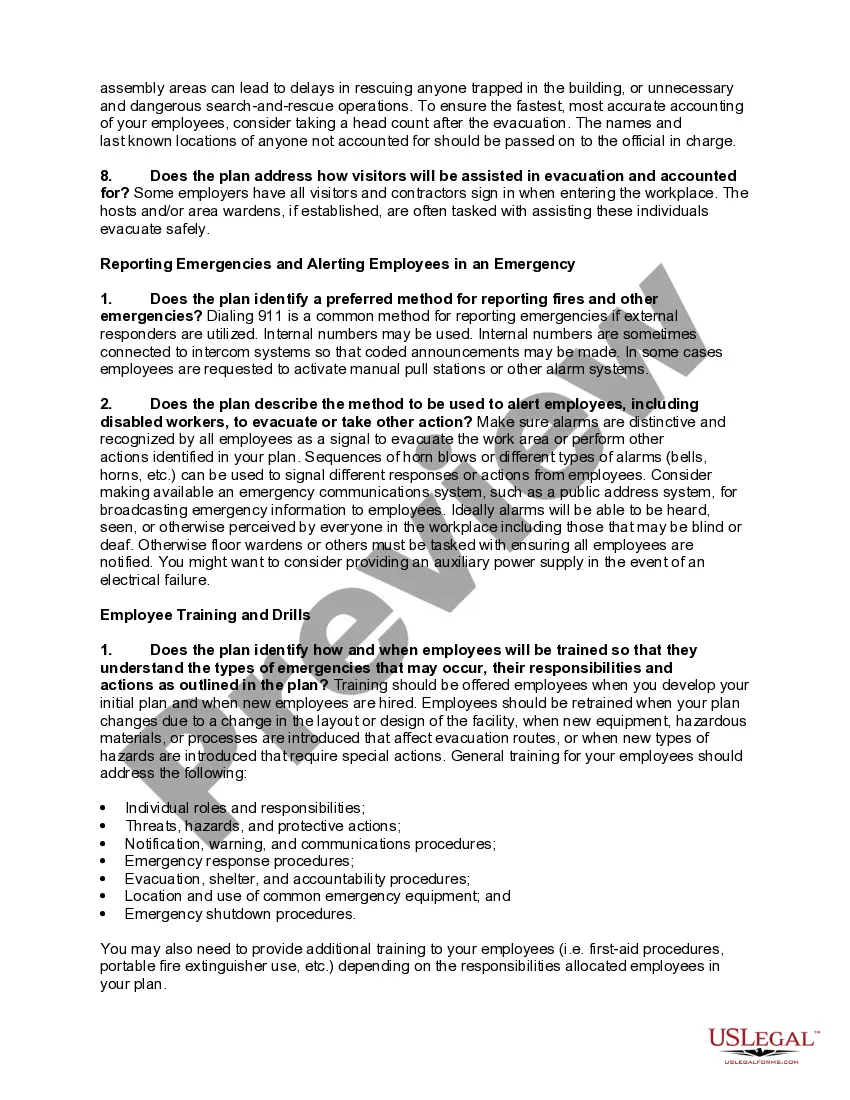
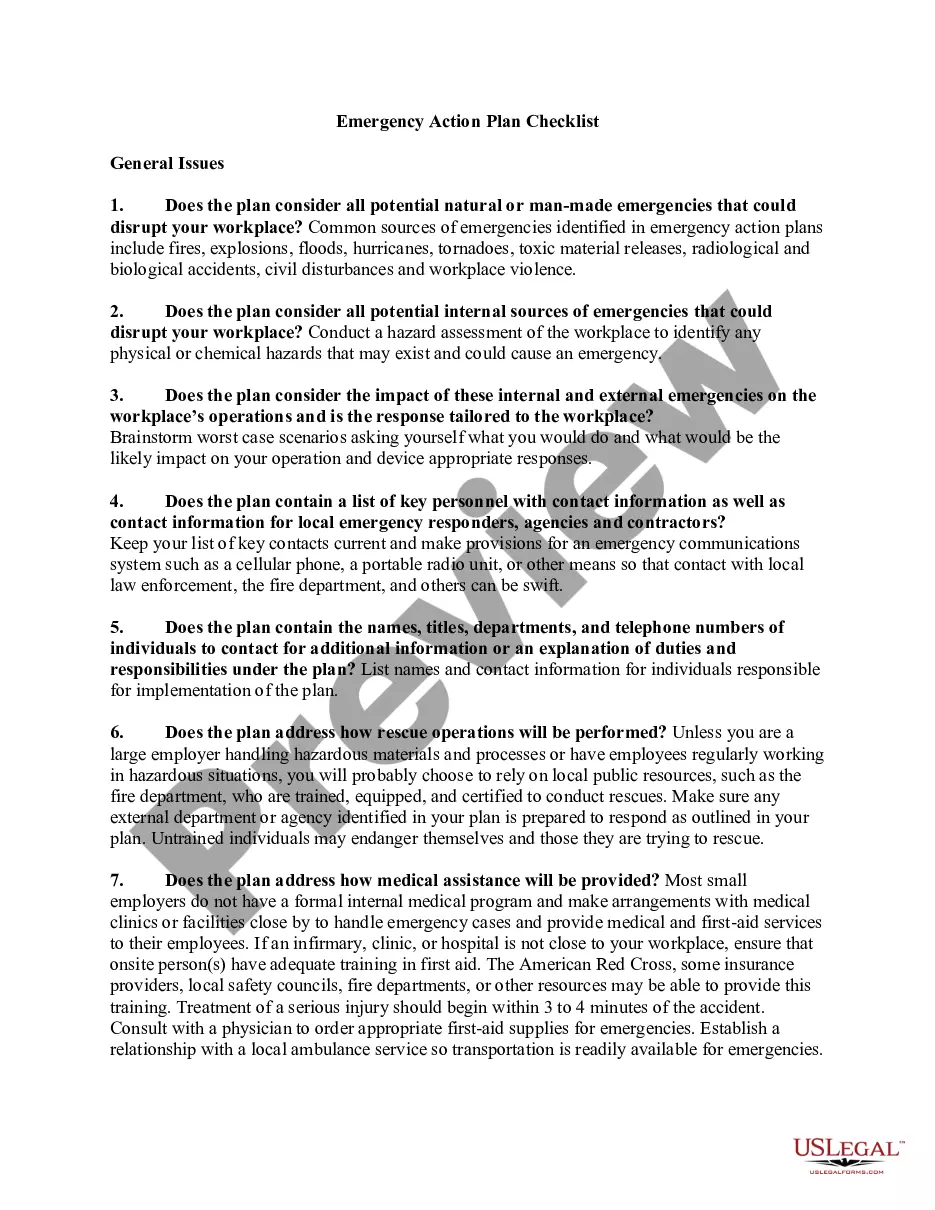
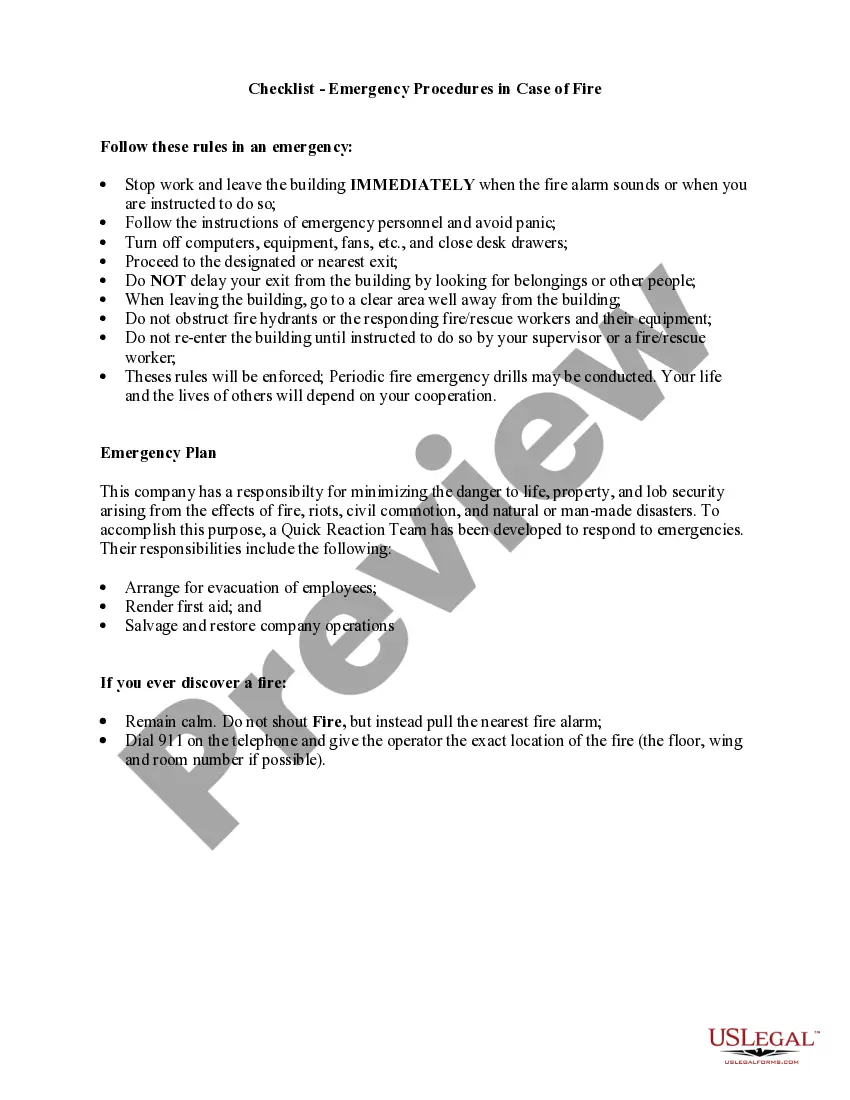
An emergency action plan (EAP) is a written document required by particular OSHA standards. The purpose of an EAP is to facilitate and organize employer and employee actions during workplace emergencies. Well developed emergency plans and proper employee training (such that employees understand their roles and responsibilities within the plan) will result in fewer and less severe employee injuries and less structural damage to the facility during emergencies. A poorly prepared plan, likely will lead to a disorganized evacuation or emergency response, resulting in confusion, injury, and property damage.


Putting together a comprehensive emergency action plan that deals with those issues specific to your worksite is not difficult. It involves taking what was learned from your workplace evaluation and describing how employees will respond to different types of emergencies, taking into account your specific worksite layout, structural features, and emergency systems. Most organizations find it beneficial to include a diverse group of representatives (management and employees) in this planning process and to meet frequently to review progress and allocate development tasks. The commitment and support of all employees is critical to the plan's success in the event of an emergency; ask for their help in establishing and implementing your emergency action plan. For smaller organizations, the plan does not need to be written and may be communicated orally if there are 10 or fewer employees.


At a minimum, the plan must include but is not limited to the following elements:

" Means of reporting fires and other emergencies;

" Evacuation procedures and emergency escape route assignments;

" Procedures to be followed by employees who remain to operate critical plant operations before they evacuate;

" Procedures to account for all employees after an emergency evacuation has been completed;

" Rescue and medical duties for those employees who are to perform them; and

" Names or job titles of persons who can be contacted for further information or explanation of duties under the plan.
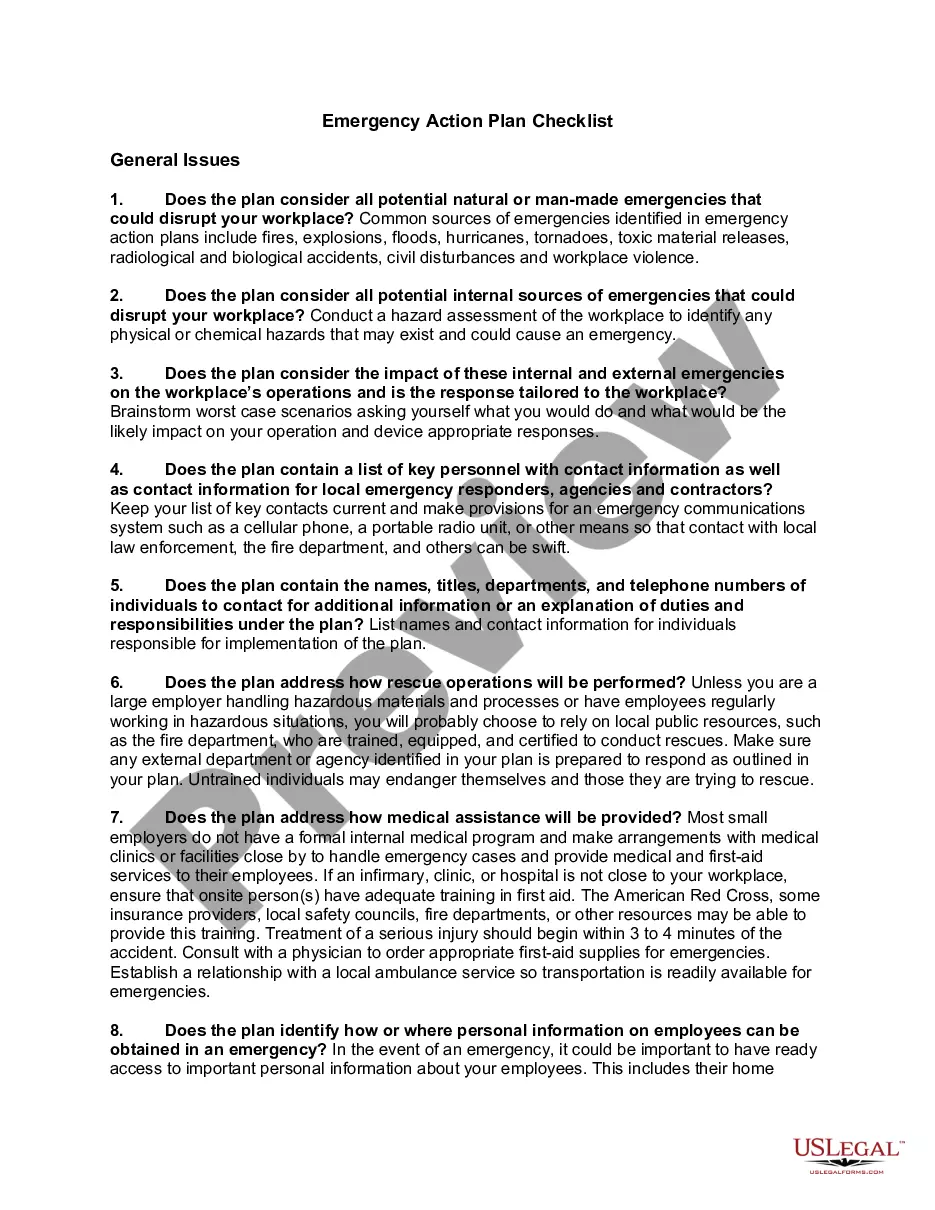
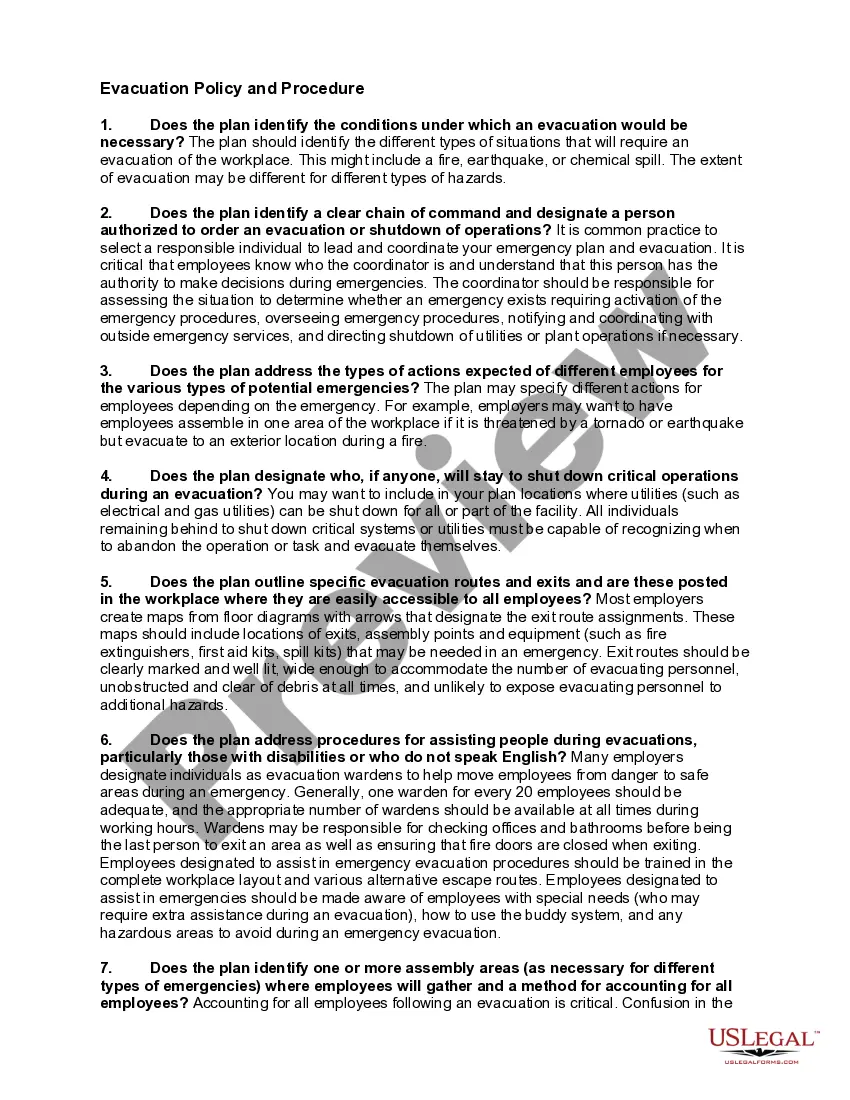
Free preview
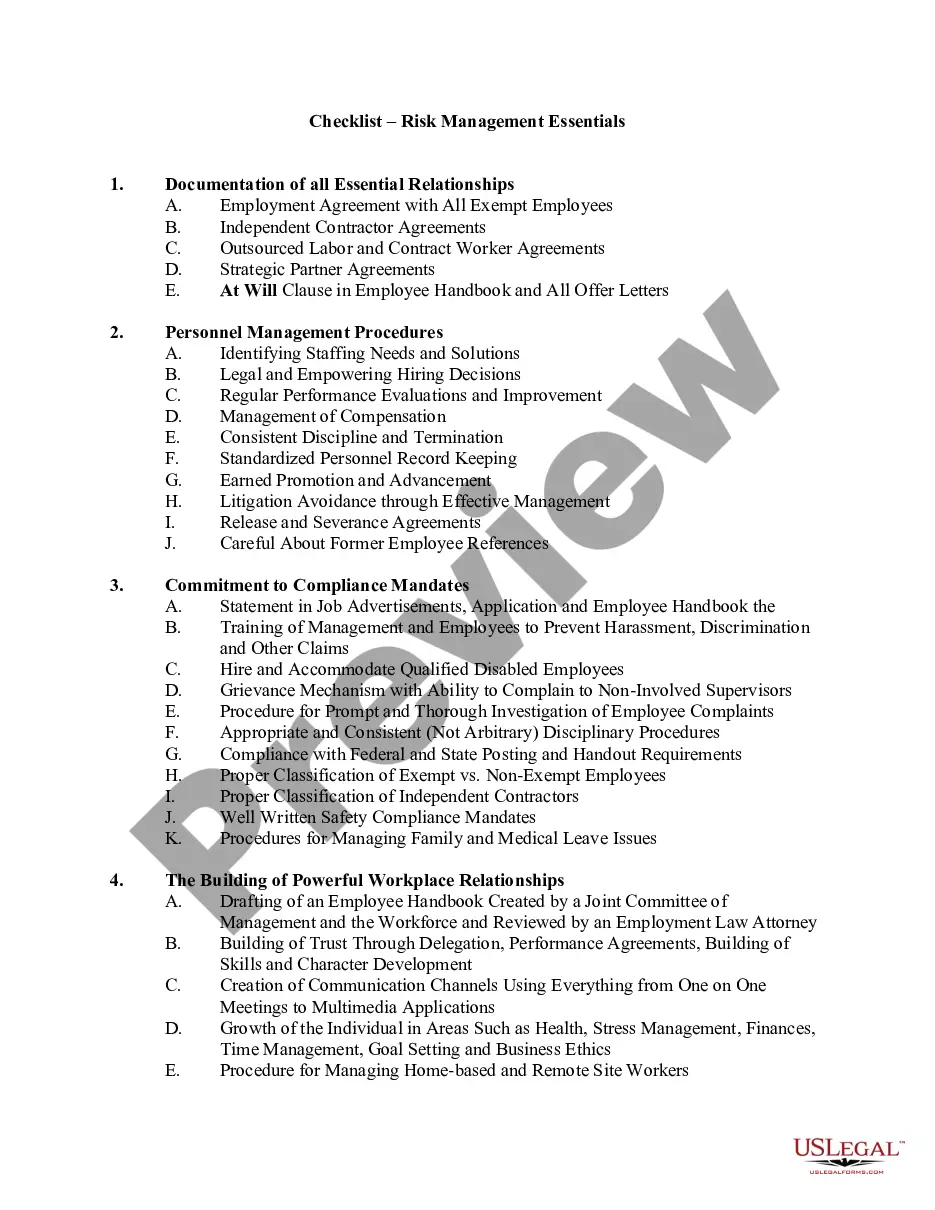
  • Preview Emergency Action Plan Checklist - EAP
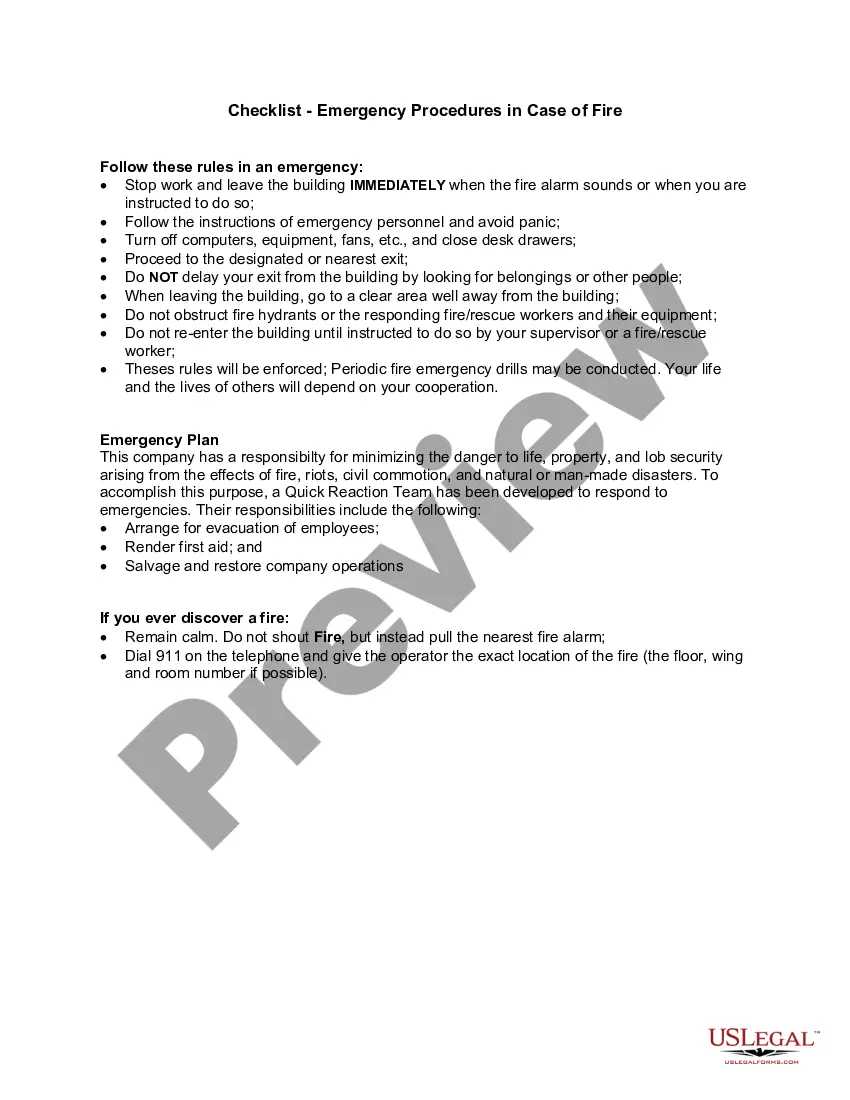
  • Preview Emergency Action Plan Checklist - EAP
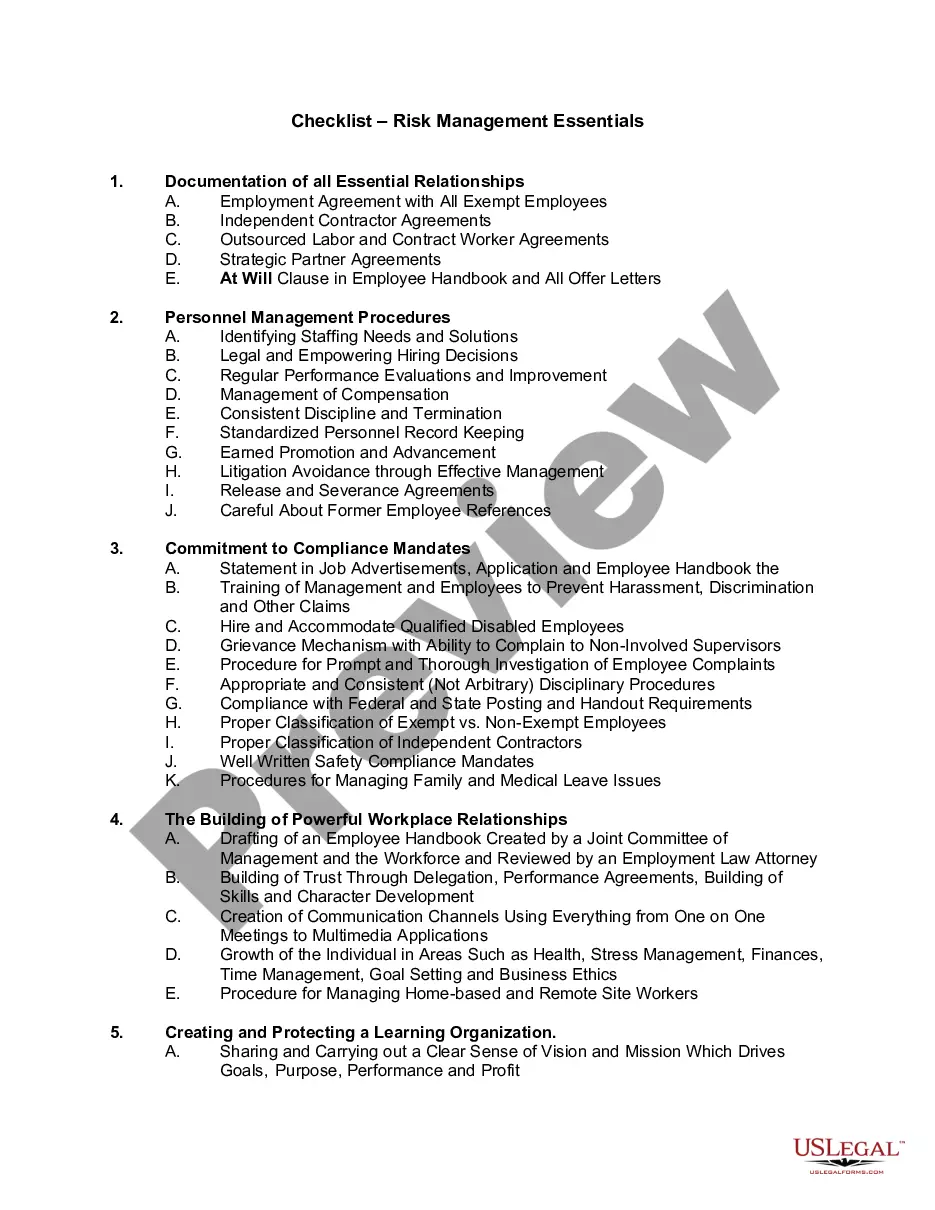
  • Preview Emergency Action Plan Checklist - EAP
  • Preview Emergency Action Plan Checklist - EAP

Form popularity

FAQ

Paul was not one of the Twelve Apostles, and did not know Jesus during his lifetime. ing to the Acts, Paul lived as a Pharisee and participated in the persecution of early disciples of Jesus, possibly Hellenised diaspora Jews converted to Christianity, in the area of Jerusalem, prior to his conversion.

Before conversion Before his conversion, Paul was known as Saul and was "a Pharisee of Pharisees", who "intensely persecuted" the followers of Jesus.

Definition. Paul was a follower of Jesus Christ who famously converted to Christianity on the road to Damascus after persecuting the very followers of the community that he joined. However, as we will see, Paul is better described as one of the founders of the religion rather than a convert to it.

Paul was a follower of Jesus Christ who famously converted to Christianity on the road to Damascus after persecuting the very followers of the community that he joined. However, as we will see, Paul is better described as one of the founders of the religion rather than a convert to it.

Although St. Paul was not one of the original 12 Apostles of Jesus, he was one of the most prolific contributors to the New Testament. Of the 27 books in the New Testament, 13 or 14 are traditionally attributed to Paul, though only 7 of these Pauline epistles are accepted as being entirely authentic and dictated by St.

He went on to become one of the most powerful preachers of the faith. He was a well-educated man driven by passion and a love for Christ and His Church. Today St Paul is celebrated in the Catholic Church as the patron saint of the missions, writers and publishers.

Paul never met Jesus while he was alive. While he was undoubtedly a contemporary of Jesus, he wasn't born or raised in Palestine like Jesus and all his disciples. He never met Jesus and didn't claim to have met him. Or at least not the earthly Jesus.

Paul did not follow Jesus' early ministry as he was actively persecuting Christians; Paul was not a disciple of Jesus. Paul's only encounter with Jesus personally was the experience on the Damascus Road, which Acts claims occurred after Jesus' death.

Interesting Questions

Trusted and secure by over 3 million people of the world’s leading companies

Saint Paul Minnesota Emergency Action Plan Checklist - EAP