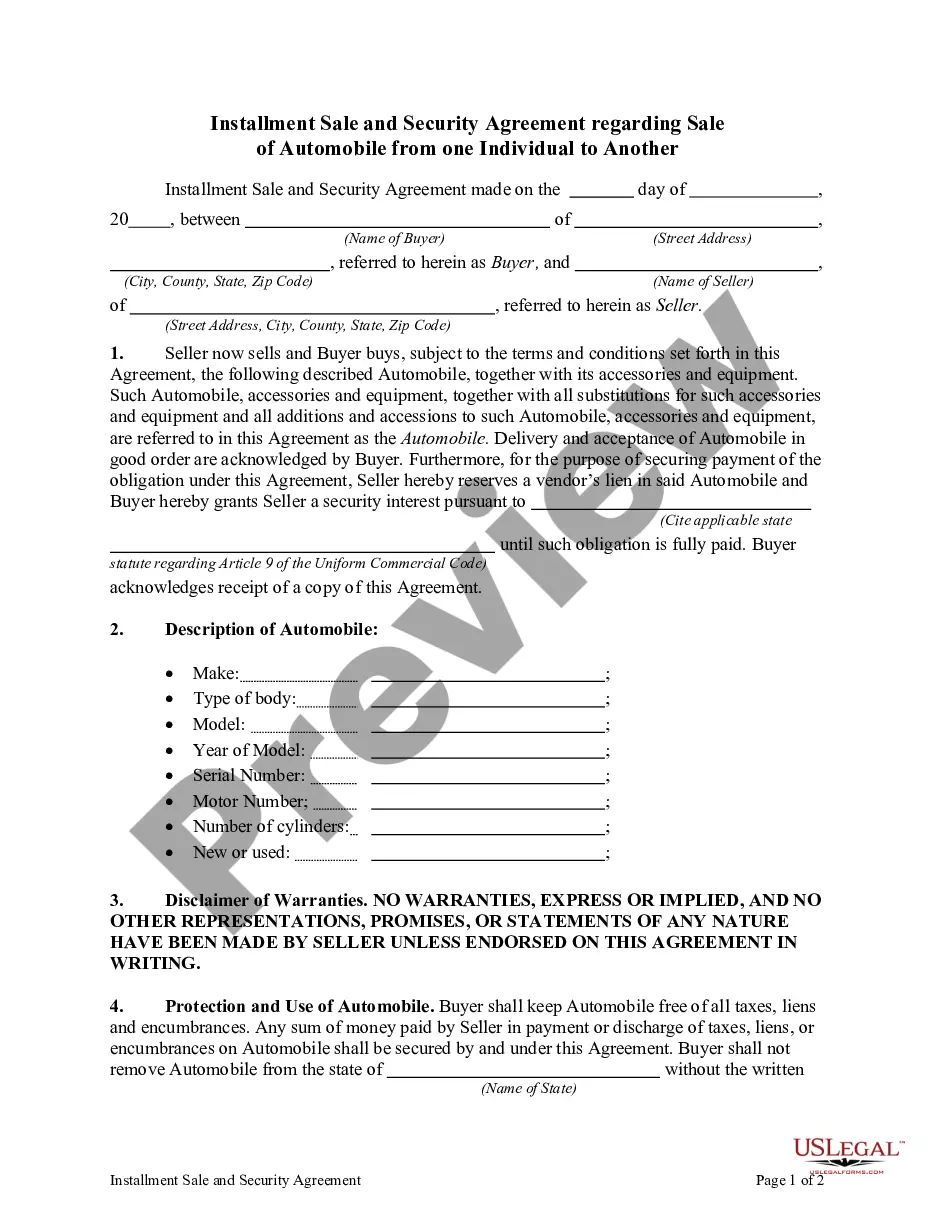
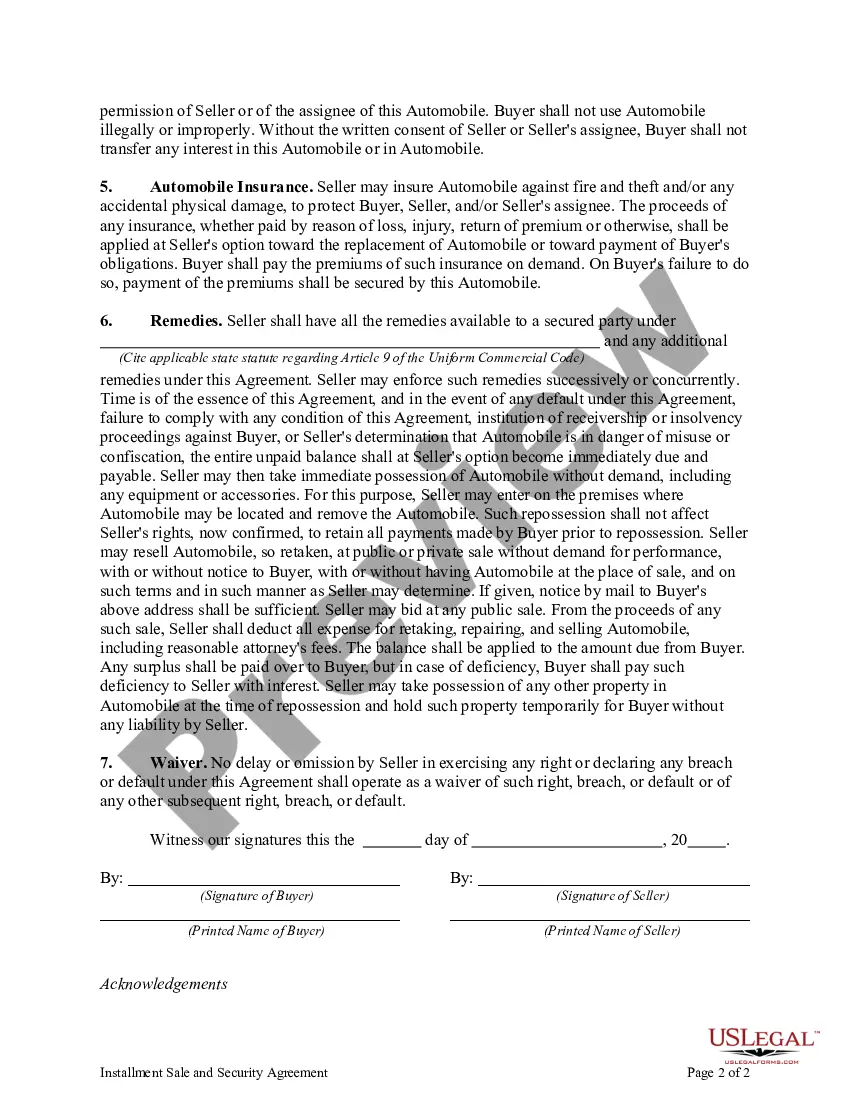
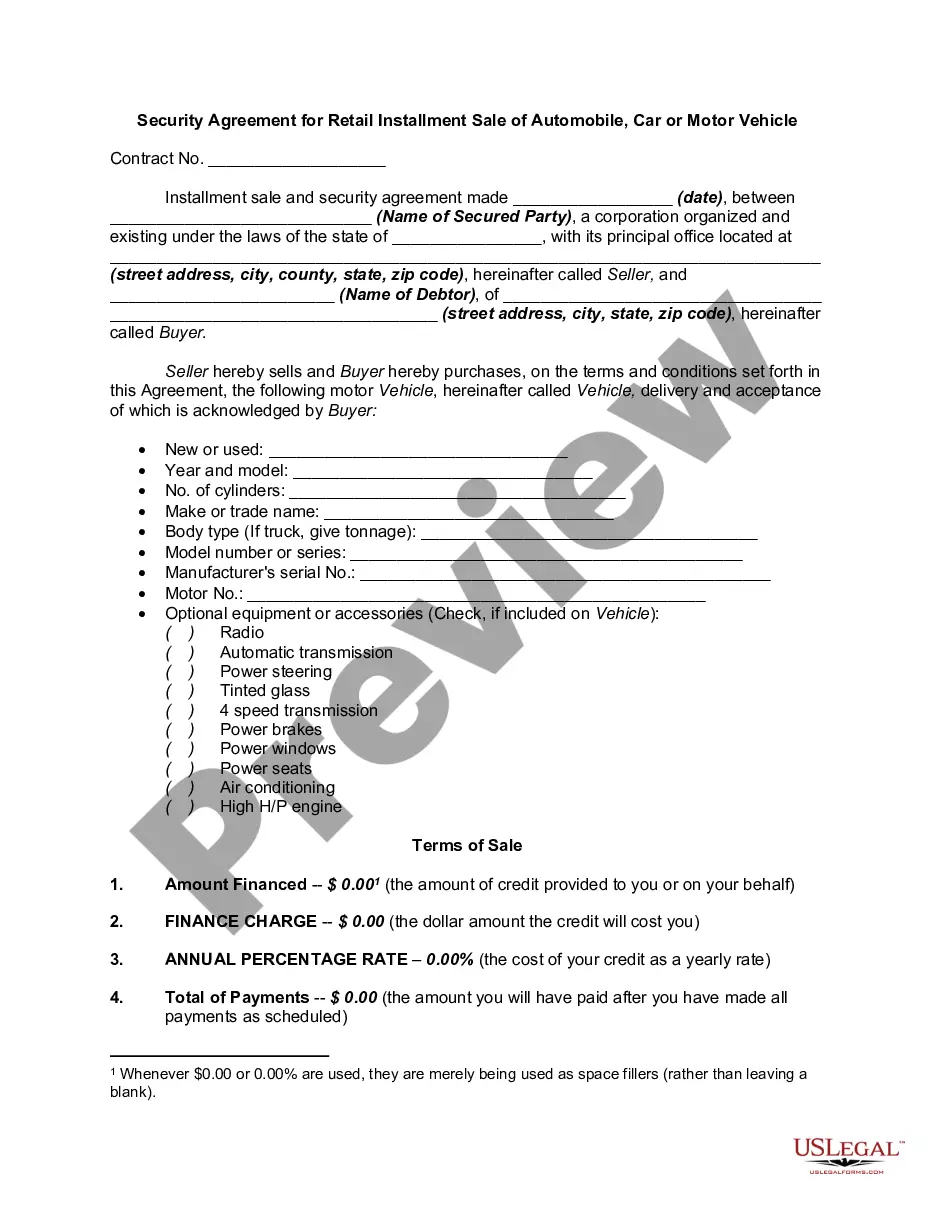
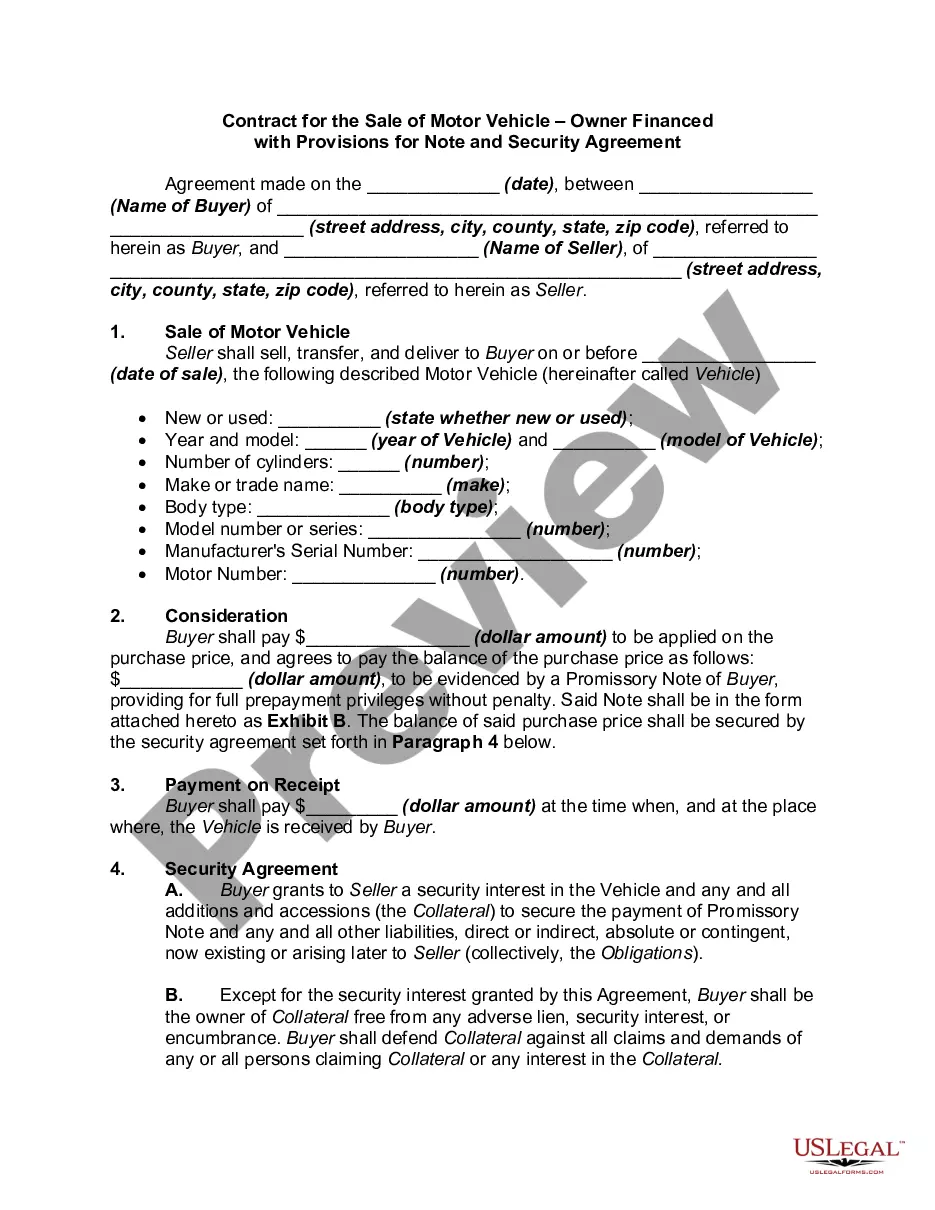
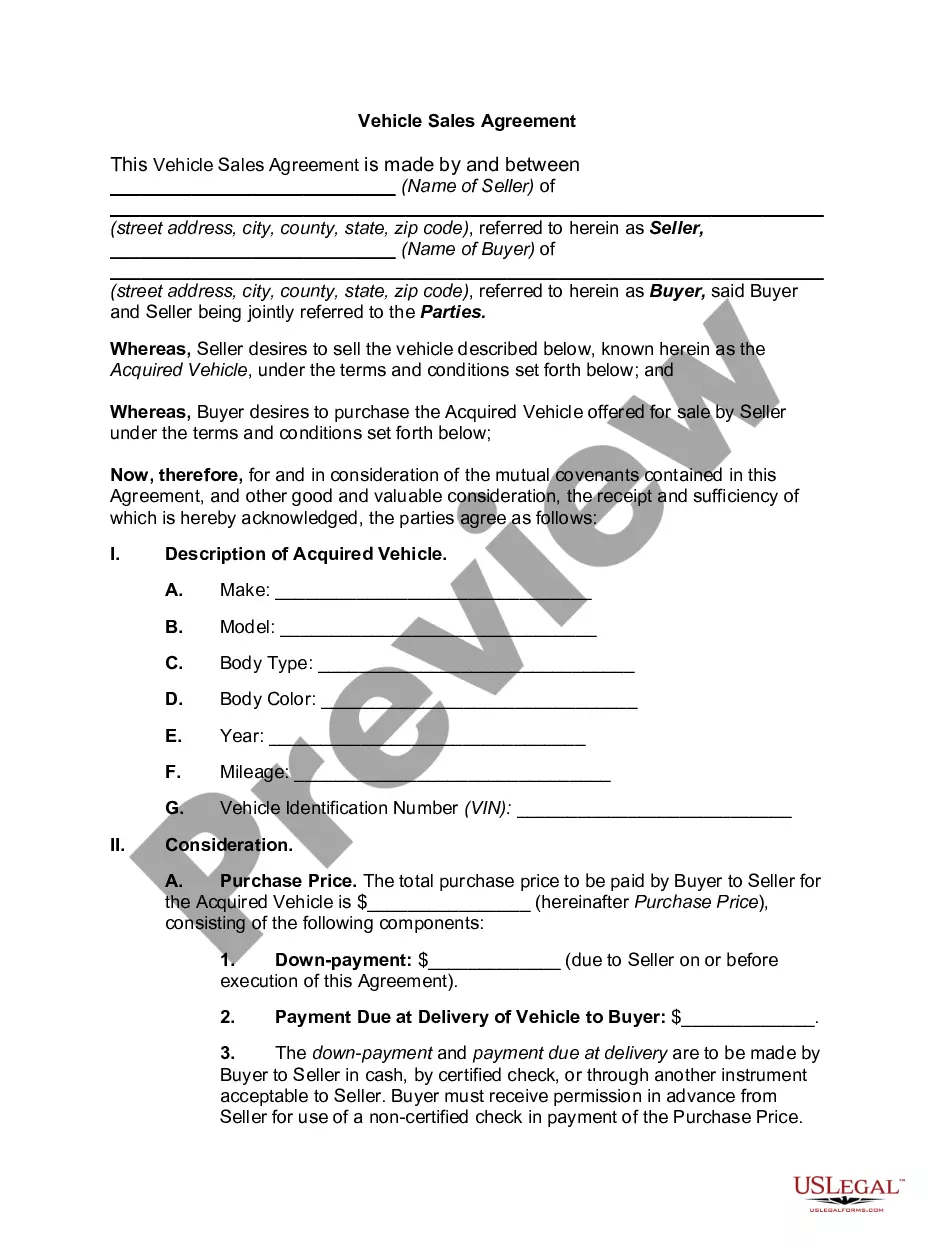
Fairfax Virginia Installment Sale and Security Agreement Regarding Sale of Automobile from One Individual to Another
Description
Get your form ready online
Our built-in tools help you complete, sign, share, and store your documents in one place.
Make edits, fill in missing information, and update formatting in US Legal Forms—just like you would in MS Word.
Download a copy, print it, send it by email, or mail it via USPS—whatever works best for your next step.
Sign and collect signatures with our SignNow integration. Send to multiple recipients, set reminders, and more. Go Premium to unlock E-Sign.
If this form requires notarization, complete it online through a secure video call—no need to meet a notary in person or wait for an appointment.
We protect your documents and personal data by following strict security and privacy standards.

Make edits, fill in missing information, and update formatting in US Legal Forms—just like you would in MS Word.

Download a copy, print it, send it by email, or mail it via USPS—whatever works best for your next step.

Sign and collect signatures with our SignNow integration. Send to multiple recipients, set reminders, and more. Go Premium to unlock E-Sign.

If this form requires notarization, complete it online through a secure video call—no need to meet a notary in person or wait for an appointment.

We protect your documents and personal data by following strict security and privacy standards.
Looking for another form?
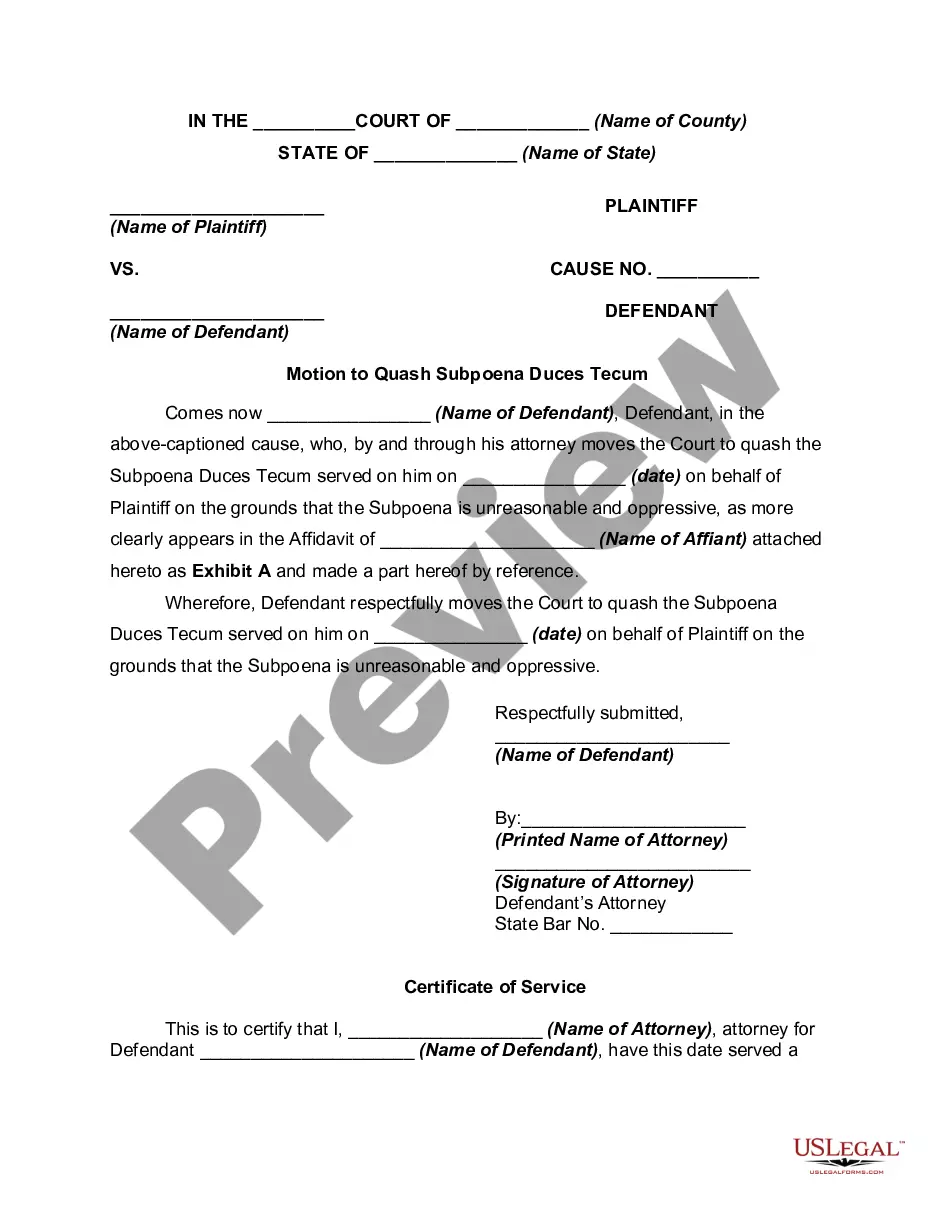
How to fill out Installment Sale And Security Agreement Regarding Sale Of Automobile From One Individual To Another?
Composing documents for professional or personal purposes is always a significant responsibility.
When formulating a contract, a public service application, or a power of attorney, it is vital to take into account all federal and state regulations pertinent to the specific region.
Nonetheless, smaller counties and even municipalities also possess legislative protocols that must be taken into account.
Ensure the template adheres to legal standards and click Buy Now.
- All these elements render it cumbersome and time-consuming to create a Fairfax Installment Sale and Security Agreement Regarding Sale of Automobile from One Individual to Another without expert assistance.
- It's simple to avert unnecessary expenses on attorneys drafting your paperwork and produce a legally binding Fairfax Installment Sale and Security Agreement Regarding Sale of Automobile from One Individual to Another independently, utilizing the US Legal Forms online repository.
- It is the premier online collection of state-specific legal documents that have been professionally validated, ensuring their authenticity when selecting a template for your county.
- Prior subscribers only need to Log In to their accounts to retrieve the required document.
- If you do not yet have a subscription, follow the step-by-step guide provided below to acquire the Fairfax Installment Sale and Security Agreement Regarding Sale of Automobile from One Individual to Another.
- Browse the page you have opened and verify if it contains the document you need.
- To achieve this, employ the form description and preview if these options are available.
Form popularity
FAQ
The Virginia Department of Motor Vehicles (DMV) implemented the Commonweath's Electronic Lien and Title (ELT) System in 1995. The System gives you the capability to electronically exchange lien and title information between the lienholder and the motor vehicle agency.
Bill of Sale in Virginia, which can be drafted by hand if necessary, does not need to be notarized. However, each document should feature the following information in order to serve its purpose: The names, contact information, and signatures of the buyer and seller. A full description of the vehicle.
How to Sell a Car in Virginia Step 1: Organize and gather all related vehicle documentation. Step 2: Transfer the Title. Step 3: Remove the seller's license plates from the vehicle. Step 4: Inform the Virginia DMV that you have sold, traded or donated the vehicle. Step 5: Cancel your insurance.
If you have purchased a new vehicle, titled it in your name and plan to transfer your existing license plate from your previous car, you will need to visit your local Virginia Department of Motor Vehicles service center. Because you are registering a new vehicle, you cannot take care of your transaction online.
If the vehicle is five years old or less, you'll need to sign an Affidavit of Vehicle Purchase Price Form (SUT 1A), which does need to be witnessed by a notary.
Unlike many other states, Virginia does not require a bill of sale to sell your car. That being said, a bill of sale is a legal record that proves the transaction was carried out. Therefore, it's suggested that a bill of sale is created for the benefit of both the buyer and the seller.
What You'll Need to Do to Transfer your Vehicle Title in Virginia Visit the DMV near your area. Consider making a DMV appointment or getting a line waiting concierge. Submit the documents. Pay the fees. Record the odometer reading. Select electronic or paper title.
You will need to visit a Virginia DMV office and file an Application for Certificate of Title and Registration (VSA 17A), while showing proof of ID, to transfer your car's title. This process doesn't take long if you have documents and payment ready. Transferring the title is necessary if selling or buying a vehicle.
You have the option of an electronic or paper vehicle title. If you choose an electronic vehicle title, you can order a paper vehicle title from the VA DMV if you ever need one. Once the VA vehicle title transfer is complete, you can register your vehicle.
You will need to visit a Virginia DMV office and file an Application for Certificate of Title and Registration (VSA 17A), while showing proof of ID, to transfer your car's title. This process doesn't take long if you have documents and payment ready. Transferring the title is necessary if selling or buying a vehicle.