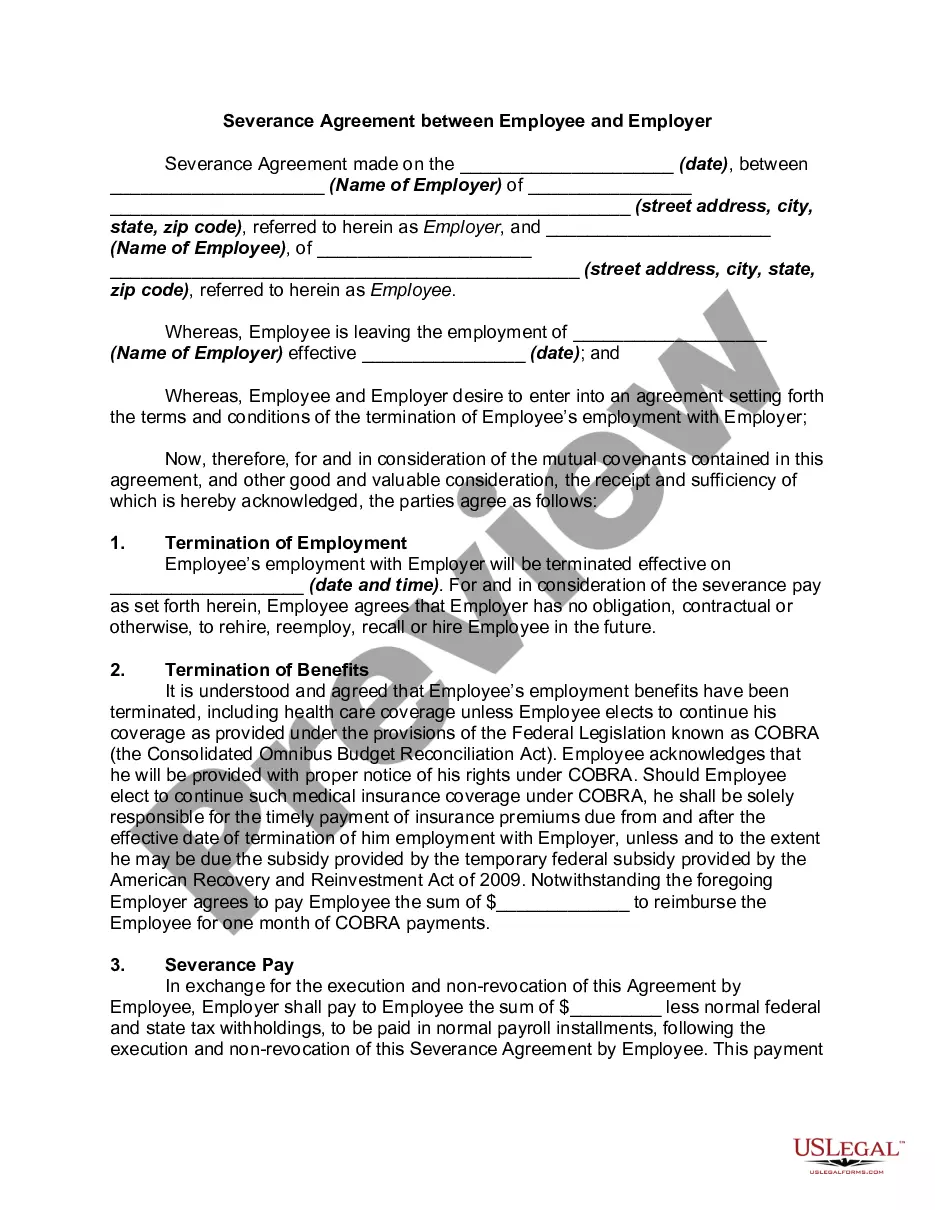
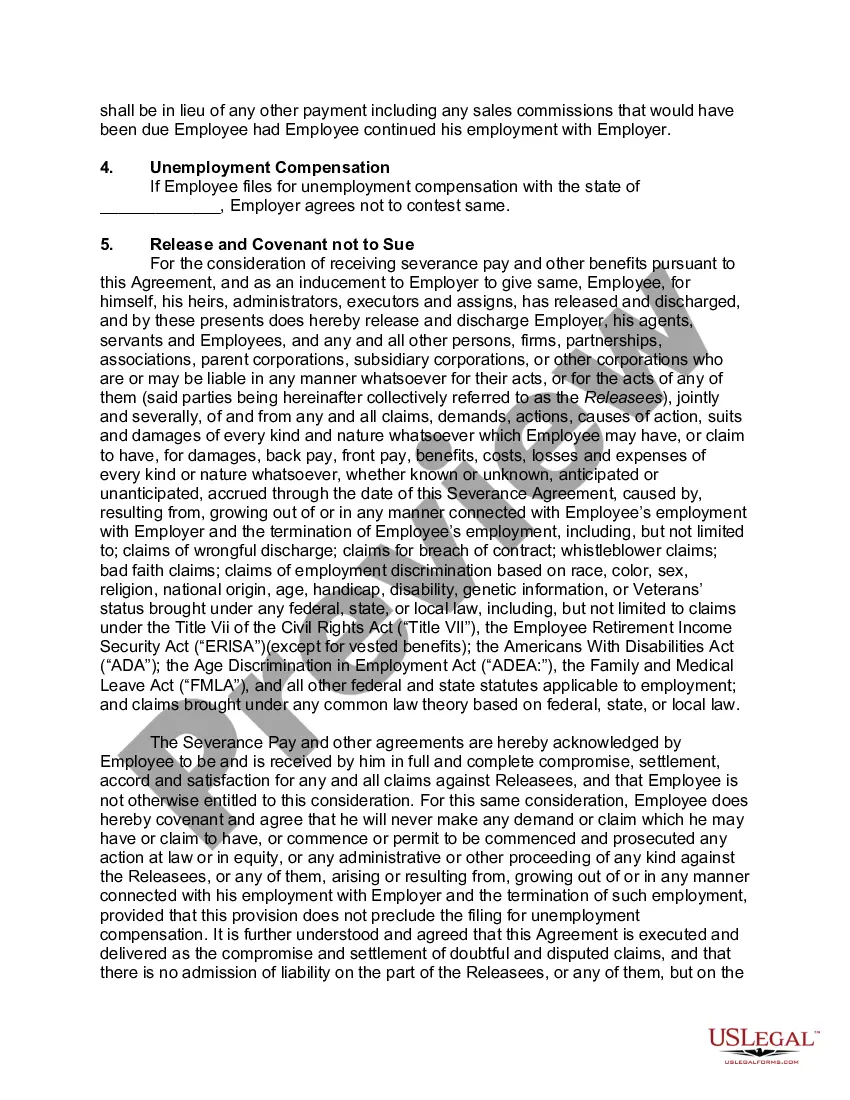
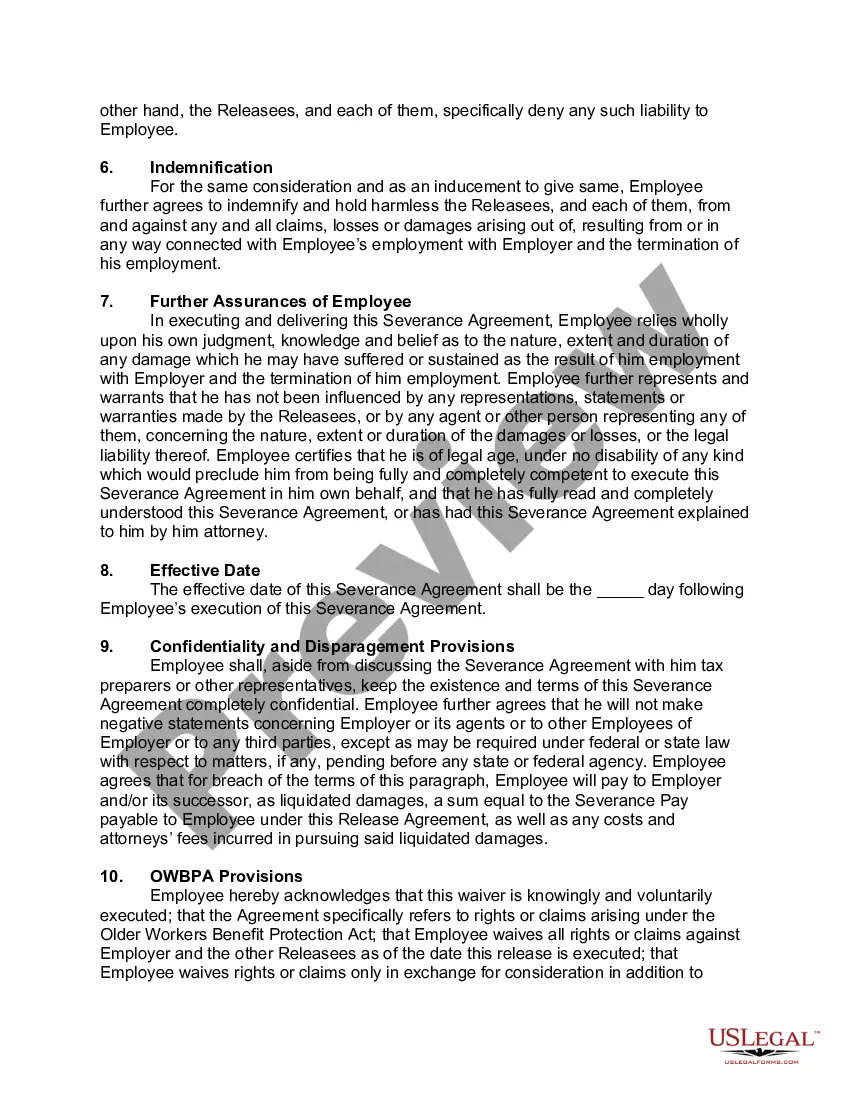
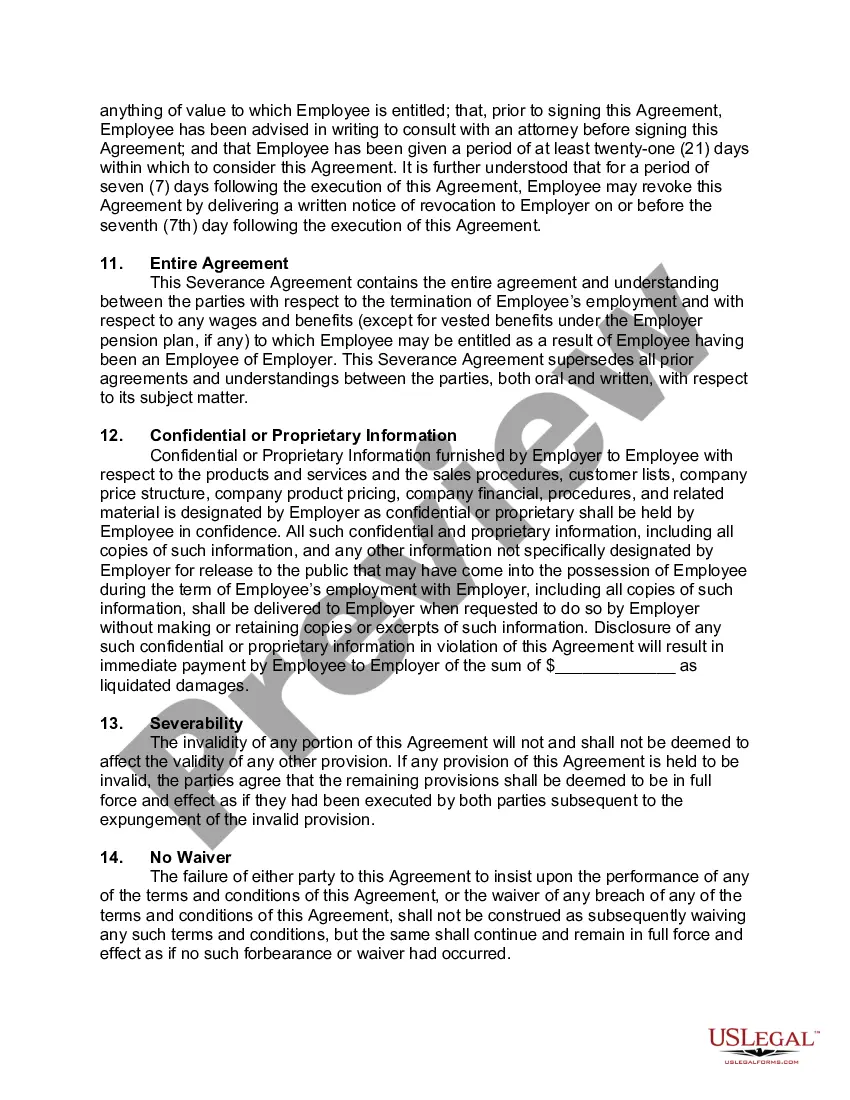
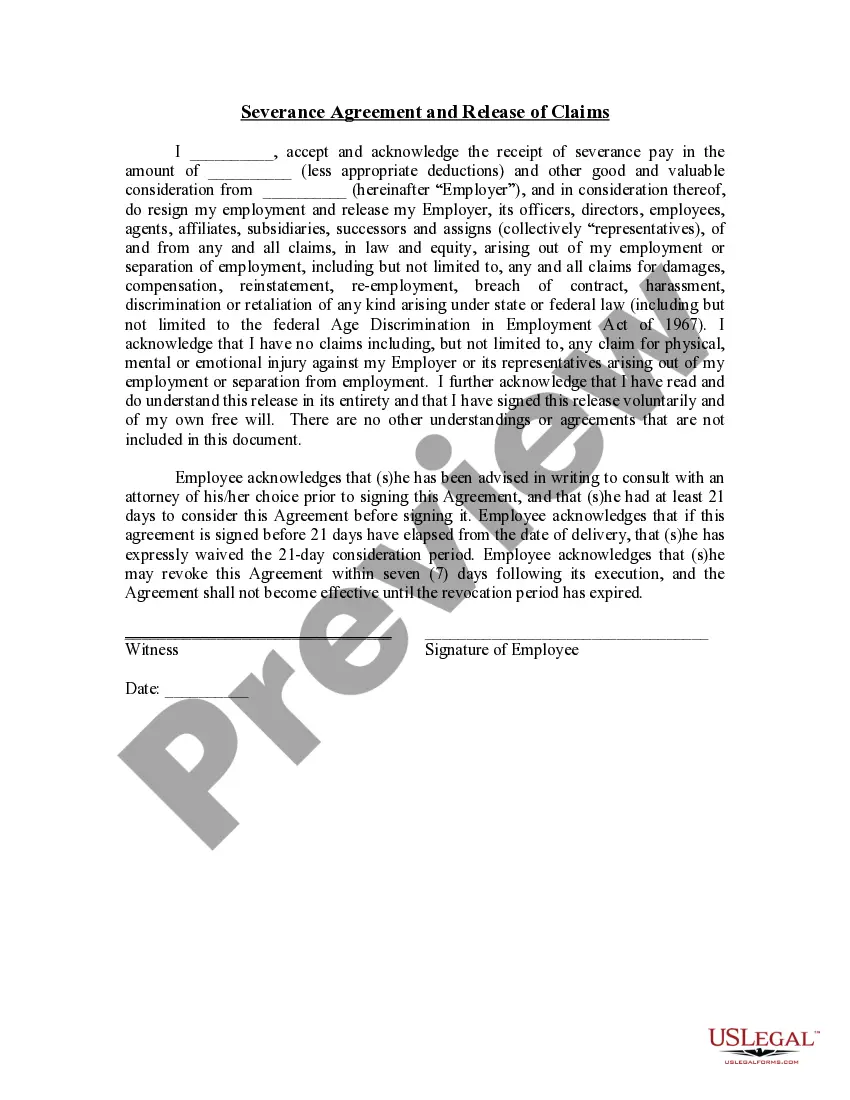
When a relationship is severed, this means that the ties between parties are cut. A severance agreement, commonly known as a termination agreement, is a document that outlines how the connection between an employer and its employees will be cut. Such agreements can be beneficial to both employers and employees.
A severance agreement can address numerous issues regarding termination of employment. The contract may state how much notice an employer must give an employee before laying her off. It may state the procedure that must be followed before the employee can be fired. The purpose of this type of contract is for both parties to agree what will happen when their relationship comes to an end.
Queens New York Severance Agreement between Employee and Employer
State:
Multi-State
Category:
County:
Queens
Control #:
US-02688BG
Format:
Word;
Rich Text
299 downloads

Reviewed by
Description
Free preview
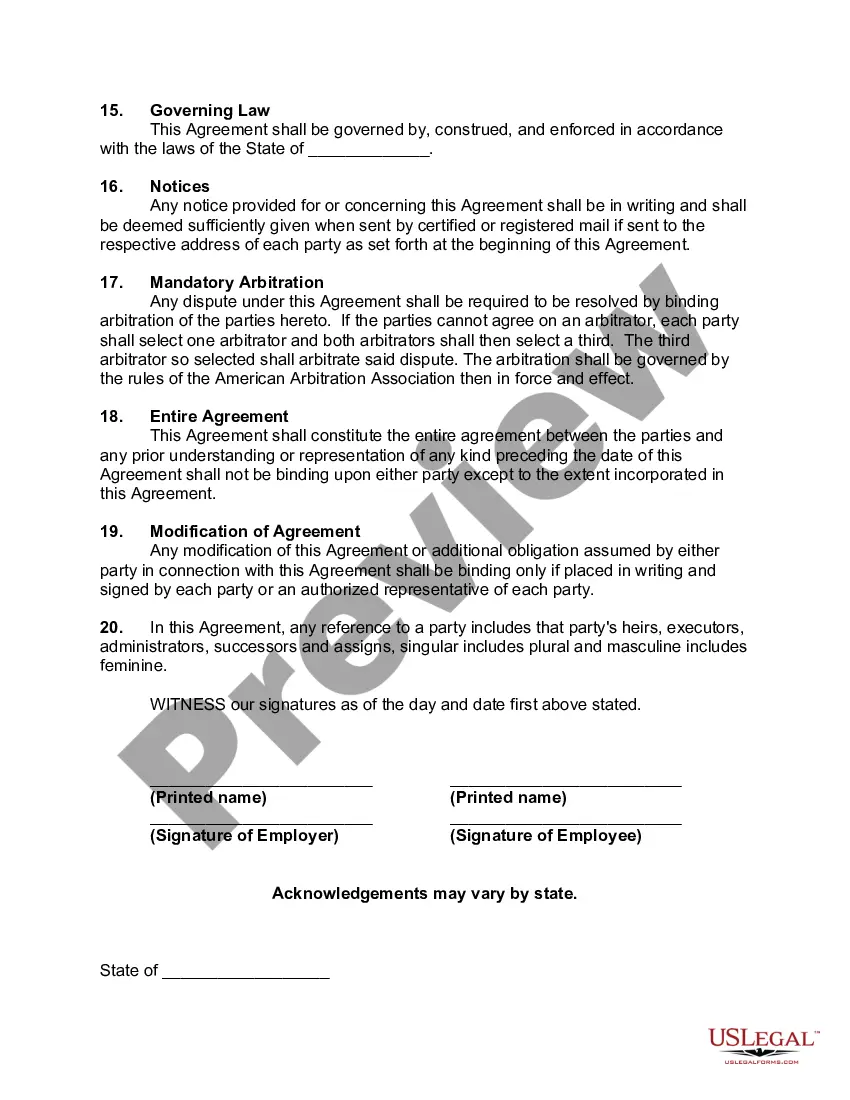
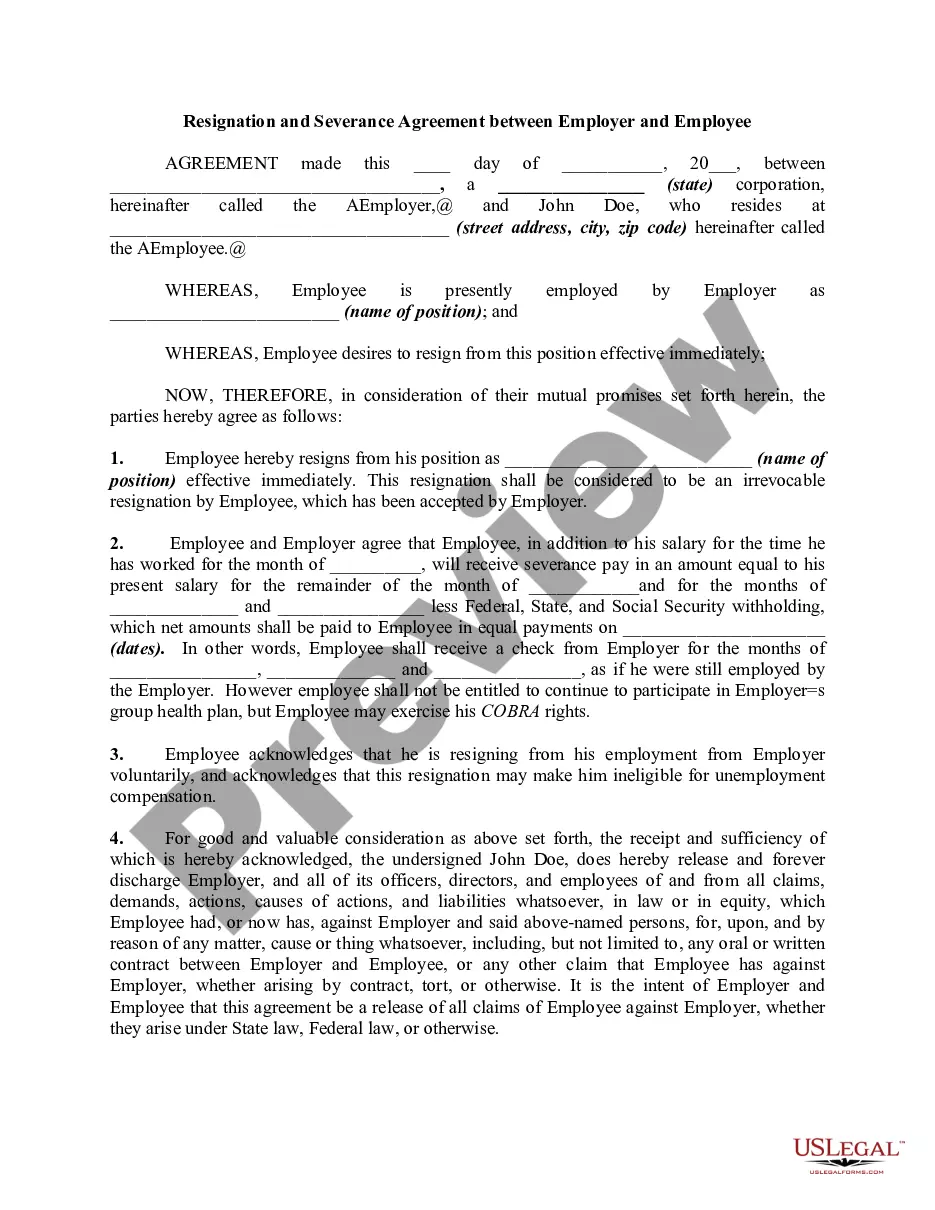
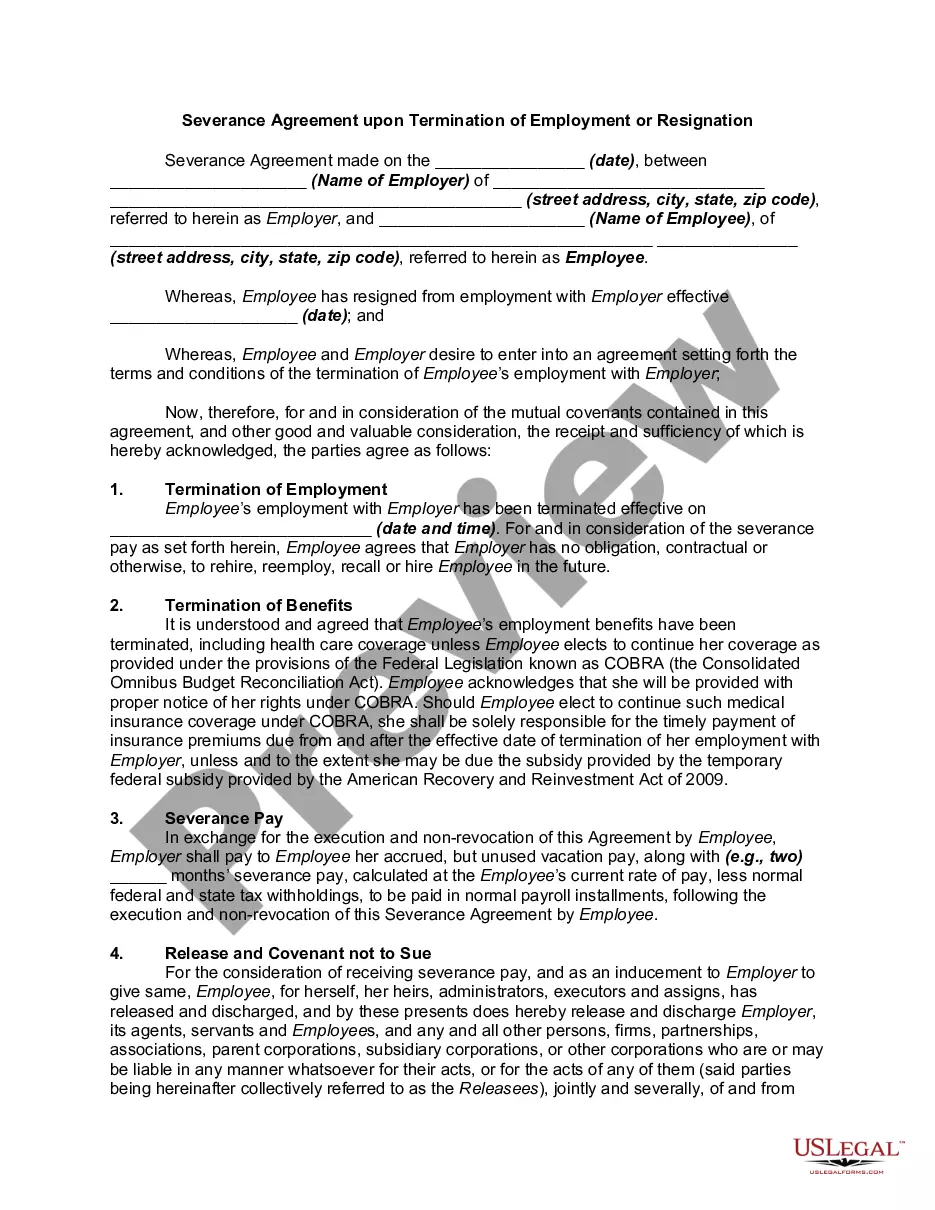
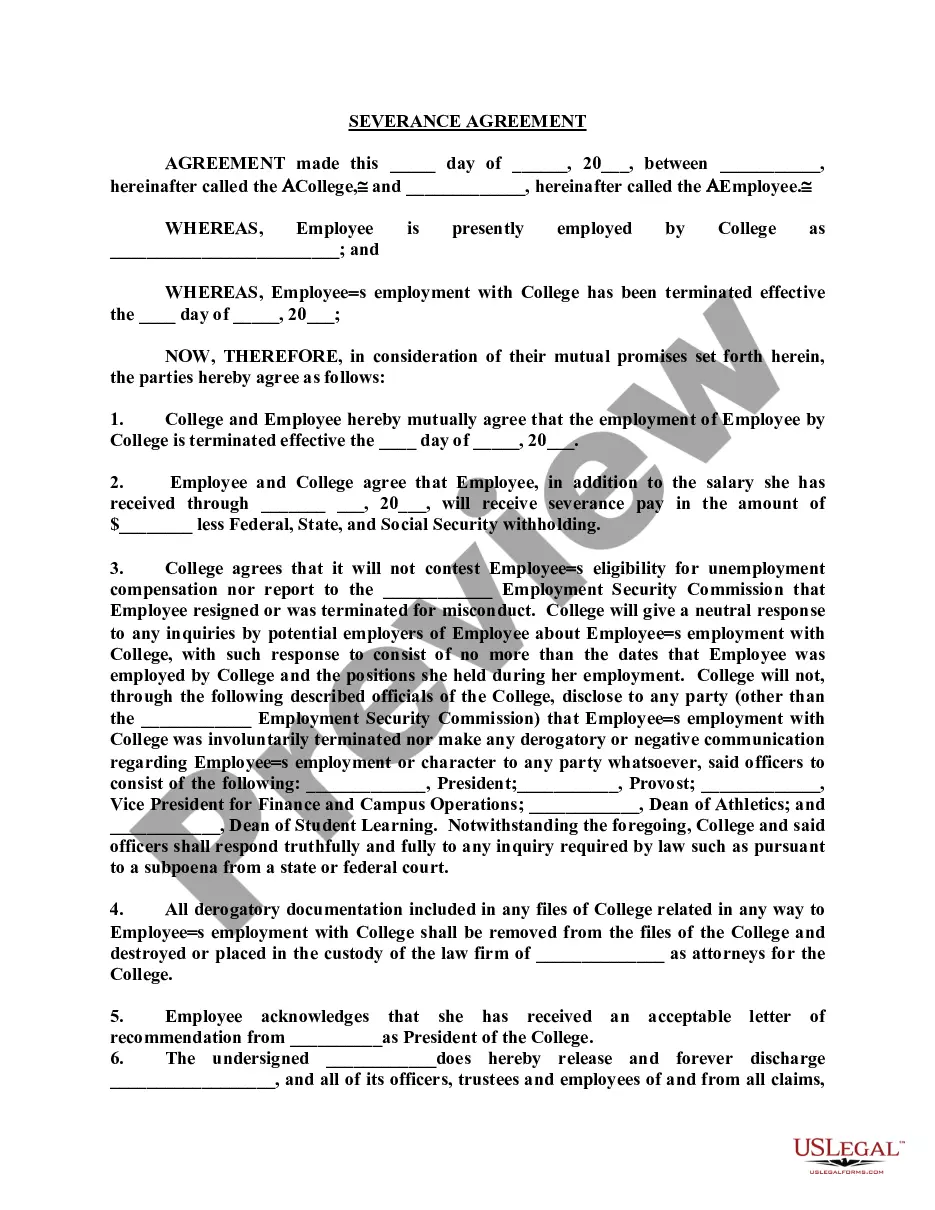
Get your form ready online
Our built-in tools help you complete, sign, share, and store your documents in one place.
Built-in online Word editor
Make edits, fill in missing information, and update formatting in US Legal Forms—just like you would in MS Word.
Export easily
Download a copy, print it, send it by email, or mail it via USPS—whatever works best for your next step.
E-sign your document
Sign and collect signatures with our SignNow integration. Send to multiple recipients, set reminders, and more. Go Premium to unlock E-Sign.
Notarize online 24/7
If this form requires notarization, complete it online through a secure video call—no need to meet a notary in person or wait for an appointment.
Store your document securely
We protect your documents and personal data by following strict security and privacy standards.

Make edits, fill in missing information, and update formatting in US Legal Forms—just like you would in MS Word.

Download a copy, print it, send it by email, or mail it via USPS—whatever works best for your next step.

Sign and collect signatures with our SignNow integration. Send to multiple recipients, set reminders, and more. Go Premium to unlock E-Sign.

If this form requires notarization, complete it online through a secure video call—no need to meet a notary in person or wait for an appointment.

We protect your documents and personal data by following strict security and privacy standards.
Looking for another form?

How to fill out Severance Agreement Between Employee And Employer?
A document process consistently accompanies any legal action you undertake.
Establishing a business, applying for or accepting a job proposal, transferring assets, and various other life events require you to prepare official documentation that varies from state to state.
This is why consolidating everything in one location is extremely advantageous.
US Legal Forms is the largest online repository of current federal and state-specific legal templates.
This is the simplest and most dependable method to acquire legal documents. All the templates accessible in our library are expertly created and verified for compliance with local laws and regulations. Prepare your documents and manage your legal matters effectively with US Legal Forms!
- On this platform, you can effortlessly search for and download a document for any personal or business purpose utilized in your area, including the Queens Severance Agreement between Employee and Employer.
- Finding templates on the platform is astonishingly easy.
- If you already have a subscription to our service, Log In to your account, locate the sample via the search bar, and click Download to save it on your device.
- Afterward, the Queens Severance Agreement between Employee and Employer will be available for subsequent use in the My documents section of your profile.
- If you are using US Legal Forms for the first time, follow this concise guide to acquire the Queens Severance Agreement between Employee and Employer.
- Make sure you have opened the correct page with your local form.
- Utilize the Preview mode (if available) and scroll through the template.
- Examine the description (if present) to confirm the form meets your needs.
- Look for another document using the search feature in case the sample does not suit you.
- Click Buy Now when you find the necessary template.
Form popularity
FAQ
To ensure an employee understands a severance agreement, provide clear explanations of each section of the document. Use simple language when discussing the Queens New York Severance Agreement between Employee and Employer to make the terms accessible. Consider allowing the employee time to review the agreement independently and suggest they seek legal advice if needed. Open communication fosters trust and minimizes misunderstandings.
The severance pay offered is typically one to two weeks for every year worked, but it can be more. If the job loss will create an economic hardship, discuss this with your (former) employer. The general practice is to try to get four weeks of severance pay for each year worked.
' In New York, your employer is not required by law to provide you with a severance package, nor are there any rules for what a severance package should include.
Yes. If you receive your first dismissal/severance payment more than 30 days after your last day of employment, you will be able to receive Unemployment Insurance benefits if you meet the other eligibility requirements.
Employers are required by law to pay 1 week's pay for each completed year of continued employment as severance pay, however, the consulting employees may suggest a bigger amount.
While many companies offer 1-2 weeks of severance pay for every year worked, you can ask for more. A good rule of thumb is to request 4 weeks of severance pay for each year worked. However, other benefits, like continued health insurance, may be more important to you.
Typical severance packages offer one to two weeks of paid salary for every year worked. You usually have 21 days to accept a severance agreement, and once it's signed, you have seven days to change your mind.
Typical severance packages offer one to two weeks of paid salary per year worked. Continuation of insurance benefits, assistance finding another job, and other perks can be negotiated. You usually have 21 days to accept a severance agreement, and once it's signedseven days to change your mind.
Usually, you get severance pay if you get terminated. But if you get fired for job related wilful misconduct then you may not receive any severance. In some cases, you get severance after a prolonged laid off period or when contract was silent on layoff.
Severance pay is considered dismissal pay. It may be paid as a series of payments or as a lump sum. Dismissal/severance pay does not include payments for pension, retirement, accrued leave and health insurance or payments for supplemental unemployment benefits.