Charlotte North Carolina Do Not Resuscitate Order - DNR or Advance Directive

Category:
State:
Multi-State
City:
Charlotte
Control #:
US-02091BG
Format:
Word; 
Rich Text
Instant download

Description

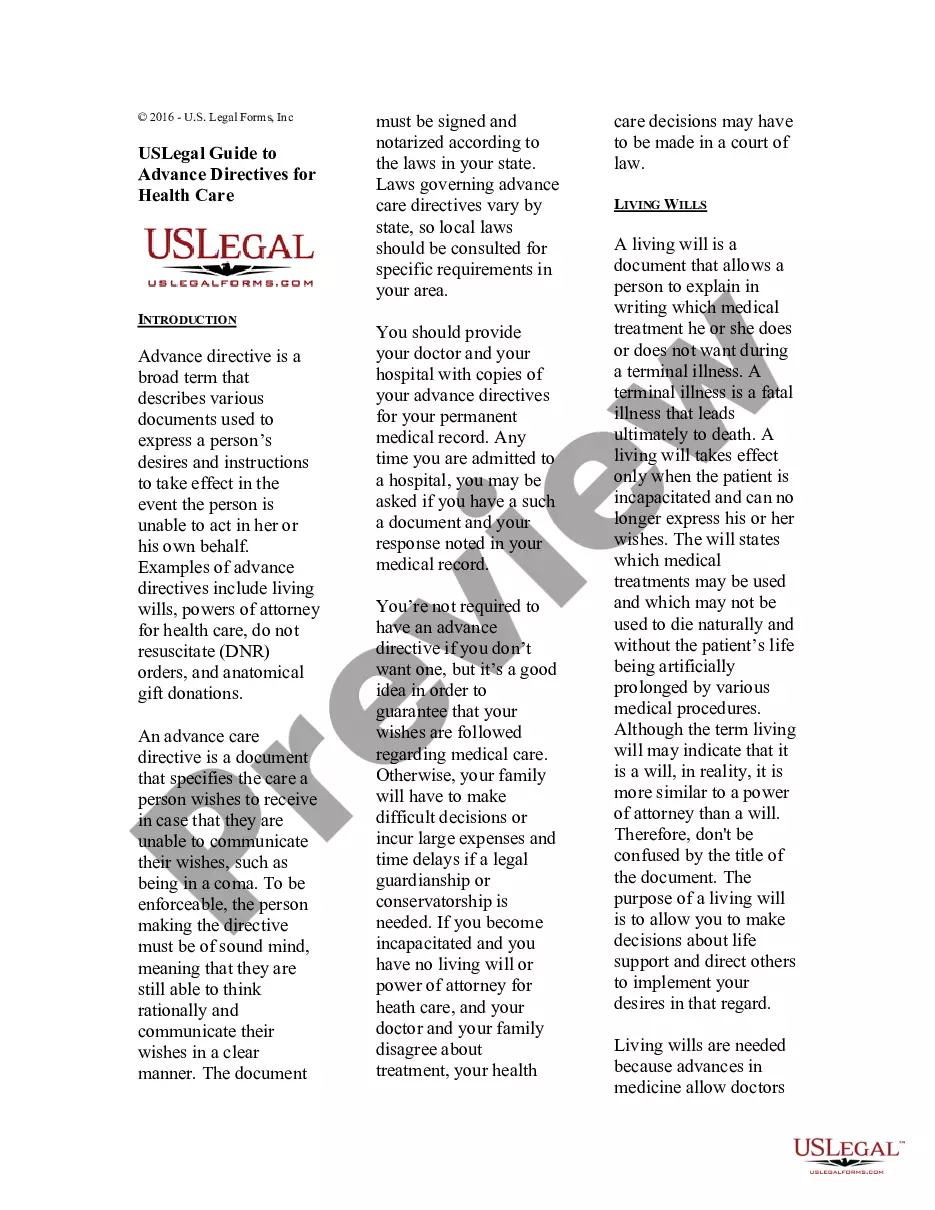
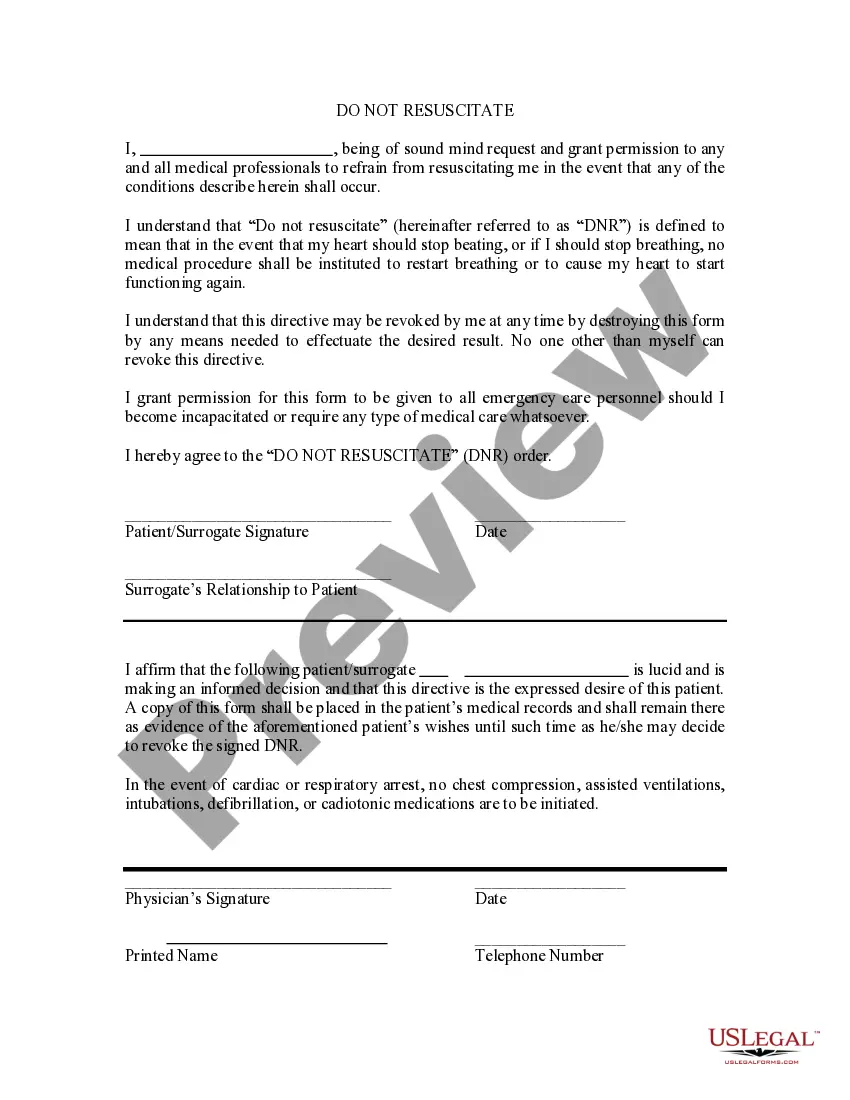
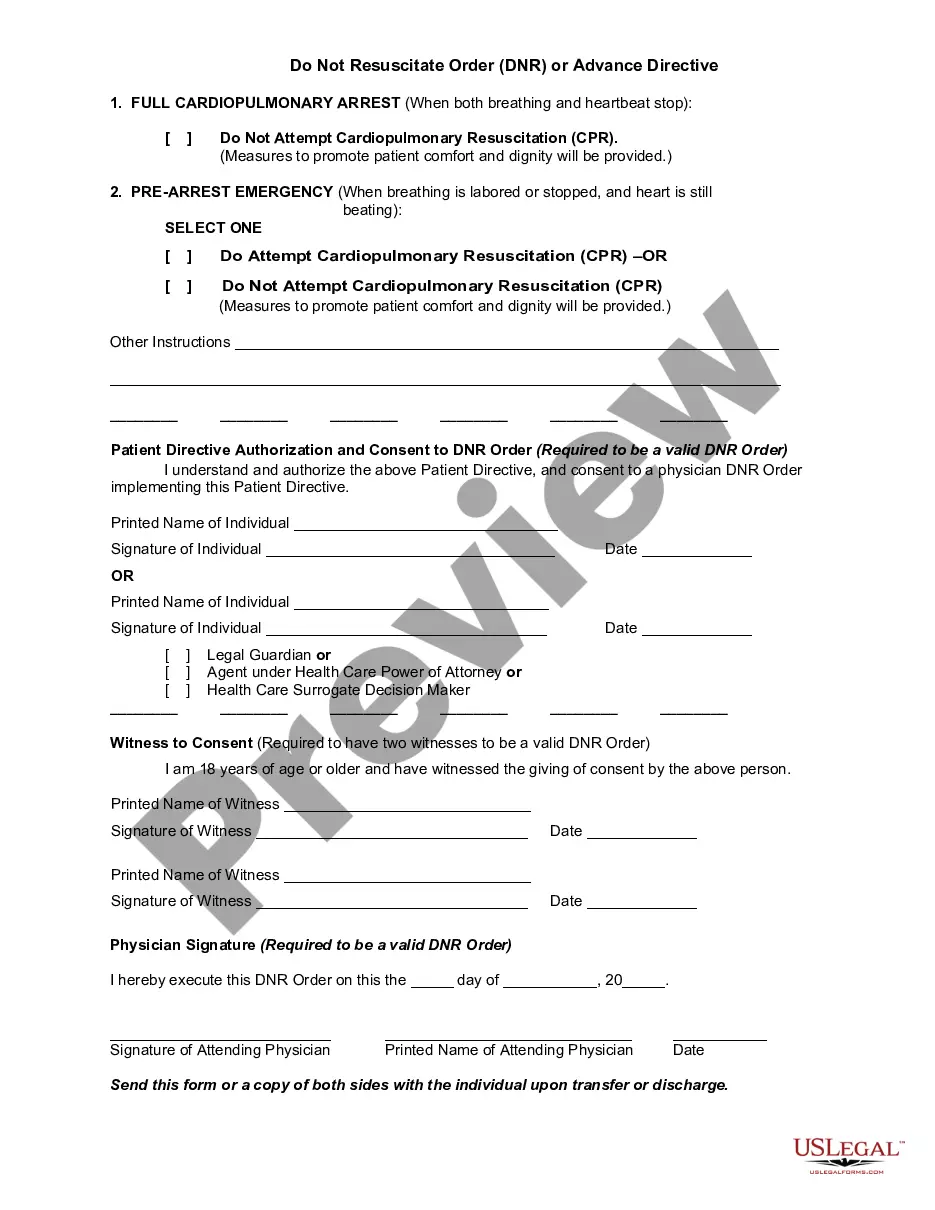
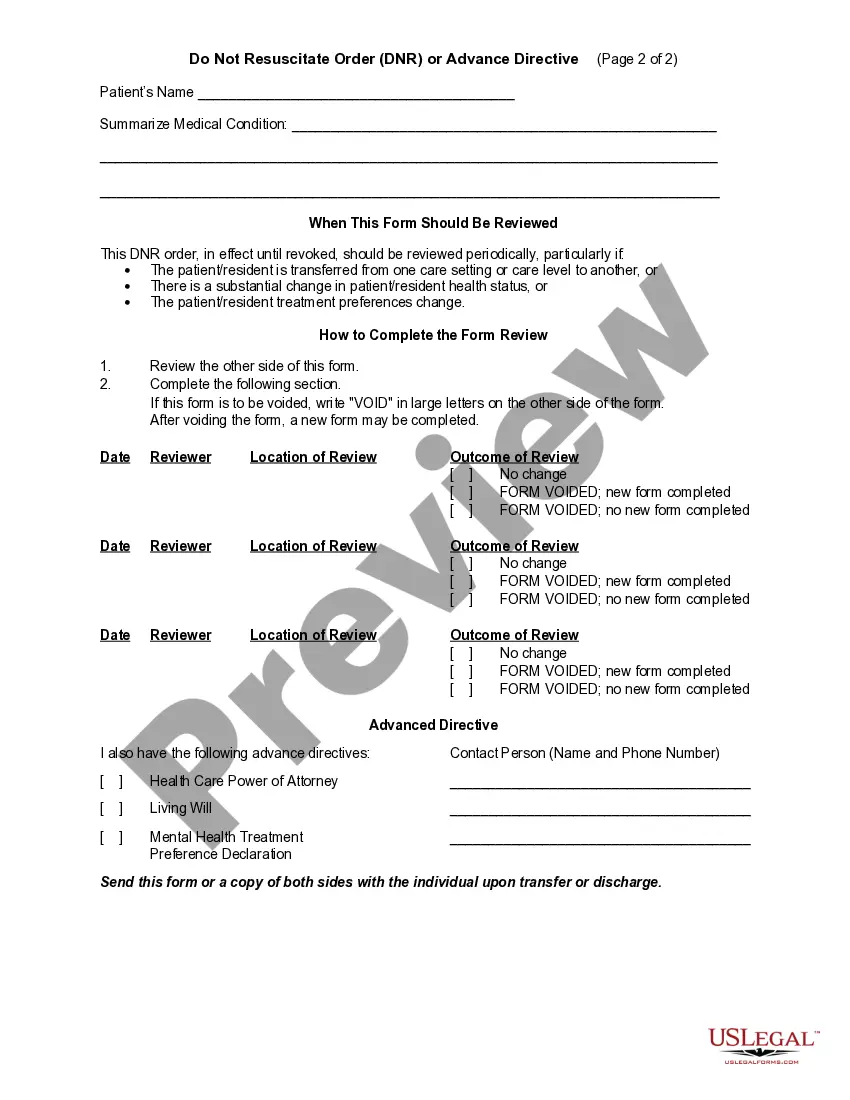
A do not resuscitate (DNR) order is a request not to have cardiopulmonary resuscitation (CPR) if your heart stops or if you stop breathing. Unless given other instructions, hospital staff will try to help all patients whose heart has stopped or who have stopped breathing. A DNR order is put in your medical chart by your doctor. DNR orders are accepted by doctors and hospitals in all states.


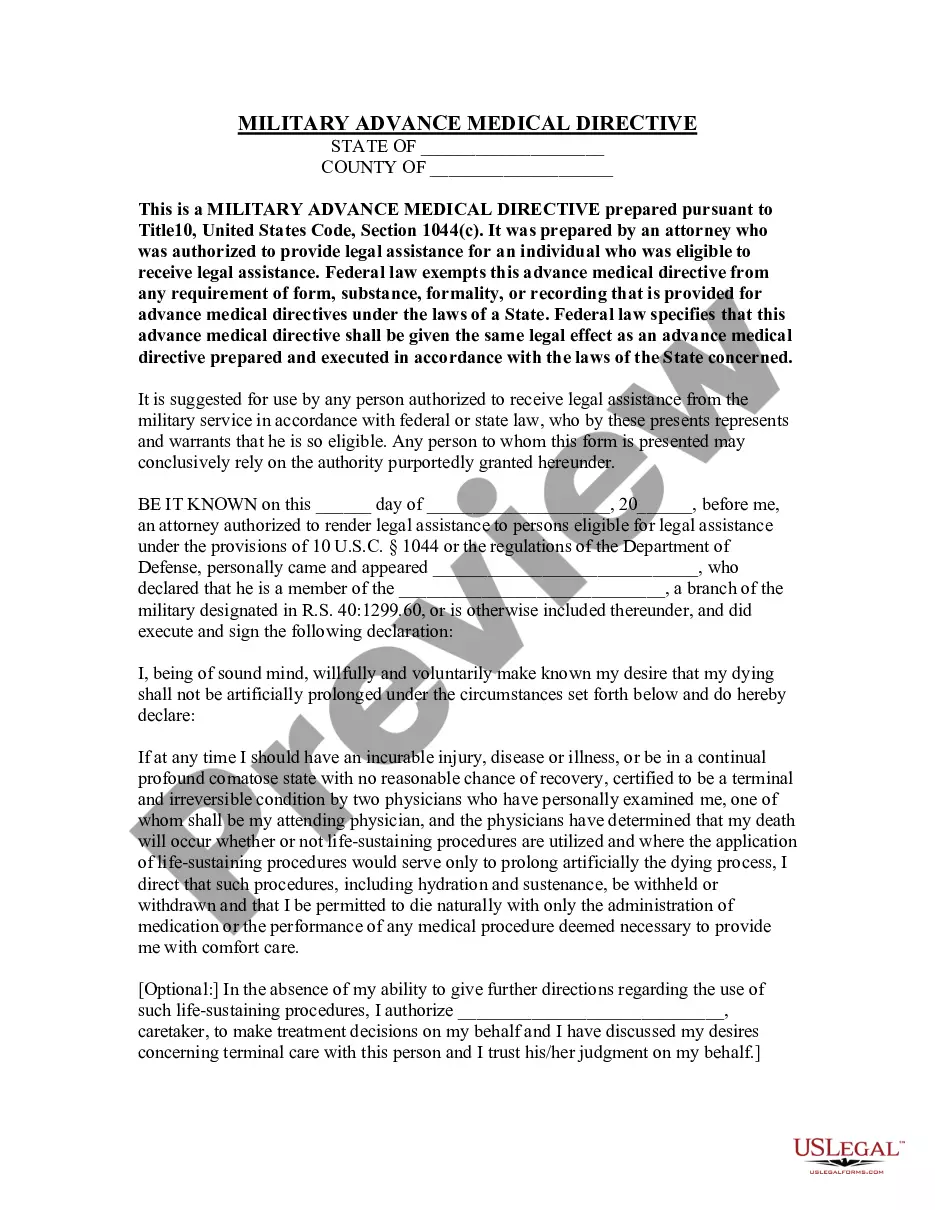
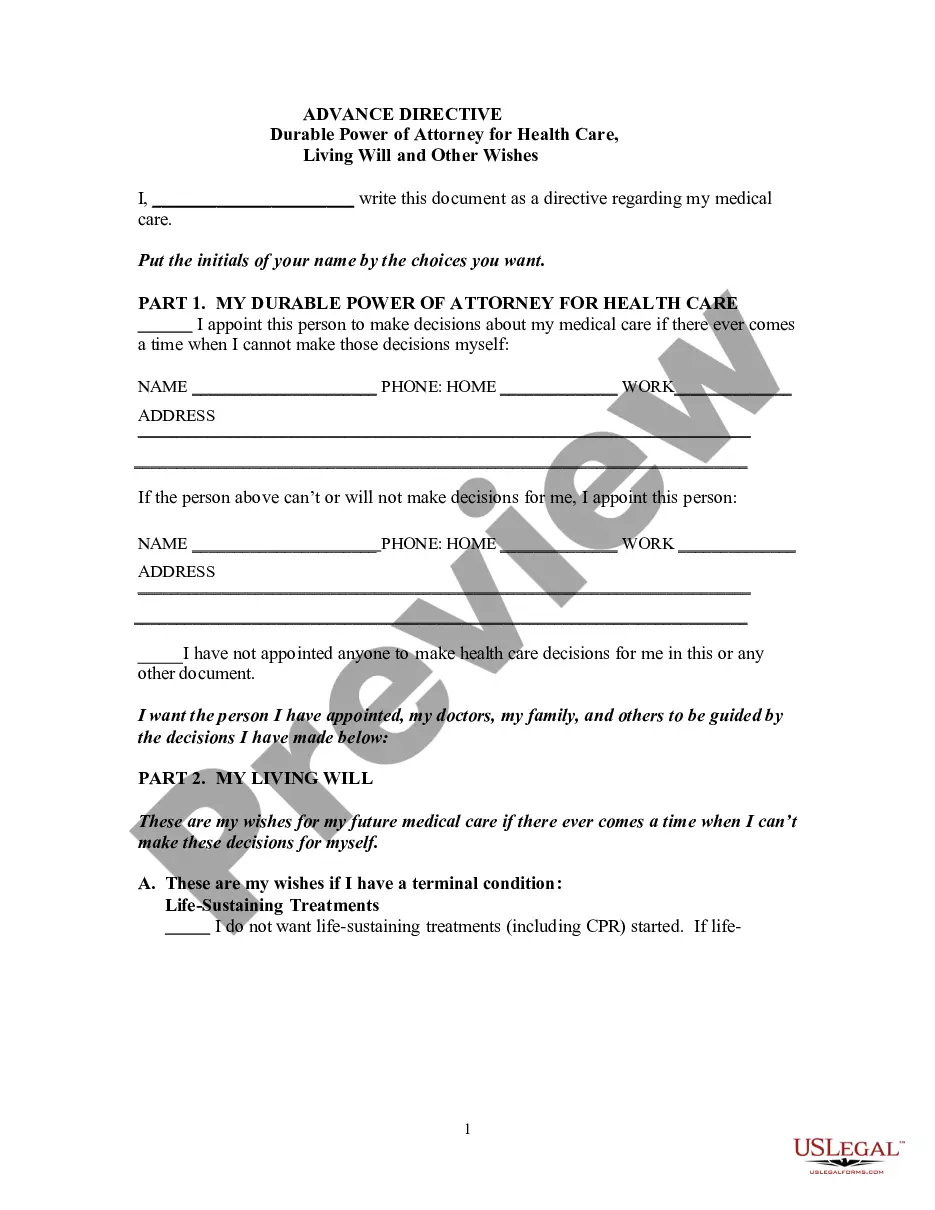
This form is a generic example that may be referred to when preparing such a form for your particular state. It is for illustrative purposes only. Local laws should be consulted to determine any specific requirements for such a form in a particular jurisdiction.
Free preview
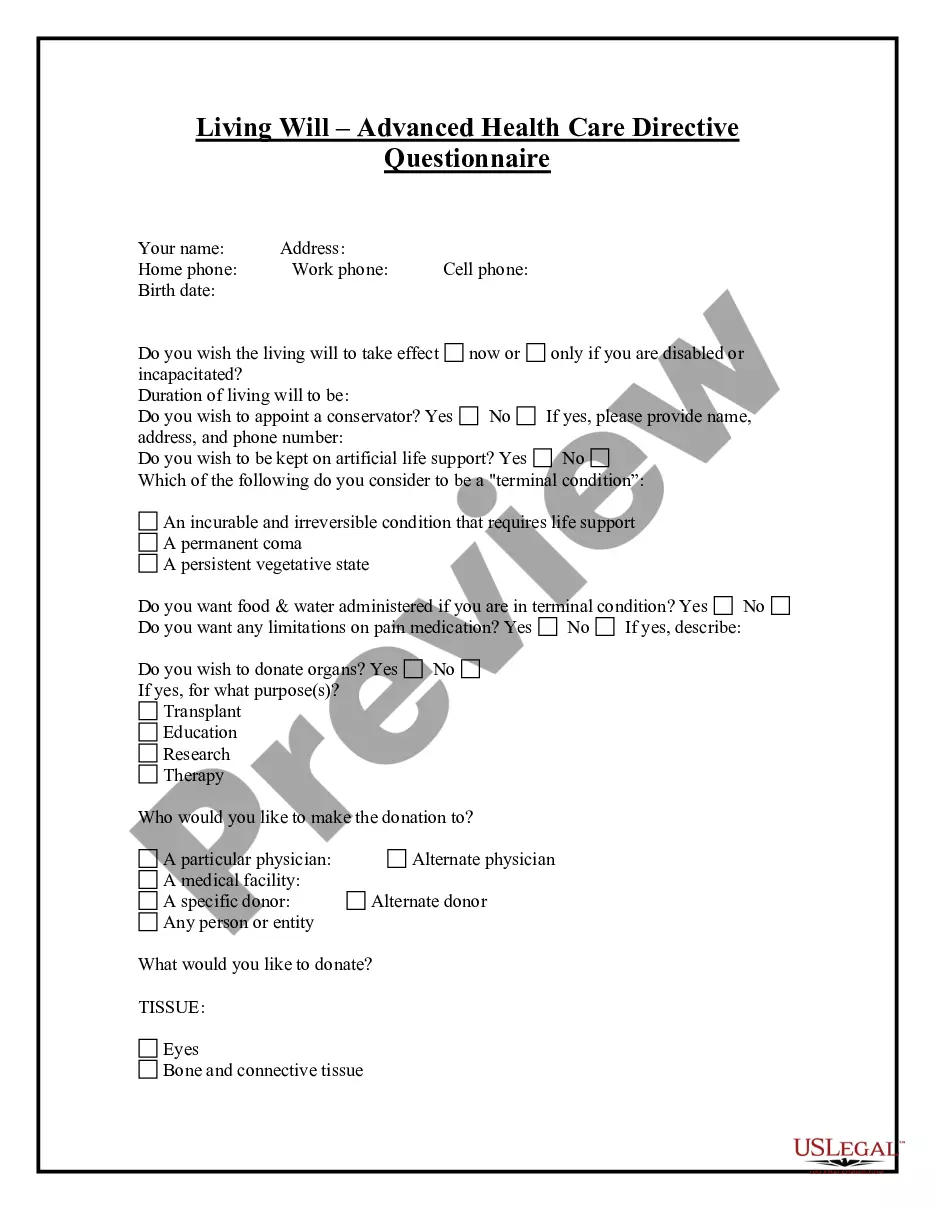
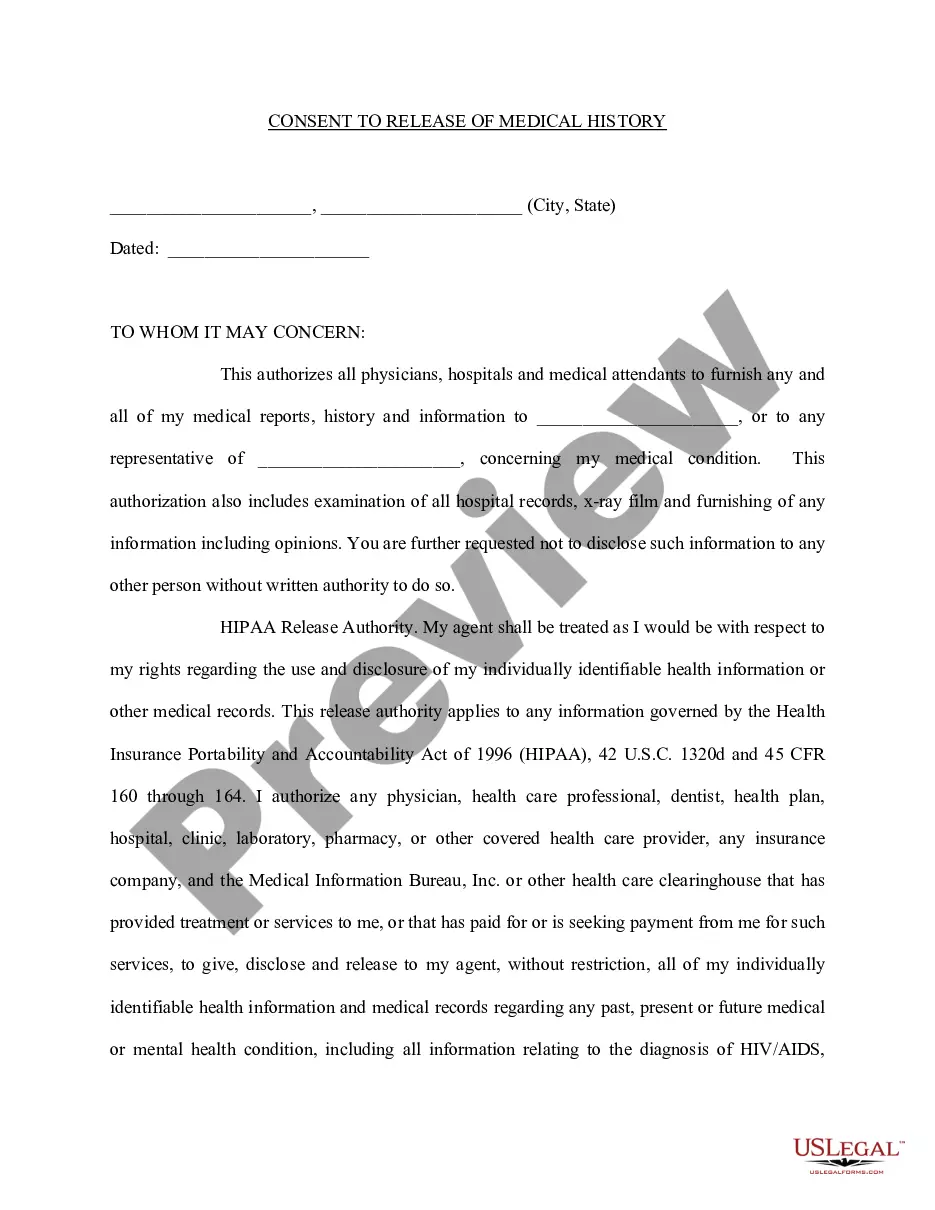
  • Preview Do Not Resuscitate Order - DNR or Advance Directive
  • Preview Do Not Resuscitate Order - DNR or Advance Directive

Form popularity

FAQ

You can find the do-not-resuscitate form for a Charlotte North Carolina Do Not Resuscitate Order - DNR or Advance Directive through various sources. Local hospitals and healthcare providers typically have these forms available. Additionally, platforms like USLegalForms offer easy access to the necessary documents online, ensuring you can complete your advance directives conveniently. Always ensure that the form you use complies with state regulations to guarantee its validity.

To obtain a Charlotte North Carolina Do Not Resuscitate Order - DNR or Advance Directive, you must first discuss your wishes with your healthcare provider. They will help you understand the implications and guide you through the necessary steps. After that, you will need to fill out the appropriate forms, which can often be found through local hospitals or online resources. It’s essential to ensure that your preferences are clearly documented and communicated to both your family and medical team.

You can get the Do Not Resuscitate form from several sources in North Carolina, including hospitals, healthcare providers, and legal document websites like uslegalforms. It is crucial to choose a reliable source to ensure you receive a valid and current Charlotte North Carolina Do Not Resuscitate Order - DNR or Advance Directive. Be sure to follow any specific instructions for completing and signing the form.

To obtain a DNR form in North Carolina, you can visit your healthcare provider or access legal websites that specialize in these documents, such as uslegalforms. They offer a variety of resources to help you understand and fill out the Charlotte North Carolina Do Not Resuscitate Order - DNR or Advance Directive correctly. Ensure you have the appropriate form that meets your needs.

Yes, you can create your own DNR, but it must adhere to North Carolina's legal requirements. Using templates or forms available from reputable sources, like uslegalforms, is advisable to ensure compliance. The Charlotte North Carolina Do Not Resuscitate Order - DNR or Advance Directive should be filled out accurately and signed to be valid.

The primary difference between a DNR and an advance directive lies in their scope. A DNR specifically instructs medical staff not to perform resuscitation, whereas an advance directive outlines a person's wishes regarding various medical treatments and interventions. Both are essential tools for ensuring your healthcare preferences are respected in situations where you may be unable to communicate them.

A Do Not Resuscitate order is a specific type of advance directive focused solely on resuscitation preferences. While both documents reflect a person's healthcare wishes, an advance directive can cover a broader range of medical decisions beyond resuscitation. Understanding the distinctions between these documents is crucial when considering the Charlotte North Carolina Do Not Resuscitate Order - DNR or Advance Directive.

In North Carolina, you can obtain DNR forms through various medical and legal sources. Many hospitals, healthcare providers, and legal websites like uslegalforms offer these forms for your convenience. It is vital to ensure that you are using the correct and up-to-date Charlotte North Carolina Do Not Resuscitate Order - DNR or Advance Directive to ensure compliance with state regulations.

A DNR order specifically instructs healthcare providers not to perform resuscitation in the event of cardiac or respiratory arrest. In contrast, a Medical Orders for Scope of Treatment (MOST) form outlines a patient's broader preferences for medical treatment, including resuscitation and other life-sustaining measures. Both documents are important, but they serve different purposes in the context of the Charlotte North Carolina Do Not Resuscitate Order - DNR or Advance Directive.

Yes, North Carolina recognizes Do Not Resuscitate (DNR) orders as part of its healthcare regulations. The Charlotte North Carolina Do Not Resuscitate Order - DNR or Advance Directive allows individuals to express their wishes regarding resuscitation efforts. It is essential to understand that these orders must be properly executed to be valid in medical settings.

Interesting Questions

Trusted and secure by over 3 million people of the world’s leading companies

Charlotte North Carolina Do Not Resuscitate Order - DNR or Advance Directive