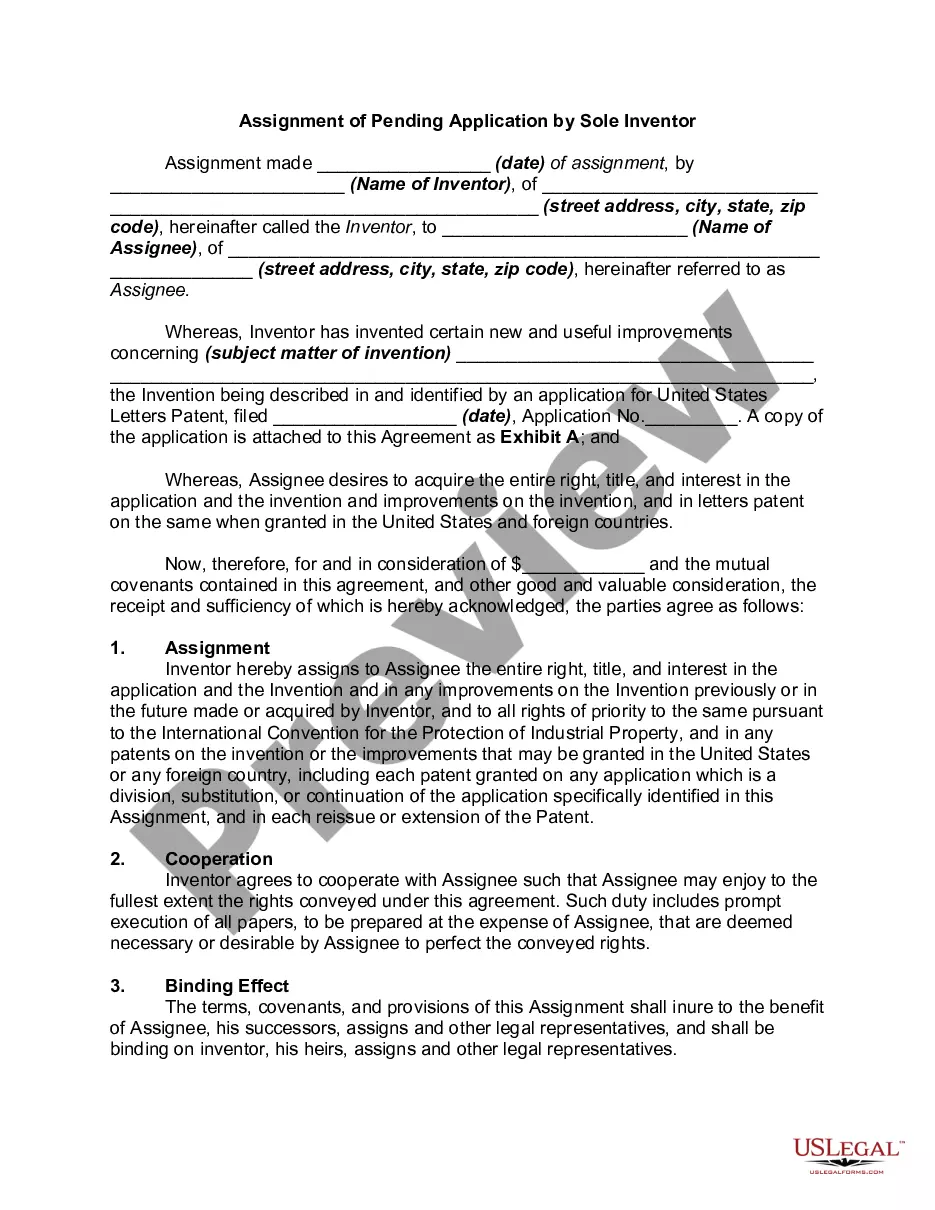
Boston Massachusetts Assignment of Pending Application by Sole Inventor - Paris Convention

State:
Multi-State
City:
Boston
Control #:
US-02077BG
Format:
Word; 
PDF; 
Rich Text
Instant download

Description

The International Convention for the Protection of Industrial Property was first signed in Paris in 1883. The document itself is known as the Paris Convention. The convention has been revised many times and its current language encompasses patents, trademarks, and industrial designs. As of November 2008, there were 173 contracting parties to the Paris Convention.

The Paris Convention established some important international protocols to deal with multi-national patent filings. It both protects some rights of those who file international applications, and governs procedure for how signatory states should treat these patent filings. Most importantly, the Paris Convention included the vital concept of “priority". This means that under the Paris Convention, patent applicants are granted the date of their first filing as the active application date for patent applications in all additional Paris Union countries, for up to 12 months after filing the original application.

Another useful function of the Paris Convention treaty is that it contains provisions to ensure that intellectual property holders who are non-residents and non-nationals of a Paris Union country are given the same expectations and rights under the law as nationals of said country.
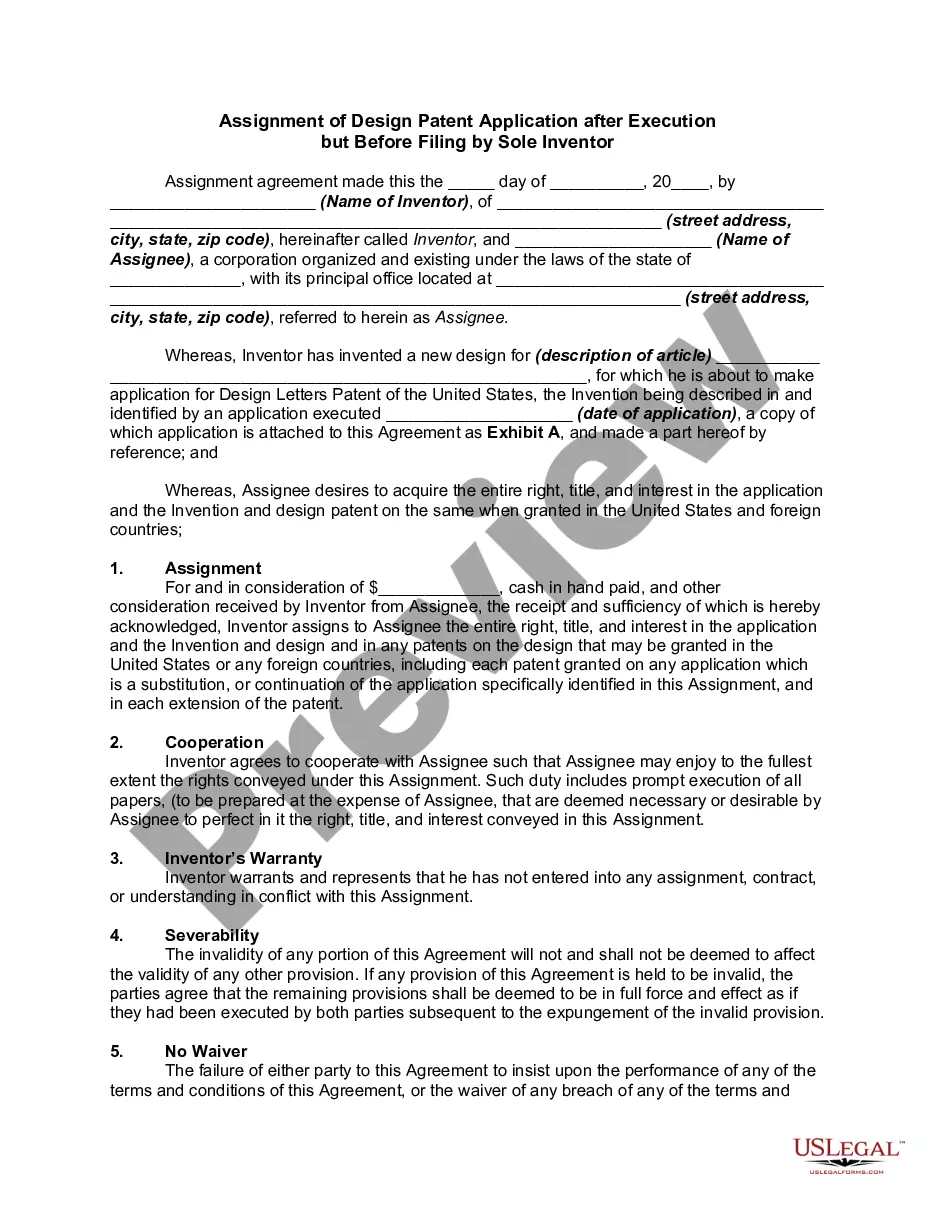
Free preview
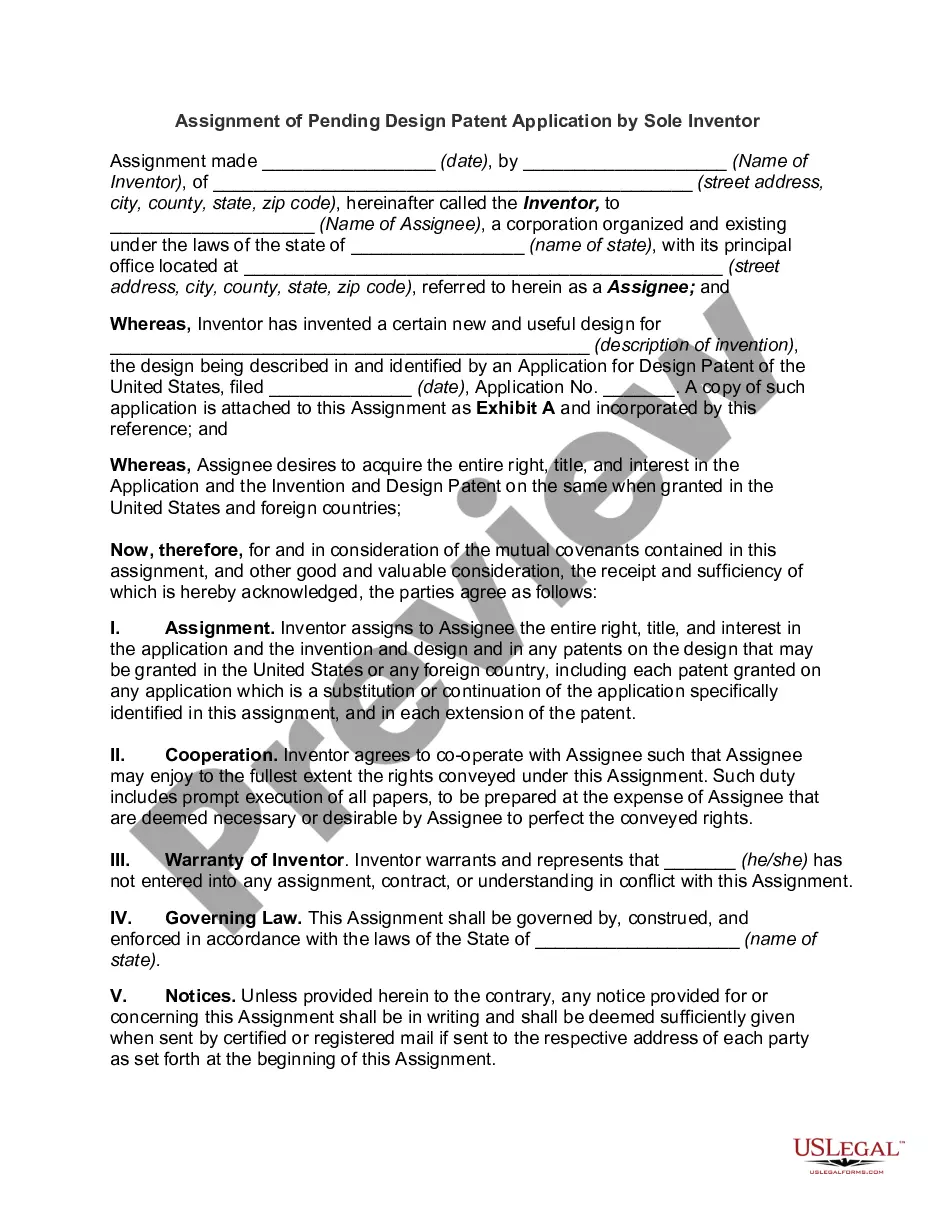
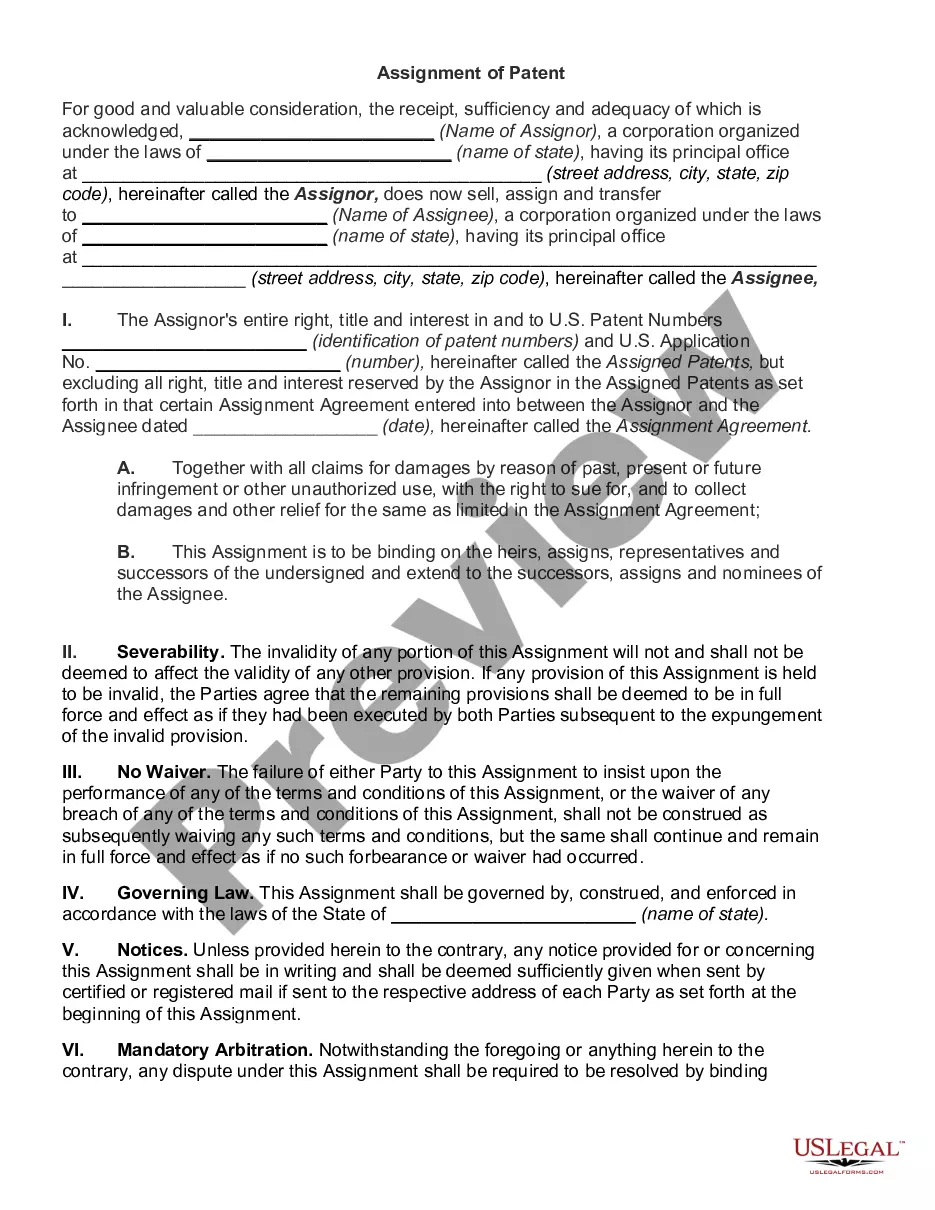
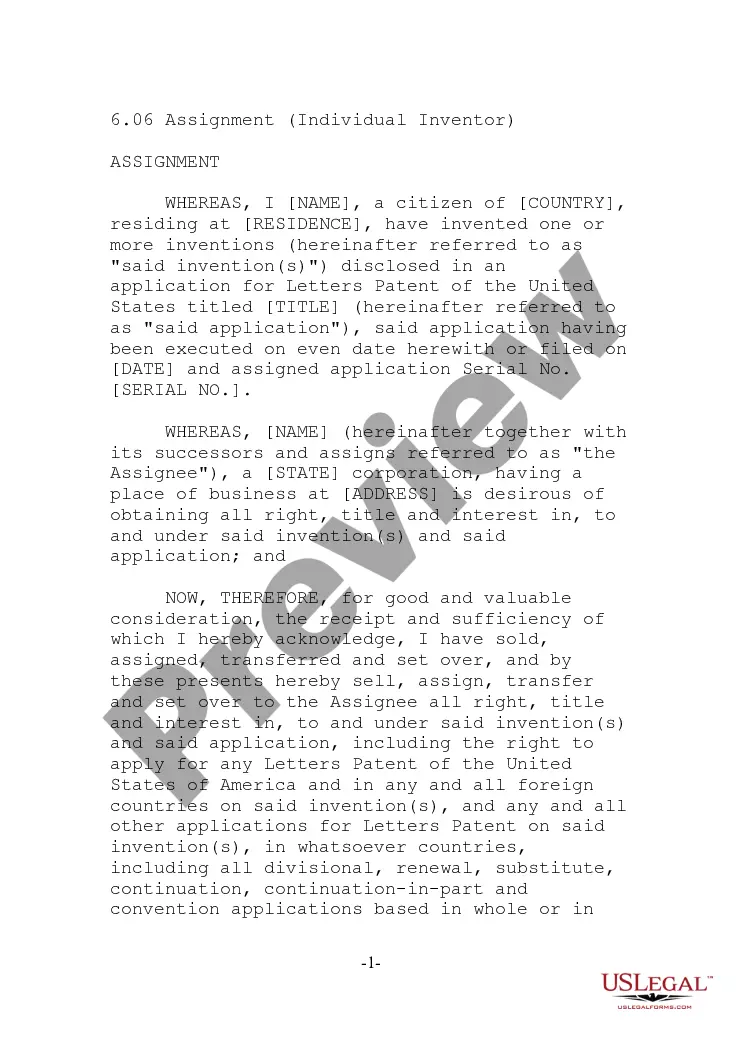
  • Preview Assignment of Pending Application by Sole Inventor - Paris Convention
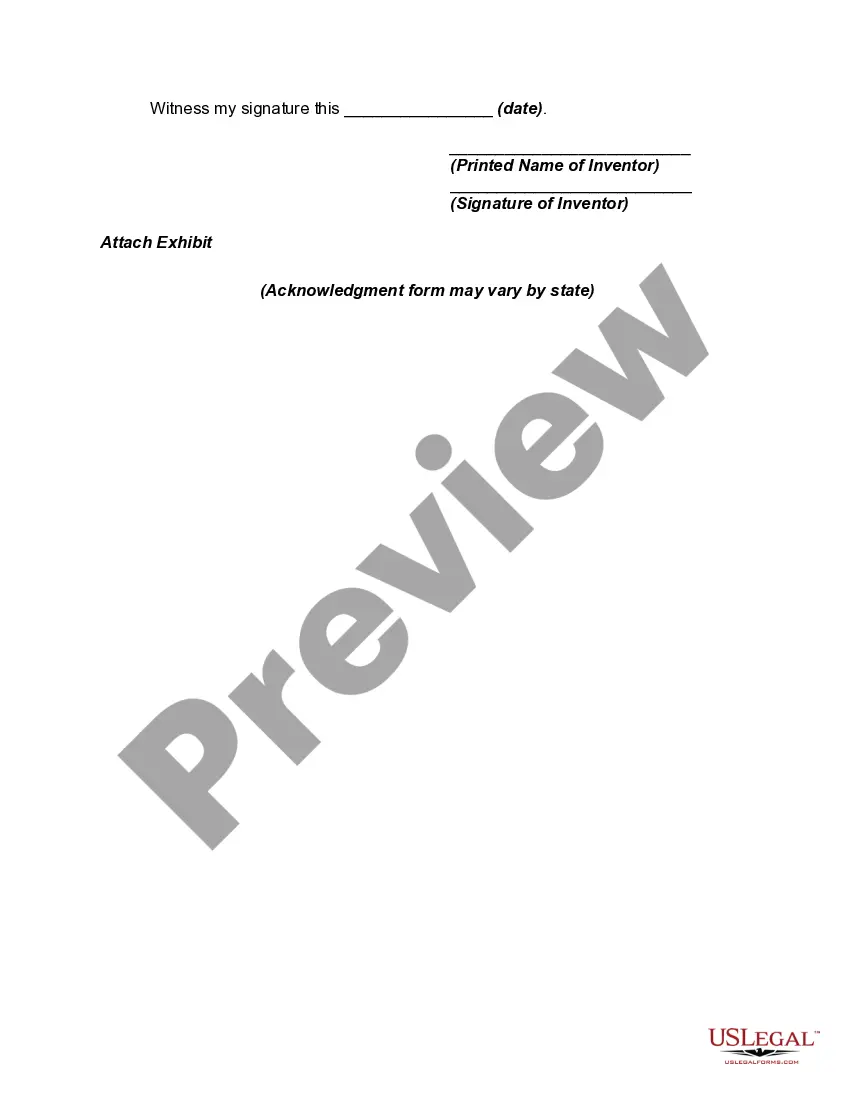
  • Preview Assignment of Pending Application by Sole Inventor - Paris Convention

Form popularity

FAQ

A Paris Convention application refers to a patent application filed under the Paris Convention for the Protection of Industrial Property. This international agreement allows inventors to secure patent rights in multiple countries based on their original application. If you are pursuing a Boston Massachusetts Assignment of Pending Application by Sole Inventor - Paris Convention, this application can be a vital step in protecting your invention globally.

No, assignment is not the same as ownership. An assignment transfers rights from one party to another, but it does not necessarily mean that the original owner loses all rights. In the context of a Boston Massachusetts Assignment of Pending Application by Sole Inventor - Paris Convention, understanding the difference is crucial for ensuring correct legal standing and rights to the invention.

You can find patent assignment documents on the USPTO's official website. They maintain a searchable database that allows you to access records related to patent assignments. Additionally, if you need assistance in navigating these resources, consider using uslegalforms, which can guide you in obtaining the necessary Boston Massachusetts Assignment of Pending Application by Sole Inventor - Paris Convention documents.

The time it takes for the USPTO to record an assignment can vary. Typically, you can expect the recording process to take a few weeks. However, the speed may depend on the volume of applications being processed at that time. If you are dealing with a Boston Massachusetts Assignment of Pending Application by Sole Inventor - Paris Convention, it is wise to submit your documents promptly to avoid delays.

In the context of the USPTO, the applicant is the individual or entity that submits a patent application, while the assignee is the person or organization that holds the rights to the patent. When dealing with a Boston Massachusetts Assignment of Pending Application by Sole Inventor - Paris Convention, it's essential to understand that the assignee may receive rights from the applicant through a legal agreement. This distinction matters because the rights and responsibilities associated with the patent can differ significantly based on whether someone is an applicant or an assignee. Understanding these roles can help you navigate the complexities of patent law more effectively.

Article 6bis of the Paris Convention 1967 addresses the protection of industrial property rights and ensures that the rights of inventors are respected across member countries. It specifically pertains to the rights of an inventor to assign their patent applications and the obligations of countries to recognize these rights. This article plays a vital role in facilitating international patent applications, including the Boston Massachusetts Assignment of Pending Application by Sole Inventor - Paris Convention. Familiarizing yourself with Article 6bis can enhance your understanding of global patent strategies.

A Paris Convention patent application is a request for patent protection that benefits from the provisions of the Paris Convention for the Protection of Industrial Property. This international agreement allows inventors to file a patent in one member country and retain their filing date in other member countries for a specified period. It provides inventors with a strategic advantage in securing their rights globally. If you're considering a Boston Massachusetts Assignment of Pending Application by Sole Inventor - Paris Convention, understanding this application type is essential.

The overview of the patent application process includes six key stages: preparation, filing, examination, allowance, issuance, and maintenance. First, you prepare your application by documenting your invention thoroughly. Next, you file your application with the United States Patent and Trademark Office (USPTO). After filing, your application undergoes examination where an examiner reviews it for compliance. If approved, it moves to allowance, followed by issuance of the patent. Finally, maintenance involves paying fees to keep your patent active. Understanding these stages is crucial for a successful Boston Massachusetts Assignment of Pending Application by Sole Inventor - Paris Convention.

An assignment does not have to be notarized to be valid, but notarization can add an extra layer of security. In the context of a Boston Massachusetts Assignment of Pending Application by Sole Inventor - Paris Convention, notarization can help verify the identities of the parties involved. It can also make the assignment easier to enforce in case of legal disputes. Consider notarizing the document to strengthen your position.

To record a trademark assignment, you must file the appropriate documentation with the United States Patent and Trademark Office (USPTO). This process is similar to the Boston Massachusetts Assignment of Pending Application by Sole Inventor - Paris Convention and helps establish clear ownership. You will need to provide details about both the assignor and assignee, along with the trademark involved. Proper recording helps protect your trademark rights and prevents future disputes.

Interesting Questions

Trusted and secure by over 3 million people of the world’s leading companies

Boston Massachusetts Assignment of Pending Application by Sole Inventor - Paris Convention