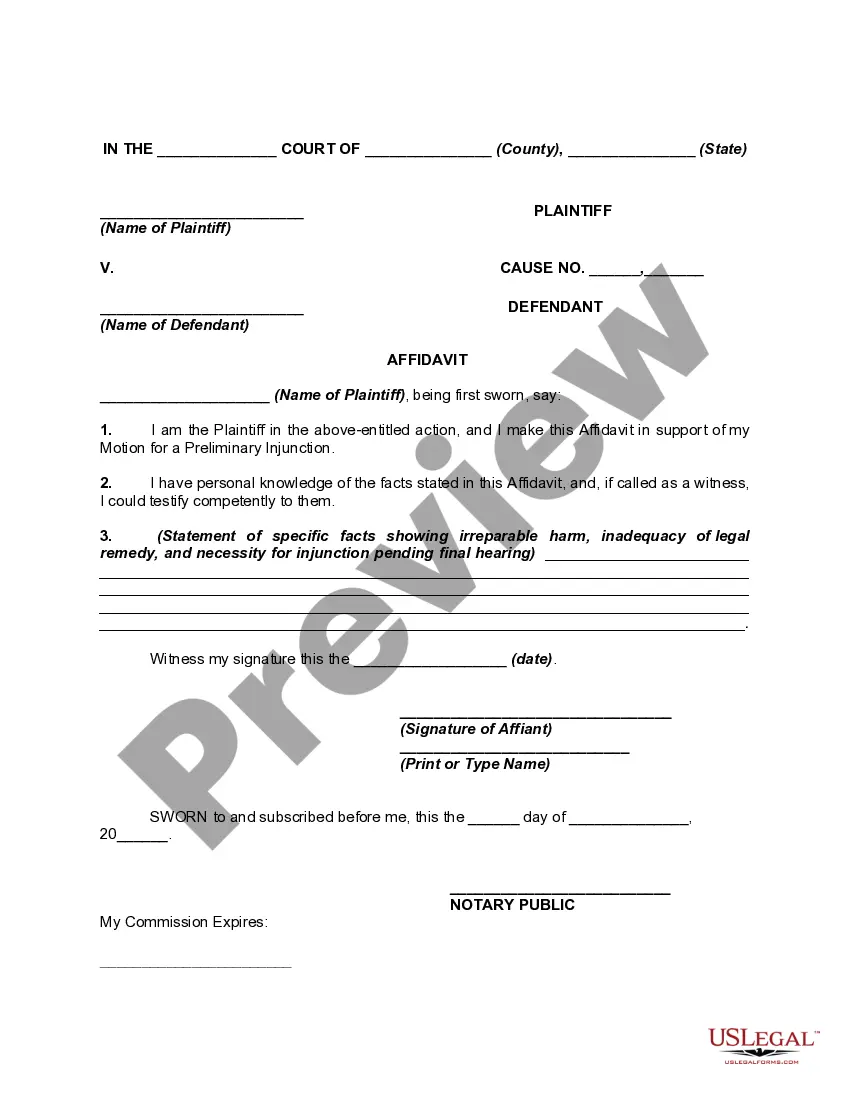
Indianapolis Indiana Affidavit in Support of Motion for Preliminary Injunction

State:
Multi-State
City:
Indianapolis
Control #:
US-01893BG
Format:
Word; 
Rich Text
Instant download

Description

An affidavit is statement of facts which is sworn to before an officer who has authority to administer an oath (e.g. a notary public). The person making the signed statement (the affiant) takes an oath that the contents are, to the best of their knowledge, true. It is also signed by a notary or some other judicial officer that can administer oaths, affirming that the person signing the affidavit was under oath when doing so. These documents are valuable to presenting evidence in court when a witness is unavailable to testify in person.


There are two types of injunctions: a preliminary injunction and a temporary restraining order (TRO). The purpose of both is to maintain the status quo -- to insure a plaintiff that the defendant will not either make him or herself judgment-proof, or insolvent in some way, or to stop him or her from acting in a harmful way until further judicial proceedings are available. The court uses its discretionary power to balance the defendant's due process rights against the possibility of the defendant becoming judgment-proof, and the immediacy of the threat of harm to the plaintiff. Courts can also issue preliminary injunctions to take effect immediately and effective until a decision is made on a permanent injunction, which can stay in effect indefinitely or until certain conditions are met.

Free preview
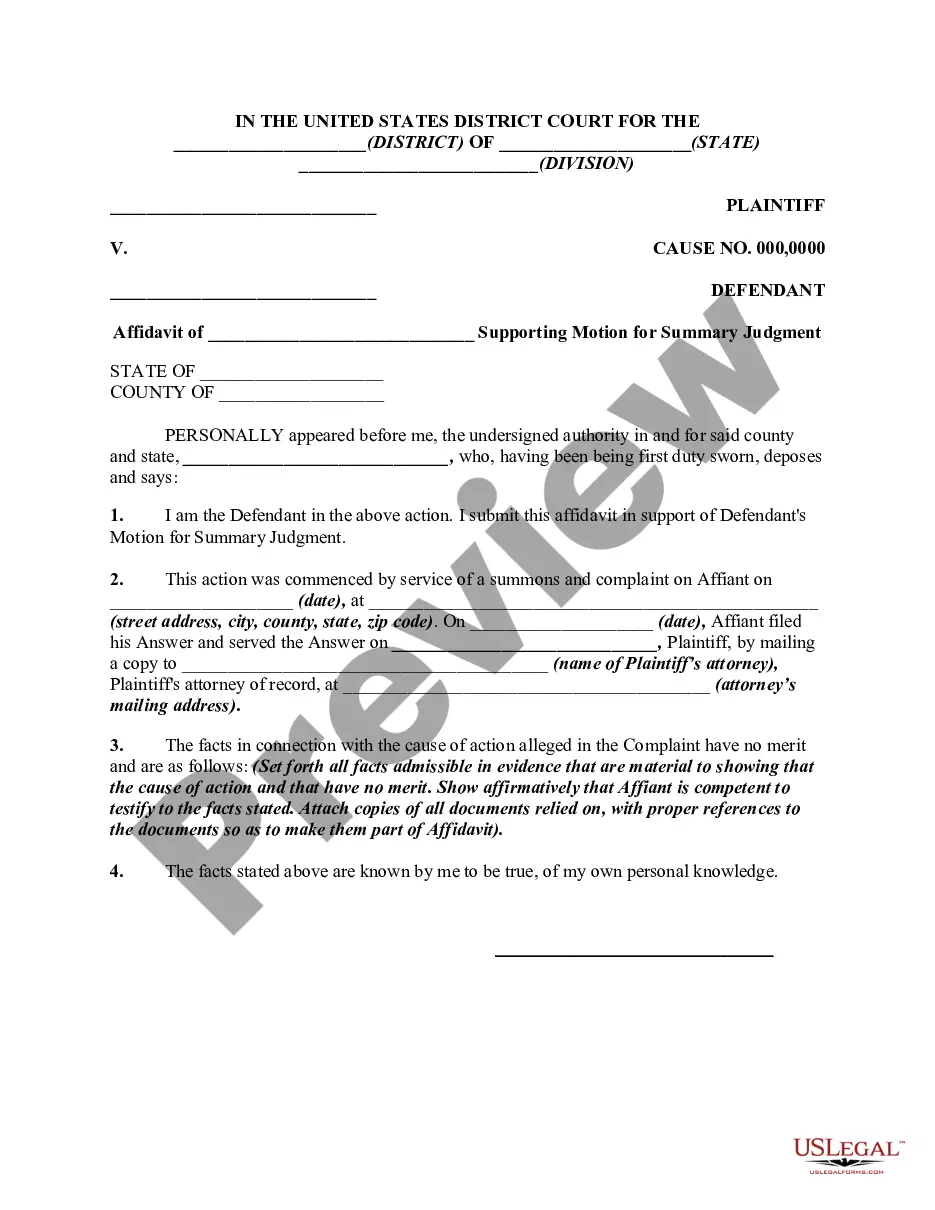
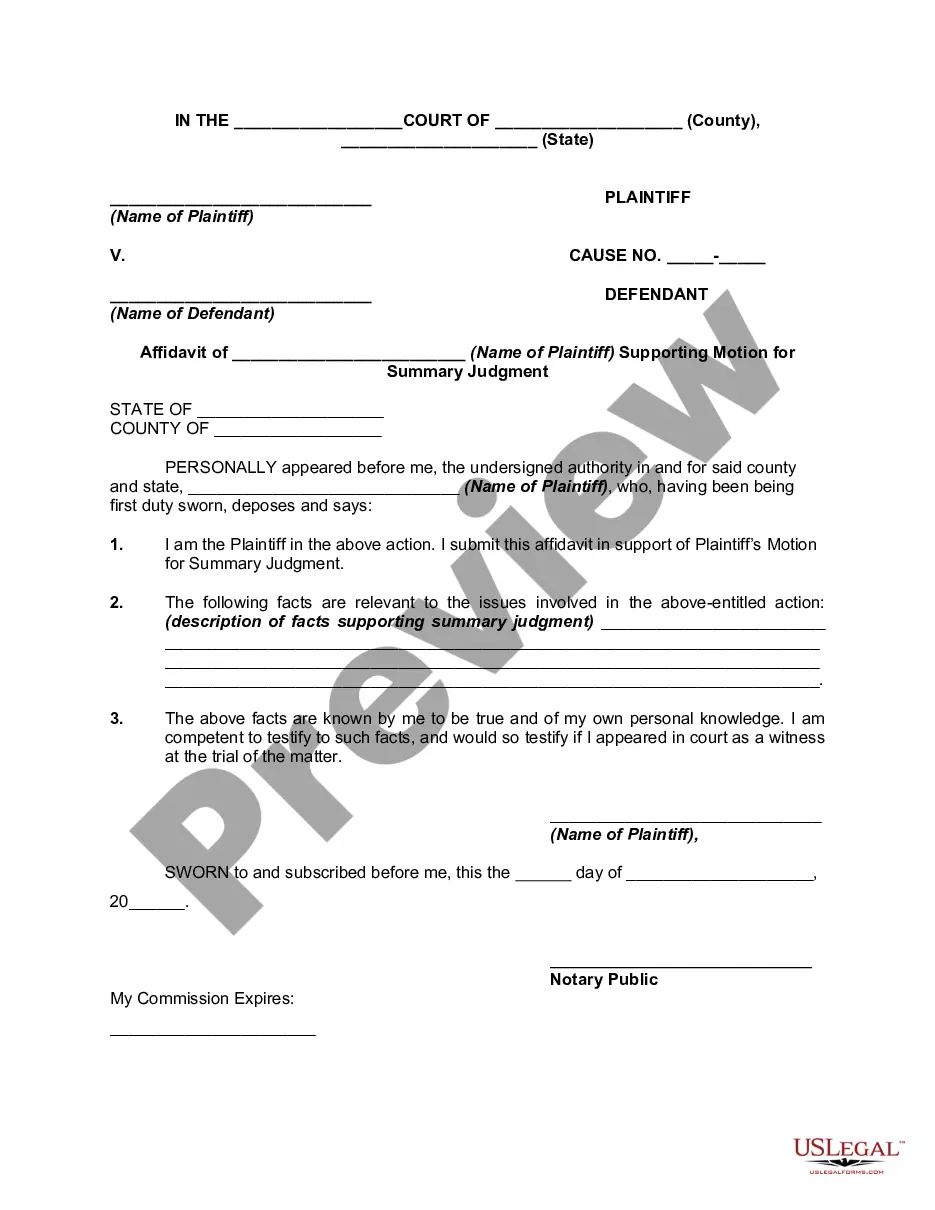
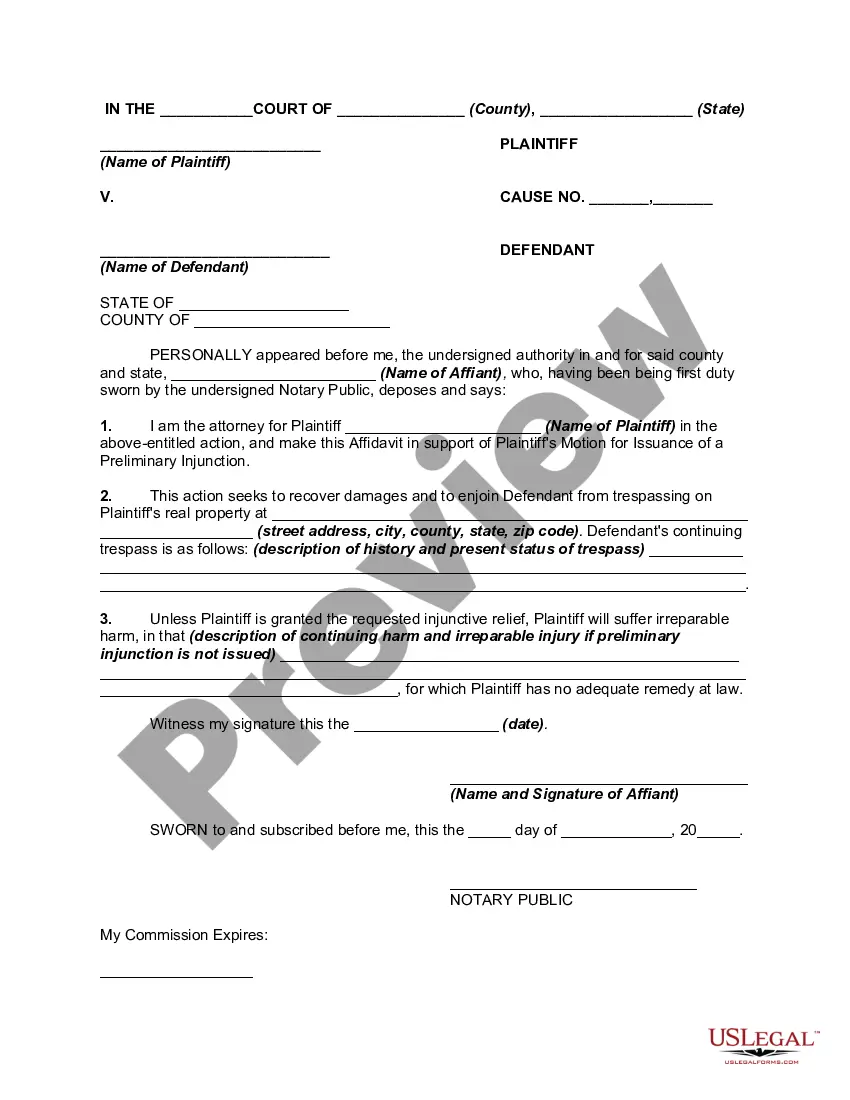
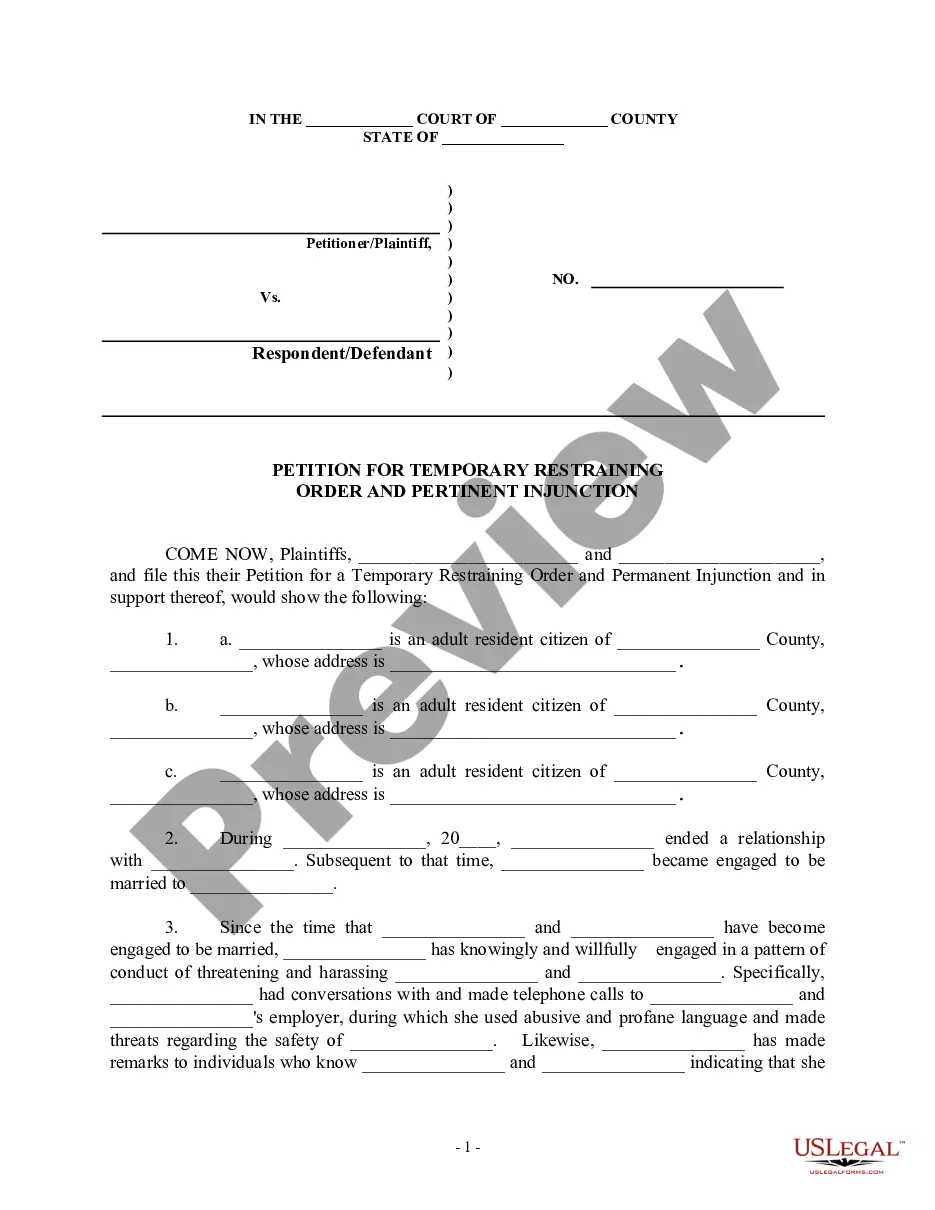
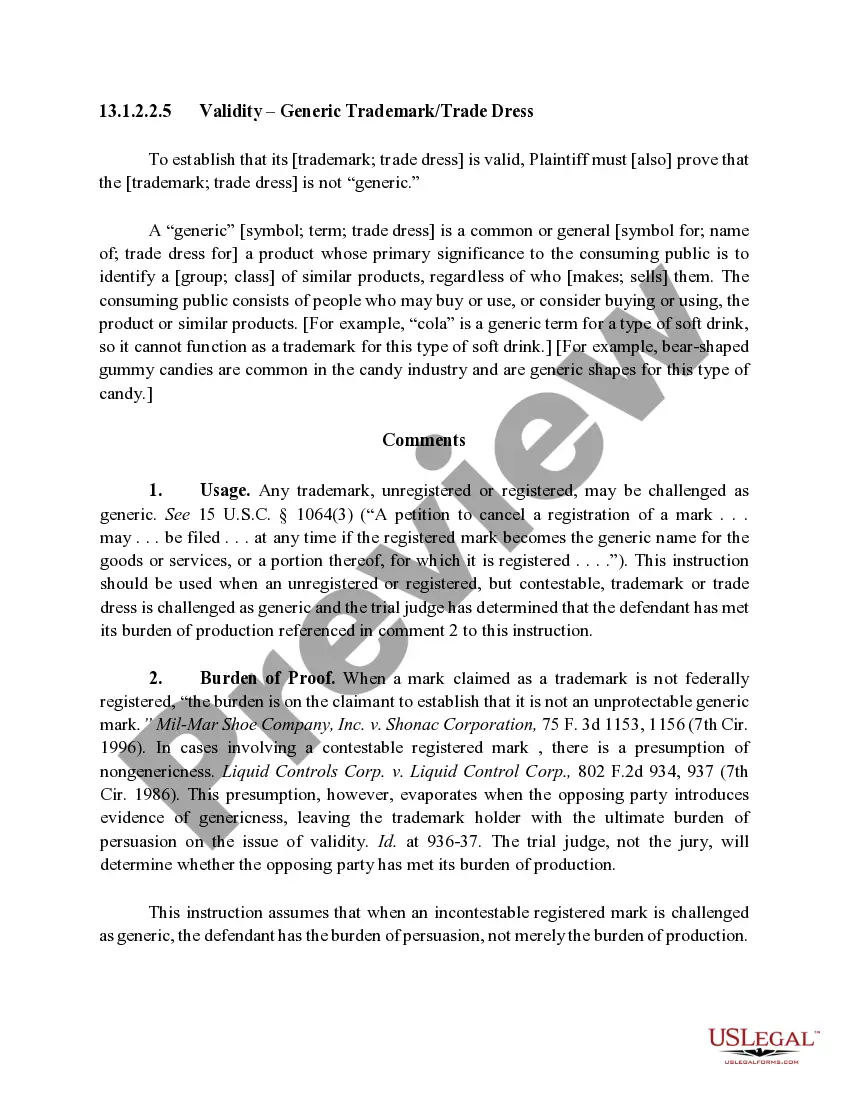
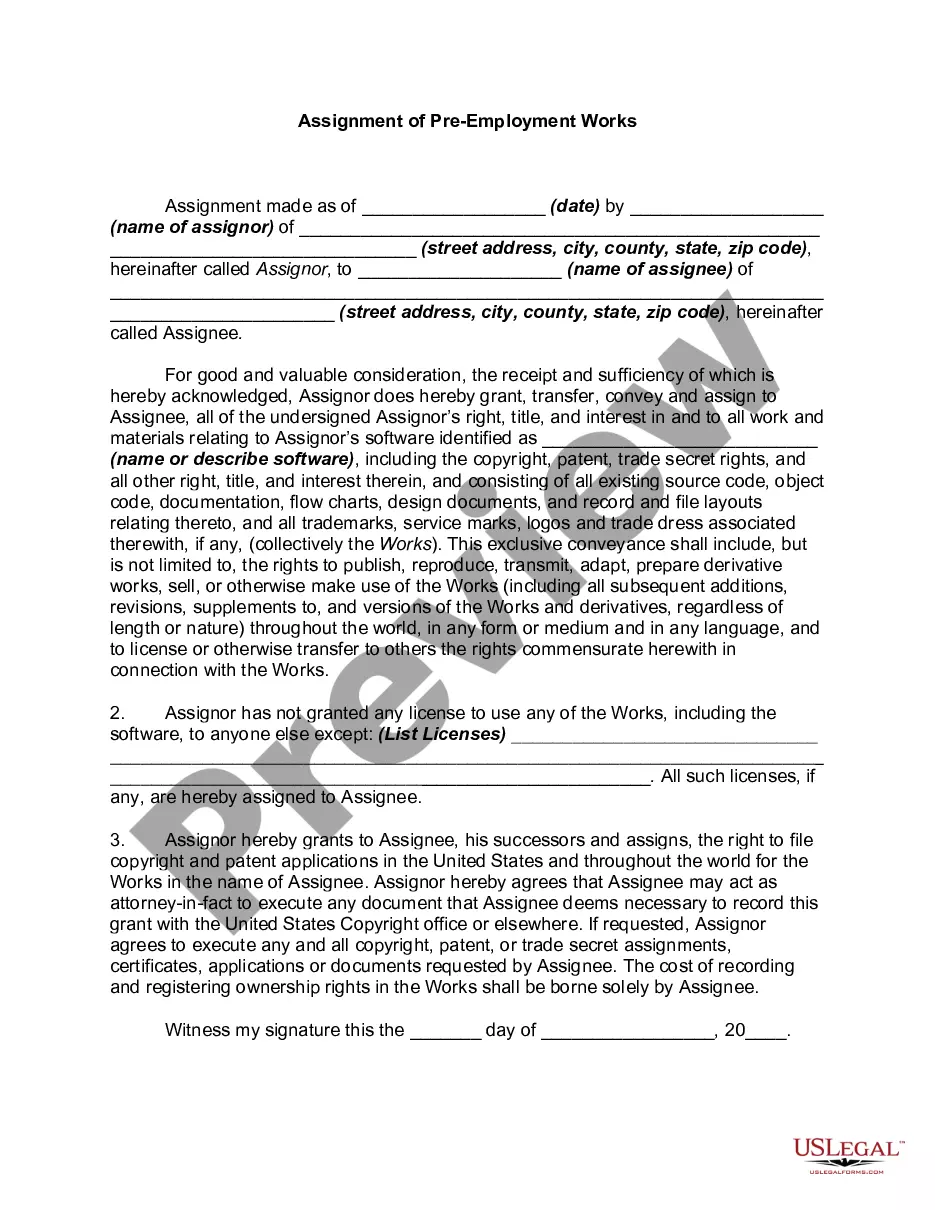
  • Preview Affidavit in Support of Motion for Preliminary Injunction
  • Preview Affidavit in Support of Motion for Preliminary Injunction

Form popularity

FAQ

A plaintiff must prove several critical factors to prevail in seeking a preliminary injunction. They must show a likelihood of succeeding in the underlying case, demonstrate potential irreparable harm without the injunction, and establish that the balance of harms favors their request. Additionally, the Indianapolis Indiana Affidavit in Support of Motion for Preliminary Injunction is vital in presenting these proofs effectively. By addressing these requirements thoroughly, a plaintiff can strengthen their motion for the injunction.

Winning a preliminary injunction requires you to demonstrate four key elements: a likelihood of success on the merits, a possibility of irreparable harm, a balance of equities in your favor, and that the public interest supports your request. The Indianapolis Indiana Affidavit in Support of Motion for Preliminary Injunction plays an essential role in laying out your arguments and evidence. By effectively presenting your case and addressing these elements, you increase your chances of securing the injunction you seek.

To write an effective injunction letter, begin by clearly stating your request for a preliminary injunction. Include details about the legal basis for your request and how it relates to the Indianapolis Indiana Affidavit in Support of Motion for Preliminary Injunction. Make sure to outline the harm you face if the injunction is not granted, and provide evidence to support your claims. Lastly, conclude with a request for the court to consider your motion.

Rule 65 of the Indiana Rules of Trial Procedure outlines the process for obtaining injunctive relief, including preliminary injunctions. This rule specifies how parties should file their Indianapolis Indiana Affidavit in Support of Motion for Preliminary Injunction, detailing the requirements for notice and the type of evidence required. It is essential to follow these guidelines to ensure your motion is properly considered by the court. For assistance with these procedures, consider using the services of USLegalForms to streamline the affidavit preparation.

The lazy judge rule in Indiana refers to a guideline encouraging judges to expedite procedures in cases involving a motion for preliminary injunction. This principle emphasizes that judges should not delay in making decisions when presented with an Indianapolis Indiana Affidavit in Support of Motion for Preliminary Injunction. By adhering to this rule, judges seek to ensure timely justice for all parties involved. Understanding this rule can help you prepare your case more effectively.

In Indiana, an affidavit must be a written statement made under oath, affirming the truth of the information contained within. Specifically, the Indianapolis Indiana Affidavit in Support of Motion for Preliminary Injunction should include the affiant's name, their relationship to the case, and detailed facts supporting the motion. Additionally, the affidavit must be signed in the presence of a notary public or another authorized individual. Properly prepared affidavits are crucial for the court's consideration of your motion.

Trial Rule 65 in Indiana governs the issuance of injunctions, including the Indianapolis Indiana Affidavit in Support of Motion for Preliminary Injunction. This rule outlines the procedures and requirements for requesting a preliminary injunction, which is a court order that prevents a party from taking certain actions until a final decision is made. It is important for petitioners to provide adequate evidence and justification in their affidavits to support their motions. Understanding this rule can help you effectively navigate the legal process.

Interesting Questions

Trusted and secure by over 3 million people of the world’s leading companies

Indianapolis Indiana Affidavit in Support of Motion for Preliminary Injunction