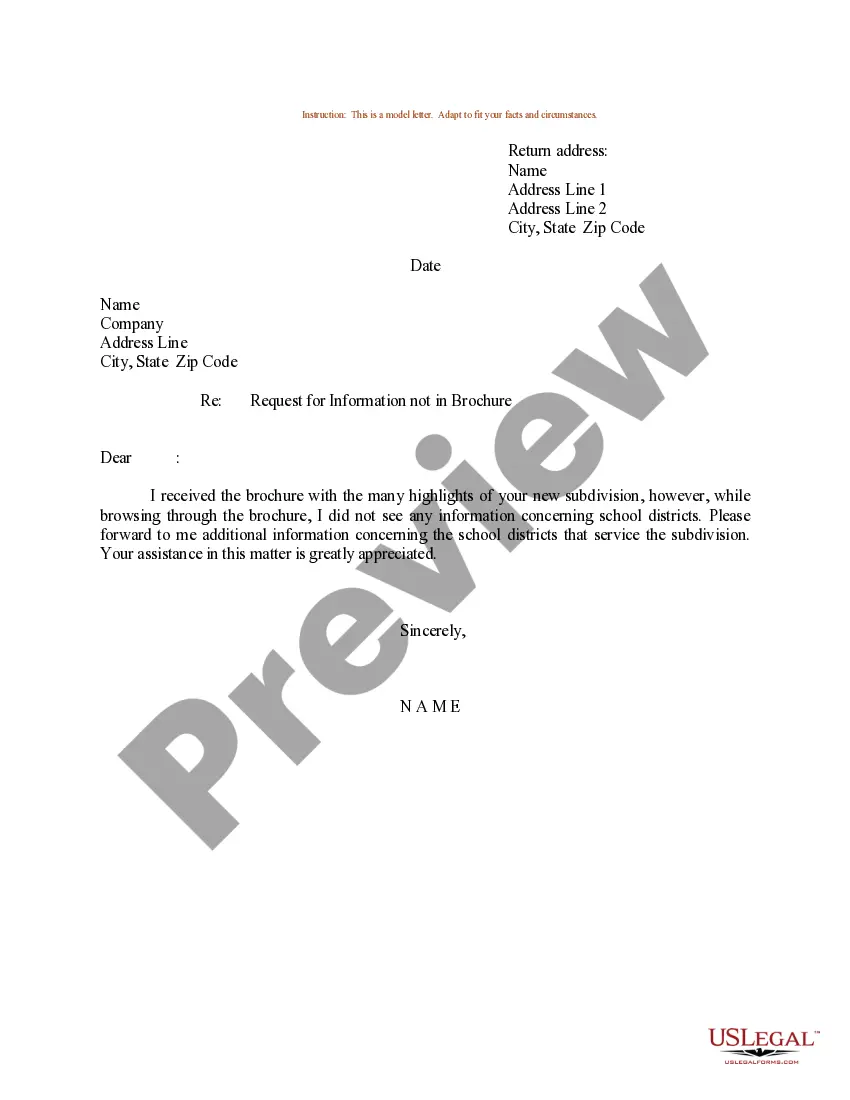
Saint Paul Minnesota Request for Additional Information , Not in Brochure 1
Description





Form popularity
FAQ
In St. Paul, residents are allowed to have up to three dogs per household without requiring a special permit. If you wish to have more than three, you will need to apply for a kennel license. This regulation helps maintain community standards and ensures responsible pet ownership. For any additional details or clarification, the Saint Paul Minnesota Request for Additional Information, Not in Brochure 1 can be a helpful resource.
The average income in Saint Paul varies depending on factors like occupation and education level. As of the latest data, the average household income in Saint Paul is approximately $60,000. This figure reflects the diverse economic landscape of the city, with many residents engaging in various sectors. For more specific information related to income or financial inquiries, consider utilizing the Saint Paul Minnesota Request for Additional Information, Not in Brochure 1.
To contact the St Paul City Council, you can visit their official website where you'll find contact information for each council member. You may also call the City Council office directly for assistance. If you need to submit a formal request, consider using the Saint Paul Minnesota Request for Additional Information, Not in Brochure 1 to ensure you provide all necessary details. This will help facilitate your inquiry and receive prompt feedback.
St. Paul, MN, tends to lean Democratic, reflecting its urban setting and diverse population. Voter trends show that residents often support progressive policies and candidates. If you wish to explore more about the political climate or related resources, consider utilizing the Saint Paul Minnesota Request for Additional Information, Not in Brochure 1.
The student population at St. Paul College typically ranges around 6,000 to 7,000 students. This vibrant community includes a diverse mix of individuals pursuing a variety of academic programs. If you're interested in learning more about how to enroll or get involved, you can find additional resources through the Saint Paul Minnesota Request for Additional Information, Not in Brochure 1.
Paul was not one of the Twelve Apostles, and did not know Jesus during his lifetime. ing to the Acts, Paul lived as a Pharisee and participated in the persecution of early disciples of Jesus, possibly Hellenised diaspora Jews converted to Christianity, in the area of Jerusalem, prior to his conversion.
Before conversion Before his conversion, Paul was known as Saul and was "a Pharisee of Pharisees", who "intensely persecuted" the followers of Jesus.
Definition. Paul was a follower of Jesus Christ who famously converted to Christianity on the road to Damascus after persecuting the very followers of the community that he joined. However, as we will see, Paul is better described as one of the founders of the religion rather than a convert to it.
Paul was a follower of Jesus Christ who famously converted to Christianity on the road to Damascus after persecuting the very followers of the community that he joined. However, as we will see, Paul is better described as one of the founders of the religion rather than a convert to it.
Although St. Paul was not one of the original 12 Apostles of Jesus, he was one of the most prolific contributors to the New Testament. Of the 27 books in the New Testament, 13 or 14 are traditionally attributed to Paul, though only 7 of these Pauline epistles are accepted as being entirely authentic and dictated by St.