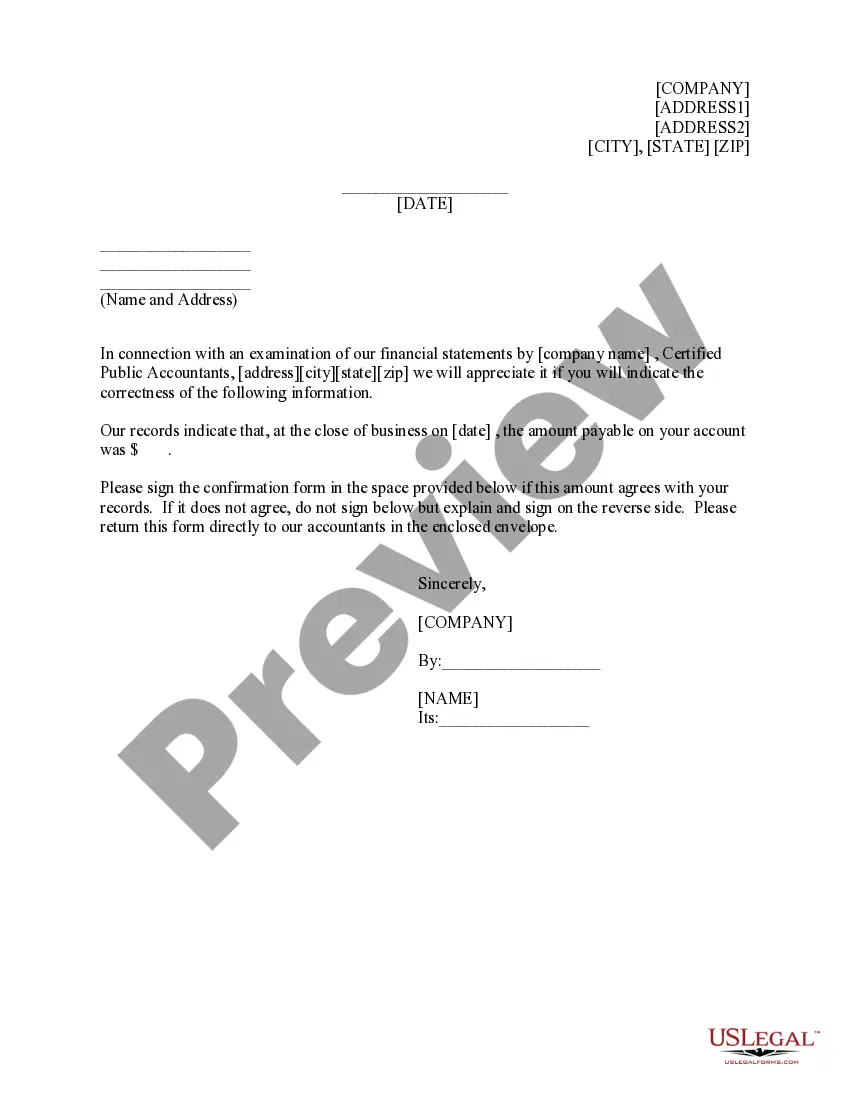
Pittsburgh Pennsylvania Request for Account Verification During Audit 1
Description

Form popularity
FAQ
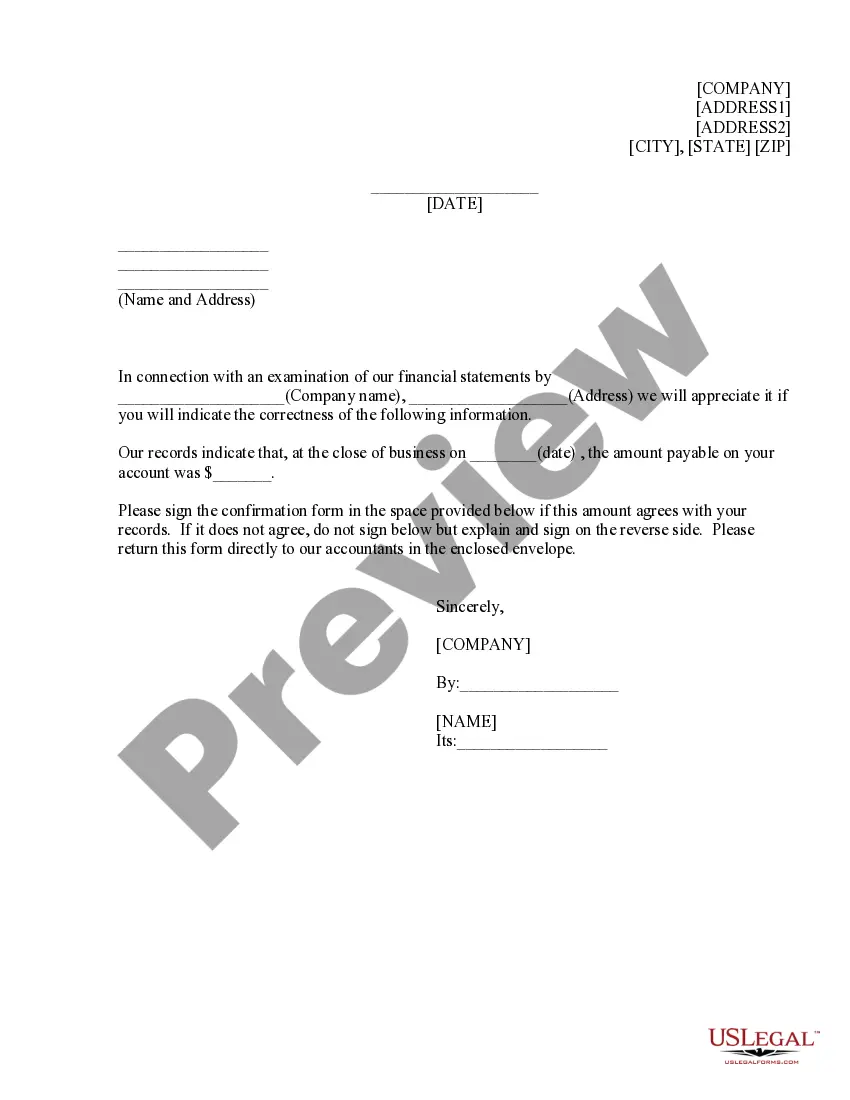
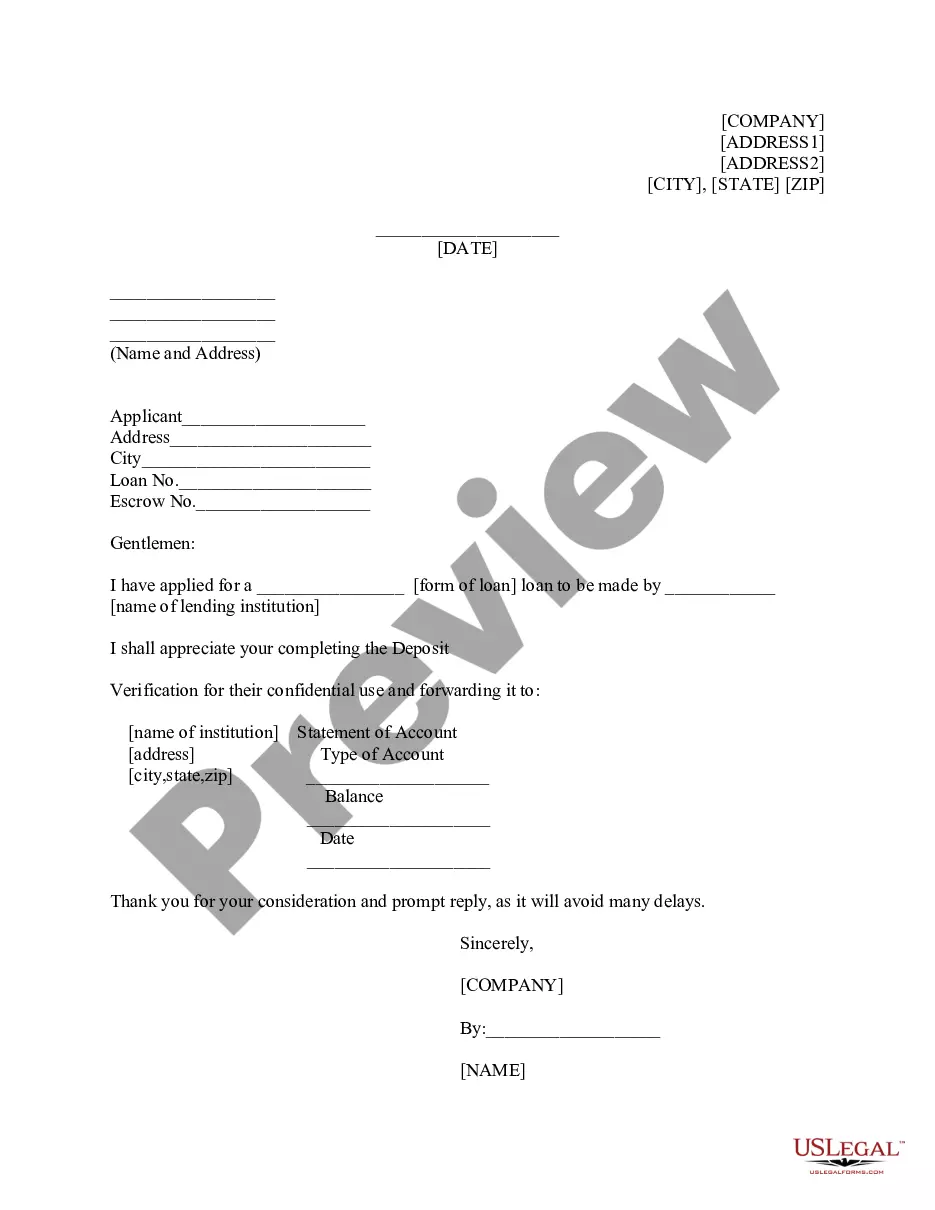
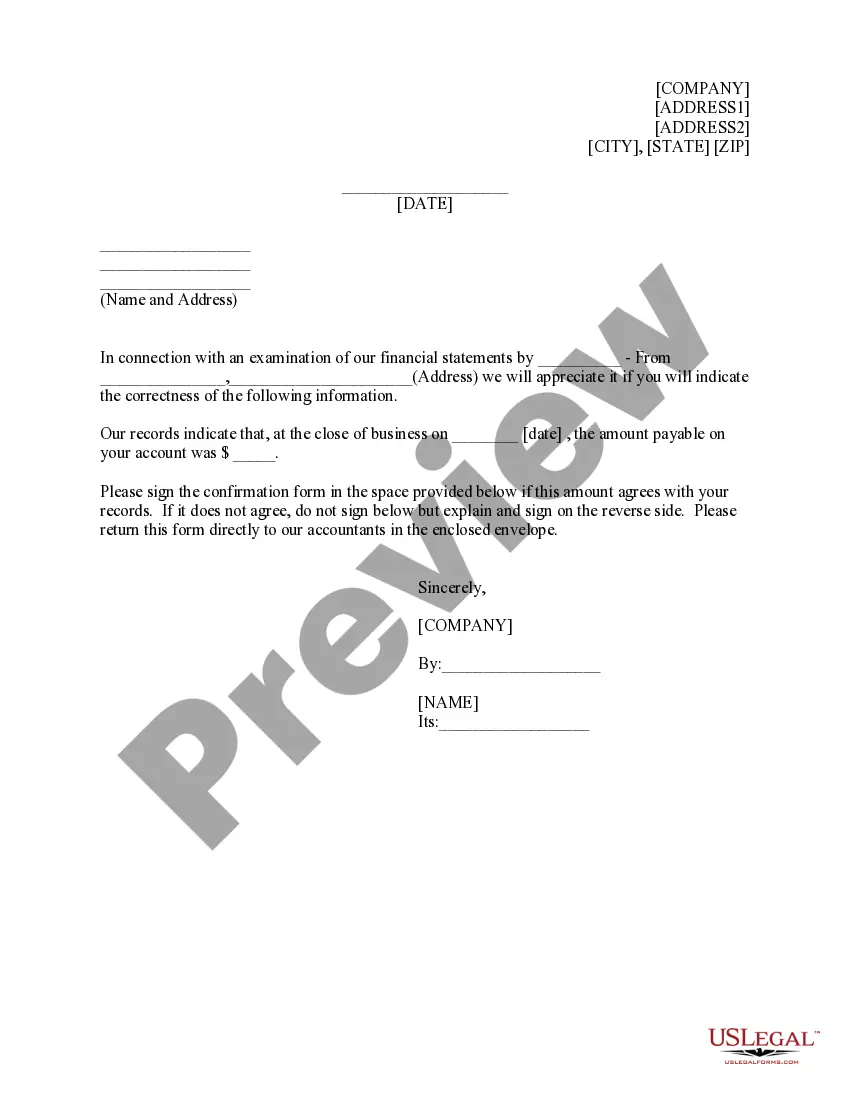
To verify bank charges during an audit, start by reviewing your bank statements for any fees or charges applied. Cross-check these charges against your financial records to ensure every entry is accounted for. If discrepancies arise, contact your bank for clarification. Using the Pittsburgh Pennsylvania Request for Account Verification During Audit can provide a formal request to help resolve any issues related to bank charges.
A credit union audit verification is a process that ensures the accuracy and integrity of a credit union's financial statements and operations. During this verification, auditors examine the credit union’s records, transactions, and compliance with regulations. This process helps maintain trust and transparency within the financial system. Utilizing the Pittsburgh Pennsylvania Request for Account Verification During Audit can assist in facilitating this verification.
During the audit process, you typically need to verify several key documents, including bank statements, transaction records, invoices, and receipts. These documents provide a comprehensive view of your financial activities and help auditors assess your financial health. It's essential to gather all related materials beforehand to streamline the audit. The Pittsburgh Pennsylvania Request for Account Verification During Audit can guide you in collecting the necessary documentation.
To verify your bank balance during an audit, you should obtain a bank statement directly from your financial institution. This statement provides a detailed record of all transactions and your current balance. Additionally, you can cross-reference this information with your internal records for accuracy. Using the Pittsburgh Pennsylvania Request for Account Verification During Audit ensures you have official documentation for your records.
It's THE Sports City ? Aptly named the City of Champions, Pittsburgh is home to three widely-known professional sports teams ? the Steelers, Penguins and Pirates ? each with its own dynamic history of world championships, incredible moments and hall of fame players.
First settled in the mid-18th century, Pittsburgh has a wealth of historical sights, from historic forts to exquisitely decorated churches. Its prominent industrial history has left it with elegant beaux-arts buildings, soaring skyscrapers, and 446 bridges, as well as the nickname "Steel City".
Easily navigable waterways with an abundance of natural resources, (coal, timber, natural gas, iron and limestone) helped Pittsburgh become the industrial center for a growing nation. Most people recognize one thing about Pittsburgh's history, that it was known as an industrial hub for coal mining and steel production.
Pittsburgh is a hub for technology, manufacturing, life sciences & health and education.
Pittsburgh is a convenient, affordable place to live and work?with a cost of living 7% lower than the national average, a reasonable median home price of $259,900, and median monthly rent of $1,427. The city also has a range of top-notch companies in the education, technology, healthcare, and steel industries.
Heinz Ketchup This iconic, world-renowned condiment was created in Pittsburgh in 1857. Heinz ramped up production of the tomato ketchup during the 20th century. As of today, the ketchup is no longer produced in the city, but it is still a popular condiment at local restaurants and residents' homes.