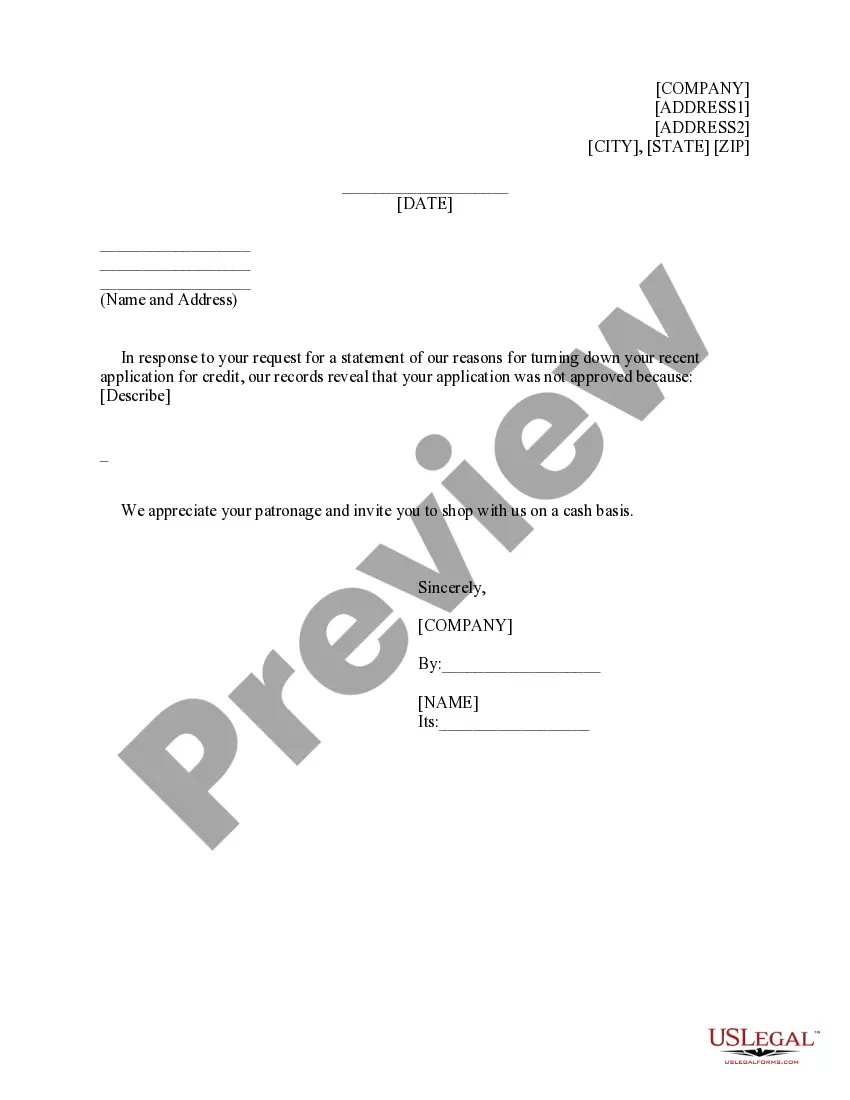
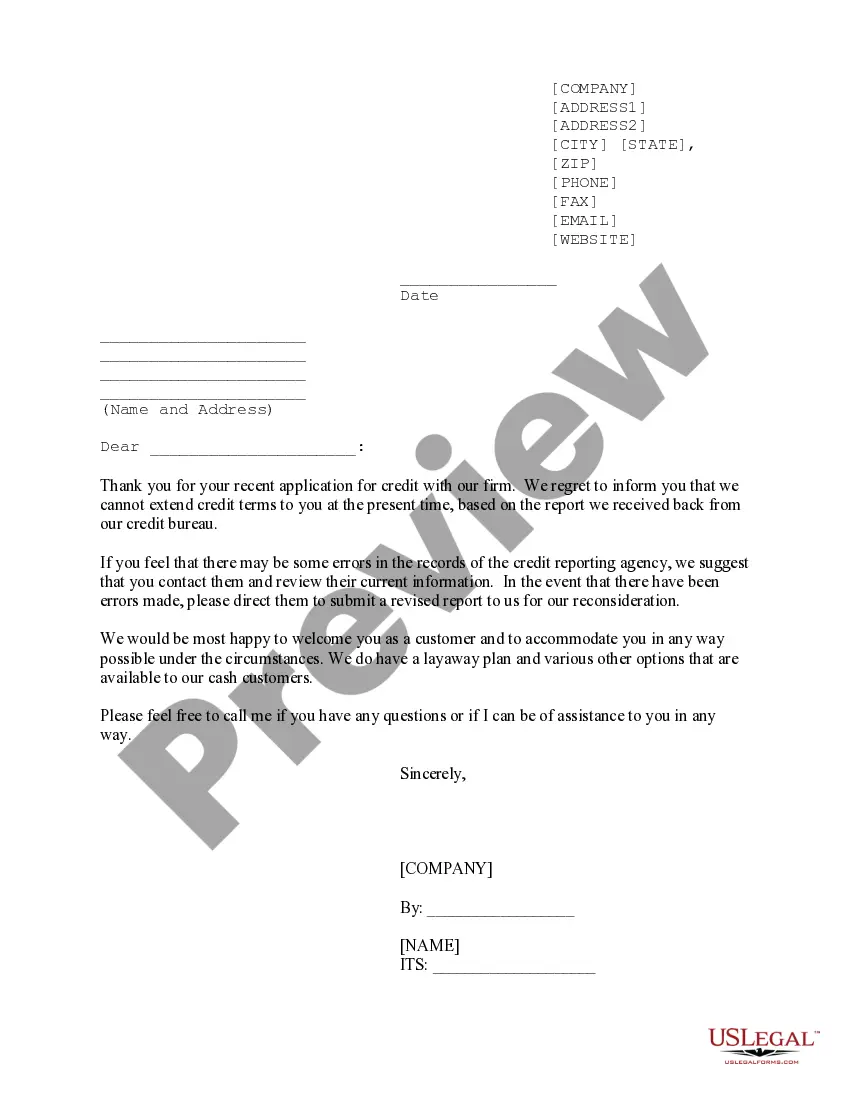
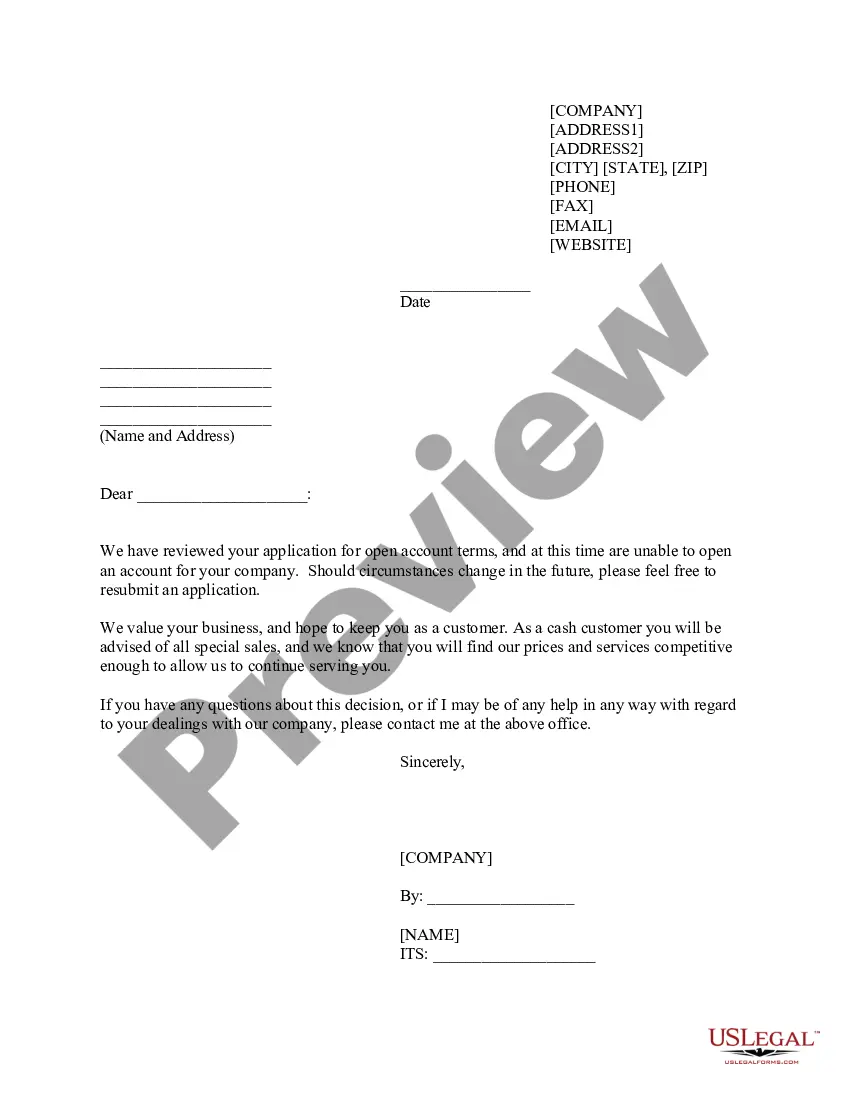
Anchorage Alaska Reply to Request About Credit Rejection
Description




Form popularity
FAQ
In Alaska, the statute of limitations on debt typically lasts for three years for most debts, including credit card debt. This period begins from the date of the last payment or acknowledgment of the debt. After this time frame, creditors may lose the right to sue you for unpaid debts. Understanding this can be crucial, especially when dealing with issues like the Anchorage Alaska Reply to Request About Credit Rejection, as it impacts your financial decisions.
To file a complaint in Alaska, start by identifying the relevant agency that handles your issue. You can visit the official Alaska state website for guidance and necessary forms. Once you complete the forms, submit them through the specified method, whether by mail or online. If your complaint relates to a credit rejection, consider how the Anchorage Alaska Reply to Request About Credit Rejection can address your concerns effectively.
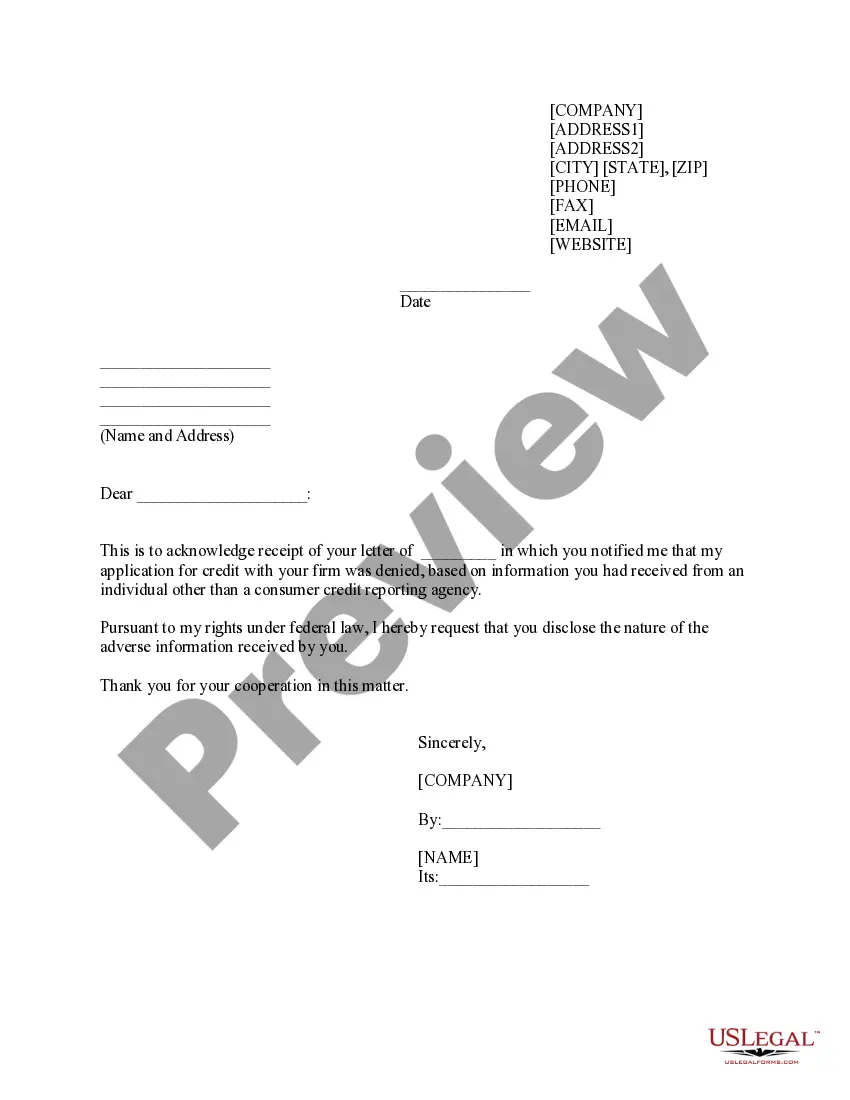
If you are denied credit, your first step should be to review the denial notice thoroughly. This document will provide essential information about why your application was declined and what steps you can take next. After understanding the reasons, you can request a copy of your credit report to identify any inaccuracies. US Legal Forms offers tools to help you address these issues and improve your credit situation effectively.
When a company denies you credit, they are required to provide you with a written notice explaining the reasons for the denial. This notice should outline the factors that led to the decision, which can help you understand your credit standing. Additionally, if you request it, they must inform you of the credit reporting agency they used in their decision-making process. For more guidance on handling credit rejection, explore resources available through US Legal Forms.
In Alaska, a debt may become uncollectible after a period of three years. This timeframe is set by the statute of limitations, which can vary depending on the type of debt. If you find yourself dealing with credit rejection, it's important to understand how these timelines can affect your financial decisions. For assistance, consider using US Legal Forms to manage your credit issues effectively.
Writing a good credit dispute letter involves being specific and concise. Start with your personal information, state the reason for your dispute, and include any supporting documents. If you're navigating an Anchorage Alaska Reply to Request About Credit Rejection, ensure your letter addresses all requirements and follows the proper format for the best results.
To win a dispute against your credit, articulate your position effectively. Clearly present the evidence supporting your claim and explain how the error affects your creditworthiness. In the context of an Anchorage Alaska Reply to Request About Credit Rejection, a well-structured argument can enhance your chances of success.
When disputing credit, state the specific item you are disputing and provide a brief explanation of why you believe it is incorrect. Be direct and clear in your communication, using factual information to support your claim. If you are addressing an Anchorage Alaska Reply to Request About Credit Rejection, ensure you include all necessary details for a strong case.
A good reason to dispute a credit report includes identifying errors such as incorrect account balances or accounts that do not belong to you. These inaccuracies can negatively affect your credit score. If you are facing issues related to an Anchorage Alaska Reply to Request About Credit Rejection, disputing these errors is crucial for maintaining your financial health.
Responding to a court summons for debt requires careful attention. First, review the summons thoroughly and understand your rights. You can use resources like US Legal Forms to find templates and guidance for drafting your response, especially if you need to address an Anchorage Alaska Reply to Request About Credit Rejection.