Fort Worth Texas Liability Waiver for Independent Contractor
Description
Form popularity
FAQ
The independent contractor agreement form in Texas is a contract that outlines the terms of the working relationship between a contractor and a client. This document typically covers payment terms, project scope, and liabilities, including a Fort Worth Texas Liability Waiver for Independent Contractor. This waiver ensures both parties understand their rights and responsibilities, helping to prevent misunderstandings. For easy access to compliant templates, check out US Legal Forms, which offers various legal documents tailored for Texas contractors.
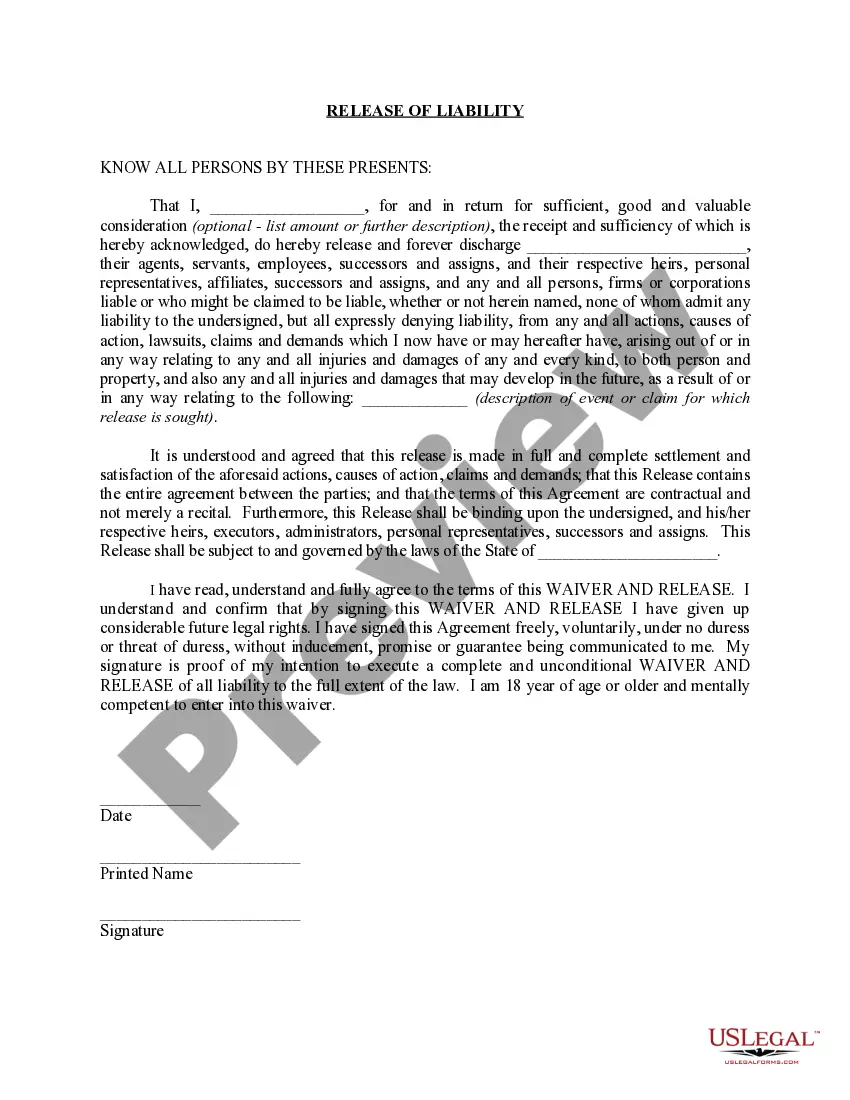
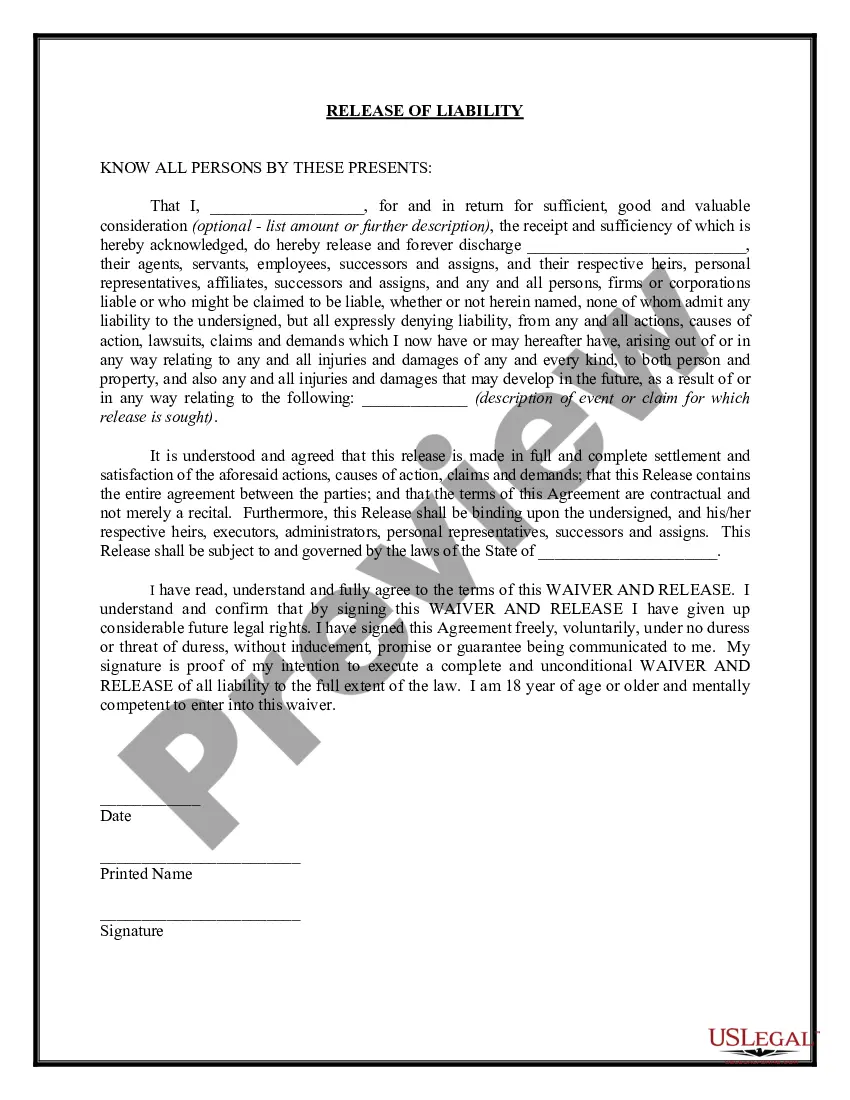
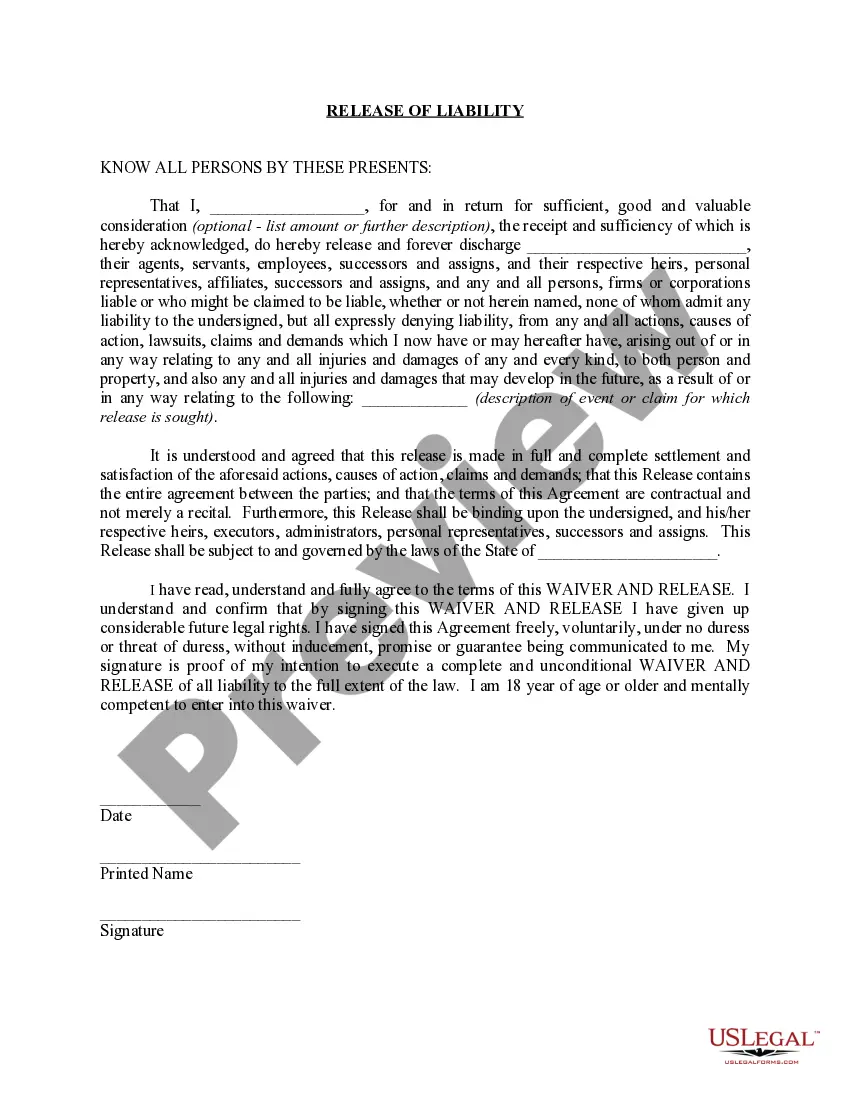
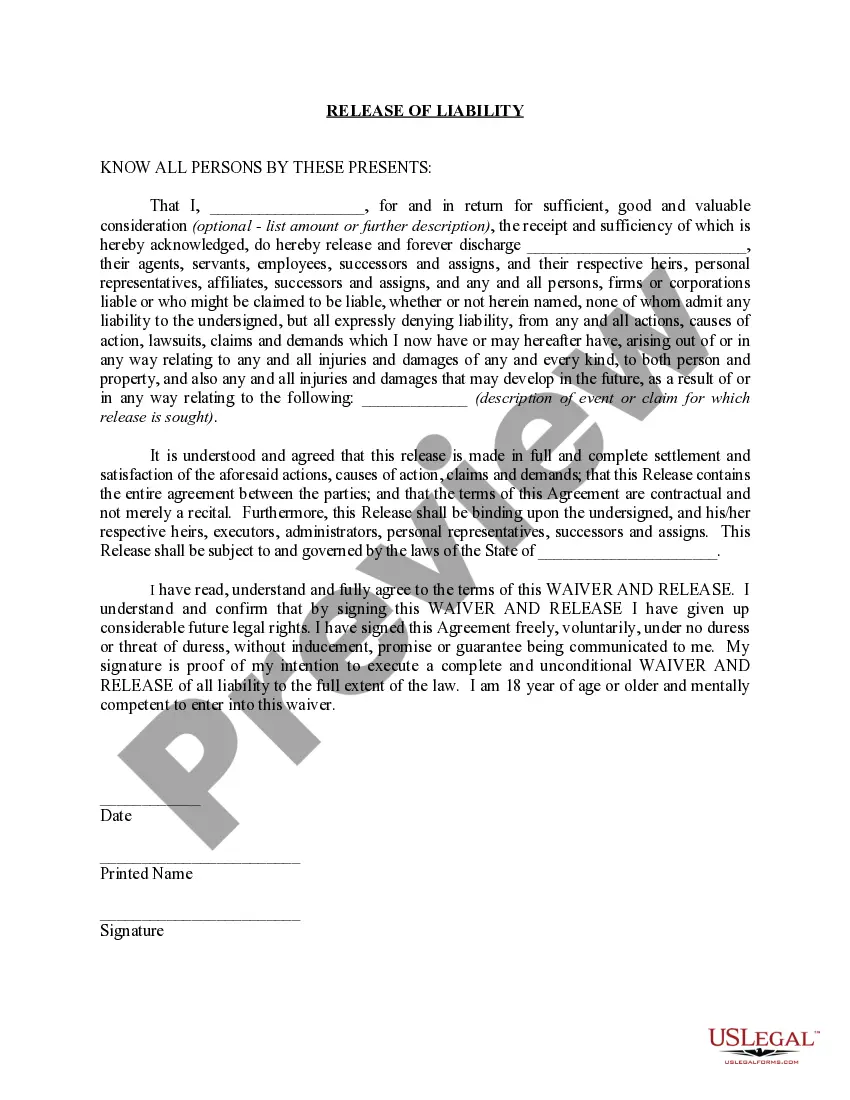
Writing a liability waiver form involves outlining the risks involved in the activity, specifying the parties involved, and stating that the participant understands and accepts these risks. It's essential to include a clear release of liability clause in your Fort Worth Texas Liability Waiver for Independent Contractor. You should also ensure that the language is straightforward and that the participant signs the document voluntarily. To simplify this process, consider using templates from US Legal Forms that comply with Texas laws.
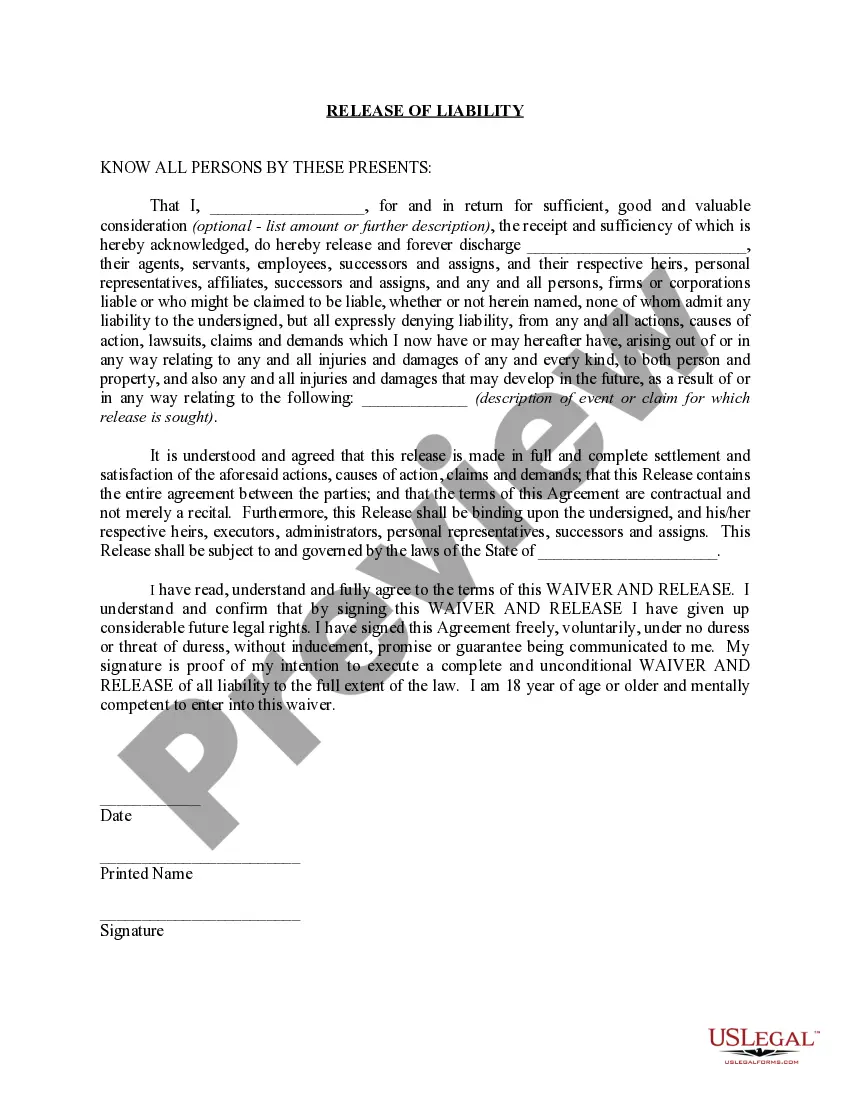
A waiver of liability is a legal document that protects one party from being held liable for injuries or damages that may occur during an activity. For instance, if a contractor is working on a construction site, a Fort Worth Texas Liability Waiver for Independent Contractor might state that the contractor assumes the risks associated with the job and releases the property owner from any claims. This document helps clarify responsibilities and can prevent costly legal disputes. Using a reliable platform like US Legal Forms can assist you in drafting such waivers effectively.
As an independent contractor in Fort Worth, Texas, having liability insurance is highly recommended. This insurance protects you from claims related to accidents, injuries, or damages that occur while you perform your work. Additionally, if you require a Fort Worth Texas Liability Waiver for Independent Contractor, having insurance can provide extra security and peace of mind. It’s important to understand that many clients may also request proof of liability insurance before hiring you.
In Texas, a liability waiver does not necessarily need to be notarized to be enforceable. However, having a notarized Fort Worth Texas Liability Waiver for Independent Contractor can add an extra layer of authenticity and trust. Notarization may also help in cases where the waiver’s validity is challenged. It's wise to consider the specific circumstances and consult legal advice to determine the best approach.
Writing your own liability waiver is possible, but it requires careful consideration of legal standards. The Fort Worth Texas Liability Waiver for Independent Contractor should include specific terms and conditions to be effective. It is advisable to seek guidance to avoid common pitfalls and ensure the waiver is clear and comprehensive. Platforms like uslegalforms can simplify the process by offering customizable templates.
Yes, you can write your own liability waiver, but it is crucial to understand the legal implications. A well-crafted Fort Worth Texas Liability Waiver for Independent Contractor should cover specific risks and include clear language. However, without proper legal knowledge, you may overlook important details that could affect its enforceability. Using a professional service like uslegalforms can provide templates that ensure compliance with state laws.
For a liability waiver to be legal in Texas, it must clearly outline the rights being waived and the risks involved. The Fort Worth Texas Liability Waiver for Independent Contractor should be written in a way that is understandable to all parties involved. Additionally, it should be voluntarily signed by the individual, without coercion or fraud. Legal advice can help ensure that your waiver meets all necessary legal requirements.
Yes, liability waivers can be enforceable in Texas, including the Fort Worth Texas Liability Waiver for Independent Contractor. However, enforceability often depends on the specific wording and circumstances surrounding the waiver. It is important to ensure that the waiver contains clear language and is not deemed unconscionable by a court. Consulting legal resources or professionals can help clarify these aspects.