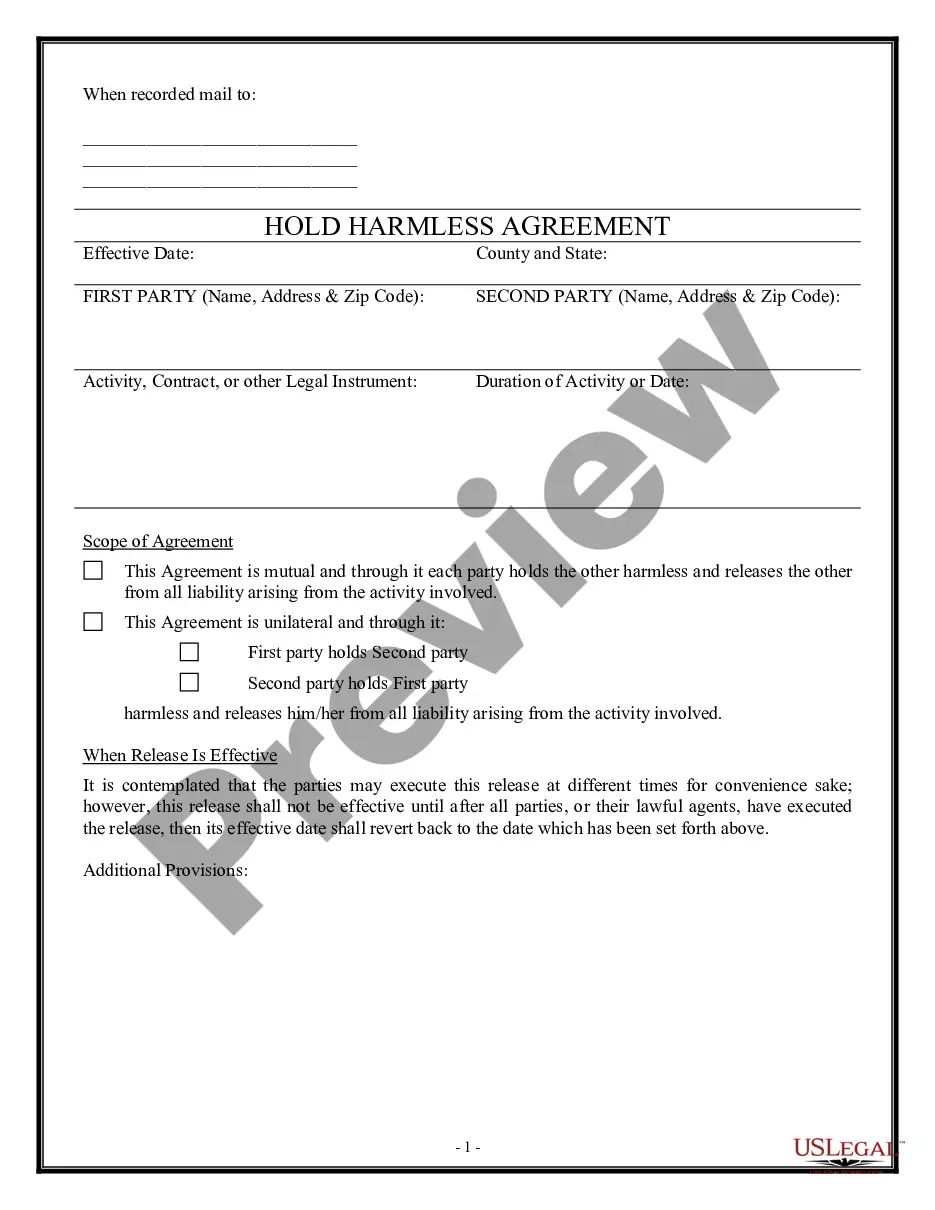
Philadelphia Pennsylvania Hold Harmless Agreement for Dogs
Description
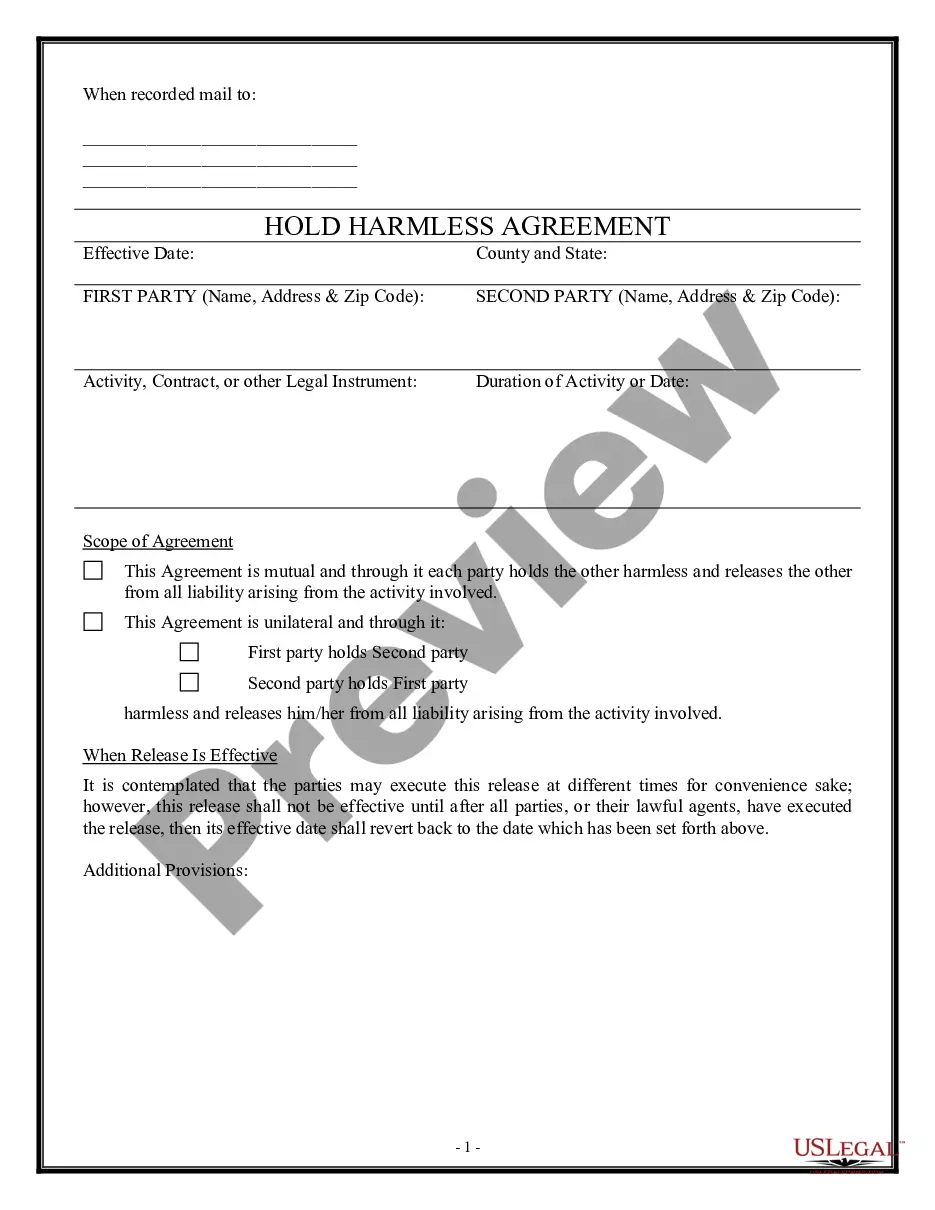
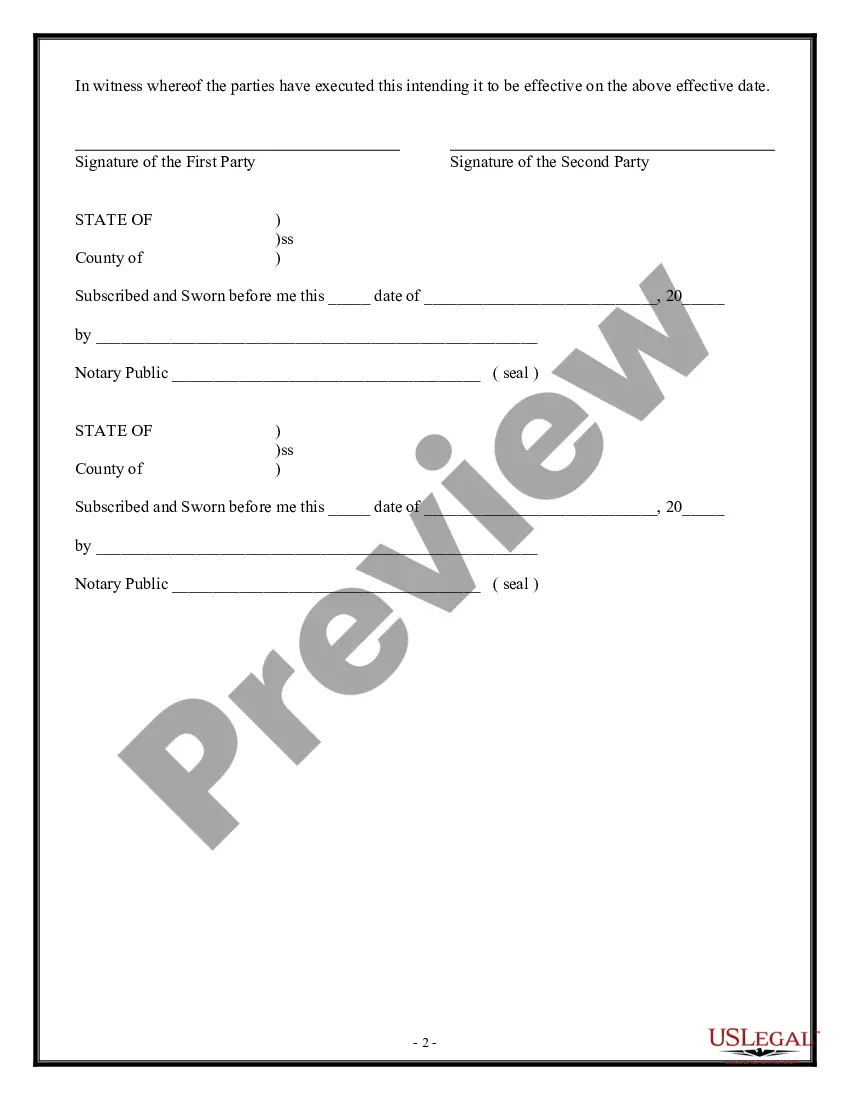
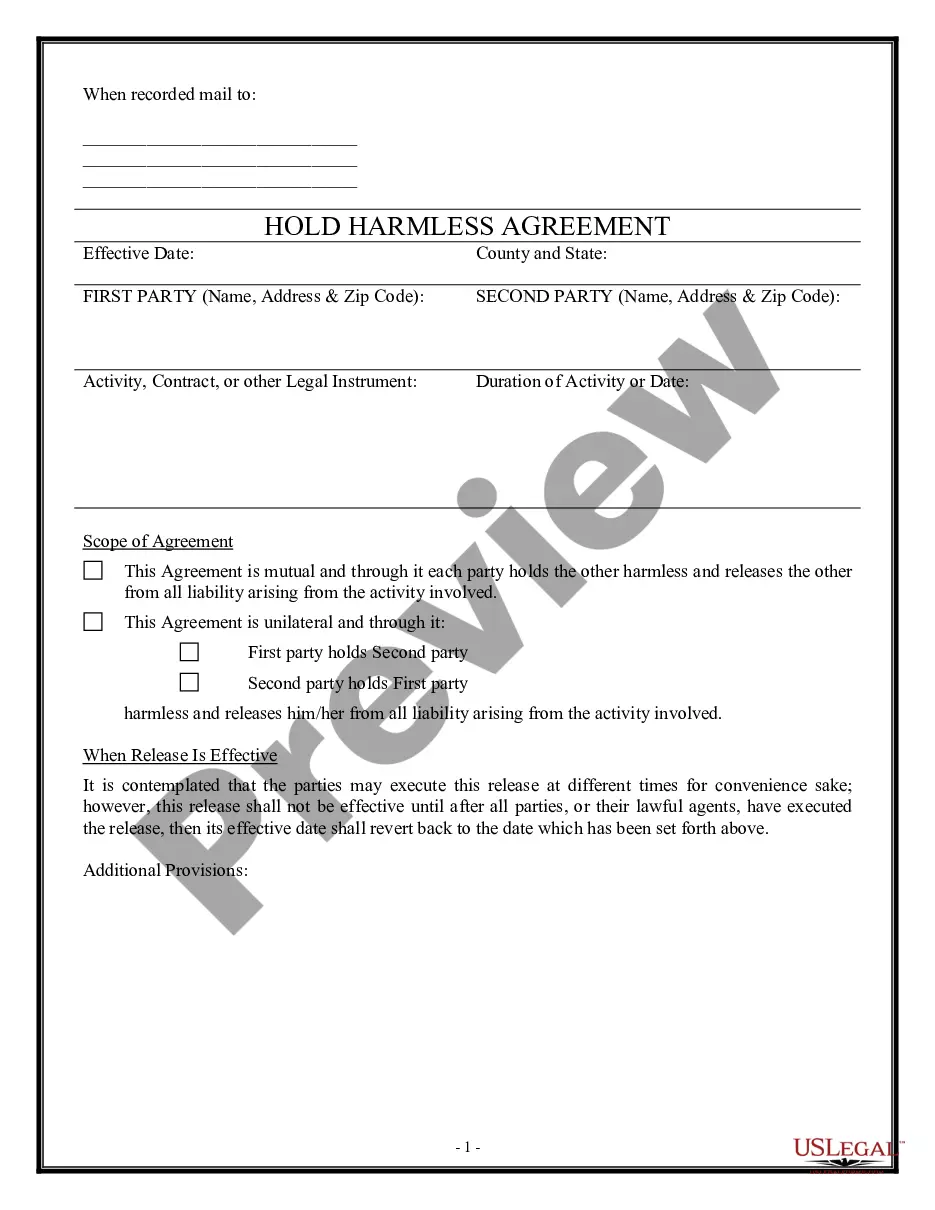
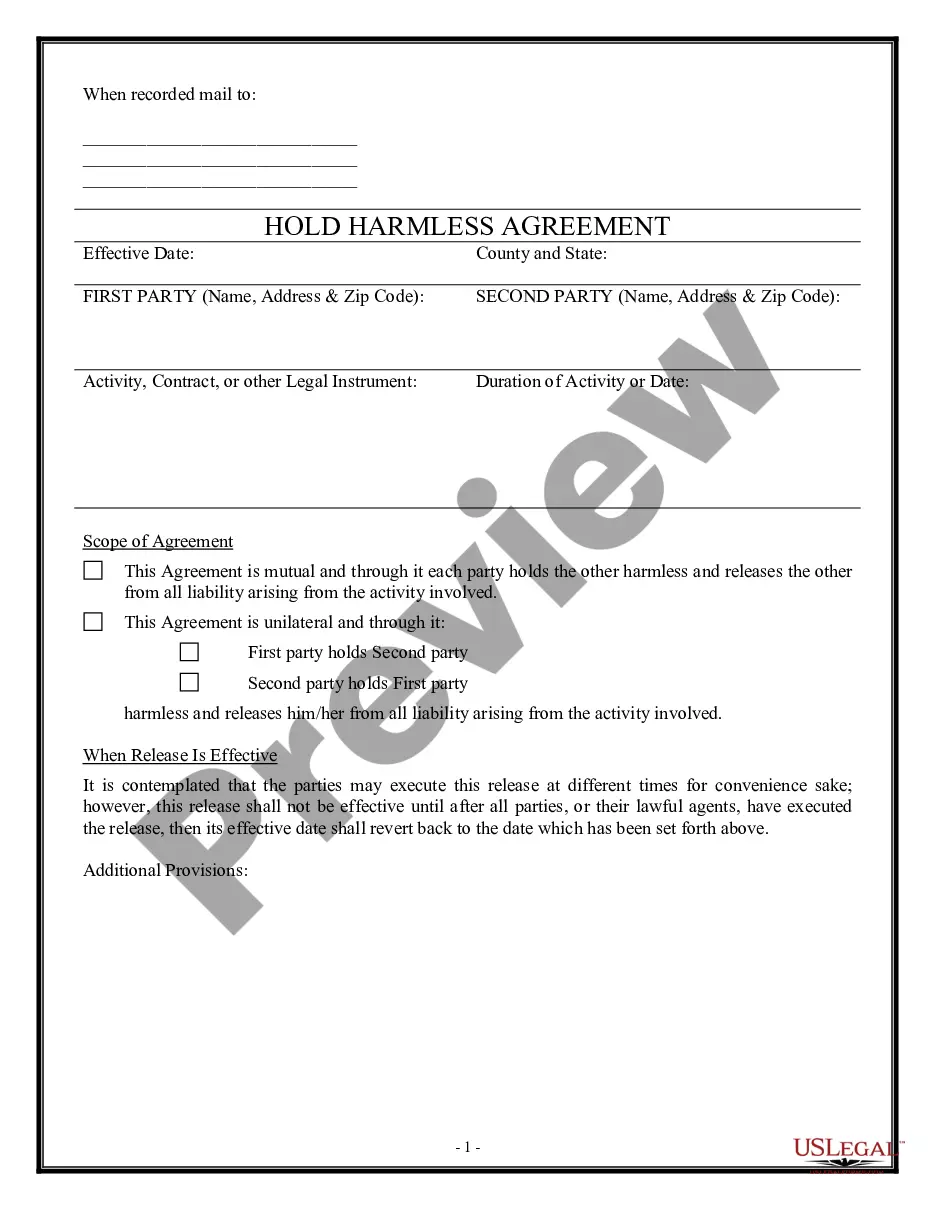
Get your form ready online
Our built-in tools help you complete, sign, share, and store your documents in one place.
Make edits, fill in missing information, and update formatting in US Legal Forms—just like you would in MS Word.
Download a copy, print it, send it by email, or mail it via USPS—whatever works best for your next step.
Sign and collect signatures with our SignNow integration. Send to multiple recipients, set reminders, and more. Go Premium to unlock E-Sign.
If this form requires notarization, complete it online through a secure video call—no need to meet a notary in person or wait for an appointment.
We protect your documents and personal data by following strict security and privacy standards.

Make edits, fill in missing information, and update formatting in US Legal Forms—just like you would in MS Word.

Download a copy, print it, send it by email, or mail it via USPS—whatever works best for your next step.

Sign and collect signatures with our SignNow integration. Send to multiple recipients, set reminders, and more. Go Premium to unlock E-Sign.

If this form requires notarization, complete it online through a secure video call—no need to meet a notary in person or wait for an appointment.

We protect your documents and personal data by following strict security and privacy standards.
Looking for another form?

How to fill out Hold Harmless Agreement For Dogs?
Creating documentation for business or personal purposes is consistently a significant obligation.
When preparing a contract, a public service application, or a power of attorney, it is essential to take into account all federal and state laws and regulations pertinent to the specific area.
However, minor counties and even municipalities also have legislative stipulations that you must bear in mind.
To find the one that meets your needs, employ the search tab in the page header.
- All these factors render it stressful and labor-intensive to produce a Philadelphia Hold Harmless Agreement for Dogs without expert help.
- It's simple to prevent financial loss by not hiring lawyers to draft your documents and instead, create a legally binding Philadelphia Hold Harmless Agreement for Dogs independently using the US Legal Forms online repository.
- This is the largest online compilation of state-specific legal forms that are expertly verified, ensuring their legitimacy when selecting a template for your county.
- Returning users simply need to Log In to their accounts to retrieve the necessary form.
- If you do not have a subscription yet, follow the step-by-step instructions below to obtain the Philadelphia Hold Harmless Agreement for Dogs.
- Review the page you've accessed and confirm if it contains the sample you need.
- To do this, utilize the form description and preview if these features are present.
Form popularity
FAQ
Under the current code, residents may possess no more than 12 cats or dogs and only two of which may be unspayed or unneutered. But the code stipulates a "dwelling unit," not the whole property.
Under Section 10-103 of The Philadelphia Code, all dogs 4 months and older must be licensed in Philadelphia. You must purchase a license within 30 days of obtaining a dog over the age of 4 months or within 30 days of establishing residence in the City of Philadelphia.
All dogs three months of age and older living in Pennsylvania must be licensed by January 1 of each year. Violators will be cited up to $300 per violation, plus court costs. There are two types of licenses: an annual license and a lifetime license.
In determining proof of ownership, a judge will consider the following: Registration and license: The most likely document to be recognized by the court is the initial registration required for the majority of household pets.
Consider filing a police report The police may take action or they may say they don't get involved in "civil" disputes (which means you have to pursue your dispute in court). If you are able to file a police report for your dog, make sure you keep a copy of the police report.
What are Pennsylvania's Dog Laws? All dogs three months of age or older must be licensed. Licenses are issued by the County Treasurer.
In Pennsylvania, pets are considered personal property. This means that when dividing assets, pets are legally viewed in the same light as a family car or home. This presents a unique conflict as most Americans consider their family pet as part of the family, rather than a possession of the family.
Establish your ownership rights through the following: Registration. Registration is not always mandatory.Veterinary records.Microchipping.Tags.A recent photo of your pet.Adoption or purchase records.Consider a pet agreement form.
Proof of ownership of a dog will vary from family to family but can include such matters as evidence of a purchase, registration with the Kennel Club, evidence that the dog in question is micro-chipped with the micro-chip registered to the family, veterinary records, insurance etc.