Santa Clara California Hold Harmless Agreement for Rental Property
Description
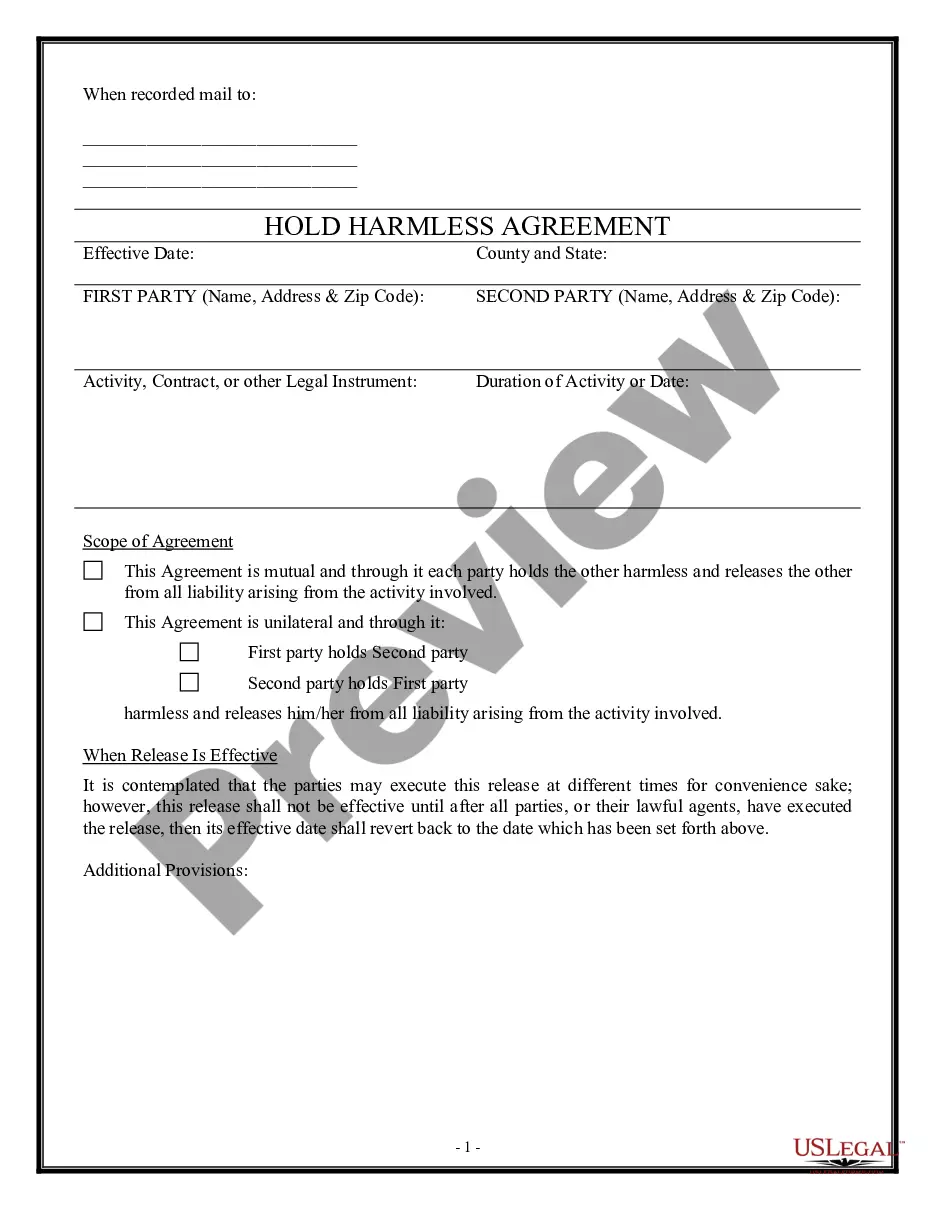
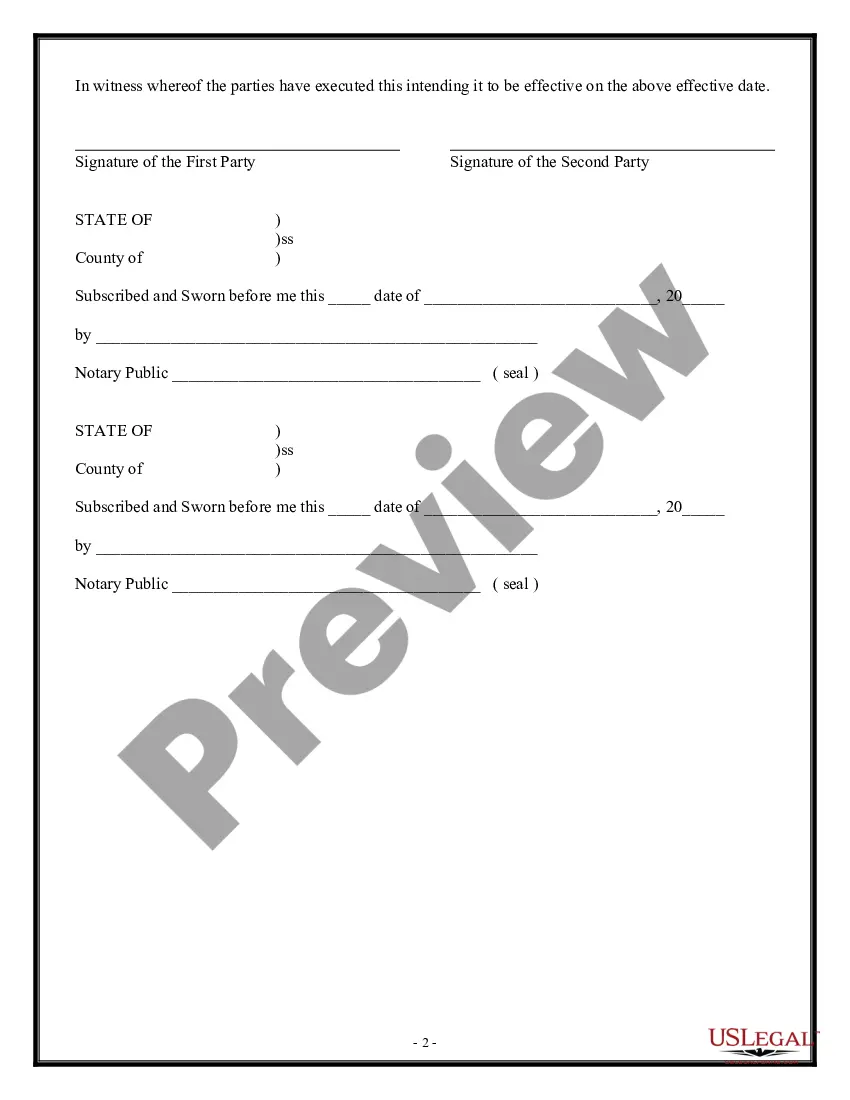
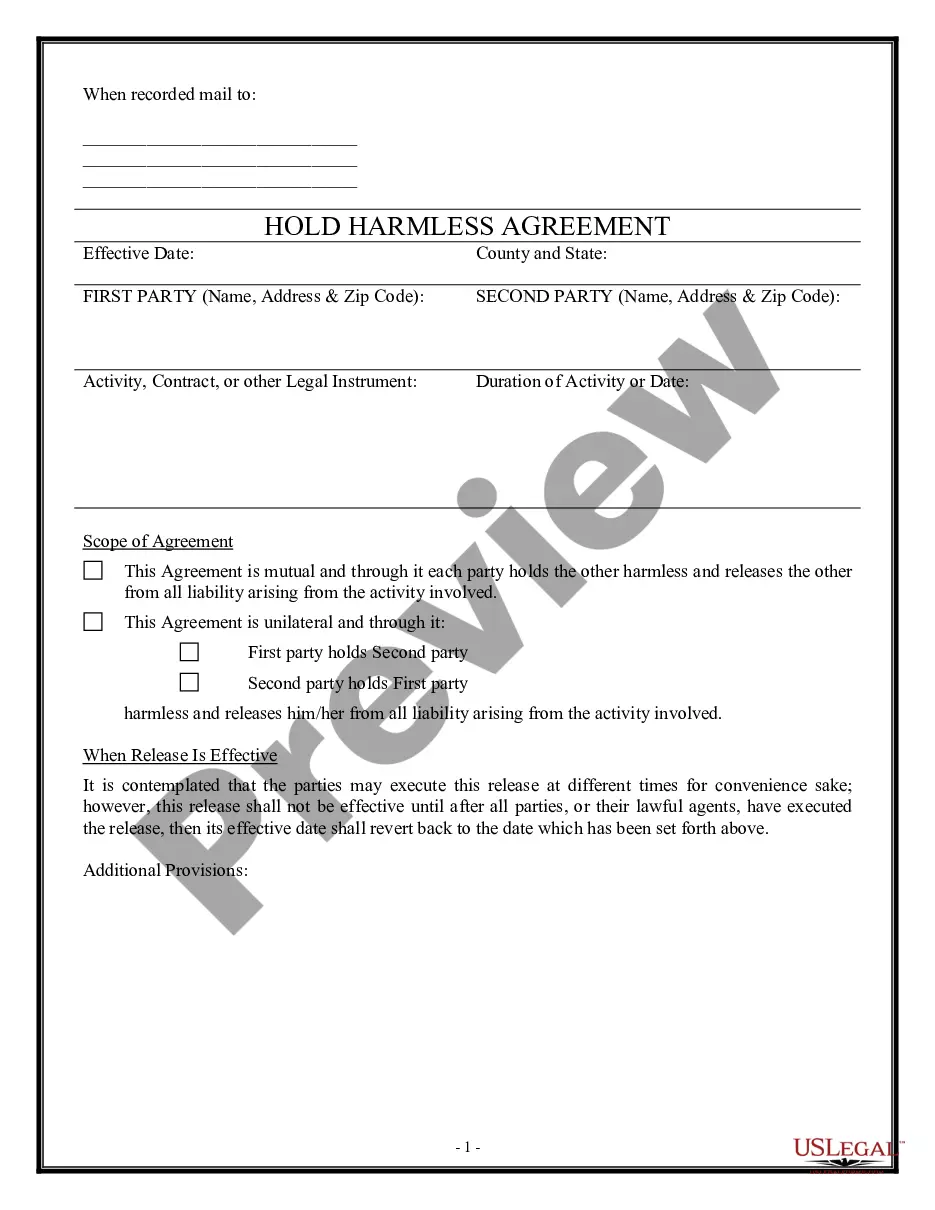
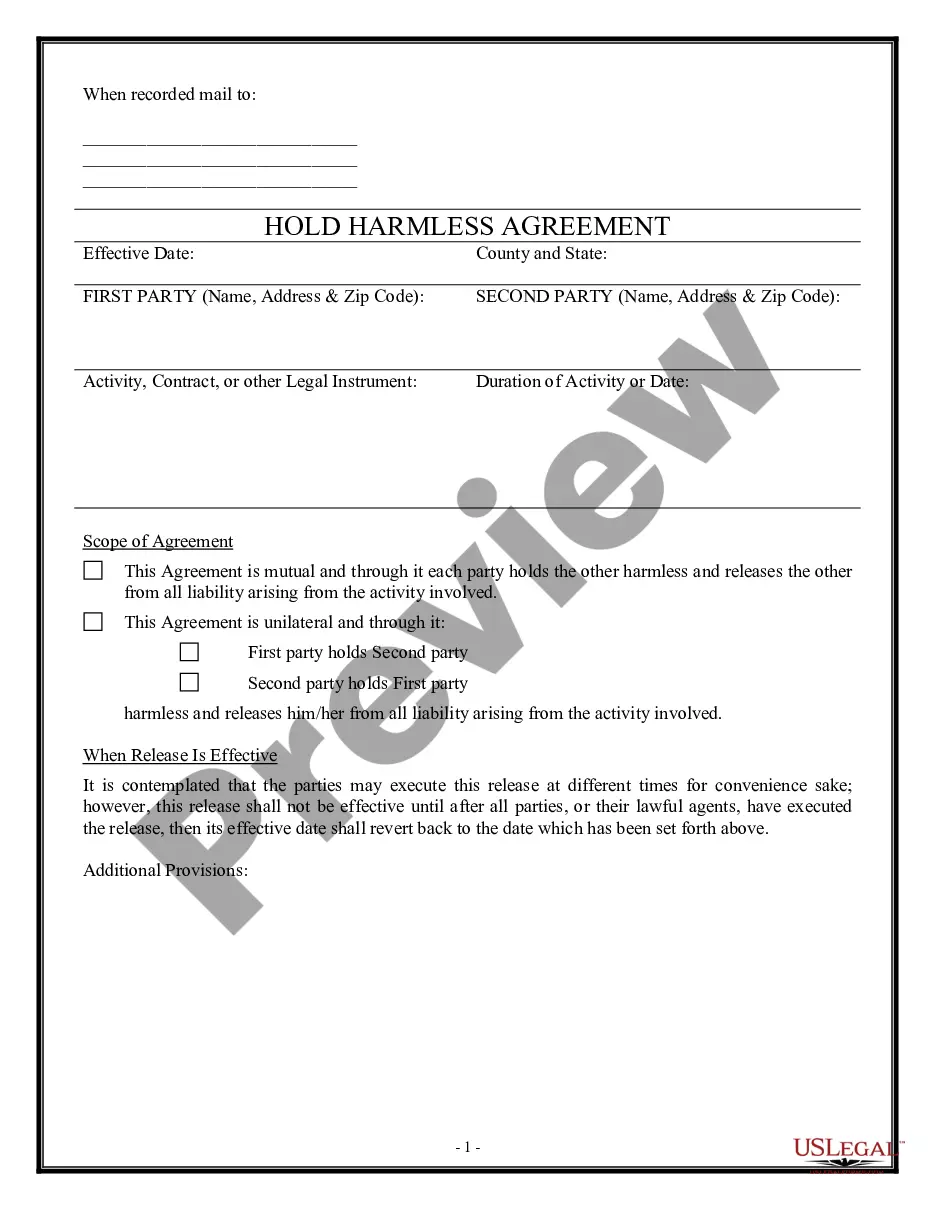
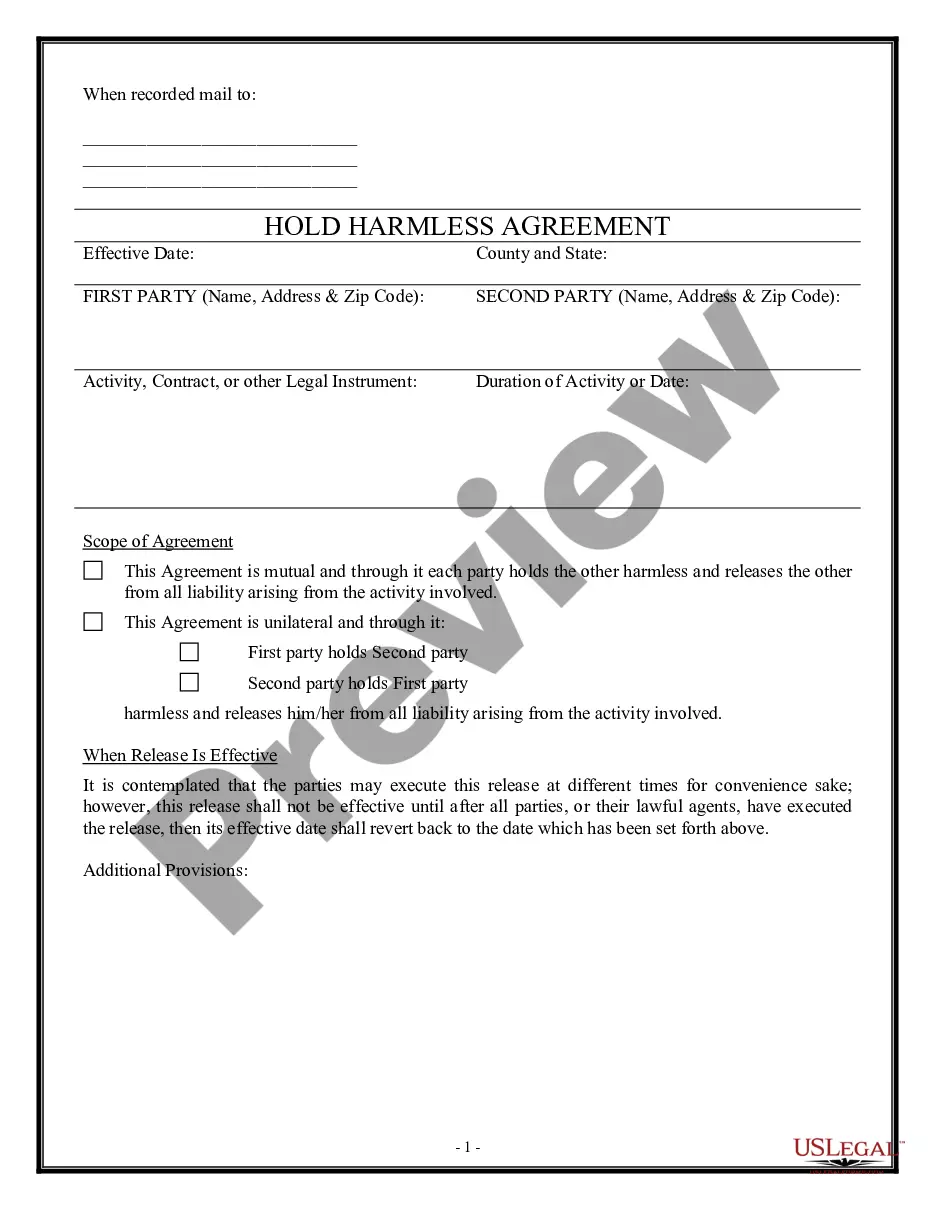
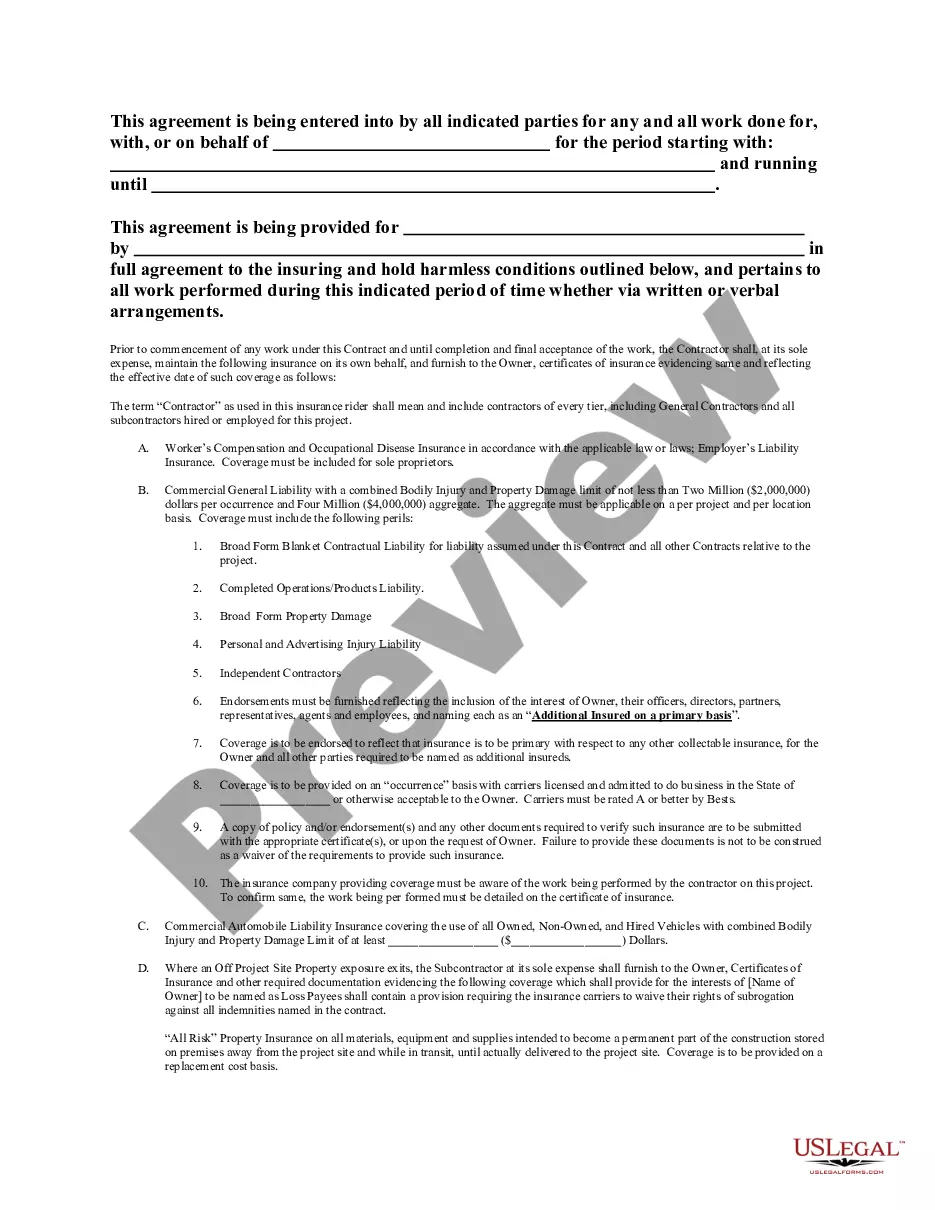
Get your form ready online
Our built-in tools help you complete, sign, share, and store your documents in one place.
Make edits, fill in missing information, and update formatting in US Legal Forms—just like you would in MS Word.
Download a copy, print it, send it by email, or mail it via USPS—whatever works best for your next step.
Sign and collect signatures with our SignNow integration. Send to multiple recipients, set reminders, and more. Go Premium to unlock E-Sign.
If this form requires notarization, complete it online through a secure video call—no need to meet a notary in person or wait for an appointment.
We protect your documents and personal data by following strict security and privacy standards.

Make edits, fill in missing information, and update formatting in US Legal Forms—just like you would in MS Word.

Download a copy, print it, send it by email, or mail it via USPS—whatever works best for your next step.

Sign and collect signatures with our SignNow integration. Send to multiple recipients, set reminders, and more. Go Premium to unlock E-Sign.

If this form requires notarization, complete it online through a secure video call—no need to meet a notary in person or wait for an appointment.

We protect your documents and personal data by following strict security and privacy standards.
Looking for another form?
How to fill out Hold Harmless Agreement For Rental Property?
Preparing documents for a business or personal requirements is always a significant obligation.
When formulating a contract, a public service application, or a power of attorney, it is essential to take into account all federal and state regulations in the relevant region.
However, small counties and even municipalities also possess legislative rules that should be taken into account.
To find the one that meets your needs, use the search tab in the header of the page.
- All of these aspects contribute to the anxiety and lengthy process of producing a Santa Clara Hold Harmless Agreement for Rental Property without professional assistance.
- It's feasible to prevent squandering funds on attorneys for preparing your paperwork and to create a legally enforceable Santa Clara Hold Harmless Agreement for Rental Property independently, utilizing the US Legal Forms online library.
- This library is the largest digital collection of state-specific legal templates that are expertly verified, ensuring their legitimacy when selecting a template for your jurisdiction.
- Previously subscribed users merely need to Log In to their accounts to obtain the required document.
- If you have yet to subscribe, follow the step-by-step guide below to acquire the Santa Clara Hold Harmless Agreement for Rental Property.
- Check the page you have accessed and ensure it contains the document you require.
- To verify this, consult the form description and preview if those features are available.
Form popularity
FAQ
The main difference in this case is that hold harmless may require a party to protect against actual losses as well as potential losses while indemnification protects against actual losses only.
How Binding Is a Hold Harmless Agreement? In most cases, a hold harmless agreement is binding and legally enforceable. Business owners should include specific language in their contract, stipulating a release of liability from lawsuits that occur as a result of negligence.
An apartment lease may have a hold harmless clause stating that the landlord is not responsible for any damage caused by the tenant. A homeowner hiring a roofer might request a hold harmless clause to protect against a lawsuit if the roofer falls off the roof.
A hold harmless clause is also called a release of liability, a waiver of liability, a save harmless clause, or a hold harmless letter or release. These agreements are usually seen in leases, contracts, and easements, in an attempt to protect either one party or both.
Enforceability of Hold Harmless Agreements The general answer is yes, that these documents signing away your right to sue for negligence are legally enforceable.
A California hold harmless agreement is a clause in a contract in California releasing one party from liabilities or consequences due to the actions of the other party.
The hold harmless clause is a statement in a legal contract that absolves one or both parties in a contract of legal liability for any injuries or damage suffered by the party signing the contract.
Any hold harmless agreement should include a few key provisions, including: The party that will be held harmless or protected, including their contact information and address. The other party to the agreement, including their contact information and address. The date of the agreement.
These agreements can either be one-way (known as unilateral) agreements, or they can be mutual (known as reciprocal) agreements. You can sign a hold harmless agreement either before or after the activity covered occurs.
An example would be you hire someone to do some remodeling work on your house and you do not want to be held liable if they hurt themselves while on your property. You can ask them to sign a Hold Harmless Agreement to protect you should an incident occur.