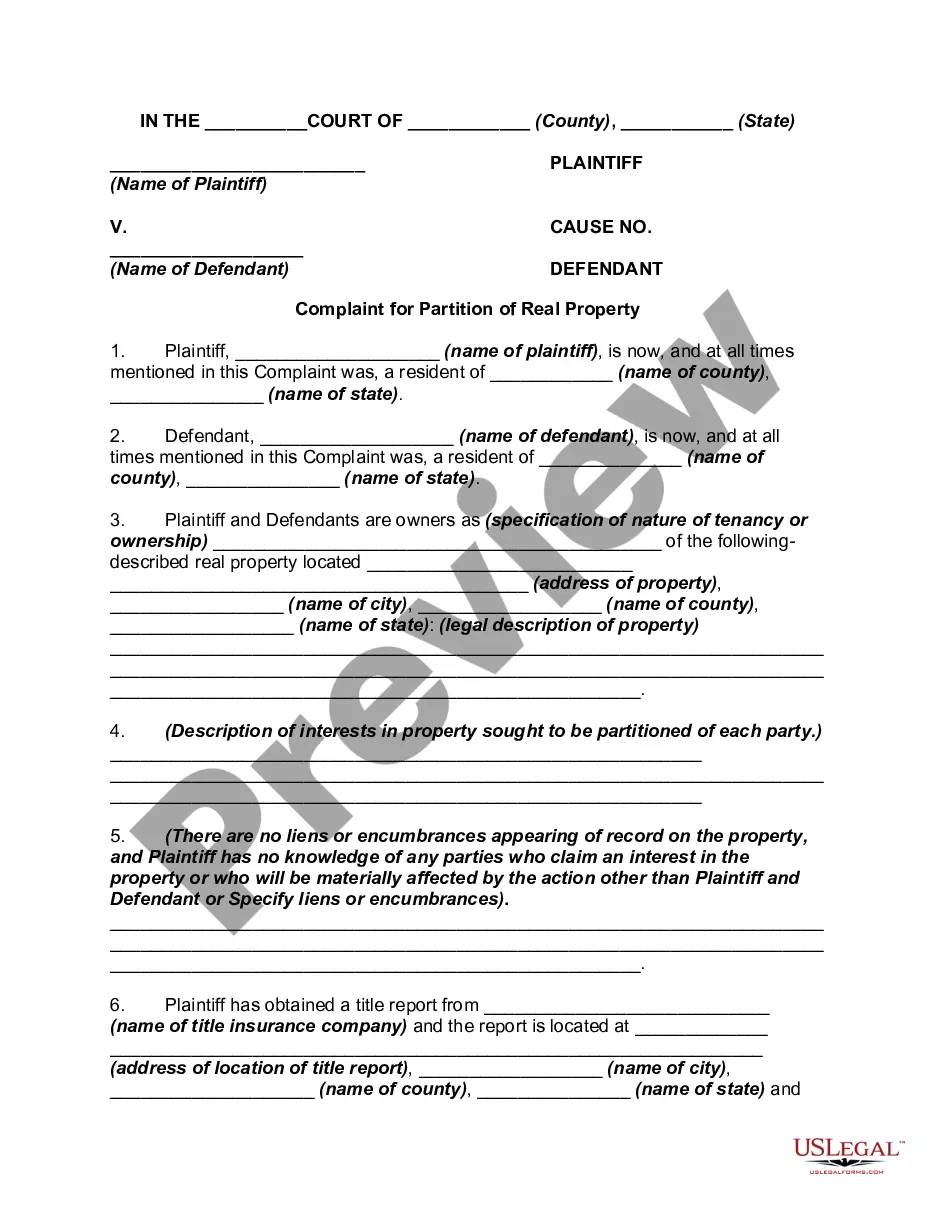
An action for partition usually arises when there is a dispute as to how to divide property, or in a dispute as to whether property should be sold. One co-owner of real property can file to get a court order requiring the sale of the property and division of the profits.
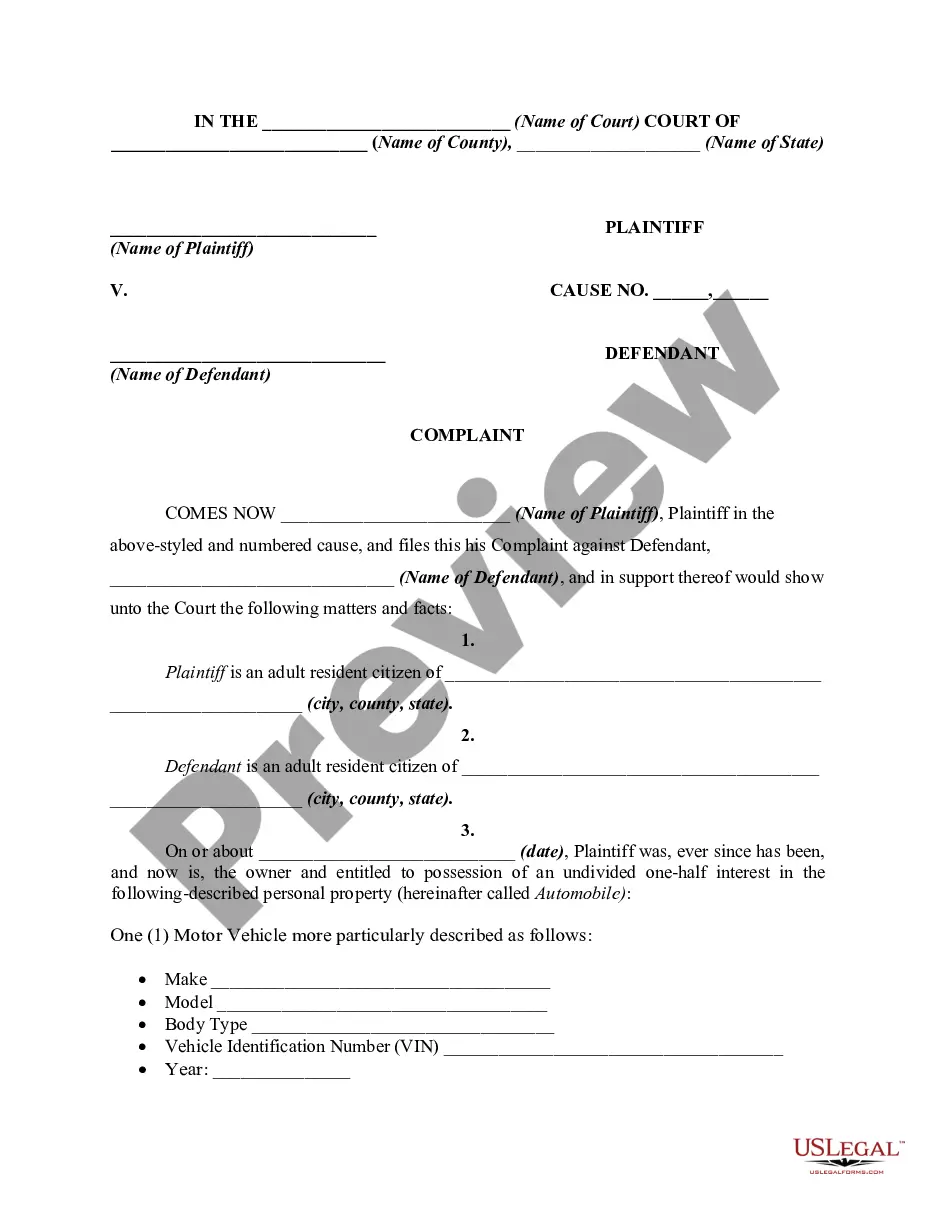
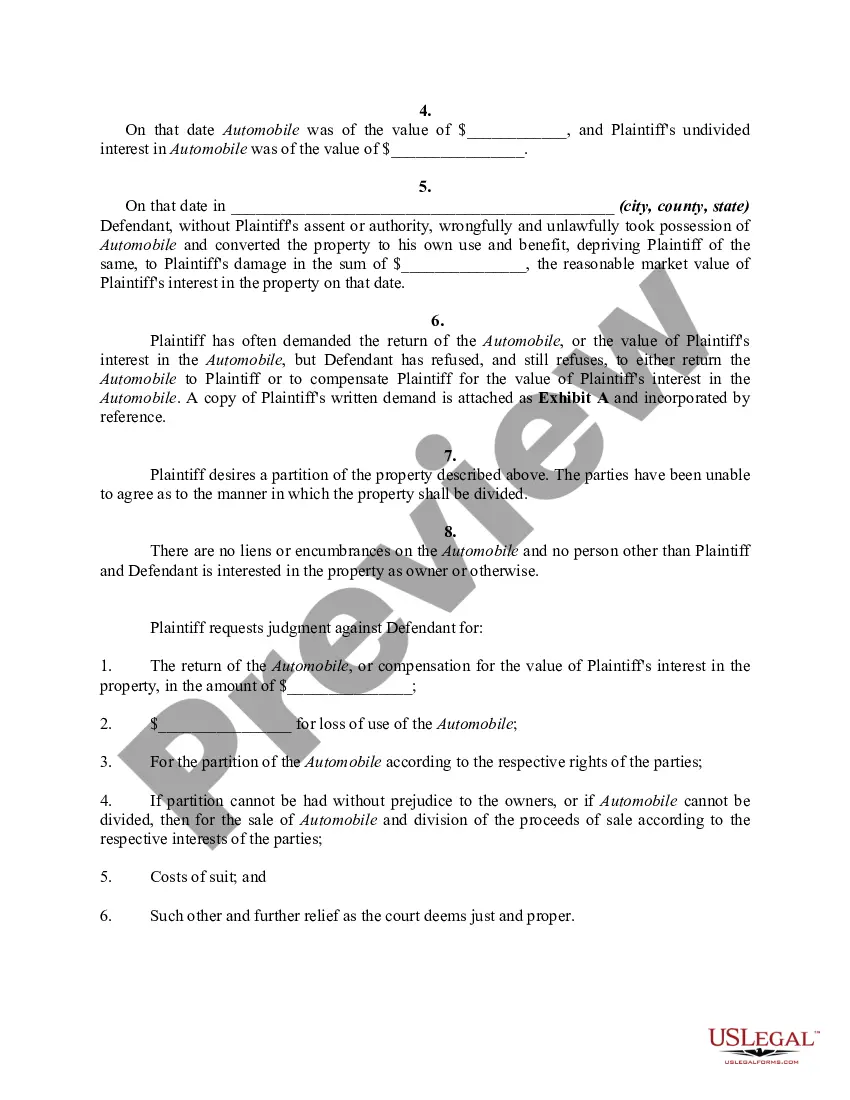
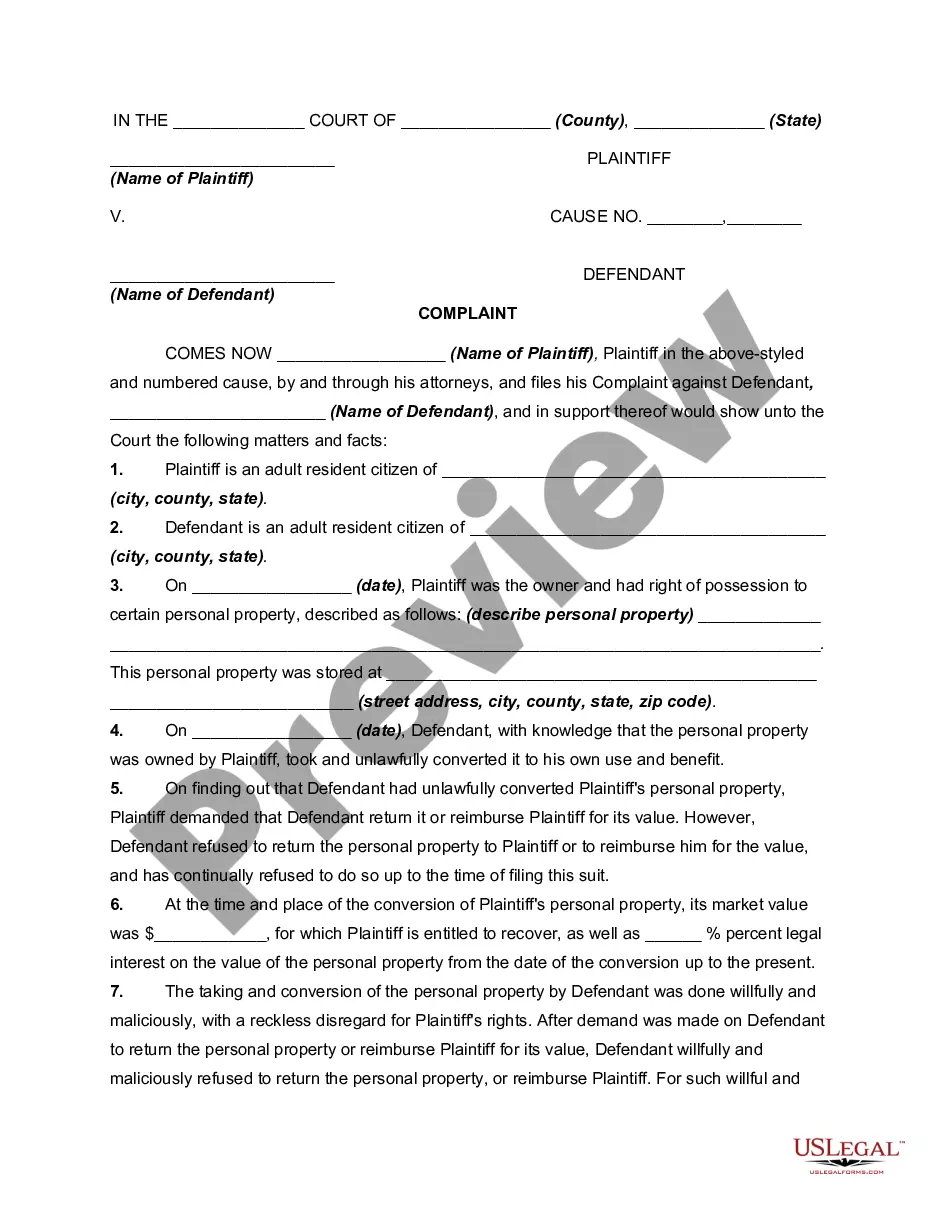
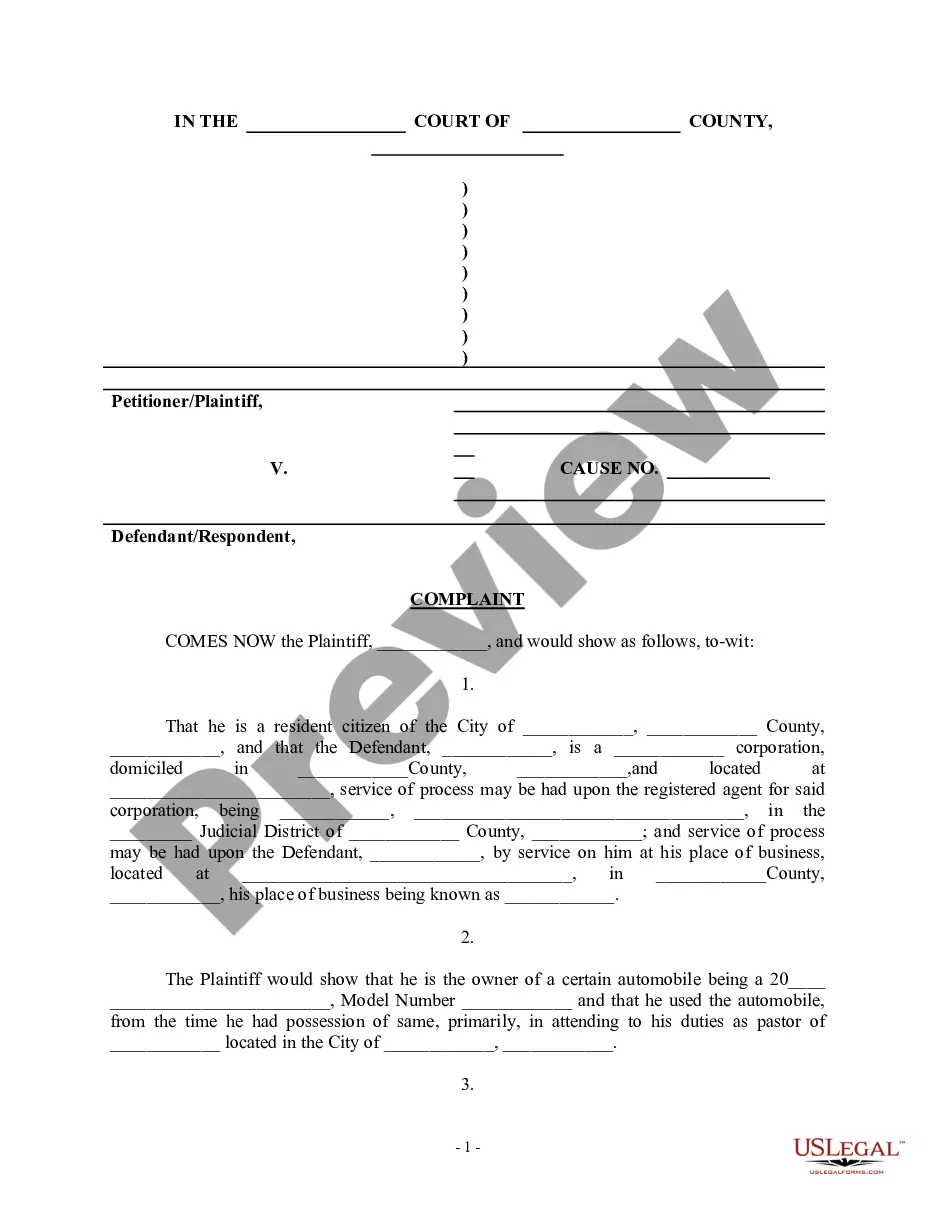
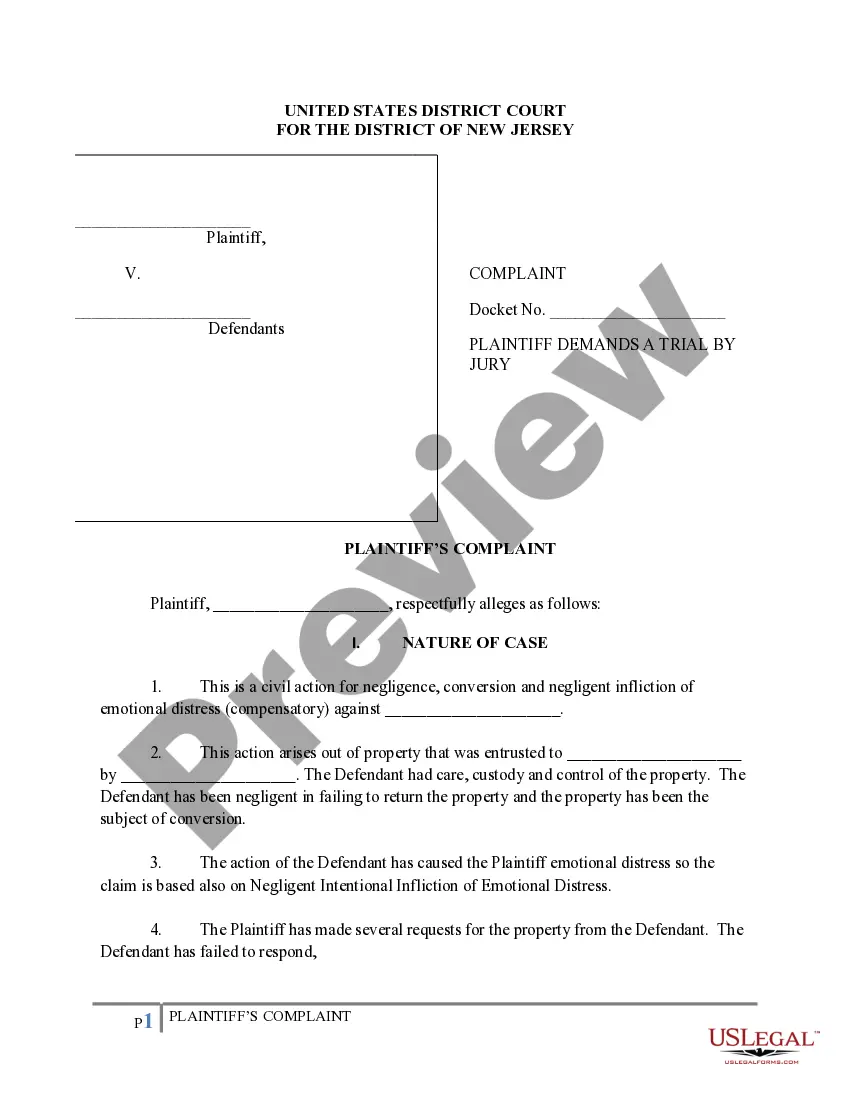
Charlotte North Carolina Complaint for Conversion of Personal Property by Co-Owner and Request for Partition
Category:
State:
Multi-State
City:
Charlotte
Control #:
US-01705BG
Format:
Word;
Rich Text
Instant download
Description
Conversion is when someone wrongfully uses property of another for their own purposes or alters or destroys it. In an action for conversion, the taking of the property may be lawful, but the retaining of the property is unlawful. To succeed in the action, the plaintiff must prove that he or she demanded the property returned and the defendant refused to do so.
Free preview



Form popularity
FAQ
The financial responsibility for a partition action in North Carolina usually falls on the co-owners involved in the dispute. Each party's contribution is typically proportional to their stake in the property. If you are considering filing a Charlotte North Carolina Complaint for Conversion of Personal Property by Co-Owner and Request for Partition, understanding these costs is crucial. Consulting with a legal expert can help you manage these expenses and clarify your obligations.
Recovering personal property from someone can involve various steps, especially if the matter escalates to legal action. To initiate the process, you should communicate directly with the individual to request the return of your belongings. If this fails, filing a Charlotte North Carolina Complaint for Conversion of Personal Property by Co-Owner and Request for Partition may be necessary. Working with a legal platform like uslegalforms can provide the resources you need to navigate this situation effectively.
In North Carolina, the costs associated with a partition action are typically shared among the co-owners involved. Each party may contribute to legal fees, court costs, and other expenses based on their ownership interest in the property. It’s important to address these financial responsibilities upfront when filing a Charlotte North Carolina Complaint for Conversion of Personal Property by Co-Owner and Request for Partition. Seeking guidance from legal professionals can clarify payment obligations.
The duration of a partition action in North Carolina can vary based on several factors, including the complexity of the case and the court's schedule. Generally, you can expect the process to take several months, especially if disputes arise among co-owners. Preparing a Charlotte North Carolina Complaint for Conversion of Personal Property by Co-Owner and Request for Partition can help streamline the process. Utilizing expert legal services can also expedite your case.
In North Carolina, the five requirements for adverse possession include actual possession of the property, continuous use for a specified period, open and notorious use, hostile possession without permission, and exclusive possession. Understanding these elements can be crucial when dealing with property disputes, including those related to a Charlotte North Carolina Complaint for Conversion of Personal Property by Co-Owner and Request for Partition. Consulting with legal experts can provide clarity on how these factors apply to your situation.
A partition action in North Carolina allows co-owners of property to seek a legal remedy for dividing their interests. This is particularly relevant in cases involving a Charlotte North Carolina Complaint for Conversion of Personal Property by Co-Owner and Request for Partition. The action can result in either physical division of the property or a sale, enabling fair distribution of proceeds among co-owners.
If you do not respond to a partition action, the court may proceed without your input, potentially leading to a ruling that does not favor your interests. In cases such as a Charlotte North Carolina Complaint for Conversion of Personal Property by Co-Owner and Request for Partition, failing to respond can result in a default judgment against you. It is crucial to engage promptly with the legal process to protect your rights.
A partition action can be worth pursuing if co-owners cannot agree on the use or division of property, especially in situations like a Charlotte North Carolina Complaint for Conversion of Personal Property by Co-Owner and Request for Partition. It can provide a legal solution to disputes that might otherwise lead to ongoing conflict. Ultimately, weighing the potential outcomes and legal costs against the benefits will help you make an informed decision.
The duration of a partition lawsuit can vary based on several factors, including the complexity of the case and court schedules. Generally, you can expect the process to take several months, particularly if it involves a Charlotte North Carolina Complaint for Conversion of Personal Property by Co-Owner and Request for Partition. Engaging with legal professionals can help streamline the process and ensure timely resolution.
In a partition action lawsuit, the court determines how to divide property among co-owners, especially in cases like a Charlotte North Carolina Complaint for Conversion of Personal Property by Co-Owner and Request for Partition. The process typically involves filing a complaint, gathering evidence, and possibly a court hearing. Ultimately, the court will decide whether to partition the property physically, sell it, or other remedies as deemed appropriate.