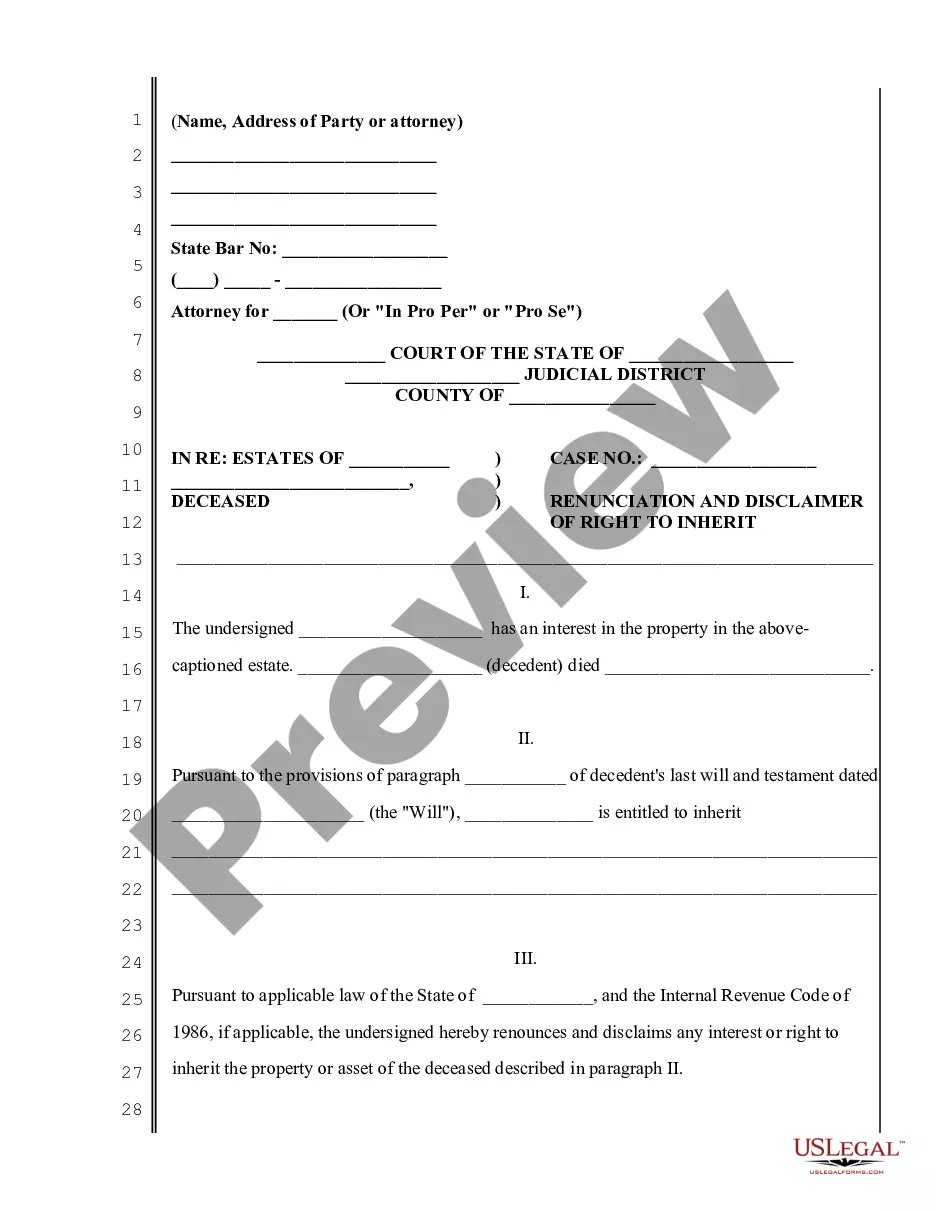
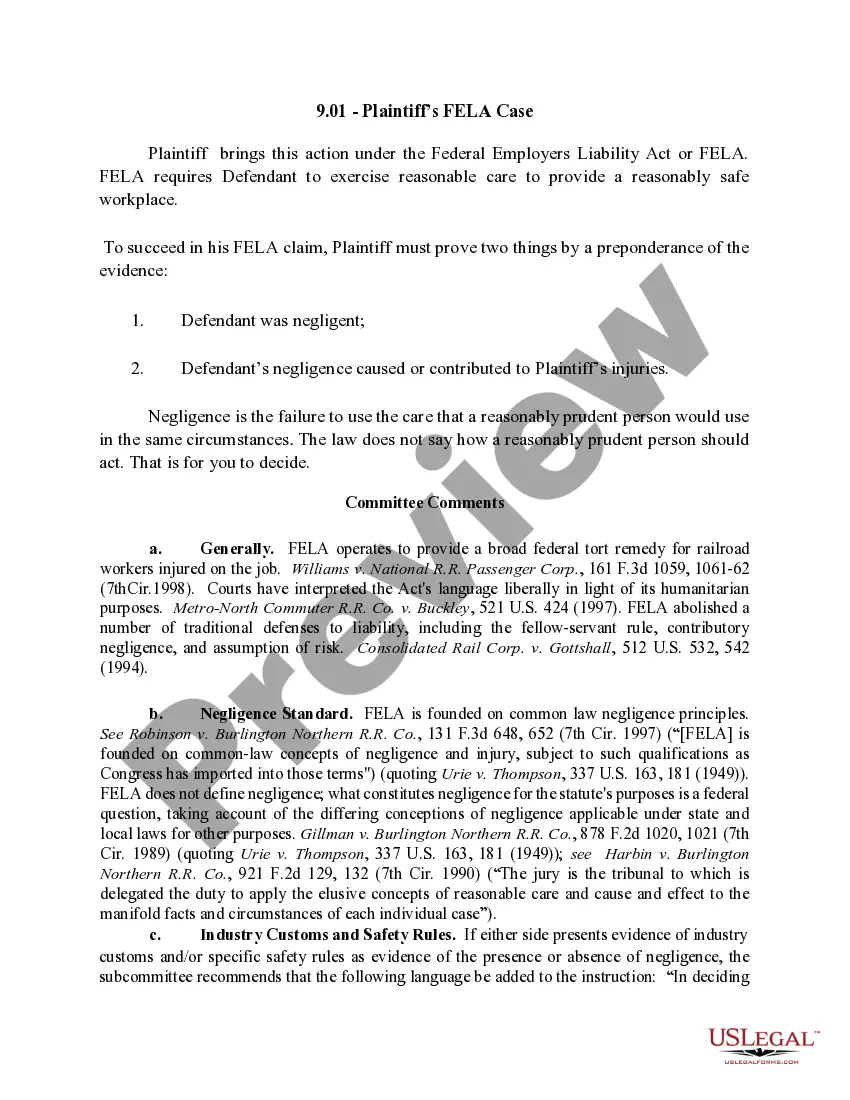
Seattle Washington Renunciation and Disclaimer of Interest in Life Insurance Proceeds

State:
Multi-State
City:
Seattle
Control #:
US-01697BG
Format:
Word; 
Rich Text
Instant download

Description

Disclaimers are used by those who receive property as heirs or legatees in an estate, or by beneficiaries of a non-testamentary transfer of property at death; for example, the beneficiaries of a life insurance policy. A disclaimer is simply a declaration by the person entitled to property that the interest in that property is disclaimed or renounced. A disclaimer allows the disclaiming heir or beneficiary to disclaim an interest in such a fashion that the right to the property that is disclaimed is treated as if it never existed.


The Uniform Disclaimers of Property Interests Act (which has been adopted by a number of states) provides the authority to make disclaimers, what interests may be disclaimed, the time when disclaimers are effective, and the effect on the distribution of the disclaimed property interests.
Free preview
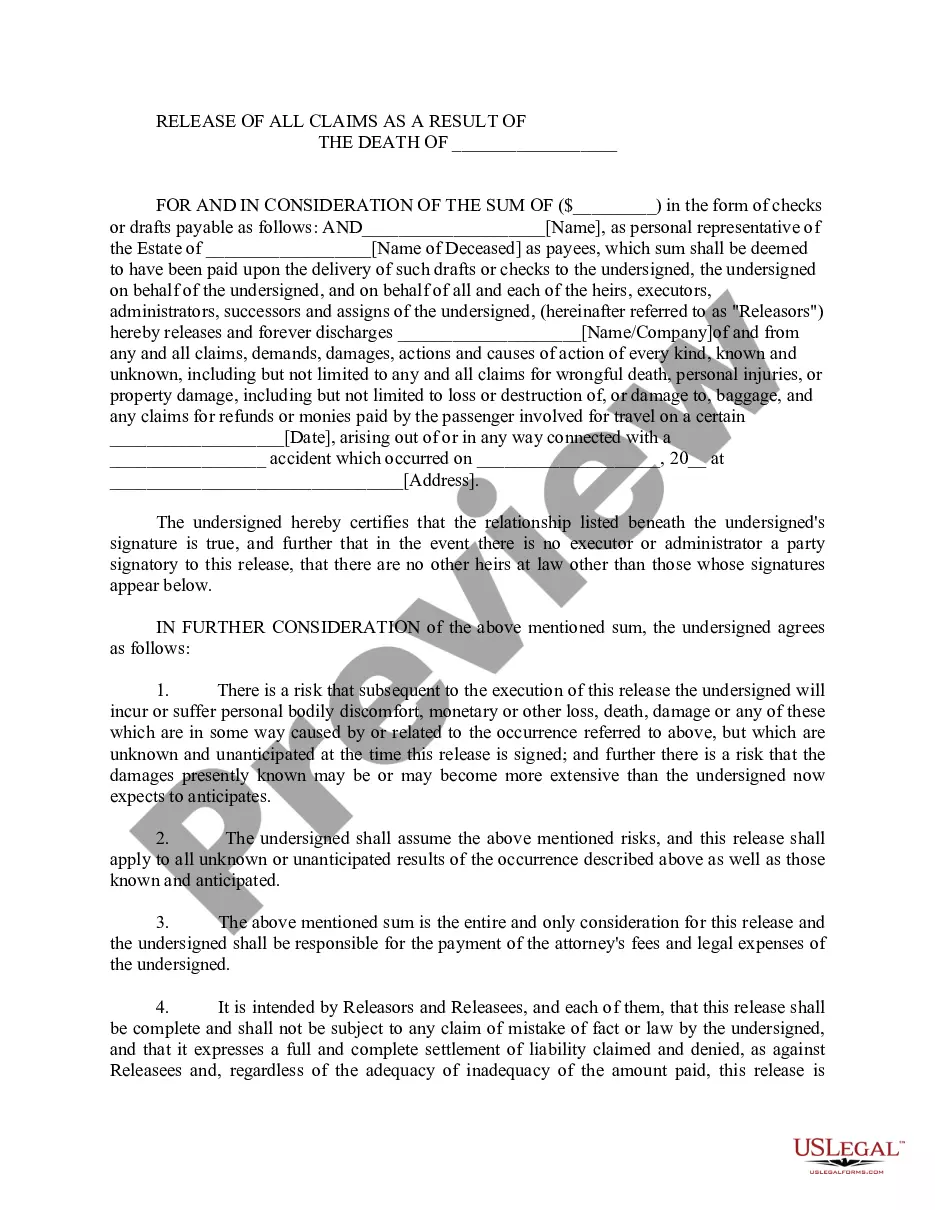
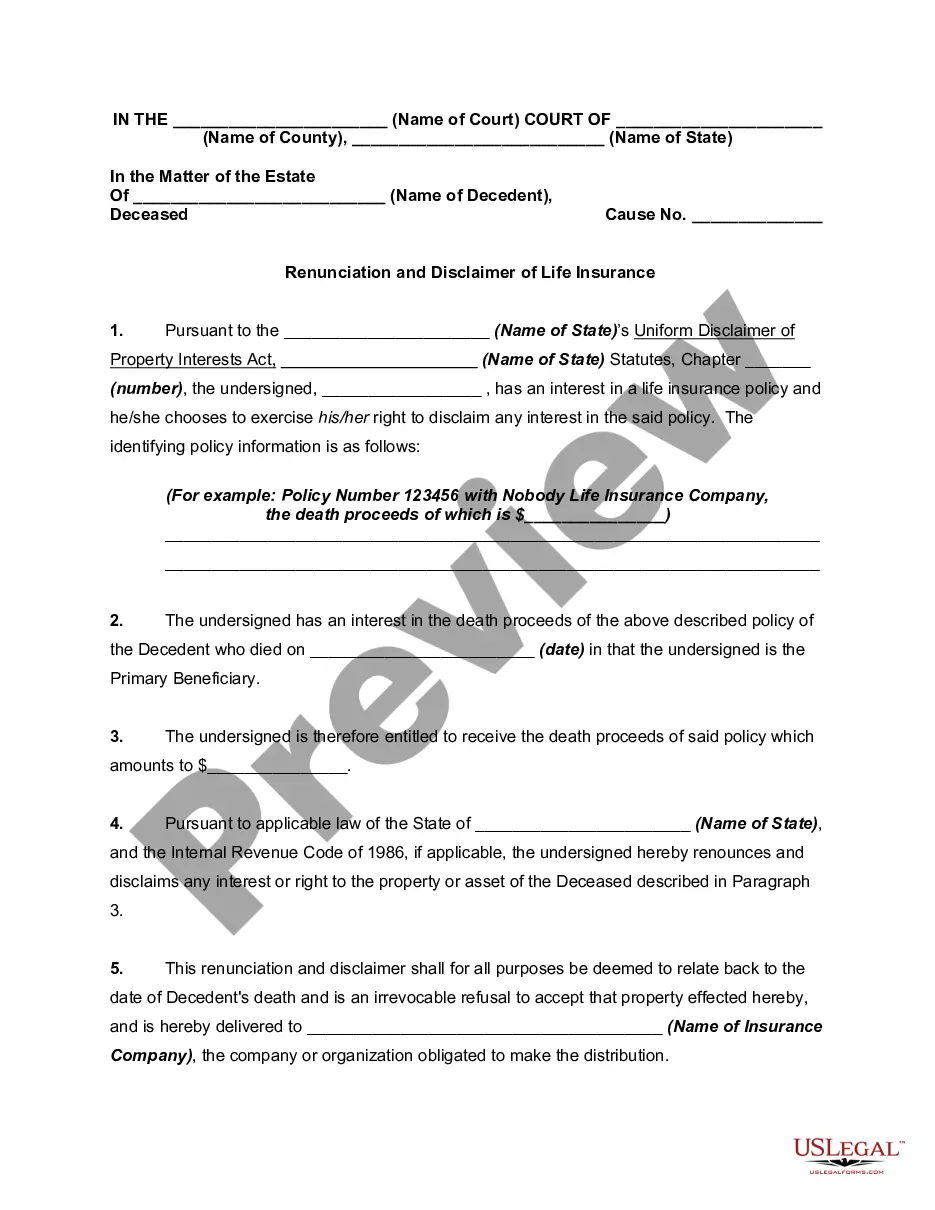
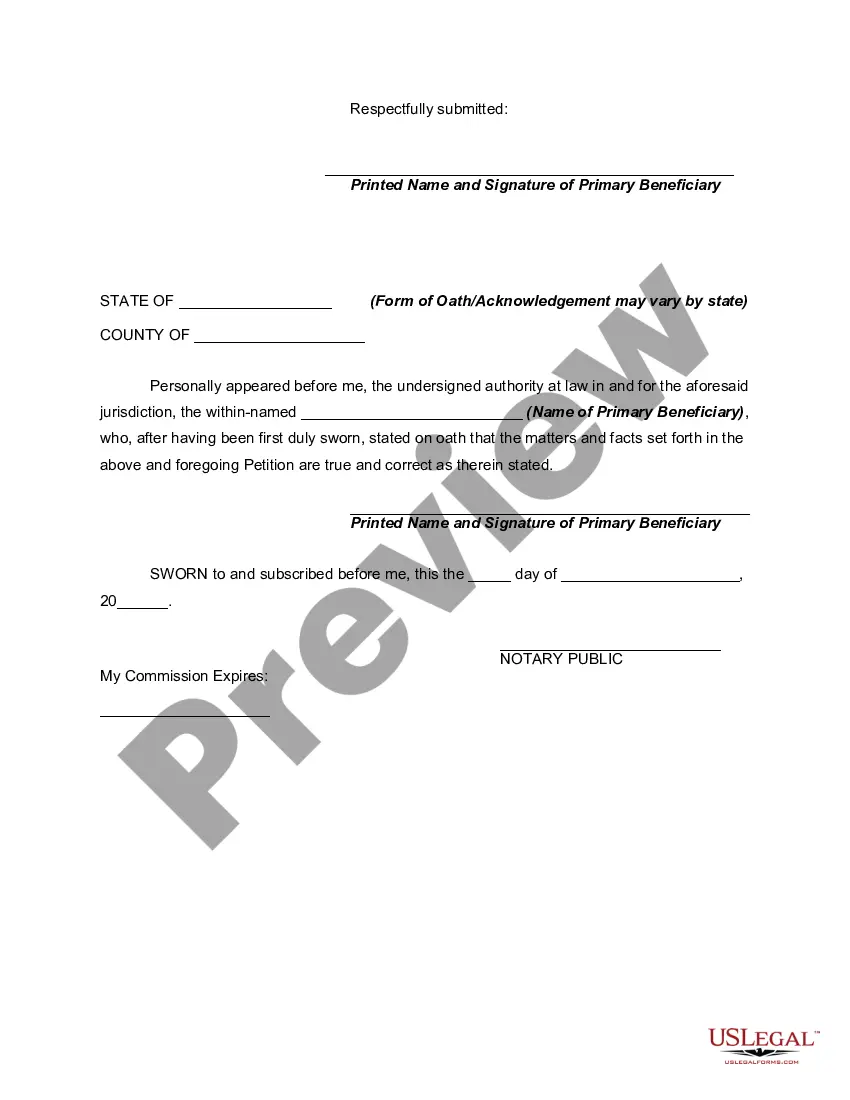
  • Preview Renunciation and Disclaimer of Interest in Life Insurance Proceeds
  • Preview Renunciation and Disclaimer of Interest in Life Insurance Proceeds

Form popularity

FAQ

To write a beneficiary disclaimer letter, start by clearly stating your intention to disclaim your interest in the inheritance. Include relevant details, such as the decedent's name, the nature of the interests you are disclaiming, and your contact information. Make sure to sign and date the letter before submitting it to the appropriate parties, such as the estate executor. For guidance and templates, US Legal Forms can assist you in crafting a precise disclaimer that meets the requirements for Seattle Washington Renunciation and Disclaimer of Interest in Life Insurance Proceeds.

A disclaimer of interest form is a legal document that allows an individual to refuse or renounce an interest in an inheritance or property. This form is essential when someone does not wish to accept the benefits associated with an estate, including life insurance proceeds. By submitting this form, you can clearly communicate your decision to reject the inheritance. US Legal Forms offers user-friendly templates that help you navigate the process of Seattle Washington Renunciation and Disclaimer of Interest in Life Insurance Proceeds.

To disclaim an inheritance in Washington state, you must file a written disclaimer with the probate court. This document must clearly state your intention to renounce any interest in the inheritance. It is important to act promptly, as Washington law requires disclaimers to be filed within nine months of the decedent's death. For assistance with the process, consider using US Legal Forms, which provides templates specifically for Seattle Washington Renunciation and Disclaimer of Interest in Life Insurance Proceeds.

The 9 month disclaimer rule in Seattle, Washington, states that you must file your disclaimer within nine months of the decedent's death. This timeline is crucial, as failing to disclaim within this period may result in the loss of your right to renounce the inheritance, including any life insurance proceeds. To stay informed and compliant, consider using US Legal Forms for the necessary documentation and to ensure timely submission.

In Seattle, Washington, a disclaimer of inheritance does not necessarily need notarization, but it is often recommended. Notarizing your disclaimer can add an extra layer of authenticity and may reduce potential disputes regarding your intentions. To ensure compliance with state laws, you can utilize resources from US Legal Forms, which provides guidance on how to properly execute your disclaimer.

To disclaim an inheritance, you must submit a formal written statement indicating your intention to renounce your rights to the property, which in this case involves the Seattle Washington Renunciation and Disclaimer of Interest in Life Insurance Proceeds. This document typically needs to include specific information about the decedent and the property being disclaimed. After preparing the disclaimer, you should file it with the appropriate court or executor. Using platforms like US Legal Forms can simplify this process by providing templates tailored to your needs.

Writing an inheritance disclaimer involves drafting a formal document that clearly states your intention to renounce your interest in the inheritance. This document must meet specific state requirements to be valid, including proper identification and signatures. Using the Seattle Washington Renunciation and Disclaimer of Interest in Life Insurance Proceeds as a guide can simplify the process and ensure compliance with legal standards.

Filing a disclaimer after the 9-month period can be complex and may not be permissible under Washington state law. Generally, disclaimers must be filed within this timeframe to be valid and effective. If you are considering the Seattle Washington Renunciation and Disclaimer of Interest in Life Insurance Proceeds, it is crucial to act swiftly to secure your rights and options.

To avoid U.S. taxes, you generally need to stay out of the country for at least 330 full days during a 12-month period. This rule is important for determining your tax residency status and can significantly affect your financial outcomes, especially regarding life insurance proceeds. Engaging with the Seattle Washington Renunciation and Disclaimer of Interest in Life Insurance Proceeds can also help you clarify your tax obligations.

In 2026, estate tax exemptions are expected to revert to pre-2017 levels, which may lead to increased tax liabilities for many estates. This change could impact how individuals manage their assets and plan their inheritances, including life insurance proceeds. Utilizing the Seattle Washington Renunciation and Disclaimer of Interest in Life Insurance Proceeds can be a strategic way to navigate these changes and protect your estate from excessive taxation.

Interesting Questions

Trusted and secure by over 3 million people of the world’s leading companies

Seattle Washington Renunciation and Disclaimer of Interest in Life Insurance Proceeds