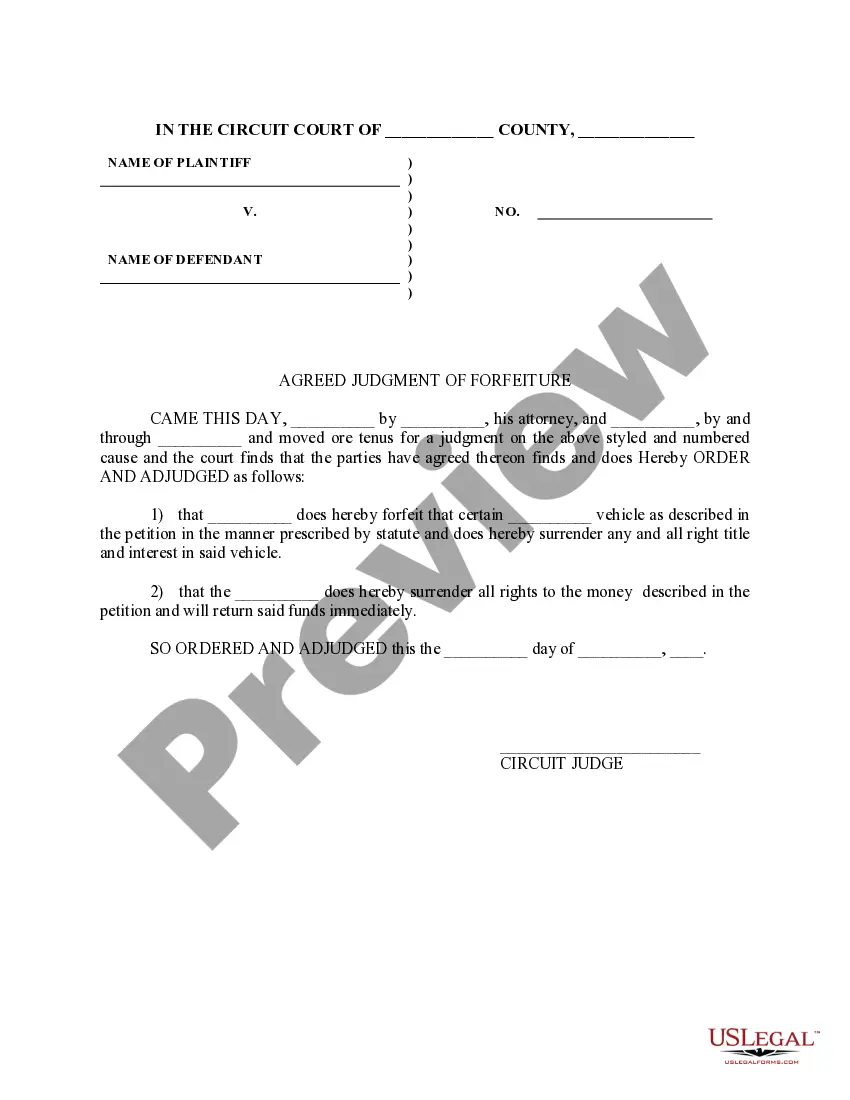
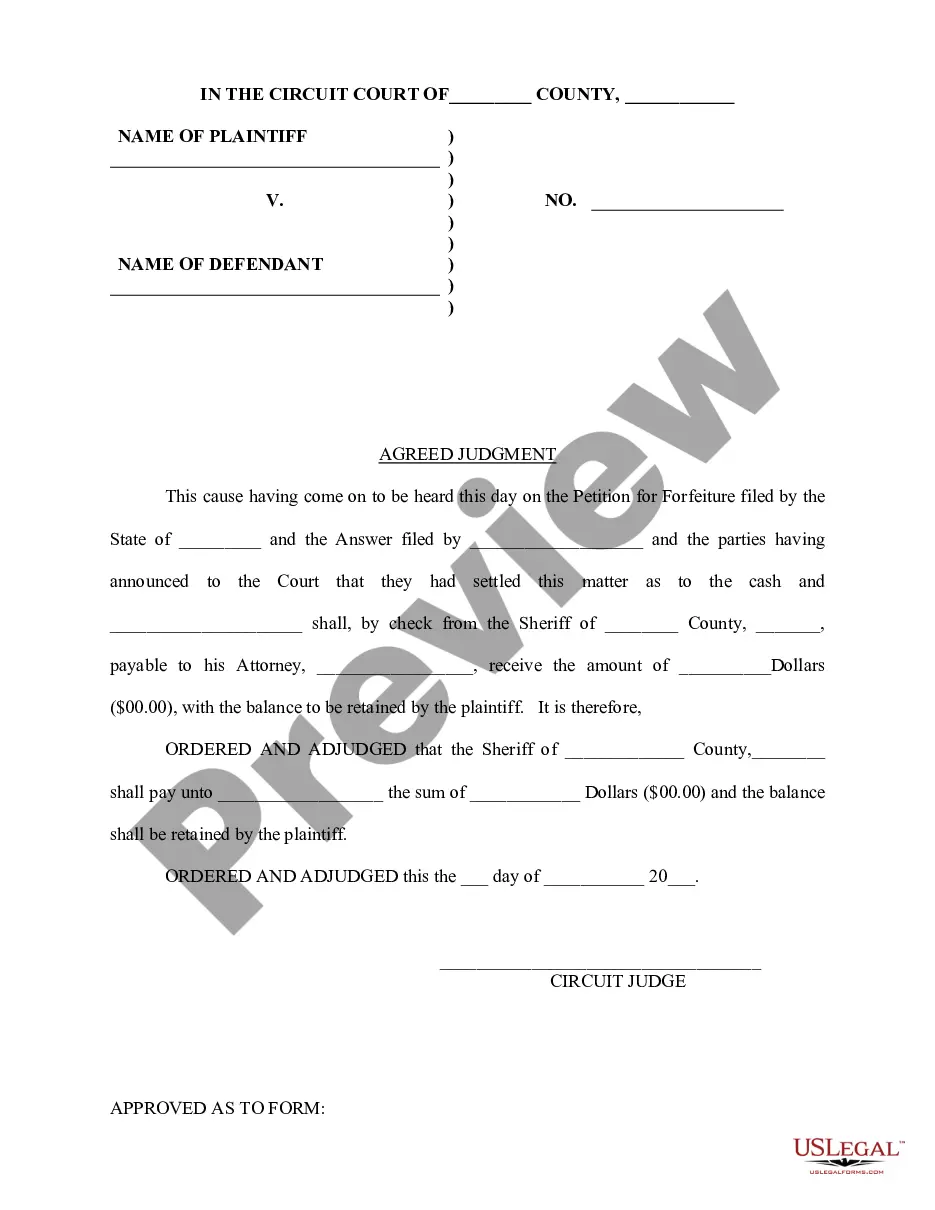
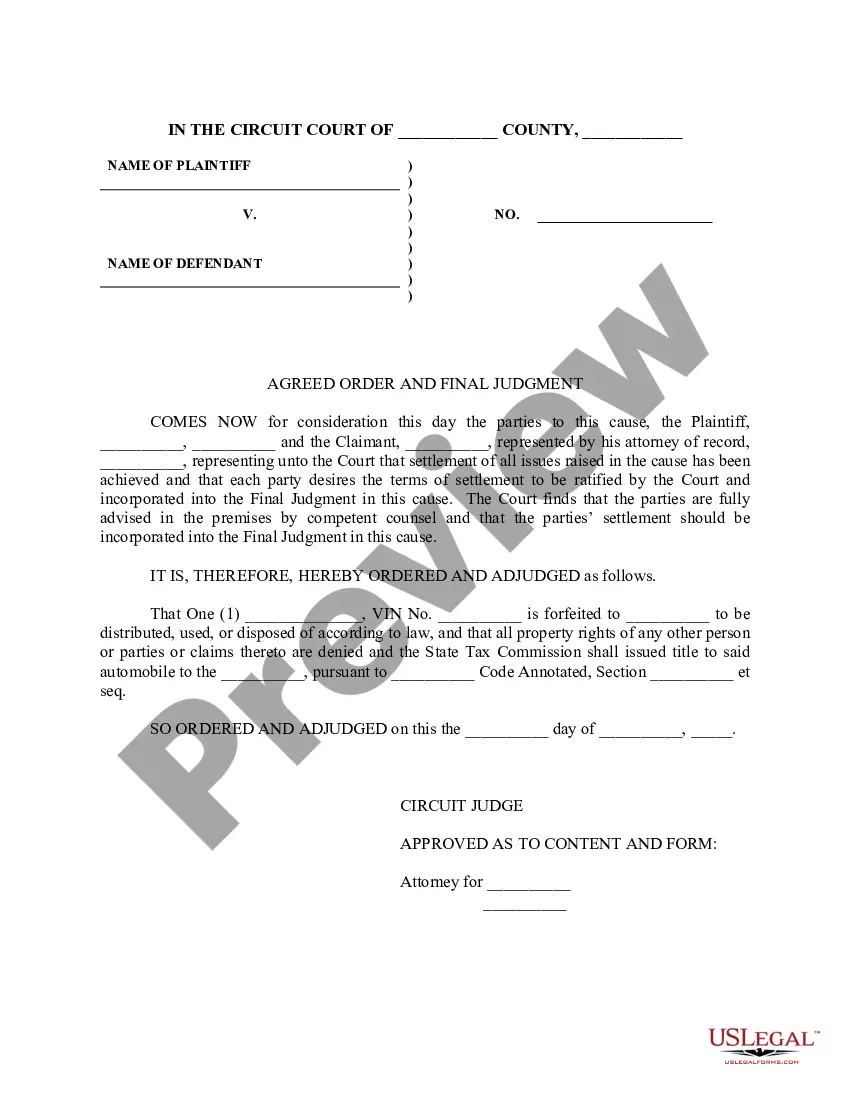
Mesa Arizona Agreed Judgment of Forfeiture
Description





Form popularity
FAQ
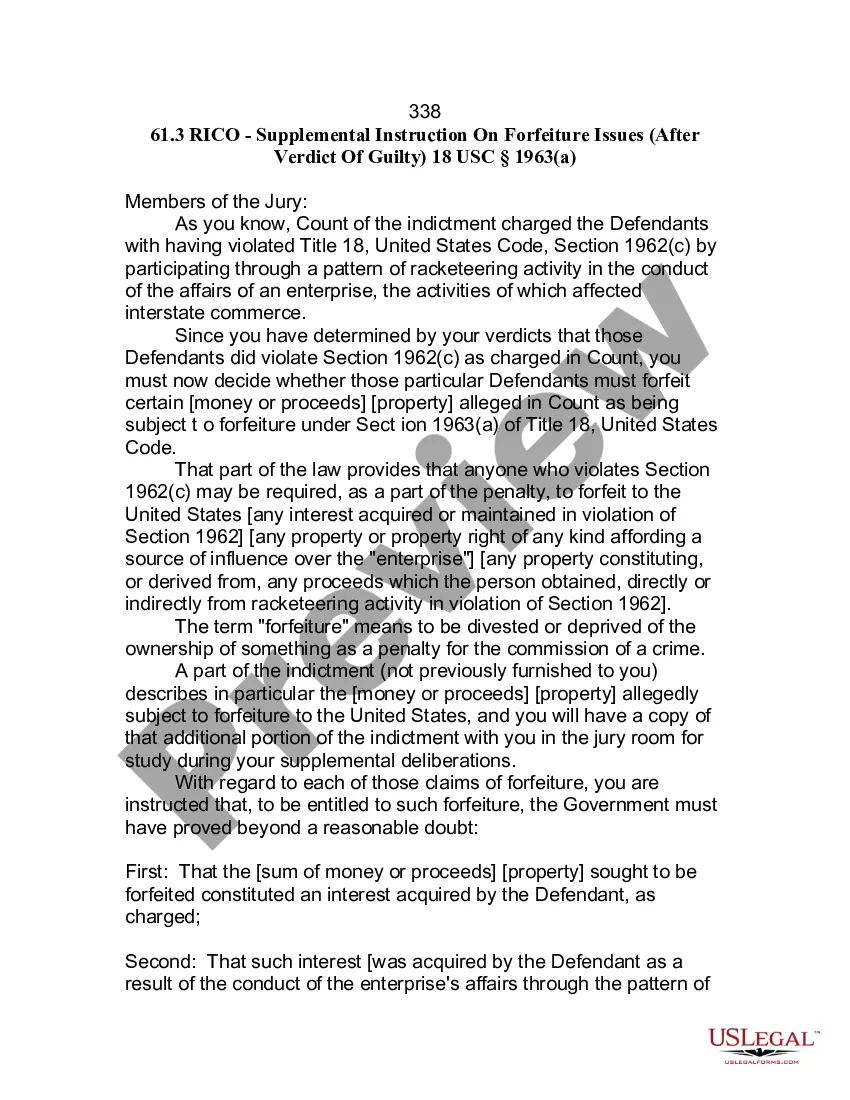
Winning a forfeiture case generally requires a solid legal strategy that includes gathering substantial evidence and presenting a compelling argument in court. In Mesa, Arizona, understanding the grounds for the agreed judgment of forfeiture can significantly influence the case. It is often advantageous to consult with legal experts who can provide guidance on the best approach to achieve a favorable result.
In the federal court system, the three types of cases are civil cases, criminal cases, and bankruptcy cases. Civil cases typically involve disputes between private parties, while criminal cases involve the government prosecuting an individual. Understanding these distinctions is crucial, especially when seeking a favorable outcome in a Mesa Arizona agreed judgment of forfeiture.
The three types of forfeiture are civil forfeiture, criminal forfeiture, and statutory forfeiture. Each type has different legal standards and requirements, which can affect the outcome of cases. Engaging with a knowledgeable attorney can be beneficial when navigating the complexities of a Mesa Arizona agreed judgment of forfeiture.
In Arizona, judgments must comply with specific rules, such as being based on clear evidence and demonstrating a legal entitlement to the judgment. A Mesa Arizona agreed judgment of forfeiture must be documented properly to be enforceable. Additionally, parties involved should ensure they follow the correct legal procedures, including adhering to timelines and filing requirements.
The three primary types of forfeiture cases are civil forfeiture, criminal forfeiture, and administrative forfeiture. Civil forfeiture involves the government seizing property without charging the owner with a crime, while criminal forfeiture follows a criminal conviction. It's important to understand the implications of each type, especially when dealing with a Mesa Arizona agreed judgment of forfeiture.
Common examples of forfeiture include the seizure of assets used in illegal activities, such as vehicles involved in drug trafficking or properties linked to criminal enterprises. Additionally, the government often seeks forfeiture of funds acquired through means deemed unlawful. In Mesa, Arizona, the agreed judgment of forfeiture can facilitate the process of reclaiming property legally after compliance with the law.
Yes, Arizona operates as a second chance state, offering individuals opportunities to rebuild their lives after legal challenges. This reflects a growing understanding that past mistakes should not define one’s future. The Mesa Arizona Agreed Judgment of Forfeiture plays a significant role in this process, allowing individuals to settle disputes without long-term repercussions. By utilizing legal resources, such as US Legal Forms, you can navigate the complexities of second chances effectively.
Following the forfeiture of a lease, the landlord typically takes back possession of the property. In the context of a Mesa Arizona Agreed Judgment of Forfeiture, this can mean that previous tenants lose their rights to the leased space. As a result, the landlord may pursue subsequent tenants or make changes to the property. If you find yourself facing a lease forfeiture, consider utilizing resources like uslegalforms to navigate the legal landscape smoothly.
After a default judgment is issued in Arizona, the opposing party may have limited options for contesting the ruling. In cases related to Mesa Arizona Agreed Judgment of Forfeiture, this judgment can lead to the court's determination on property rights and ownership. The affected party may need to comply with the terms set forth in the judgment, which may involve the surrender of property. It is advisable to seek legal guidance to explore any recourse available.
The order of forfeiture represents a formal command from the court to relinquish certain assets or properties. Relating this to a Mesa Arizona Agreed Judgment of Forfeiture, it highlights the judicial decision that specific property should be forfeited due to violations of the law. This order serves as a critical element in maintaining legal standards and deterring illicit behavior. Knowledge of this order is essential for anyone involved in forfeiture cases.