Boston Massachusetts Sample Letter for Disputed Bill
Description


Form popularity
FAQ
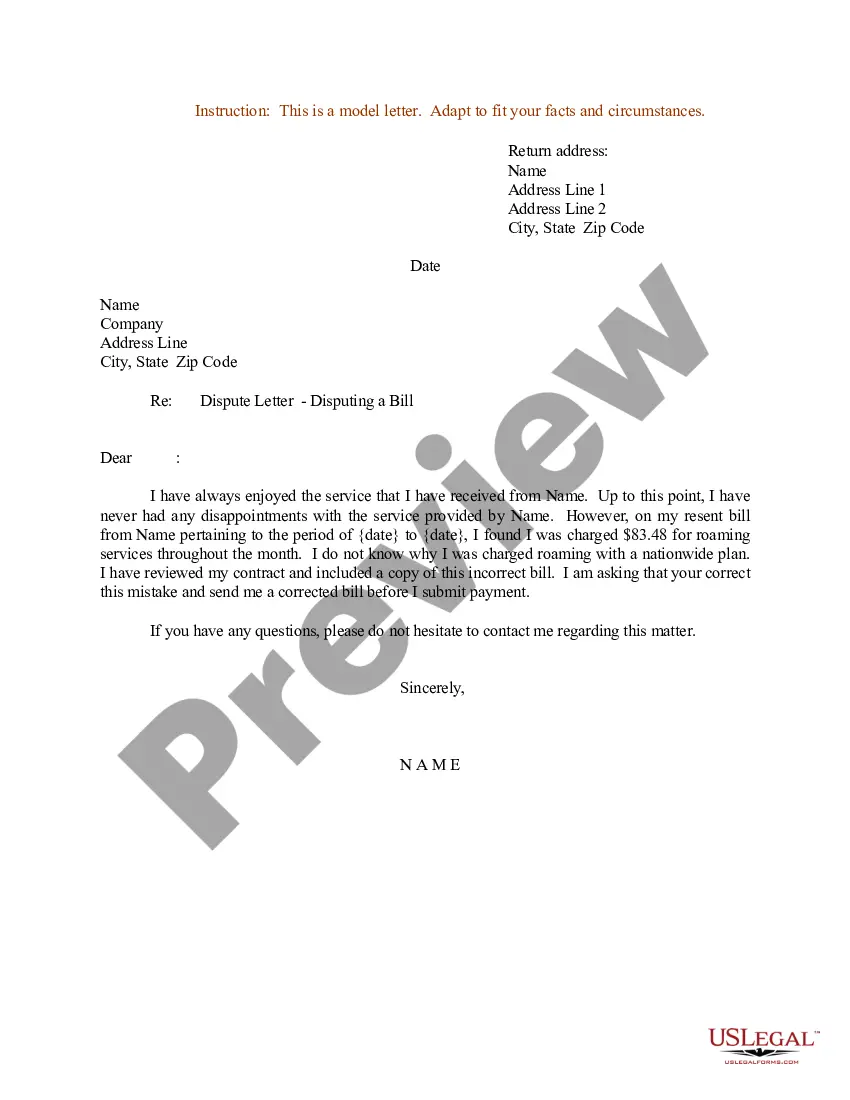
Writing a billing dispute letter involves stating your purpose upfront and providing pertinent details about your account and the disputed charges. Be concise but thorough in explaining why you feel the bill is incorrect, and support your claims with relevant documentation. For an effective format, consider utilizing a Boston Massachusetts Sample Letter for Disputed Bill, which can streamline the process and enhance your letter's effectiveness.
To politely dispute an invoice, express your disagreement respectfully and provide a clear explanation of the reasons behind your dispute. Mention the specific charges or services that you find inaccurate, while remaining courteous throughout your letter. You may consider using a Boston Massachusetts Sample Letter for Disputed Bill to ensure your message is professional and clear.
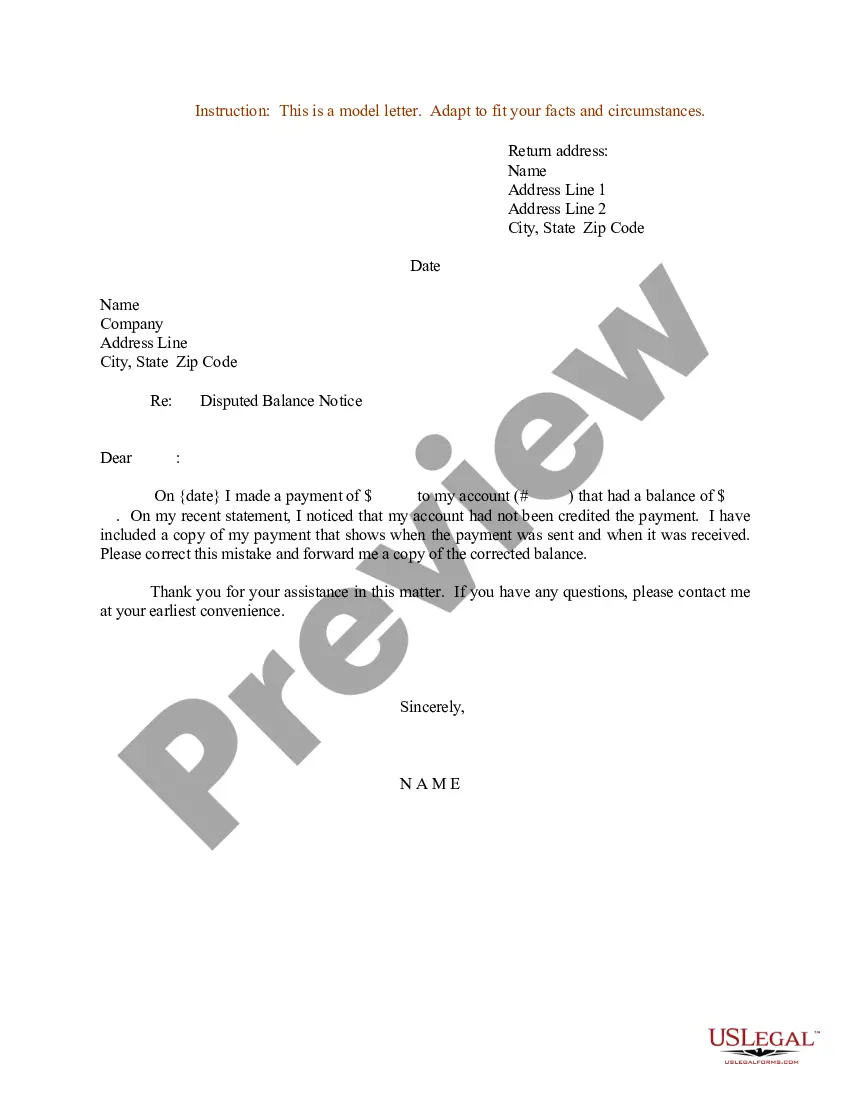
When drafting a complaint letter for wrong billing, start by addressing the recipient and stating your account information. Clearly outline the errors in the bill, specifying the amounts and services that are incorrect. Attach any evidence you have that supports your claim, and conclude by requesting a correction. A Boston Massachusetts Sample Letter for Disputed Bill can provide a helpful structure for your complaint.
To write a letter disputing charges, begin by clearly stating your intent to dispute the charges in question. Include your account details and a concise explanation of the specific charges you disagree with. It's helpful to reference the relevant dates and amounts, along with attaching any supporting documents. For convenience, you can use a Boston Massachusetts Sample Letter for Disputed Bill to guide you through the process.
Writing a payment dispute letter involves a few essential steps to ensure clarity and effectiveness. Start by stating your intention clearly, referencing the specific bill in question. Next, outline the reasons for the dispute, including any relevant details and evidence that support your case. For inspiration, you can use the Boston Massachusetts Sample Letter for Disputed Bill from US Legal Forms, which guides you in crafting a professional and persuasive letter.
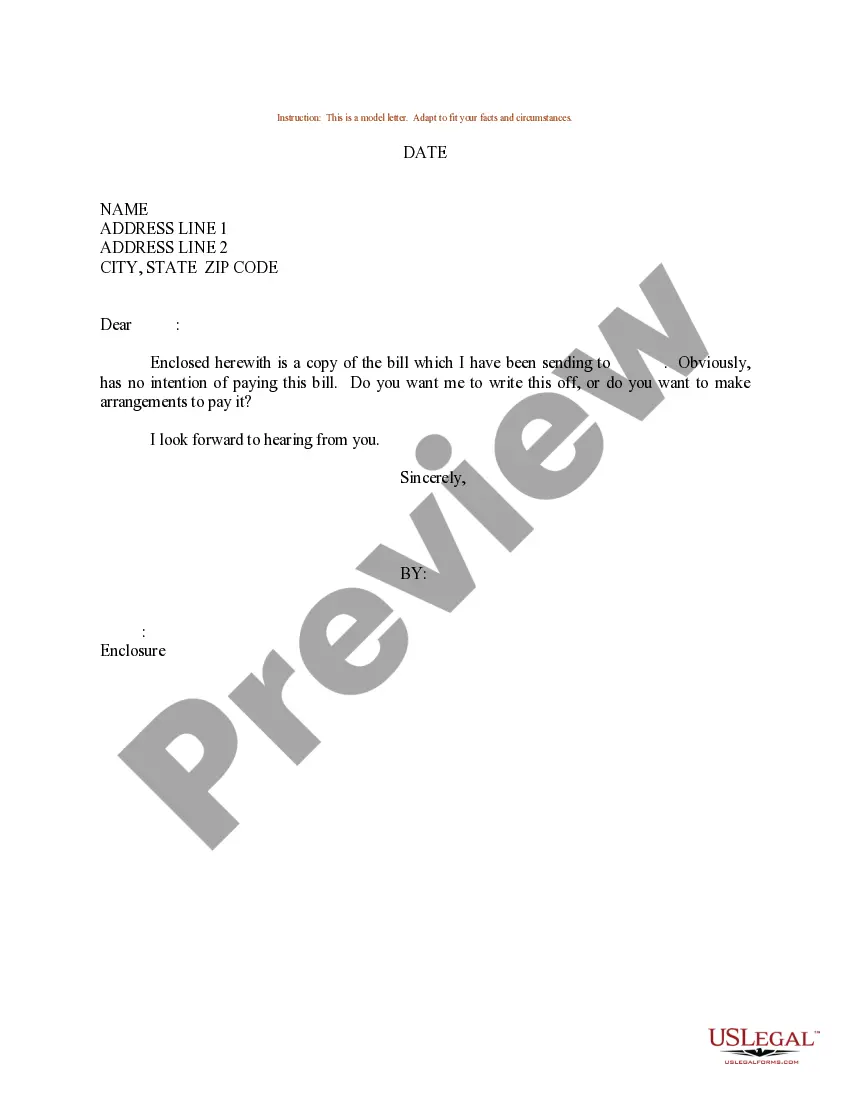
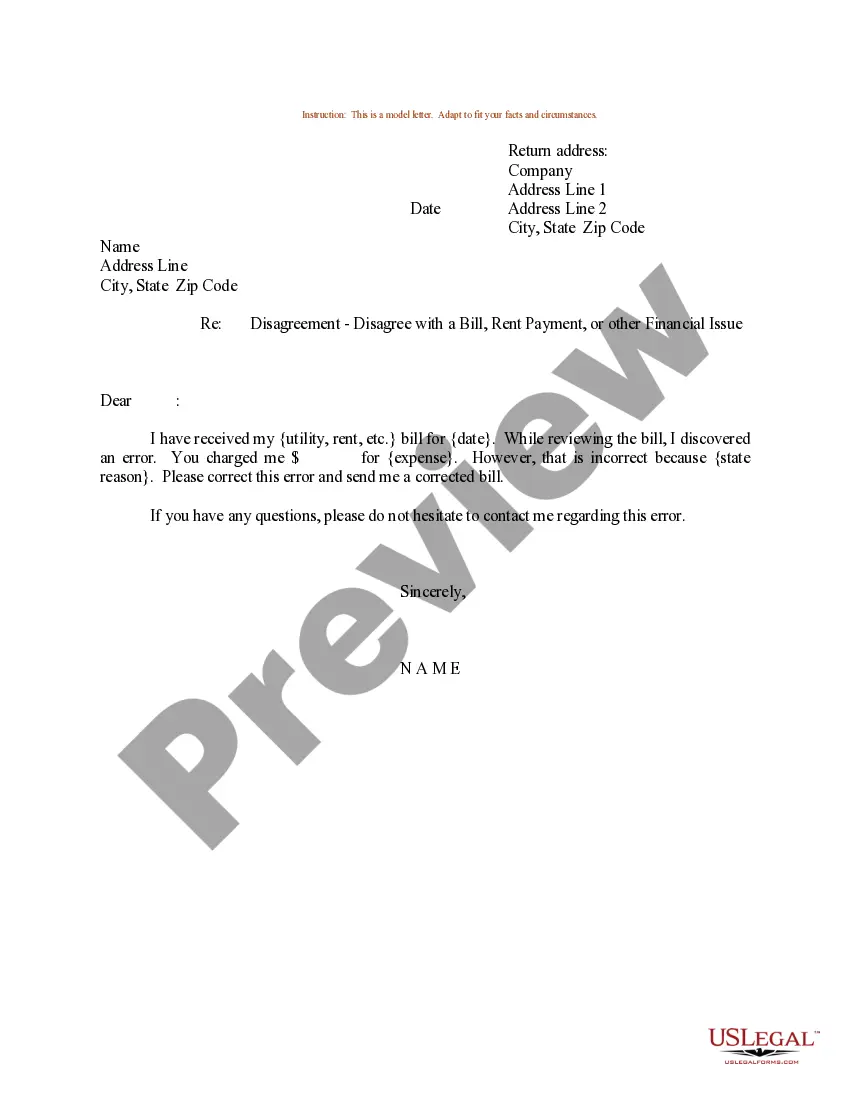
A Boston Massachusetts Sample Letter for Disputed Bill serves as a formal way to challenge inaccuracies on a billing statement. This letter should clearly state the details of the disputed charges, including the date, amount, and any other relevant information. Additionally, you should explain why you believe these charges are incorrect. By using a sample letter, you can ensure that your communication is clear and effective, enhancing your chances of a prompt resolution.
An example of a dispute letter for debt typically starts with a statement of the debt in question, followed by the reasons why you dispute it. Include any evidence that supports your claim, such as account records or prior communication. Using the Boston Massachusetts Sample Letter for Disputed Bill as a reference can help ensure you address all necessary components clearly and effectively.
An example of a billing dispute letter includes elements such as an introduction, a description of the disputed charges, and a request for correction. This letter should concentrate on presenting factual information that supports your claim. Using the Boston Massachusetts Sample Letter for Disputed Bill will provide a structured approach, making your argument clear and compelling.
When writing a bill dispute letter, start with your contact information and the recipient's details at the top. Clearly describe the billing discrepancy, including any supporting documents and your reasons for contesting the bill. Using the Boston Massachusetts Sample Letter for Disputed Bill can help format your letter correctly and ensure that you cover all necessary points.
A 609 dispute letter example is a template that you can use to dispute inaccurate information on your credit report. This letter references Section 609 of the Fair Credit Reporting Act, allowing you to request proof of the debt. For an effective request, consider using the Boston Massachusetts Sample Letter for Disputed Bill to guide you in formulating your own letter.