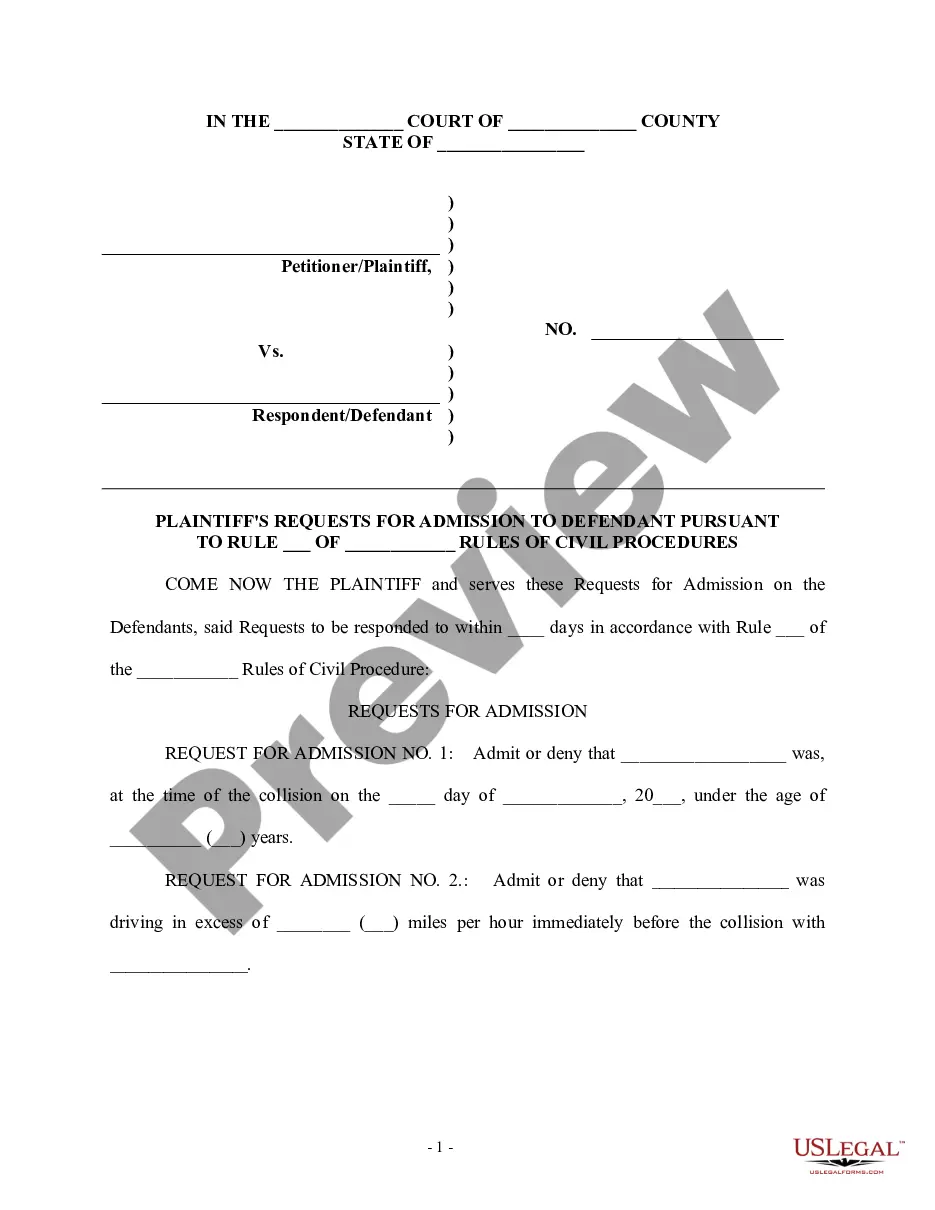
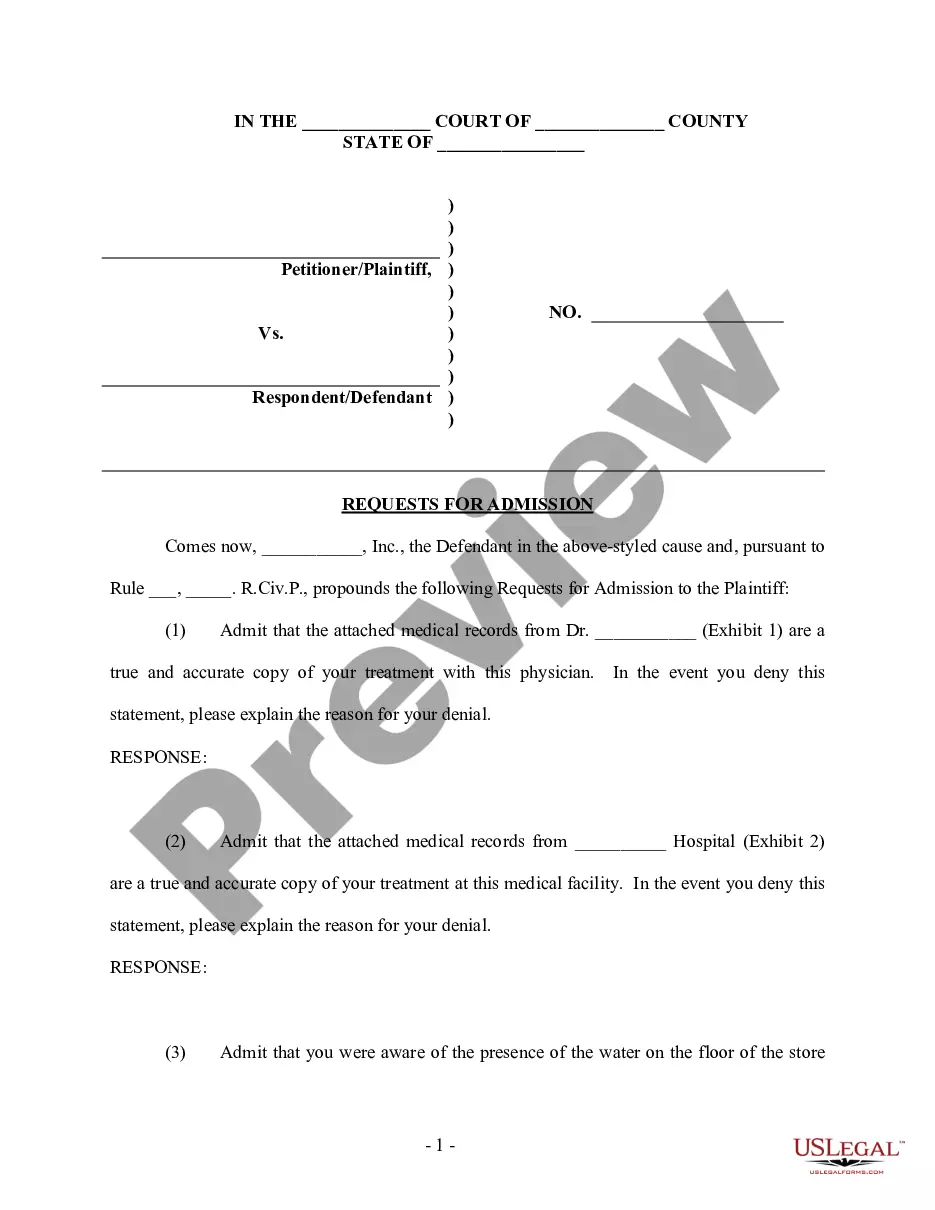
Jacksonville Florida Requests for Admissions
Description






Form popularity
FAQ
Answering requests for admissions involves reviewing each statement carefully and deciding whether to admit, deny, or state that you lack sufficient information to respond. Provide clear and concise answers to avoid ambiguity in your responses. This process is crucial in Jacksonville Florida Requests for Admissions, as your responses can impact your case. If you need assistance, consider using resources from US Legal Forms to create your answers efficiently.
To reply to an admission offer, you should draft a formal response that clearly states whether you admit or deny the request. Make sure to address each point explicitly and provide explanations if necessary. It is wise to do this promptly to stay compliant with deadlines, particularly in Jacksonville Florida Requests for Admissions. Using platforms like US Legal Forms can streamline this process and help ensure your reply is properly structured.
Yes, you can refuse to answer a request for admission under specific circumstances. If the request asks for information that is privileged or protected, you may object. Additionally, if answering the request would be unreasonable or burdensome, you can decline to respond. It's important to understand your rights and options related to Jacksonville Florida Requests for Admissions to make informed decisions.
Yes, verifying requests for admission is crucial in the Jacksonville Florida Requests for Admissions process. This verification helps establish the authenticity of claims made by both parties, ensuring that your case is built on solid foundations. By confirming the accuracy of these requests, you can effectively streamline the litigation process and focus on the key issues at hand. Utilizing the services of US Legal Forms can simplify this verification process, providing you with templates and guidance tailored to your specific needs.
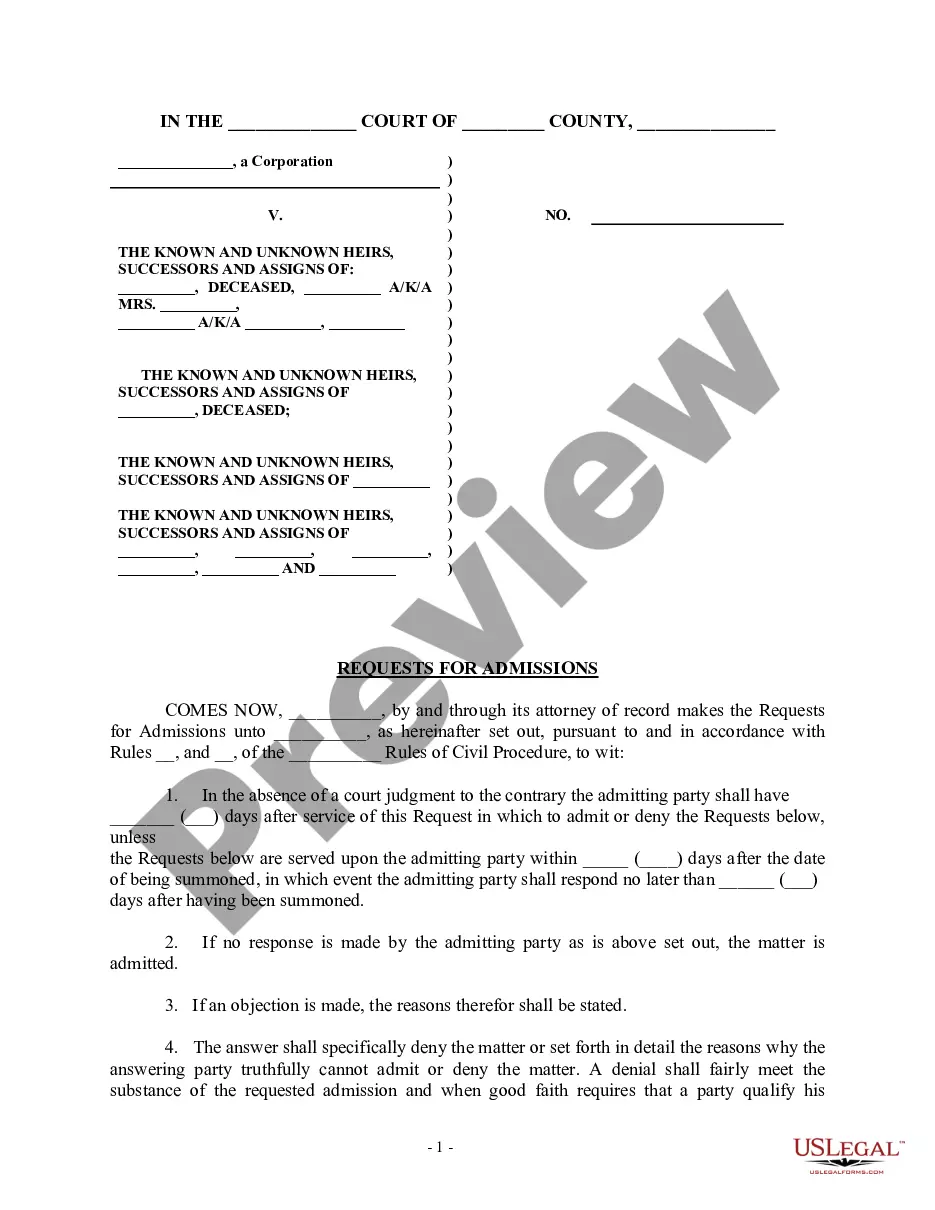
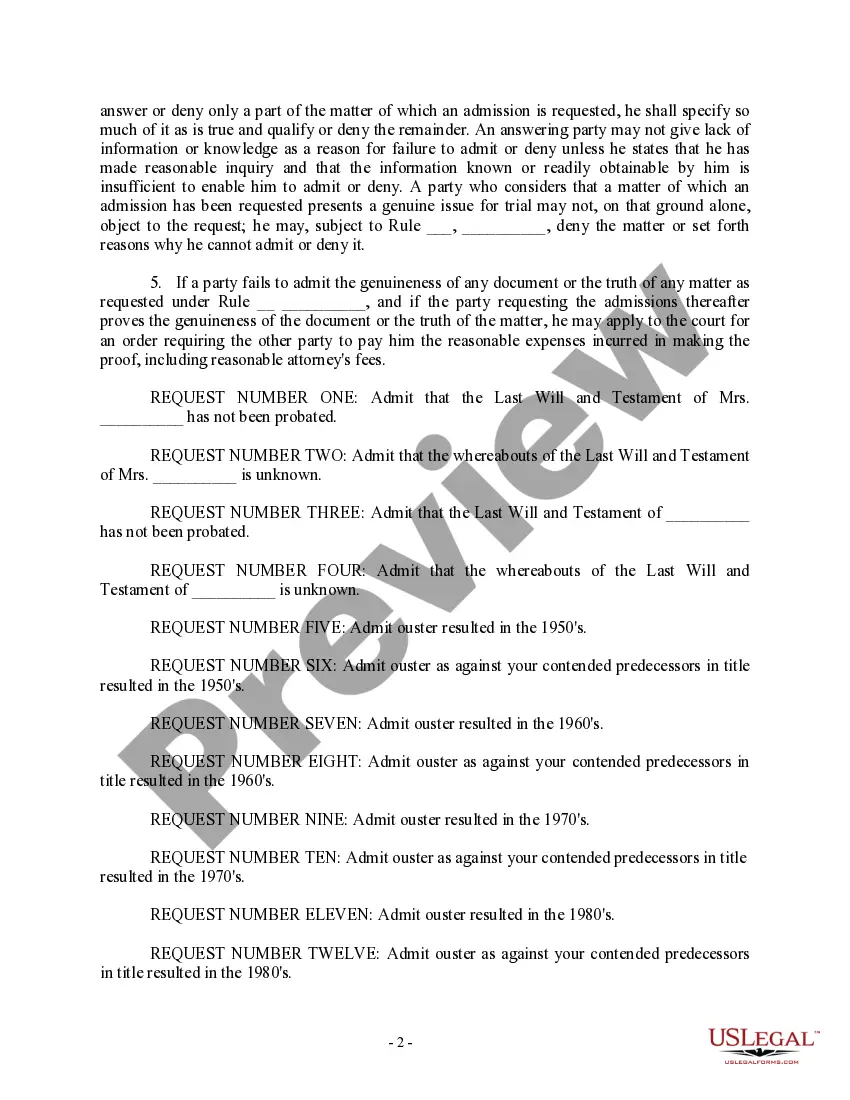
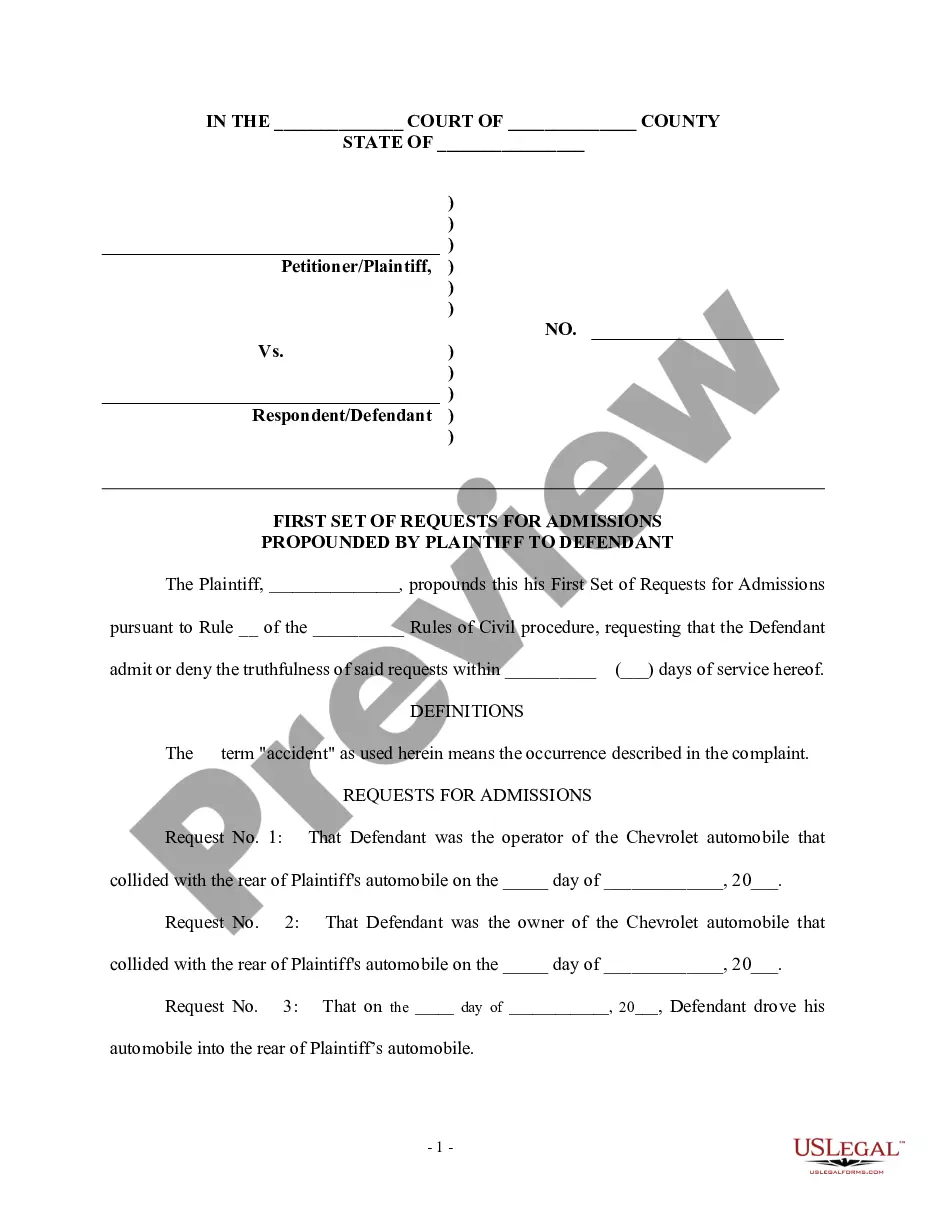
In Florida, the rules governing requests for admission can be found in Rule 1.370 of the Florida Rules of Civil Procedure. This rule allows parties to request the other side to admit specific facts, simplifying the trial process by clarifying what is not contested. For those in Jacksonville, Florida, leveraging these admissions can significantly bolster your litigation strategy.
Rule 36 specifies that a party may serve requests for admission on another party, seeking to establish the truth of any matters within the scope of discovery. This rule helps expedite litigation by eliminating unnecessary disputes over facts. If you engage with this rule wisely, especially in Jacksonville, Florida, you can enhance the efficiency of your legal proceedings.
In Florida, requests for admission fall under the Florida Rules of Civil Procedure, specifically Rule 1.370. This rule enables you to obtain admissions on material facts, streamlining the litigation process. By effectively utilizing this rule in Jacksonville, Florida, you can clarify opposing party positions and strengthen your case.
Rule 36 of the Federal Rules of Civil Procedure outlines requests for admission, allowing one party to ask another to admit the truth of a matter relevant to the case. This process aids in narrowing down the issues for trial, saving both time and resources. In Jacksonville, Florida, understanding Rule 36 can enhance your legal strategy and ensure thorough preparation for your case.
In Jacksonville, Florida, parties generally have 30 days to respond to a request for admission. This period ensures you have adequate time to consider each request carefully. If you need additional time, you may request an extension, but you should communicate this promptly to avoid any potential issues. Meeting this timeline is crucial for your case.