Charlotte North Carolina Revocable or Irrevocable Proxy
Description




Form popularity
FAQ
Yes, you can write your own will and have it notarized in North Carolina. It is important to ensure that your will meets the legal requirements of the state. While drafting your will, consider including provisions for a Charlotte North Carolina Revocable or Irrevocable Proxy, as this can help clarify decisions in case you become unable to communicate your wishes. Using the US Legal Forms platform can make this process easier, providing you with customizable templates and legal guidance to ensure your documents are compliant.
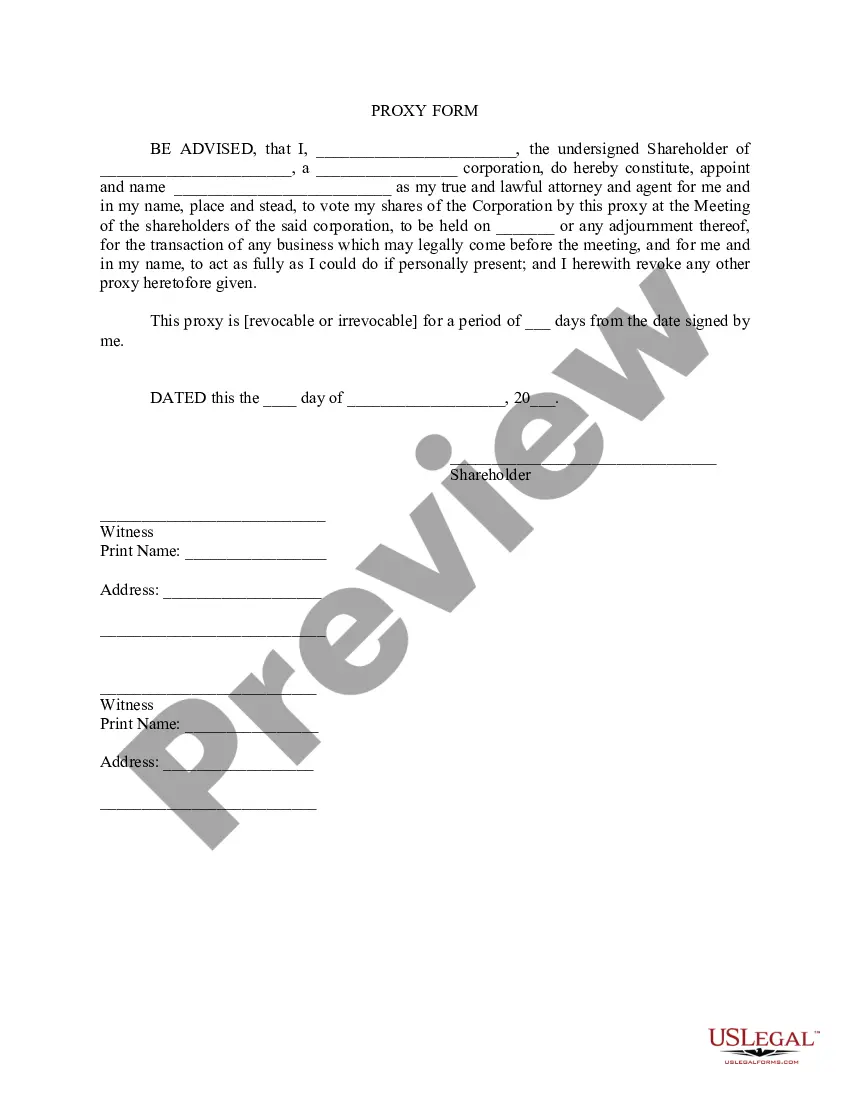
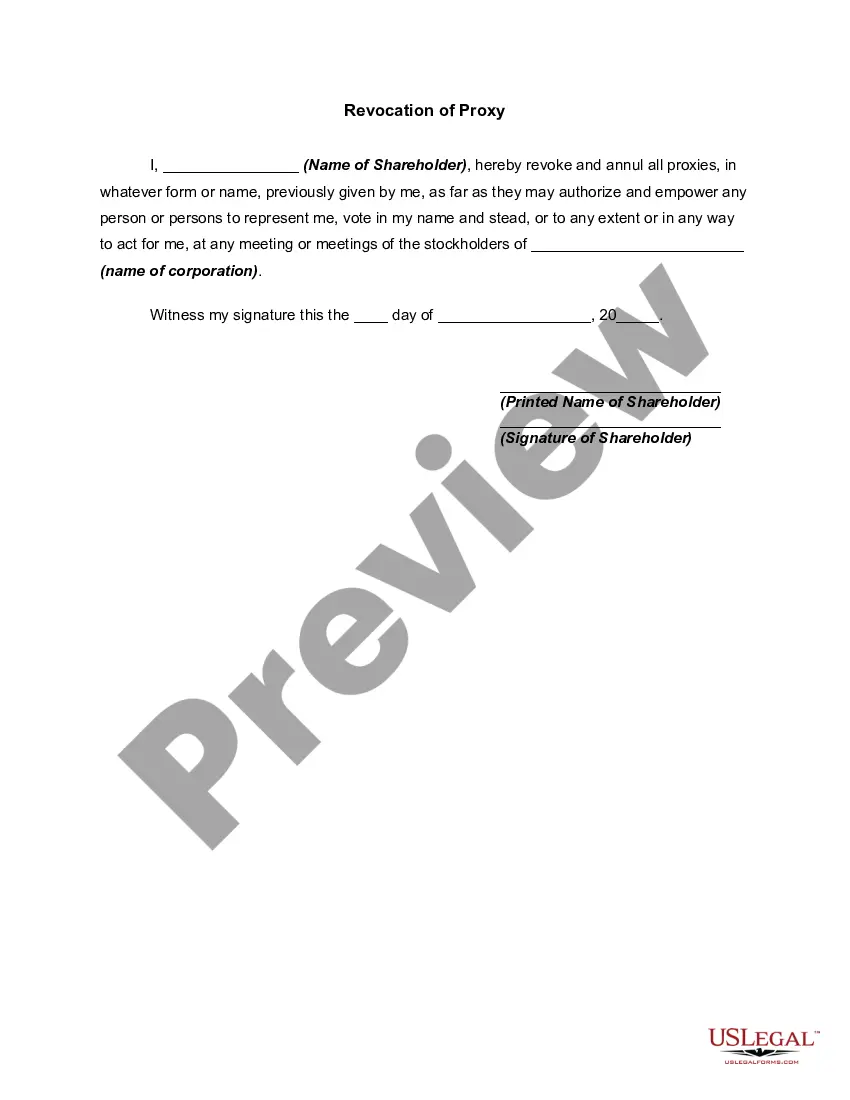
A proxy can indeed be revoked, particularly if it is structured as a revocable proxy. The principal retains the right to rescind the authority given to the proxy holder at any time. It's essential to follow specific procedures for revocation to ensure that the change is legally recognized. For those navigating the complexities of Charlotte North Carolina Revocable or Irrevocable Proxy, having reliable documentation can significantly aid in smooth transitions.
Yes, North Carolina recognizes joint tenancy with the right of survivorship. This legal concept allows co-owners to inherit the property seamlessly upon the passing of one owner. Therefore, incorporating joint tenancy as part of your property planning can complement your use of a revocable or irrevocable proxy. Understanding how these legal tools interact can enhance your overall estate planning strategy.
In North Carolina, a trust typically does not need to be recorded, but specific actions may require some documentation. It is advisable to keep records of trust agreements for clarity and to ensure they carry out your intentions. Establishing a revocable or irrevocable proxy in conjunction with a trust can offer a well-rounded approach to managing your affairs. For accurate guidance, exploring Charlotte North Carolina Revocable or Irrevocable Proxy serves as a useful resource.
Yes, a proxy can be legally binding if it meets necessary legal requirements. When structured correctly, a revocable or irrevocable proxy establishes a formal agreement between the principal and the proxy holder. This agreement holds up in court, provided it does not violate any laws or conditions. Engaging with proper resources can further solidify your understanding of the Charlotte North Carolina Revocable or Irrevocable Proxy and its implications.
Undue influence in North Carolina refers to a situation where someone exerts excessive pressure to affect another person’s decisions or actions, particularly regarding legal documents like proxies. This type of influence can lead to questionable legitimacy in the execution of a revocable or irrevocable proxy. If you suspect undue influence has occurred, it’s advisable to consult a legal expert for timely assistance. Awareness of Charlotte North Carolina Revocable or Irrevocable Proxy can help you protect your interests.
In many cases, a proxy is revocable, particularly when it is established as a revocable proxy. This means that you can change your mind and terminate the proxy's authority at any time. It's crucial to follow the guidelines under North Carolina law to ensure that your revocation is valid and effective. For anyone navigating these options, understanding Charlotte North Carolina Revocable or Irrevocable Proxy can provide clarity.
Yes, proxies can be revocable, particularly in the context of Charlotte North Carolina Revocable or Irrevocable Proxy. A principal can choose to revoke their proxy at any moment unless they have granted it irrevocably. This feature enables individuals to maintain control over their decisions and ensure they reflect their current wishes. Utilizing proper documentation can streamline the revocation process and enhance clarity.
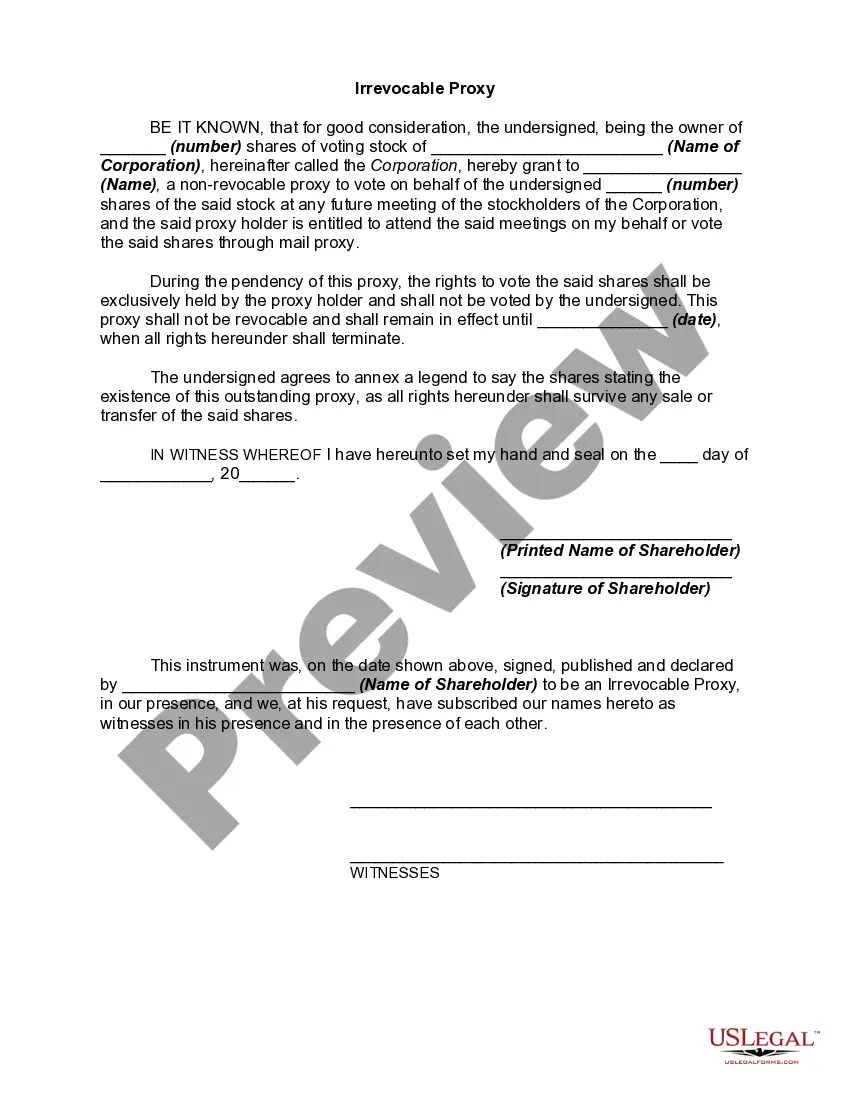
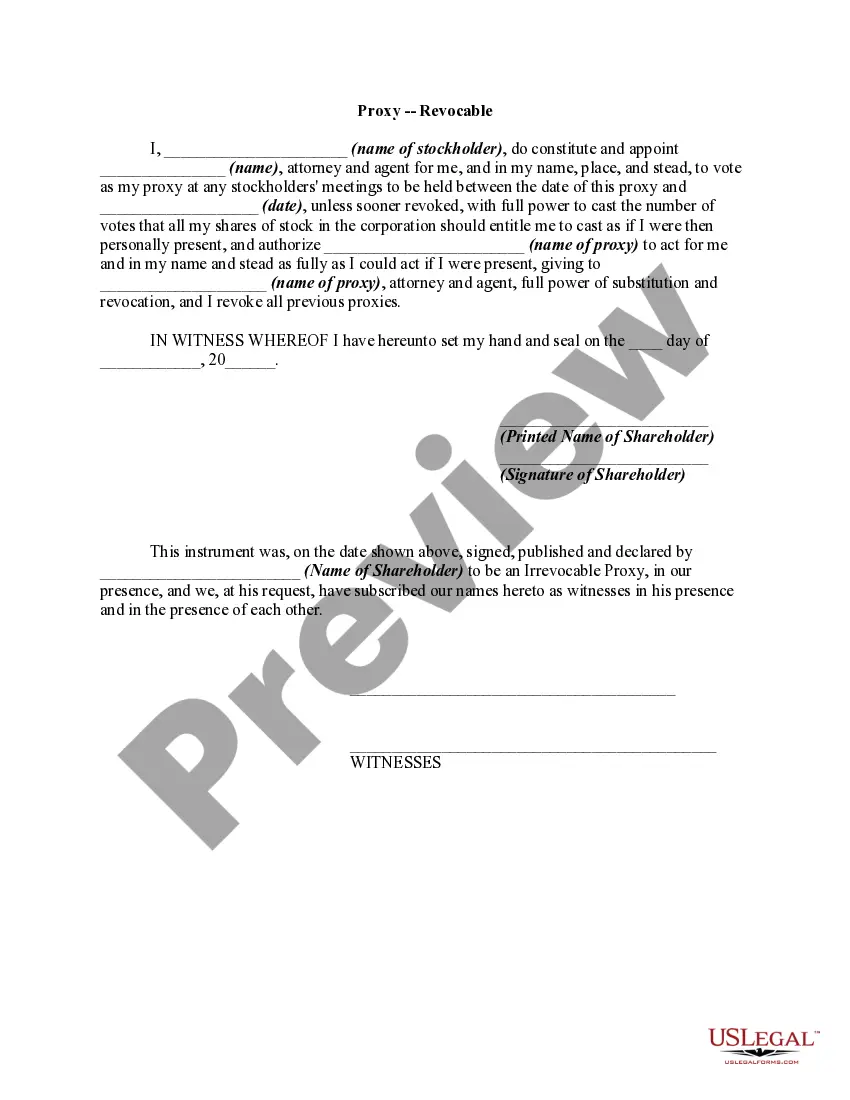
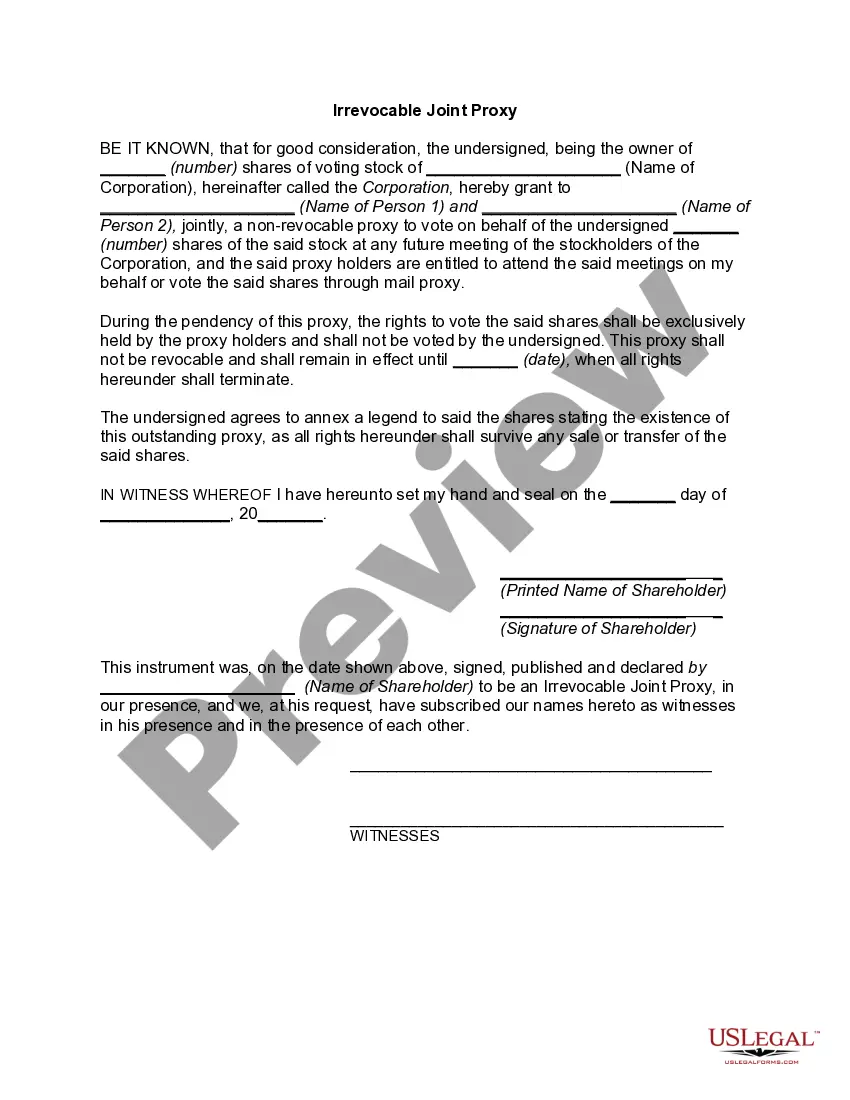
The distinction between a revocable and irrevocable proxy lies primarily in the ability to change or revoke the authority granted. A revocable proxy can be rescinded at any time by the principal, allowing for flexibility in decision-making. On the other hand, an irrevocable proxy remains valid until a specific event occurs, or until the designated time frame ends, offering more stability in certain situations. Understanding Charlotte North Carolina Revocable or Irrevocable Proxy allows you to choose the right option for your needs.
In Charlotte, North Carolina, anyone who is at least 18 years old can serve as a proxy for a revocable or irrevocable proxy. This means family members, friends, or trusted individuals can represent you in decision-making matters. However, it is crucial to choose someone you trust, as they will have significant authority over your legal and financial interests. To facilitate this process, consider using the US Legal Forms platform, where you can easily find and create the proper documents needed for a Charlotte North Carolina Revocable or Irrevocable Proxy.