Dallas Texas Palliative Care Services Agreement
Description
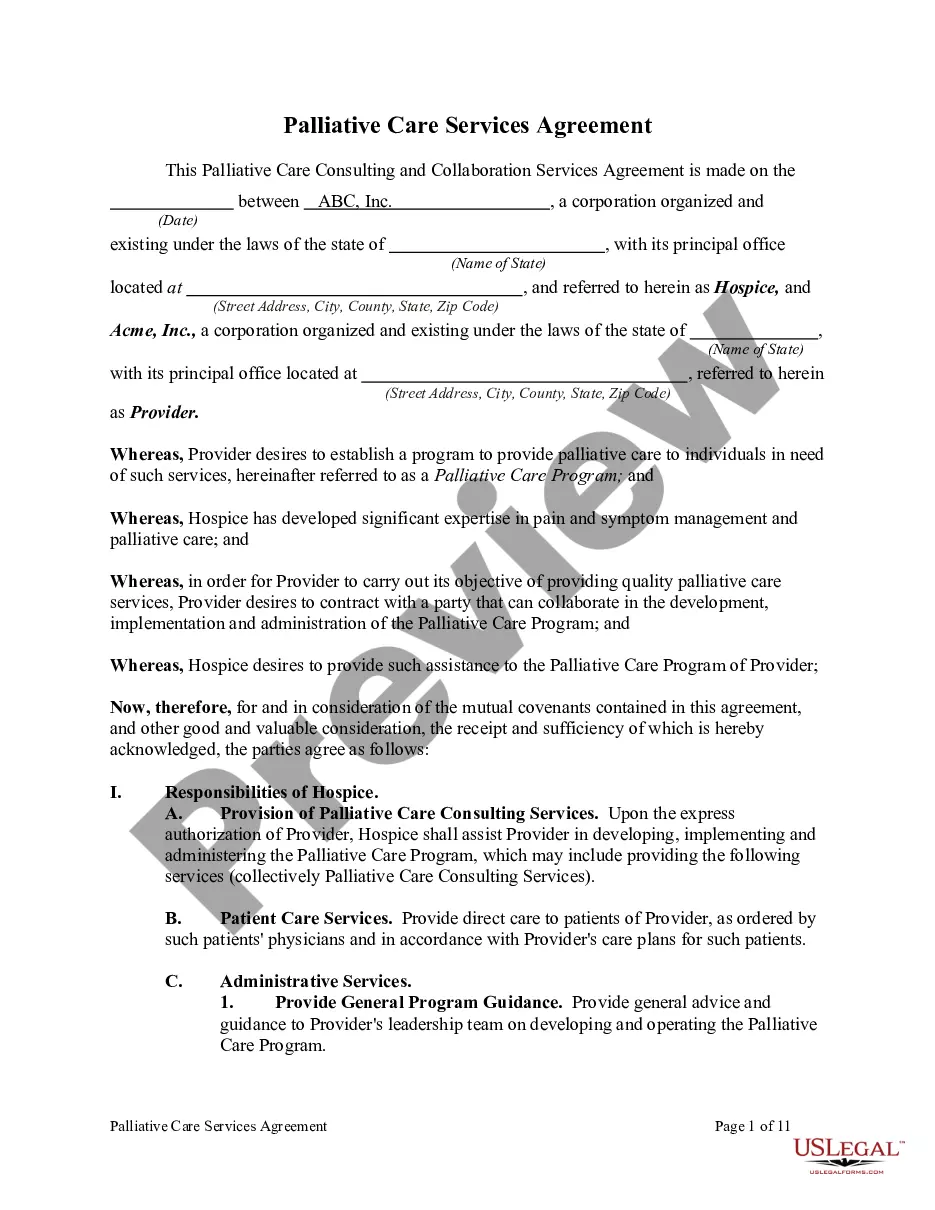
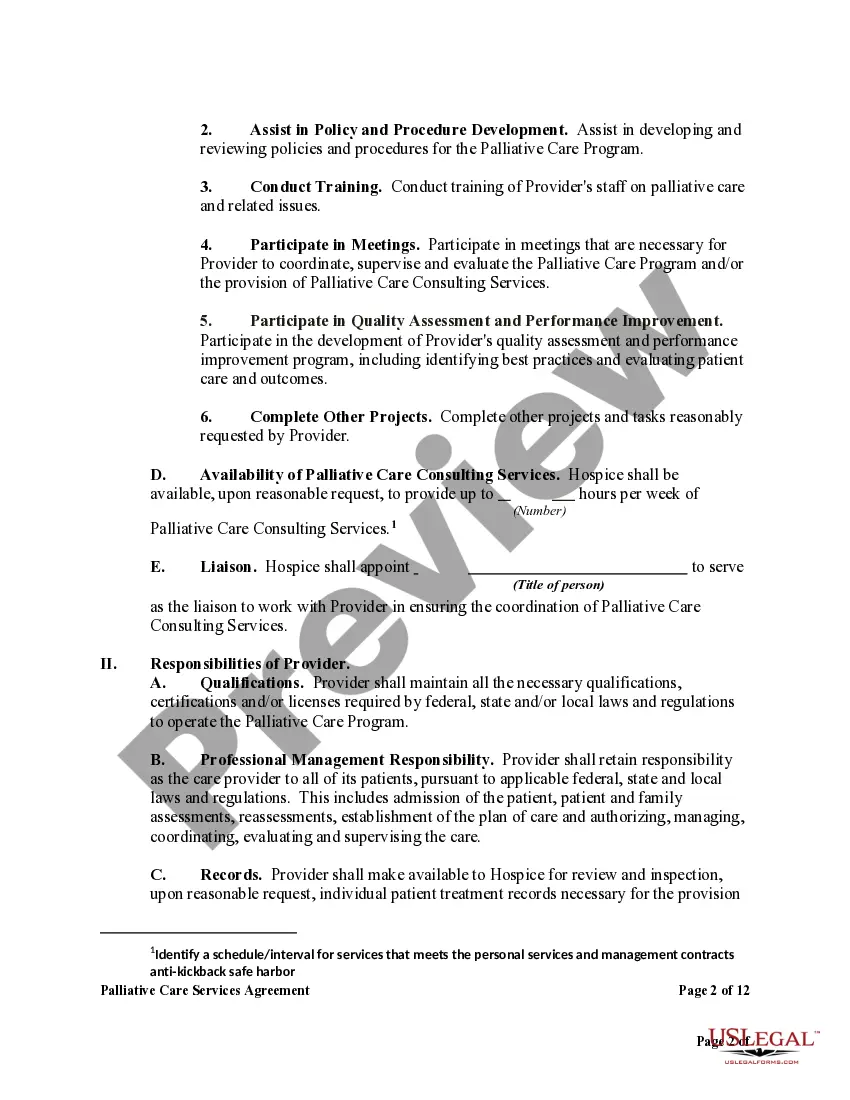
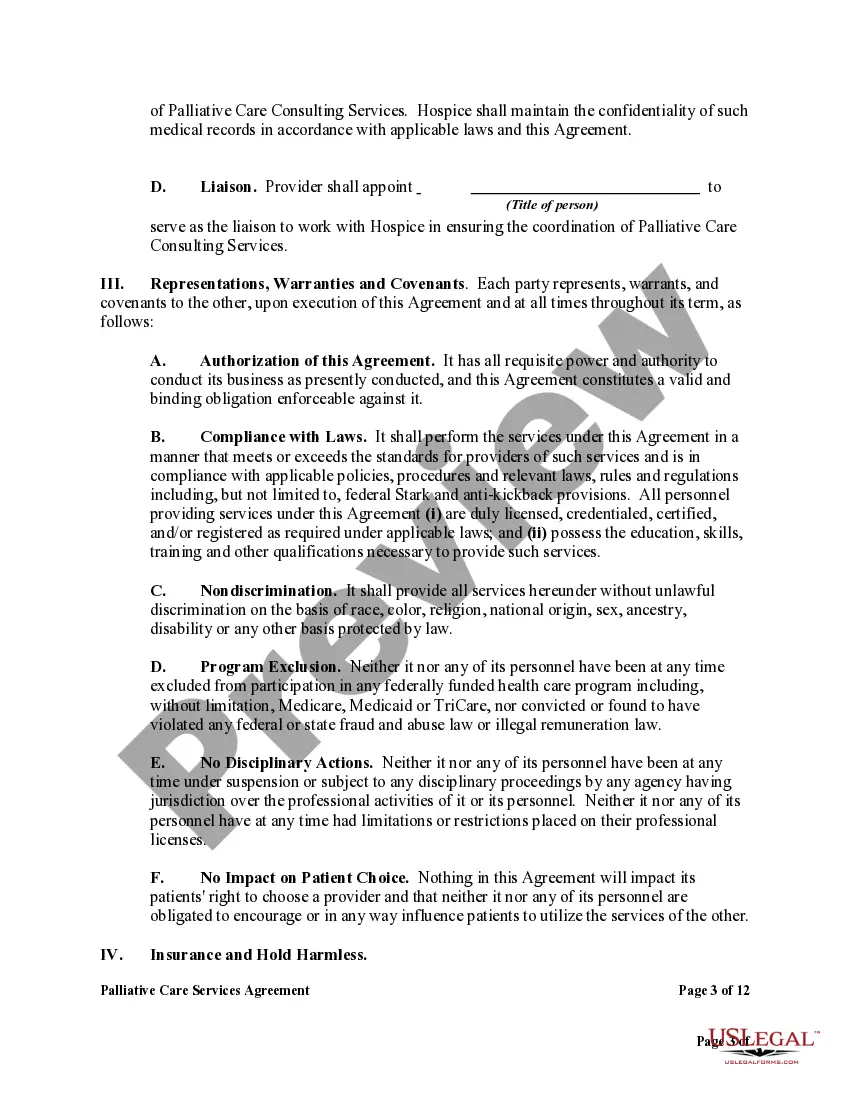
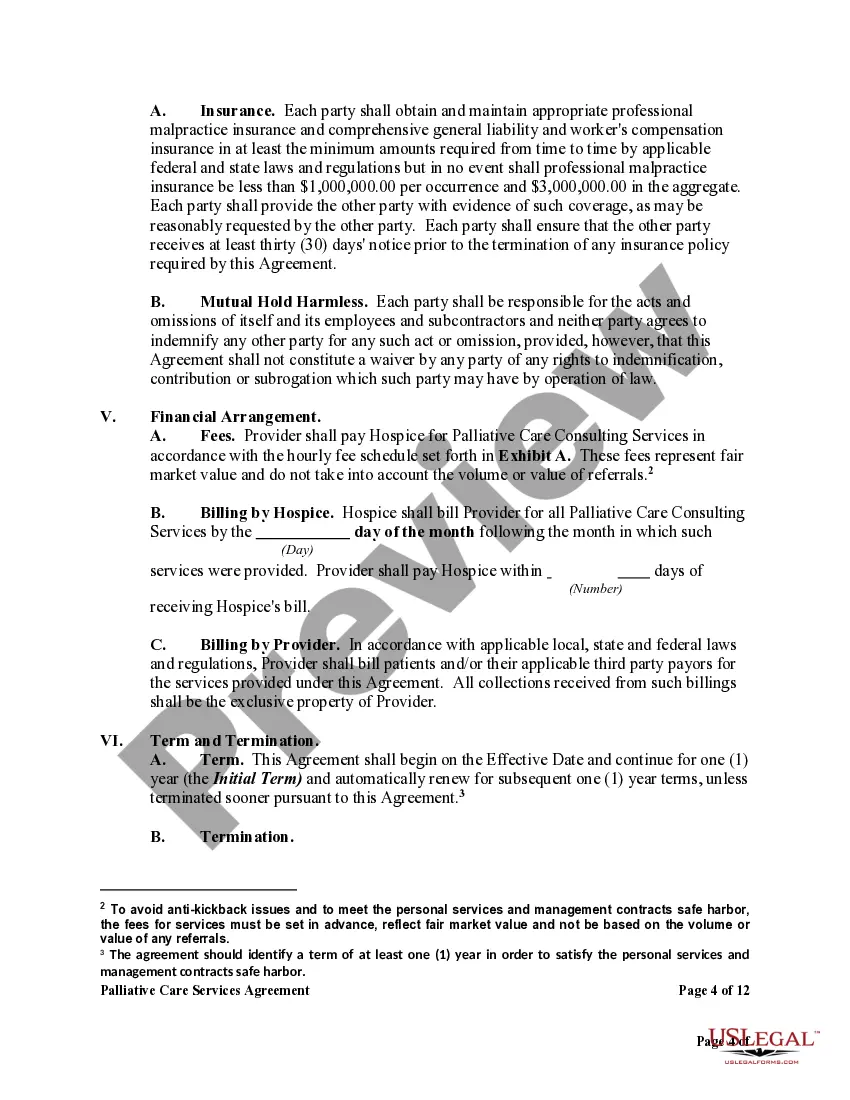




Get your form ready online
Our built-in tools help you complete, sign, share, and store your documents in one place.
Make edits, fill in missing information, and update formatting in US Legal Forms—just like you would in MS Word.
Download a copy, print it, send it by email, or mail it via USPS—whatever works best for your next step.
Sign and collect signatures with our SignNow integration. Send to multiple recipients, set reminders, and more. Go Premium to unlock E-Sign.
If this form requires notarization, complete it online through a secure video call—no need to meet a notary in person or wait for an appointment.
We protect your documents and personal data by following strict security and privacy standards.

Make edits, fill in missing information, and update formatting in US Legal Forms—just like you would in MS Word.

Download a copy, print it, send it by email, or mail it via USPS—whatever works best for your next step.

Sign and collect signatures with our SignNow integration. Send to multiple recipients, set reminders, and more. Go Premium to unlock E-Sign.

If this form requires notarization, complete it online through a secure video call—no need to meet a notary in person or wait for an appointment.

We protect your documents and personal data by following strict security and privacy standards.
Looking for another form?










How to fill out Palliative Care Services Agreement?
A document procedure consistently accompanies any legal action you undertake.
Launching a business, applying for or accepting a job proposition, transferring property, and numerous other life circumstances necessitate you to prepare official paperwork that varies across the nation.
That is why having it all gathered in one location is incredibly beneficial.
US Legal Forms is the largest online repository of current federal and state-specific legal templates.
- On this platform, you can effortlessly find and obtain a document for any personal or business purpose used in your county, including the Dallas Palliative Care Services Agreement.
- Finding forms on the platform is remarkably simple.
- If you already possess a subscription to our service, Log In to your account, locate the sample through the search field, and click Download to save it on your device.
- Subsequently, the Dallas Palliative Care Services Agreement will be accessible for future use in the My documents section of your profile.
- If you are utilizing US Legal Forms for the initial time, follow this straightforward guideline to acquire the Dallas Palliative Care Services Agreement.
- Ensure you have navigated to the correct page with your regional form.
- Utilize the Preview mode (if available) to review the template.
- Examine the description (if present) to confirm the form meets your requirements.
Form popularity
FAQ
Palliative care is commonly split into five stages, understanding these stages can help you make decisions for your own care, and ensure you and your family is getting the right support, at the right time.
Becoming Licensed in Texas Complete the pre-survey, computer-based training. Properly complete the license application. Upload all required documents. Pay the required license fee(s). Be registered with and be in good standing from the State Comptroller of Public Accounts.
I'm going to discuss three essential components of palliative care: identifying goals of care, controlling symptoms and caring for the whole person.
How to Become a Provider. Hospice providers must be licensed as a Home and Community Support Services Agency and have a contract with the Texas Health and Human Services Commission to provide Medicaid hospice services.
You can begin by partnering with a local hospital, or embed a palliative care clinician in a physician practice. Or you might enter into a pilot with a health plan. And of course, you can always just start making home visits and billing fee-for-service Medicare.
How to Enroll. Go to the Enrolling in the CSHCN Services Program page of the Texas Medicaid & Healthcare Partnership website. You can enroll online or print out the paper application form to complete and return to TMHP. If you have questions, call your local area TMHP provider relations representative.
Overview. Principles. Intended outcomes. Essential components. 1. Informing community expectations. 2. EOL discussions and planning. 3. Access to care. 4. Early recognition.
The goal of palliative care is to relieve the suffering of patients and their families by the comprehensive assessment and treatment of physical, psychosocial, and spiritual symptoms experienced by patients.
Stage One: Stable The first phase of palliative care involves planning and creating a treatment plan suitable for your or your loved one's condition. The patient and their family will work closely with the care team to identify the physical and medical needs of the patient.
The goals of palliative care are to relieve pain, control symptoms, prevent side effects and complications, and maintain the best quality of life possible.