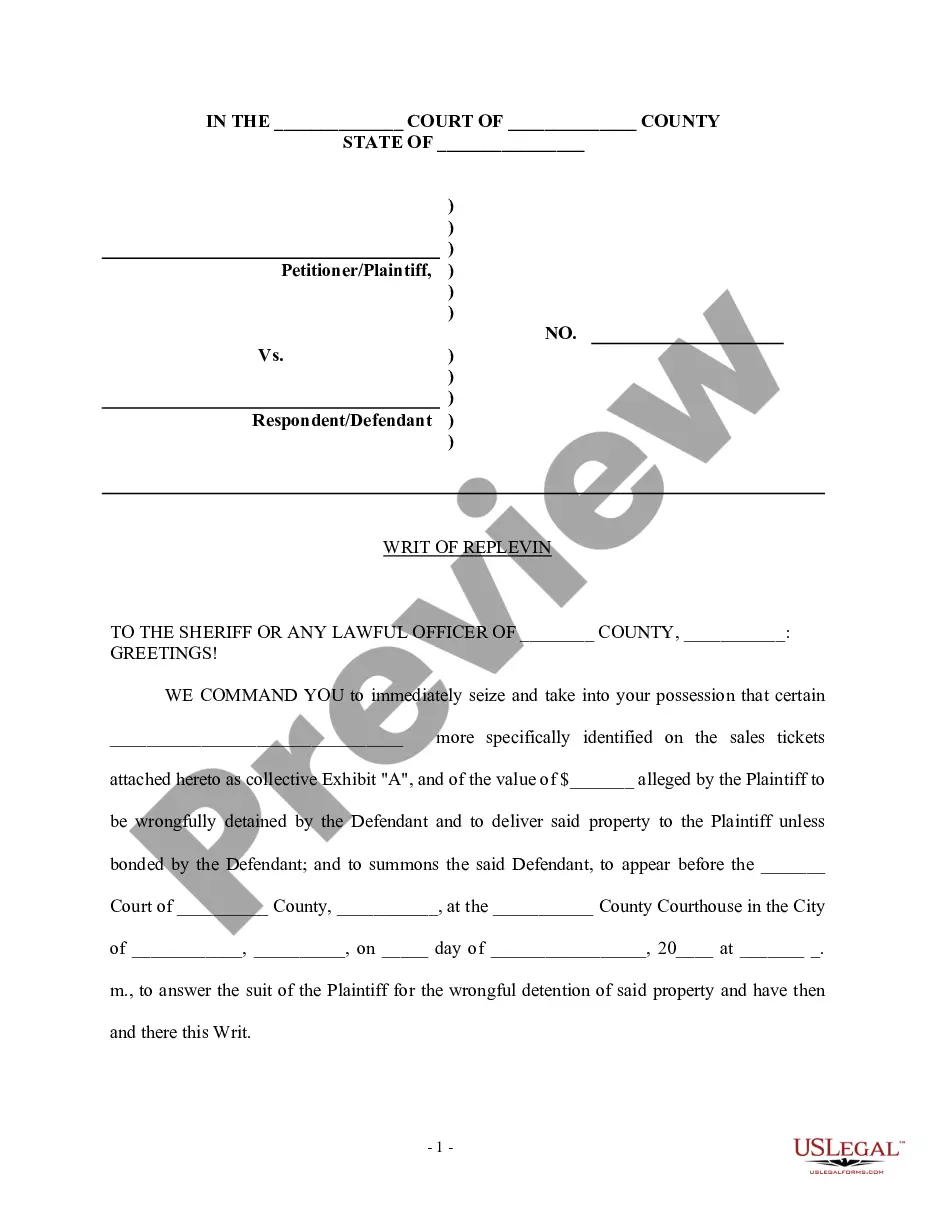
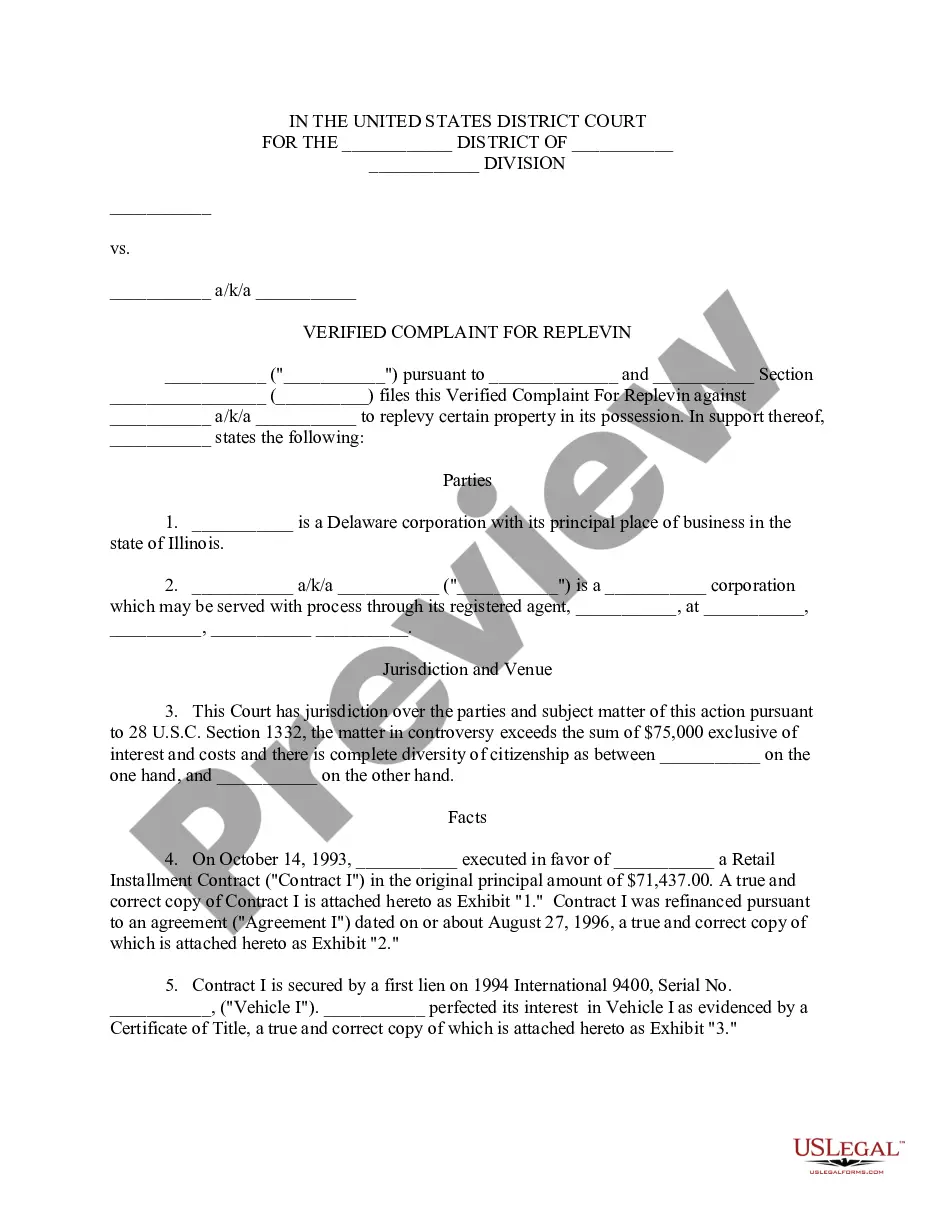
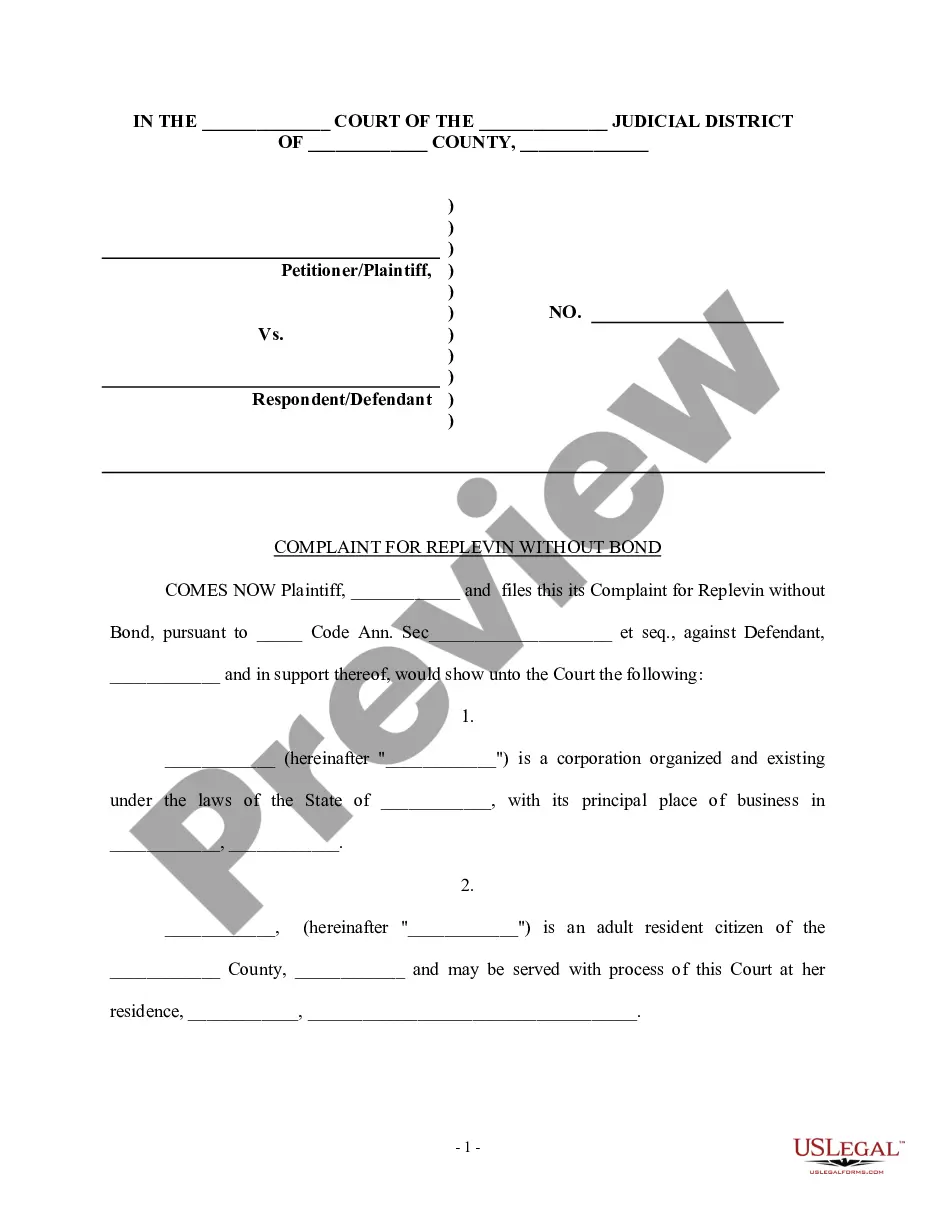
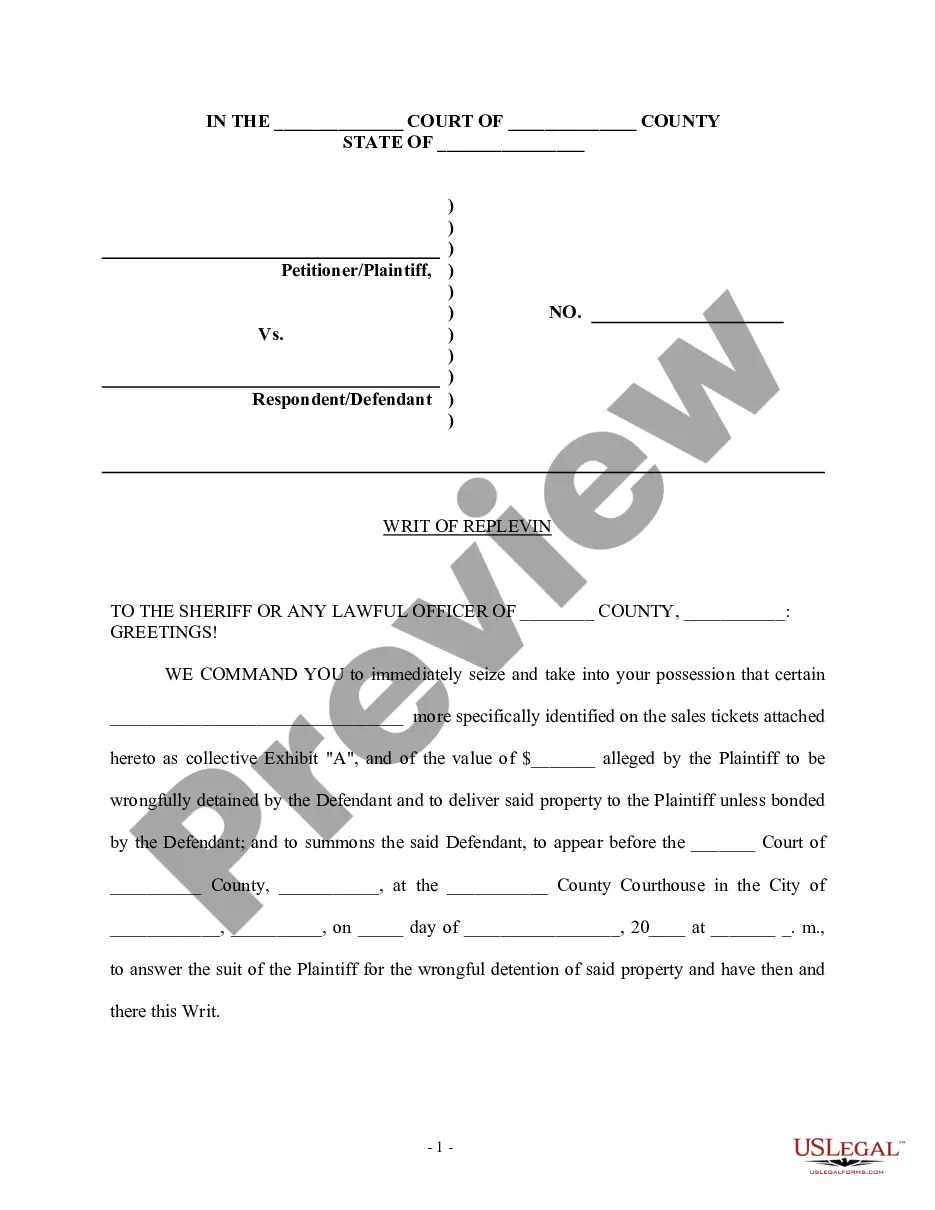
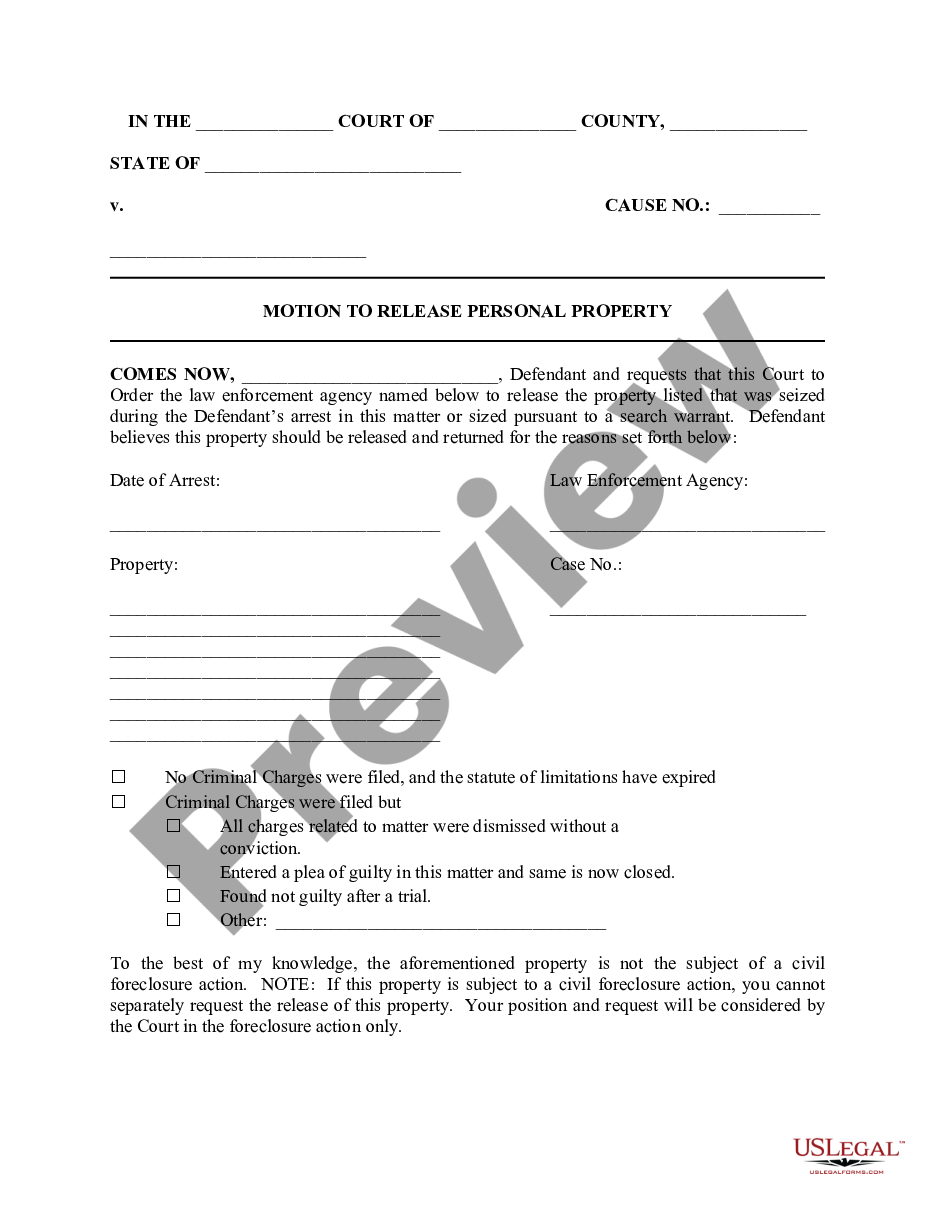
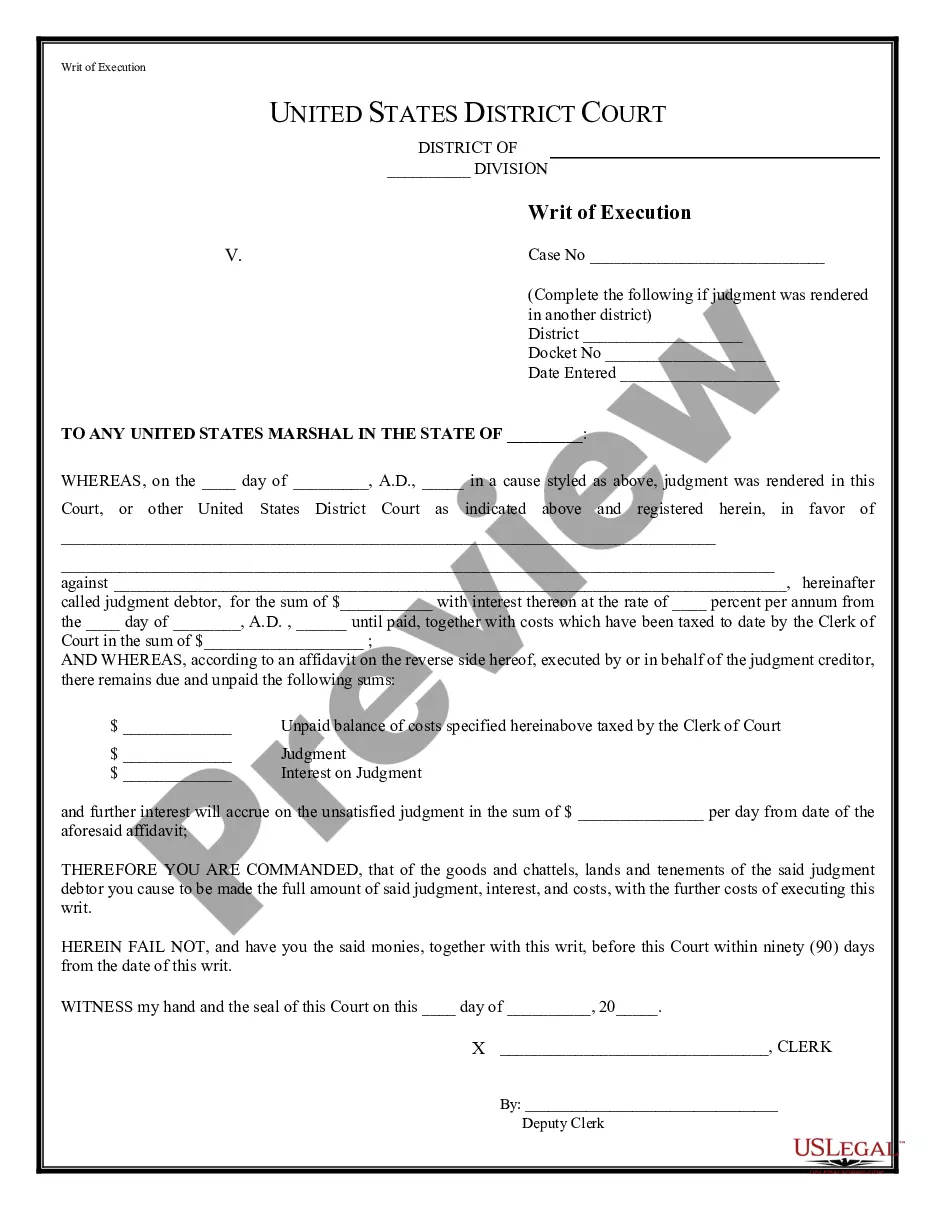
This form is a Writ of Replevin. The Writ of Replevin provides that the sheriff or any law enforcement officer may take into possession certain property identified on sale tickets attached to the Writ. The document also requests that the defendant be summoned to appear before the court and to answer the suit of the plaintiff for the wrongful detention of the property.
Kings New York Writ of Replevin or Repossession
State:
Multi-State
Category:
County:
Kings
Control #:
US-01275
Format:
Word;
Rich Text
352 downloads
Description
Free preview
Get your form ready online
Our built-in tools help you complete, sign, share, and store your documents in one place.
Built-in online Word editor
Make edits, fill in missing information, and update formatting in US Legal Forms—just like you would in MS Word.
Export easily
Download a copy, print it, send it by email, or mail it via USPS—whatever works best for your next step.
E-sign your document
Sign and collect signatures with our SignNow integration. Send to multiple recipients, set reminders, and more. Go Premium to unlock E-Sign.
Notarize online 24/7
If this form requires notarization, complete it online through a secure video call—no need to meet a notary in person or wait for an appointment.
Store your document securely
We protect your documents and personal data by following strict security and privacy standards.

Make edits, fill in missing information, and update formatting in US Legal Forms—just like you would in MS Word.

Download a copy, print it, send it by email, or mail it via USPS—whatever works best for your next step.

Sign and collect signatures with our SignNow integration. Send to multiple recipients, set reminders, and more. Go Premium to unlock E-Sign.

If this form requires notarization, complete it online through a secure video call—no need to meet a notary in person or wait for an appointment.

We protect your documents and personal data by following strict security and privacy standards.
Looking for another form?
How to fill out Writ Of Replevin Or Repossession?
Laws and statutes across different areas vary throughout the nation.
If you're not an attorney, it can be challenging to navigate a multitude of standards when drafting legal documents.
To sidestep expensive legal fees when drafting the Kings Writ of Replevin or Repossession, you require a validated template suitable for your locality.
That's the simplest and most budget-friendly method to access the latest templates for any legal purposes. Find everything with just a few clicks and maintain your documents in order with US Legal Forms!
- That's when utilizing the US Legal Forms platform becomes invaluable.
- US Legal Forms is a reliable online repository, trusted by millions, comprising over 85,000 state-specific legal templates.
- It's an excellent option for both professionals and individuals seeking DIY templates for various personal and commercial situations.
- All documents can be reused: when you select a template, it stays accessible in your profile for future use.
- Consequently, if you possess an account with an active subscription, you can simply Log In and redownload the Kings Writ of Replevin or Repossession from the My documents section.
- For newcomers, several additional steps are required to obtain the Kings Writ of Replevin or Repossession.
- Review the page content to confirm you have located the right document.
- Utilize the Preview feature or examine the form description if available.
Form popularity
FAQ
Replevin, also known as a claim and delivery, is a legal recourse that allows a person to obtain any personal property that was wrongfully claimed. The remedy is given before the court pronounces the final judgment and the wronged party is also compensated for any losses incurred due to the illegal act.
: an action originating in common law and now largely codified by which a plaintiff having a right in personal property which is claimed to be wrongfully taken or detained by the defendant seeks to recover possession of the property and sometimes to obtain damages for the wrongful detention also : a procedure allowing
Replevin differed from the actions of Trespass and Trover in that it sought recovery of the specific items of property in dispute rather than monetary damages.
Creditors use replevin actions to recover collateral when debtors default on secured loans. For example, a bank might file a replevin action against a borrower to repossess the borrower's car after he missed too many payments.
Replevin is an action for the recovery of personal property. It is both a principal remedy and a provisional relief. When utilized as a principal remedy, the objective is to recover possession of personal property that may have been wrongfully detained by another.
A writ of replevin is a prejudgment process ordering the seizure or attachment of alleged illegally taken or wrongfully withheld property to be held in the U.S. Marshal's custody or that of another designated official, under order and supervision of the court, until the court determines otherwise.
The main differences are: Replevin allows police to seize property and return it to the creditor and is more generally used when a defendant wrongfully took a property. Detinue orders the defendant to surrender the property to the creditor because they are wrongfully withholding it.
Definition of detinue 1 : a common-law action for the recovery of a personal chattel wrongfully detained or of its value. 2 : detention of something due especially : the unlawful detention of a personal chattel from another.
Repossession is the act by a creditor, or an agent hired by a creditor, to take possession of a debtor's property that has been put up as a security interest or collateral. This happens when the debtor has defaulted on the debt and has failed to pay the creditor.
Detinue was a way for a plaintiff to seek recovery of their specific property in court. It was abolished in 1977 and replaced with interference with property torts such as conversion. Under detinue, the defendant could have taken the property by lawful means, but retains it unlawfully.