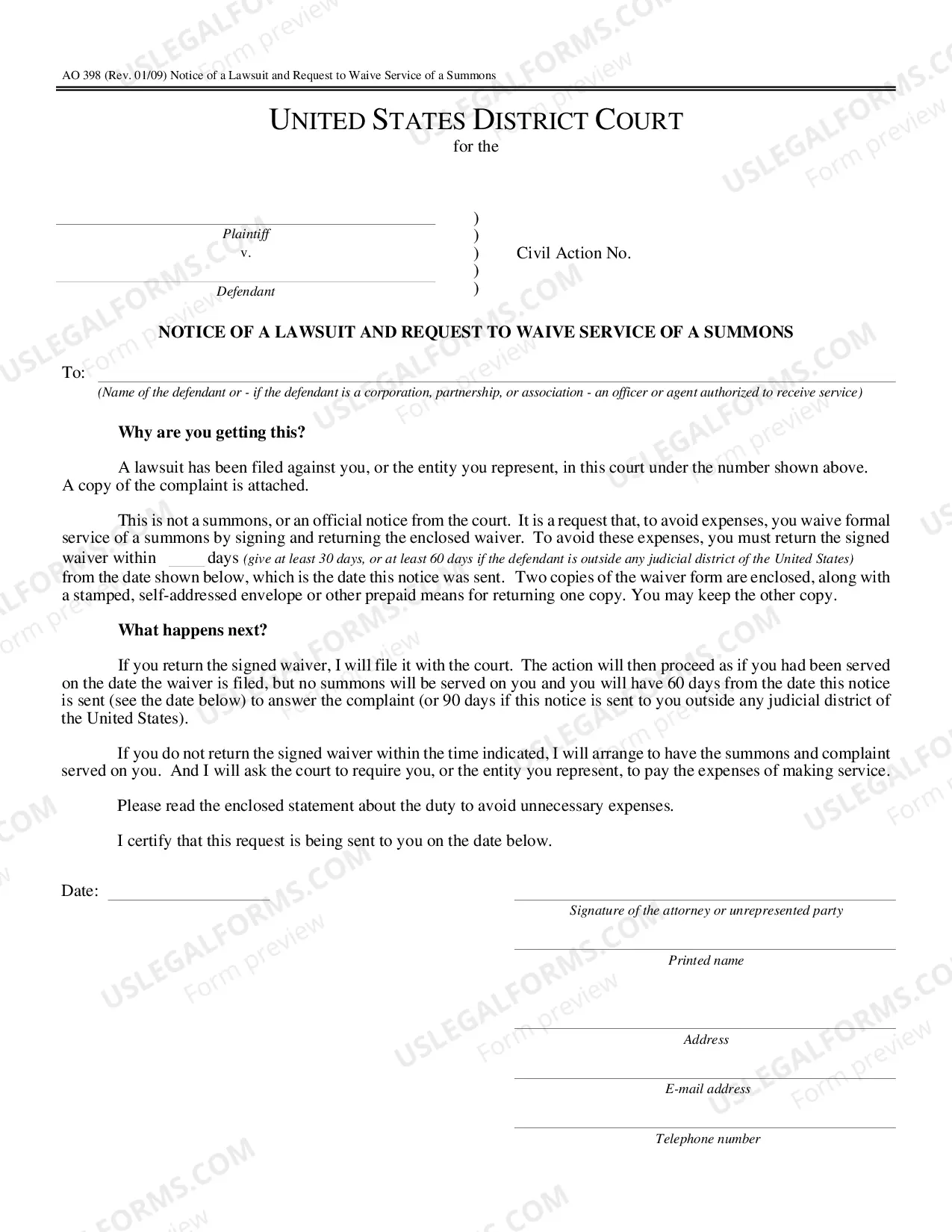
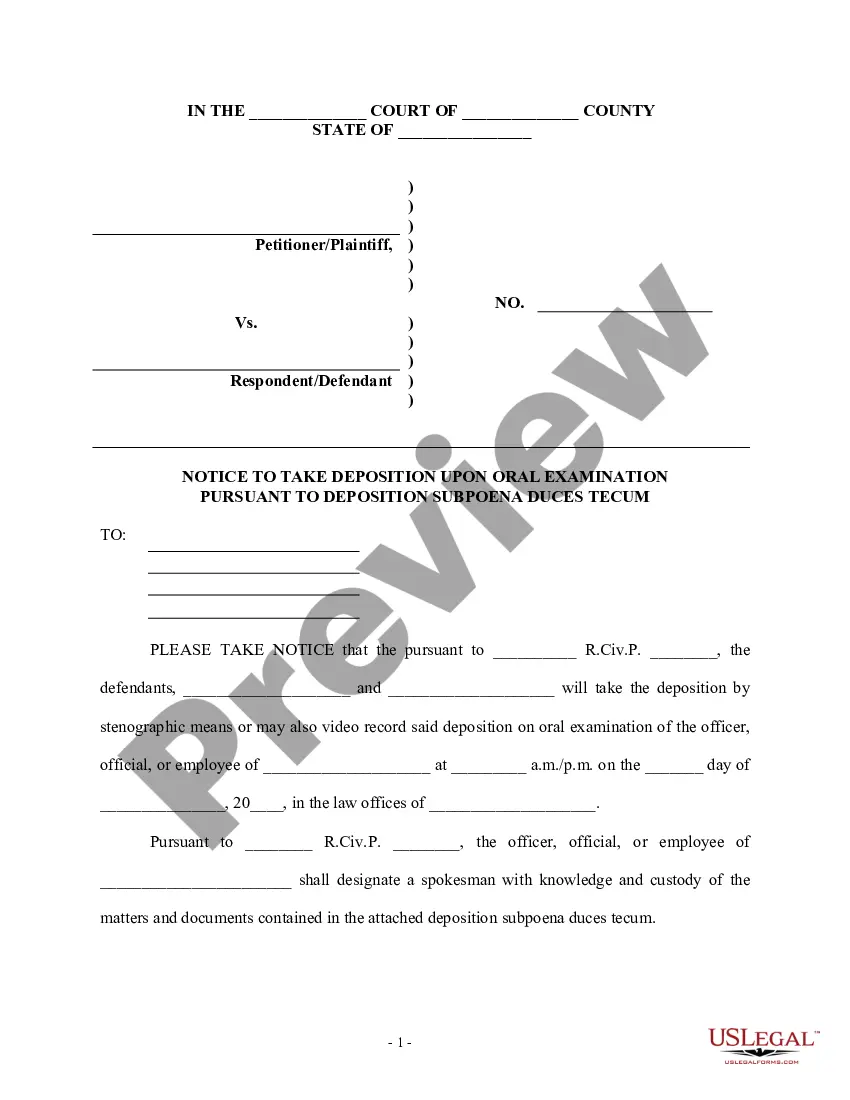
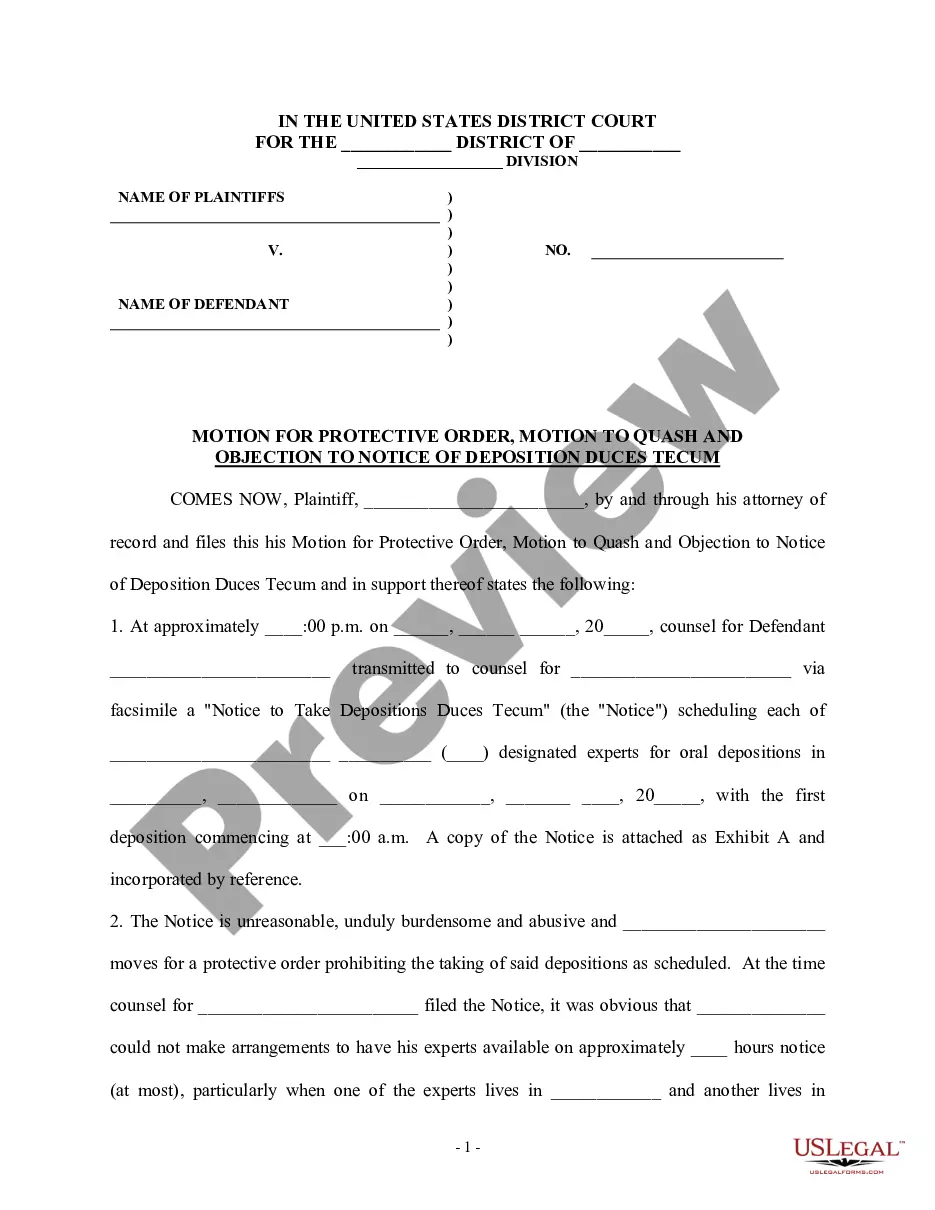
Allegheny Pennsylvania Notice - served with Complaint and Summons
Description
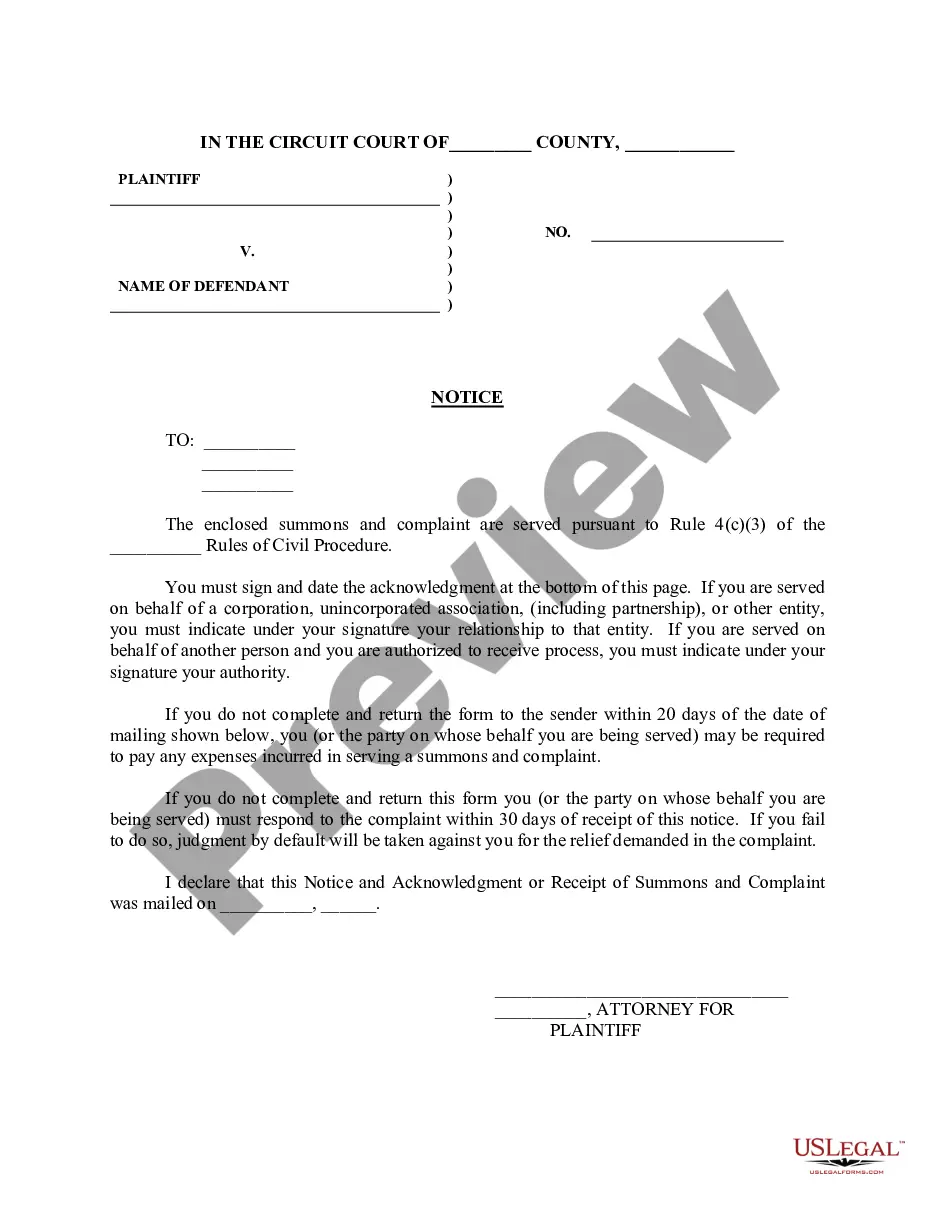
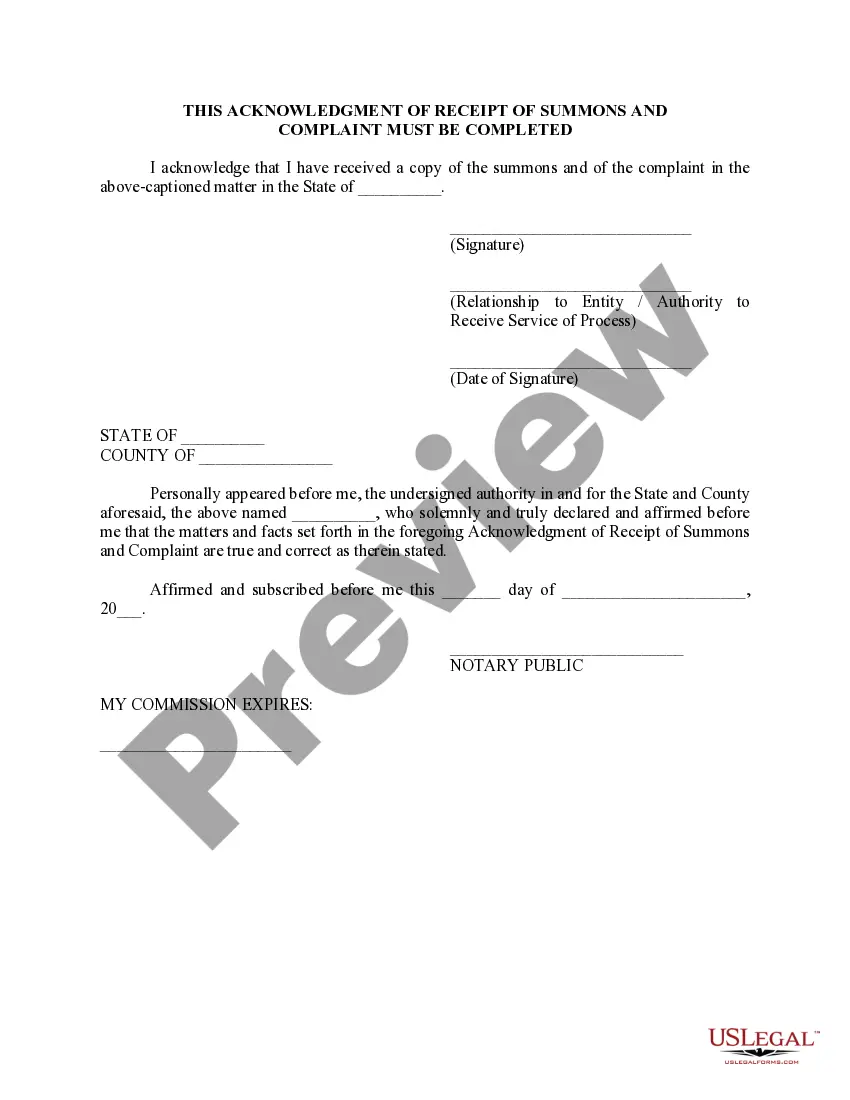
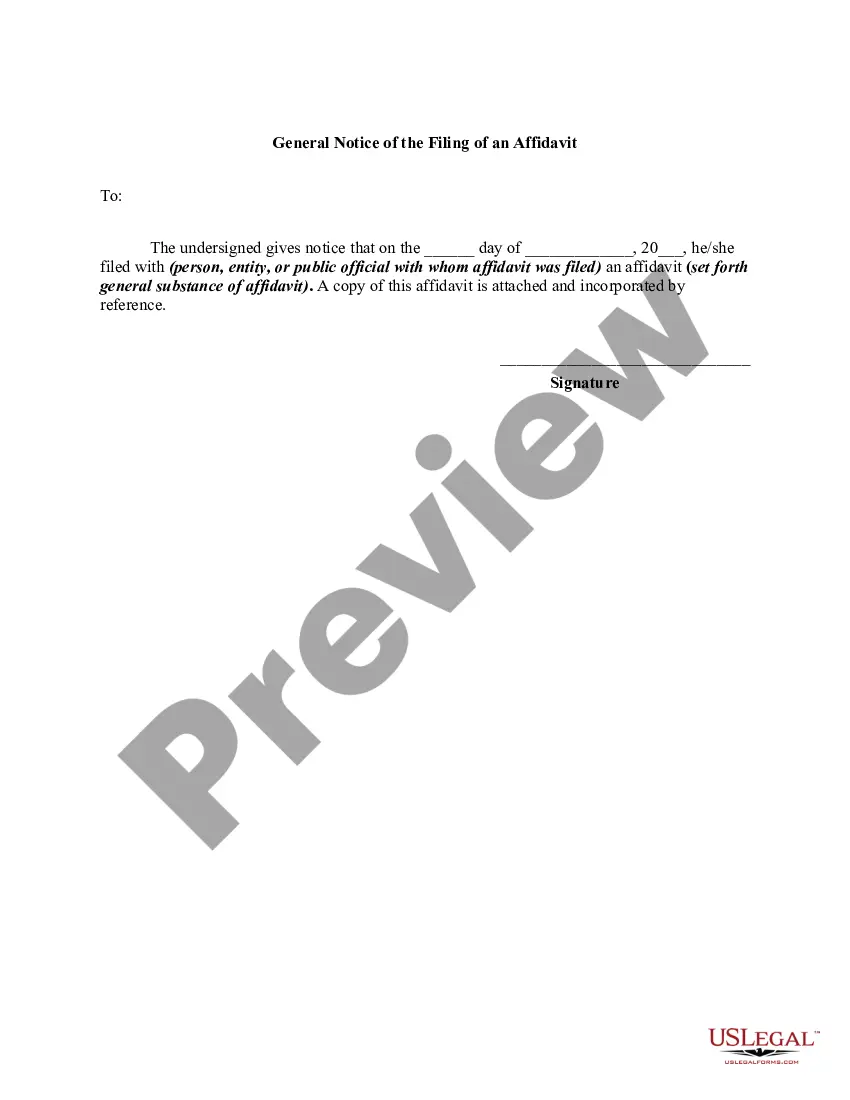
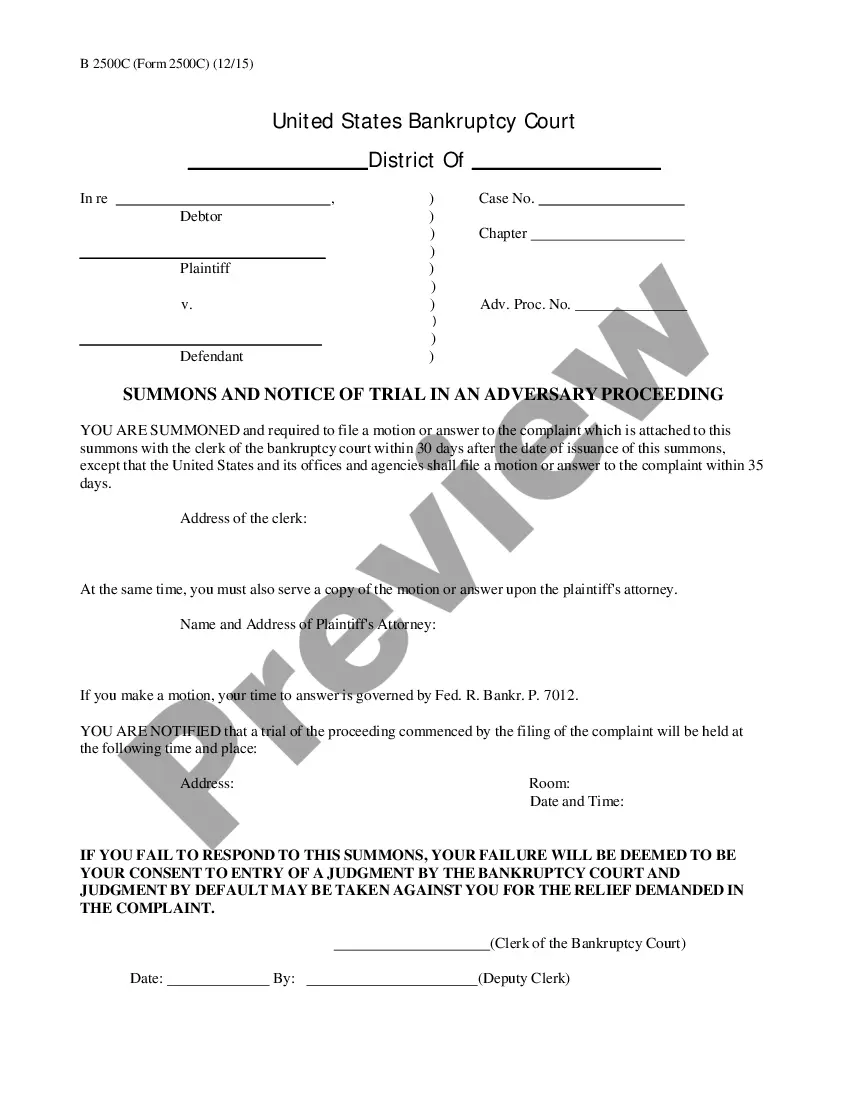
Get your form ready online
Our built-in tools help you complete, sign, share, and store your documents in one place.
Make edits, fill in missing information, and update formatting in US Legal Forms—just like you would in MS Word.
Download a copy, print it, send it by email, or mail it via USPS—whatever works best for your next step.
Sign and collect signatures with our SignNow integration. Send to multiple recipients, set reminders, and more. Go Premium to unlock E-Sign.
If this form requires notarization, complete it online through a secure video call—no need to meet a notary in person or wait for an appointment.
We protect your documents and personal data by following strict security and privacy standards.

Make edits, fill in missing information, and update formatting in US Legal Forms—just like you would in MS Word.

Download a copy, print it, send it by email, or mail it via USPS—whatever works best for your next step.

Sign and collect signatures with our SignNow integration. Send to multiple recipients, set reminders, and more. Go Premium to unlock E-Sign.

If this form requires notarization, complete it online through a secure video call—no need to meet a notary in person or wait for an appointment.

We protect your documents and personal data by following strict security and privacy standards.
Looking for another form?

How to fill out Notice - Served With Complaint And Summons?
Laws and statutes in every domain differ from one state to another.
If you are not a legal professional, it can be simple to become confused by the differing standards when it involves creating legal documents.
To prevent costly legal counsel when drafting the Allegheny Notice - to be served with Complaint and Summons, you require a validated template authorized for your county. That is when utilizing the US Legal Forms platform becomes beneficial.
Fill out and sign the document on paper after printing it or complete it all electronically. This is the simplest and most economical method to obtain current templates for any legal purposes. Locate them all in just a few clicks and maintain your paperwork organized with US Legal Forms!
- US Legal Forms is relied upon by millions as an online repository of over 85,000 state-specific legal documents.
- It serves as an ideal choice for professionals and individuals seeking do-it-yourself templates for various personal and business situations.
- All the forms can be utilized multiple times: once you acquire a sample, it remains accessible in your profile for future use.
- Therefore, if you possess an account with an active subscription, you can simply Log In and re-download the Allegheny Notice - to be served with Complaint and Summons from the My documents section.
- For new users, a few additional steps are necessary to obtain the Allegheny Notice - to be served with Complaint and Summons.
- Review the page content to confirm that you have located the correct sample.
- Utilize the Preview feature or examine the form description if provided.
- Seek another document if there are discrepancies with your specific needs.
- Press the Buy Now button to acquire the document once you identify the correct one.
- Choose one of the subscription plans and log in or create an account.
- Decide how you wish to pay for your subscription (via credit card or PayPal).
- Select the format you prefer to save the file in and click Download.
Form popularity
FAQ
In Pennsylvania, you generally have 20 days to file a complaint after receiving a writ of summons. This timeline is critical because it ensures that your case proceeds without unnecessary delays. If you miss this deadline, you could lose the opportunity to present your case. To ensure you meet all legal timelines, consider utilizing resources like USLegalForms for documentation assistance.
Reissuance, Reinstatement, and Substitution of Original Process (a) Original process shall be served within the Commonwealth within 30 days after the issuance of the writ or the filing of the complaint. Note: See Rule 404 for the time for service outside the Commonwealth.
Service of Summons; Proof of Service. (A) The summons shall be served upon the defendant by both first class mail and certified mail, return receipt requested. A copy of the complaint shall be served with the summons.
Service of summons: Rule 9 says that summons should be served by the proper officer or his subordinate. Rule 10 prescribes the mode of service viz. by delivering or tendering of duly signed and sealed summons.
The Sheriff will give the Summons to the defendant by hand. They can also give it to someone who lives with the defendant who is at least 13 years old. Next, the Sheriff fills out a sworn statement on the back of the copy of the Summons. Then, they file it with the Clerk of the Court.
A Writ of Summons must be served within 30 days after it was filed. If the sheriff's office does not serve the writ within this time frame, the writ will essentially expire. In such a case, the praecipe will have tolled the Statute of Limitations and become inactive. However, the prothonotary can reissue the writ.
If you've been served with a lawsuit in Pennsylvania state court, you generally have about 30 days to respond to the Complaint (more on that below). You have only 21 days if you are sued in federal court.
In Pennsylvania, a praecipe for a Writ of Summons is a document that the plaintiff fills out in order to begin legal action against another party. After the writ is processed and signed by the Clerk of Courts and the sheriff's office, the defendant will receive the document in the mail.
If you've been served with a lawsuit in Pennsylvania state court, you generally have about 30 days to respond to the Complaint (more on that below). You have only 21 days if you are sued in federal court.
Pennsylvania also permits service of process by mail. Process can be served by mail requiring a signature of the defendant. If the mail is unclaimed, alternative service must be attempted.