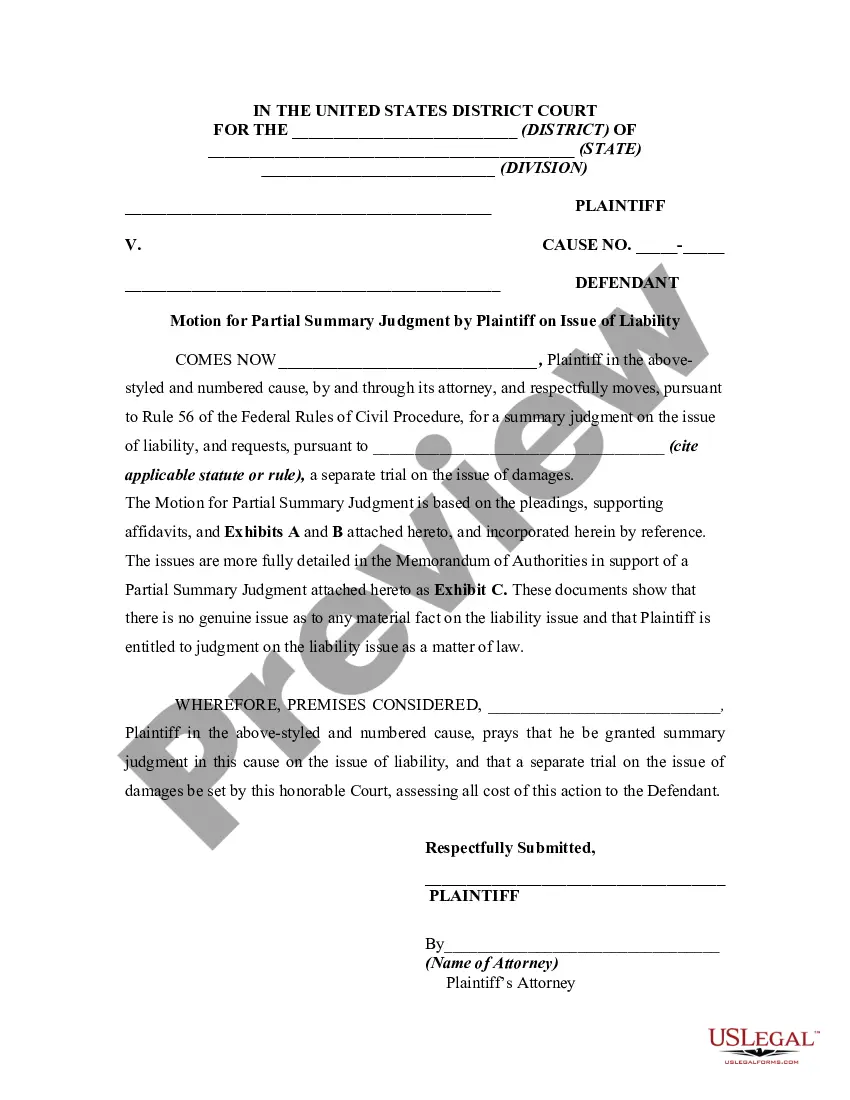
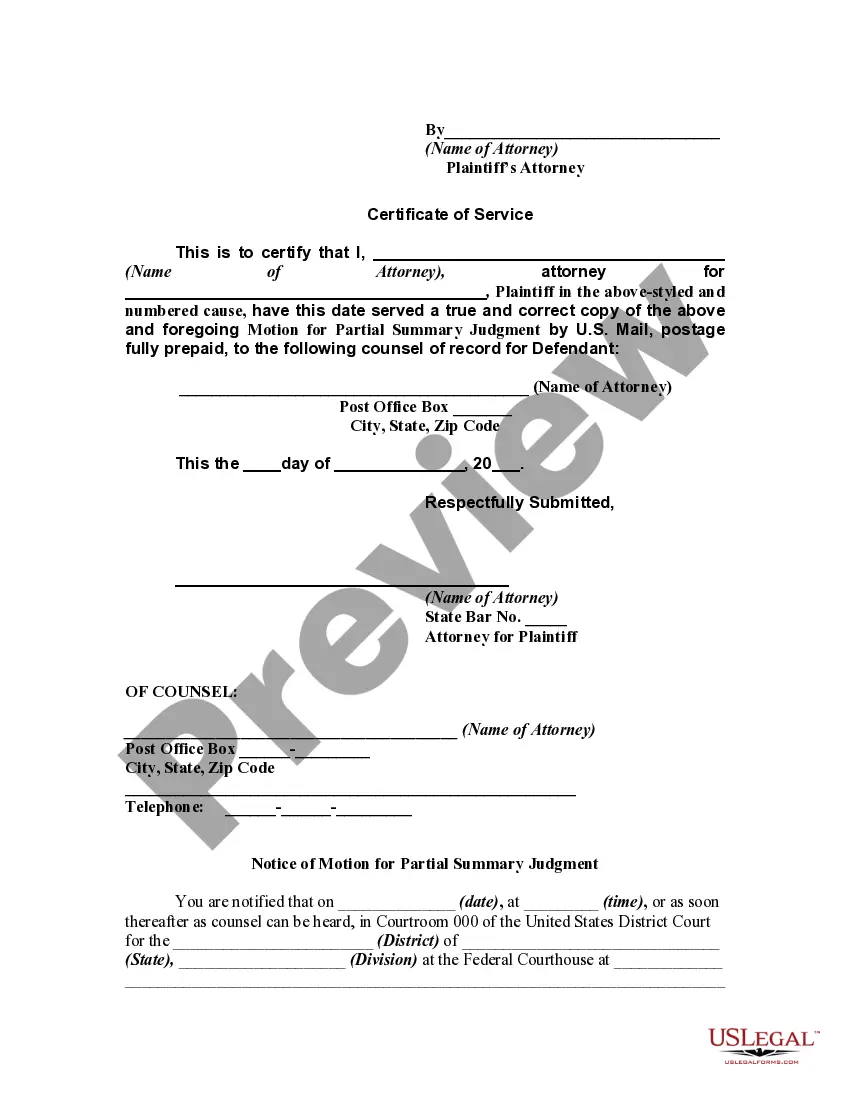
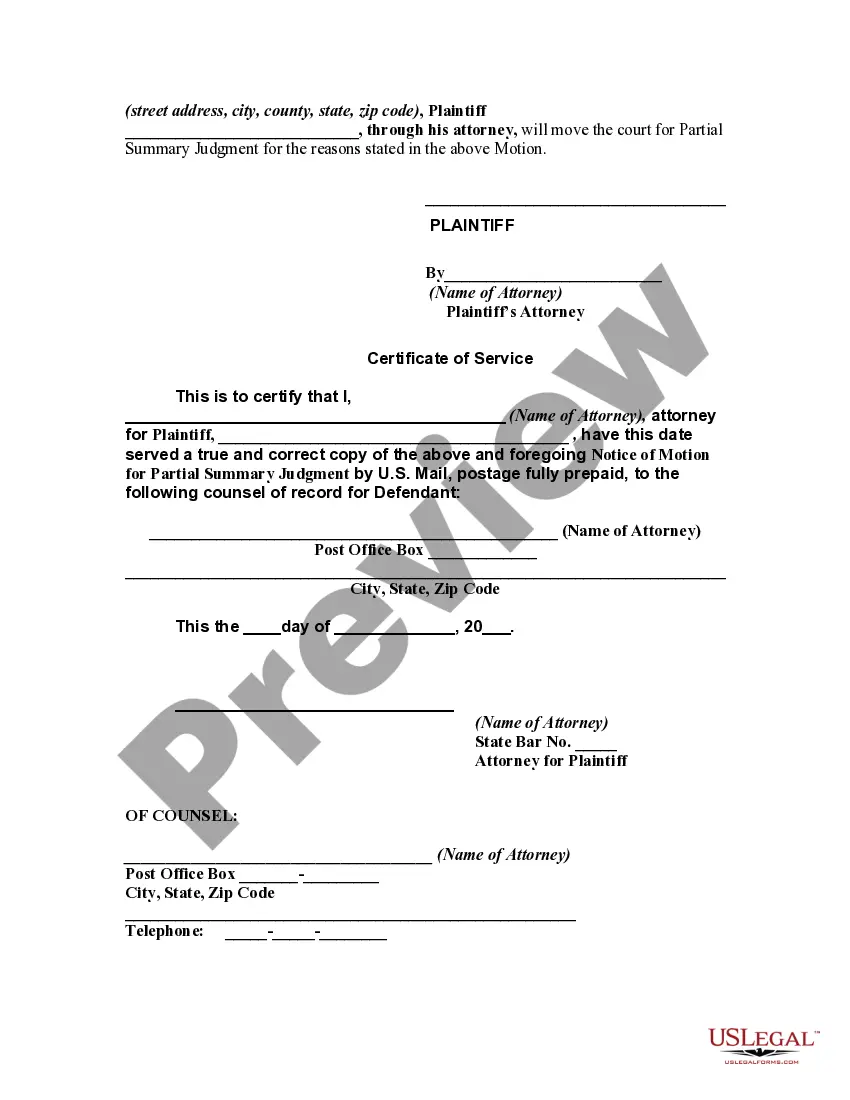
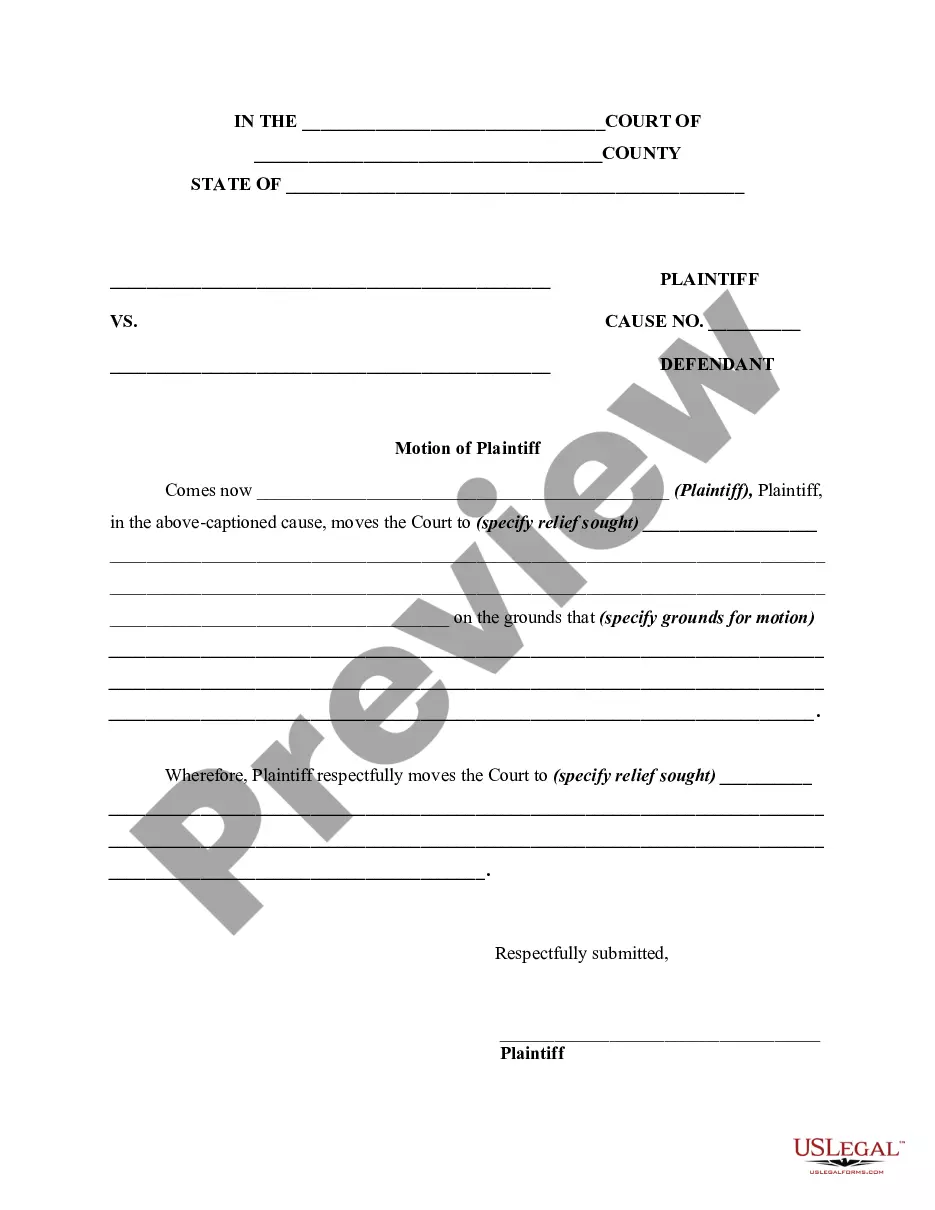
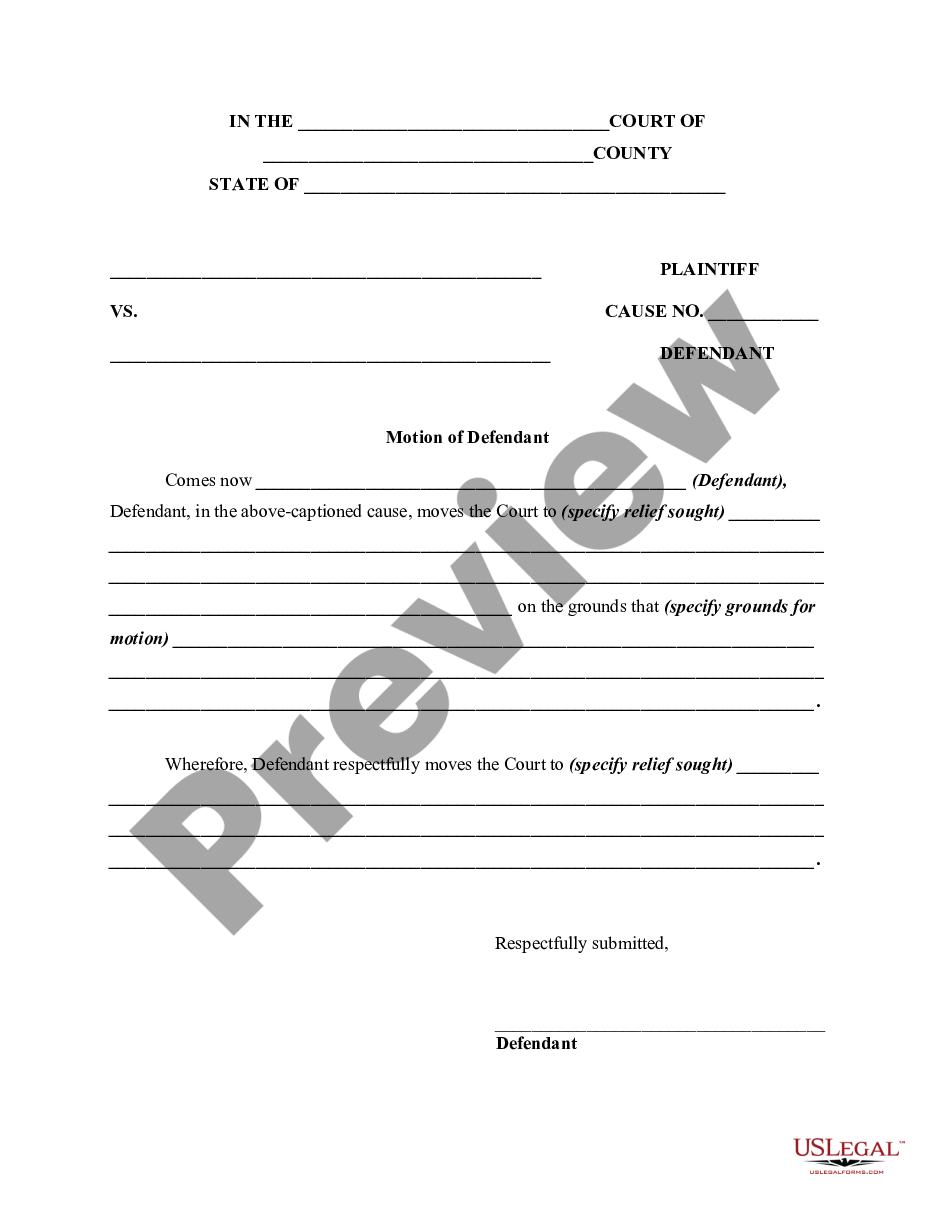
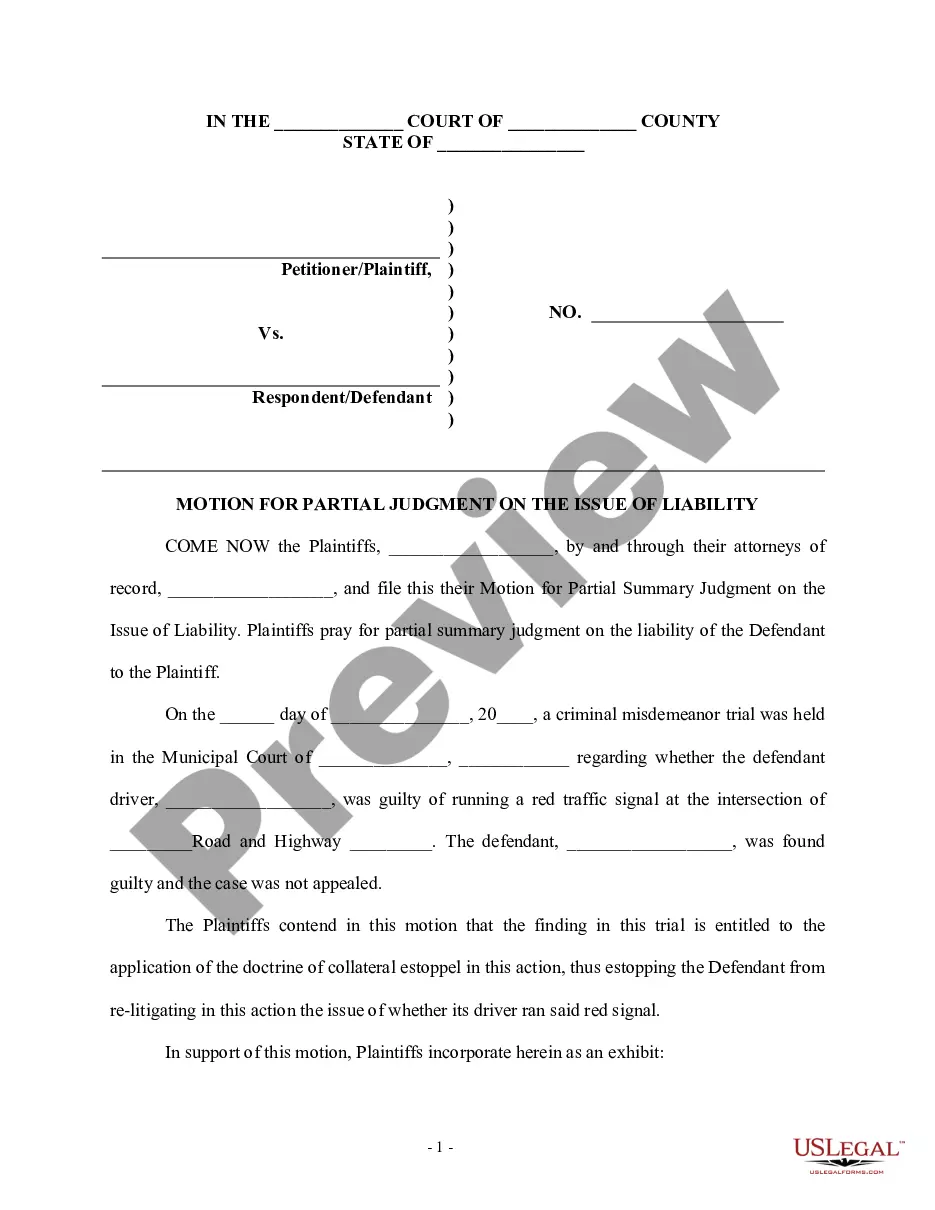
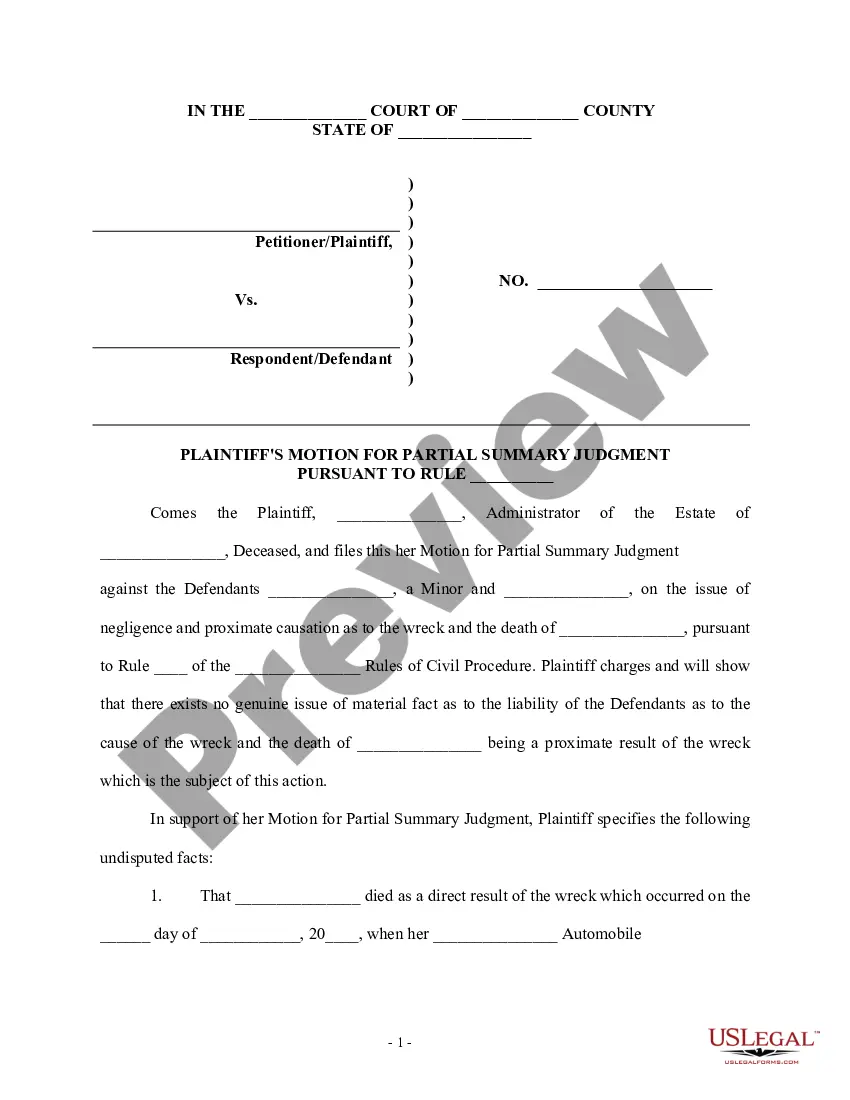
This form is a generic motion for partial summary judgment on the issue of liability. The motion adopts the "notice pleadings" format of the Federal Rules of Civil Procedure, which have been adopted by most states in one form or another.
Seattle Washington General Form of Partial Motion for Summary Judgment by Plaintiff on Issue of Liability with Notice of Motion and with Request for Separate Trial on Issue of Damages
State:
Multi-State
Category:
City:
Seattle
Control #:
US-00918BG
Format:
Word;
Rich Text
121 downloads
Description
Free preview
Get your form ready online
Our built-in tools help you complete, sign, share, and store your documents in one place.
Built-in online Word editor
Make edits, fill in missing information, and update formatting in US Legal Forms—just like you would in MS Word.
Export easily
Download a copy, print it, send it by email, or mail it via USPS—whatever works best for your next step.
E-sign your document
Sign and collect signatures with our SignNow integration. Send to multiple recipients, set reminders, and more. Go Premium to unlock E-Sign.
Notarize online 24/7
If this form requires notarization, complete it online through a secure video call—no need to meet a notary in person or wait for an appointment.
Store your document securely
We protect your documents and personal data by following strict security and privacy standards.

Make edits, fill in missing information, and update formatting in US Legal Forms—just like you would in MS Word.

Download a copy, print it, send it by email, or mail it via USPS—whatever works best for your next step.

Sign and collect signatures with our SignNow integration. Send to multiple recipients, set reminders, and more. Go Premium to unlock E-Sign.

If this form requires notarization, complete it online through a secure video call—no need to meet a notary in person or wait for an appointment.

We protect your documents and personal data by following strict security and privacy standards.
Looking for another form?

Form popularity
FAQ
Yes, a plaintiff can file a motion for summary judgment, specifically using the Seattle Washington General Form of Partial Motion for Summary Judgment by Plaintiff on Issue of Liability with Notice of Motion and with Request for Separate Trial on Issue of Damages. This legal process allows the plaintiff to seek a ruling based on the evidence presented, without the need for a trial. By doing so, they can establish liability more efficiently, thus saving time and resources for all parties involved.