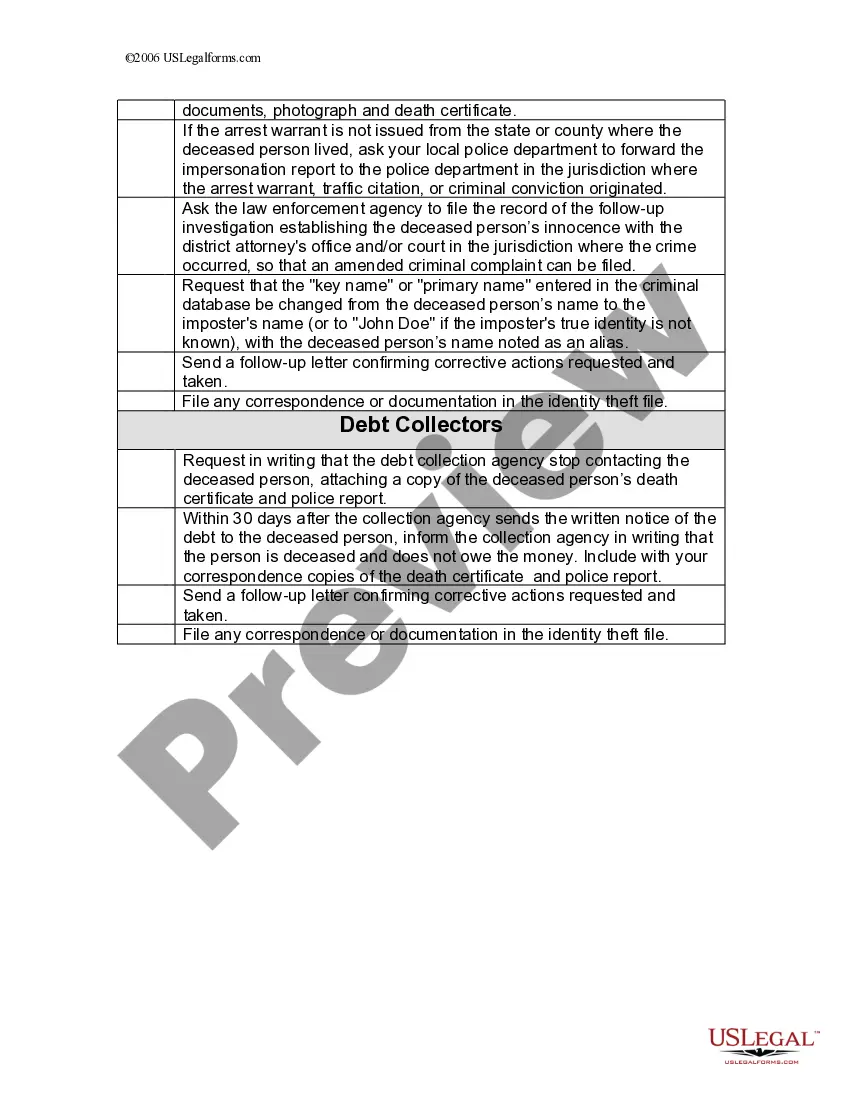
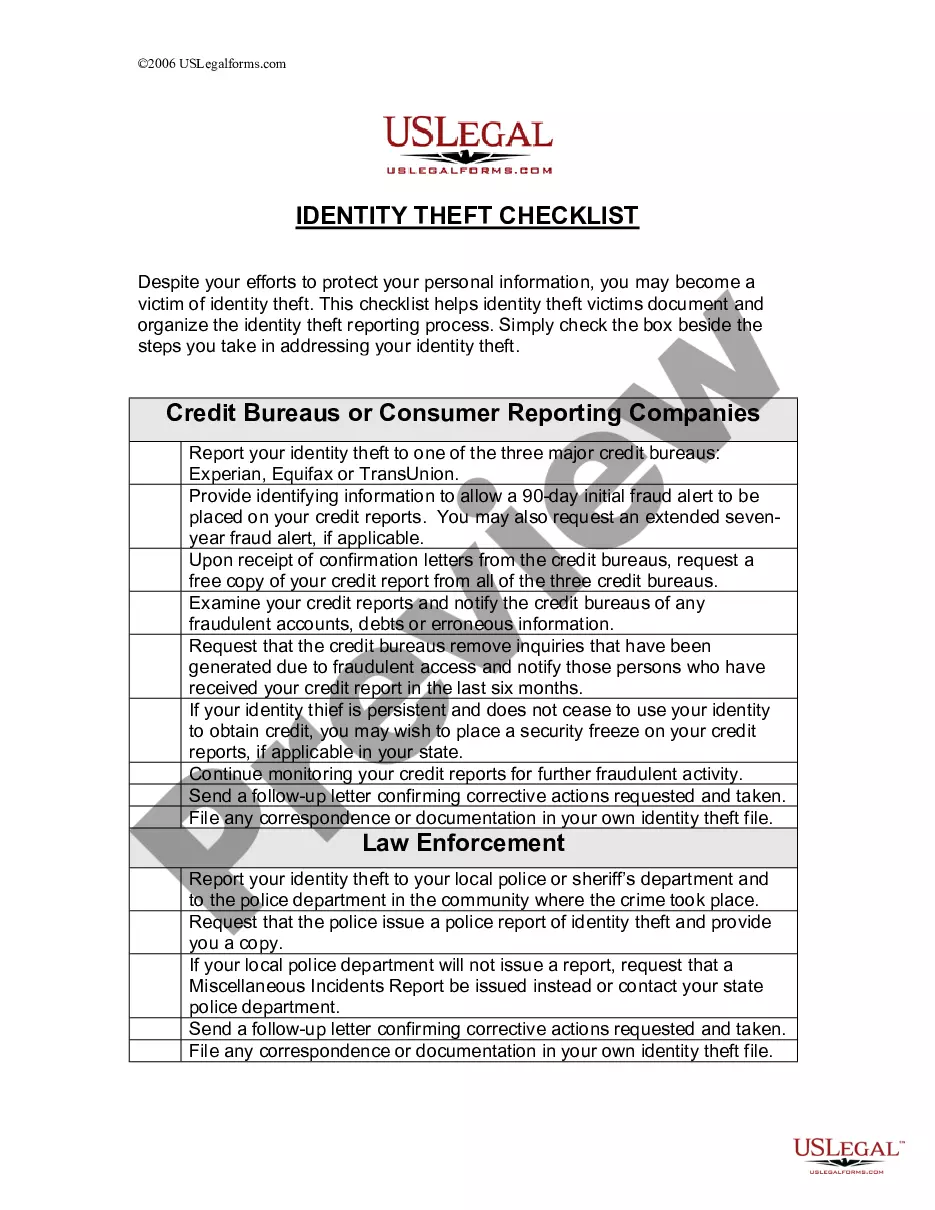
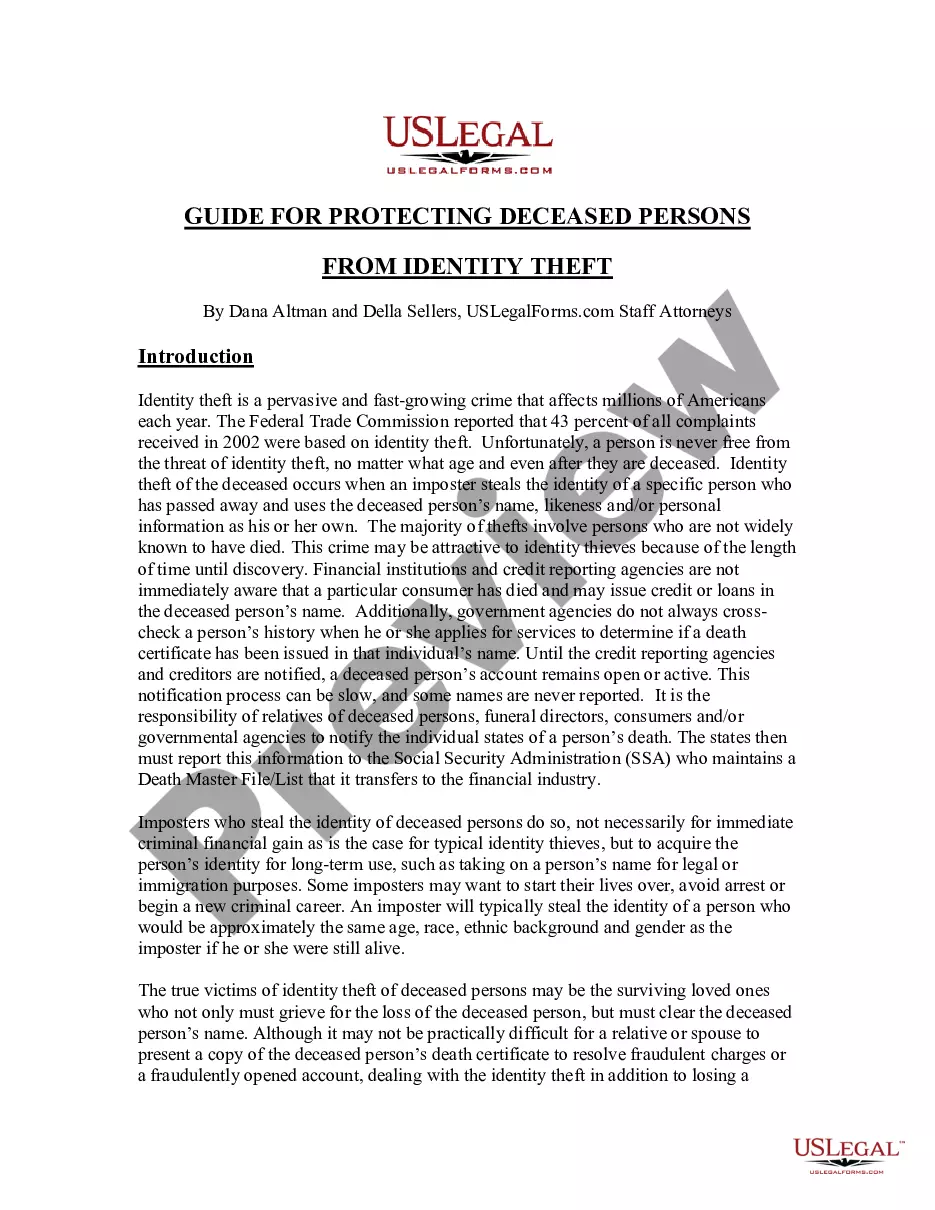
Chandler Arizona Checklist for Remedying Identity Theft of Deceased Persons
Description

Form popularity
FAQ
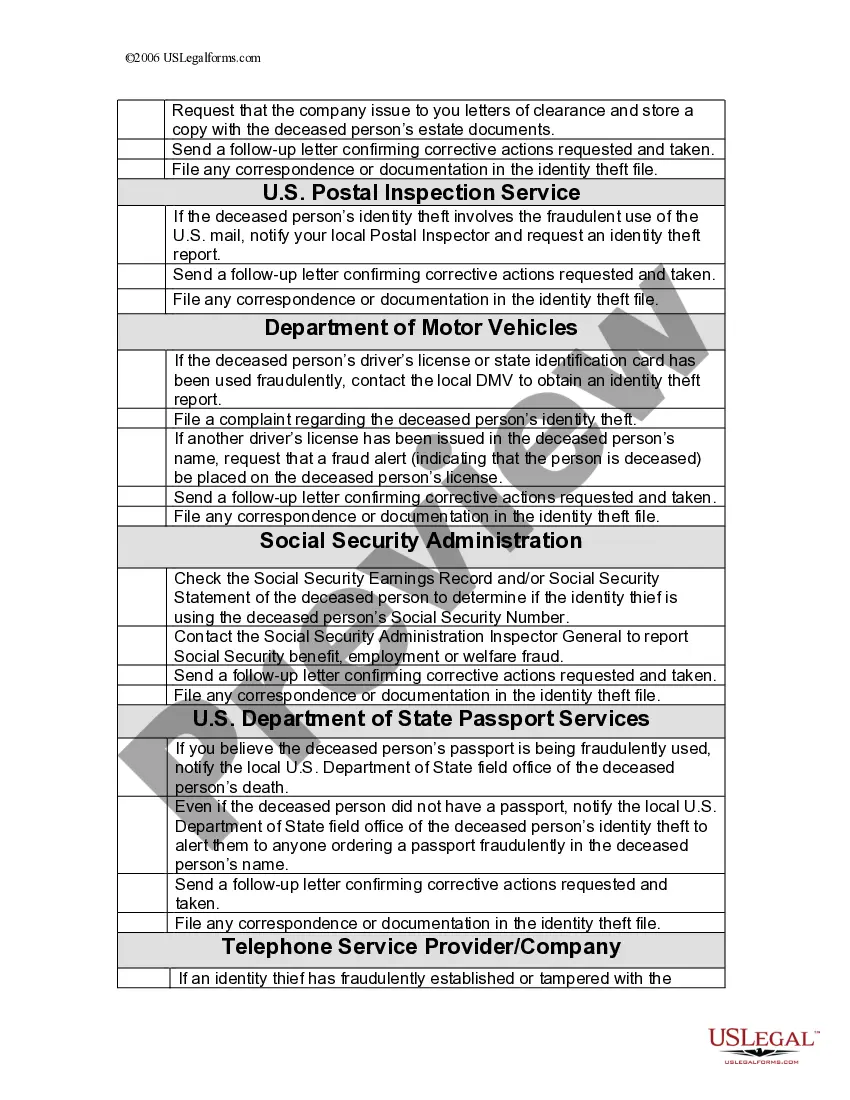
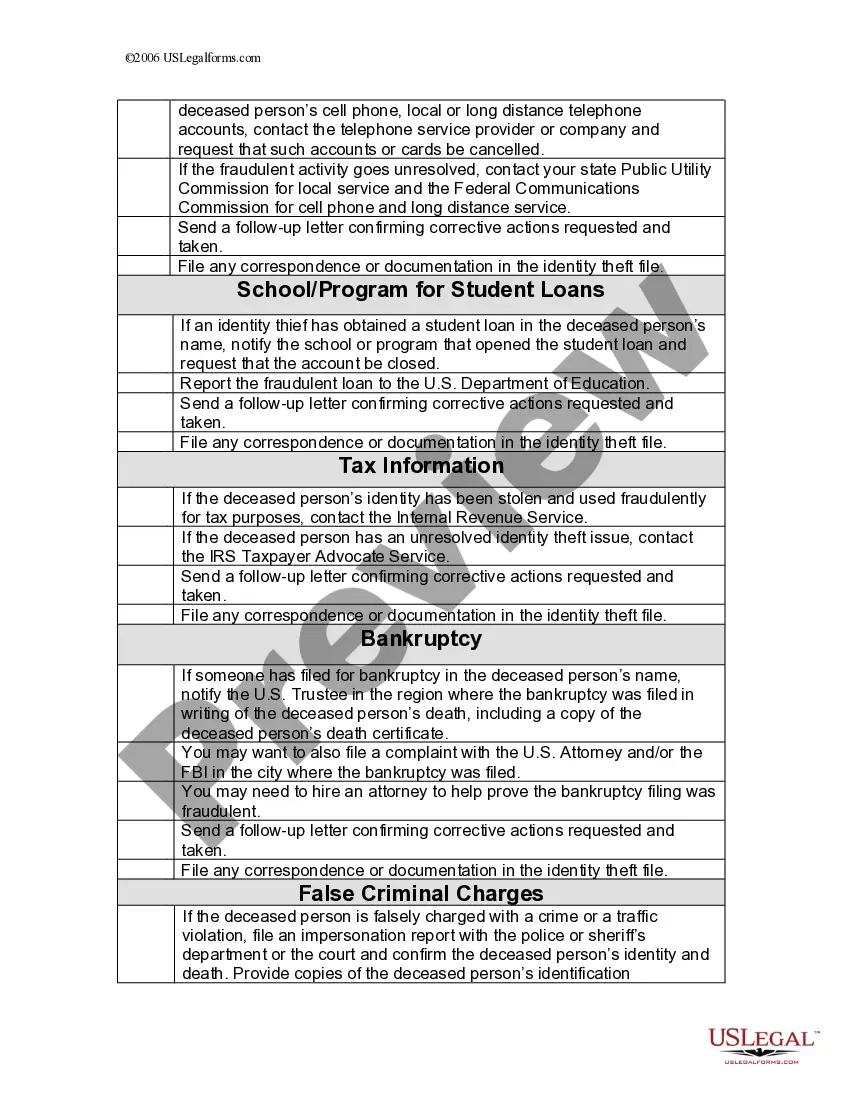
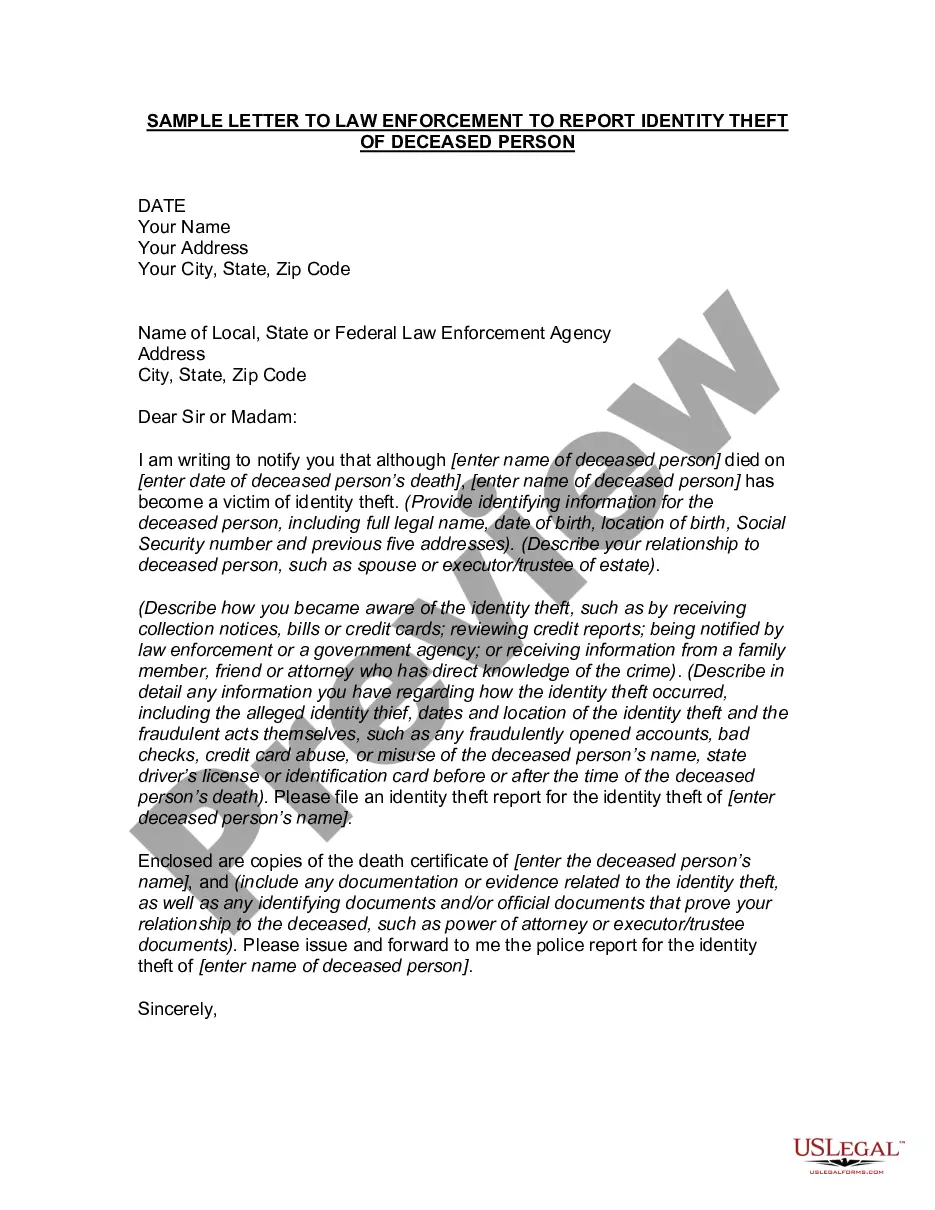
Reporting identity theft of a deceased person involves several critical steps. First, collect necessary documents, including the death certificate and evidence of fraudulent activity. You can follow the Chandler Arizona Checklist for Remedying Identity Theft of Deceased Persons, which provides a structured approach to reporting the crime to the credit bureaus and law enforcement. Additionally, consider using platforms like uslegalforms to access resources and forms that can simplify the reporting process.
If someone is stealing from a deceased person, you should act quickly to protect their estate. Start by gathering relevant documents, such as the death certificate and any financial records. Next, consult the Chandler Arizona Checklist for Remedying Identity Theft of Deceased Persons to understand the steps necessary to address the situation. You may also consider engaging with a legal professional to ensure the estate's assets are secure.
Theft of identity without consent occurs when someone uses another person's personal information to commit fraud or other crimes without their permission. This can involve using names, Social Security numbers, or financial details to impersonate the individual. Such actions are illegal and can lead to severe penalties. To address this issue effectively, refer to the Chandler Arizona Checklist for Remedying Identity Theft of Deceased Persons, which outlines essential steps for reporting and rectifying identity theft cases.
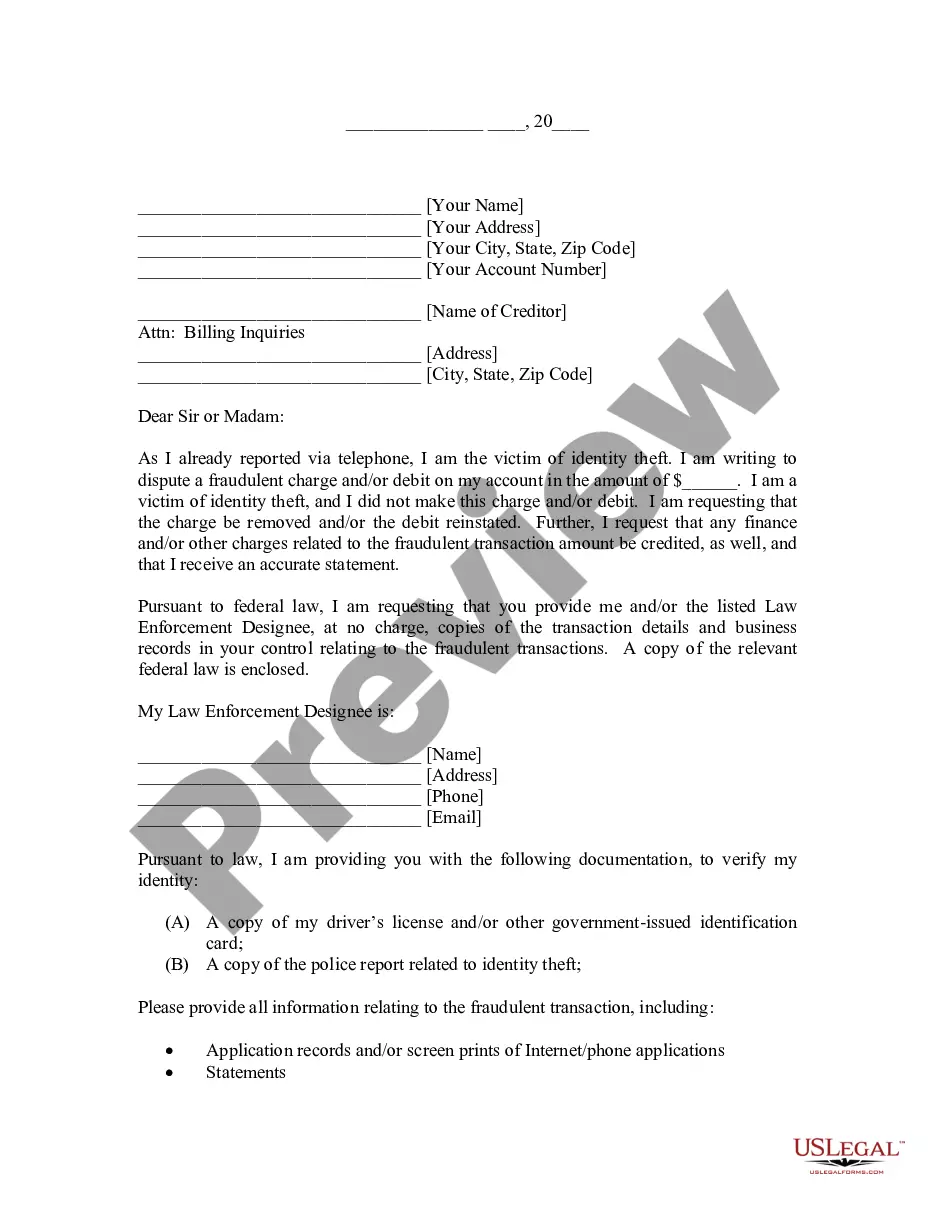
If someone steals your identity, take immediate action to minimize damage. Start by contacting your bank and credit card companies to report the theft. Additionally, you should file a report with the Federal Trade Commission and consider placing a fraud alert on your credit report. Utilizing the Chandler Arizona Checklist for Remedying Identity Theft of Deceased Persons can also guide you through the specific steps necessary to protect your identity and restore your peace of mind.
No, it is not a HIPAA violation if the person is deceased. HIPAA regulations protect the privacy of individuals' health information while they are alive. Once a person passes away, their health information is no longer protected under HIPAA. However, it's crucial to follow local and state laws regarding the handling of deceased individuals' information, especially when considering the Chandler Arizona Checklist for Remedying Identity Theft of Deceased Persons.
Yes, a deceased person's identity can indeed be stolen. Identity thieves may exploit personal information from obituaries, public records, or other sources to commit fraud. This type of identity theft can have lasting effects on the deceased's estate and surviving family members. To protect against this, refer to the Chandler Arizona Checklist for Remedying Identity Theft of Deceased Persons for effective strategies.
Filling out a FTC affidavit is a straightforward process. First, gather all necessary documents that support your claim of identity theft. Then, carefully complete the affidavit form by providing accurate details about the theft and any fraudulent activities. For a comprehensive approach, consider using the Chandler Arizona Checklist for Remedying Identity Theft of Deceased Persons to ensure you cover all required steps.
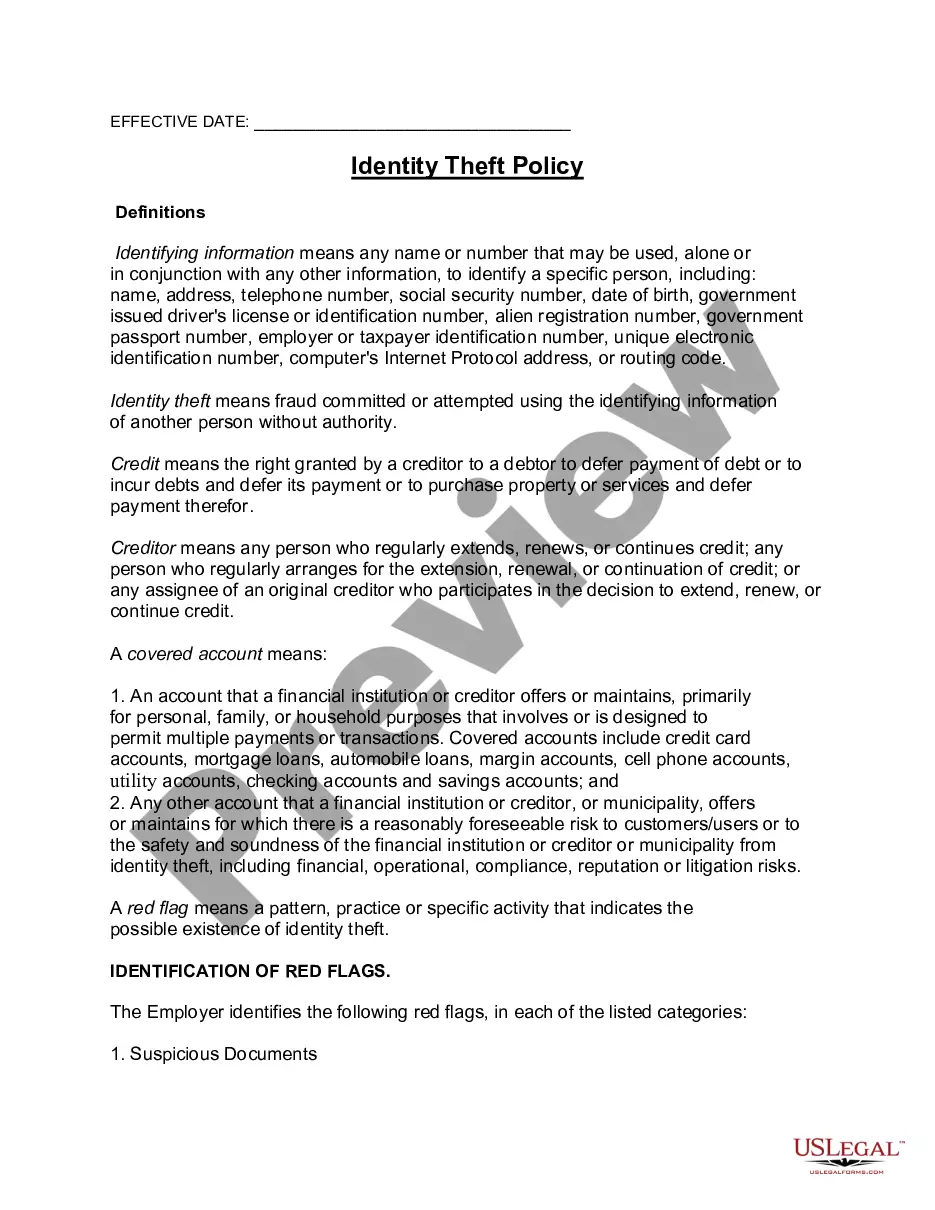
To comply with the Red Flag rule, an identity theft prevention program must include policies that identify relevant risk factors, procedures for detecting red flags, a response plan, and regular updates to the program. These components are essential in safeguarding against identity theft, including that of deceased individuals. Incorporating the Chandler Arizona Checklist for Remedying Identity Theft of Deceased Persons can enhance your program, ensuring you remain vigilant. Additionally, staying informed about evolving threats helps maintain a proactive stance against identity fraud.
When someone steals the identity of a deceased person, they may use that identity to open fraudulent accounts or commit financial crimes. This can lead to significant distress for the surviving family members, as they may face complications in settling the deceased's affairs. By following the Chandler Arizona Checklist for Remedying Identity Theft of Deceased Persons, you can take actionable steps to address and rectify any identity theft issues. It's vital to act quickly to mitigate potential damage and protect the deceased's legacy.
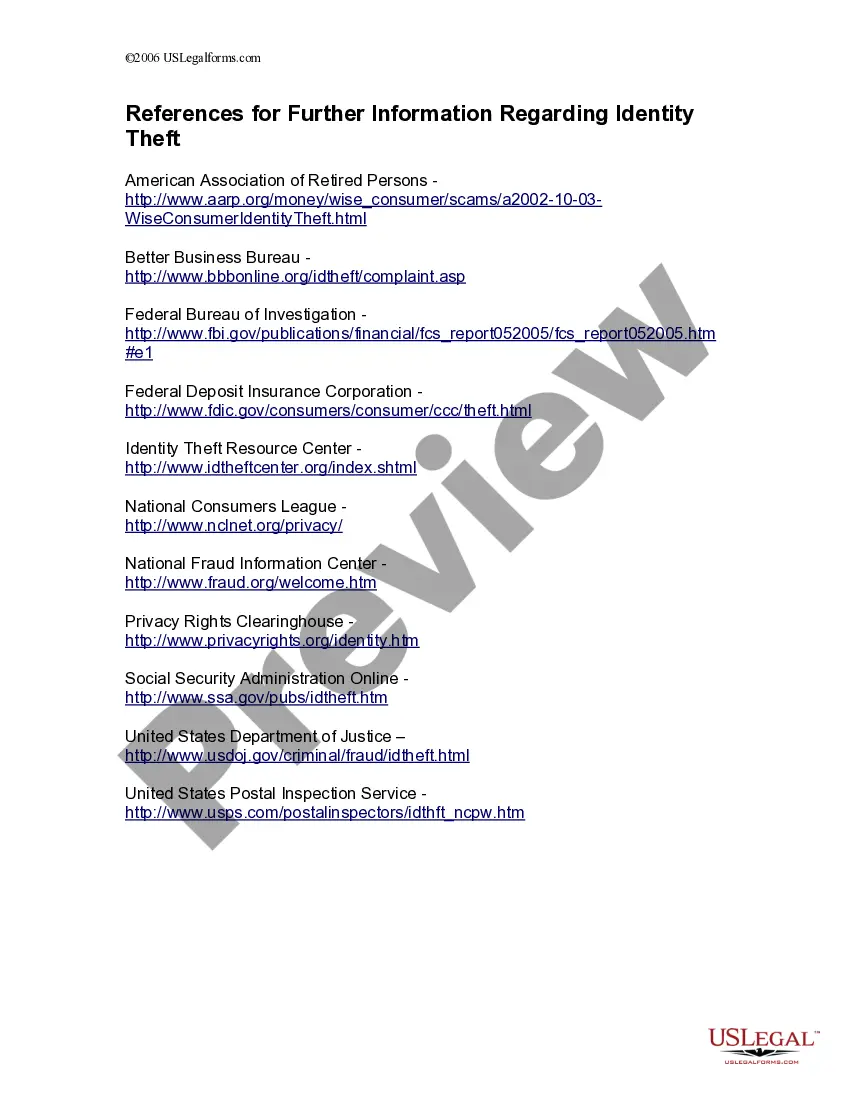
To report identity theft of a deceased person online, you can start by visiting the Federal Trade Commission's (FTC) website. The FTC provides resources tailored for these situations, including a specific section for reporting identity theft involving deceased individuals. Additionally, utilizing the Chandler Arizona Checklist for Remedying Identity Theft of Deceased Persons can help guide you through necessary steps and documentation. It is crucial to notify credit bureaus and relevant authorities promptly to protect the deceased's identity.