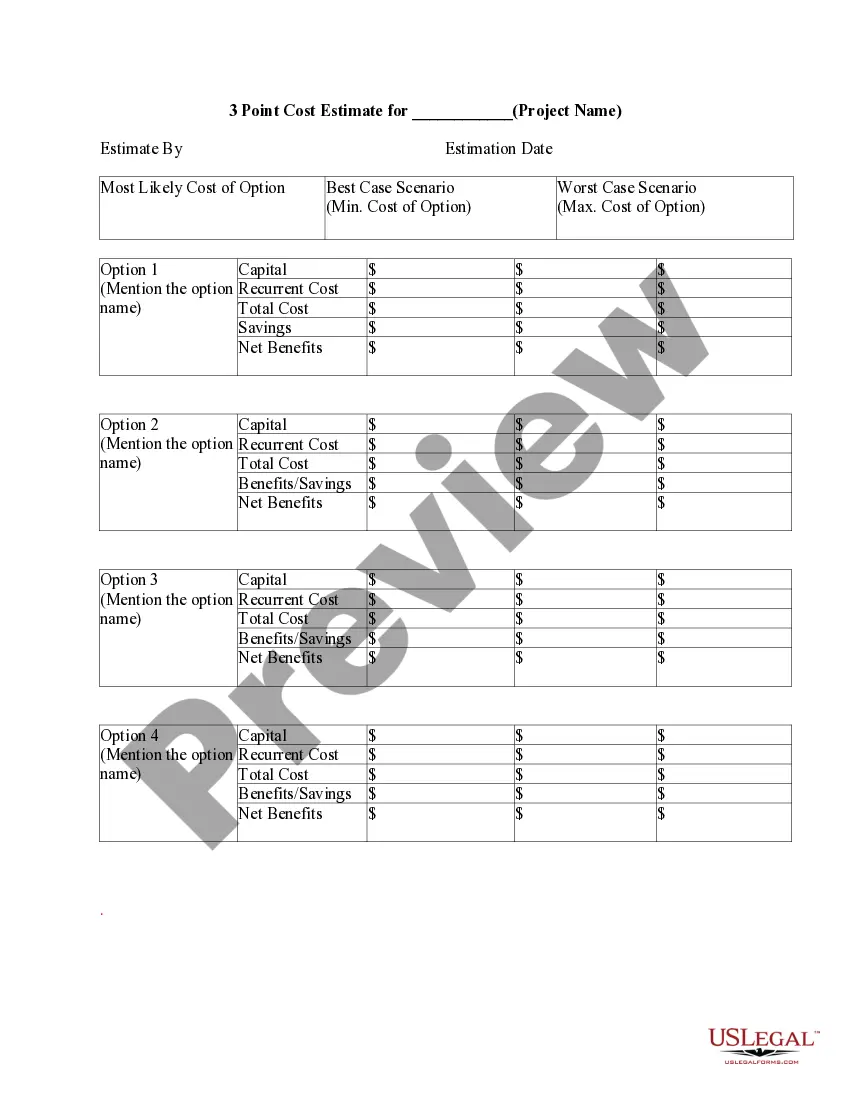
Irvine California 3-Point Cost Estimate Comparisons
Description





Form popularity
FAQ
The formula for a point estimate is straightforward. Typically, it can be represented as the average of different estimates, often simplified to Total Costs / Number of Estimates. In the case of Irvine California 3-Point Cost Estimate Comparisons, leveraging this formula helps project managers and businesses achieve accurate financial projections.
Calculating a point estimate involves determining a single value that represents the most likely outcome of your project. You can use historical data and current information to make an informed guess about potential costs. In the context of Irvine California 3-Point Cost Estimate Comparisons, this estimate serves as a crucial benchmark for budgeting and financial planning.
To calculate a 3-point estimate for the Irvine California 3-Point Cost Estimate Comparisons, you gather three estimates: the optimistic, pessimistic, and most likely outcomes. Then, you can use the formula: (Optimistic + 4 x Most Likely + Pessimistic) / 6. This method takes into account different scenarios, providing a more balanced perspective on potential costs.
To calculate a three-point estimation, you need three key pieces of information: the optimistic estimate, the pessimistic estimate, and the most likely estimate. Each of these figures represents a different scenario for completing a task or project. Collecting accurate data for each category allows for a comprehensive assessment of potential costs. Exploring the Irvine California 3-Point Cost Estimate Comparisons will enhance your understanding and accuracy in this calculation.
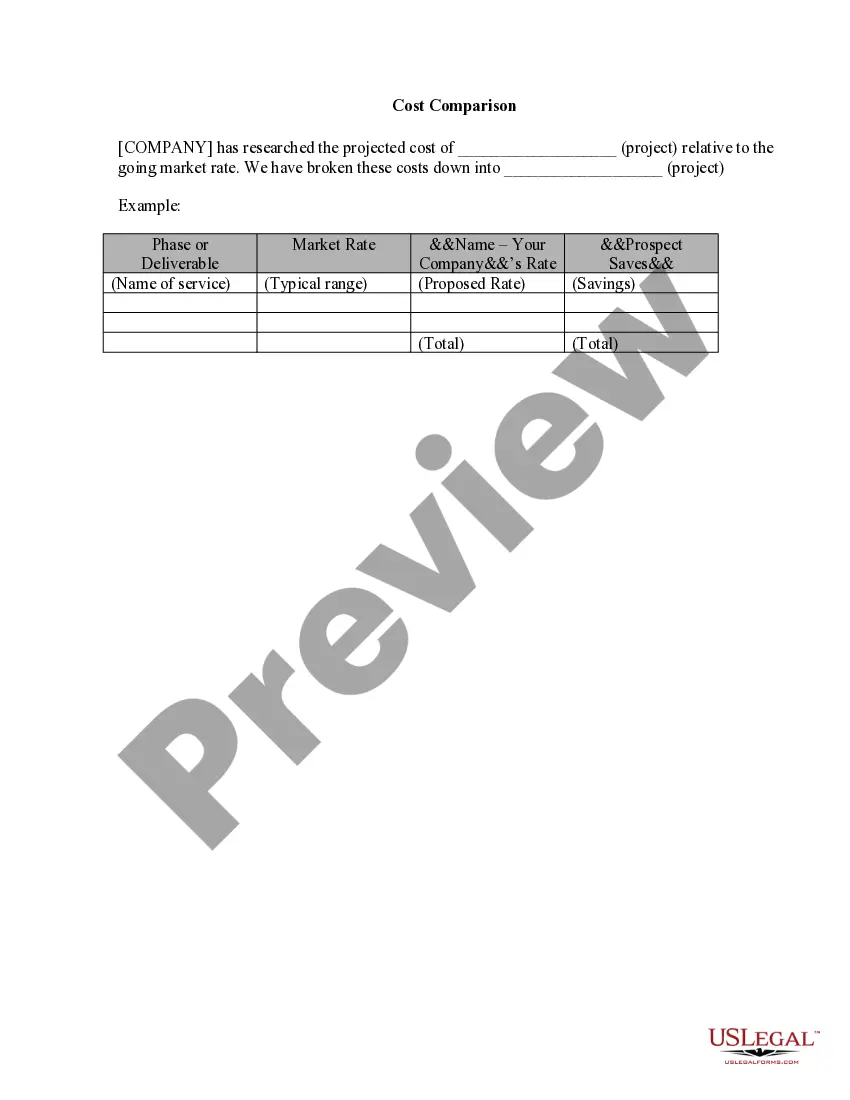
To calculate a 3-point average, you add the optimistic, pessimistic, and most likely estimates together. Next, you divide the total by three to arrive at the average estimate. This method gives you a more balanced view of the expected costs while factoring in the uncertainty. For those looking to streamline this calculation, the Irvine California 3-Point Cost Estimate Comparisons feature can offer valuable tools and templates through USLegalForms.
To perform a 3-point estimate, you first identify three estimates for a specific task or project: the optimistic estimate, the pessimistic estimate, and the most likely estimate. This allows you to capture a range of possibilities rather than a single point. After gathering these estimates, you can calculate the average, which helps you gain insights into the overall costs involved. Utilizing the Irvine California 3-Point Cost Estimate Comparisons can simplify this process and provide clarity.
For three-point estimating, you should utilize optimistic, pessimistic, and most likely estimates to encompass a range of scenarios. Each type serves a purpose in understanding the potential risks involved in your estimates. This approach leads to a more comprehensive understanding of costs and timelines. When looking at Irvine California 3-Point Cost Estimate Comparisons, these estimates help you choose the most appropriate strategy for your project.
Calculating a 3-point average involves taking the three estimates and applying the formula: (Optimistic + 4 Most Likely + Pessimistic) / 6. This process ensures that the most likely outcome is weighted more heavily, reflecting a realistic average. By using this in your Irvine California 3-Point Cost Estimate Comparisons, you produce a more precise estimate for your projects.
To calculate 3-point estimation, start with your three values: optimistic, pessimistic, and most likely. You then apply the formula: (Optimistic + 4 Most Likely + Pessimistic) / 6, which gives you the expected value. This approach reduces the impact of uncertainty. For those dealing with Irvine California 3-Point Cost Estimate Comparisons, this method is crucial for accurate financial planning.
point estimate calculator allows you to input your optimistic, pessimistic, and most likely estimates to generate an expected value efficiently. This calculator minimizes errors and speeds up the estimation process, making it userfriendly. For effective Irvine California 3Point Cost Estimate Comparisons, using such a tool streamlines project management and forecasting.