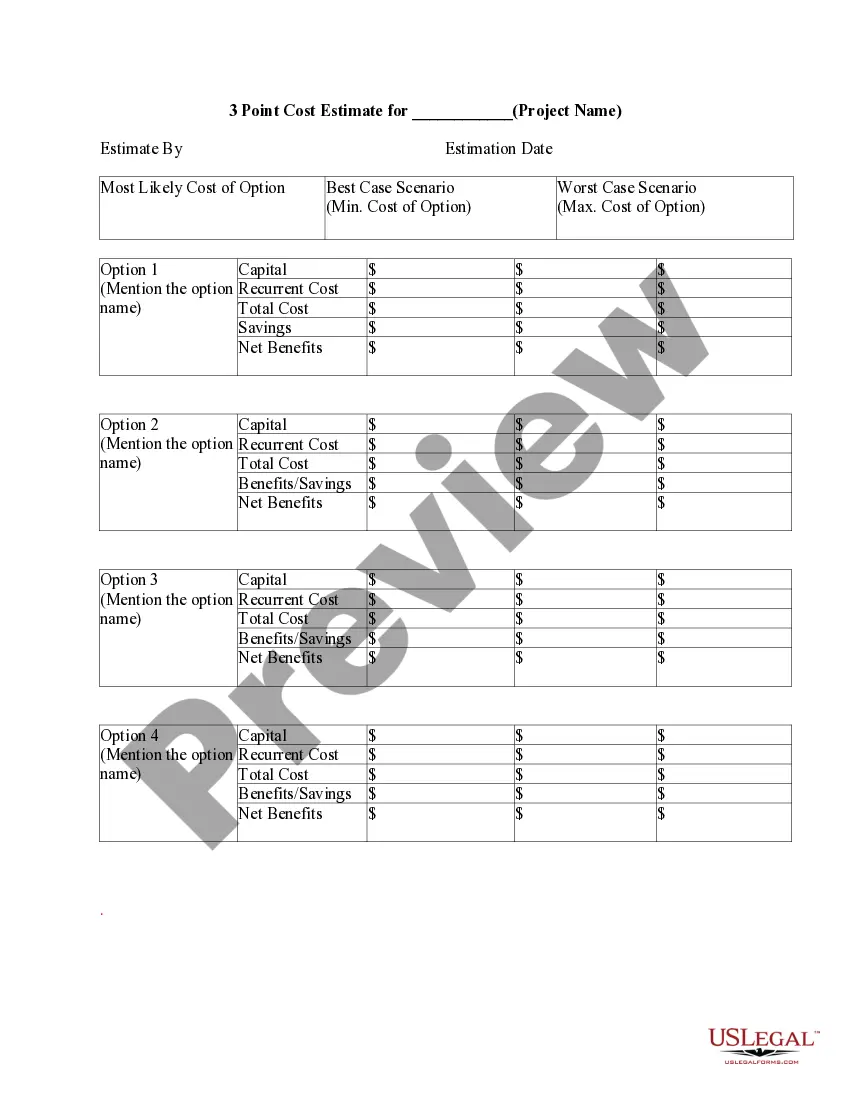
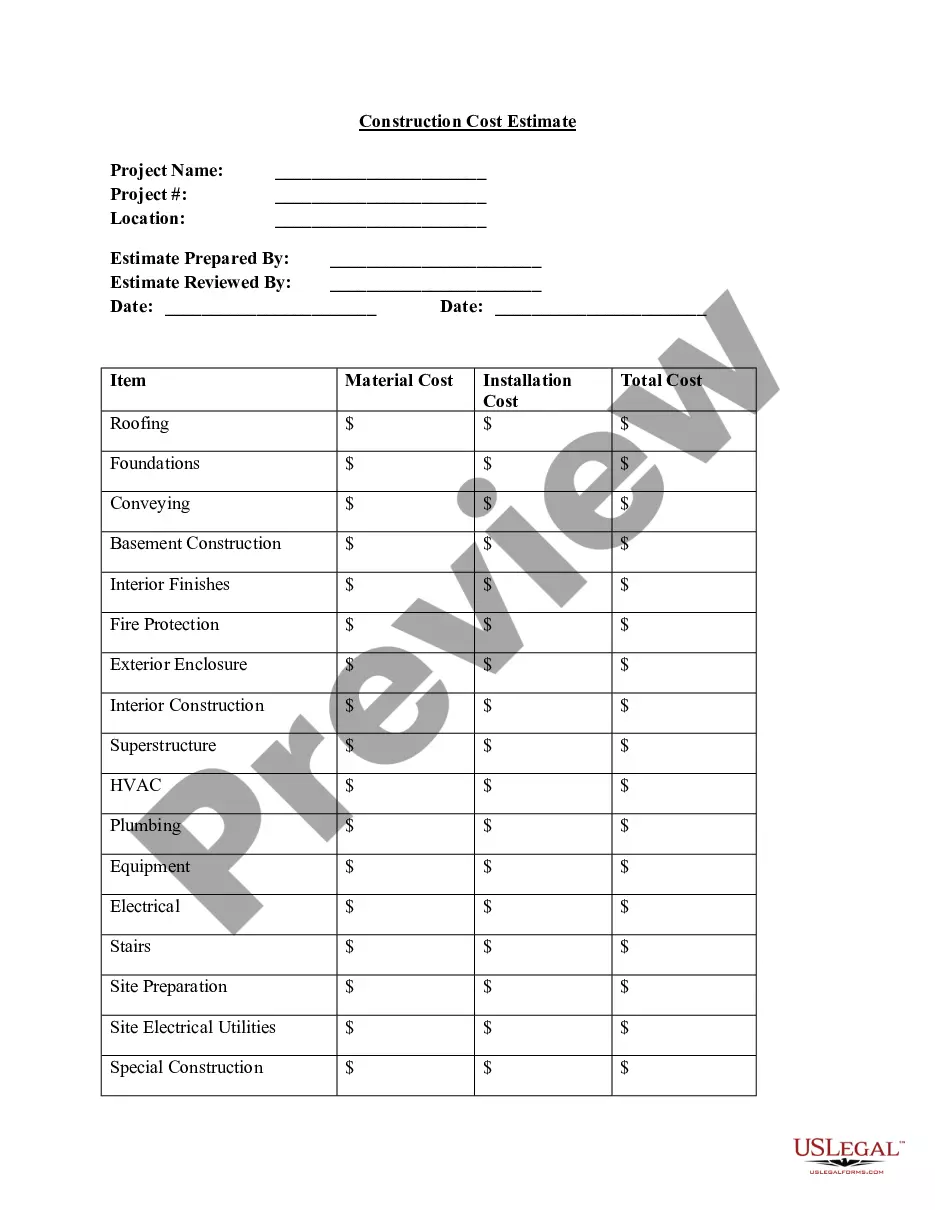
Detroit Michigan 3-Point Cost Estimate Comparisons
Description


Form popularity
FAQ
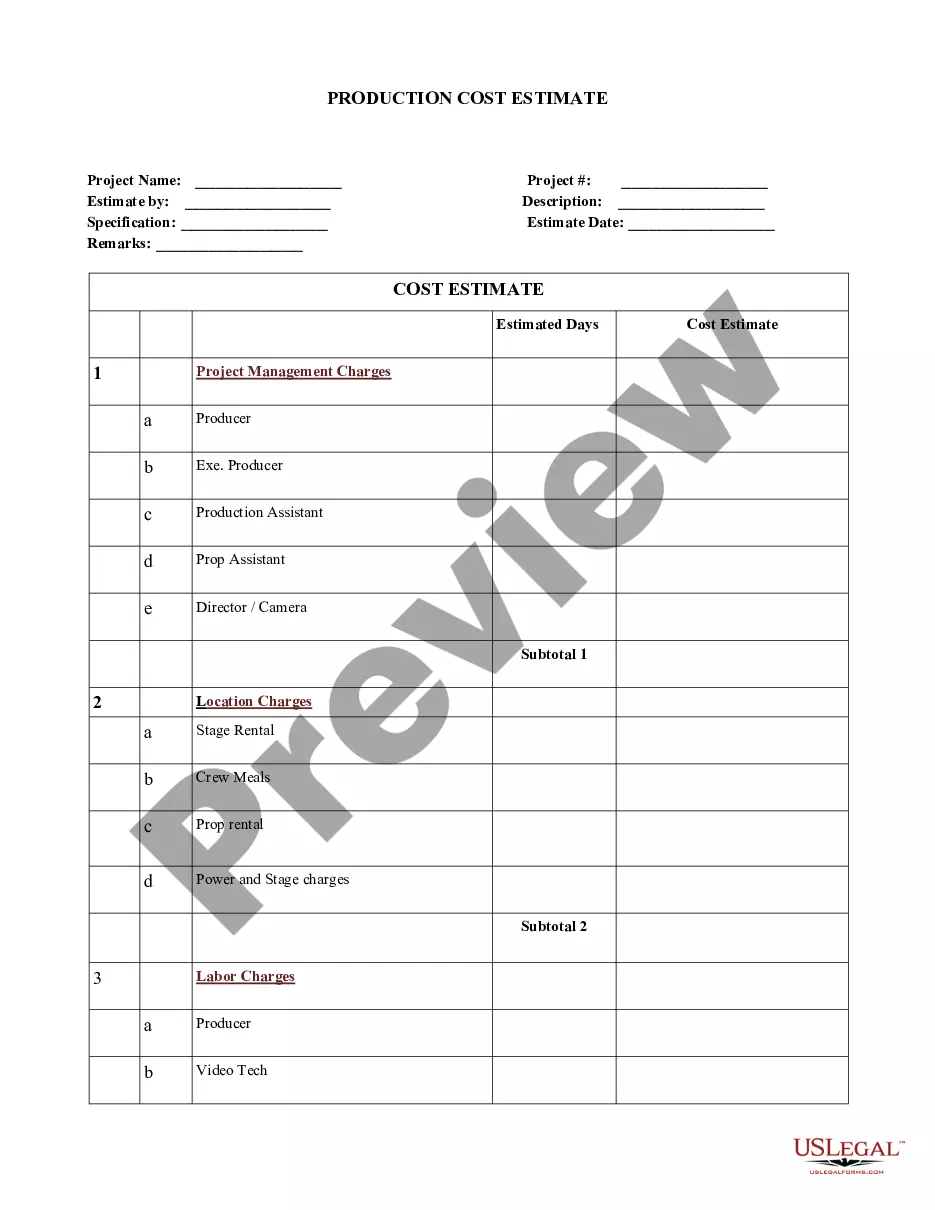
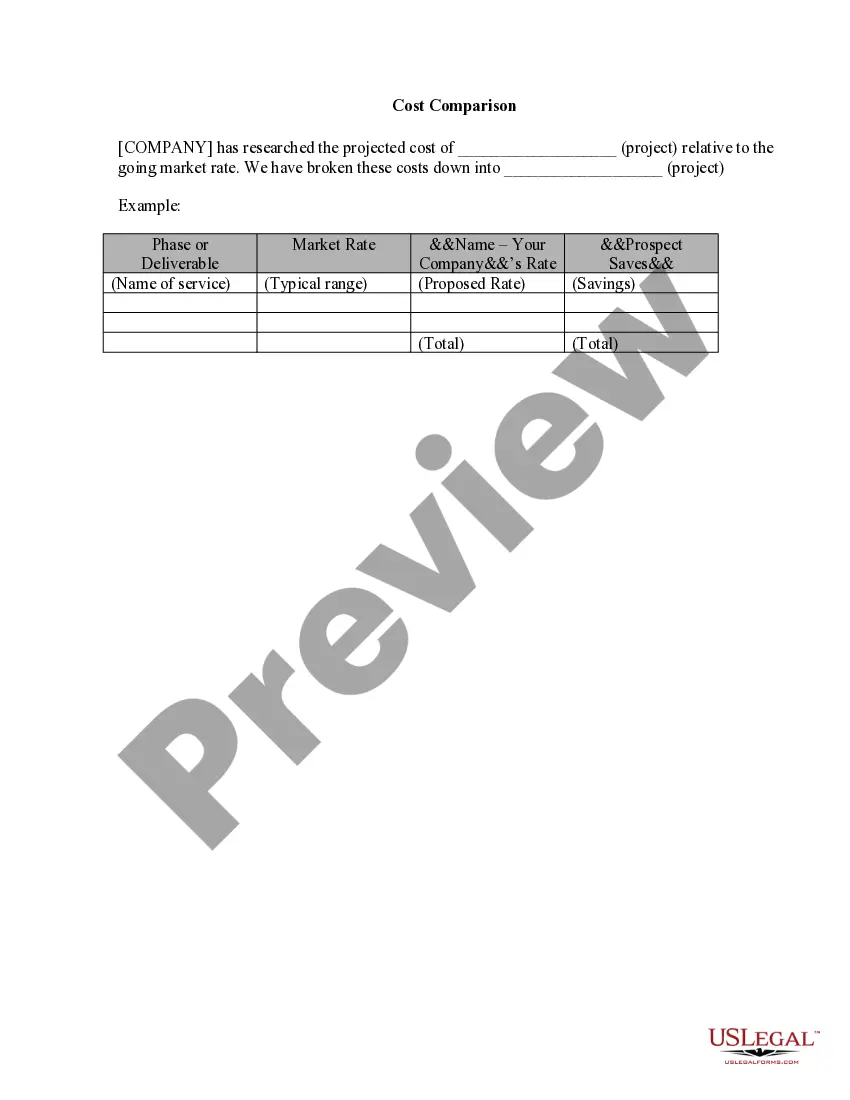
To calculate a 3-point average, you add the optimistic, pessimistic, and most likely estimates together and then divide by three. This method smooths out the extreme values and provides a reliable average, essential for effective budgeting. When working with Detroit Michigan 3-Point Cost Estimate Comparisons, using this average helps you evaluate various project costs genuinely and effectively, ensuring you make informed financial decisions.
The 3-point formula for Project Management Professionals (PMP) helps in estimating project costs by considering optimistic, pessimistic, and most likely outcomes. This approach provides a more balanced estimate by allowing for uncertainty in project planning. In the context of Detroit Michigan 3-Point Cost Estimate Comparisons, you can use this formula to gain a clearer perspective on potential project costs, aiding in decision-making for your local projects.
In three-point estimating, the typical types of estimates include optimistic, pessimistic, and most likely costs. These estimates allow for a broader perspective on potential costs and risks, and they help manage uncertainties effectively. By using these types, you can enhance your credibility when presenting Detroit Michigan 3-Point Cost Estimate Comparisons. US Legal Forms can assist you in structuring these estimates conveniently, ensuring you capture all essential elements.
To calculate a 3-point estimate, first identify the three essential values: the best-case scenario, worst-case scenario, and the most probable scenario. Next, apply the formula: (Optimistic + 4 Most Likely + Pessimistic) / 6. This approach offers a more tailored expectation, which is beneficial when making Detroit Michigan 3-Point Cost Estimate Comparisons. By utilizing this method, you can refine your project's overall cost assessment.
Calculating a 3-point estimate involves gathering three different values: the optimistic estimate, the pessimistic estimate, and the most likely estimate. You can then use these values in a formula to find the average or expected cost. This method helps reduce uncertainty and provides a balanced view, which is particularly useful for Detroit Michigan 3-Point Cost Estimate Comparisons. Accurately determining these figures can lead to better financial planning.
To calculate a point estimate, you start by analyzing available data and making informed guesses about outcomes. You assess historical data, recent trends, and expert opinions to arrive at a likely value. This process involves recognizing what factors influence costs in your specific context, particularly when making Detroit Michigan 3-Point Cost Estimate Comparisons. Using this form of estimation provides a quick yet accurate assessment for decision-making.
Yes, S-corporations must file annual tax returns with Michigan, even if they do not have a tax liability. This includes filing Form 491 and complying with any additional state requirements. To streamline the process, consider using resources related to Detroit Michigan 3-Point Cost Estimate Comparisons for more effective tax planning.
The assessed value in Detroit typically represents 50% of the property’s market value. This assessment is critical for determining your property taxes and may vary based on local economic conditions. As you seek clarity with Detroit Michigan 3-Point Cost Estimate Comparisons, understanding assessed values will enhance your decision-making.
Estimating property taxes in Michigan involves assessing the property's market value and applying the local tax rate. You can often find this information through local municipal websites or by consulting with a tax professional. For accurate financial insights, consider leveraging Detroit Michigan 3-Point Cost Estimate Comparisons to navigate property tax implications.
A Michigan Corporation subchapter S is a tax designation that allows income to pass through to shareholders, avoiding double taxation at the corporate level. This structure is beneficial for many small businesses. When analyzing options through Detroit Michigan 3-Point Cost Estimate Comparisons, this election may provide significant tax savings.