Collin Texas Living Trust - Irrevocable

State:
Multi-State
County:
Collin
Control #:
US-00556-A
Format:
Word; 
Rich Text
Instant download

Description

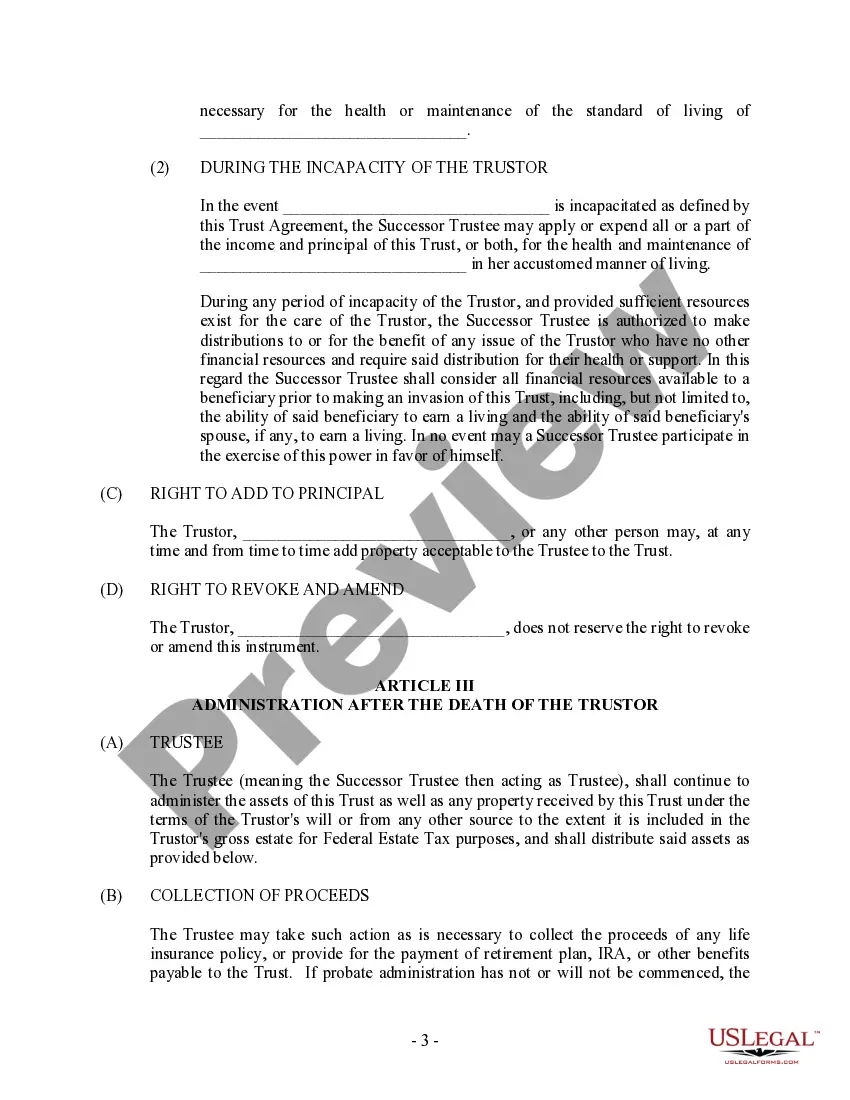
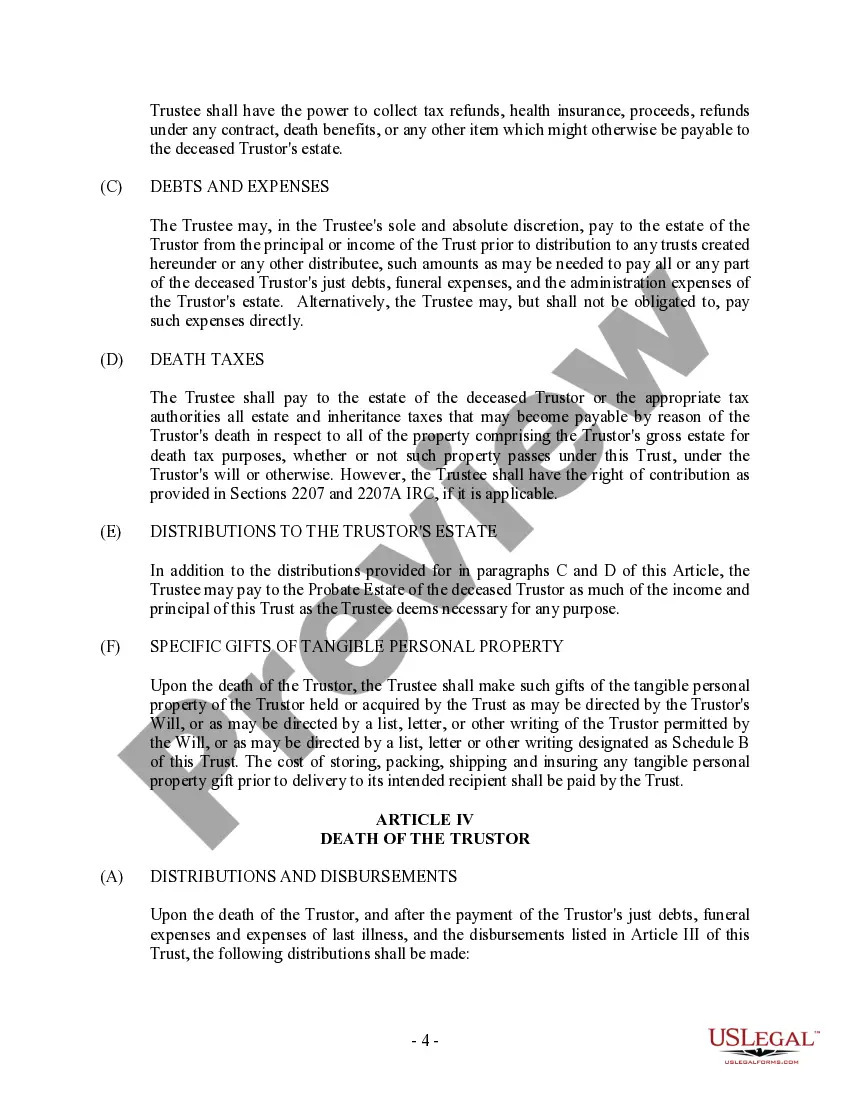
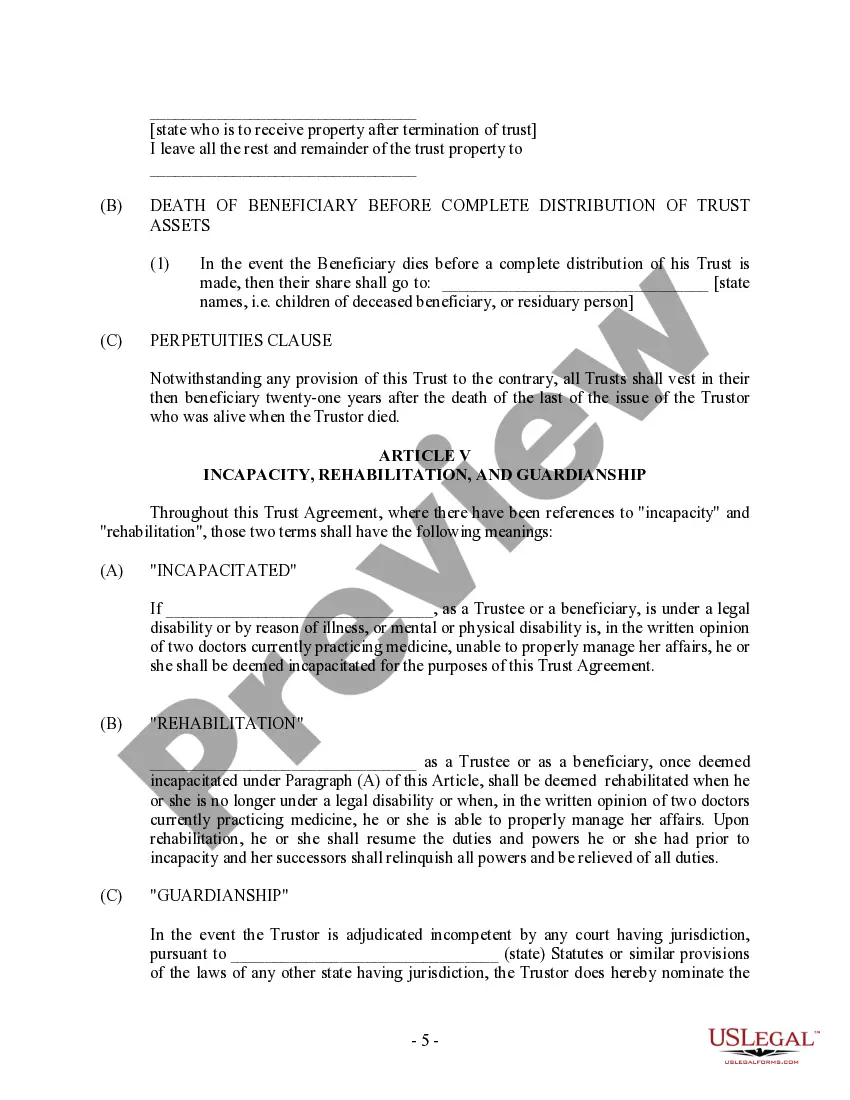
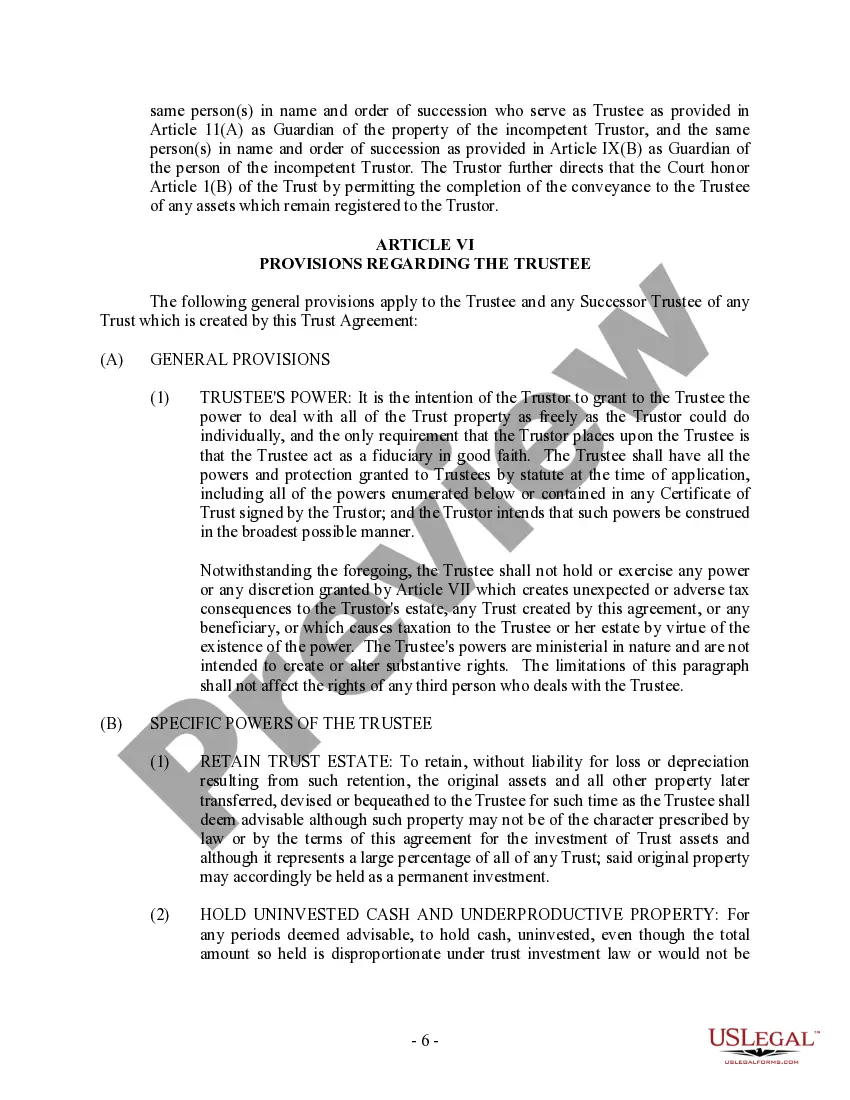
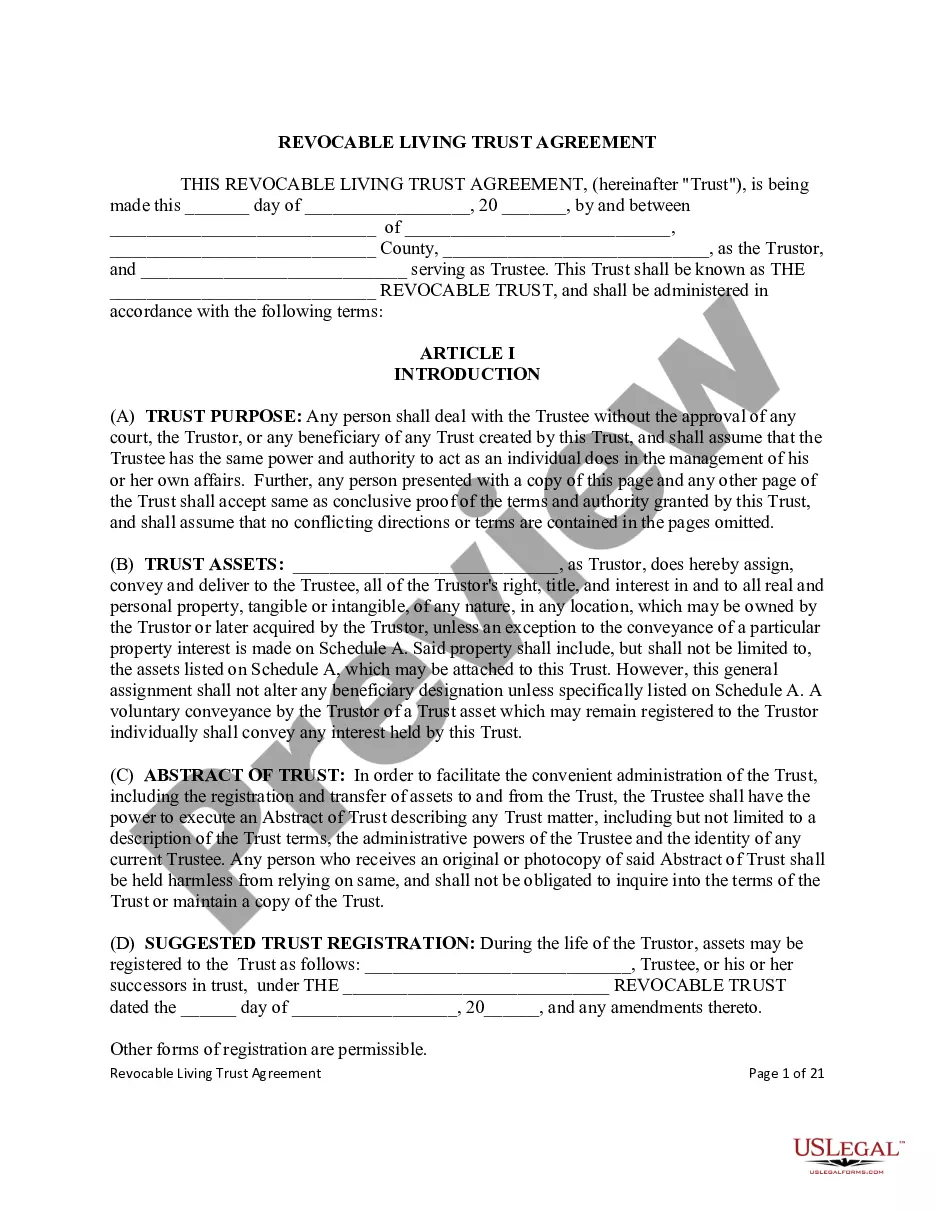
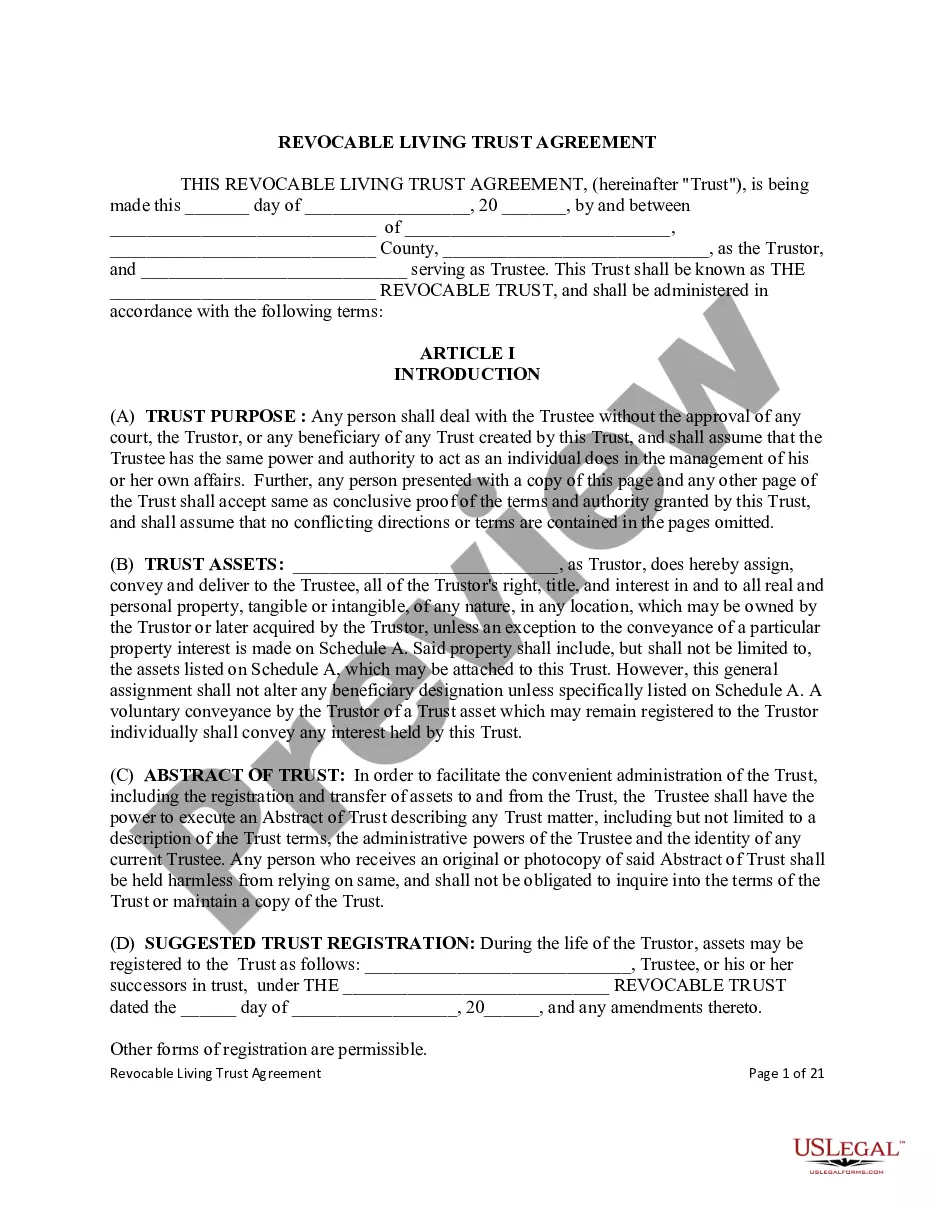
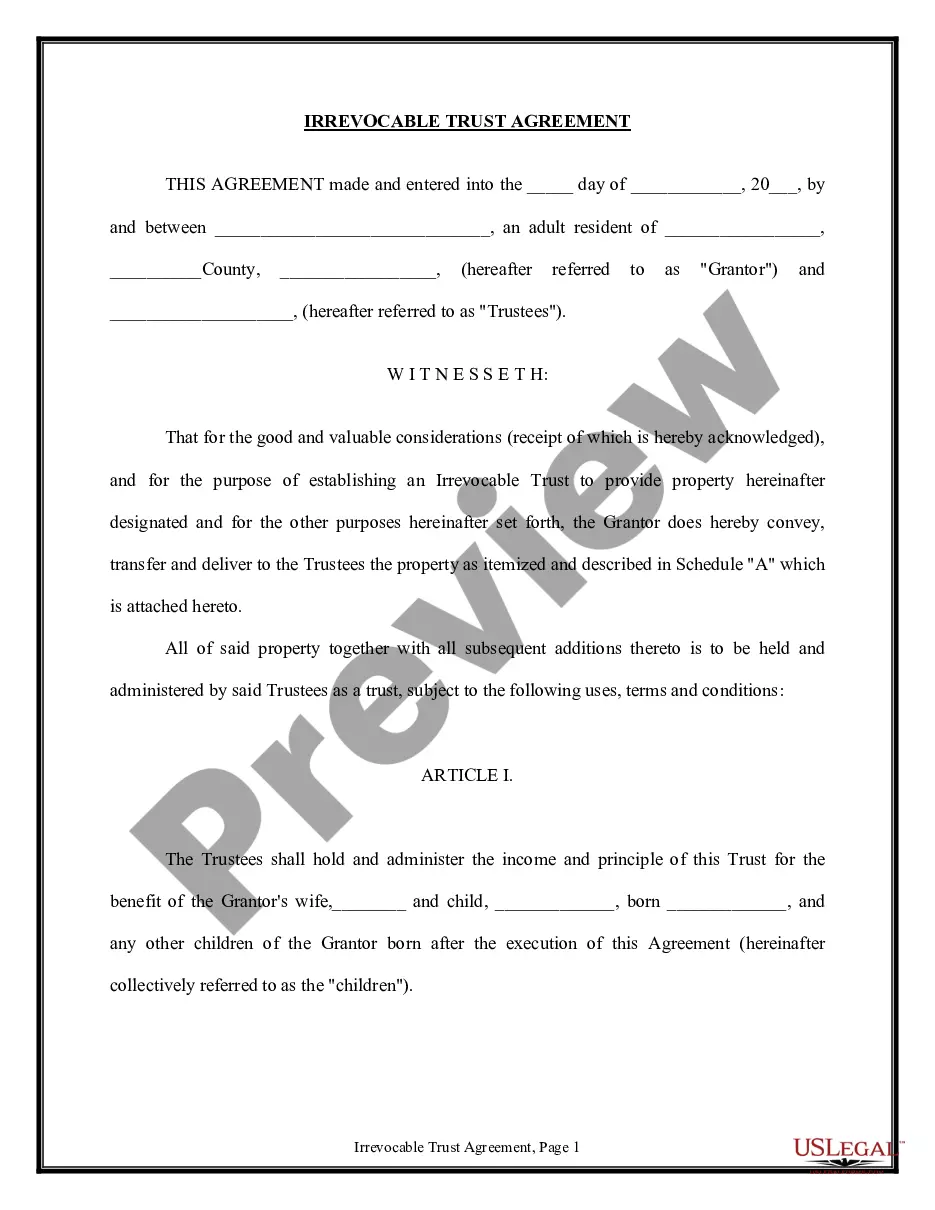
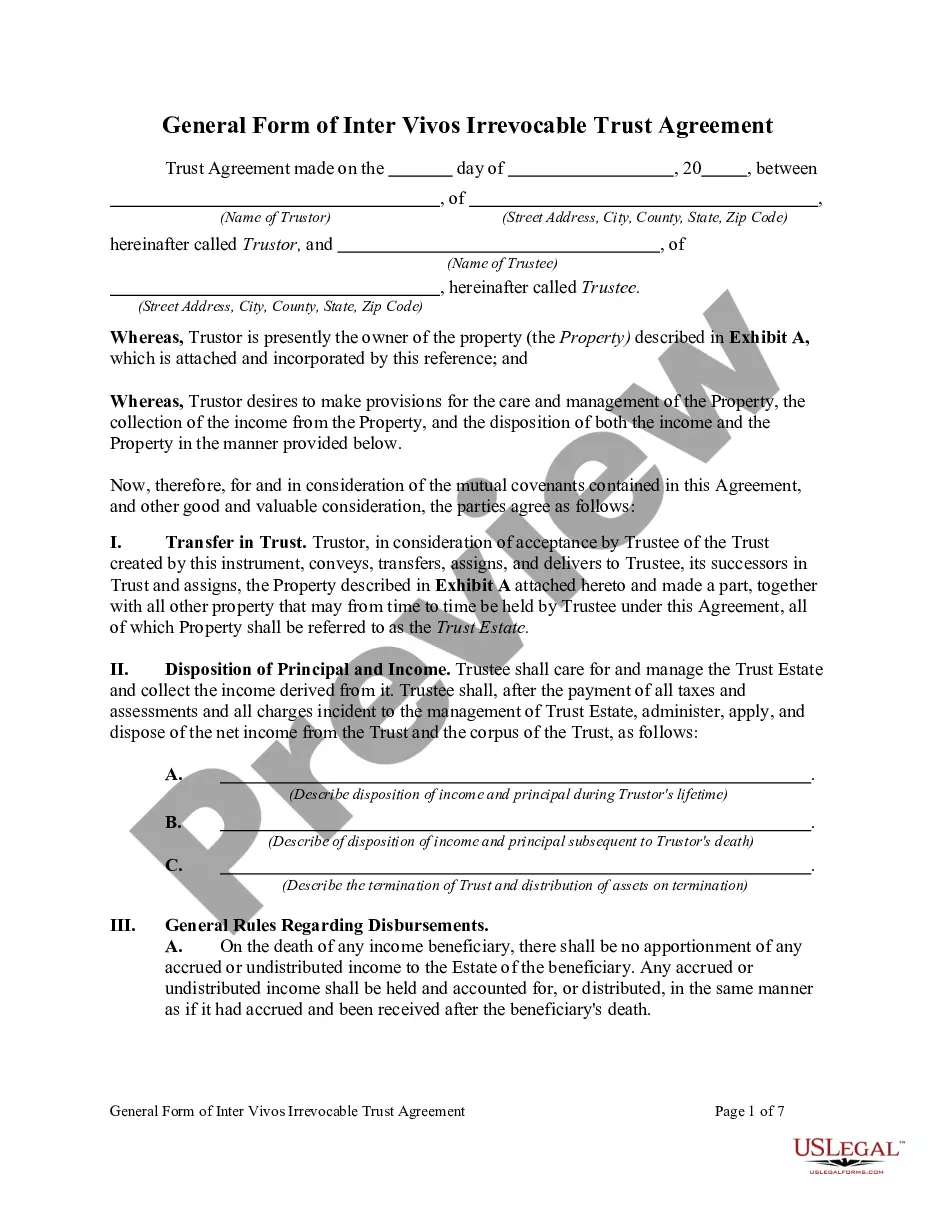
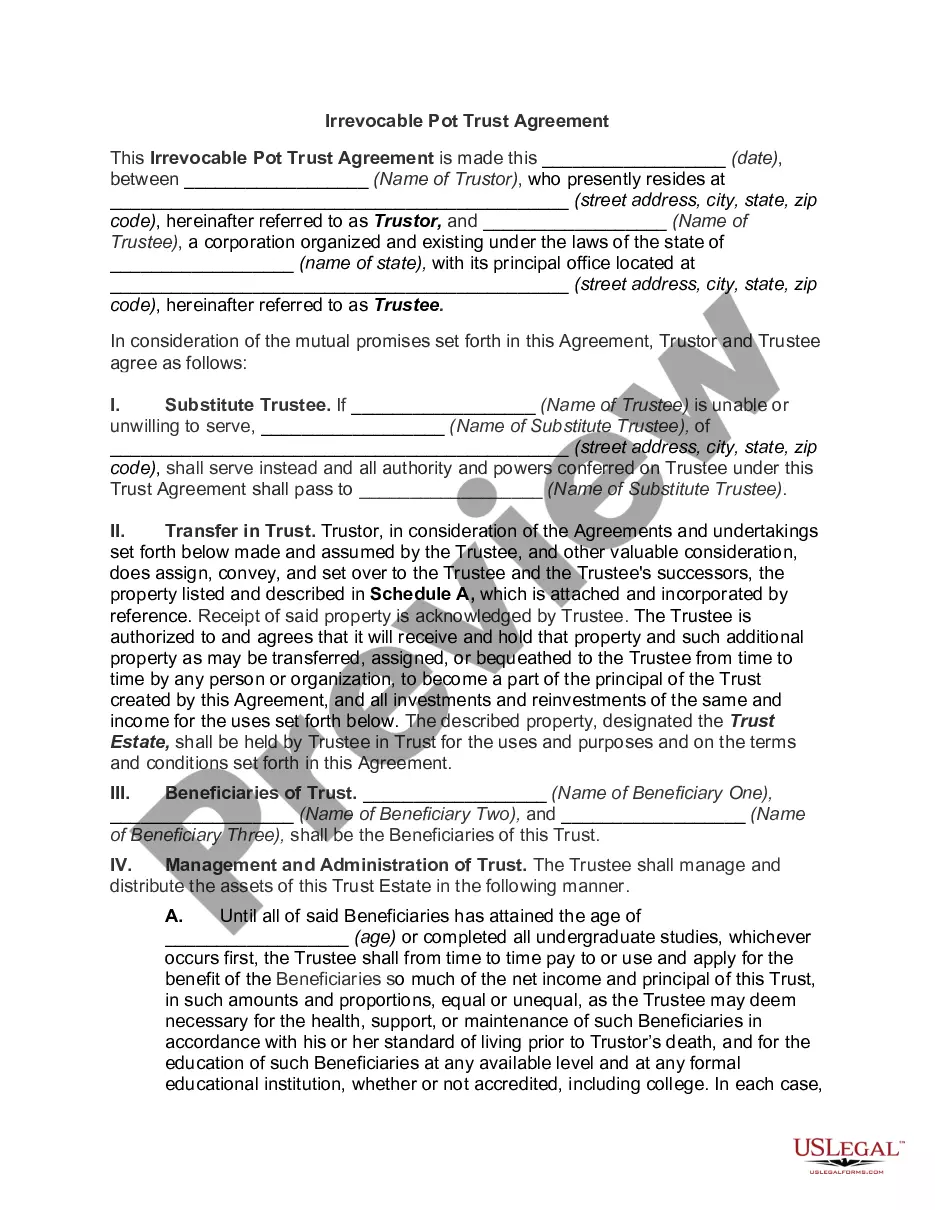
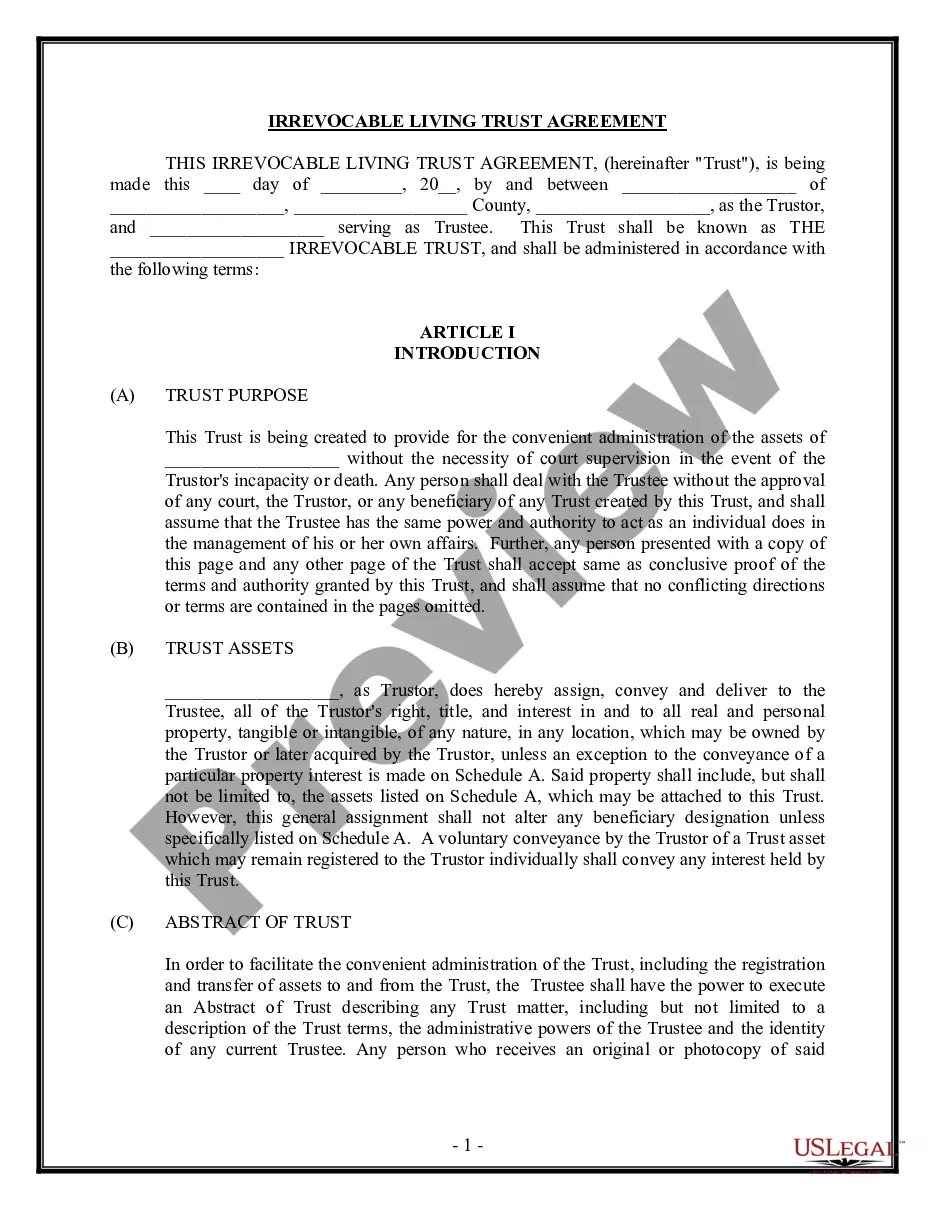
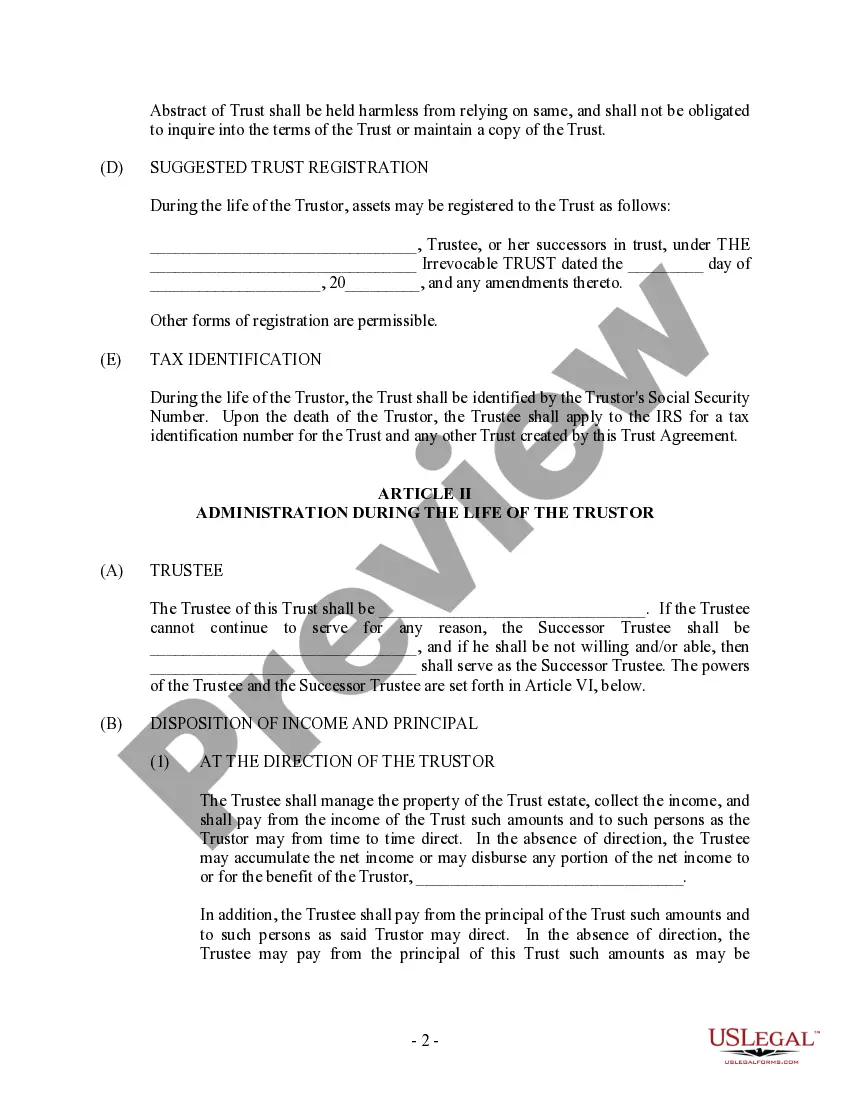
This form is an agreement between the trustor and the trustee to create an irrevocable living trust.The purpose of the creation of the trust is to provide for the convenient administration of certain assets without the necessity of court supervision in the event of the trustor incapacity or death. Other provisions within the document include: trust assets, the abstract of the trust, and suggested trust registration.


What is an Irrevocable living trust?


A living trust is a legal document that individuals (grantors or trustors) prepare to create a fund of assets they want to hold during their lifetime and bequeath to the named people (beneficiaries) after they pass away. They assign a third party (trustee) to manage these assets and supervise their transfer at a predetermined time. A living trust  are an essential tool for estate or property planning as an alternative to wills; allowing owners to distribute their assets (estate, stocks, bank accounts, etc.) as they wish and bypass state court probate procedures if they die intestate.


Trusts can be either revocable or irrevocable. An irrevocable living trust is the stricter form of property transfer as it excludes the grantor’s opportunity to modify anything in the agreement or to terminate it once set up. Though both types have similar terms, you should be aware of some important differences.


Revocable vs. irrevocable trust


As the name implies, a revocable trust allows the grantor to modify its terms (for example, transfer some assets out or add some extra ones, change the beneficiaries and trustees) or cancel it at any moment. Such terms are wholly different from those that apply to an irrevocable living trust, which must remain unchanged and without a termination option from the moment you set it up. However, in some states, the grantor can change the document with the beneficiary’s permission or by court order.


Both of these property grants have their benefits:


  • A revocable trust allows the grantor to preserve control over their property and make changes to the document terms when required. Creating a living trust of this type is also a way to avoid the probate process after the owner dies and keep privacy over terms of distribution.

  • An irrevocable trust can help reduce estate taxes (however, it’s better to consult a lawyer on that). It also protects the parties from creditors, so it can be a good option for those whose profession has a higher risk of lawsuits.

  • Types of irrevocable trusts


    There are several irrevocable trust examples:


    1. Irrevocable life insurance trusts;

    2. Charitable trusts;

    3. Lifetime gifting trusts (including the grantor-retained annuity, spousal lifetime access, and qualified personal residence trusts);

    4. Testament trust created after the grantor’s death.

    5. Living trust forms


      To set up a living trust, the grantor must ensure the accuracy of the necessary paperwork. US Legal Forms offers only verified printable and electronically editable legal templates specific to your state regulations. Download our Trust Irrevocable Form and provide the following information:


    6. Personal details of the parties involved (grantor, beneficiary, trustee, and successor trustee);

    7. Description of the transferred property items.


    The agreement template we offer is a universal multi-state do-it-yourself form. If you want to add additional terms to the contract or amend any existing ones, though, please consult a legal advisor to do this task correctly.
    Free preview
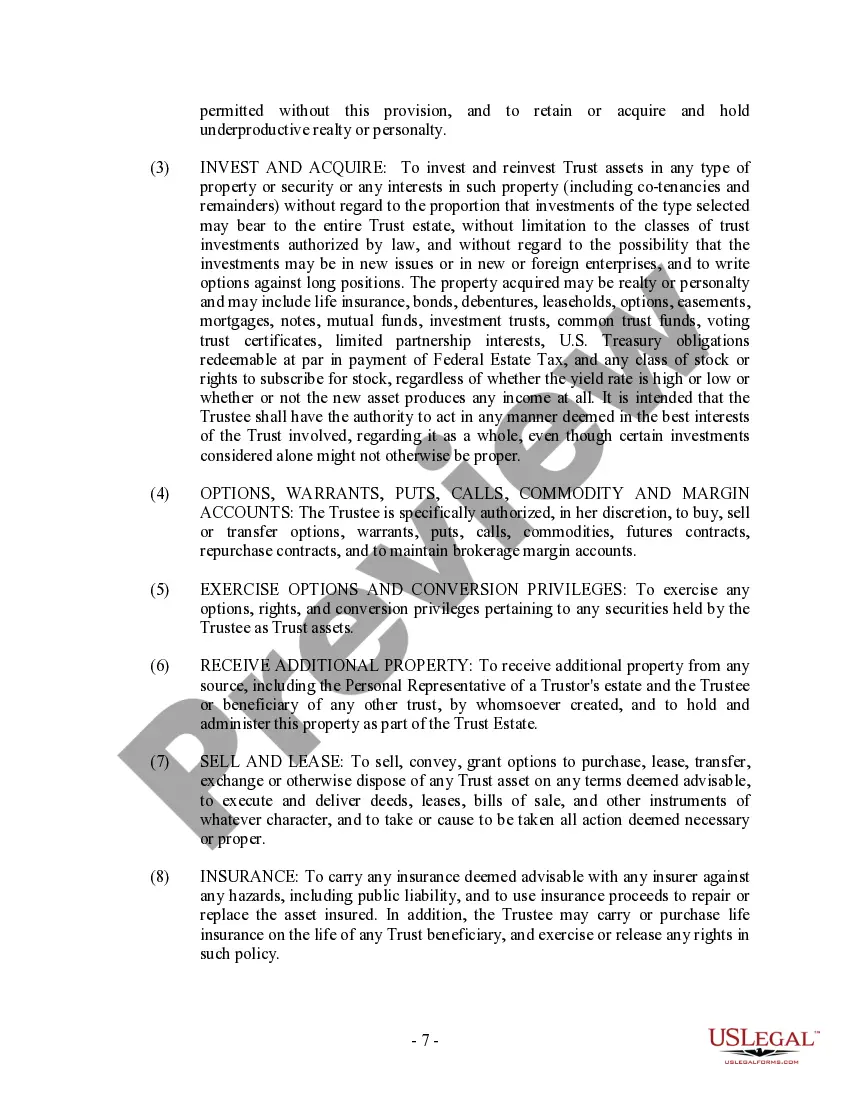
    • Preview Living Trust - Irrevocable
    • Preview Living Trust - Irrevocable
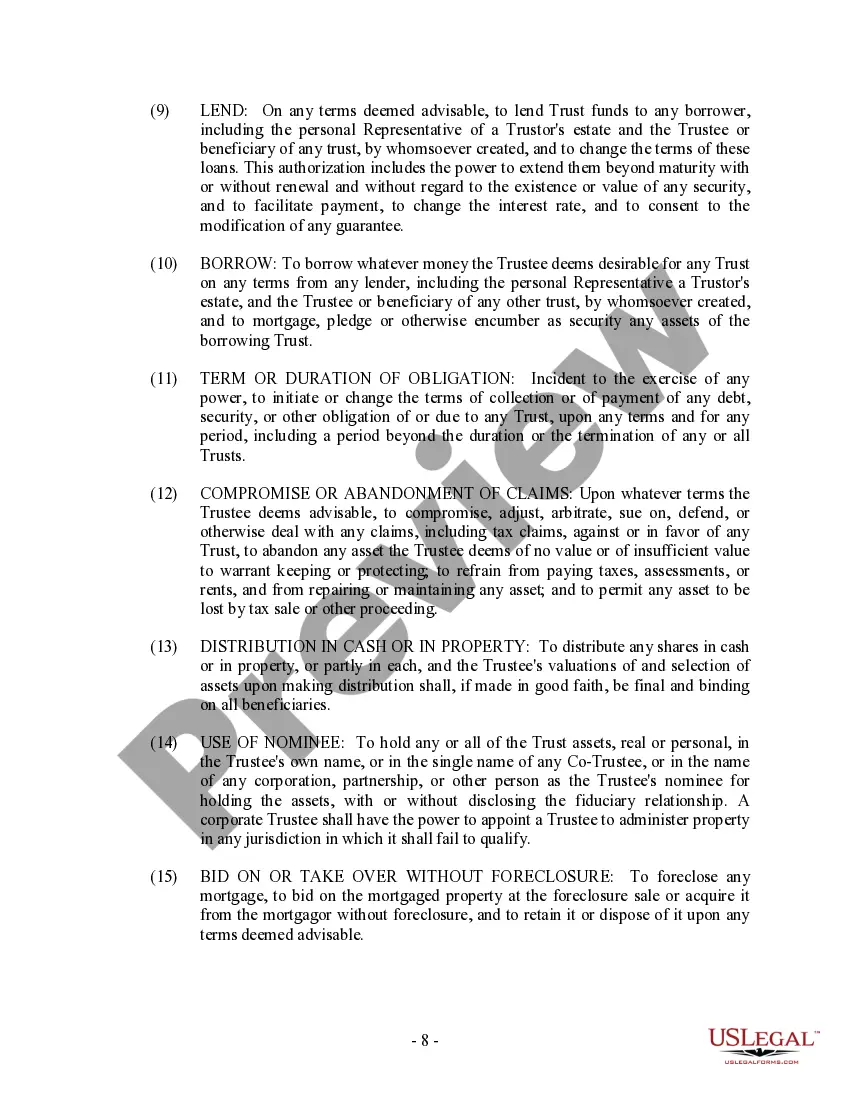
    • Preview Living Trust - Irrevocable
    • Preview Living Trust - Irrevocable
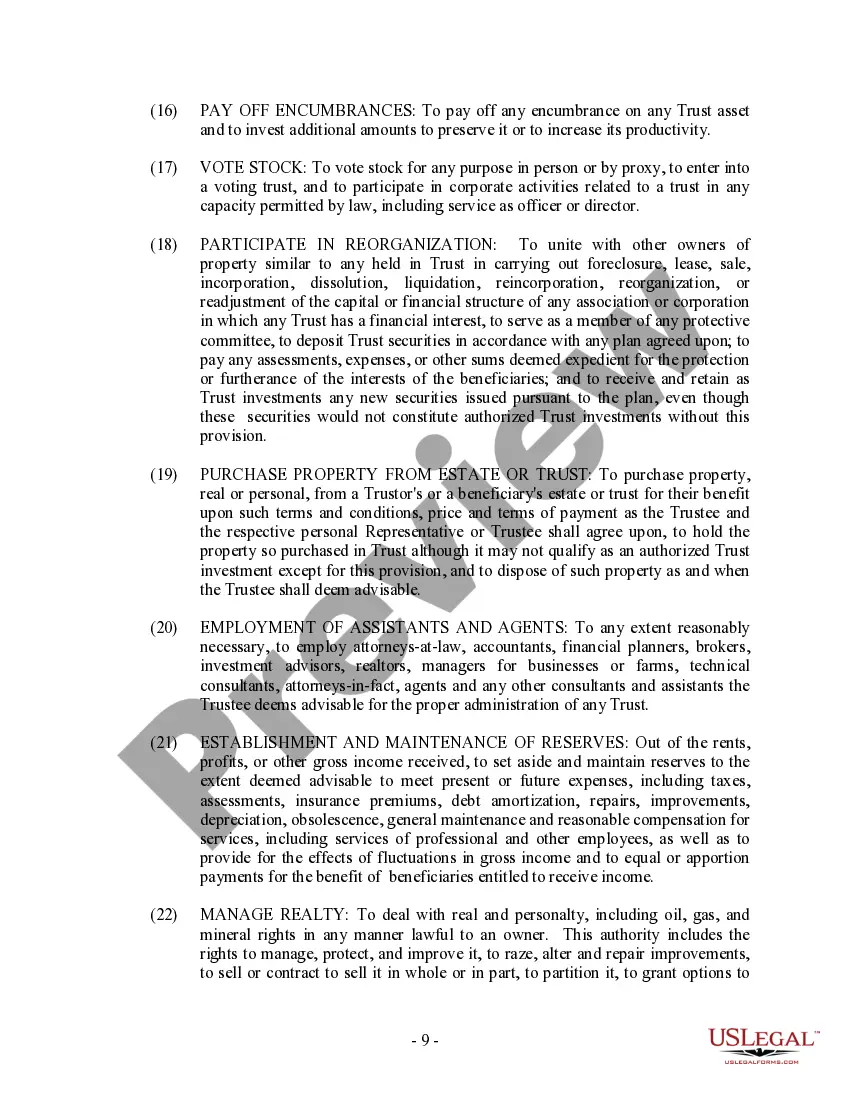
    • Preview Living Trust - Irrevocable
    • Preview Living Trust - Irrevocable
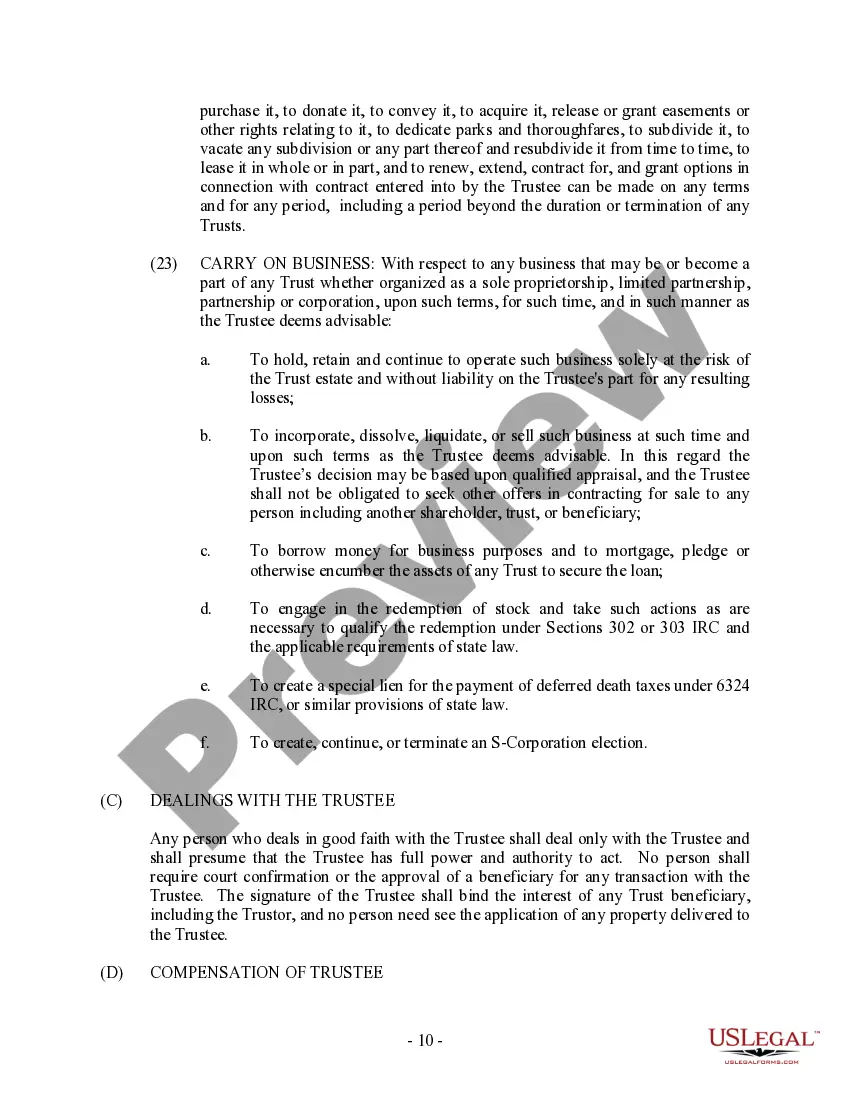
    • Preview Living Trust - Irrevocable
    • Preview Living Trust - Irrevocable
    • Preview Living Trust - Irrevocable
    • Preview Living Trust - Irrevocable
    • Preview Living Trust - Irrevocable

    How to fill out Living Trust - Irrevocable?

    Preparing documentation for business or personal purposes is always a significant obligation.

    When formulating an agreement, a public service application, or a power of attorney, it is crucial to take into account all federal and state regulations of the specific area.

    Nevertheless, small counties and even municipalities also have legislative rules that you need to be aware of.

    To find the one that serves your needs, use the search tab in the page header.

    1. All these particulars make it challenging and time-consuming to establish Collin Living Trust - Irrevocable without professional assistance.
    2. It is feasible to avoid unnecessary expenses on lawyers creating your documentation and establish a legally binding Collin Living Trust - Irrevocable independently, utilizing the US Legal Forms online archive.
    3. It is the premier online repository of state-specific legal forms that are professionally verified, so you can trust their legitimacy when selecting a template for your county.
    4. Previously subscribed users only need to Log In to their accounts to access the required document.
    5. If you do not yet have a subscription, adhere to the step-by-step guide below to acquire the Collin Living Trust - Irrevocable.
    6. Inspect the page you have opened and confirm if it contains the template you require.
    7. To achieve this, utilize the form description and preview if these options are available.

    Form popularity

    FAQ

    Living trusts do not protect assets from Medicaid or from creditors. If you would like to create a living trust in Texas you will need to sign a written trust document before a notary public. The trust is not effective until you transfer ownership of assets to it.

    Irrevocable trusts are private documents and not subject to public record.

    A living trust never needs to be filed with a court, either before or after your death. The probate court isn't involved in supervising your trustee, the person you name in the trust document to handle the distribution of the trust assets.

    To create an irrevocable trust in Texas, you must draft a document naming a trustee and beneficiaries. If you choose to name yourself as trustee, you must also name a successor trustee. Once you and any other grantors have signed to trust, you can transfer your assets.

    Unlike a corporation, which is required to file a certificate of formation with the Secretary of State, there is no such requirement for a trust. Rather, the trust remains a private document.

    If you hire a lawyer, the cost of creating a living trust will depend on the fees the attorney charges. You could end up paying more than $1,000 to create a living trust.

    Irrevocable trusts are most often used to protect assets from creditors or to obtain certain tax advantages. While it is advisable to enlist the help of an attorney when setting up this type of trust, it is possible to do it yourself.

    Irrevocable trusts are most often used to protect assets from creditors or to obtain certain tax advantages. While it is advisable to enlist the help of an attorney when setting up this type of trust, it is possible to do it yourself.

    Irrevocable Trust DisadvantagesInflexible structure. You don't have any wiggle room if you're the grantor of an irrevocable trust, compared to a revocable trust.Loss of control over assets. You have no control to retrieve or even manage your former assets that you assign to an irrevocable trust.Unforeseen changes.

    The grantor transfers all ownership of assets into the trust and legally removes all of their ownership rights to the assets and the trust. Living and testamentary trusts are two types of irrevocable trusts.

    Trusted and secure by over 3 million people of the world’s leading companies

    Collin Texas Living Trust - Irrevocable