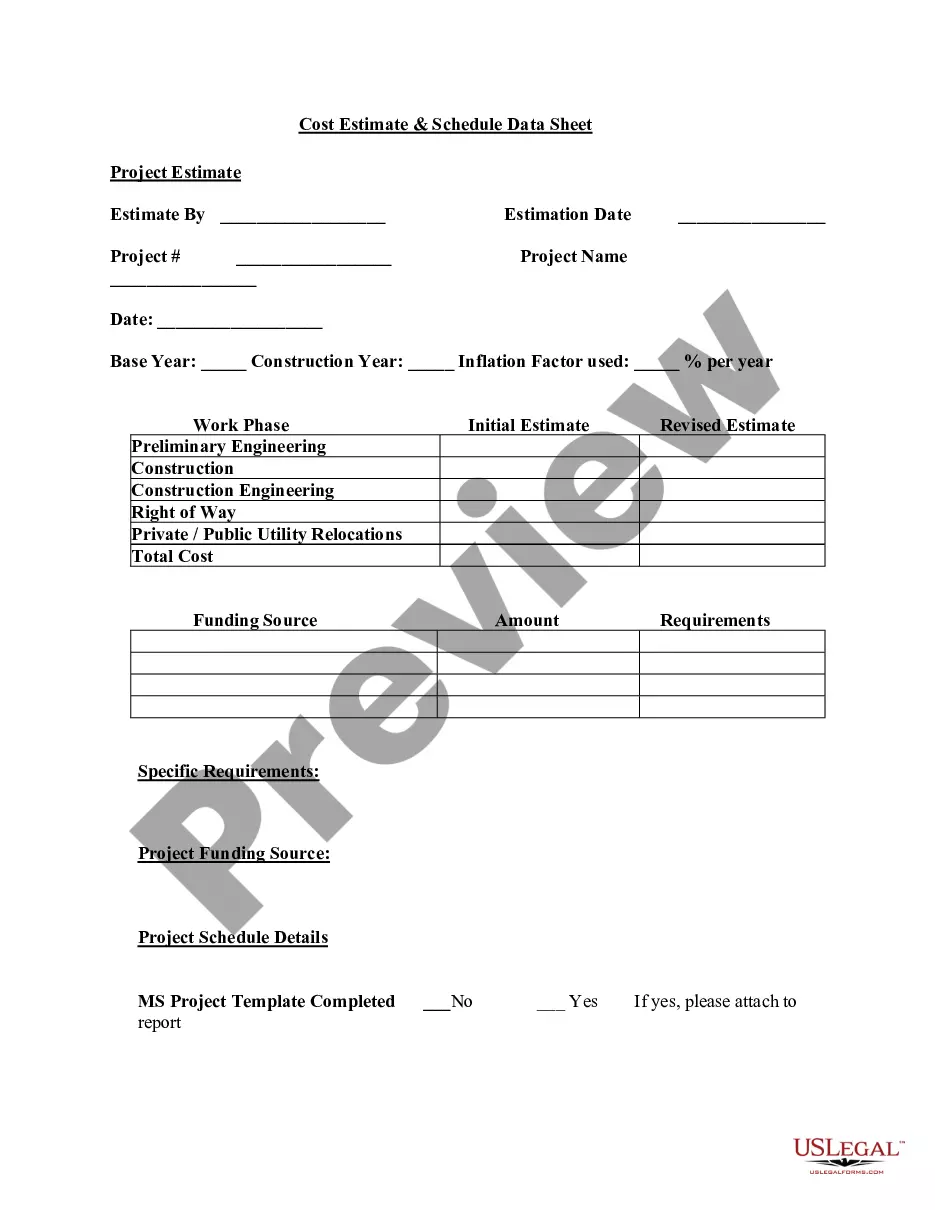
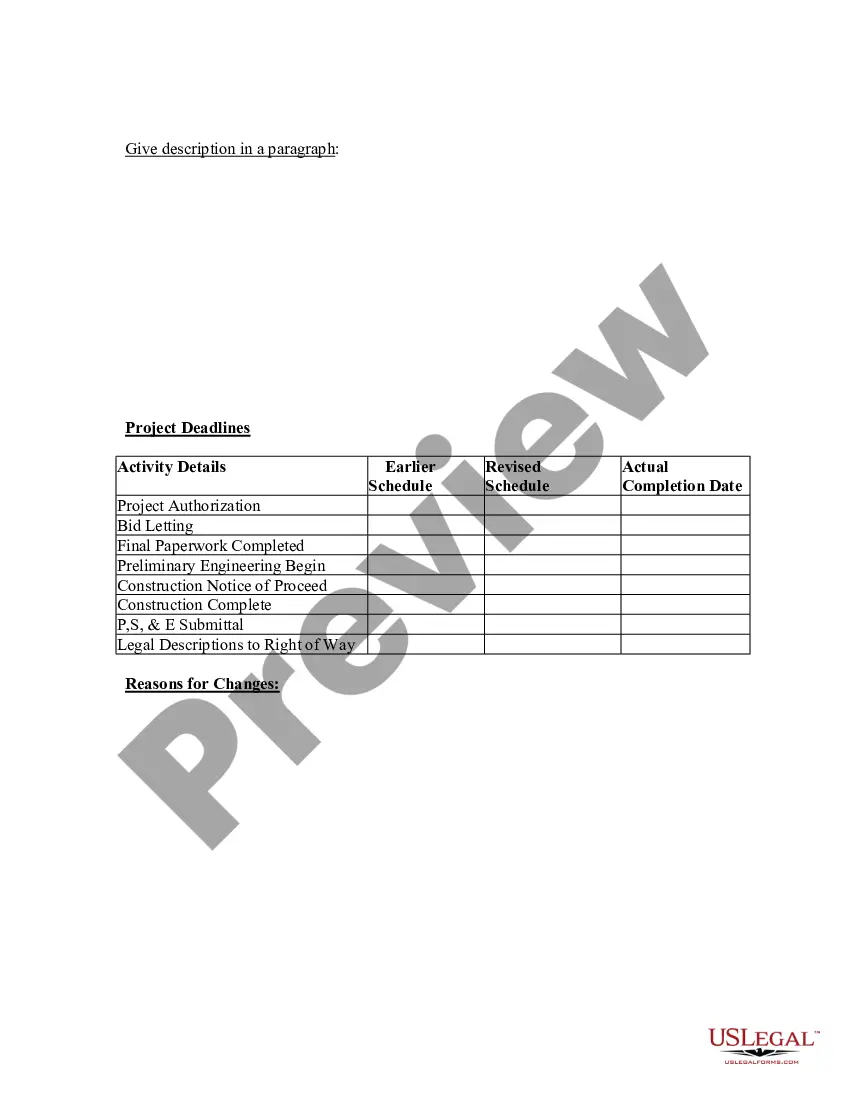
Anchorage Alaska Cost Estimate and Schedule Data Sheet
Description

Form popularity
FAQ
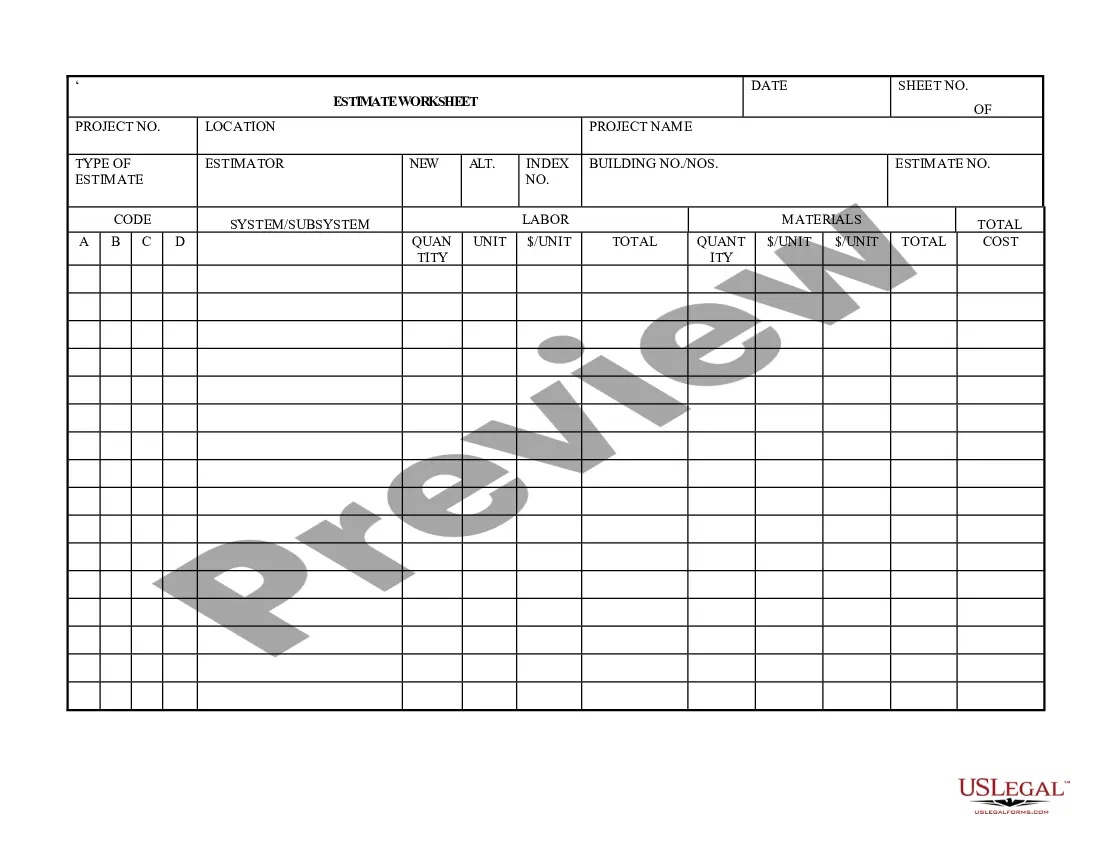
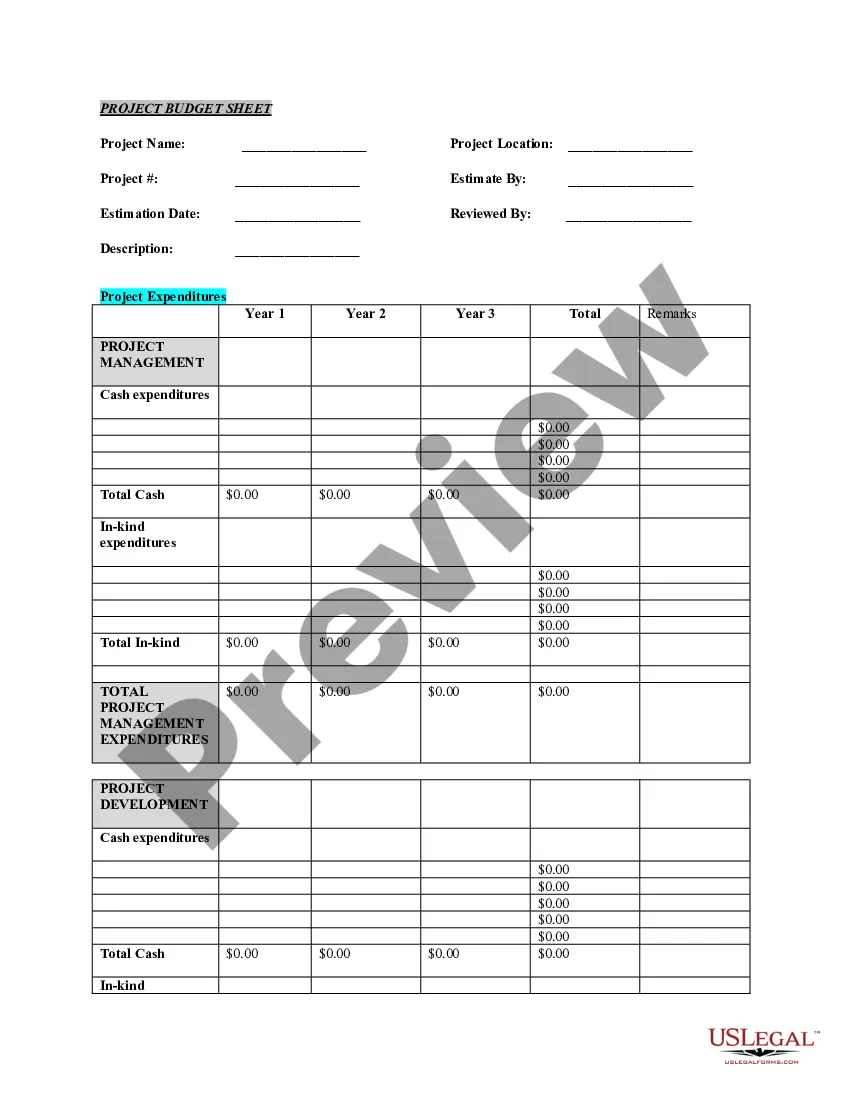
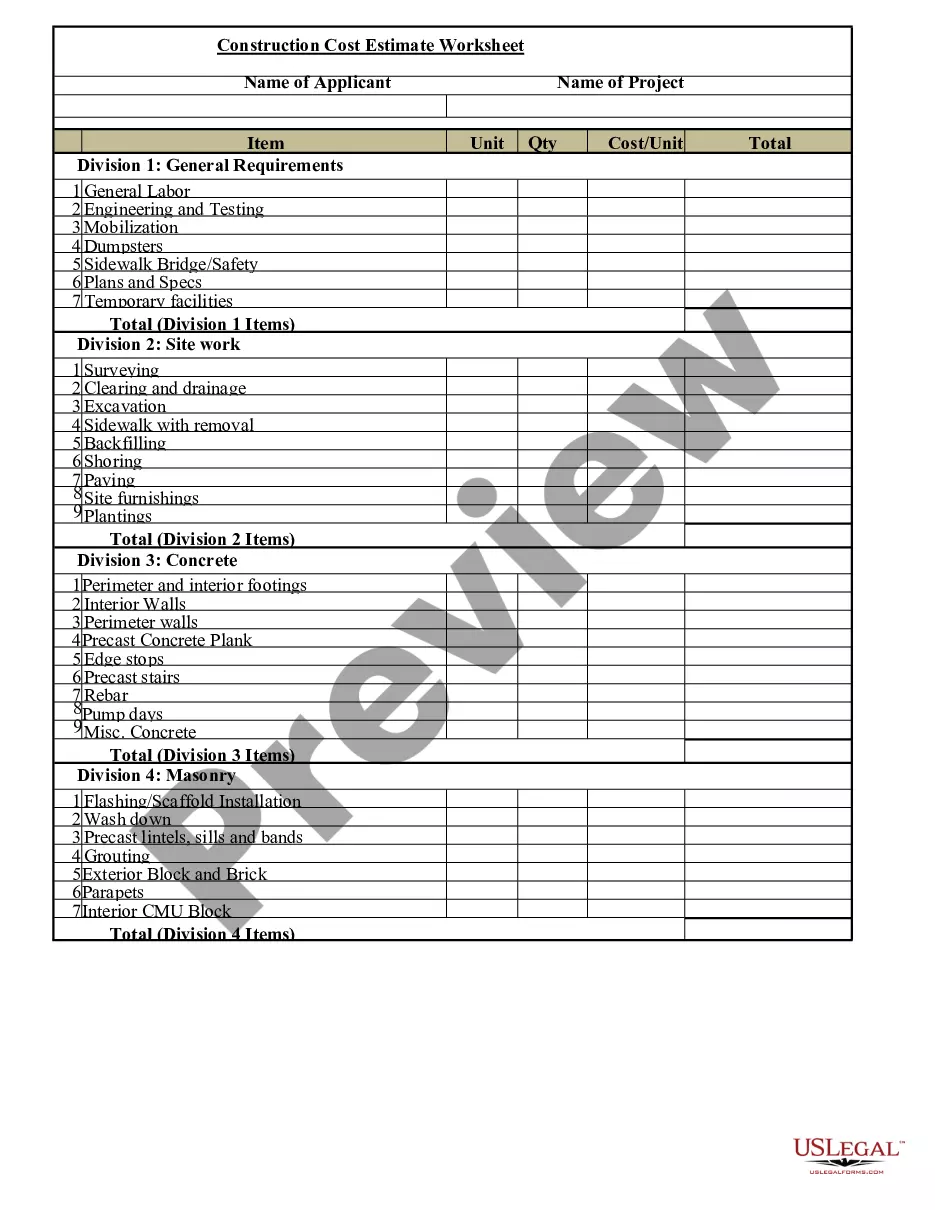
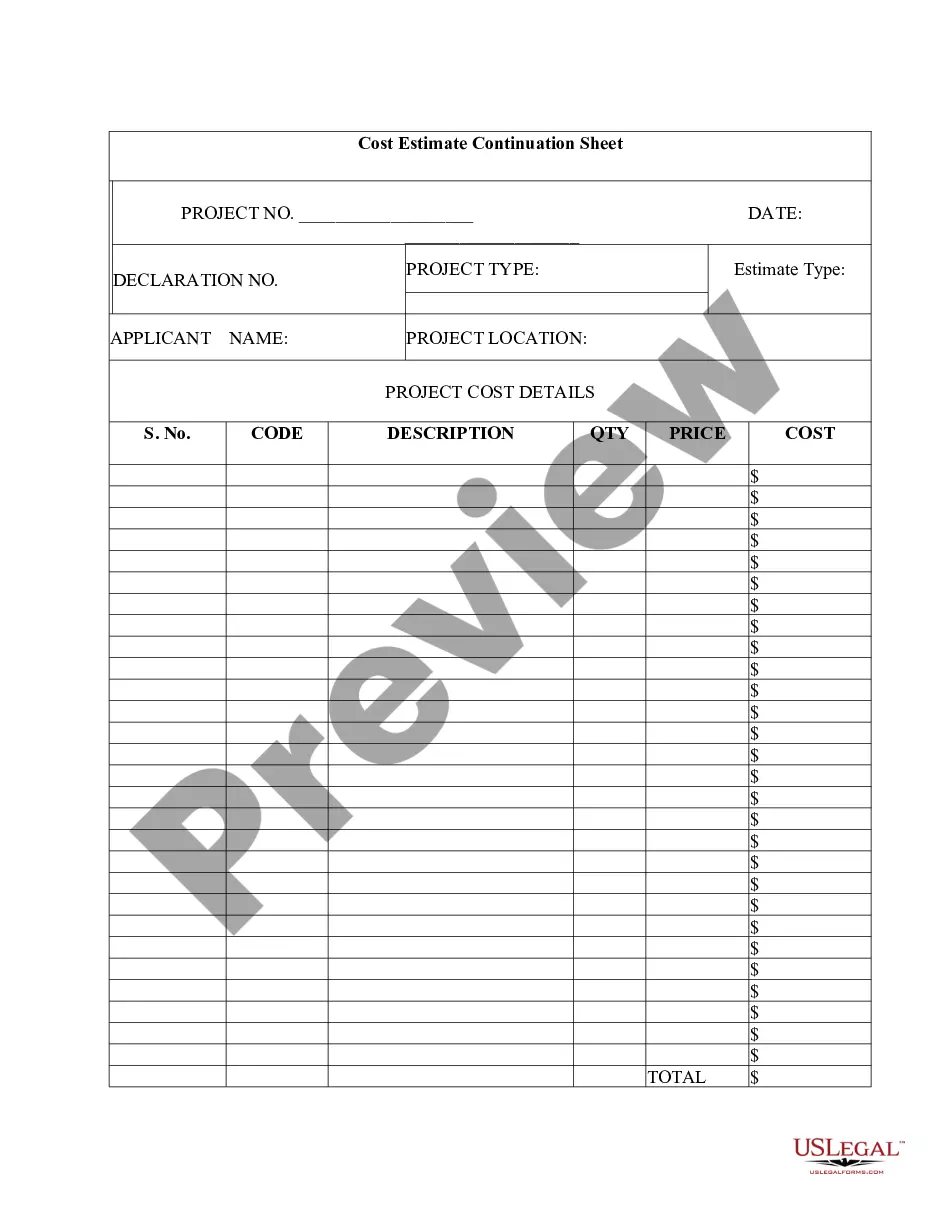
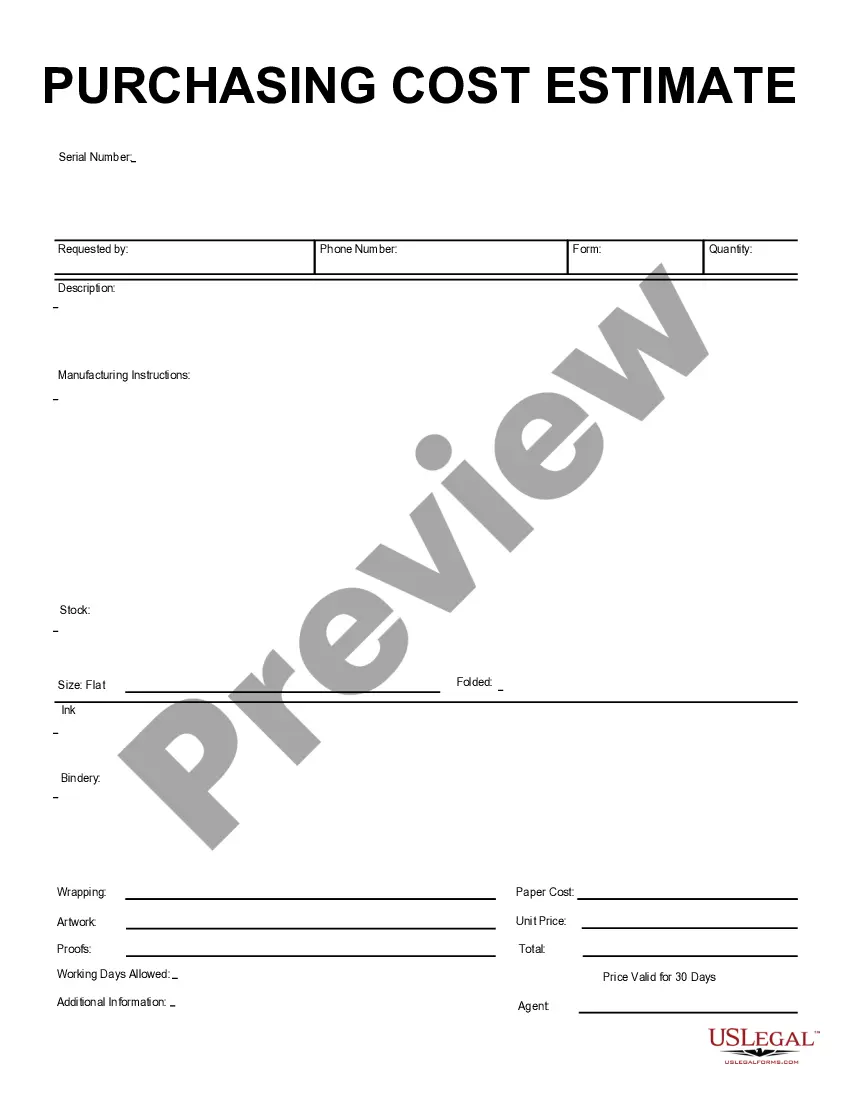
To make a cost estimate, begin by identifying and listing all project-related expenses. Then, evaluate each item and assign a dollar value based on market research or previous project data. By utilizing an Anchorage Alaska cost estimate and schedule data sheet, you can maintain clarity and accuracy through each phase of the project estimation process.
The formula for a cost estimate typically involves summing fixed and variable costs. A common approach is to aggregate direct costs, which include labor and materials, and indirect costs such as overhead. For professionals in Anchorage, Alaska, using an effective cost estimate and schedule data sheet can clarify this calculation and support efficient project planning.
The six steps in cost estimation include defining project objectives, gathering data, developing cost estimates, evaluating risks, reviewing and validating estimates, and presenting the final estimate. Each step plays a crucial role in ensuring accuracy and completeness. An Anchorage Alaska cost estimate and schedule data sheet can be an invaluable resource throughout this process, facilitating easier tracking and adjustments.
Creating a cost estimate starts with defining the project scope and collecting relevant data. Then, break down each component into detailed cost categories like materials, labor, and overhead. Using tools like the Anchorage Alaska cost estimate and schedule data sheet will aid in organizing these calculations and presenting the information clearly.
A Type 4 cost estimate refers to a detailed estimate based on final project specifications and plans available at an advanced stage. This type of estimate often incorporates real quotations from vendors and contractors. Utilizing an Anchorage Alaska cost estimate and schedule data sheet can streamline this process, ensuring that all aspects of the project are accounted for and accurately represented.
To make an estimated cost, start by gathering all necessary information regarding the project scope and requirements. Next, identify the relevant costs, including materials, labor, and possible contingencies. In Anchorage, Alaska, this approach can guide you in creating an accurate cost estimate and schedule data sheet, which helps in informed decision-making.
An example of cost estimation involves calculating the expected expenses for a construction project. For instance, a builder may use historical data and current market rates to assess labor, materials, and overhead costs. In this context, a detailed cost estimate and schedule data sheet can provide valuable insights, especially for businesses in Anchorage, Alaska, aiming to budget effectively.
Building a 2000 sq ft house in Alaska could cost you between $400,000 and $800,000, depending on various factors, including location and the materials used. Referring to the Anchorage Alaska Cost Estimate and Schedule Data Sheet can offer you more precise figures based on current market conditions. This data sheet helps you understand not just the upfront costs, but also the ongoing maintenance expenses. Ultimately, it can serve as a valuable tool in your budgeting process.
Deciding whether to buy or build a house in Alaska depends on your needs and goals. In many cases, existing homes may offer better value in the short term, while new construction allows customization and efficiency. To make a well-informed decision, consult the Anchorage Alaska Cost Estimate and Schedule Data Sheet, which provides insights on current market trends and estimated costs for both options. This understanding can help you choose the option that aligns best with your financial plans.
To create a loading schedule, start by gathering all necessary data, including timelines and resources. Utilize the Anchorage Alaska Cost Estimate and Schedule Data Sheet for detailed estimates and timelines specific to your project. Organize your tasks chronologically, ensuring each element aligns with your overall goals. Consider using project management software that integrates with the Anchorage Alaska Cost Estimate and Schedule Data Sheet, making it easier to adjust plans as you progress.