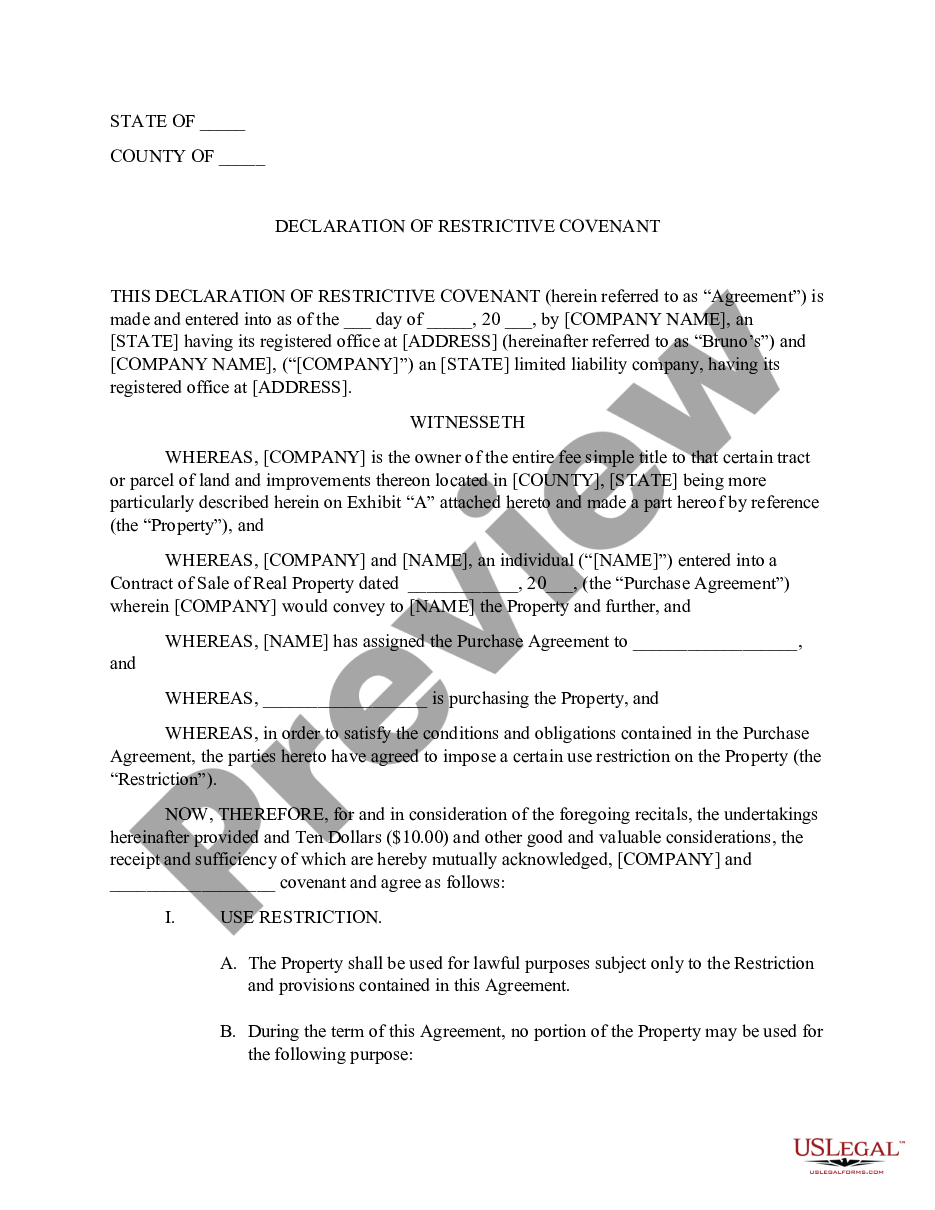
In a deed, a grantee may agree to do something or refrain from doing certain acts. This agreement will become a binding contract between the grantor and the grantee. An example would be an agreement to maintain fences on the property or that the property will only be used for residential purposes. This kind of covenant is binding, not only between the grantor and the grantee, but also runs with the land. This means that anyone acquiring the land from the grantee is also bound by the covenant of the grantee. A covenant that provides that the grantee will refrain from certain conduct is called a restrictive or protective covenant. For example, there may be a covenant that no mobile home shall be placed on the property.
A restrictive or protective covenant may limit the kind of structure that can be placed on the property and may also restrict the use that can be made of the land. For example, when a tract of land is developed for individual lots and homes to be built, it is common to use the same restrictive covenants in all of the deeds in order to cause uniform restrictions and patterns on the property. For example, the developer may provide that no home may be built under a certain number of square feet. Any person acquiring a lot within the tract will be bound by the restrictions if they are placed in the deed or a prior recorded deed. Also, these restrictive covenants may be placed in a document at the outset of the development entitled "Restrictive Covenants," and list all the restrictive covenants that will apply to the tracts of land being developed. Any subsequent deed can then refer back to the book and page number where these restrictive covenants are recorded. Any person owning one of the lots in the tract may bring suit against another lot owner to enforce the restrictive covenants. However, restrictive covenants may be abandoned or not enforceable by estoppel if the restrictive covenants are violated openly for a sufficient period of time in order for a Court to declare that the restriction has been abandoned.
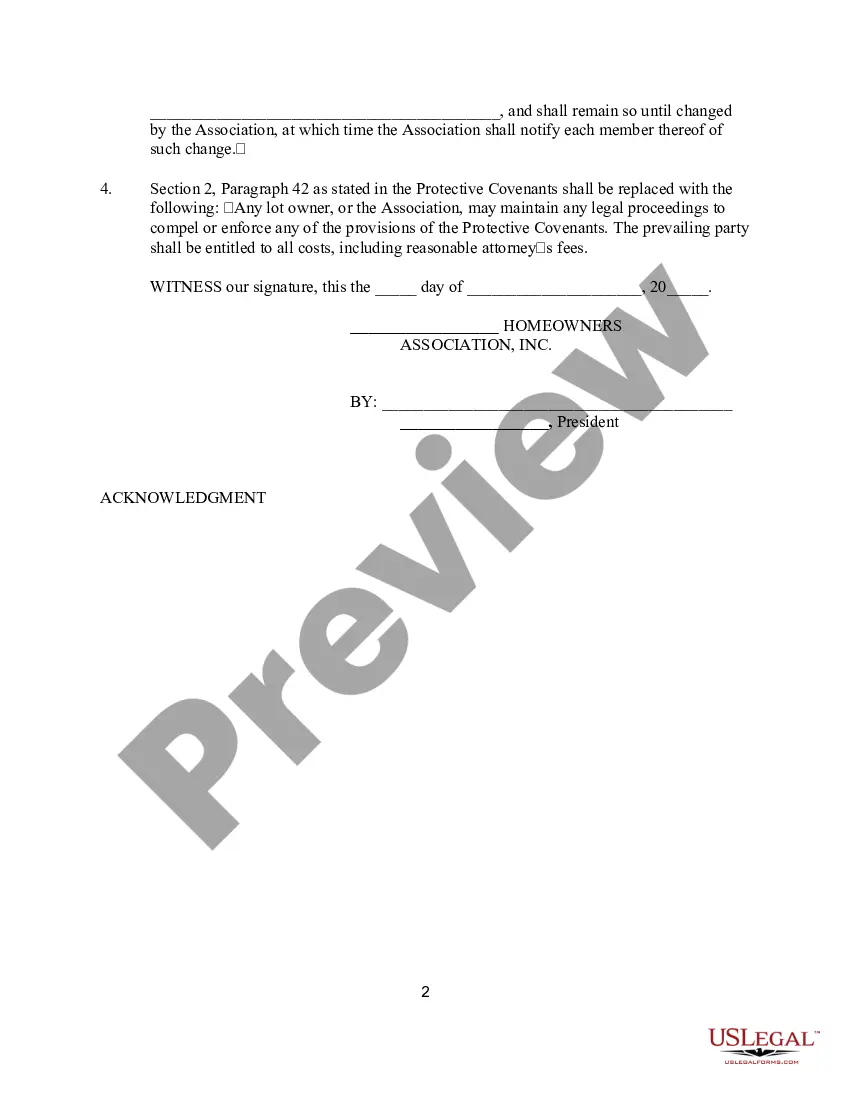
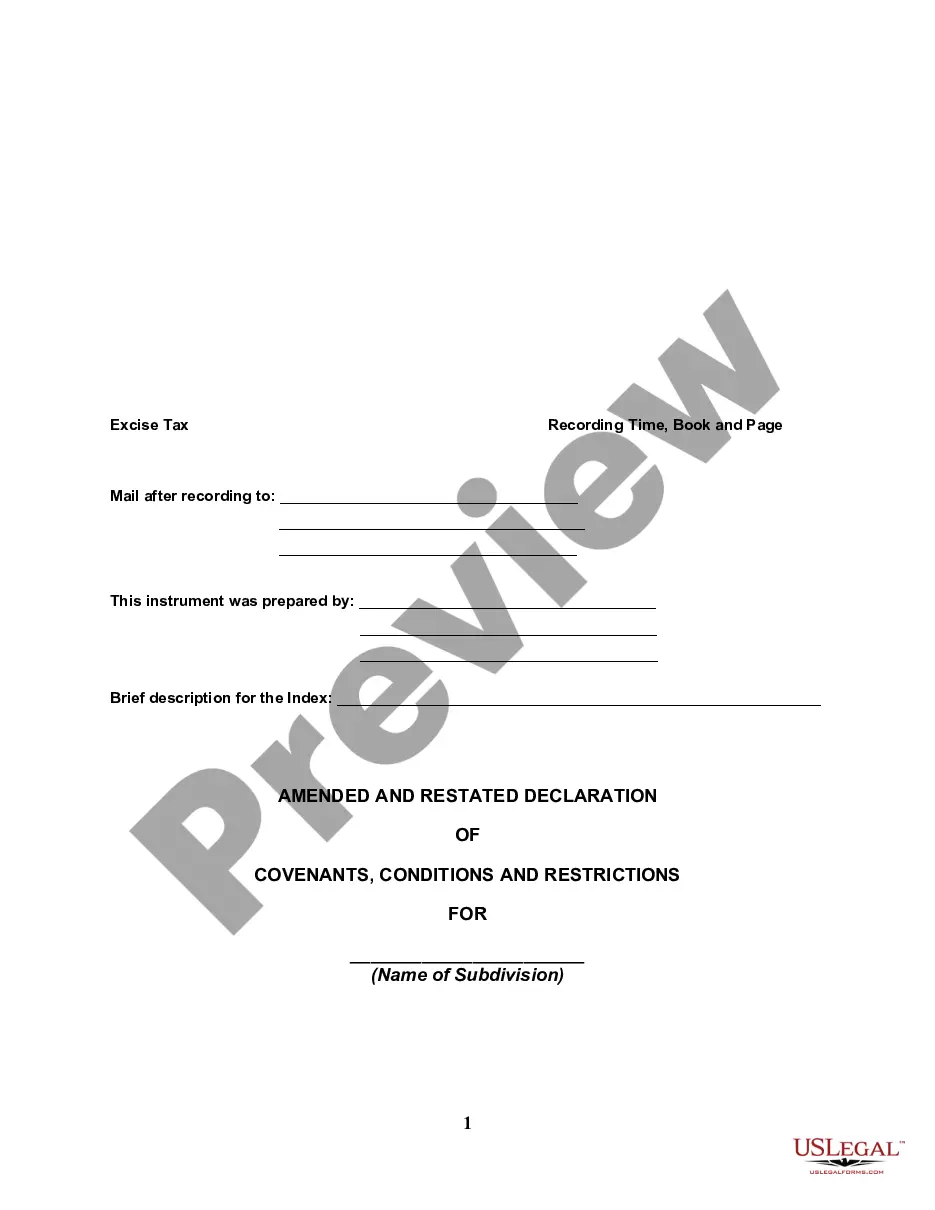
The following form shows one way in which Restrictive or Protective Covenants may be amended.
Anaheim California Amendment to Protective Covenant
Category:
State:
Multi-State
City:
Anaheim
Control #:
US-00405BG
Format:
Word;
Rich Text
Instant download
Description
Free preview