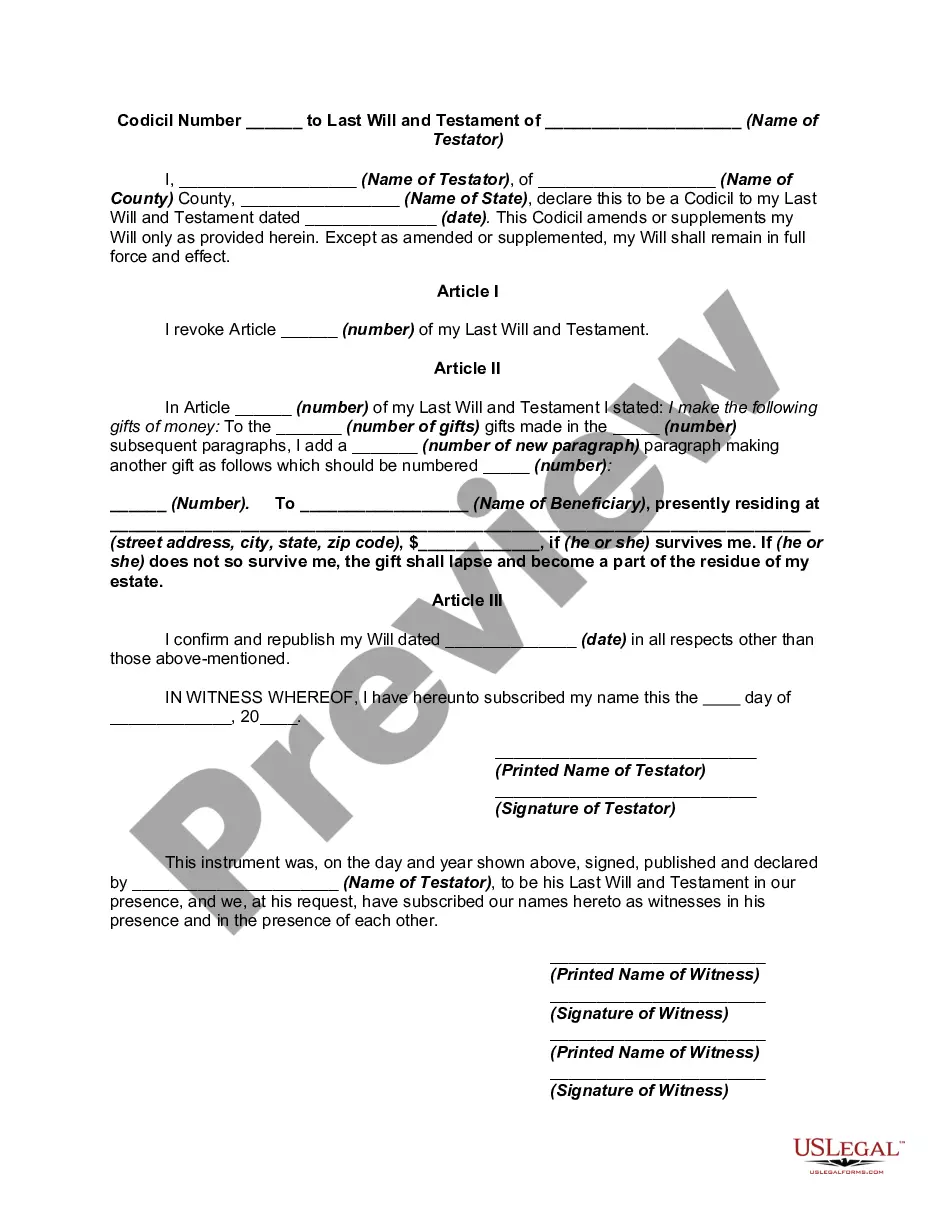
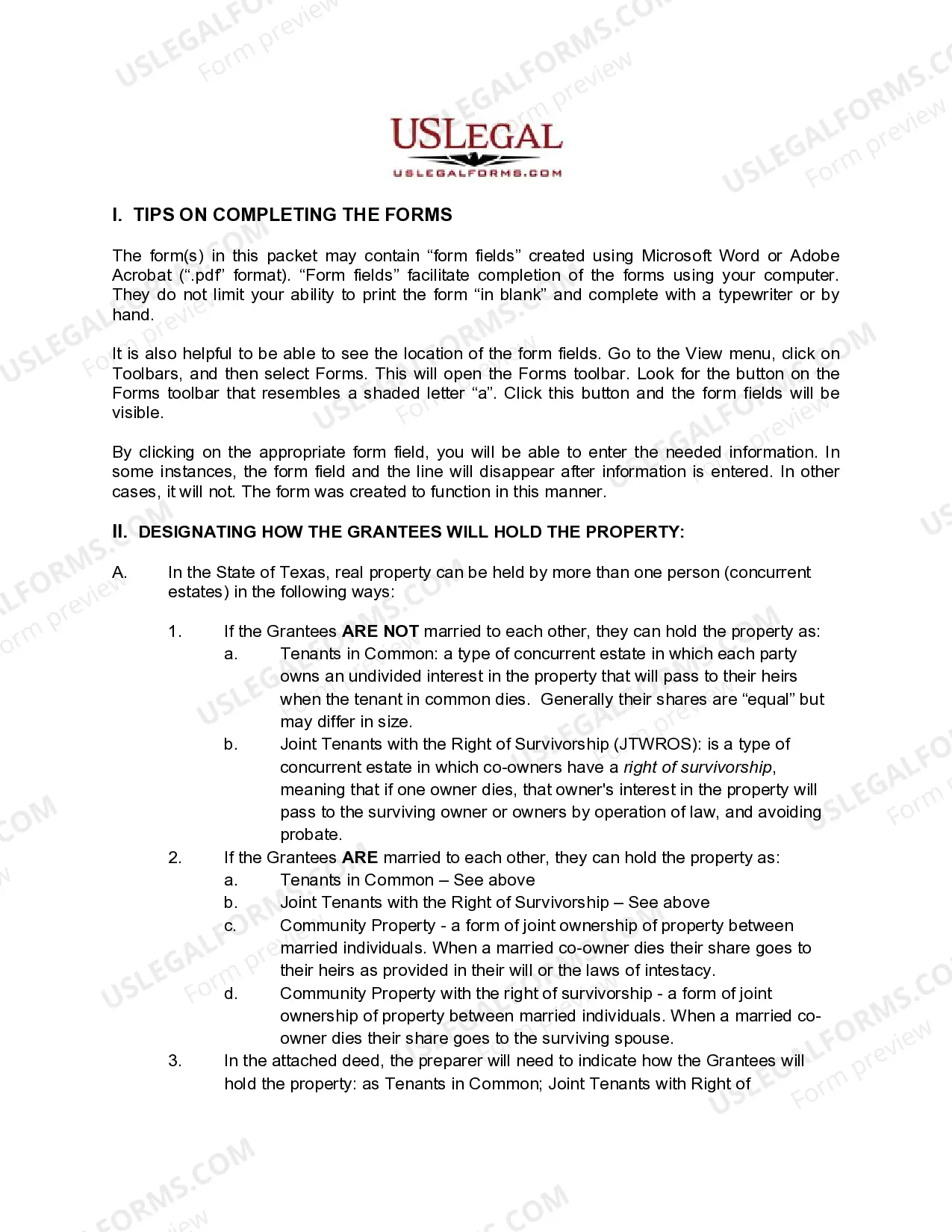
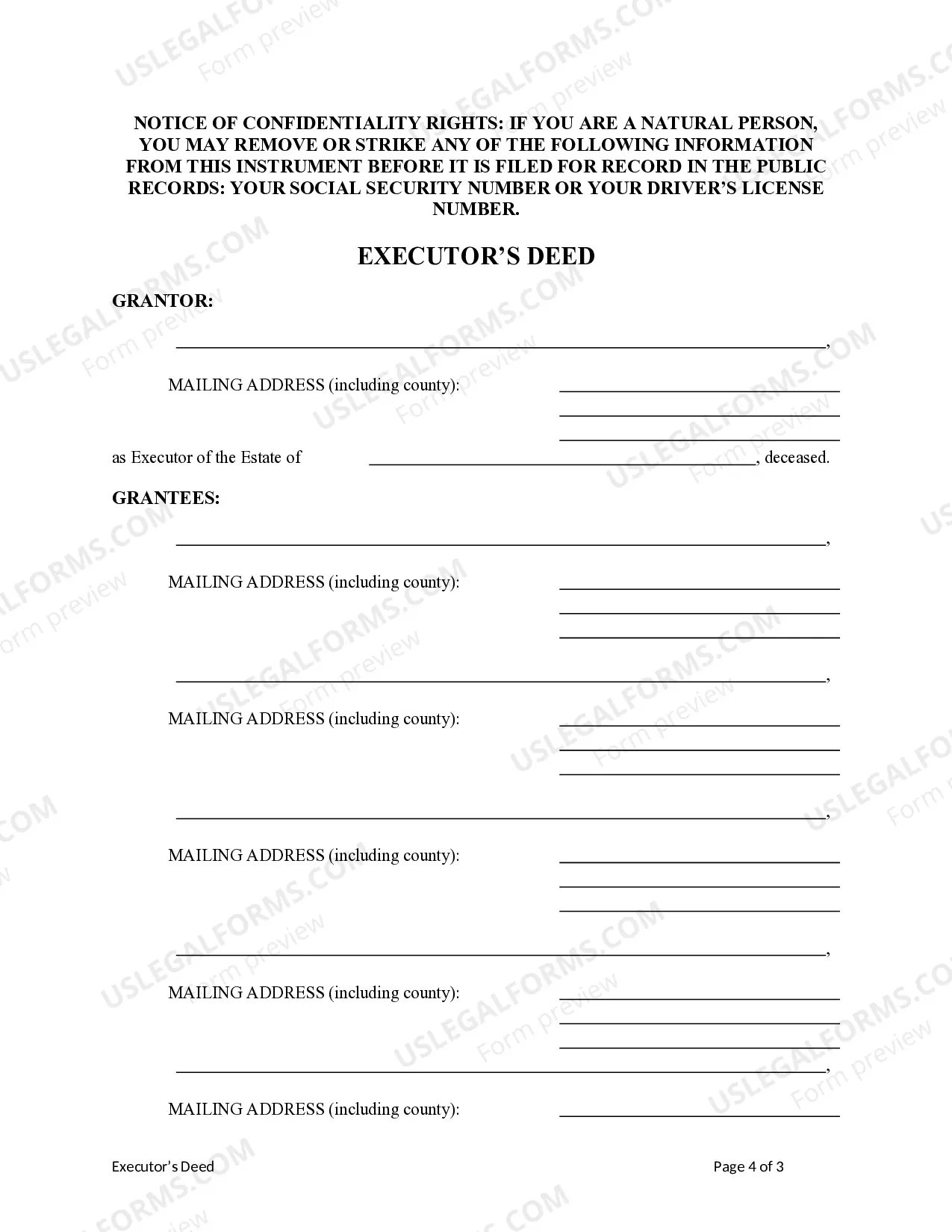
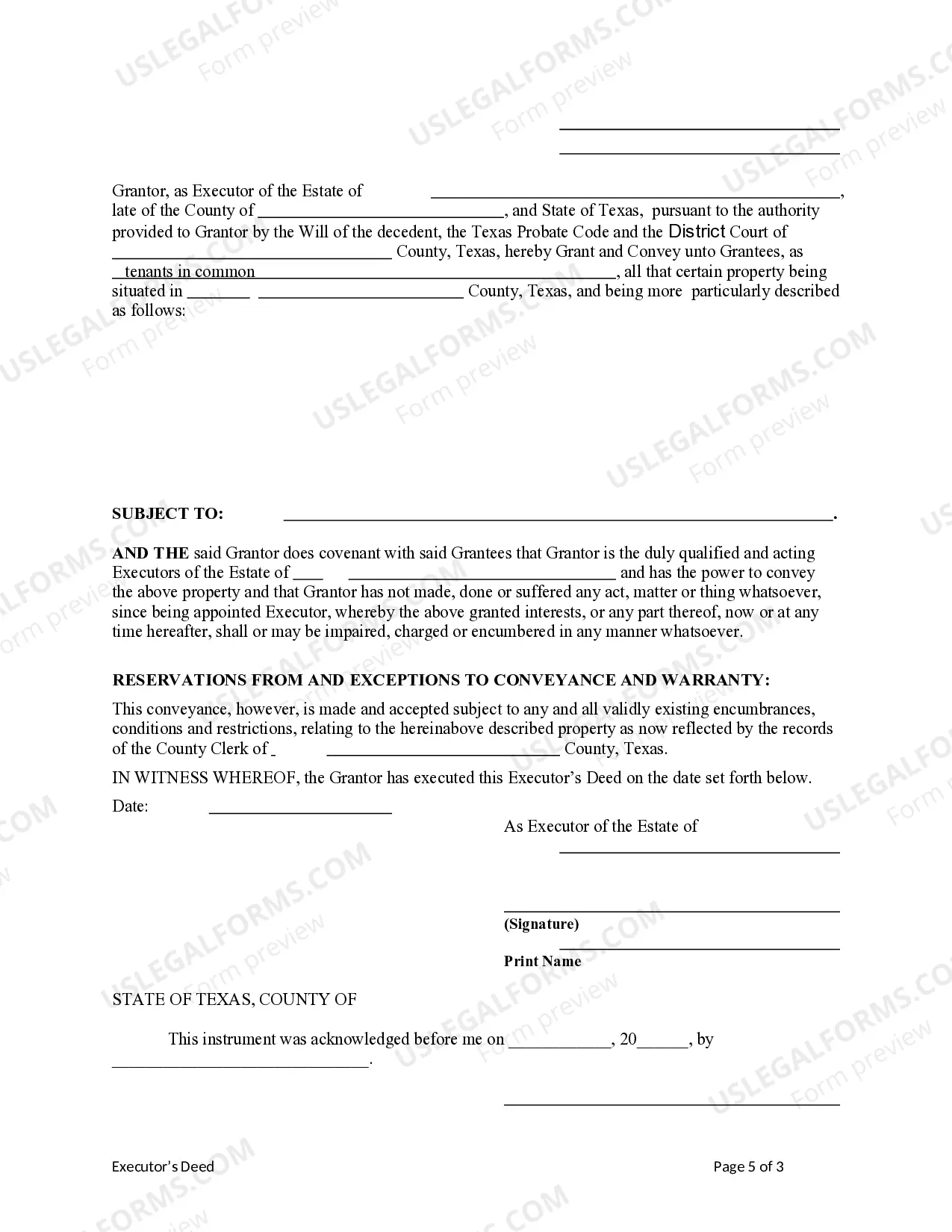
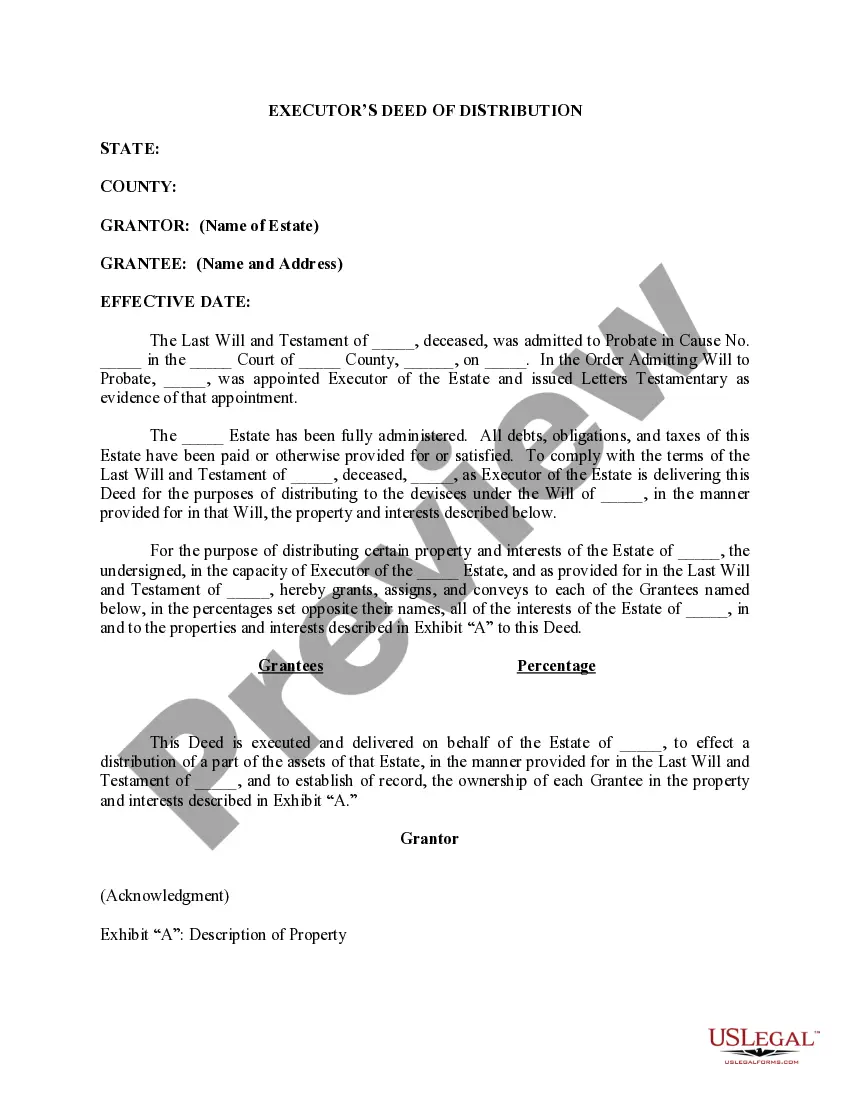
This form is an Executor's Deed where the Grantor is the executor of an estate and the Grantees are the beneficiaries or heirs of the estate. Grantor conveys the described property to the Grantees. This deed complies with all state statutory laws.
Beaumont Texas Executor's Deed - Estate to Five Beneficiaries
Category:
State:
Texas
City:
Beaumont
Control #:
TX-096-78
Format:
Word;
Rich Text
Instant download
Description
Free preview
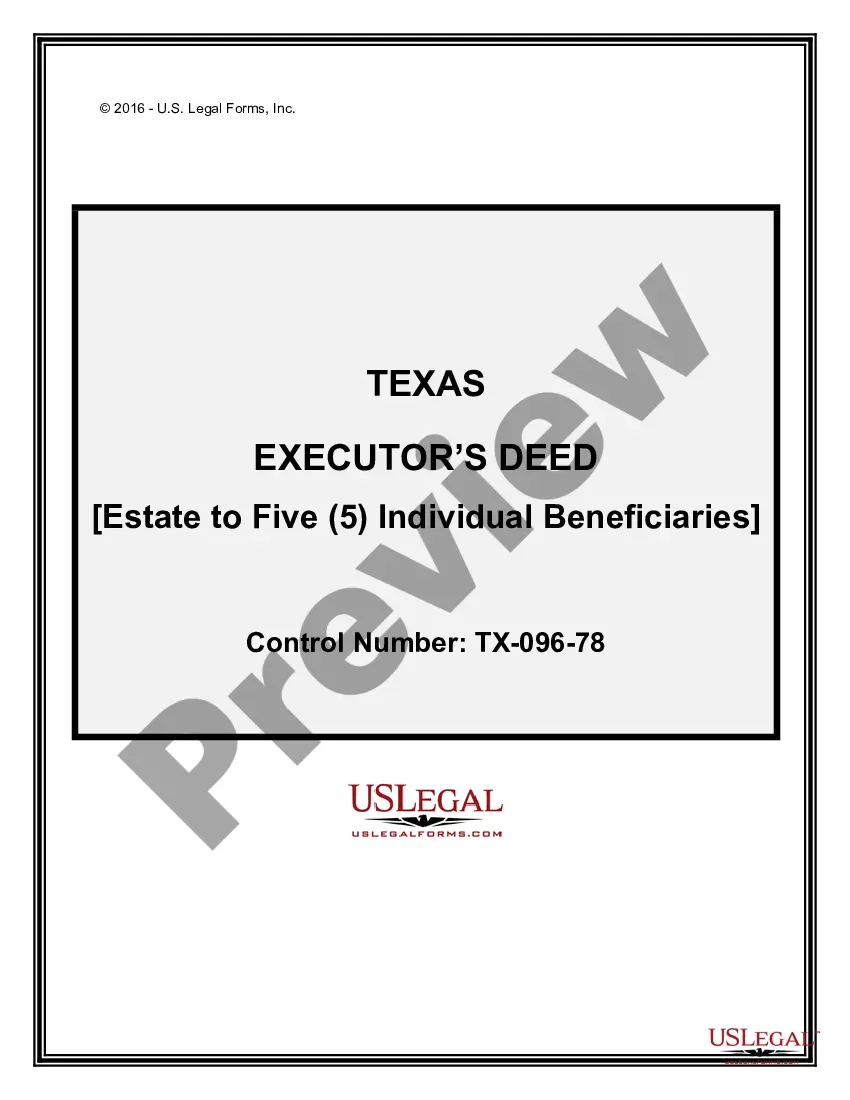
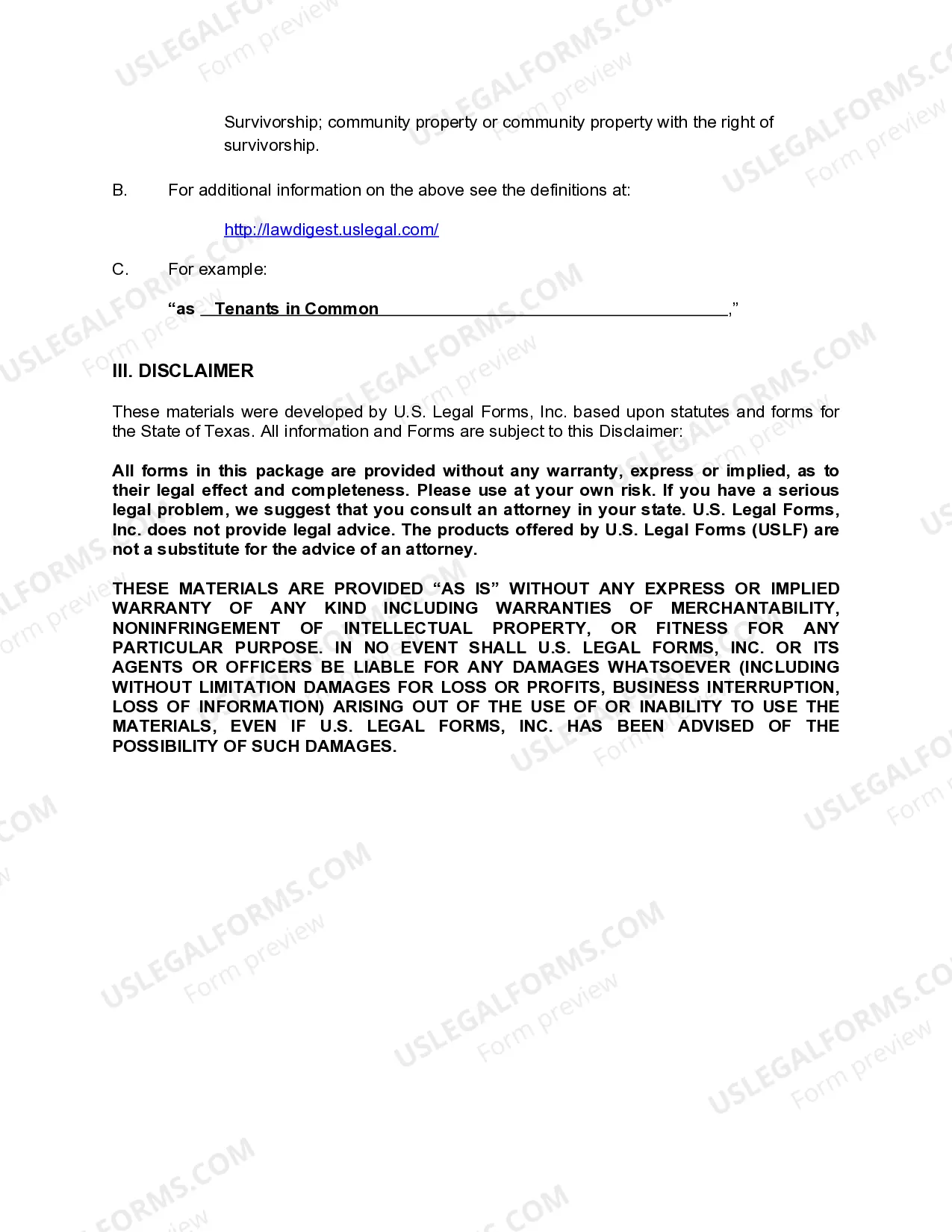









How to fill out Texas Executor's Deed - Estate To Five Beneficiaries?
Locating validated templates tailored to your regional regulations can be difficult unless you utilize the US Legal Forms library.
It is an online collection of over 85,000 legal forms catering to both personal and professional requirements and various real-life situations.
All the documents are correctly organized by area of use and jurisdictional regions, which makes finding the Beaumont Texas Executor's Deed - Estate to Five Beneficiaries as straightforward as 1-2-3.
Maintaining your paperwork organized and compliant with legal standards is critically important. Leverage the US Legal Forms library to always have vital document templates for any need readily available!
- Review the Preview mode and form description. Ensure you’ve chosen the correct one that fulfills your needs and aligns with your local jurisdiction requirements.
- Search for an additional template, if necessary. If you notice any discrepancies, use the Search tab above to find the right one. If it meets your criteria, proceed to the next step.
- Purchase the document. Click on the Buy Now button and select your preferred subscription plan. You will need to create an account to gain access to the library’s offerings.
- Complete your purchase. Enter your credit card information or use your PayPal account to pay for the service.
- Download the Beaumont Texas Executor's Deed - Estate to Five Beneficiaries. Save the template on your device so you can proceed with its completion and access it in the My documents section of your profile whenever you need it again.
Form popularity
FAQ
According to the Estates Code, an executor in Texas is entitled to up to 5% of the estate's total financial transactions. For Example: If an executor has to settle an estate worth $250,000 - if they do their duties correctly, and honestly are entitled up to $12,500 as compensation for administering the estate.
The executor can sell property without getting all of the beneficiaries to approve. However, notice will be sent to all the beneficiaries so that they know of the sale but they don't have to approve of the sale.
Since the heirs own the real estate when the decedent dies, all the heirs must join in selling the property, including signing the real estate contract, deed of sale and other documents incidental to a sales transaction.
(a) An executor, administrator, or temporary administrator a court finds to have taken care of and managed an estate in compliance with the standards of this title is entitled to receive a five percent commission on all amounts that the executor or administrator actually receives or pays out in cash in the
As an executor, you will have a duty to ensure that you are selling the property for the best possible price, for the benefit of the estate. For example, you must not sell the property at an undervalue to yourself, a member of your family, or indeed to one of the beneficiaries in the will.
The executor will notify all creditors about the person's death and validate any claims before paying them to ensure that they are legitimate debts. Other duties include: Filing tax returns for the decedent and the estate and paying any taxes due. Notifying the Social Security Administration regarding benefits payments.
MYTH: An heir cannot sell his or her interest in heirs property without the consent of the other heirs. FACT: An heir can sell his or her interest in heirs property to any non-family or family member and does not need the consent of any other heir.
Can An Executor Sell Estate Property Without Getting Approval From All Beneficiaries? The executor can sell property without getting all of the beneficiaries to approve. However, notice will be sent to all the beneficiaries so that they know of the sale but they don't have to approve of the sale.
Unless the will explicitly states otherwise, inheriting a house with siblings means that ownership of the property is distributed equally. The siblings can negotiate whether the house will be sold and the profits divided, whether one will buy out the others' shares, or whether ownership will continue to be shared.
Under the Texas Estates Code, the standard compensation is a five (5%) percent commission on (1) all amounts that the executor or administrator receives; or (2) pays out in cash in the administration of the estate (the Texas two-step on executor compensation).