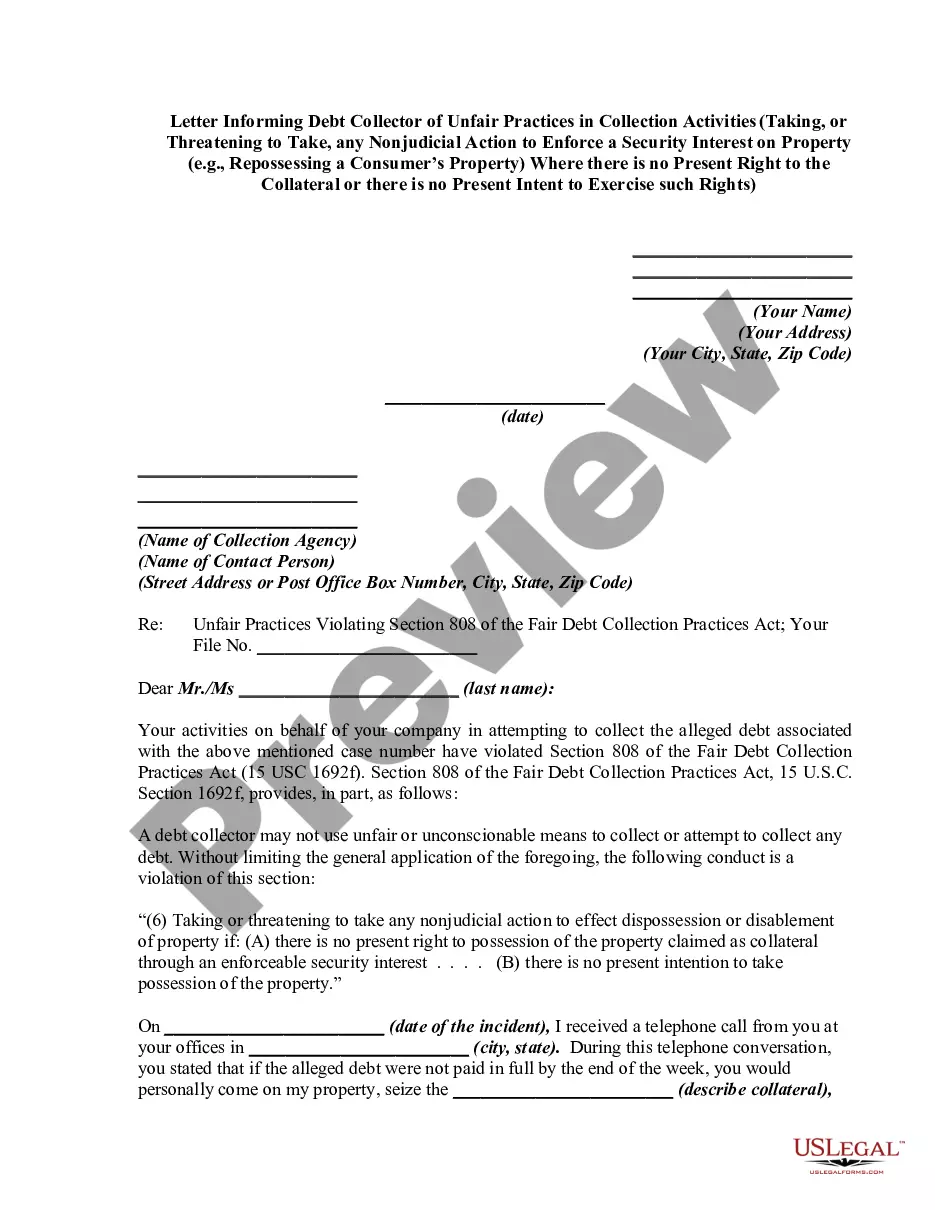
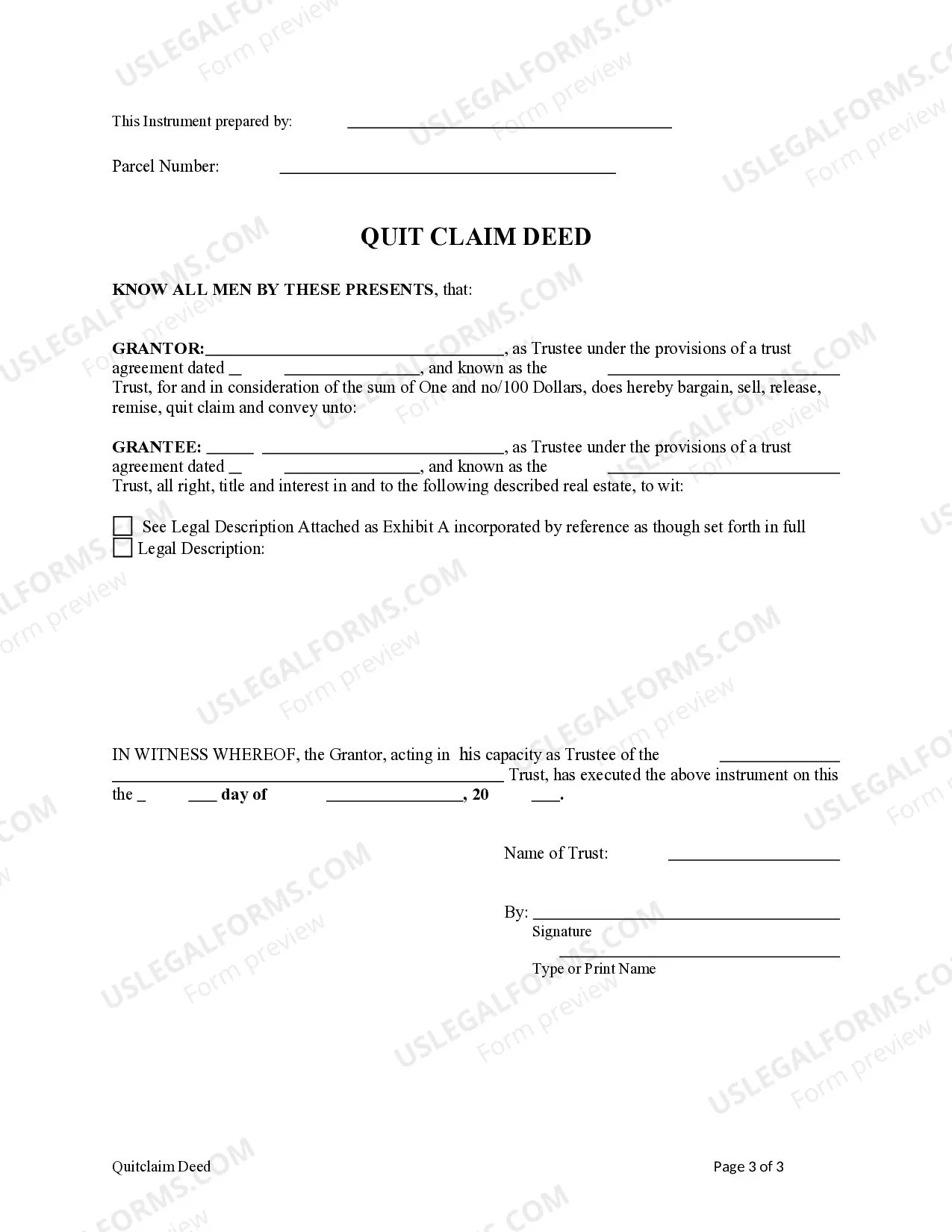
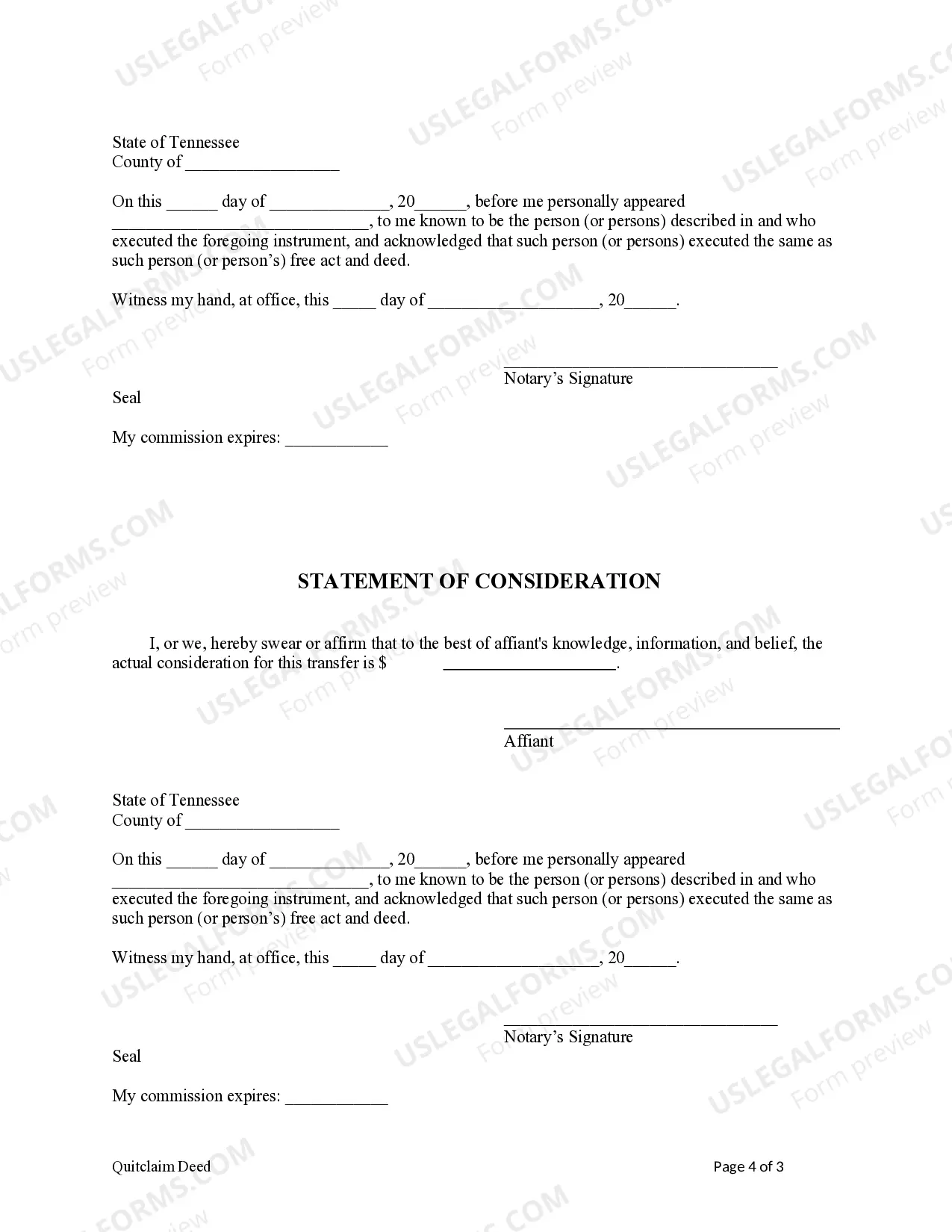
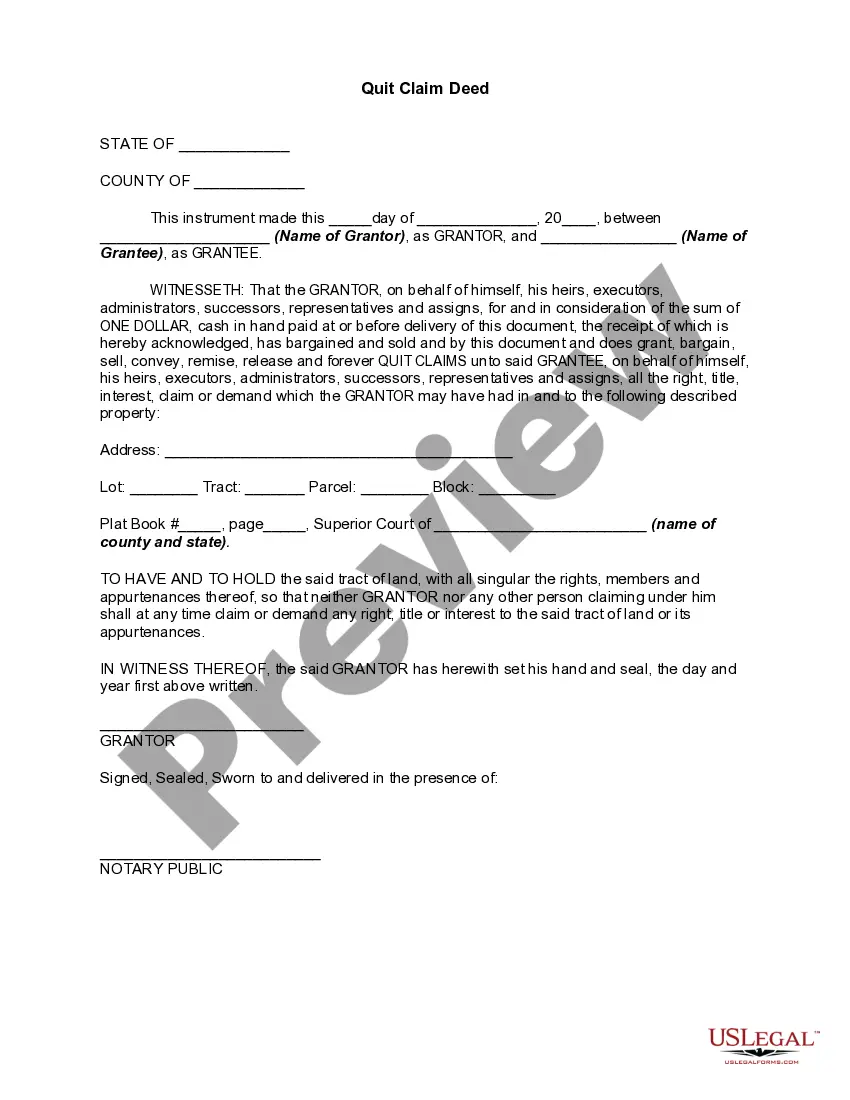
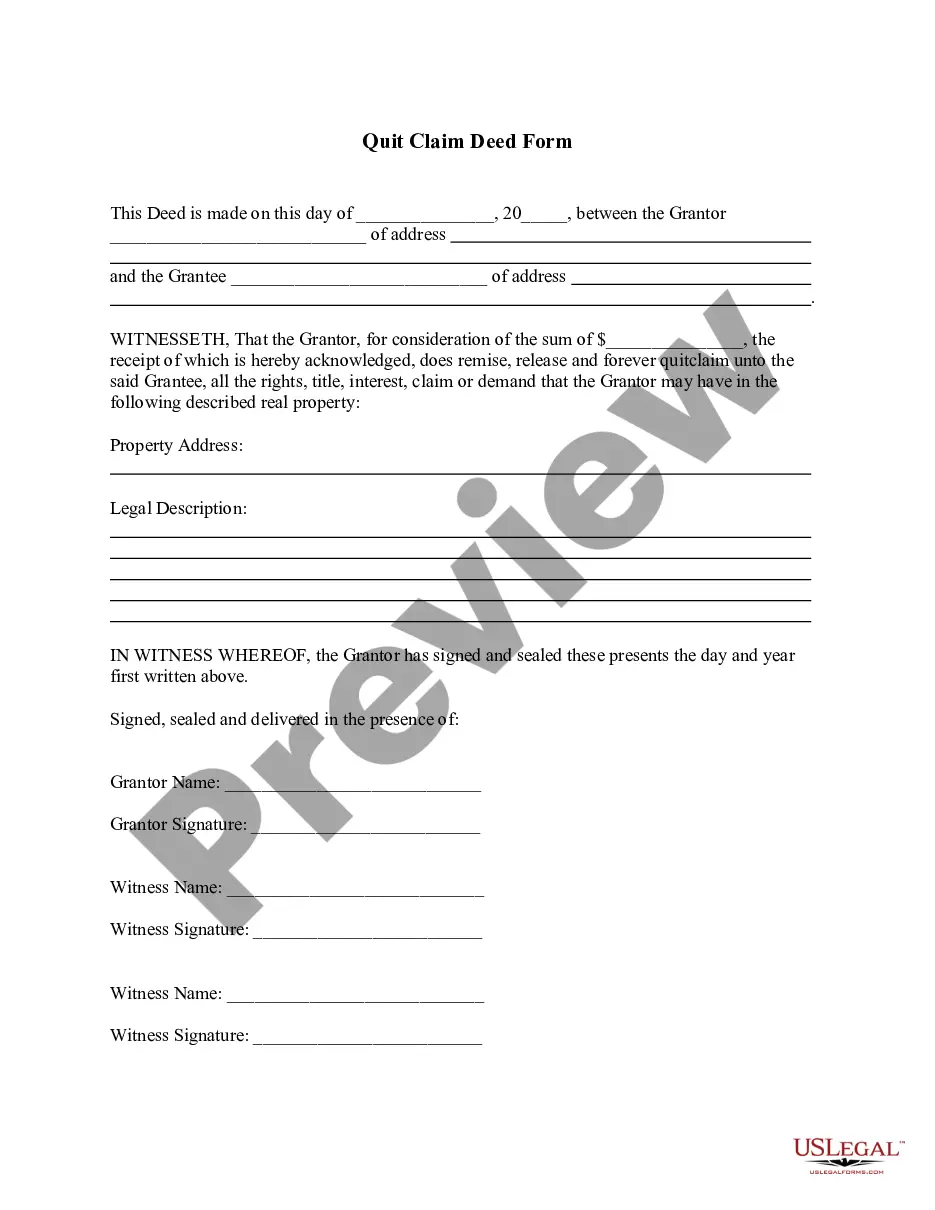
This form is a Quitclaim Deed where the Grantor is a trust and the Grantee is a trust. Grantor conveys and quitclaims the described property to Grantee. This deed complies with all state statutory laws.
Memphis Tennessee Quitclaim Deed
Category:
State:
Tennessee
City:
Memphis
Control #:
TN-030-77
Format:
Word;
Rich Text
Instant download
Description
Free preview






How to fill out Tennessee Quitclaim Deed?
No matter your social or professional standing, completing law-related forms is a regrettable necessity in today’s work environment.
Too frequently, it’s nearly impossible for someone without a legal background to create such documents from the ground up, primarily because of the intricate jargon and legal subtleties they involve.
This is where US Legal Forms steps in to assist.
Verify that the template you’ve discovered is appropriate for your area, since the regulations of one state or locality do not apply to another.
Review the document and read a brief description (if available) of the situations for which the form may be utilized.
- Our service provides a vast selection with over 85,000 ready-to-use state-specific forms suitable for almost any legal scenario.
- US Legal Forms also serves as a valuable resource for associates or legal advisors who wish to save time using our DIY templates.
- Whether you need the Memphis Tennessee Quitclaim Deed or any other document applicable in your state or region, with US Legal Forms, everything is readily available.
- Here’s how you can obtain the Memphis Tennessee Quitclaim Deed in minutes utilizing our reliable service.
- If you’re already a current customer, you can proceed to Log In to your account to retrieve the necessary form.
- However, if you’re new to our platform, be sure to follow these instructions before downloading the Memphis Tennessee Quitclaim Deed.
Form popularity
FAQ
Finally, quit claim deeds are another common way that properties are conveyed in the State of Tennessee. Quit claim deeds are often used to convey property from one person to another or to add additional people to title.
Tennessee Quitclaim Deed Laws and Requirements Under Tennessee law, a quitclaim deed must be in writing and signed by the grantor. Either the deed must have two witnesses, or the grantor's signature must be acknowledged before a notary public or other public official.
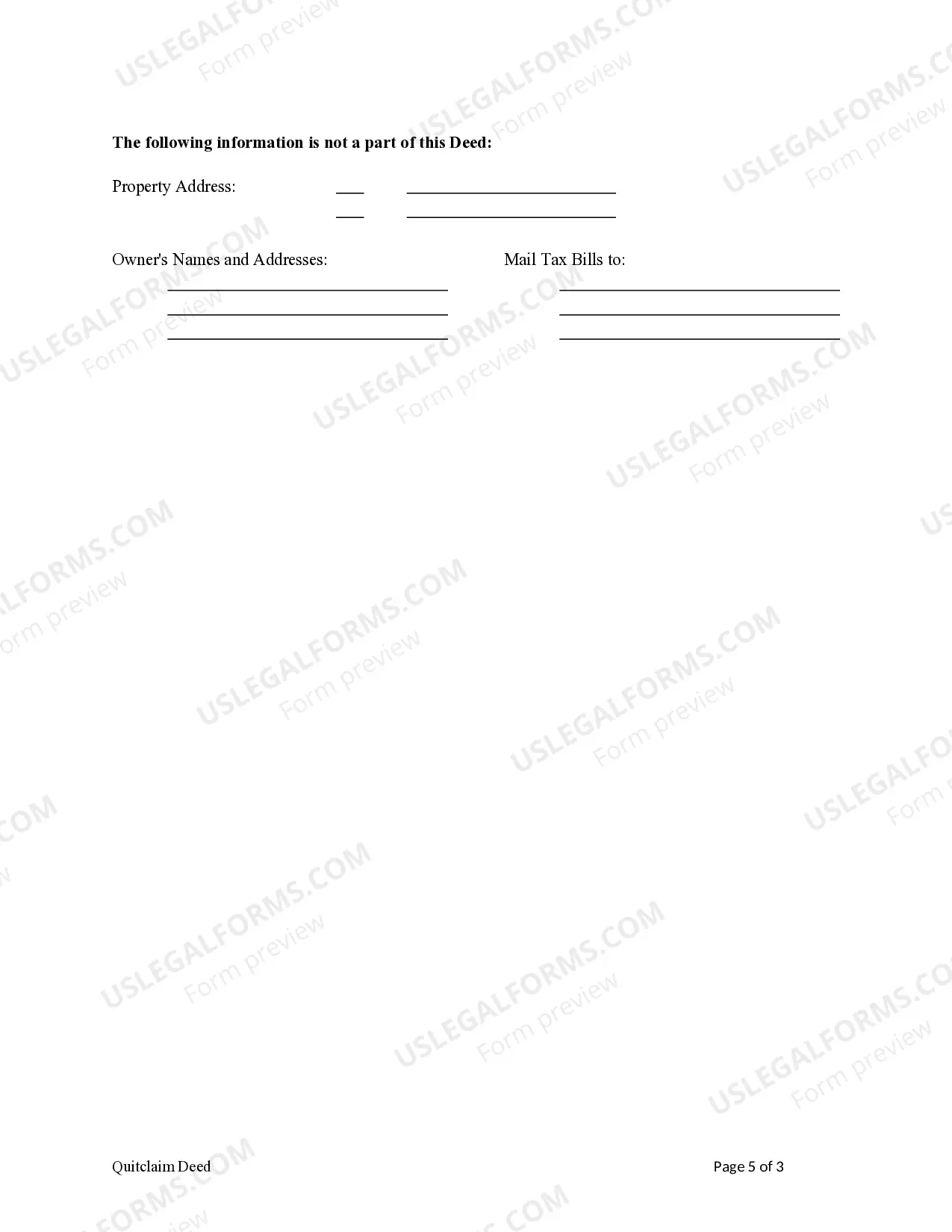
How to Write a Tennessee Quitclaim Deed Preparer's name and address. Full name and mailing address of the person to whom the recorded deed should be sent. County where the real property is located. The consideration paid for the property. Grantor's name and address. Grantee's name and address.
In the State of Tennessee, a quitclaim deed must be either notarized by a Notary Public or signed by the seller of the property in front of two witnesses (§ 66-22-101). Once one of these criteria has been met, the document must be filed with the Register of Deeds Office along with the proper filing fees (§ 66-5-106).
Under Tennessee law, a quitclaim deed must be in writing and signed by the grantor. Either the deed must have two witnesses, or the grantor's signature must be acknowledged before a notary public or other public official. The deed must be recorded, and you will likely pay a Realty Transfer Tax and filing fees.
To present a deed to be recorded in Shelby County, go to the Register of Deeds, located at 1075 Mullins Station Rd., Suite 165, Memphis, TN 38134. For general information, call 901.379. 7500. They are open M-F from 8am-pm.
A Tennessee quit claim deed may be filled out and filed with the Tennessee Register of Deeds in order to transfer a property from a grantor to a grantee. This document must be signed and notarized.
Adding someone to your house deed requires the filing of a legal form known as a quitclaim deed. When executed and notarized, the quitclaim deed legally overrides the current deed to your home. By filing the quitclaim deed, you can add someone to the title of your home, in effect transferring a share of ownership.