Fayetteville North Carolina Amendment to Living Trust
Description





How to fill out North Carolina Amendment To Living Trust?
Irrespective of one's societal or occupational rank, completing legal documentation is a regrettable requisite in contemporary society.
Frequently, it becomes nearly impossible for individuals lacking any legal training to create such documents from scratch, primarily due to the intricate vocabulary and legal subtleties they involve.
This is where US Legal Forms proves to be invaluable.
Ensure that the form you selected is relevant to your area, as the laws of one state or region may not apply to others.
Preview the document and review a brief description (if available) of scenarios for which the document may be applicable.
- Our platform offers an extensive library with over 85,000 ready-to-use, state-specific forms tailored for nearly any legal circumstance.
- US Legal Forms is also a beneficial resource for associates or legal advisors looking to conserve time with our DIY templates.
- Whether you're searching for the Fayetteville North Carolina Amendment to Living Trust or any other relevant document suited for your state or region, US Legal Forms has everything readily available.
- Here’s how you can acquire the Fayetteville North Carolina Amendment to Living Trust within minutes using our dependable platform.
- If you are currently a subscriber, simply Log In to your account to obtain the required form.
- However, if you are a newcomer to our platform, make sure to adhere to these steps before downloading the Fayetteville North Carolina Amendment to Living Trust.
Form popularity
FAQ
Yes, a will in North Carolina must be signed by the testator and witnessed by at least two individuals to be valid, but notarization is not a strict requirement. However, notarizing the will, along with an affidavit of the witnesses, can help streamline the probate process. If you are preparing a Fayetteville North Carolina Amendment to Living Trust, it may be beneficial to consult with professionals who can guide you through the notarization process.
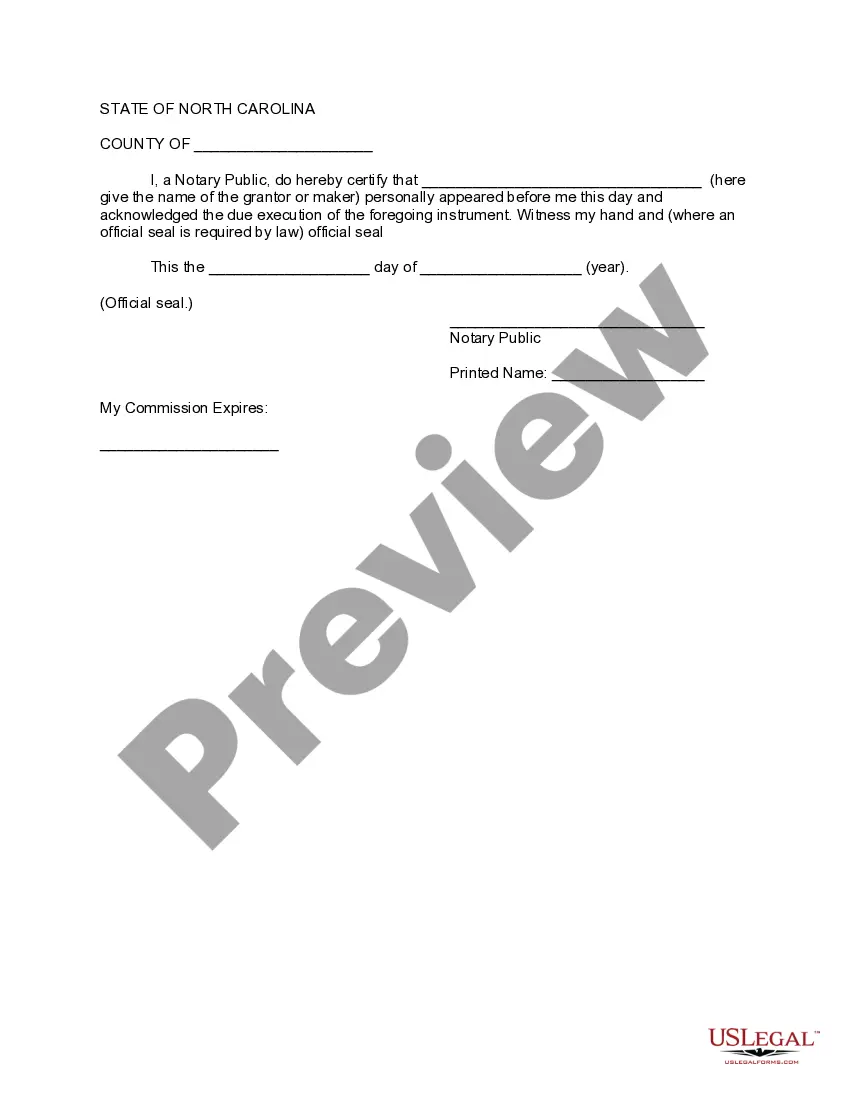
In North Carolina, certain documents must be notarized, such as wills, deeds, and powers of attorney. While trusts themselves do not require notarization, it's wise to have supporting documents notarized to avoid complications. If you are creating a Fayetteville North Carolina Amendment to Living Trust, ensure you understand which documents require notarization for your peace of mind.
In North Carolina, a certificate of trust does not need to be recorded, unlike a will or property deed. This document confirms the validity of the trust but is typically not filed with any public office. When making a Fayetteville North Carolina Amendment to Living Trust, you can keep this document private, ensuring confidentiality.
Trusts in North Carolina do not require notarization for their formation. Nevertheless, notarization can serve as proof that the document was properly executed. For those working on a Fayetteville North Carolina Amendment to Living Trust, having your documents notarized can provide additional peace of mind.
A codicil, which is an amendment to your will, does not necessarily require notarization in North Carolina. However, it is advisable to have it notarized to reinforce its validity, particularly if you want to avoid issues later on. If you are revising your will or making a Fayetteville North Carolina Amendment to Living Trust, consider using our platform to ensure your documents are in order.
In North Carolina, a trust does not have to be notarized to be valid. However, notarization can help in proving the authenticity of the documents if disputes arise. If you are considering a Fayetteville North Carolina Amendment to Living Trust, consulting with an attorney can provide clarity on the best practices for maintaining your trust.
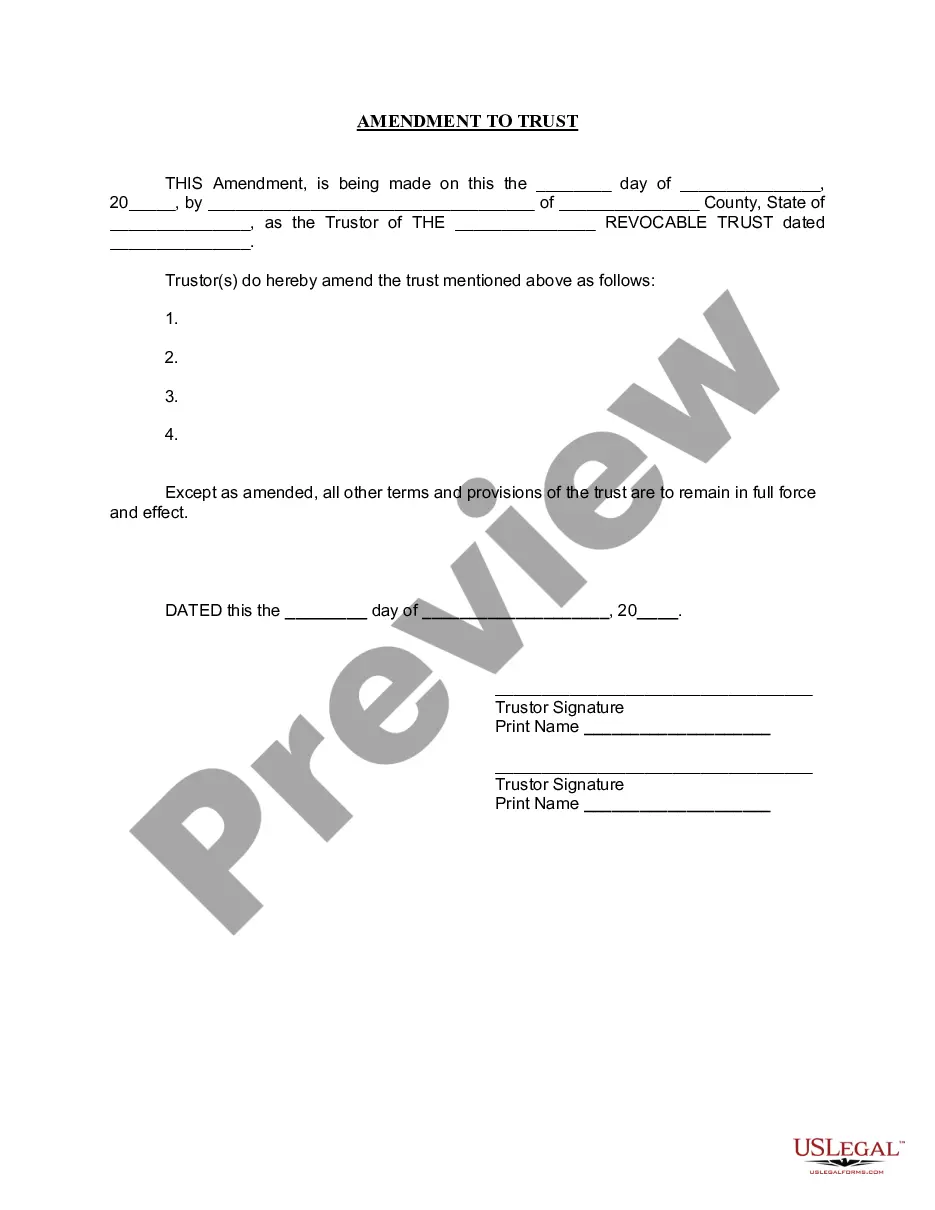
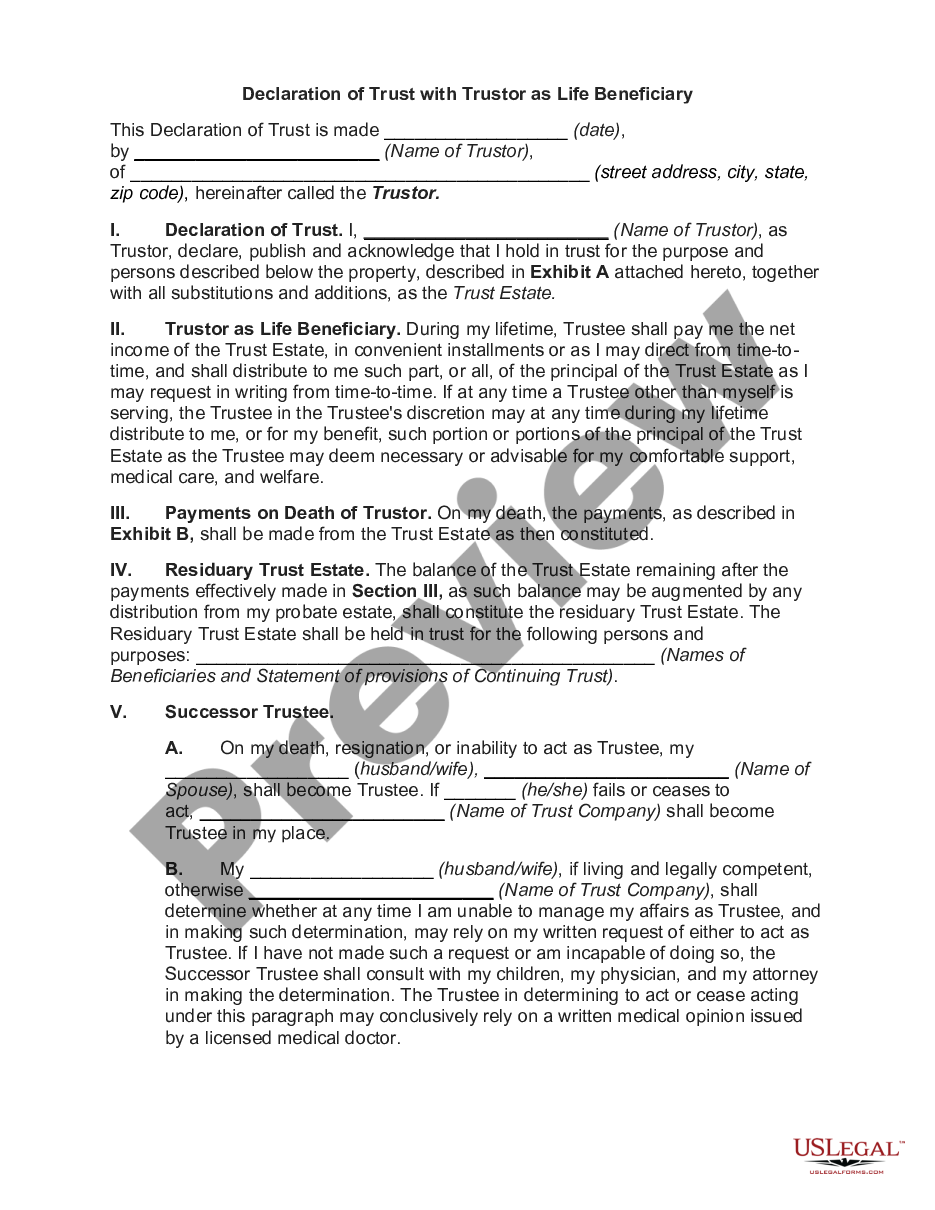
The best way to amend a trust is to clearly document the changes you wish to make and ensure that all parties involved understand these modifications. A Fayetteville North Carolina Amendment to Living Trust simplifies this process by providing a clear structure for the necessary changes. After drafting the amendment, sign the document and keep it with your original trust. Seeking legal advice can help ensure you’ve followed all requirements correctly.
While trusts offer many benefits, they do have disadvantages in North Carolina. They can be more expensive to establish than wills, and ongoing management may require additional legal fees. Also, some people may find the terms of a Fayetteville North Carolina Amendment to Living Trust can be complex, leading to misunderstandings. Weighing these potential drawbacks against the benefits is essential in your estate planning.
To set up a living trust in North Carolina, start by choosing the type of trust you need and gathering all necessary information about your assets. Next, prepare the trust document, which outlines how your assets will be managed and distributed. Finally, consider a Fayetteville North Carolina Amendment to Living Trust to ensure your document is comprehensive and complies with state laws. Consulting a legal expert can streamline this process.
Yes, you can create your own living trust in North Carolina, but it's advisable to do so with careful consideration. While templates and online resources are available, a Fayetteville North Carolina Amendment to Living Trust might be more effective. Including legal support can help ensure your trust meets state requirements and reflects your wishes accurately. Don’t overlook the importance of professional guidance in this process.