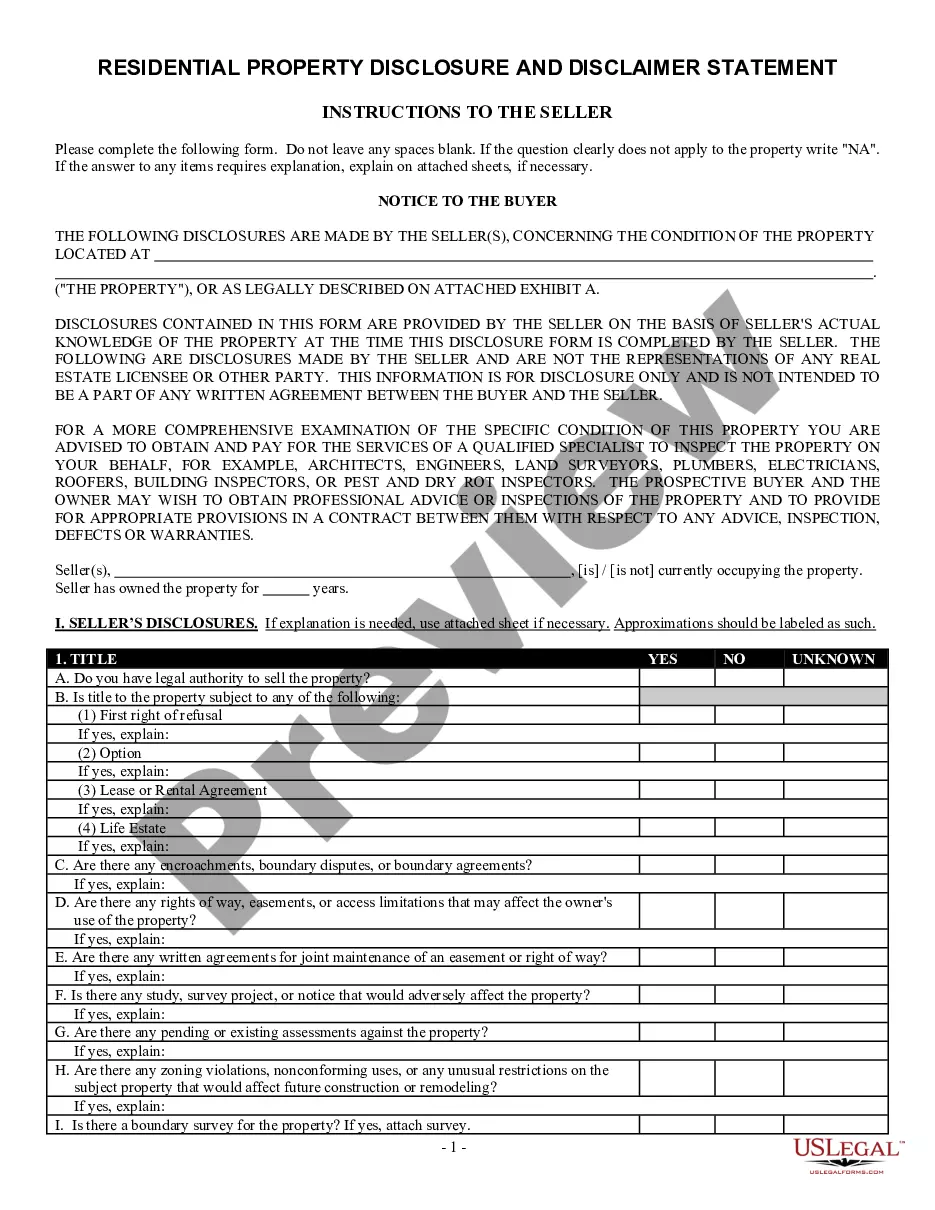
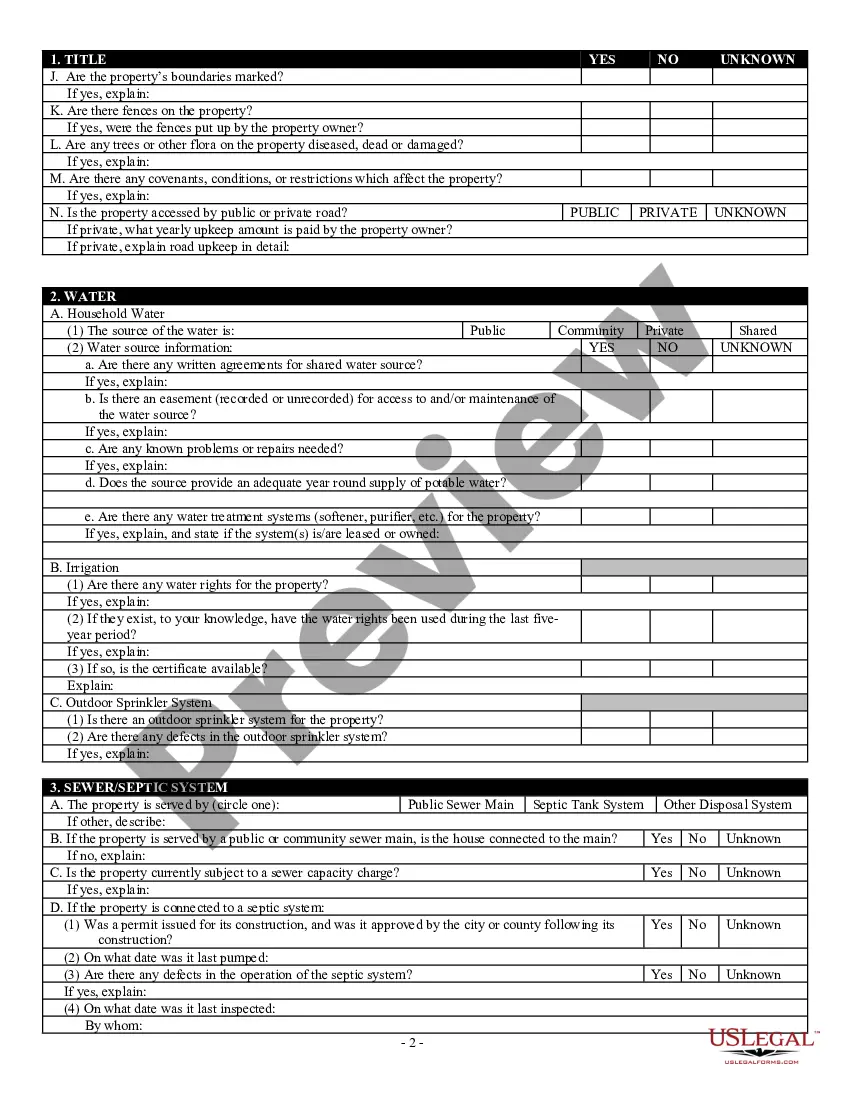
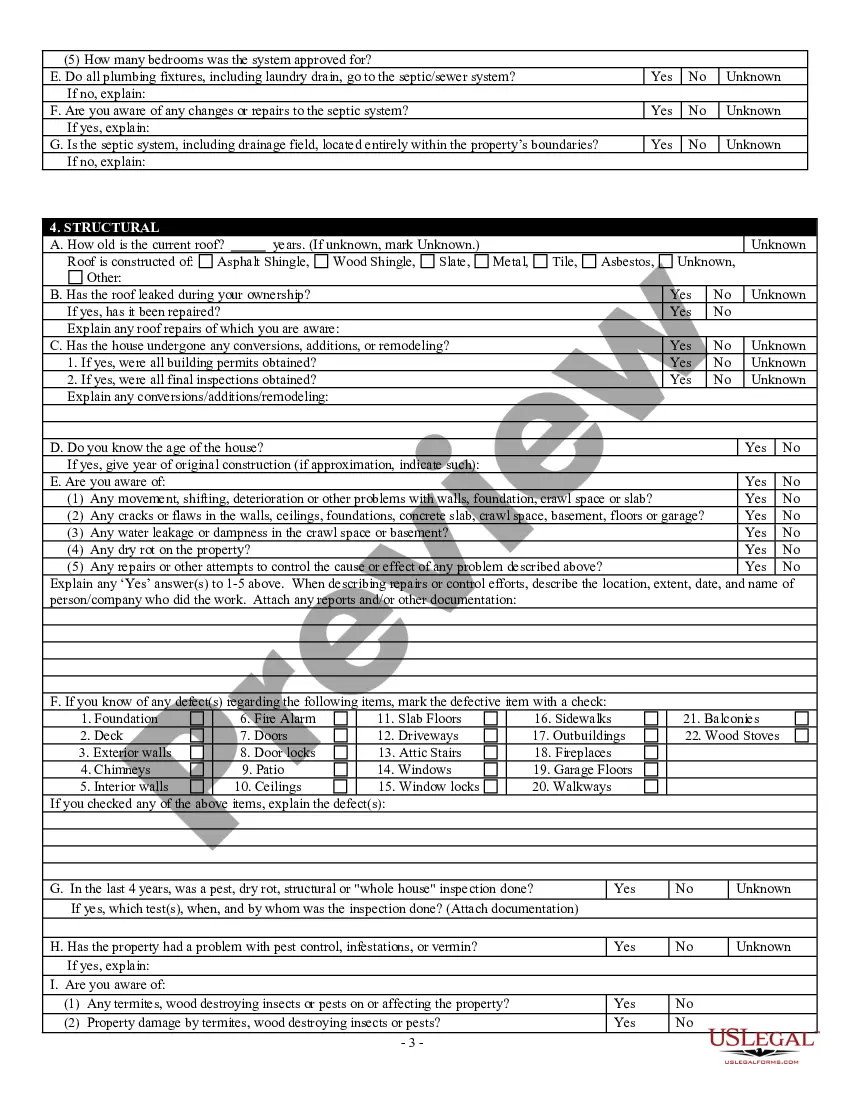
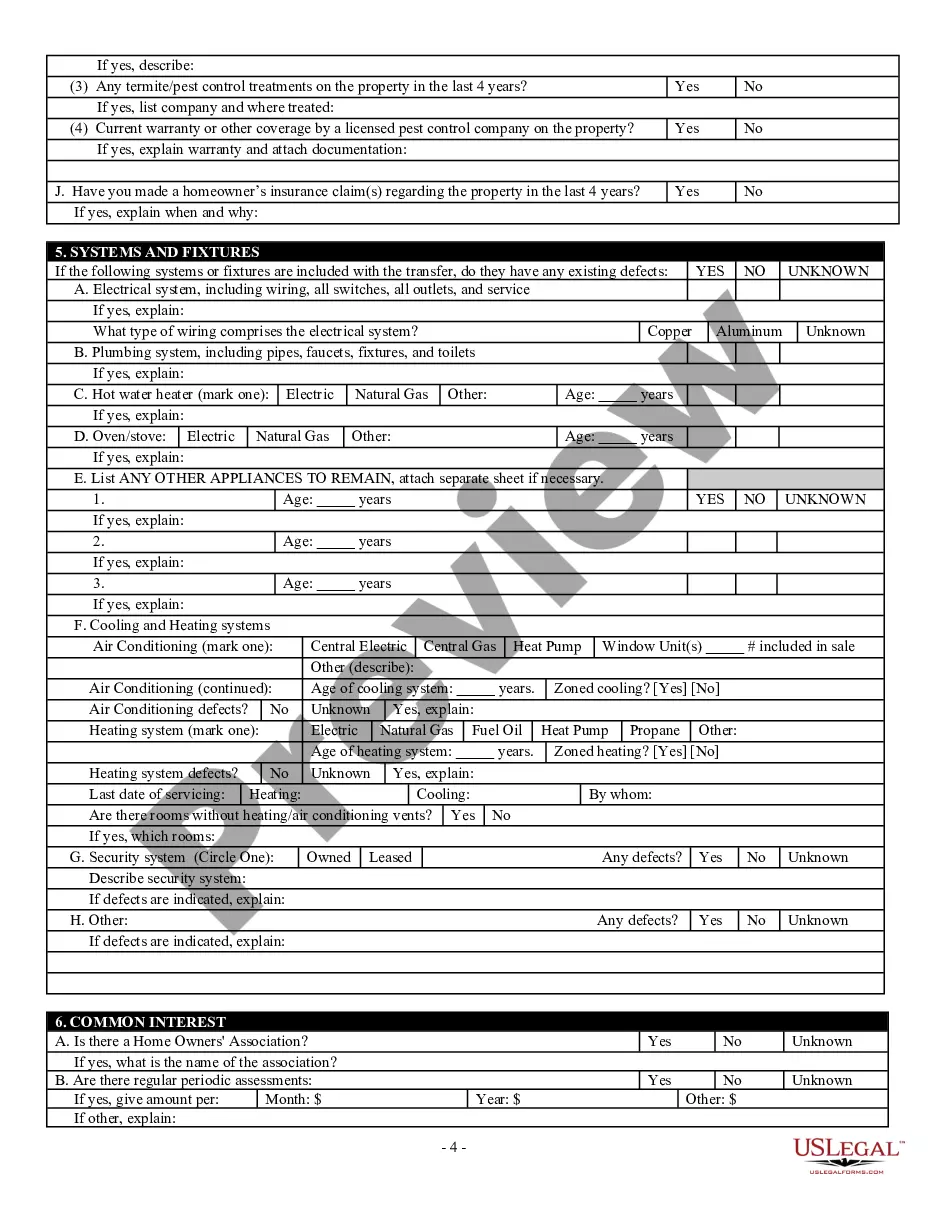
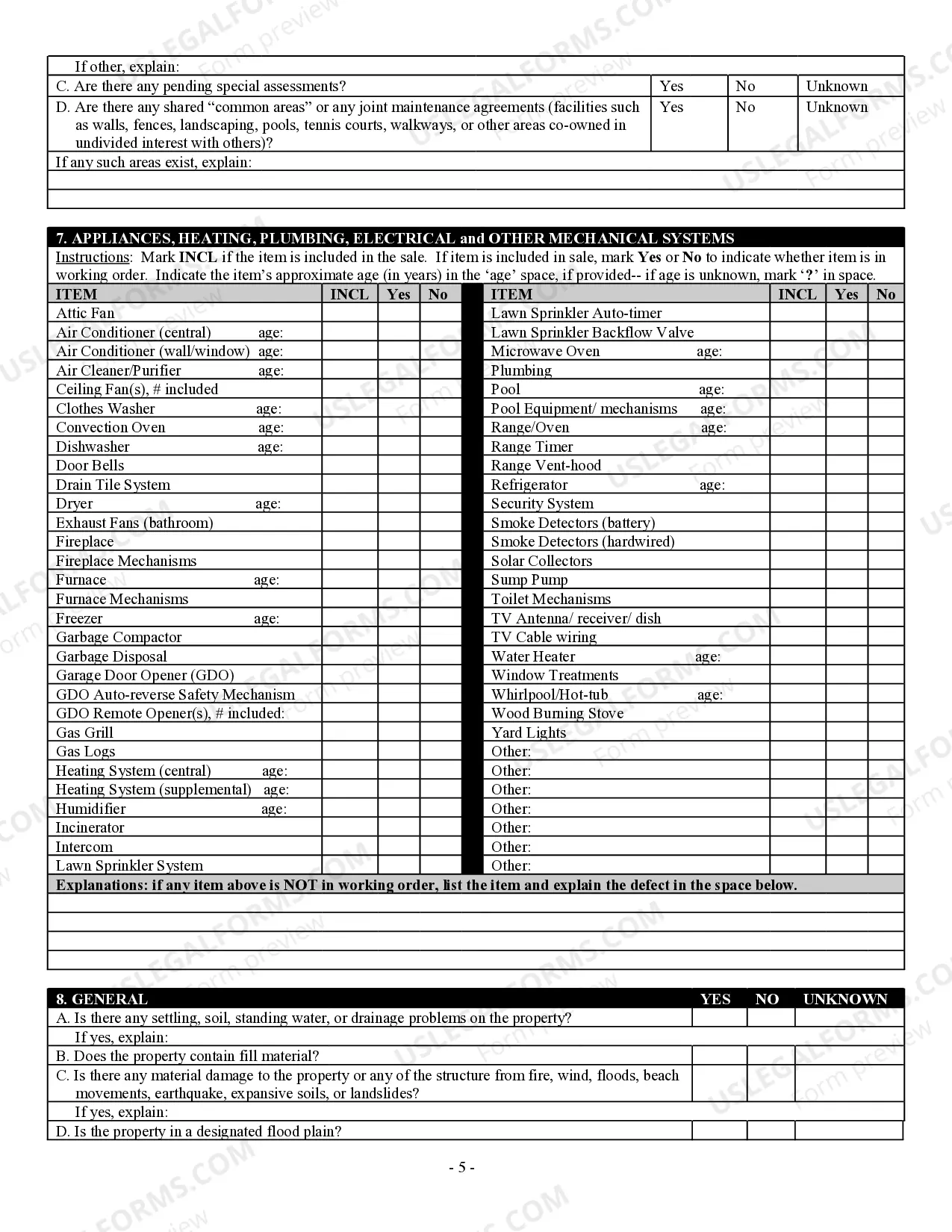
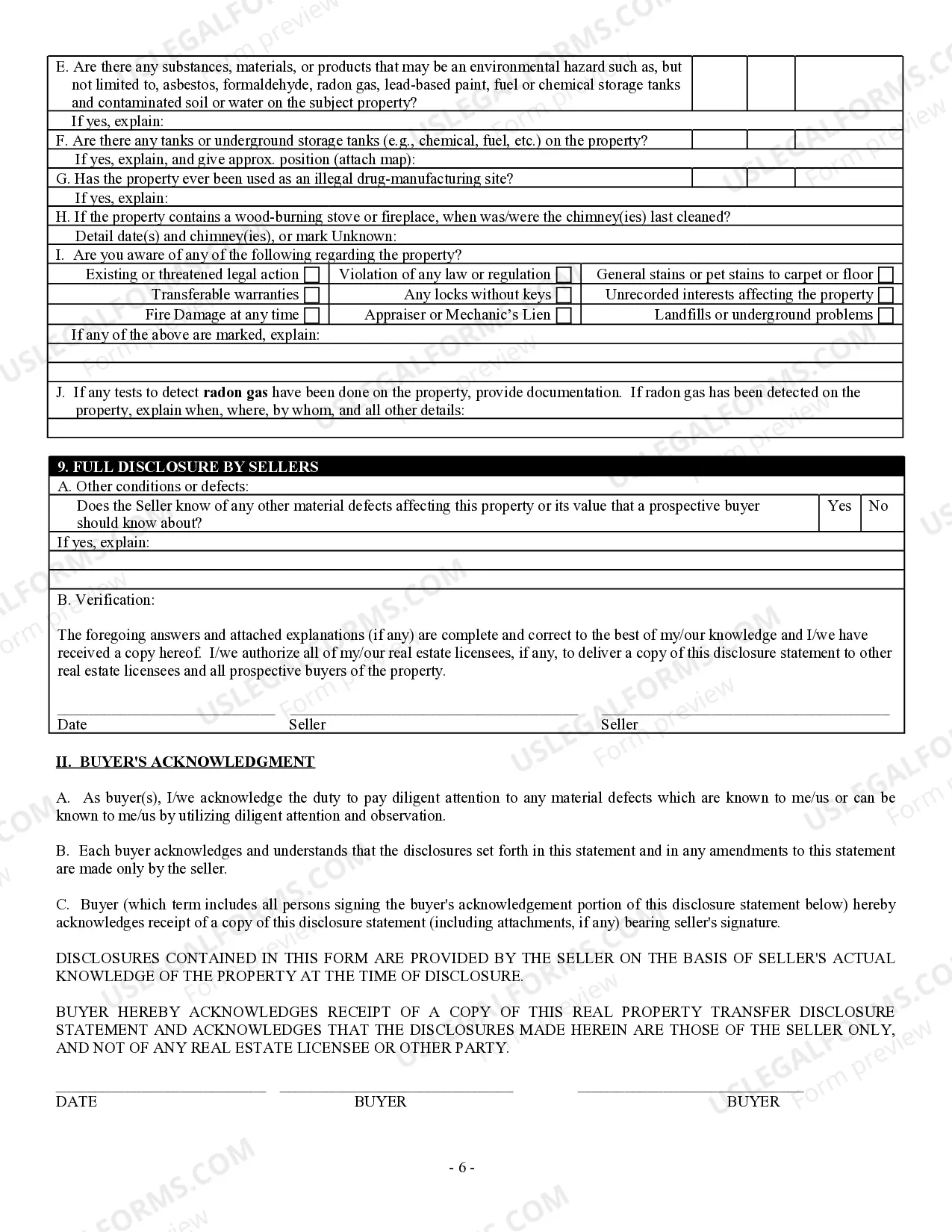
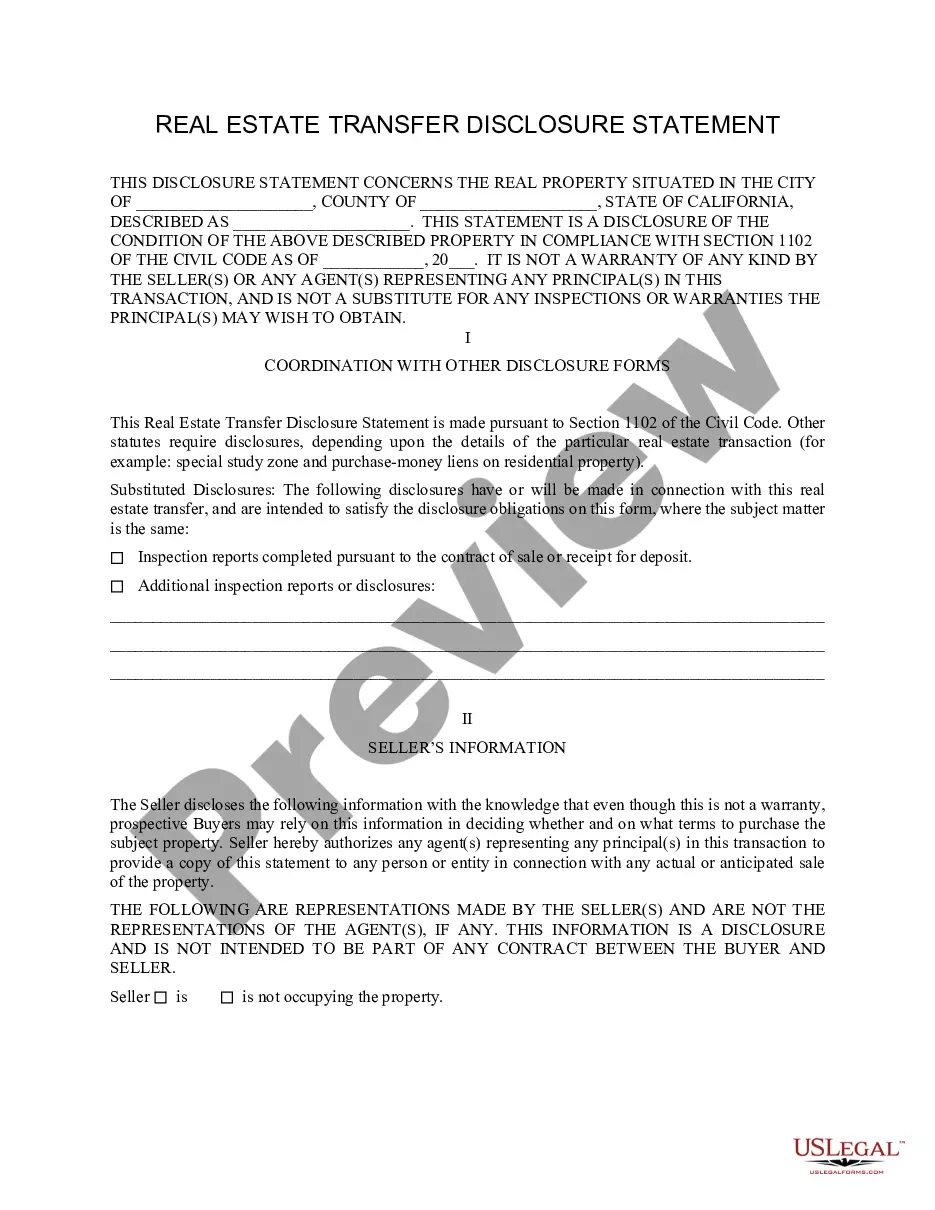
This form is a Seller's Disclosure Statement for use in a residential sales transaction in Massachusetts. This disclosure statement concerns the condition of property and is completed by the Seller.
Boston Massachusetts Residential Real Estate Sales Disclosure Statement
State:
MassachusettsPlease select your state
Select state
Category:
City:
Boston
Control #:
MA-37014
Format:
Word;
Rich Text
65 downloads
Description
Free preview
Get your form ready online
Our built-in tools help you complete, sign, share, and store your documents in one place.
Built-in online Word editor
Make edits, fill in missing information, and update formatting in US Legal Forms—just like you would in MS Word.
Export easily
Download a copy, print it, send it by email, or mail it via USPS—whatever works best for your next step.
E-sign your document
Sign and collect signatures with our SignNow integration. Send to multiple recipients, set reminders, and more. Go Premium to unlock E-Sign.
Notarize online 24/7
If this form requires notarization, complete it online through a secure video call—no need to meet a notary in person or wait for an appointment.
Store your document securely
We protect your documents and personal data by following strict security and privacy standards.

Make edits, fill in missing information, and update formatting in US Legal Forms—just like you would in MS Word.

Download a copy, print it, send it by email, or mail it via USPS—whatever works best for your next step.

Sign and collect signatures with our SignNow integration. Send to multiple recipients, set reminders, and more. Go Premium to unlock E-Sign.

If this form requires notarization, complete it online through a secure video call—no need to meet a notary in person or wait for an appointment.

We protect your documents and personal data by following strict security and privacy standards.
Looking for another form?
How to fill out Massachusetts Residential Real Estate Sales Disclosure Statement?
Irrespective of personal or occupational standing, finalizing legal documents is an unfortunate requirement in today's work environment.
Frequently, it’s nearly infeasible for someone without legal experience to create such documents from scratch, largely because of the intricate language and legal subtleties they entail.
This is where US Legal Forms comes to the aid.
Verify that the template you have found suits your area, as the regulations of one state or county may not be applicable in another.
Review the form and examine a brief outline (if available) of situations the document can be utilized for.
- Our platform offers an extensive assortment of over 85,000 state-specific ready-to-use documents suitable for nearly any legal matter.
- US Legal Forms also serves as an invaluable resource for associates or legal advisors looking to save time by utilizing our DIY forms.
- Whether you require the Boston Massachusetts Residential Real Estate Sales Disclosure Statement or any other documents applicable in your state or county, US Legal Forms puts everything at your disposal.
- Here’s how to swiftly obtain the Boston Massachusetts Residential Real Estate Sales Disclosure Statement using our trusted platform.
- If you are already a subscriber, you can proceed to Log In to your account to download the correct form.
- However, if you are new to our library, ensure you follow these steps before acquiring the Boston Massachusetts Residential Real Estate Sales Disclosure Statement.
Form popularity
FAQ
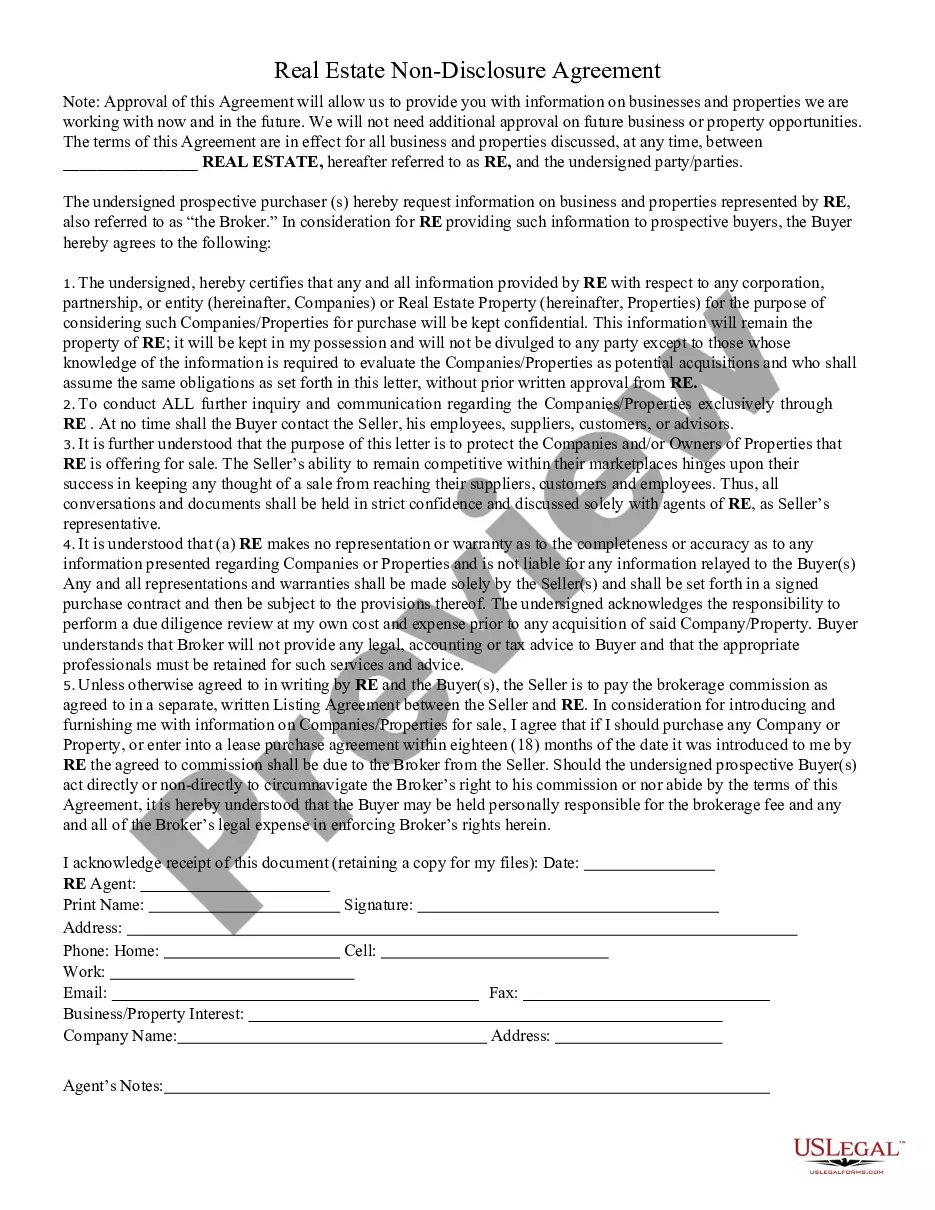
Non·?dis·?clo·?sure ?nan-dis-?kl?-zh?r. : failure or refusal to make something known : lack of disclosure. nondisclosure of a known problem with the property. often used before another noun.
There are two things that sellers must disclose in Massachusetts: the existence of lead paint in the house and presence of a septic system. However, if a prospective buyer asks questions, the seller cannot lie or hide the truth.
Other than the lead paint and septic system disclosures, sellers in Massachusetts generally don't have to reveal anything else concerning the condition of their property. That is, unless the buyer asks. If a prospective buyer has specific questions about the property, a seller must truthfully disclose the information.
By contrast, Massachusetts does not require sellers to provide a disclosure form or statement to potential buyers. If you work with a real estate broker or agent, he or she may ask you to complete a statement that will include a provision that indemnifies the broker or agent for any misstatements or errors on the form.
However, Massachusetts has no such law that mandates sellers to provide a disclosure statement to potential buyers. At most, your real estate agent will ask you to complete a form that includes a provision that indemnified them from any misstatements or errors made during the deal.
Under Massachusetts law, real estate professionals are not required to disclose if a property was the site of a murder, suicide, or felony ? this even includes the alleged sighting of paranormal activity.
If you're selling your home in Massachusetts, you legally do not have to disclose asbestos, but you do have to disclose formaldehyde foam insulation and lead paint.
Some states are more stringent than others when it comes to disclosing issues. For example, in Massachusetts, home sellers are not required to disclose known problems with a home unless asked a direct question from a buyer. This is what's referred to as ?Caveat Emptor? or ?let the buyer beware.?
This may surprise you, but, yes, it's legal to sell a house with mold. There are no federal laws against selling houses with mold, though some states do require the seller to disclose whether a home has had past or present mold issues.