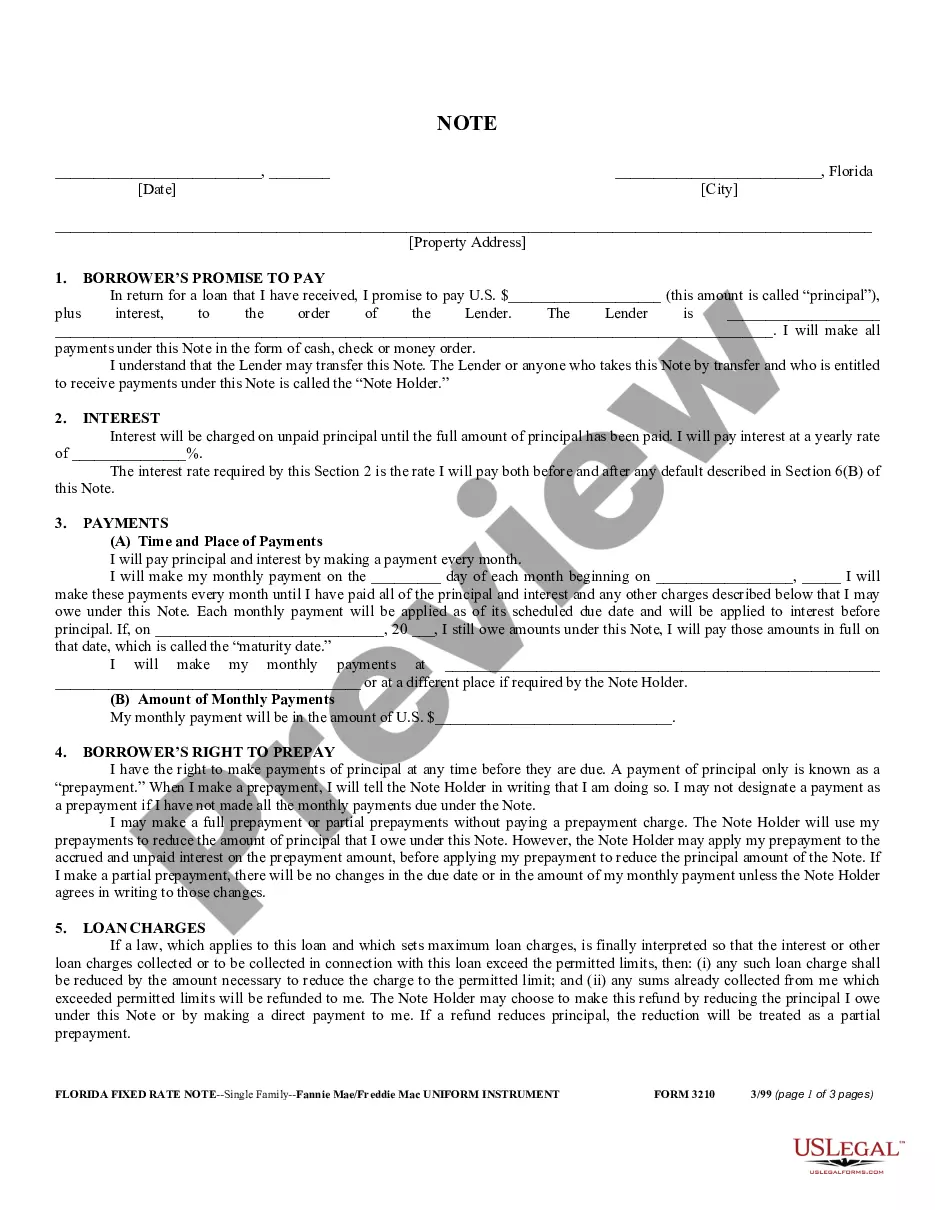
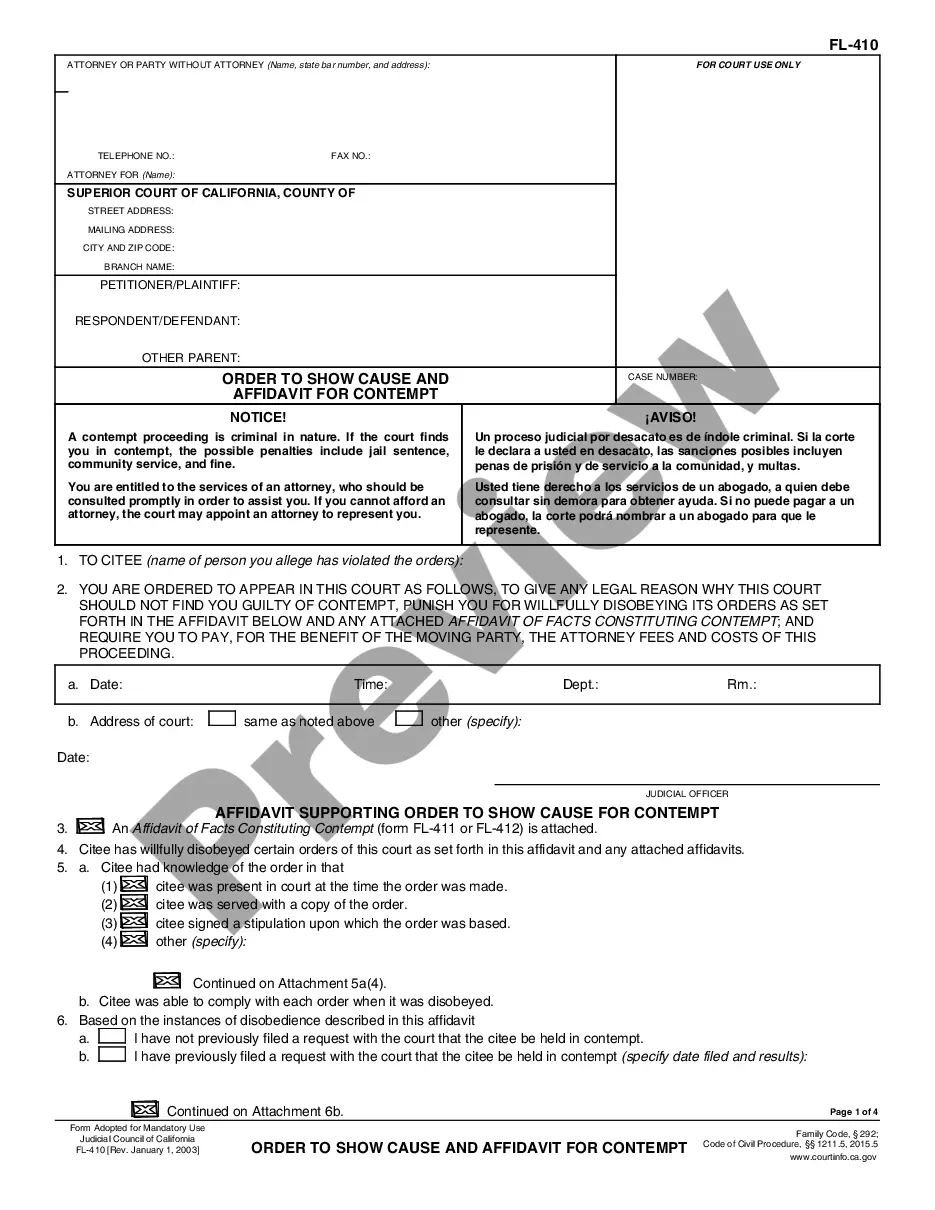
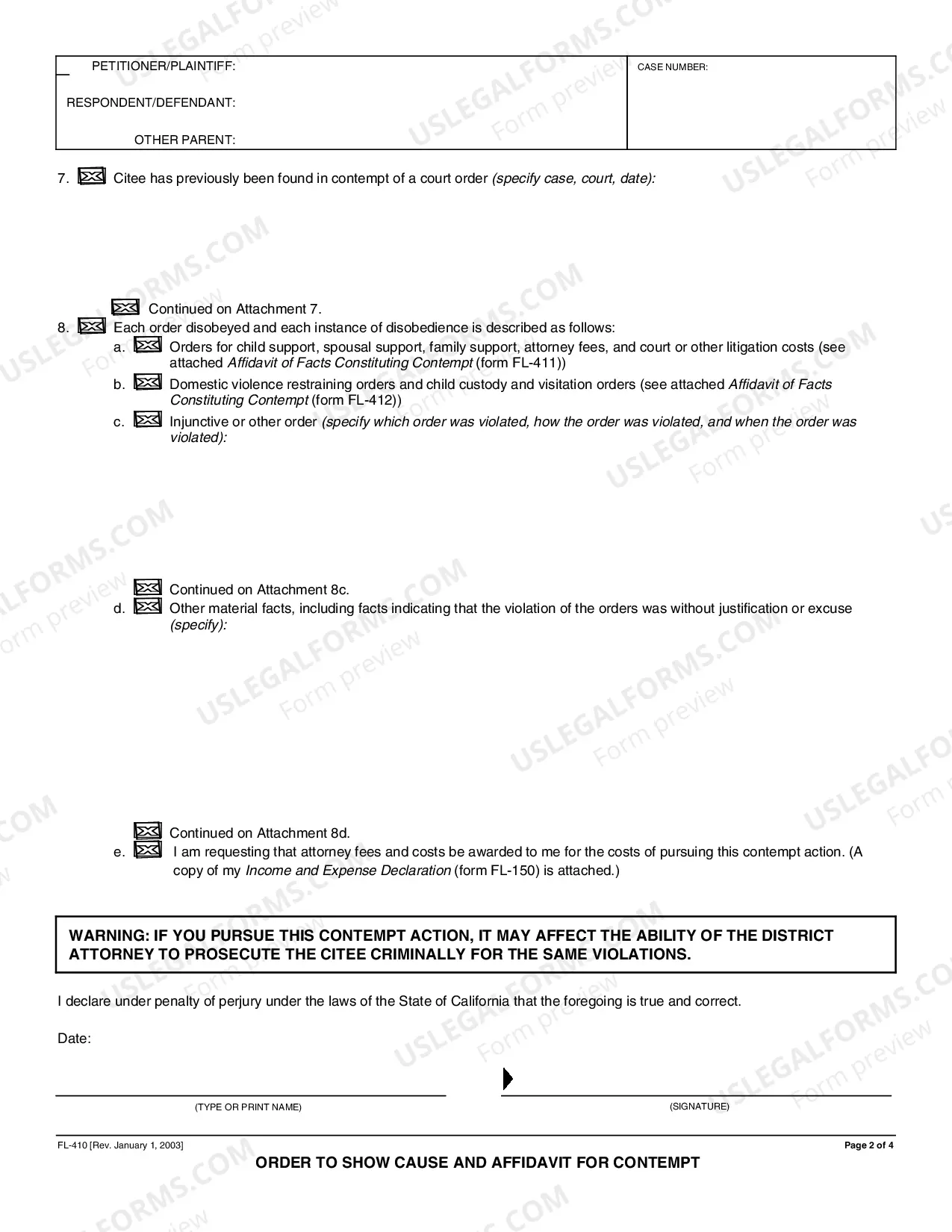
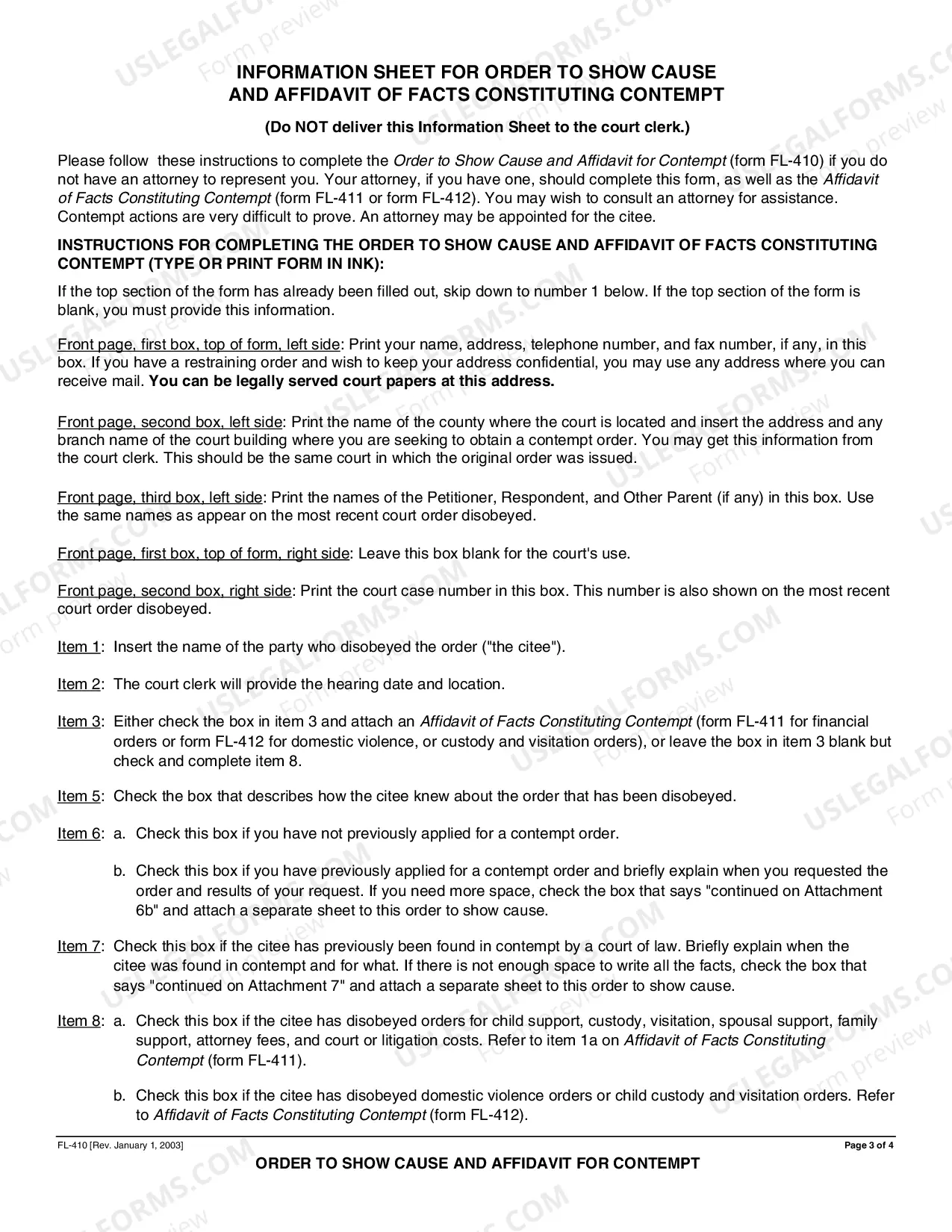
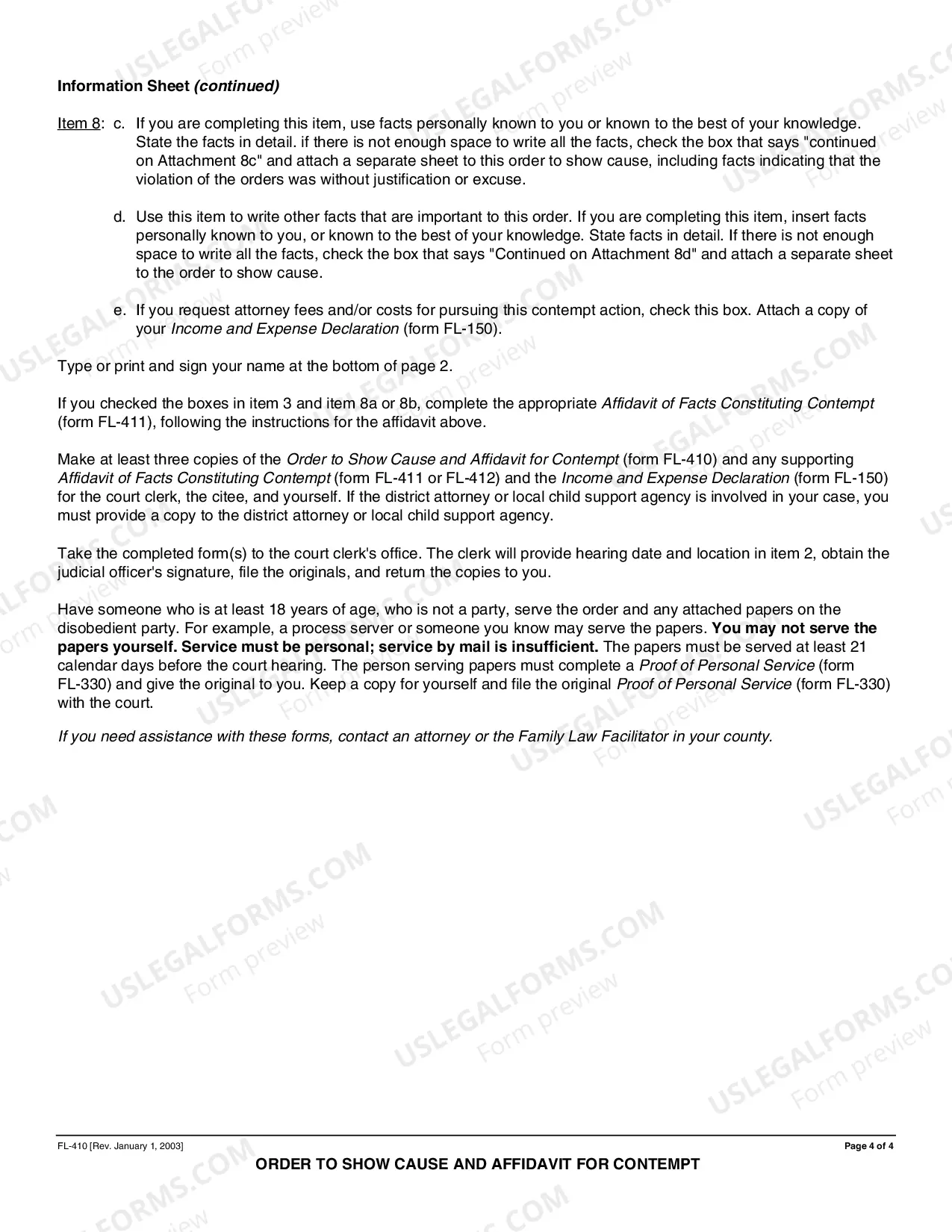
This is an official California Judicial Council family law form, which may be used in domestic litigation in California. Enter the information as indicated on the form and file with the court as appropriate.
Los Angeles California Order to Show Cause and Affidavit for Contempt
State:
California
County:
Los Angeles
Control #:
CA-FL-410
Format:
PDF
Instant download
This website is not affiliated with any governmental entity
Public form
Description
Free preview
Get your form ready online
Our built-in tools help you complete, sign, share, and store your documents in one place.
Built-in online Word editor
Make edits, fill in missing information, and update formatting in US Legal Forms—just like you would in MS Word.
Export easily
Download a copy, print it, send it by email, or mail it via USPS—whatever works best for your next step.
E-sign your document
Sign and collect signatures with our SignNow integration. Send to multiple recipients, set reminders, and more. Go Premium to unlock E-Sign.
Notarize online 24/7
If this form requires notarization, complete it online through a secure video call—no need to meet a notary in person or wait for an appointment.
Store your document securely
We protect your documents and personal data by following strict security and privacy standards.

Make edits, fill in missing information, and update formatting in US Legal Forms—just like you would in MS Word.

Download a copy, print it, send it by email, or mail it via USPS—whatever works best for your next step.

Sign and collect signatures with our SignNow integration. Send to multiple recipients, set reminders, and more. Go Premium to unlock E-Sign.

If this form requires notarization, complete it online through a secure video call—no need to meet a notary in person or wait for an appointment.

We protect your documents and personal data by following strict security and privacy standards.
Looking for another form?
How to fill out California Order To Show Cause And Affidavit For Contempt?
Regardless of social or occupational position, finalizing legal paperwork is an unfortunate requirement in modern society.
Frequently, it is nearly impossible for an individual lacking any legal expertise to compose such documents from the ground up, mainly due to the intricate vocabulary and legal subtleties they entail.
This is where US Legal Forms becomes useful.
Confirm that the form you have selected is valid for your region, as the regulations of one state or county are not applicable to another.
Examine the documentation and review a brief summary (if available) of the cases the document can be utilized for.
- Our platform offers an extensive collection of over 85,000 ready-to-use state-specific documents suitable for virtually any legal situation.
- US Legal Forms also acts as a fantastic tool for associates or legal advisors seeking greater efficiency with our DIY papers.
- Regardless of whether you need the Los Angeles California Order to Show Cause and Affidavit for Contempt or any other documents that are valid in your state or county, US Legal Forms makes everything accessible.
- Here’s how to quickly obtain the Los Angeles California Order to Show Cause and Affidavit for Contempt using our trustworthy platform.
- If you are currently a subscriber, just Log In to your account to download the suitable form.
- However, if you are new to our platform, ensure you follow these guidelines before acquiring the Los Angeles California Order to Show Cause and Affidavit for Contempt.
Form popularity
FAQ
The best defense for contempt of court often involves demonstrating that you did not willfully disobey a court order. In Los Angeles, California, Order to Show Cause and Affidavit for Contempt cases, one might argue that circumstances made compliance impossible. Additionally, providing evidence that the order was unclear or improperly served can strengthen your defense. Seeking legal help to navigate these defenses is advisable.
Responding to an Order to Show Cause and Affidavit for Contempt in California involves several important steps. First, review the order carefully to understand the allegations and prepare your response accordingly. You may need to gather supporting documents or evidence to contest the claims made against you. Engaging with a resource like US Legal Forms can streamline the response process, providing the tools and templates necessary to address the court effectively.
Yes, you can file a motion for contempt without an attorney in California. However, proceeding without legal representation may present challenges, especially when dealing with the complexities of an Order to Show Cause and Affidavit for Contempt. It’s advisable to carefully follow court procedures and rules to ensure your motion is properly filed. Utilizing resources from platforms like US Legal Forms can help guide you through the process and improve your chances of success.
An Order to Show Cause in Los Angeles, California is a legal document that requests a court to schedule a hearing. It typically involves asking the court to compel a party to explain why they should not face consequences for failing to comply with a previous court order. This order is crucial in situations related to child custody, support issues, or contempt cases. Understanding the implications of an Order to Show Cause and Affidavit for Contempt is essential for effectively navigating your legal situation.
Writing a show cause order requires you to include specific details about the original court order that was violated. You should clearly state the reasons for your request and describe how the other party failed to comply. Additionally, it is crucial to format the document properly to meet court requirements. For an easier approach, USLegalForms offers templates that can help you draft a compliant and effective Order to Show Cause and Affidavit for Contempt.
An Order to Show Cause can be filed by either party in a case where there is a perceived violation of court orders. Typically, the party who believes the other has disobeyed a court order will file this document. In family law matters, it is often the custodial parent who initiates the process, seeking enforcement of custody or support orders. If you need assistance with the paperwork, consider USLegalForms, which provides guidance on the filing process.
To file a contempt of court order in California, you should first prepare the necessary documents, including an Order to Show Cause and Affidavit for Contempt. Next, you will need to file these documents with the court handling your case. It is essential to serve the other party with these documents, ensuring they receive notice of the proceedings. Utilizing services like USLegalForms can help streamline this process and ensure you complete the forms correctly.
A show cause for contempt involves a court order that requires a person to explain why they should not be held in contempt of court. This is typically issued when a party fails to comply with a court order, which can include issues like non-payment of child support or violating custody arrangements. In Los Angeles California, an Order to Show Cause and Affidavit for Contempt are critical legal documents that help ensure compliance. Seeking guidance from platforms like US Legal Forms can assist you in understanding these processes and formulating an appropriate response.
An Order to Show Cause in Los Angeles California indicates a court’s intent to address a legal dispute, requiring a party to explain why a certain action should not be taken. It is a serious matter that could lead to significant consequences, including fines or changes in custody arrangements. Therefore, understanding the implications of this order is crucial. Utilizing resources like US Legal Forms can help you navigate the details of an Order to Show Cause and Affidavit for Contempt effectively.