Oregon Living Will (Healthcare Directive)
Living Will (Healthcare Directive) documents express your medical wishes. Attorney-drafted templates ensure a fast and easy completion process.


Similar documents: key differences
- Living Will vs. Healthcare Directive — often interchangeable, both express medical wishes.
- Advance Directive vs. Living Will — Advance Directive is a broader term, including Living Wills.
- Health Care Proxy vs. Durable Power of Attorney for Health Care — Health Care Proxy specifically assigns medical decisions; the latter can include broader powers.
- Advance Healthcare Directive vs. Medical Directive — terms often used synonymously for expressing healthcare preferences.
Search for more forms
Types of Living wills forms
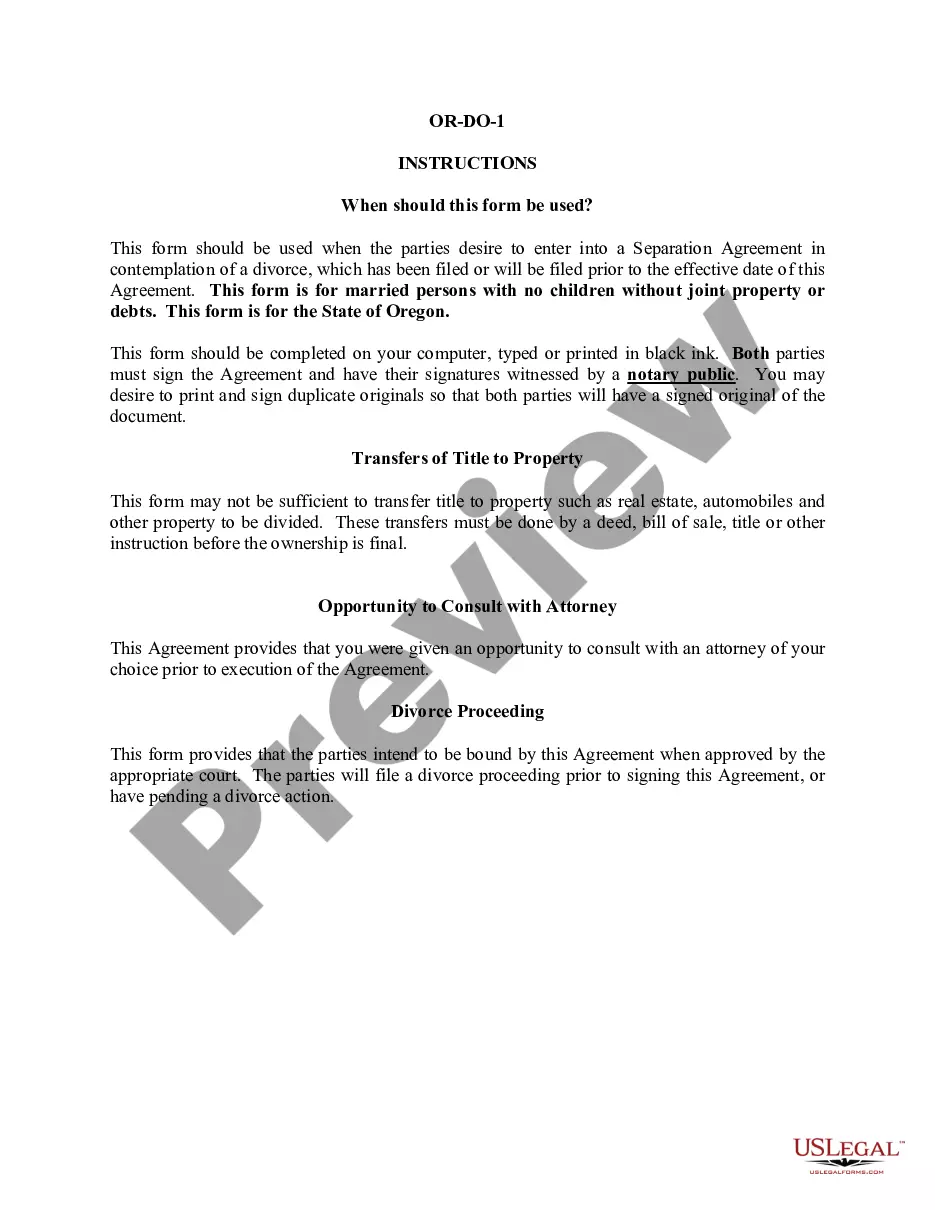
Health Care Directive - Advance Healthcare Directive - Includes Living Will and Health Care Decisions Statutory
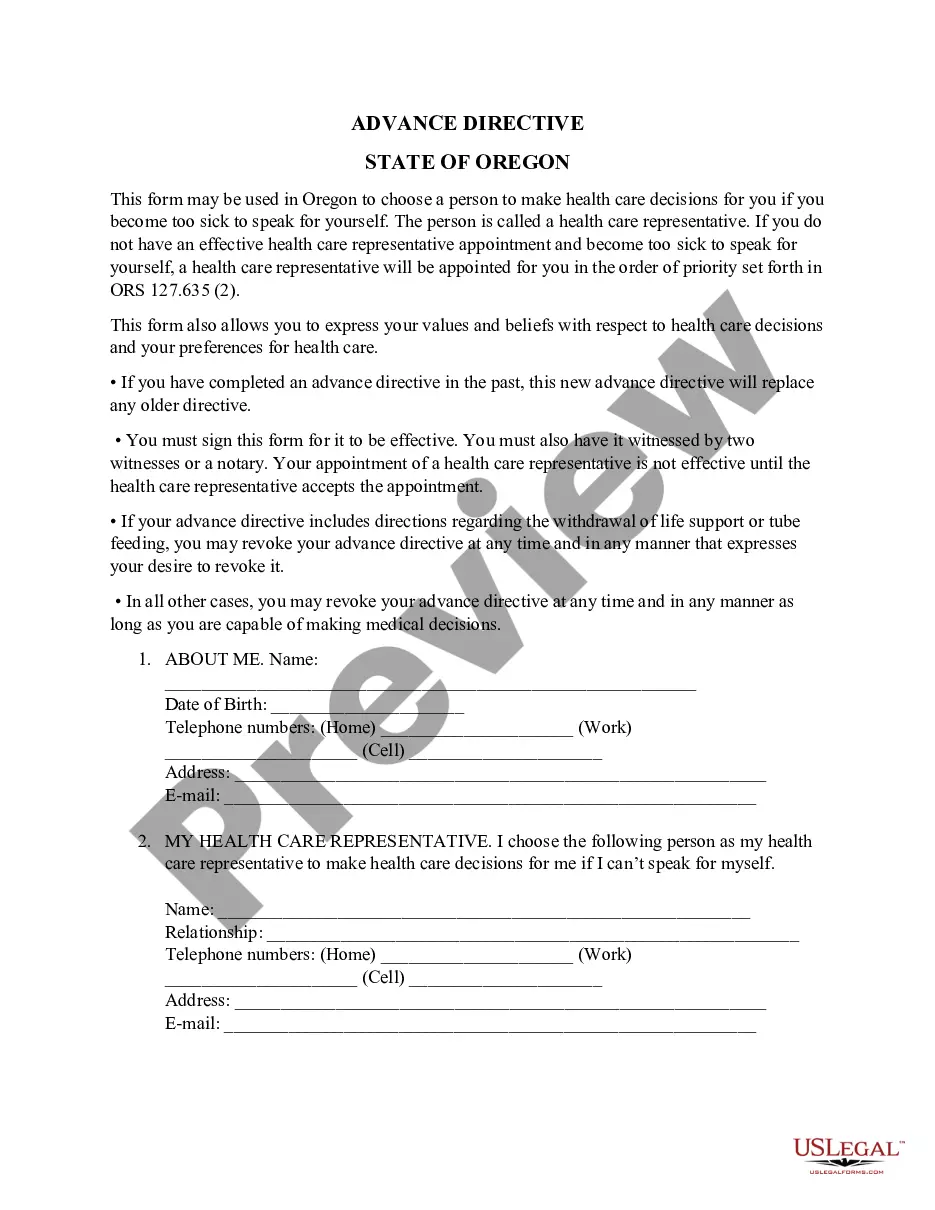
Prepare for future health care decisions by designating a representative and outlining your preferences for medical treatment in case you are unable to communicate.
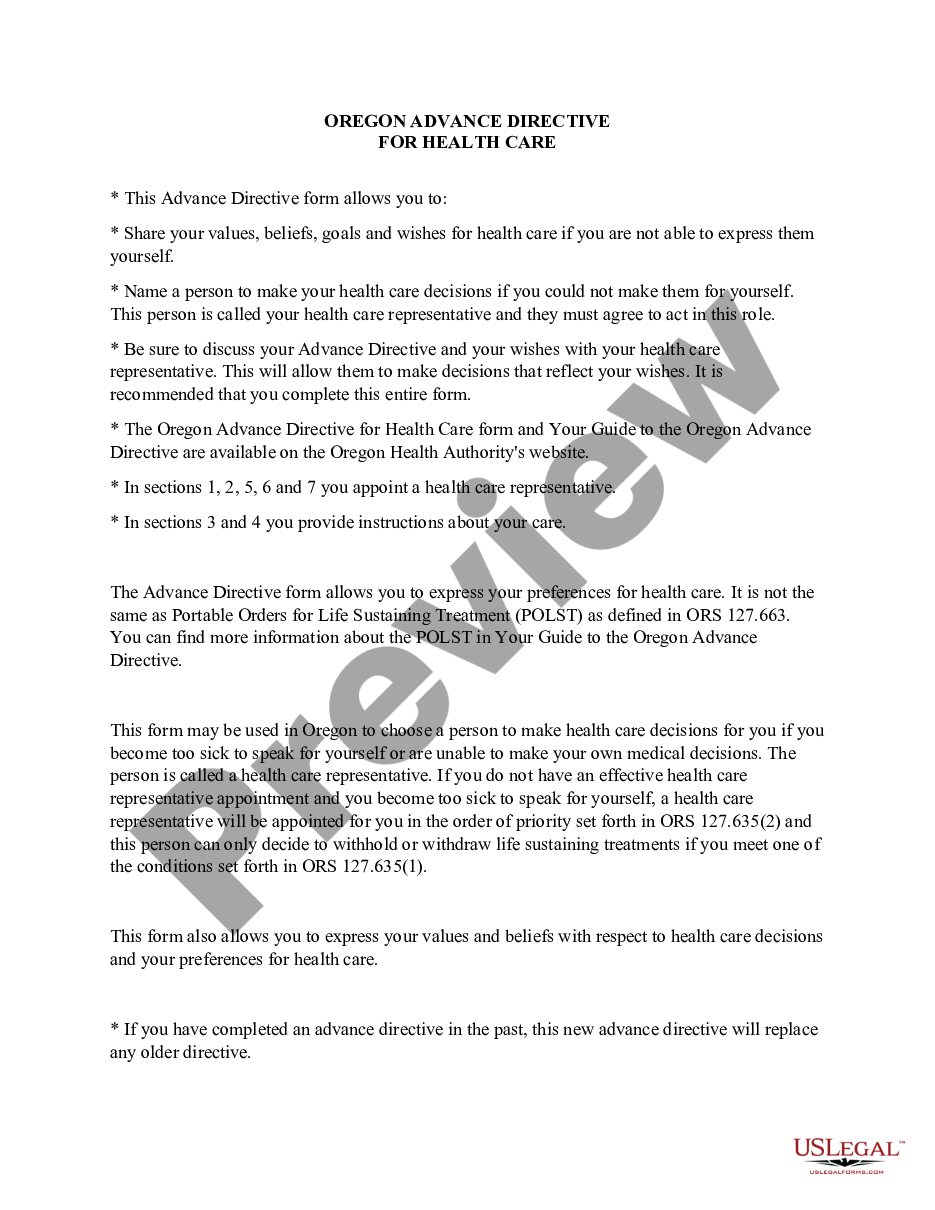
Advance Directive for Health Care
Complete this document to outline your medical preferences at the end of life, ensuring your wishes are respected when you can’t communicate them.
Revised Uniform Anatomical Gift Act Donation
Make a legally binding donation of your organs or tissues after death, ensuring your wishes are honored.
Revocation of Anatomical Gift Donation
Revoking an anatomical gift donation is crucial when your wishes change. This form allows you to formally cancel a previous donation legally.
Revocation of Health Care Directive
Use this to formally revoke a previously issued advance directive regarding your health care preferences.
Revocation of Statutory Equivalent of Living Will
This document allows individuals to withdraw their request for assisted dying, ensuring their wishes are honored even if circumstances change.
Revocation of Statutory POA for Mental Health Care
Revoke your previous mental health treatment declaration anytime you're capable, ensuring your current wishes are respected.
Declaration for Mental Health Treatment
Statutory POA for Mental Health Care
Plan for your mental health treatment decisions in advance, appointing a representative to act on your behalf if you're unable to do so.
Common Oregon Living Will (Healthcare Directive) documents
- Healthcare Directive — outlines personal health care preferences and decisions.
- Advance Directive — specifies medical treatment wishes if incapacitated.
- Health Care Proxy — designates a person to make health decisions on your behalf.
- Medical Treatment Directive — details specific medical interventions you consent to.
- Life-Support Directive — outlines your wishes regarding life-sustaining treatments.
Complete Oregon Living Will (Healthcare Directive) packages
Bundle every form you need for a complete situation — not just one document.

 8 forms
Oregon Life Documents Planning Package, including Will, Power of Attorney and Living Will
Get everything needed for health and financial planning in one package, including vital legal documents for emergencies and future decisions.
- Oregon General Durable Power of Attorney for Property and Finances or Financial Effective Immediately
- Oregon Statutory Power of Attorney for Mental Health Care
- Oregon Health Care Directive - Advance Healthcare directive - includes Living Will and Health Care Decisions Statutory form
- Oregon Advance Directive for Health Care
- Oregon Estate Planning Questionnaire and Worksheets
- Sample Letter for Request for Free Credit Report Allowed by Federal Law
- Personal Planning Information and Document Inventory Worksheets - A Legal Life Document
- Estate Planning Questionnaire
FAQs
Not necessarily; a will can suffice, but a trust offers extra management options.
Without a directive, medical decisions may default to family members or the courts.
Review your directives regularly, especially after major life changes.
Beneficiary designations can bypass your will and directly affect asset distribution.
Yes, you can appoint separate individuals for financial and healthcare decisions.
Key legal points
- Living Wills only apply when you cannot communicate your medical decisions.
- These documents can help reduce family conflict during health crises.
- Many states, including Oregon, recognize the importance of these directives.
- Healthcare providers must follow your outlined wishes unless otherwise specified.
- Documentation may require witnesses or notarization in some states.
How to get started
Begin your journey easily with these steps.
- Find a template or package that fits your situation.
- Review the description, preview, and signing requirements.
- Get full access with a subscription.
- Complete it in the online editor.
- Export or send: download, email, USPS mail, notarize online, or send for e-signature (Premium).
Practical tip
Consider designating a trusted individual as your health care proxy for clear decision-making.