Connecticut Living Will (Healthcare Directive)
Living Will (Healthcare Directive) documents guide healthcare decisions when you're unable to express them. Our attorney-drafted templates are quick and easy to complete.


Living Will & Healthcare Directive Package
PopularSix forms for end-of-life medical planning - healthcare POA, living will directive, organ donation, and a revocation form for each.
Similar documents: key differences
- Living Will vs. Advance Directive — Living Wills focus on medical wishes; Advance Directives may include both medical and financial decisions.
- Healthcare Proxy vs. Power of Attorney for Health Care — Both appoint decision-makers, but Healthcare Proxy specifically handles medical decisions.
- Do Not Resuscitate (DNR) Order vs. Living Will — A DNR specifically addresses CPR; a Living Will covers broader healthcare preferences.
- Advance Medical Directive vs. Advance Healthcare Directive — These terms are often interchangeable, referring to documents detailing medical preferences.
- Medical Consent Directive vs. Healthcare Directive — A Medical Consent Directive focuses on consent for treatments; Healthcare Directive covers overall medical preferences.
Search for more forms
Types of Living wills forms
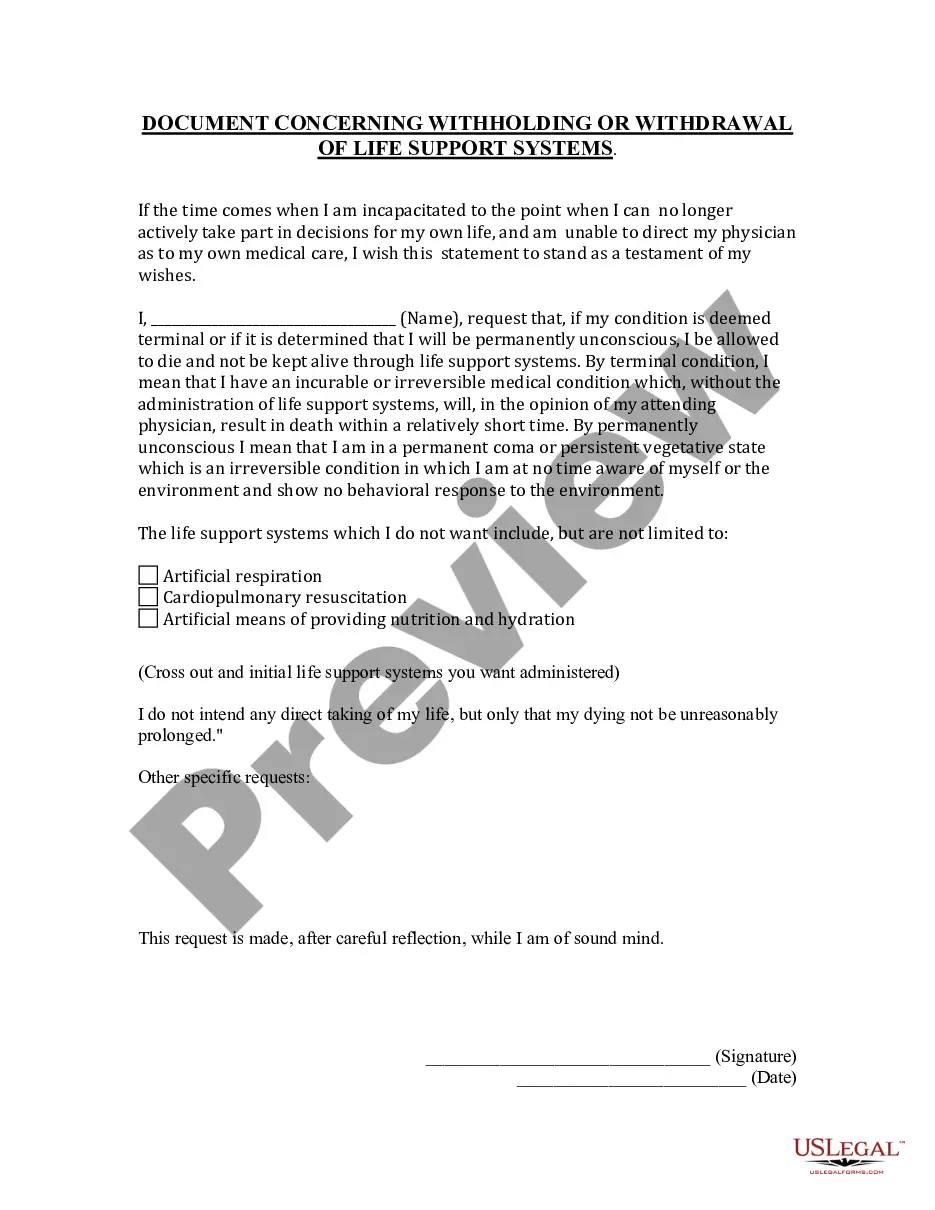
Document Concerning Withholding
Prepare a directive for medical professionals to follow when you can no longer make health care decisions, specifying your wishes regarding life support.
Affidavit That Designation of a Standby Guardian Is in Full Force and Effect
Establishes the validity of a standby guardian's designation during specific circumstances, ensuring continuity of care for dependents.
Designation of Standby Guardian
Designate a trusted individual to care for your minor children in case of unforeseen circumstances.
Statutory Document Concerning the Appointment of Health Care Representative
Designate someone to make health care decisions for you if you're unable to do so, ensuring your preferences are honored.
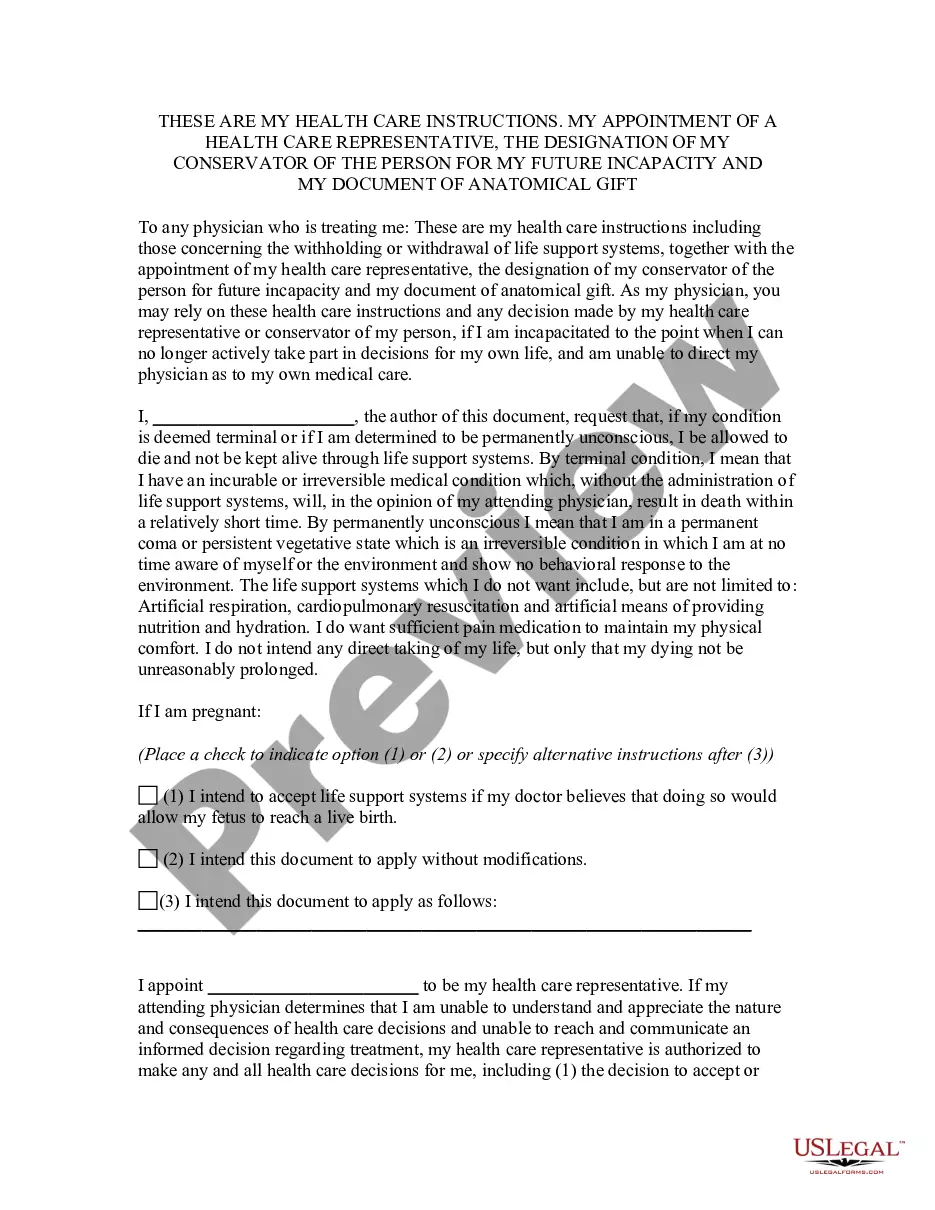
Statutory Durable POA for Health Care - Appointment of Health Care Agent and Health Care Instructions
Safeguard your health care decisions by appointing a representative and providing clear instructions for your medical treatment if you're unable to communicate.
Revised Uniform Anatomical Gift Act Donation
Use this document to legally donate anatomical gifts, ensuring your wishes are respected after your passing.
General Revocation of POA and Health Care Directives
Use this form to officially revoke your health care directives and power of attorney to ensure your wishes are respected.
Revocation of Anatomical Gift Donation
Revoking an anatomical gift preserves your wishes, especially during terminal illness or injury. Learn the steps to communicate your decision effectively.
Revocation of Designation of Standby Guardian
Update your designated standby guardian with this form, ensuring your preferences are recognized if the need arises.
Revocation of General Durable POA
Use this document to formally cancel a previously granted power of attorney, ensuring your legal wishes are clearly communicated.
Revocation of Statutory Health Care Directive
Cancel a previous health care directive at any time, ensuring your current wishes are respected concerning life support decisions.
Common Connecticut Living Will (Healthcare Directive) documents
- Advance Directive — a general document detailing healthcare preferences.
- Healthcare Proxy — designates someone to make medical decisions on your behalf.
- Do Not Resuscitate (DNR) Order — instructs healthcare providers not to perform CPR.
- Durable Power of Attorney for Health Care — grants authority to someone to make healthcare decisions.
- End-of-Life Directive — specifies wishes regarding end-of-life care.
- Medical Wishes Form — outlines specific treatment preferences.
- Life-Support Directive — states your wishes regarding life-support measures.
Complete Connecticut Living Will (Healthcare Directive) packages
Bundle every form you need for a complete situation — not just one document.

 11 forms
Connecticut Life Documents Planning Package, including Will, Power of Attorney and Living Will
Get everything needed for life planning in one package, including multiple essential legal forms to protect your health and financial interests.
- Connecticut General Durable Power of Attorney for Property and Finances or Financial Effective Immediately
- Connecticut Designation of Standby Guardian
- Connecticut Affidavit that designation of a standby guardian is in full force and effect
- Connecticut Statutory General Power of Attorney with Durable Provisions
- Connecticut Affidavit that Power of Attorney is in Full Force and Effect
- Connecticut Statutory Durable Power of Attorney for Health Care - Appointment of Health Care Agent and Health Care Instructions
- Connecticut Document Concerning Withholding or Withdrawal of Life Support Systems
- Connecticut Estate Planning Questionnaire and Worksheets
- Sample Letter for Request for Free Credit Report Allowed by Federal Law
- Personal Planning Information and Document Inventory Worksheets - A Legal Life Document
- Estate Planning Questionnaire
FAQs
Do I need a trust if I have a will?
What happens if I do nothing?
How often should I update my plan?
How do beneficiary designations interact with my plan?
Can different people handle finances and health decisions?
Key legal points
- Many documents must be signed in the presence of witnesses or notarized.
- A Living Will only takes effect when you cannot communicate your wishes.
- These documents help prevent confusion among family members about your healthcare preferences.
- They may be revoked or updated as your wishes change.
- Healthcare providers are generally required to follow your stated preferences.
- Not every state uses the same terminology for these documents.
- It's important to discuss your preferences with loved ones and healthcare providers.
How to get started
Begin your process with these simple steps.
- Find a template that fits your needs.
- Review the template details and requirements.
- Access the document with a subscription.
- Fill it out using the online editor.
- Download or send the document for notarization or e-signature.
Practical tip
Consider discussing who you want to appoint as your healthcare proxy to ensure your preferences are honored.