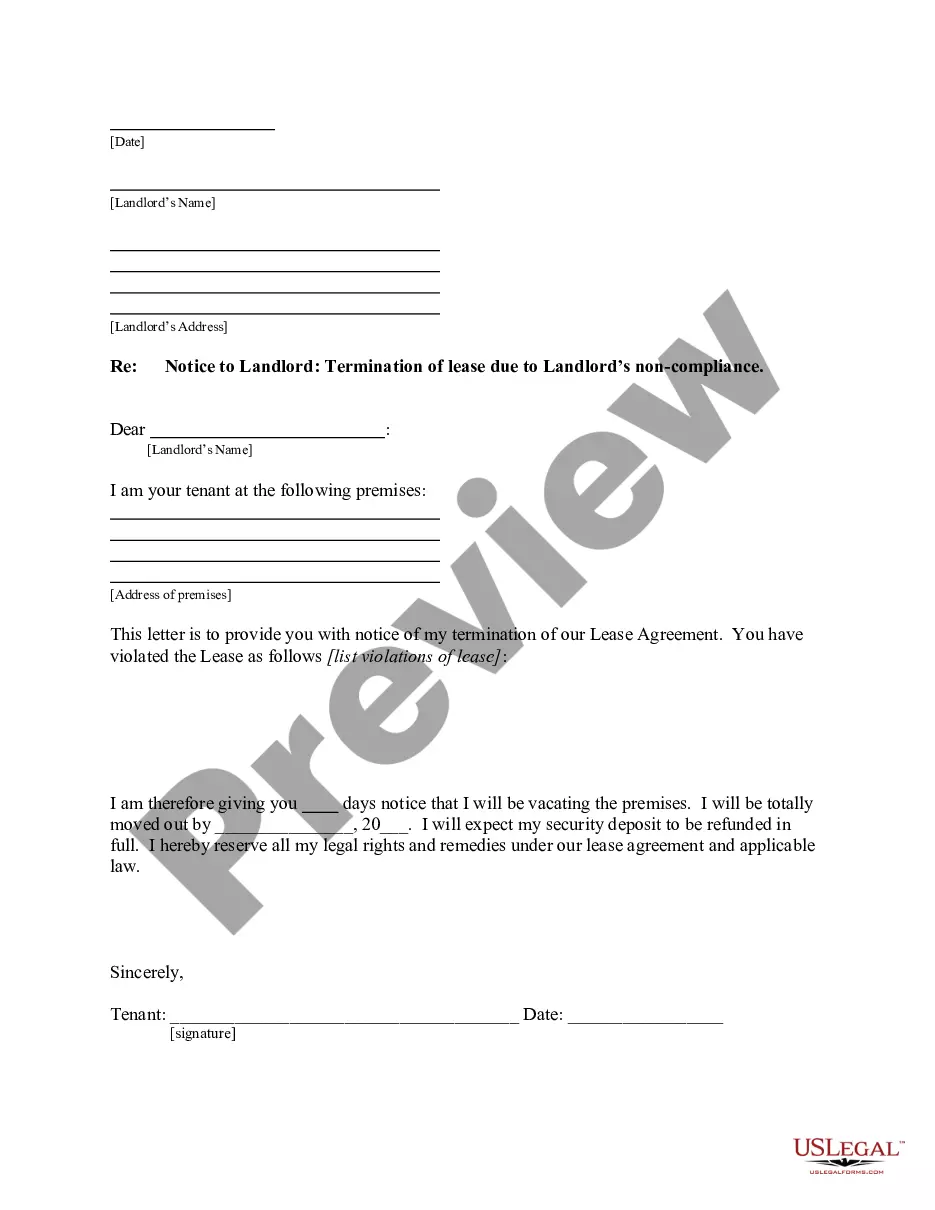
Louisiana Letter from Tenant to Landlord about Landlord's refusal to allow sublease is unreasonable
What this document covers
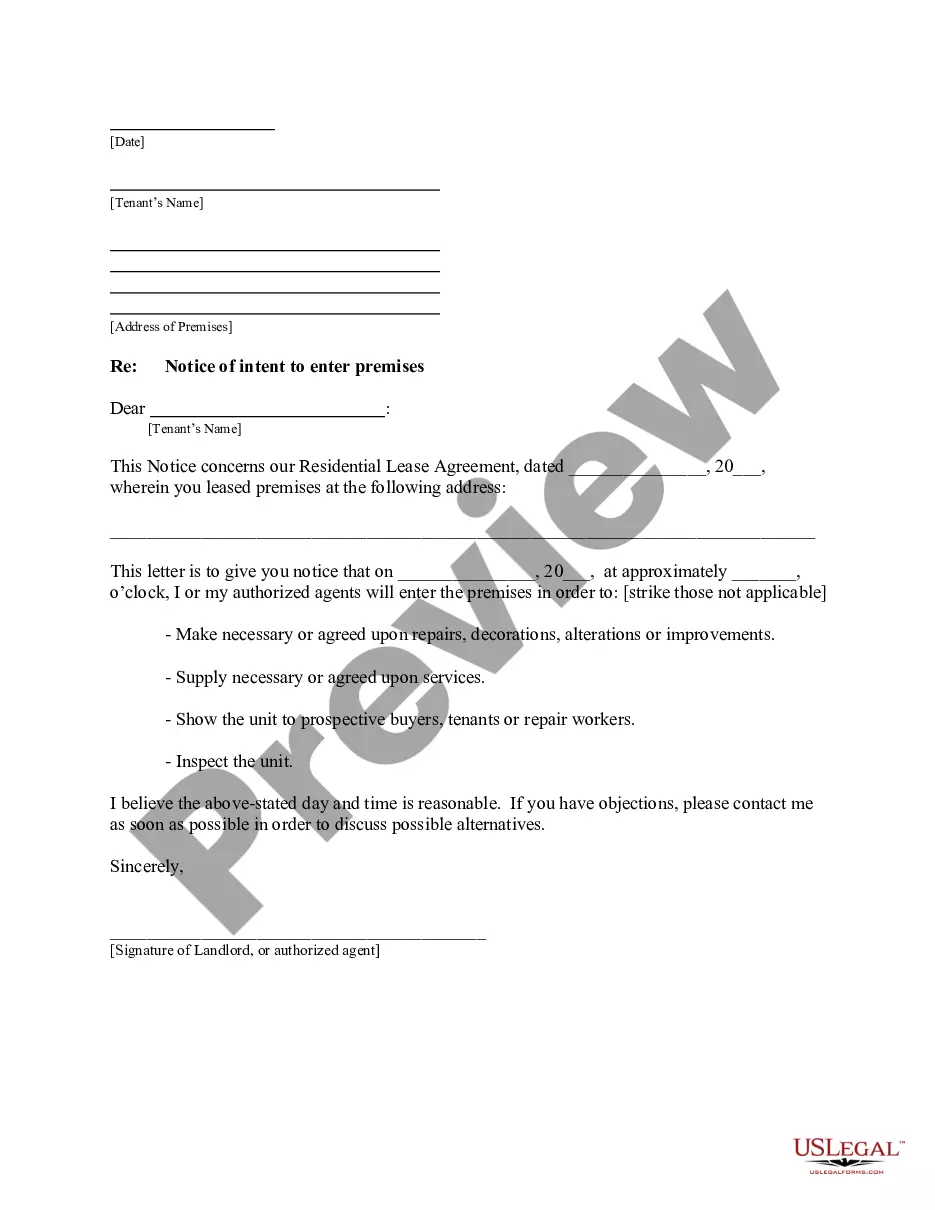
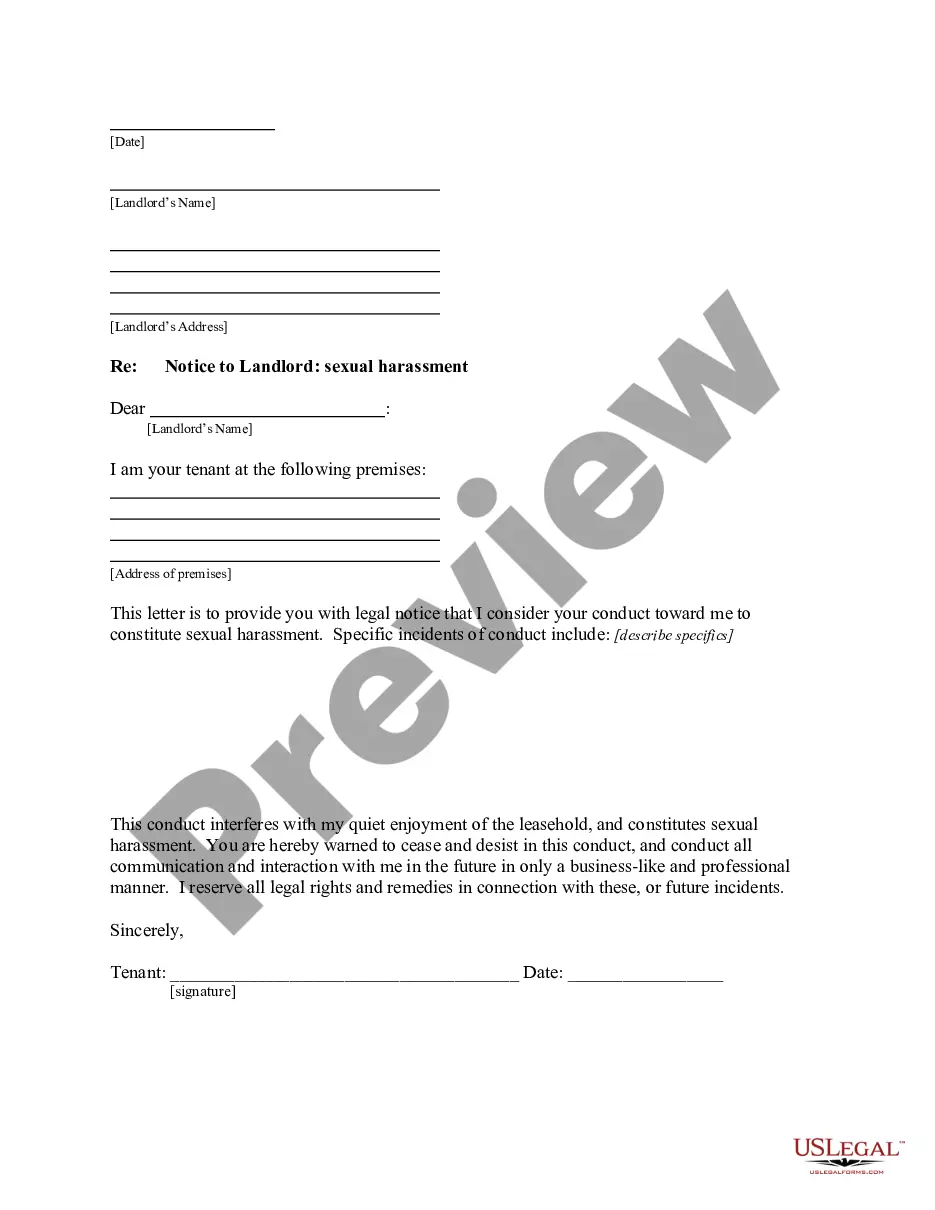
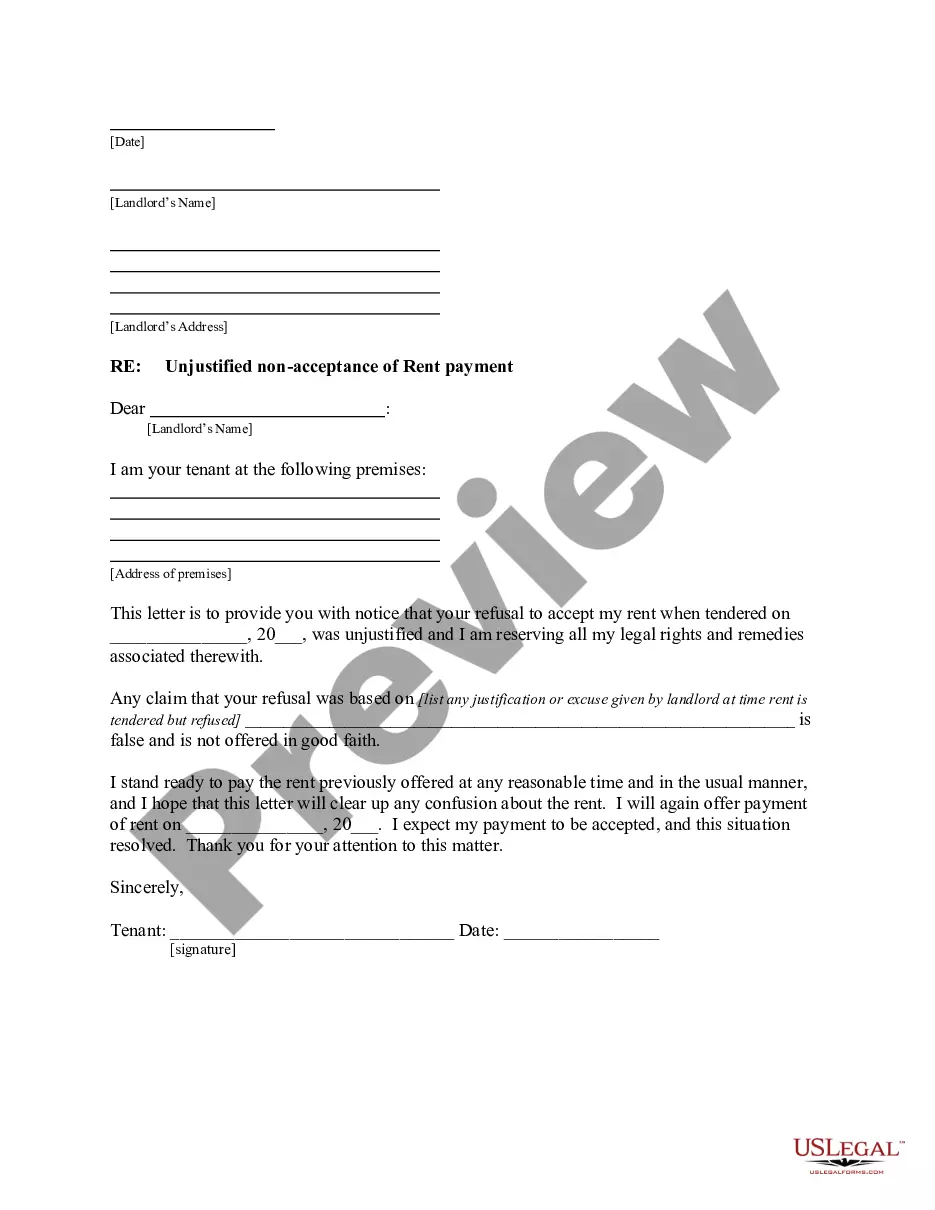
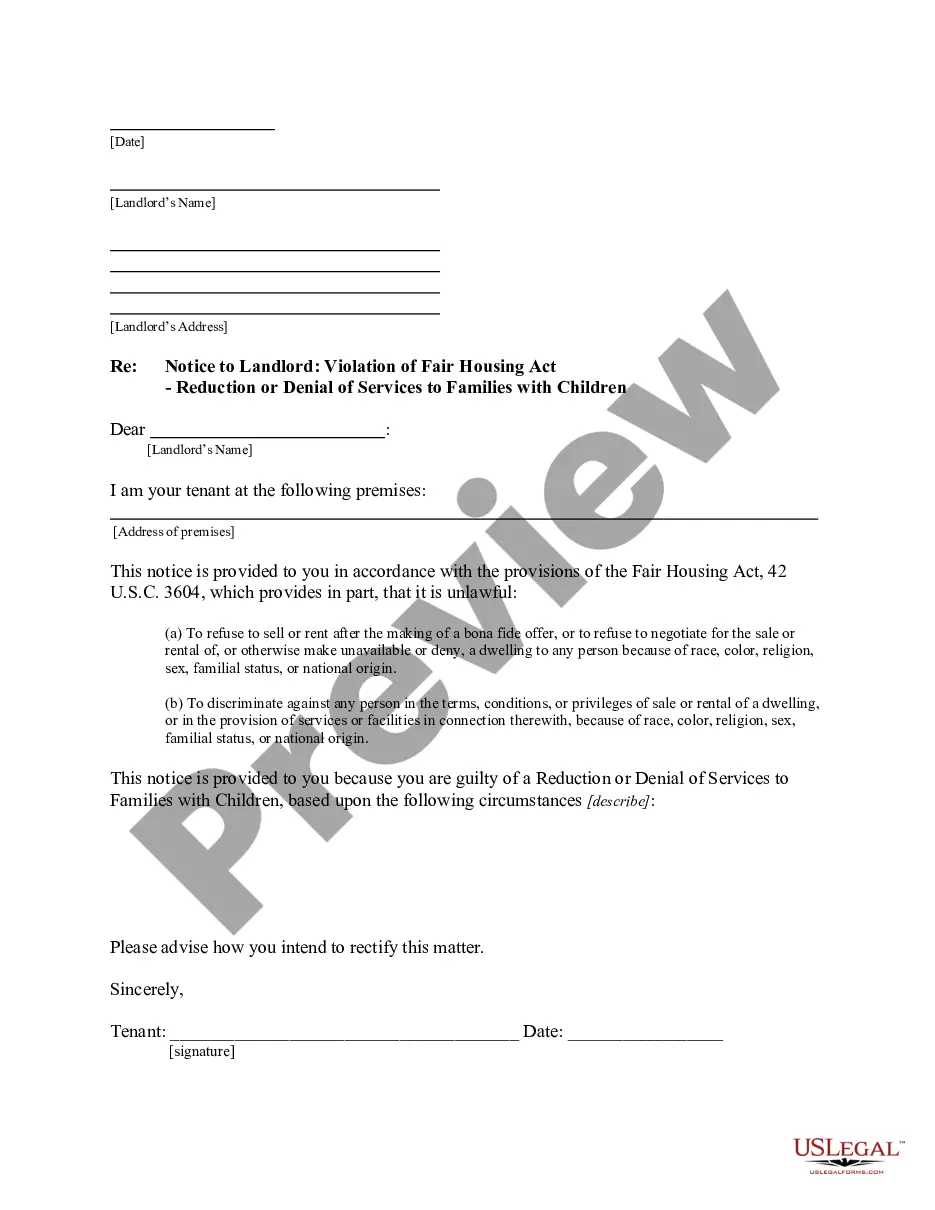
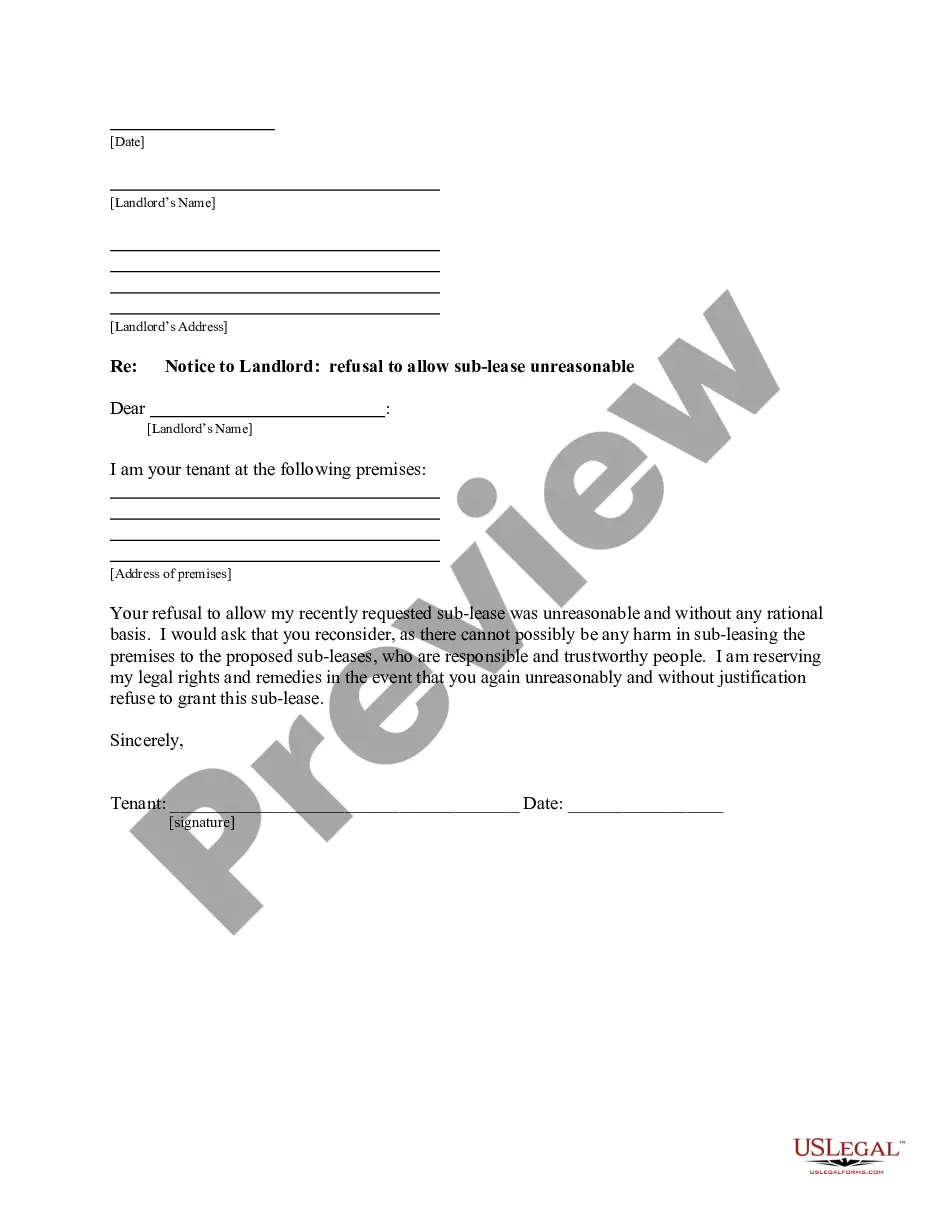
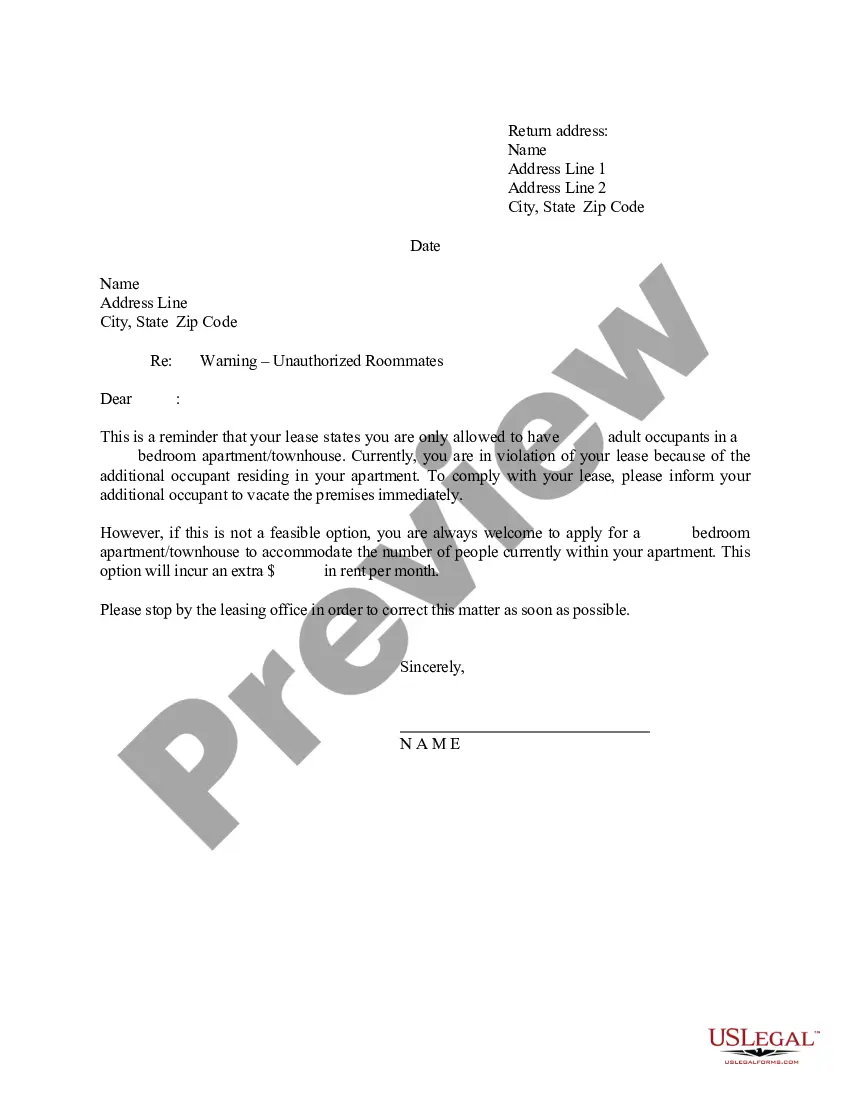
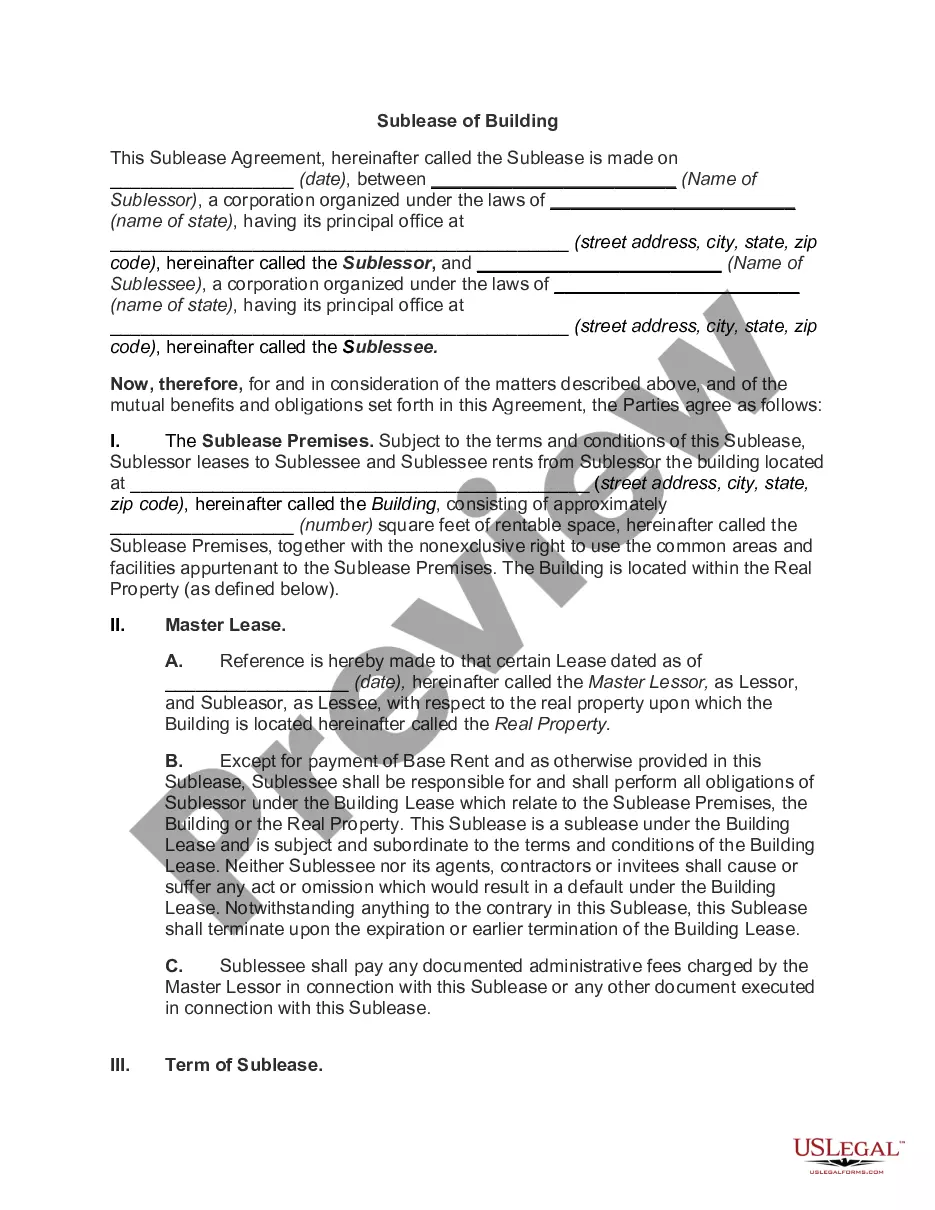
This form is a letter from a tenant to a landlord, addressing the landlord's unreasonable refusal to allow the tenant to sublease their rental property. The document serves to formally notify the landlord that the tenant reserves their legal rights and remedies if the landlord continues to deny the request for subleasing. The letter helps tenants assert their rights within the landlord-tenant relationship and opens the door for potential negotiation or resolution of the sublease dispute. It is essential for ensuring that all parties are aware of their responsibilities and rights as established by the lease agreement and relevant local laws.
Key parts of this document
- Identifying details of the tenant and landlord.
- The specific request to allow the sublease.
- A statement regarding the tenant's legal rights and remedies.
- A date to indicate when the letter is signed.
- A signature line for the tenant to sign.

When this form is needed
This letter should be used when a tenant has received a refusal from their landlord regarding a request to sublease the property. It is appropriate to use this form if the tenant believes that the landlord's refusal is unreasonable and if they wish to formally communicate their intentions to pursue their rights. Additionally, it can be utilized when a tenant wants to document their attempt to resolve the issue amicably before taking further legal action.
Who needs this form
- Tenants seeking to sublease their rental property.
- Individuals who have received a refusal from their landlord regarding a sublease.
- Tenants wishing to protect their legal rights in a subleasing situation.
- Residents in shared rental agreements where subletting is being contested.
Completing this form step by step
- Identify the parties involved: the tenant and the landlord.
- Clearly state the request to allow subleasing and the reasons supporting this request.
- Include a statement reserving legal rights and remedies.
- Sign and date the letter to authenticate it.
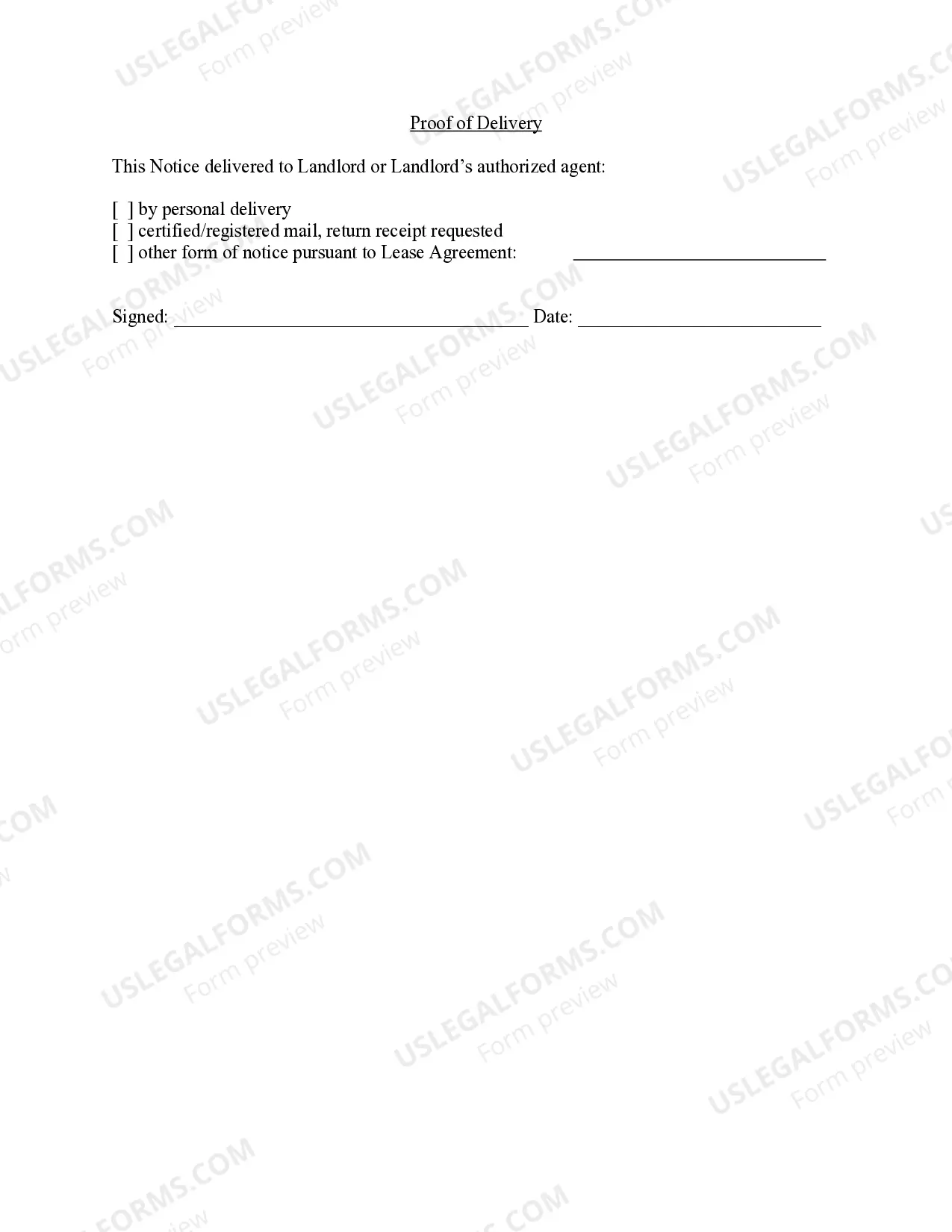
- Deliver the letter to the landlord and keep a record of delivery.
Does this form need to be notarized?
This form usually doesn’t need to be notarized. However, local laws or specific transactions may require it. Our online notarization service, powered by Notarize, lets you complete it remotely through a secure video session, available 24/7.
Get your form ready online
Our built-in tools help you complete, sign, share, and store your documents in one place.
Make edits, fill in missing information, and update formatting in US Legal Forms—just like you would in MS Word.
Download a copy, print it, send it by email, or mail it via USPS—whatever works best for your next step.
Sign and collect signatures with our SignNow integration. Send to multiple recipients, set reminders, and more. Go Premium to unlock E-Sign.
If this form requires notarization, complete it online through a secure video call—no need to meet a notary in person or wait for an appointment.
We protect your documents and personal data by following strict security and privacy standards.

Make edits, fill in missing information, and update formatting in US Legal Forms—just like you would in MS Word.

Download a copy, print it, send it by email, or mail it via USPS—whatever works best for your next step.

Sign and collect signatures with our SignNow integration. Send to multiple recipients, set reminders, and more. Go Premium to unlock E-Sign.

If this form requires notarization, complete it online through a secure video call—no need to meet a notary in person or wait for an appointment.

We protect your documents and personal data by following strict security and privacy standards.
Common mistakes
- Failing to provide clear reasons for the request to sublease.
- Not reserving legal rights explicitly in the letter.
- Sending the letter without retaining a copy for records.
- Overlooking specific state laws that apply to subleasing agreements.
Benefits of using this form online
- Quick access to a professionally drafted document.
- Ability to customize the letter according to personal circumstances.
- Convenient download options for easy printing and delivery.
- Ensures compliance with legal standards and terminology.
Legal use & context
This form is designed to help tenants document their request to sublease and retain their rights in the event of a dispute. Properly using this letter can aid in avoiding misunderstandings and provides a written record that may be referenced in future legal proceedings if necessary.
Looking for another form?


Form popularity
FAQ
Showing the premises to prospective tenants 'reasonable' notice / number of times. The law does not say what 'reasonable' means.If you refuse access, the landlord/agent can apply to the Tribunal for an order that authorises them or any other person to enter the premises.
A subtenant is not a cotenant and does not have a direct relationship with your landlord. As their landlord, you can (and should) require them to pay rent directly to you and evict them if they fail to follow through. This differs from a cotenant, who can be evicted only by your landlord.
While tenants cannot unreasonably deny access to a landlord, landlords must also follow all of the state and local rules regarding access to tenants' apartments. Roughly half of states have rules governing landlord entry into tenants' apartments.
Every tenant has a right to enjoy peaceful possession of the property without any disturbance or encumbrance from anyone including the owner. At no point of time under your tenancy can your landlord ask you to evict or leave the premises without assigning a valid reason.
If a court finds you guilty of the first offence of unlawful subletting, you can be fined in the magistrates' court.At the magistrates' court, you can get up to six months in prison or a fine, or both. At the Crown Court the maximum penalty is imprisonment for two years or a fine, or both.
If the tenant refuses, you are permitted to send them a notice to agree or quit the property. The tenant refusing you access constitutes a breach in the lease agreement, so they could be evicted if they continue to deny access.
The landlord cannot unreasonably refuse to give consent. Usually, the only reason the landlord can refuse consent is if the sub-tenancy would result in overcrowding of the premises or a breach of the tenancy agreement with the head-tenant.
If a tenant is subletting without consent, it's likely they will have broken terms in their tenancy agreement. This breach of contract means that the landlord can take action to evict them from their home. Possession proceedings can be started quickly, but it's important to follow the correct legal process.