Louisiana Warranty Deed from Husband to Himself and Wife
What is this form?
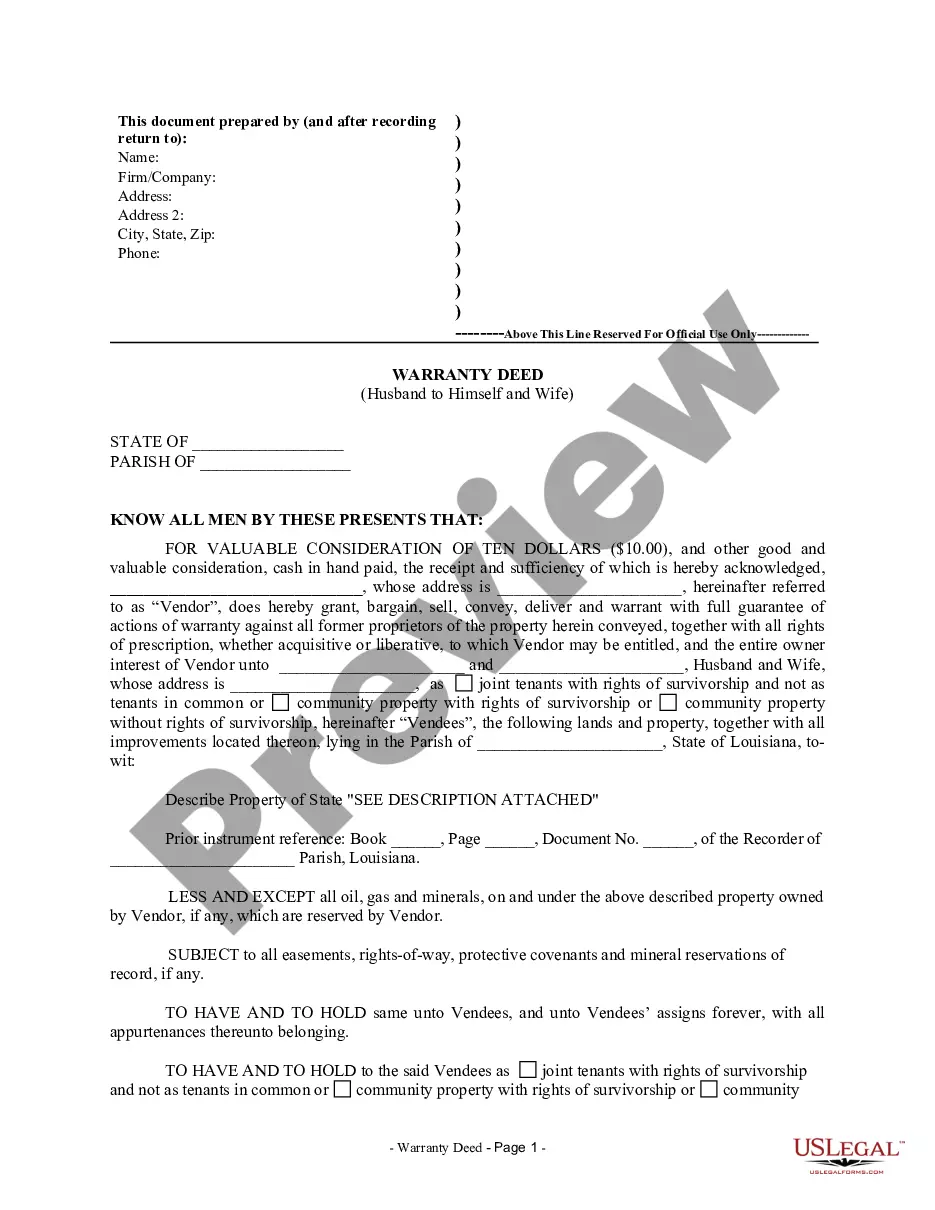
The Warranty Deed from Husband to Himself and Wife is a legal document that facilitates the transfer of property ownership from a husband to himself and his wife. This type of deed establishes joint ownership rights along with rights of survivorship, meaning that if one spouse passes away, the surviving spouse automatically inherits the property. This form distinctly differs from other types of deeds, such as quitclaim deeds, as it provides a warranty against claims from previous owners, enhancing the security of the property title.
Key parts of this document
- Identifies the grantor (husband) and grantees (husband and wife).
- Details the consideration amount ($10.00) and acknowledges receipt.
- Describes the property being transferred, including any exceptions (oil, gas, and minerals).
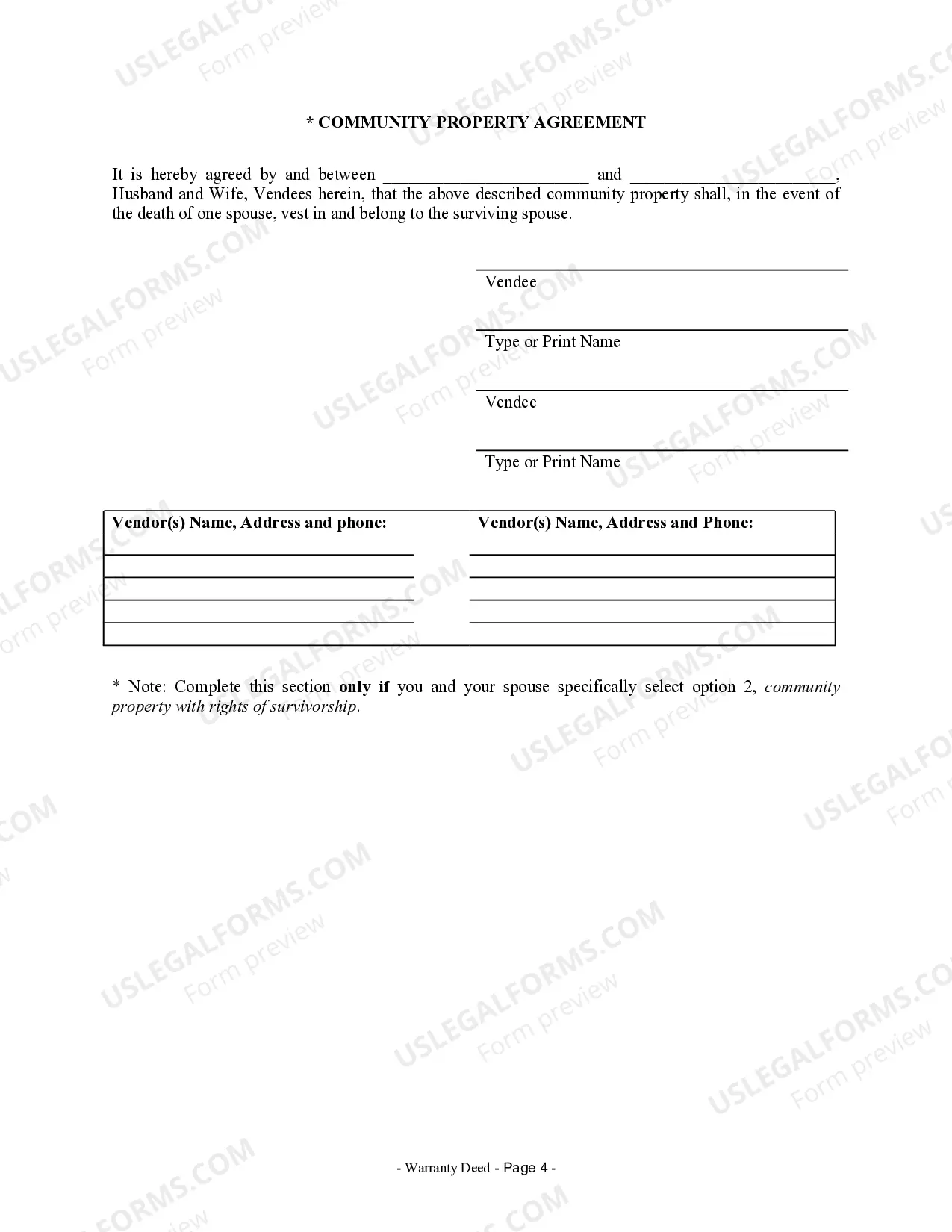
- Specifies the type of ownership (joint tenants with rights of survivorship).
- Includes covenants for lawful ownership and freedom from encumbrances.
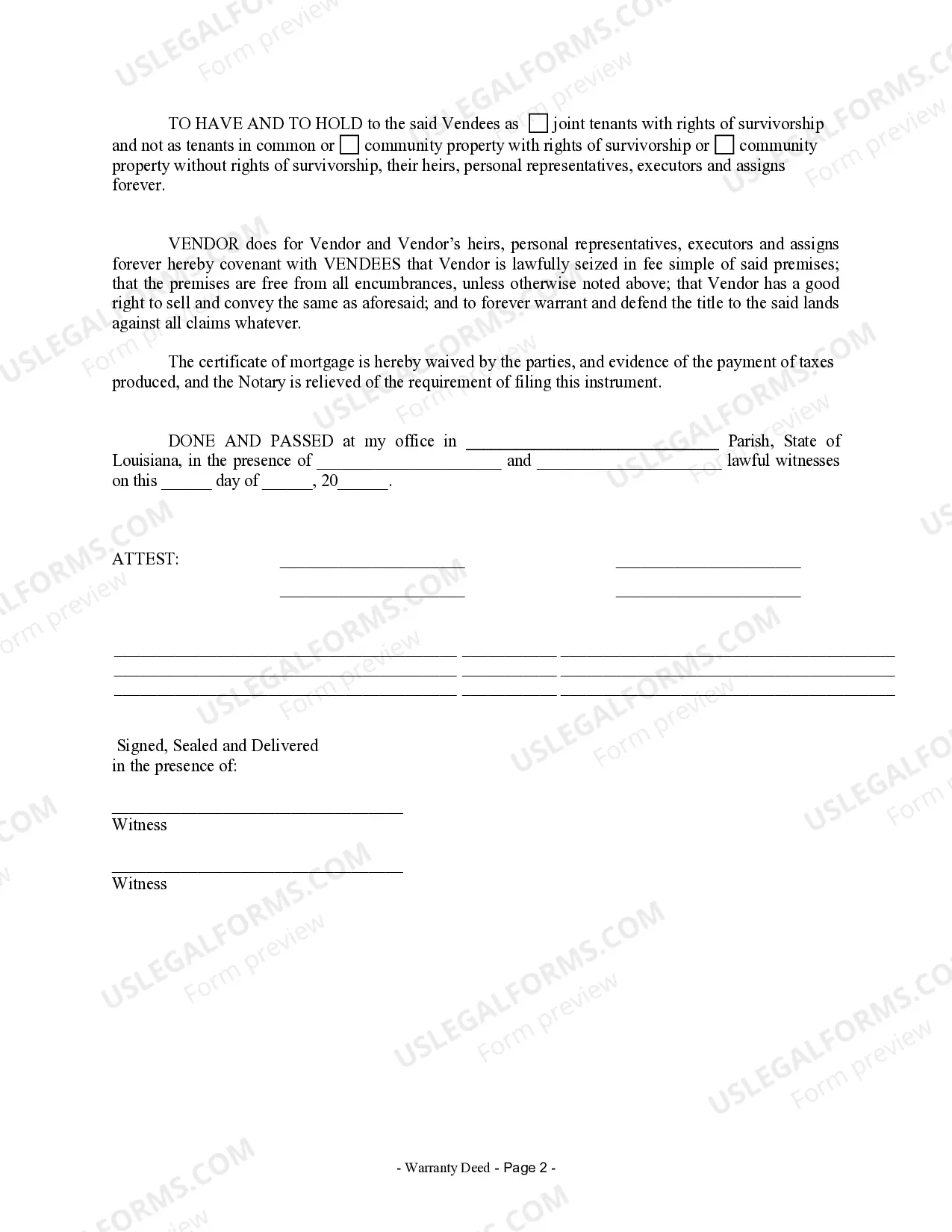
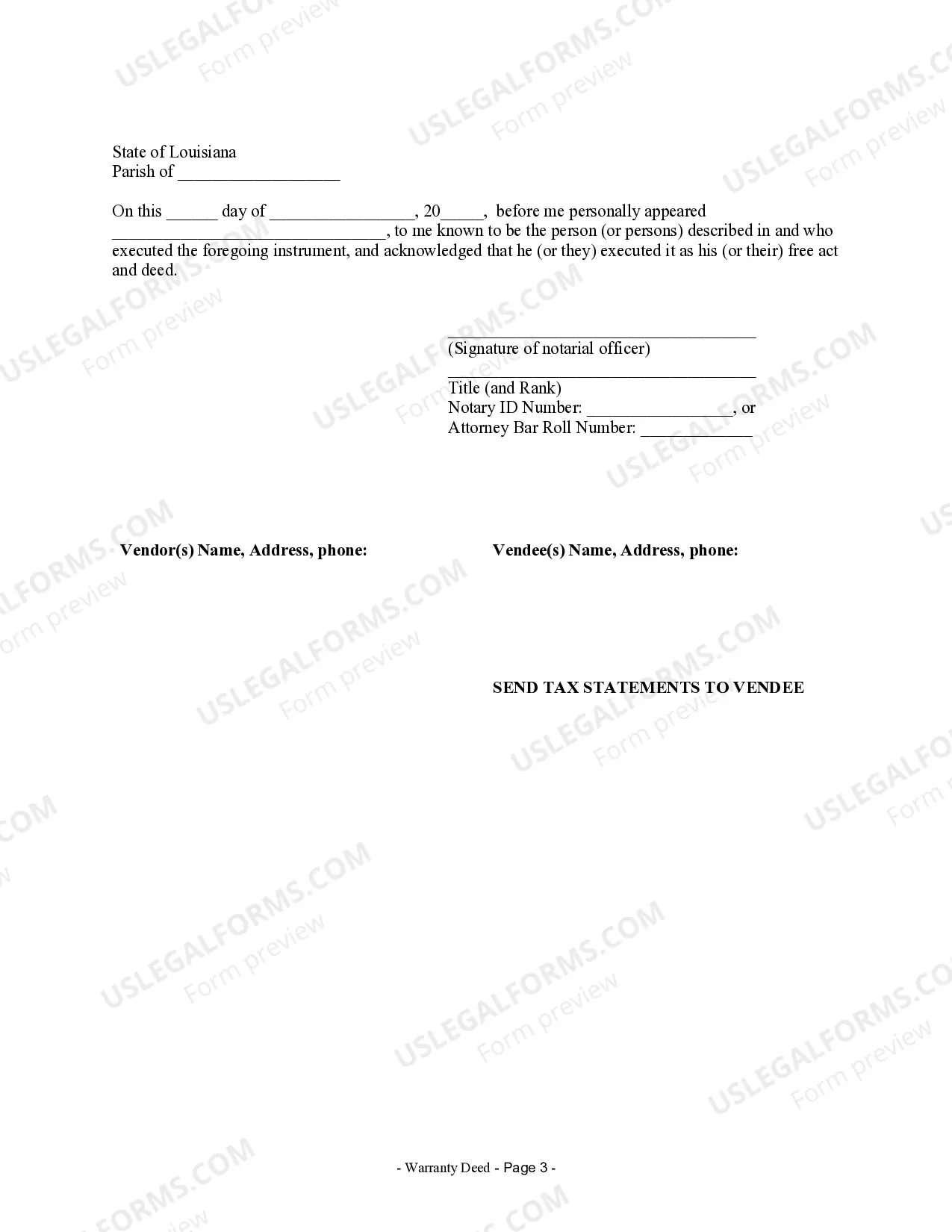
- Provides spaces for signatures, witnesses, and notary acknowledgment.



When to use this form
This form is used when a husband wishes to legally transfer property to himself and his wife, establishing joint tenancy. It is particularly useful in scenarios such as marriage, property gifting, or estate planning where both partners want to ensure that the surviving spouse retains full ownership upon the death of the other spouse.
Who this form is for
This form is suitable for the following individuals:
- Married couples looking to transfer property ownership between themselves.
- Homeowners who want to simplify estate planning by ensuring survivorship rights.
- Individuals intending to document the irrevocable rights of property ownership for both spouses.
Steps to complete this form
- Identify the parties involved: the grantor (husband) and the grantees (husband and wife).
- Specify the property being transferred with a detailed legal description.
- Enter the consideration amount (typically $10.00) and acknowledge receipt.
- Include necessary signatures from the grantor and any witnesses.
- Have the document notarized to ensure legal validity.
Does this form need to be notarized?
This form must be notarized to be legally valid. US Legal Forms provides secure online notarization powered by Notarize, allowing you to complete the process through a verified video call.
Get your form ready online
Our built-in tools help you complete, sign, share, and store your documents in one place.
Make edits, fill in missing information, and update formatting in US Legal Forms—just like you would in MS Word.
Download a copy, print it, send it by email, or mail it via USPS—whatever works best for your next step.
Sign and collect signatures with our SignNow integration. Send to multiple recipients, set reminders, and more. Go Premium to unlock E-Sign.
If this form requires notarization, complete it online through a secure video call—no need to meet a notary in person or wait for an appointment.
We protect your documents and personal data by following strict security and privacy standards.

Make edits, fill in missing information, and update formatting in US Legal Forms—just like you would in MS Word.

Download a copy, print it, send it by email, or mail it via USPS—whatever works best for your next step.

Sign and collect signatures with our SignNow integration. Send to multiple recipients, set reminders, and more. Go Premium to unlock E-Sign.

If this form requires notarization, complete it online through a secure video call—no need to meet a notary in person or wait for an appointment.

We protect your documents and personal data by following strict security and privacy standards.
Typical mistakes to avoid
- Failing to provide a complete property description.
- Not having the document notarized, if required.
- Overlooking the need for witnesses during signing.
- Inaccurate information about the grantor or grantees' names.
Why complete this form online
- Convenience of downloading and printing the form at any time.
- Editable sections to accommodate specific property details easily.
- Reliability of attorney-drafted templates that comply with state laws.
Legal use & context
- This form is legally binding upon execution and notarization.
- It allows for the establishment of ownership rights that enhance property transfer upon death.
- Warranties included protect against claims from previous owners.
Main things to remember
- The Warranty Deed facilitates property transfer between a husband and wife.
- It establishes joint tenancy with rights of survivorship.
- Proper completion and notarization are crucial for legal validity.
- This form is specific for use in Louisiana and should comply with local laws.
Looking for another form?







Form popularity
FAQ
Adding someone to your house deed requires the filing of a legal form known as a quitclaim deed. When executed and notarized, the quitclaim deed legally overrides the current deed to your home. By filing the quitclaim deed, you can add someone to the title of your home, in effect transferring a share of ownership.
If you've recently married and already own a home or other real estate, you may want to add your new spouse to the deed for your property so the two of you own it jointly. To add a spouse to a deed, all you have to do is literally fill out, sign and record a new deed in your county recorder's office.
A property deed is a legal document that transfers the ownership of real estate from a seller to a buyer. For a deed to be legal it must state the name of the buyer and the seller, describe the property that is being transferred, and include the signature of the party that is transferring the property.
A deed is an official written document declaring a person's legal ownership of a property, while a title refers to the concept of ownership rights.
A person's name can be on the deed but not the mortgage. In such circumstances, the person is an owner of the property but is not financially liable for mortgage payments.
When you own a home, you own both the deed and title for that property. In real estate, title means you have ownership and a right to use the property.The deed is the physical legal document that transfers ownership. It shows who you bought your house from, and when you sell it, it shows who you sold it to.
What Is the Difference Between a Warranty Deed & a Survivorship Deed?A warranty deed is the most comprehensive and provides the most guarantees. Survivorship isn't so much a deed as a title. It's a way to co-own property where, upon the death of one owner, ownership automatically passes to the survivor.
A warranty deed guarantees that: The grantor is the rightful owner of the property and has the legal right to transfer the title.The title would withstand third-party claims to ownership of the property. The grantor will do anything to ensure the grantee's title to the property.
The purpose of a deed is to transfer a title, a legal document proving ownership of a property or asset, to another person. For the document to be binding in a court of law, it must be filed in the public record by a local government official tasked with maintaining documents.