Kentucky Last Will and Testament for a Widow or Widower with Adult Children
Understanding this form
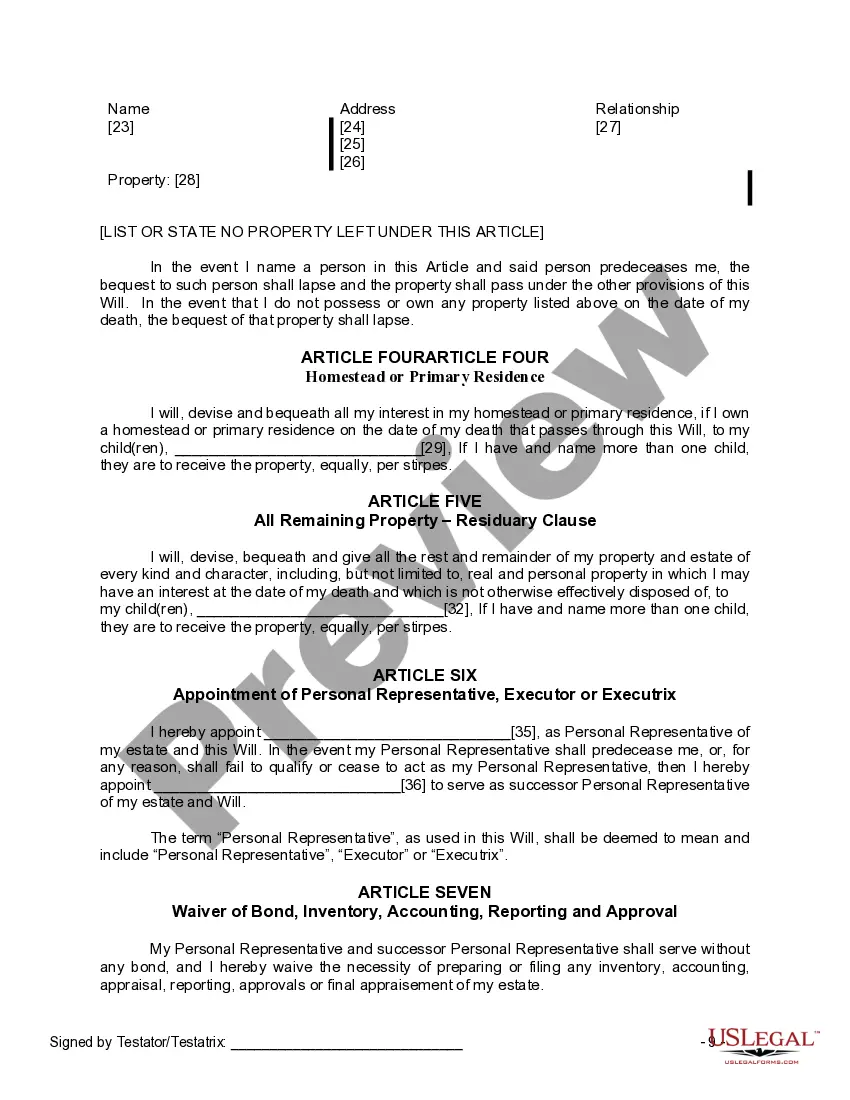
The Last Will and Testament for a Widow or Widower with Adult Children is a legal document that outlines how your assets should be distributed upon your death, specifically designed for individuals who are widowed and have adult children. This form allows you to appoint a personal representative to manage your estate and designate beneficiaries to receive your property. It differs from other types of wills primarily in its focus on providing for adult children and addressing the unique circumstances faced by individuals who have lost a spouse.
What’s included in this form
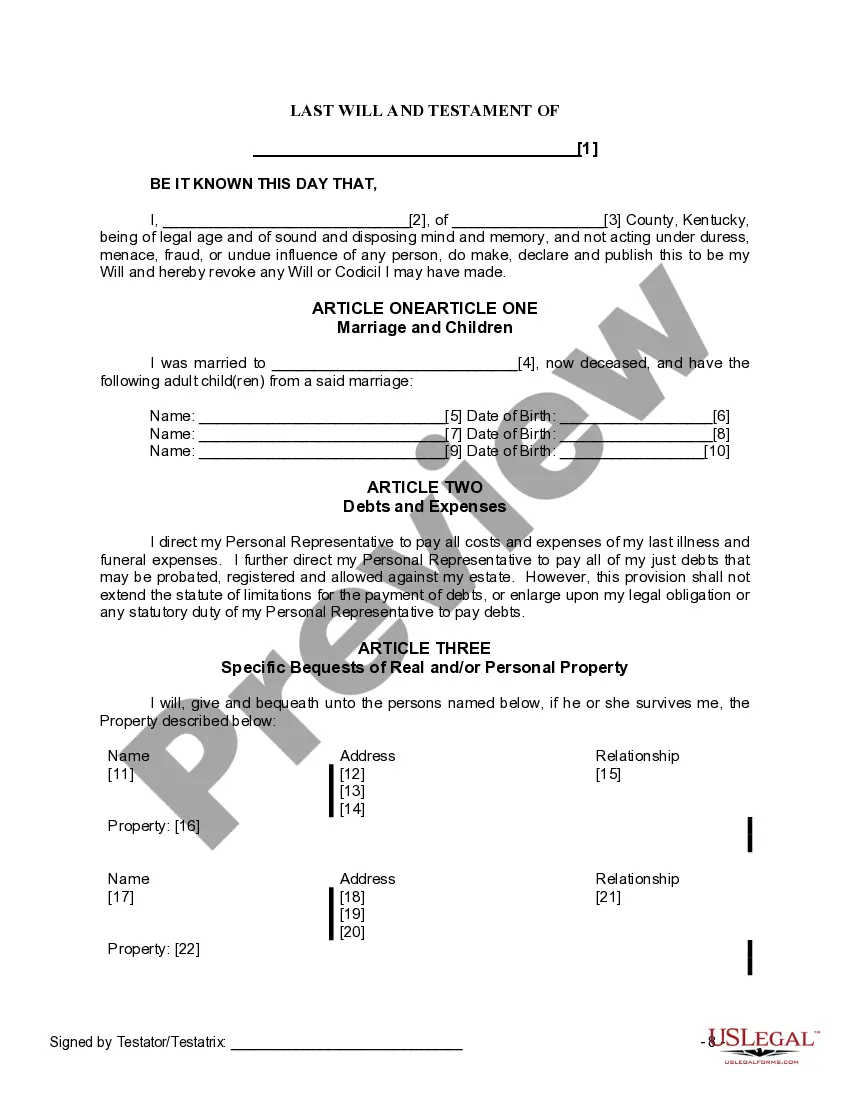
- Full name and details of the testator (yourself).
- Information about the deceased spouse.
- Designation of adult children, including names and birth dates.
- Specific bequests of property to designated beneficiaries.
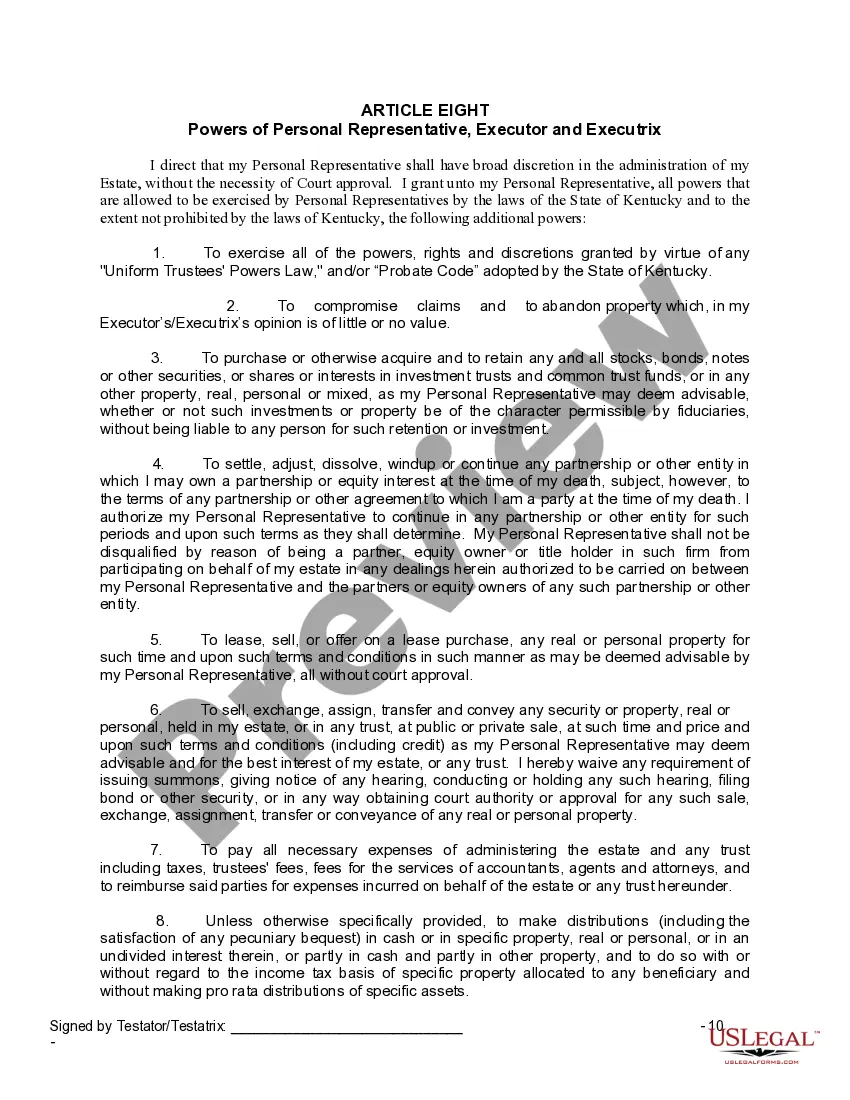
- Appointment of a personal representative to manage the estate.
- Provisions for the distribution of remaining property.





When this form is needed
This form is ideal for use when a widow or widower needs to establish a clear and legally binding directive for the distribution of their assets after death. It is particularly useful in situations where you have adult children from a previous marriage or other relationships and want to ensure that your wishes regarding property distribution are honored.
Who can use this document
- Widows or widowers who are at least 18 years old.
- Individuals with adult children looking to plan their estate.
- Persons who have experienced the death of a spouse and wish to designate new beneficiaries.
How to prepare this document
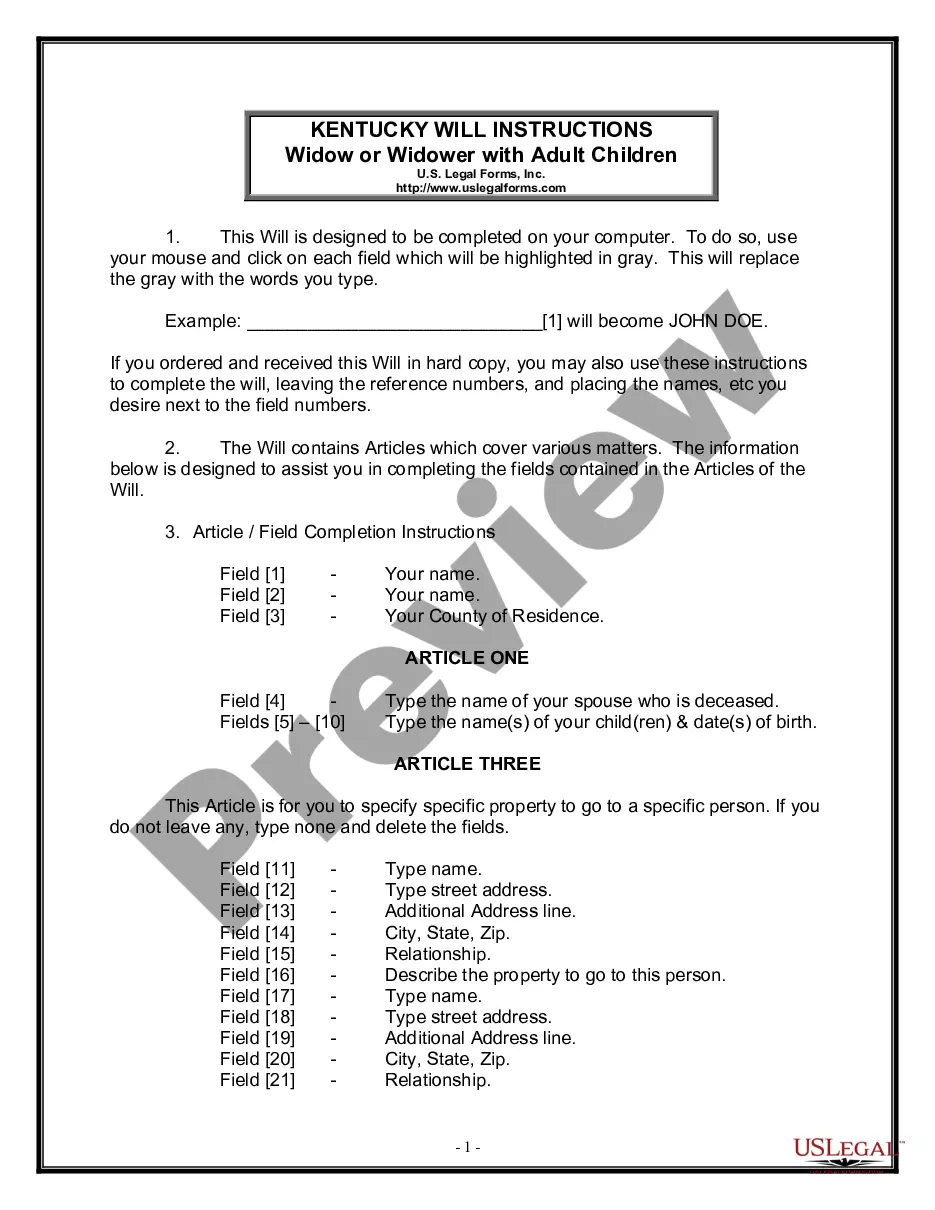
- Begin by entering your full name and county of residence.
- Specify the name of your deceased spouse.
- List your adult children along with their dates of birth.
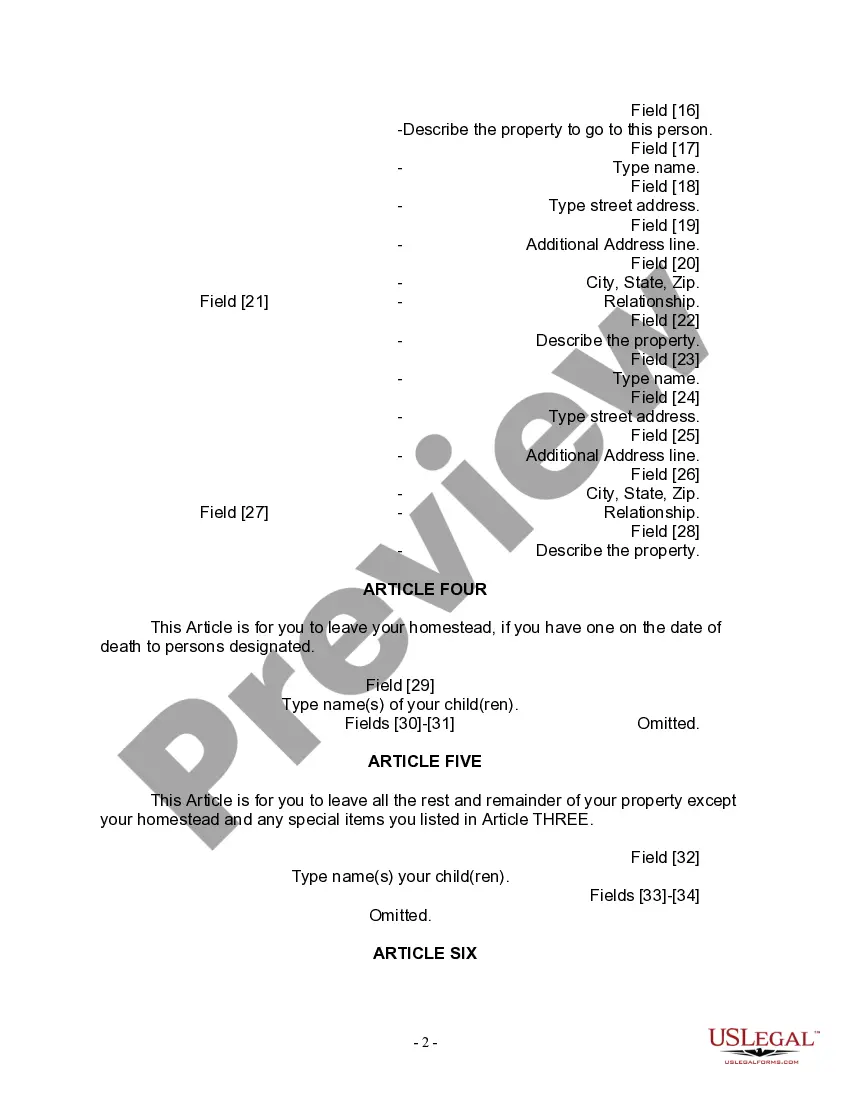
- Designate any specific property and the beneficiaries for that property.
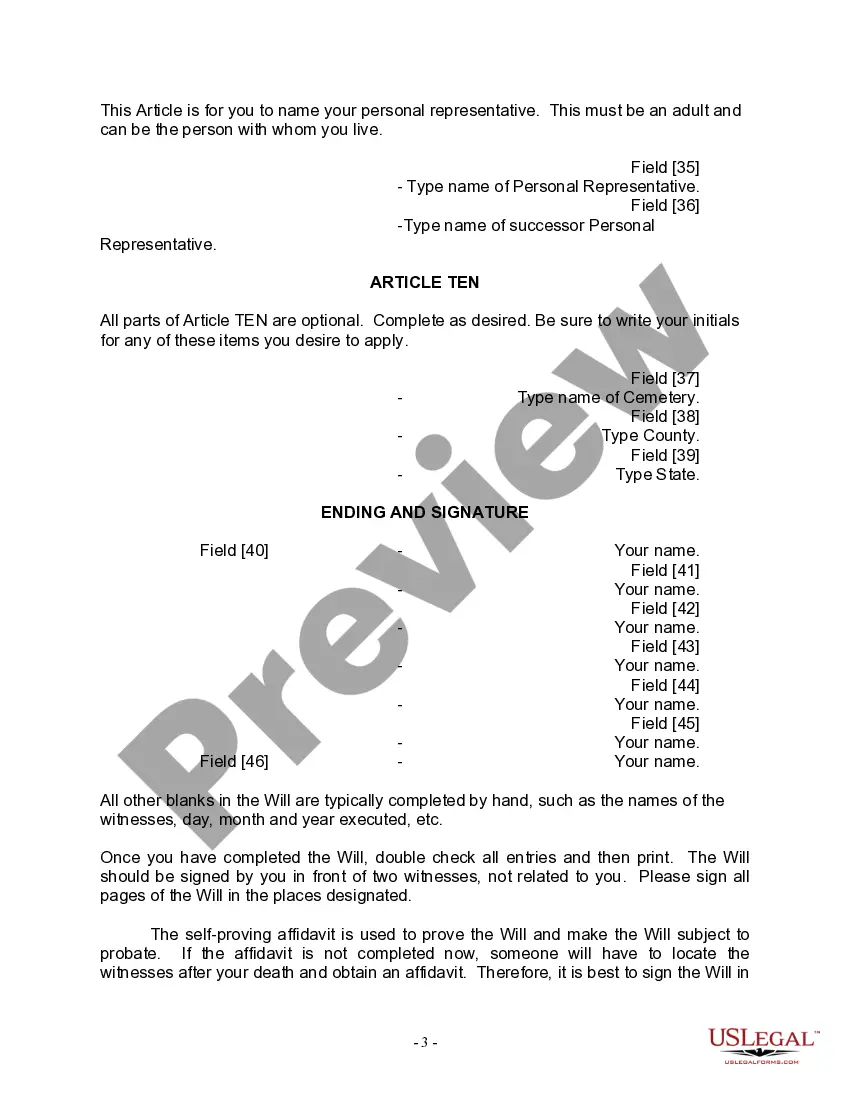
- Choose your personal representative and a successor representative.
- Ensure to sign the form in front of two witnesses and, if applicable, a notary public.
Does this document require notarization?
Yes, this form must be notarized to be legally valid. Notarization helps ensure that the will is authenticated and can facilitate a smoother probate process. US Legal Forms provides integrated online notarization services for your convenience.
Get your form ready online
Our built-in tools help you complete, sign, share, and store your documents in one place.
Make edits, fill in missing information, and update formatting in US Legal Forms—just like you would in MS Word.
Download a copy, print it, send it by email, or mail it via USPS—whatever works best for your next step.
Sign and collect signatures with our SignNow integration. Send to multiple recipients, set reminders, and more. Go Premium to unlock E-Sign.
If this form requires notarization, complete it online through a secure video call—no need to meet a notary in person or wait for an appointment.
We protect your documents and personal data by following strict security and privacy standards.

Make edits, fill in missing information, and update formatting in US Legal Forms—just like you would in MS Word.

Download a copy, print it, send it by email, or mail it via USPS—whatever works best for your next step.

Sign and collect signatures with our SignNow integration. Send to multiple recipients, set reminders, and more. Go Premium to unlock E-Sign.

If this form requires notarization, complete it online through a secure video call—no need to meet a notary in person or wait for an appointment.

We protect your documents and personal data by following strict security and privacy standards.
Avoid these common issues
- Failing to have the will signed by the required number of witnesses.
- Not clearly specifying beneficiaries or property items.
- Inadequately modifying any previous wills, leading to potential conflicts.
- Neglecting to store the will in a safe location accessible to the executor.
Benefits of using this form online
- Convenience of completing the form at your own pace.
- Ability to easily edit and customize the document as needed.
- Access to legal expertise in the creation of your Last Will and Testament.
What to keep in mind
- This form allows widows or widowers with adult children to clearly outline their estate distribution wishes.
- Filling out the form accurately and completely is crucial to ensure its validity.
- Legal requirements such as witness signatures and possible notarization should be carefully followed.
Looking for another form?



Form popularity
FAQ
California is a community property state, which means that following the death of a spouse, the surviving spouse will have entitlement to one-half of the community property (i.e., property that was acquired over the course of the marriage, regardless of which spouse acquired it).
In general, a widow or widower age 60 or older (age 50 or older if disabled) is eligible provided you were married at least nine months. However, there's no age limit if you're caring for dependent children under age 16.
If your spouse or civil partner passed away on or after 6 April 2017 you may be able to claim the bereavement support payment if you're under State Pension age. To qualify for this benefit your partner must have made at least 25 weeks' worth of National Insurance contributions, or suffered a job-related death.
Many people ask can I collect my deceased spouse's social security and my own at the same time? In fact, you cannot simply add together both a survivor benefit and your own retirement benefit. Instead, Social Security will pay the higher of the two amounts.
For Your Widow Or Widower Widows and widowers can receive: Reduced benefits as early as age 60 or full benefits at full retirement age or older. If widows or widowers qualify for retirement benefits on their own record, they can switch to their own retirement benefit as early as age 62.
These are examples of the benefits that survivors may receive: Widow or widower, full retirement age or older 100 percent of the deceased worker's benefit amount. Widow or widower, age 60 full retirement age 71½ to 99 percent of the deceased worker's basic amount.
What is the Widow's Pension 2020? The rates for bereavement allowance have changed this year. If you were 45 when your spouse died you will receive £35.97 a week. The rate goes up depending on how old you were when your partner died until the age of 55.
These are examples of monthly benefit payments: Widow or widower, full retirement age or older100 percent of your benefit amount. Widow or widower, age 60 to full retirement age71½ to 99 percent of your basic amount. Disabled widow or widower, age 50 through 5971A½ percent.
A surviving spouse can collect 100 percent of the late spouse's benefit if the survivor has reached full retirement age, but the amount will be lower if the deceased spouse claimed benefits before he or she reached full retirement age.