Kentucky Last Will and Testament for Married person with Minor Children from Prior Marriage
About this form
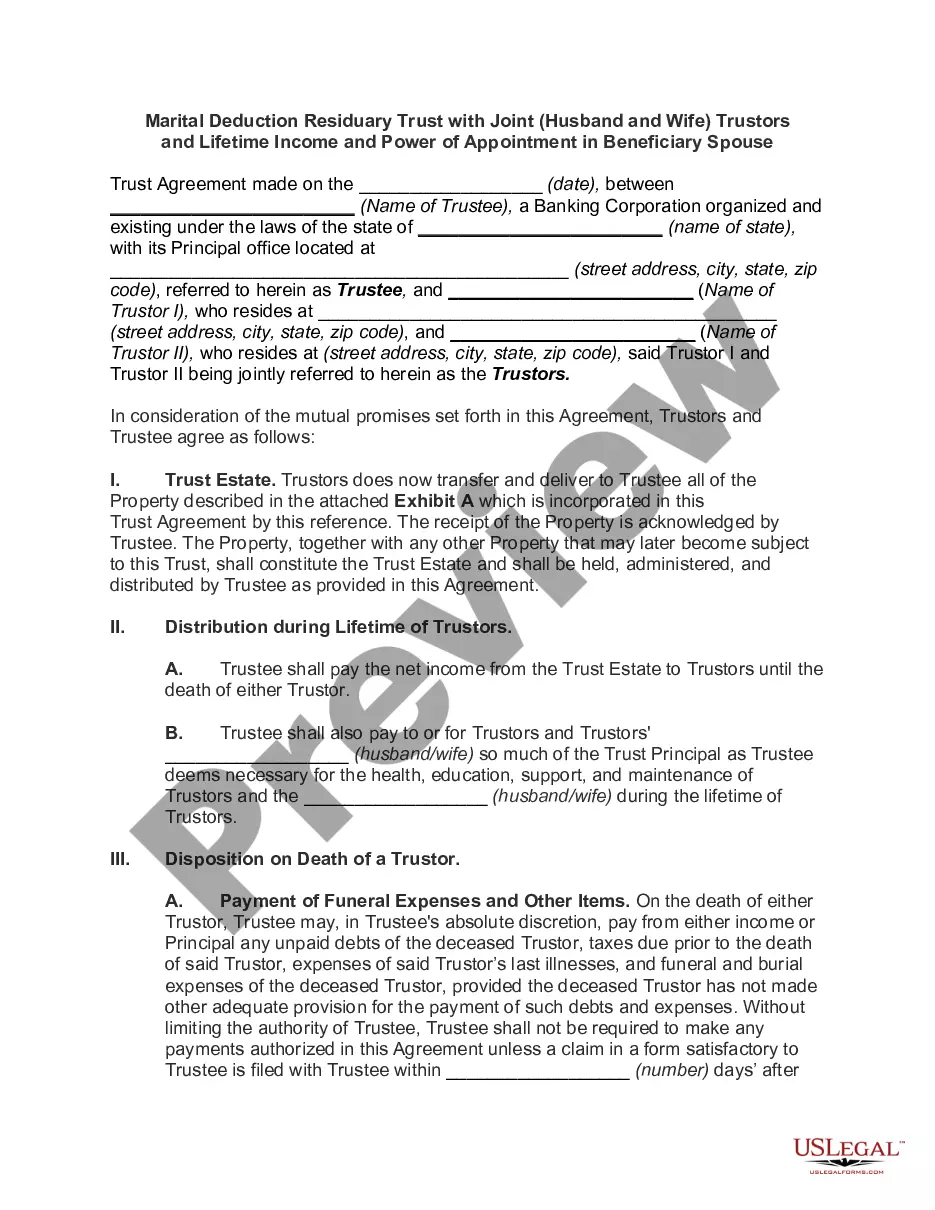
The Last Will and Testament for a Married Person with Minor Children from a Prior Marriage is a legal document that outlines how a person's assets will be distributed upon their death. This form is specifically designed for individuals who are married and have children from a previous marriage. It includes provisions for appointing an executor, defining beneficiaries, and establishing a trust for minor children, ensuring that their interests are protected.
What’s included in this form
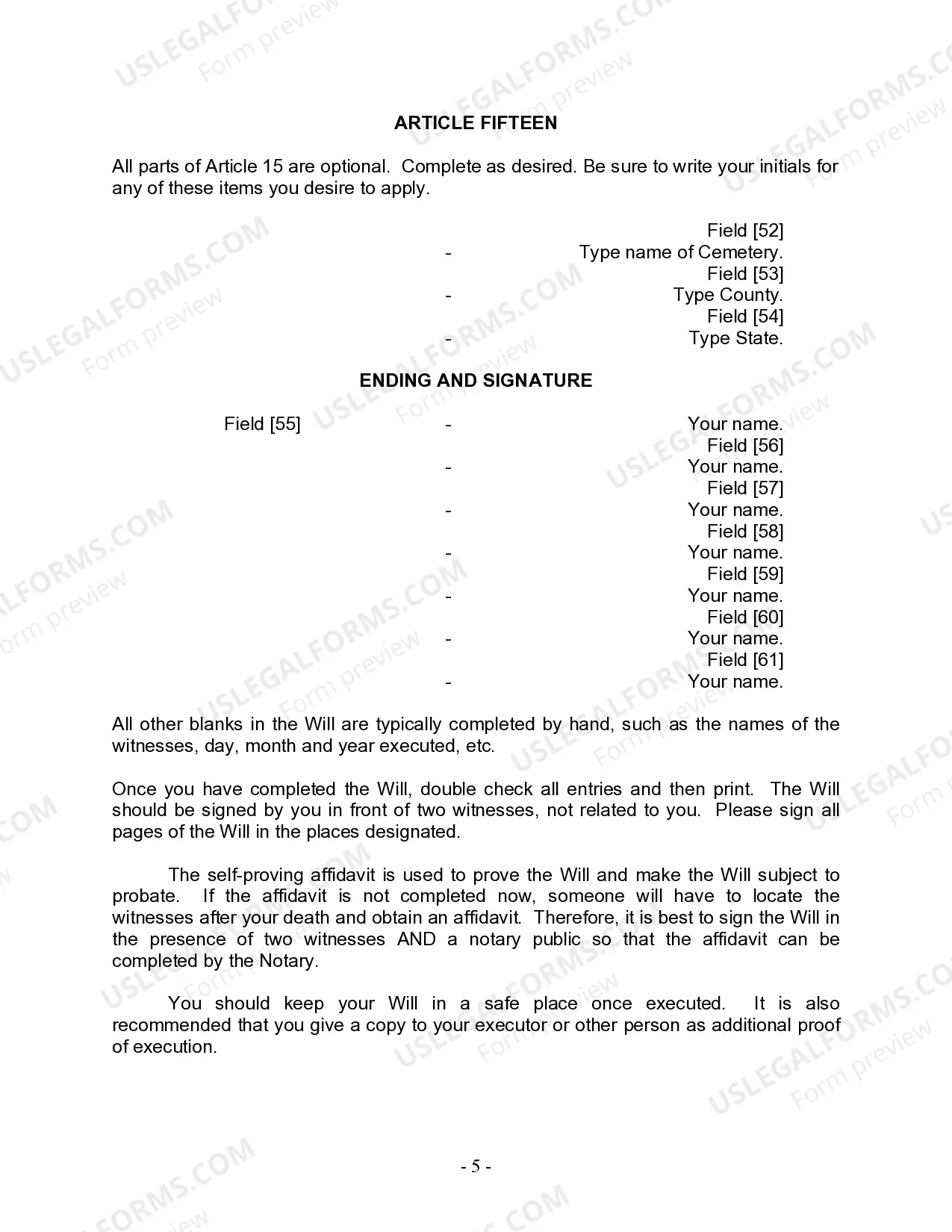
- Appointment of a personal representative or executor to manage the estate.
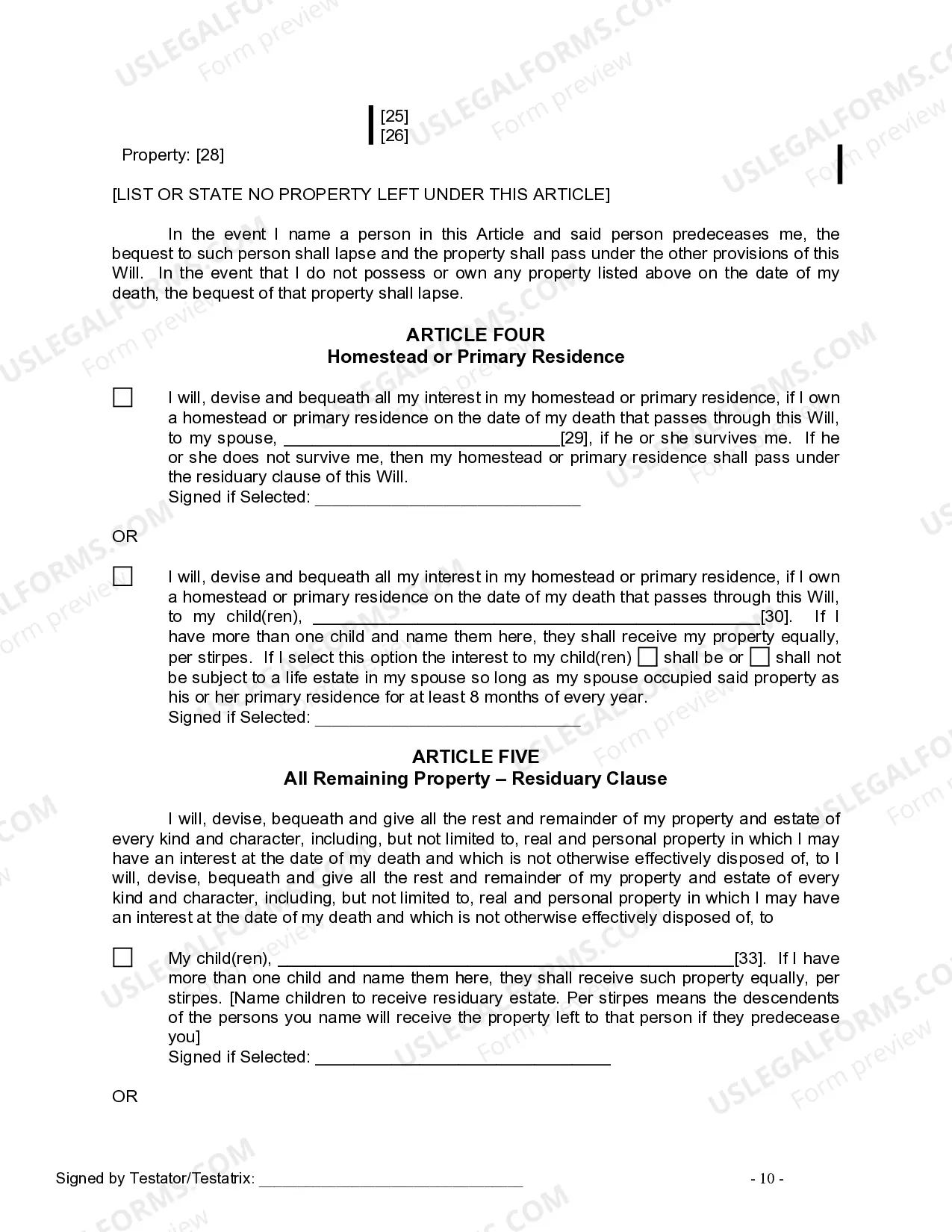
- Designations of beneficiaries, including specific bequests and residuary clauses.
- Provisions for a trust to manage assets left to minor children.
- Appointment of a guardian for minor children.
- Instructions for signing in front of witnesses and a notary public (if applicable).









When to use this form
This form is necessary when a married individual wants to ensure their assets are distributed according to their wishes, particularly when they have minor children from a prior marriage. It is useful for those who want to provide for their children while also recognizing the interests of their current spouse.
Intended users of this form
- Married individuals with children from a previous relationship.
- Anyone looking to make specific provisions for their minor children.
- Those wanting to name a personal representative and a guardian for their children.
How to complete this form
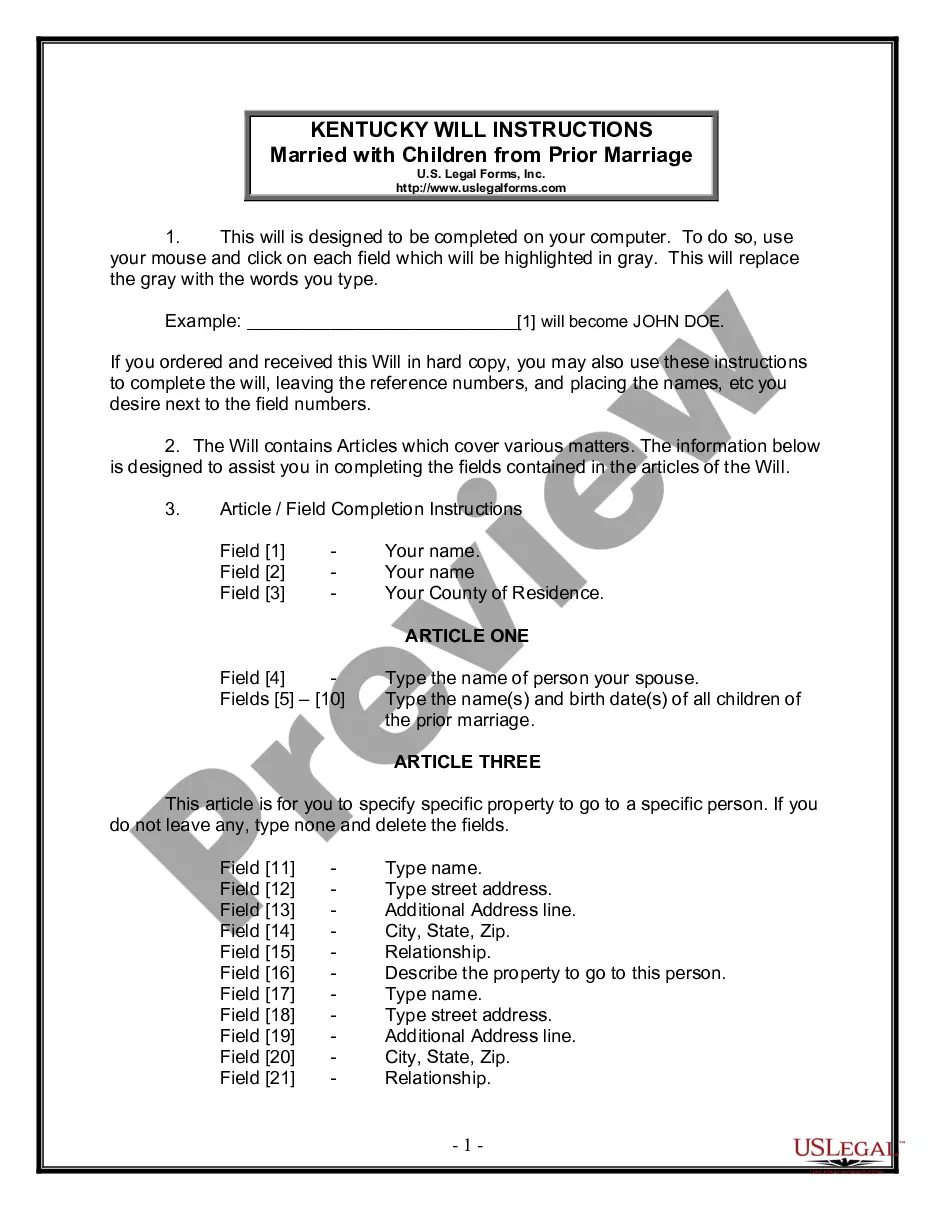
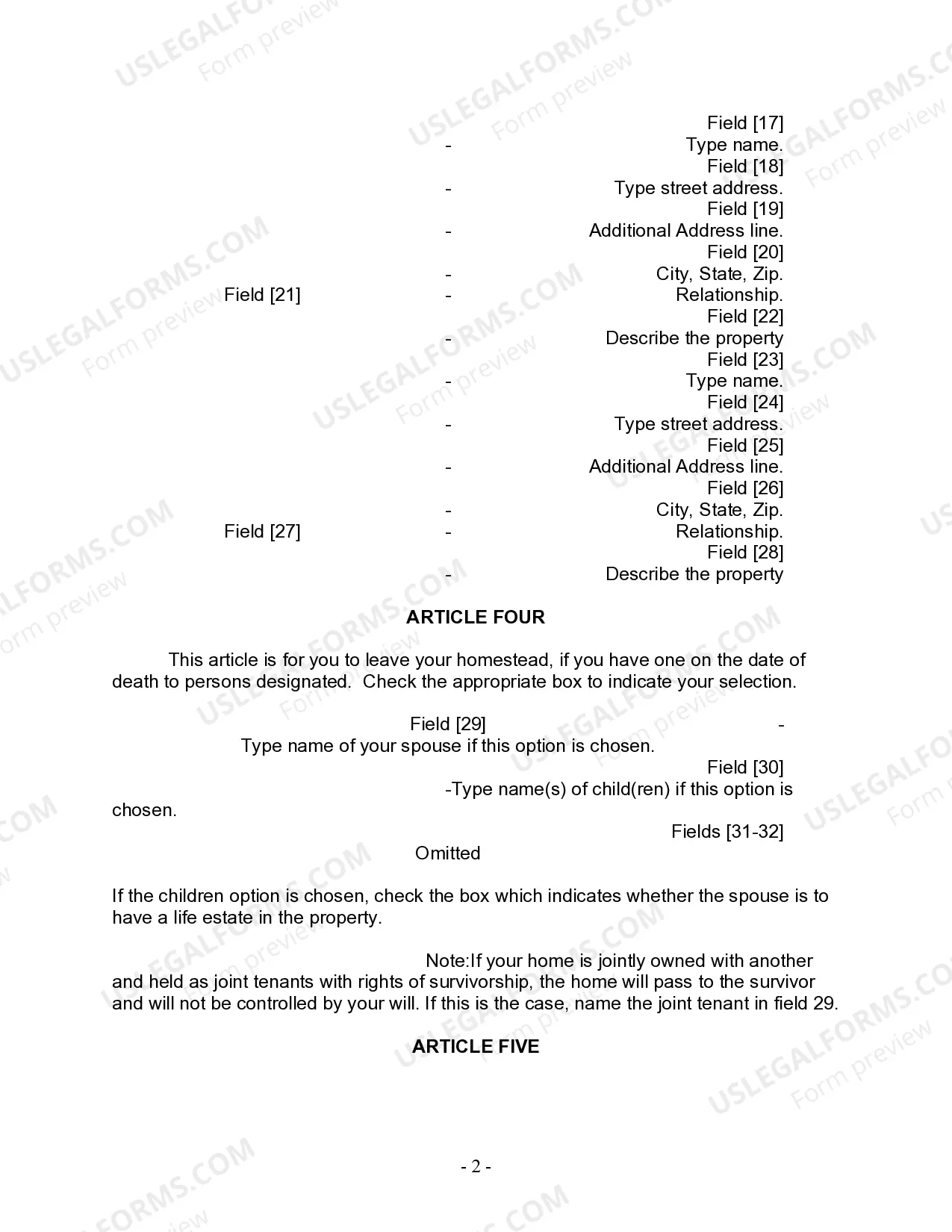
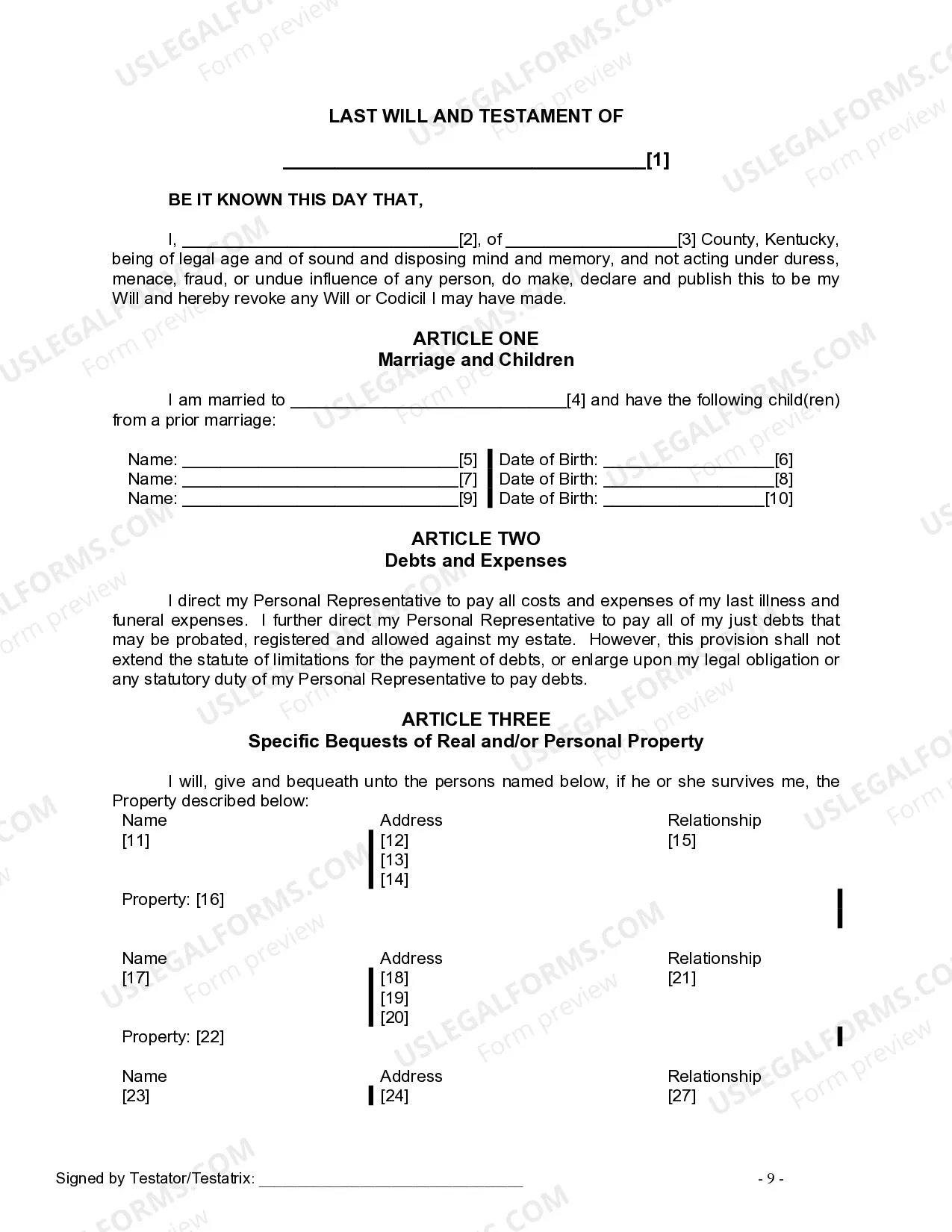
- Enter your full name and county of residence at the start of the form.
- Fill in the name of your current spouse and your children from the prior marriage.
- Specify any particular property you wish to bequeath to individuals.
- Designate a trustee for any assets left to minor children and specify the terms of the trust.
- Sign the document in front of two witnesses and a notary public if applicable.
Does this document require notarization?
Yes, this form must be notarized to be legally valid if it includes a self-proving affidavit. This ensures a smoother probate process as it confirms the identities of the signers and their competency at the time of signing.
Get your form ready online
Our built-in tools help you complete, sign, share, and store your documents in one place.
Make edits, fill in missing information, and update formatting in US Legal Forms—just like you would in MS Word.
Download a copy, print it, send it by email, or mail it via USPS—whatever works best for your next step.
Sign and collect signatures with our SignNow integration. Send to multiple recipients, set reminders, and more. Go Premium to unlock E-Sign.
If this form requires notarization, complete it online through a secure video call—no need to meet a notary in person or wait for an appointment.
We protect your documents and personal data by following strict security and privacy standards.

Make edits, fill in missing information, and update formatting in US Legal Forms—just like you would in MS Word.

Download a copy, print it, send it by email, or mail it via USPS—whatever works best for your next step.

Sign and collect signatures with our SignNow integration. Send to multiple recipients, set reminders, and more. Go Premium to unlock E-Sign.

If this form requires notarization, complete it online through a secure video call—no need to meet a notary in person or wait for an appointment.

We protect your documents and personal data by following strict security and privacy standards.
Common mistakes
- Not having the document witnessed properly or failing to include a notary if required.
- Leaving out important details, such as specific bequests or the appointment of a guardian.
- Failing to ensure that the will is kept in a safe place after completion.
Benefits of using this form online
- Convenience of filling out the form from home.
- Editability allows for easy corrections and updates.
- Access to reliable templates drafted by licensed attorneys.
What to keep in mind
- This Last Will and Testament addresses the complexities of having minor children from a prior marriage.
- Proper completion and notarization are essential for the will to be legally enforceable.
- It provides peace of mind by clearly stating distributions and guardianship arrangements.
Looking for another form?
Form popularity
FAQ
Yes, a family can choose to exclude you from a will. This exclusion must be clearly stated in the will to avoid ambiguity. Understanding the dynamics of your family and the specific provisions of Kentucky inheritance law, particularly in the context of a Kentucky Last Will and Testament for Married person with Minor Children from Prior Marriage, is essential for navigating this complex issue.
If you find yourself left out of a will, start by understanding the reasons behind this decision. It may be beneficial to open a line of communication with the remaining family members to address your feelings and concerns. Additionally, consulting with a legal professional knowledgeable in Kentucky law can help you explore your options regarding inheritance rights and potential claims.
1. My husband must always come before our children. A spouse's needs should not come first because your spouse is an adult, capable of meeting his or her own needs, whereas a child is completely dependent upon you to meet their needs.
Your spouse has to come first; always. They have to come first. Nonetheless, here's the thing: You only have your kids for 18 years, but you vowed the rest of your life to your spouse, until death do you part.
Comingling AssetsAssets kept separate may be designated for children of your first marriage. Income and property obtained during a marriage are considered community property.In most cases, the second spouse changes everything and leaves assets to their own children, nothing to the spouse's children.
When you marry someone with children, you are signing up for a lifetime commitment, not just to your spouse but also to the step-kids. Long after the high school graduation, your involvement with stepchildren will continue. In fact, you may eventually be a step-grandparent!
Considering all things the Bible teaches that a wife's primary responsibility is to God first and then her husband and then children all others follow.
A father has parental responsibility if he's married to the mother when the child is conceived, or marries her at any point afterwards. An unmarried father has parental responsibility if he's named on the child's birth certificate (from 4 May 2006).
Unless there is a pre or post-nuptial agreement of some sort there are substantial rights that a surviving spouse always has and it will indeed override whatever is written in a Will, for example, a spouse has specific elective share rights to the...
Some people may criticize you for making your marriage your first priority but putting your marriage first is the best option. Wife. Baby momma has no relevance unless it's pertaining to the welfare of the child.