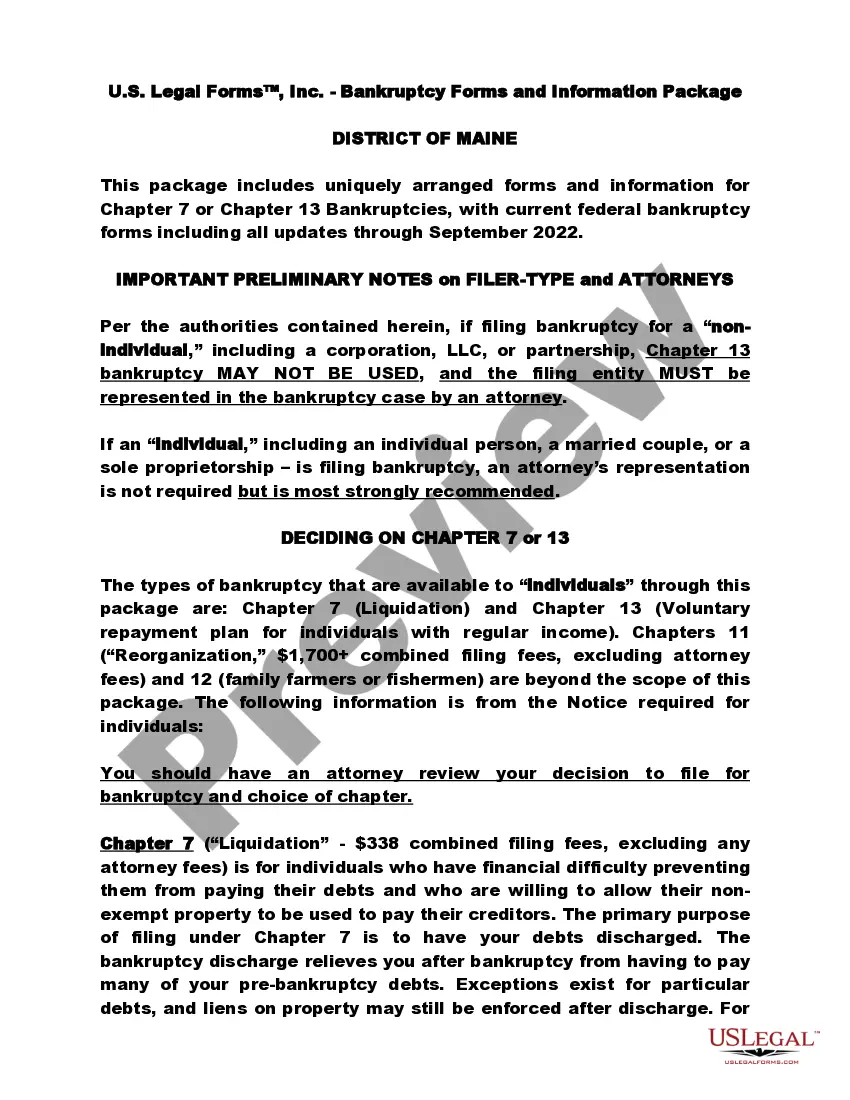
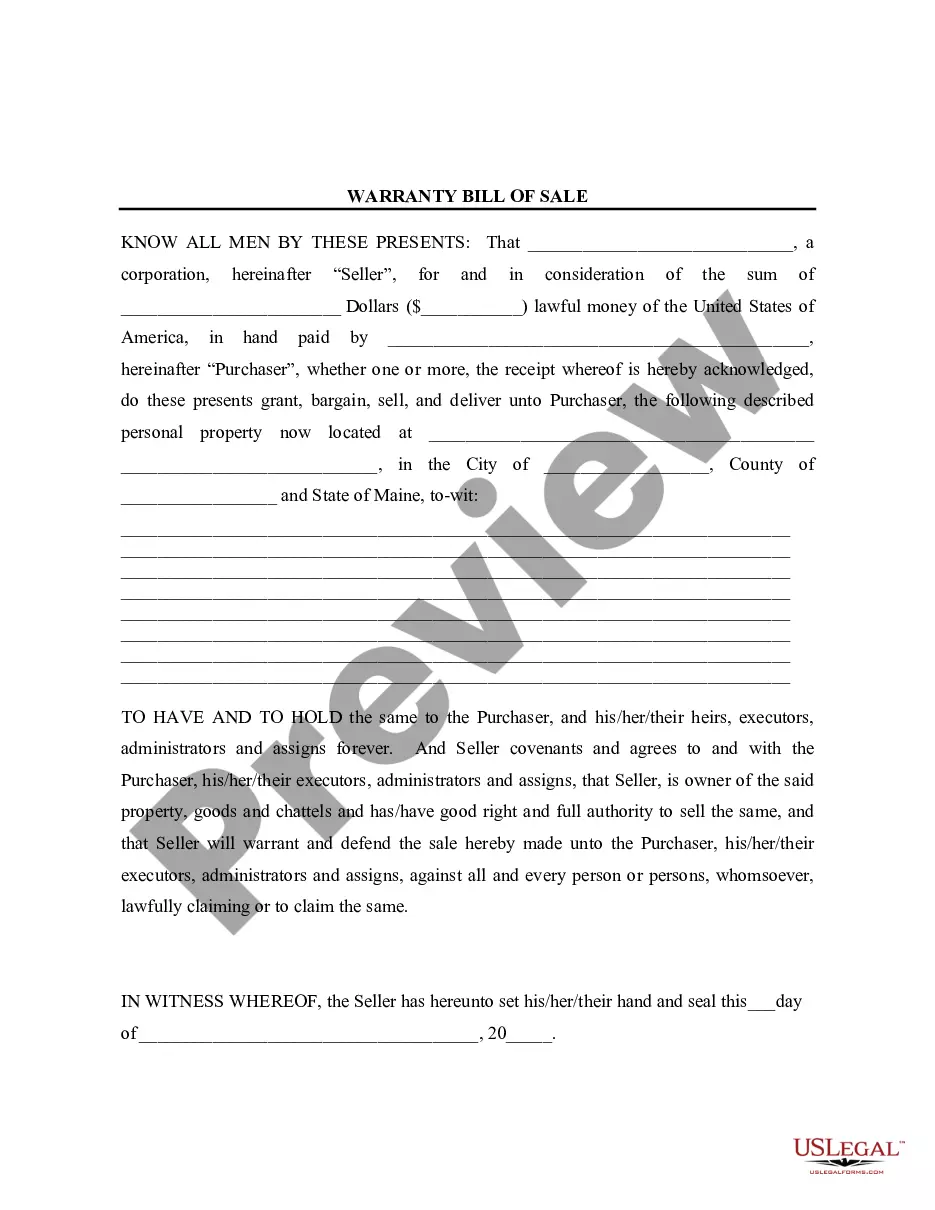
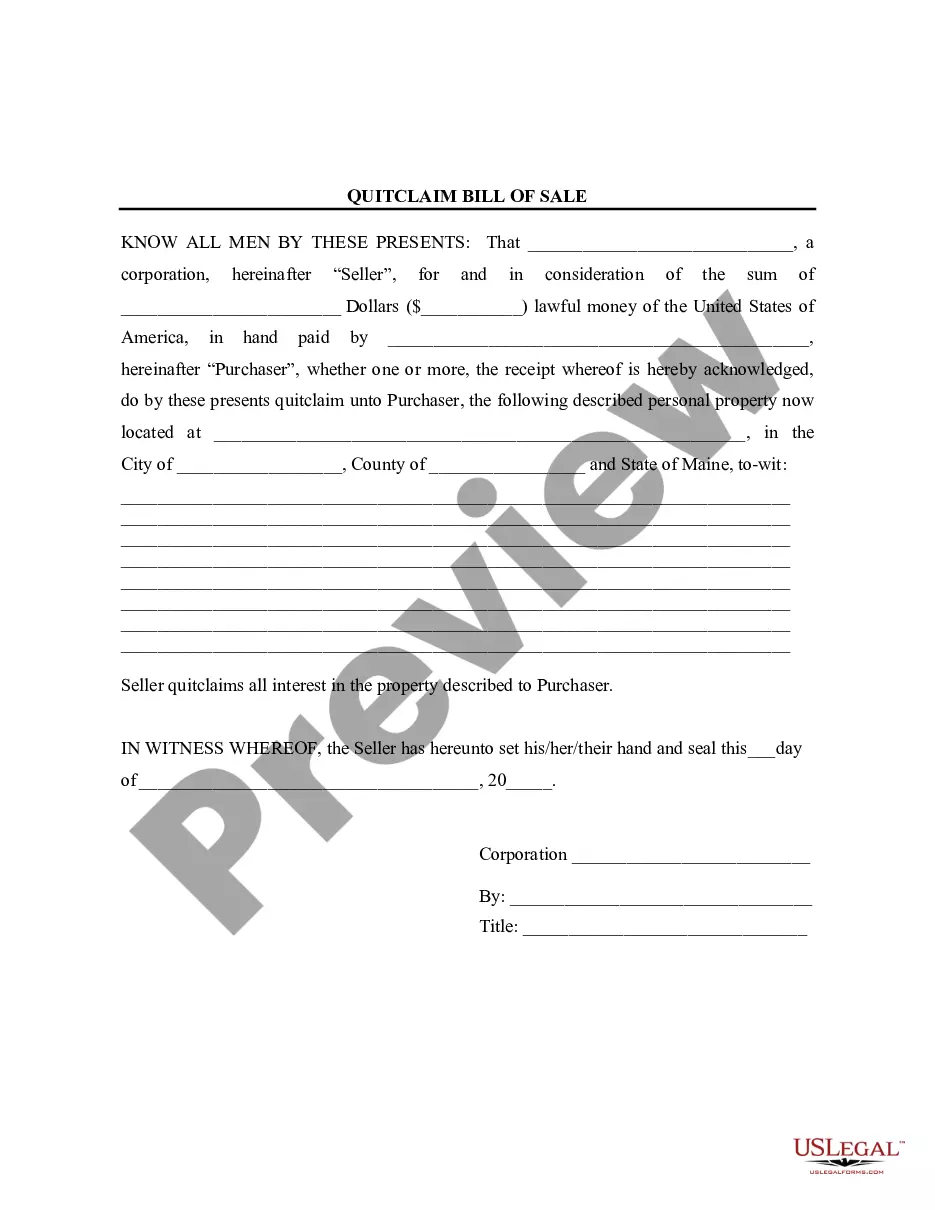
Kentucky Pre-Incorporation Agreement, Shareholders Agreement and Confidentiality Agreement
What is this form?
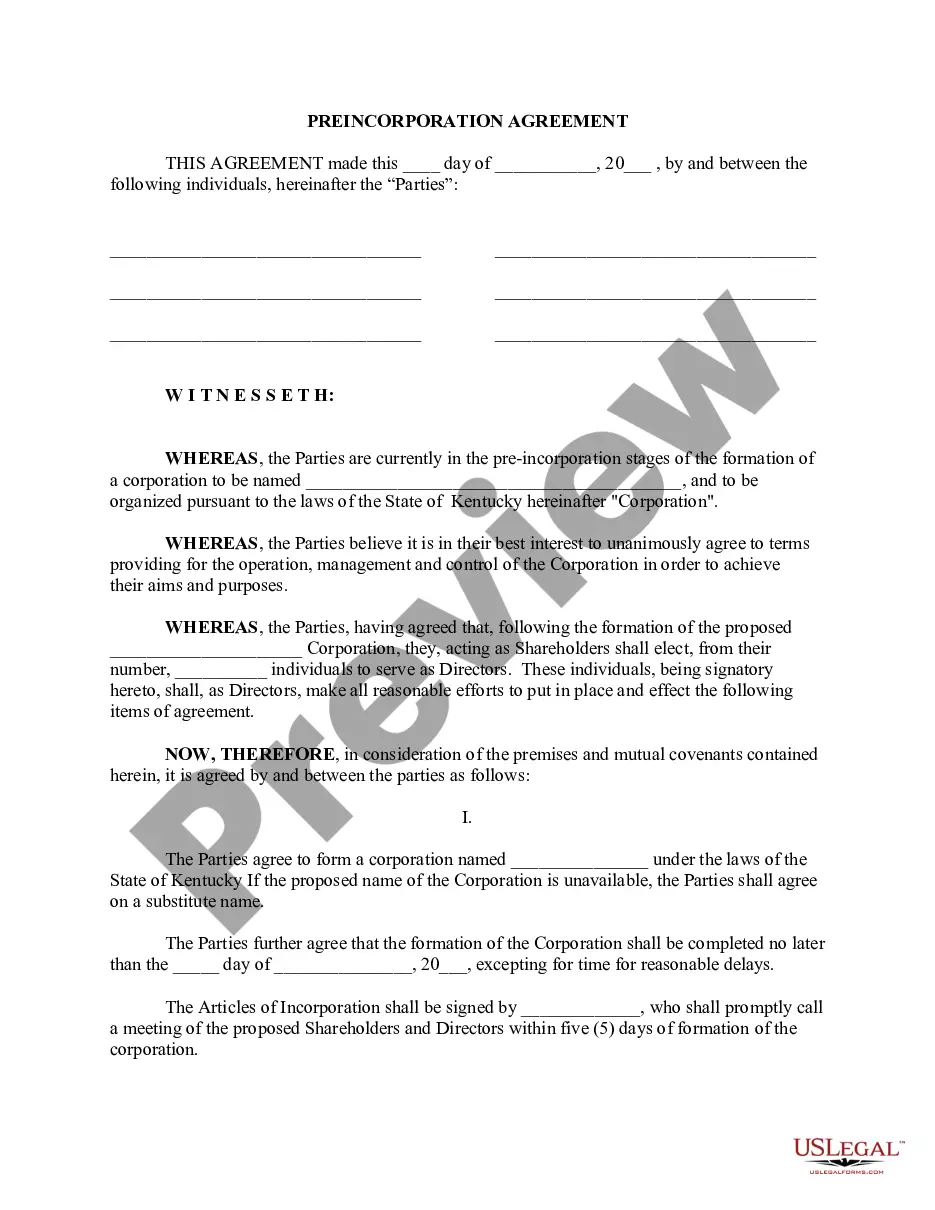
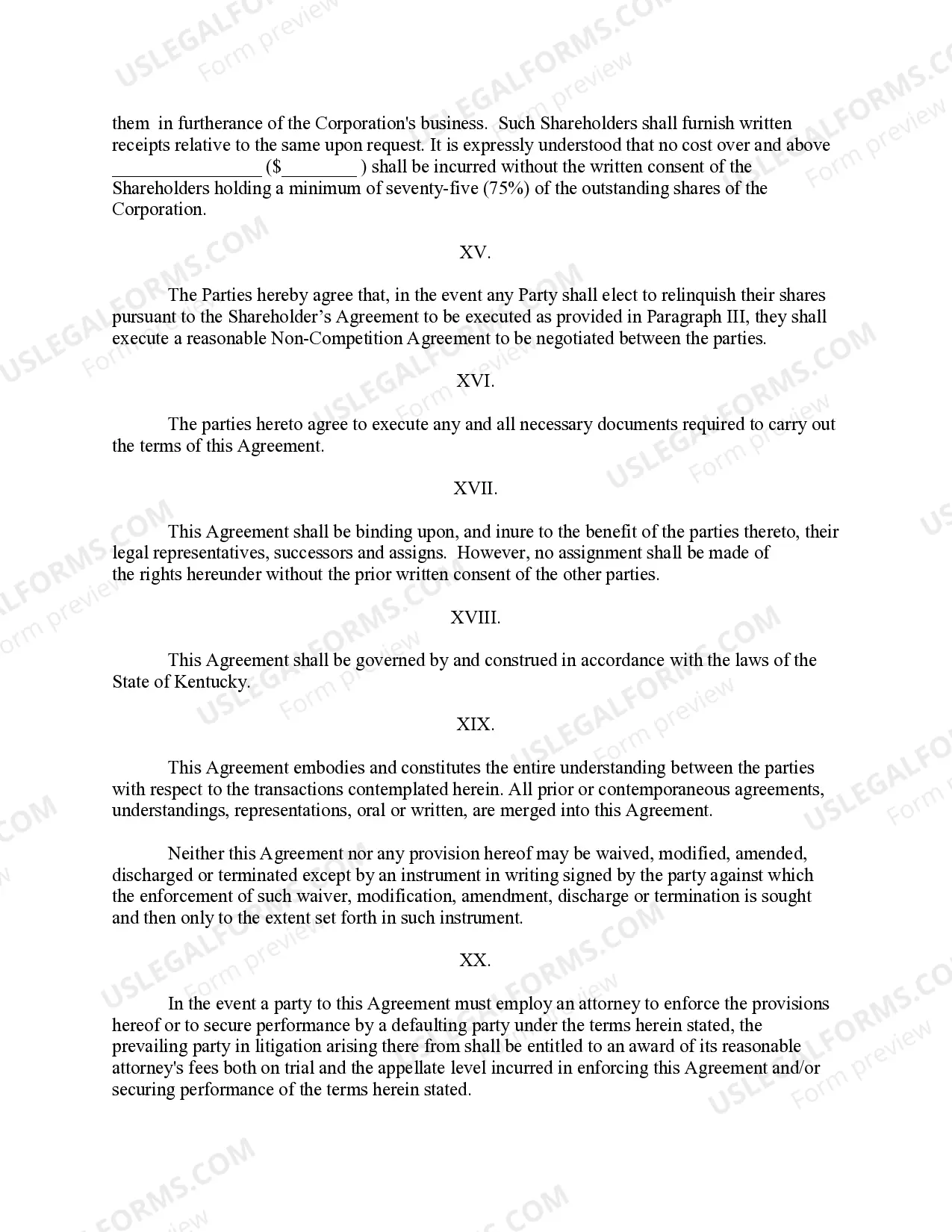
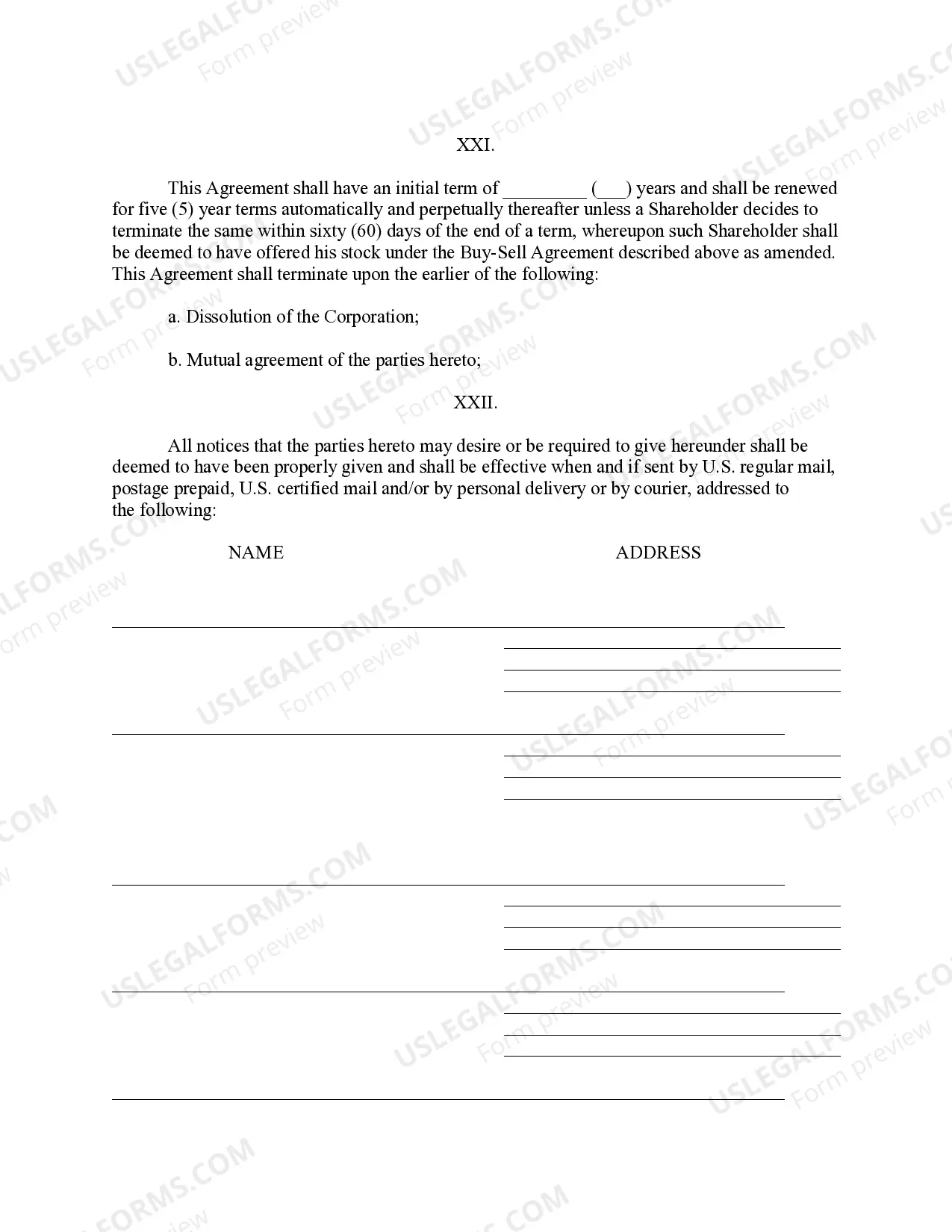
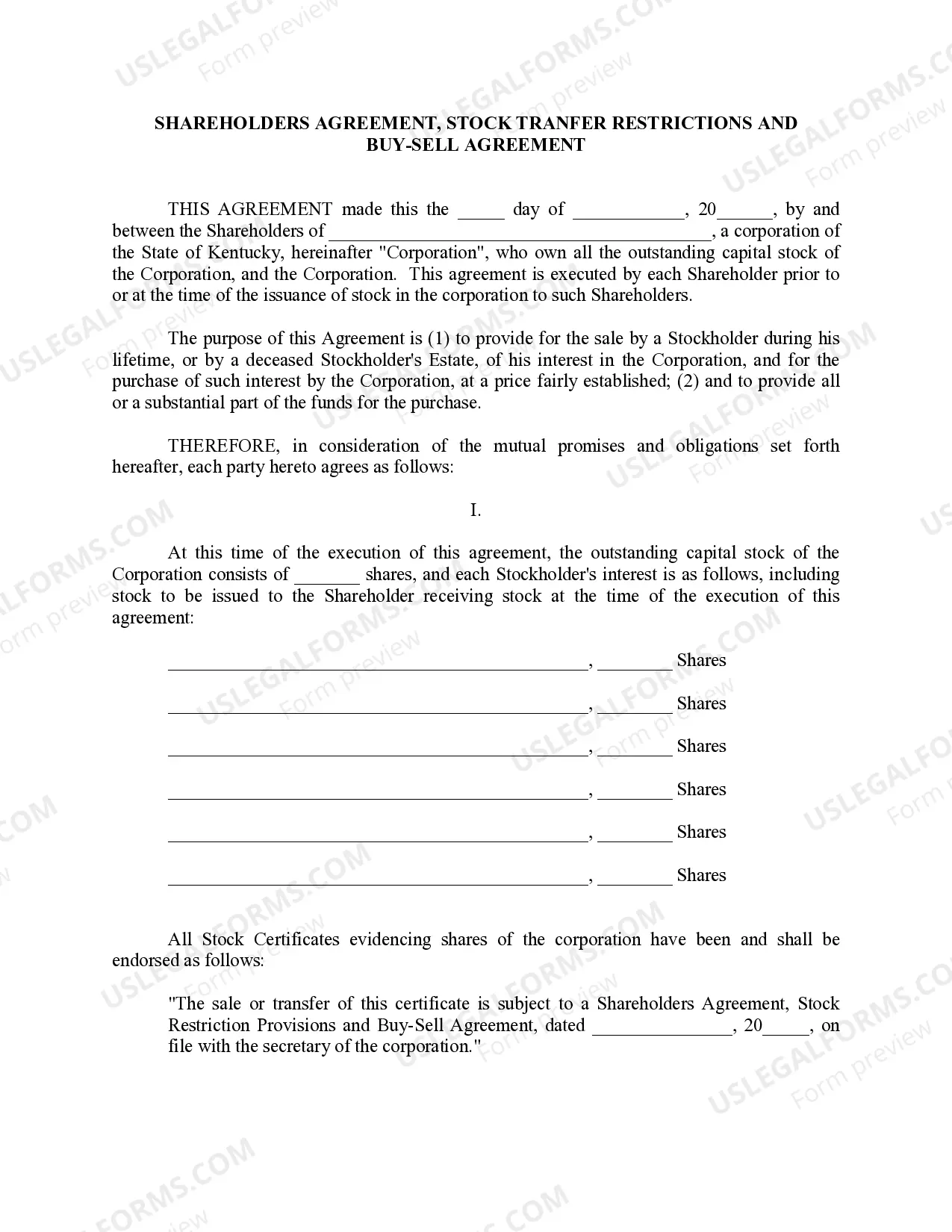
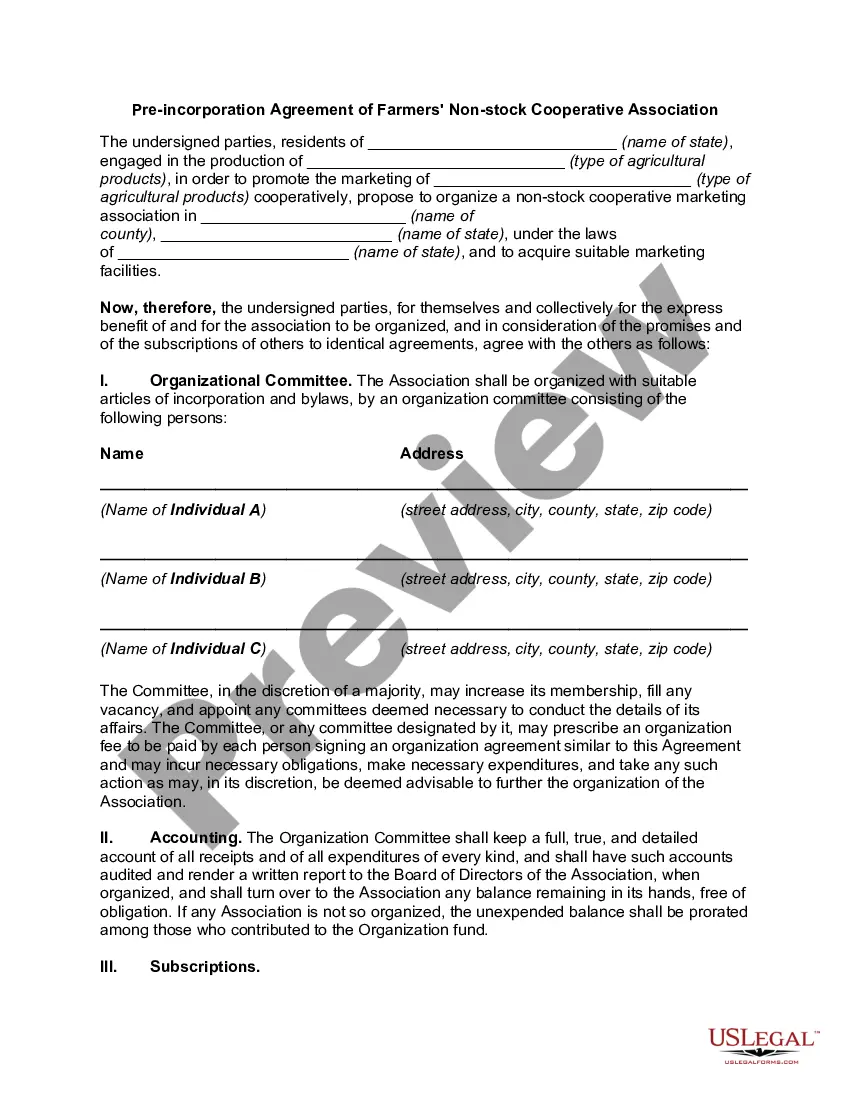
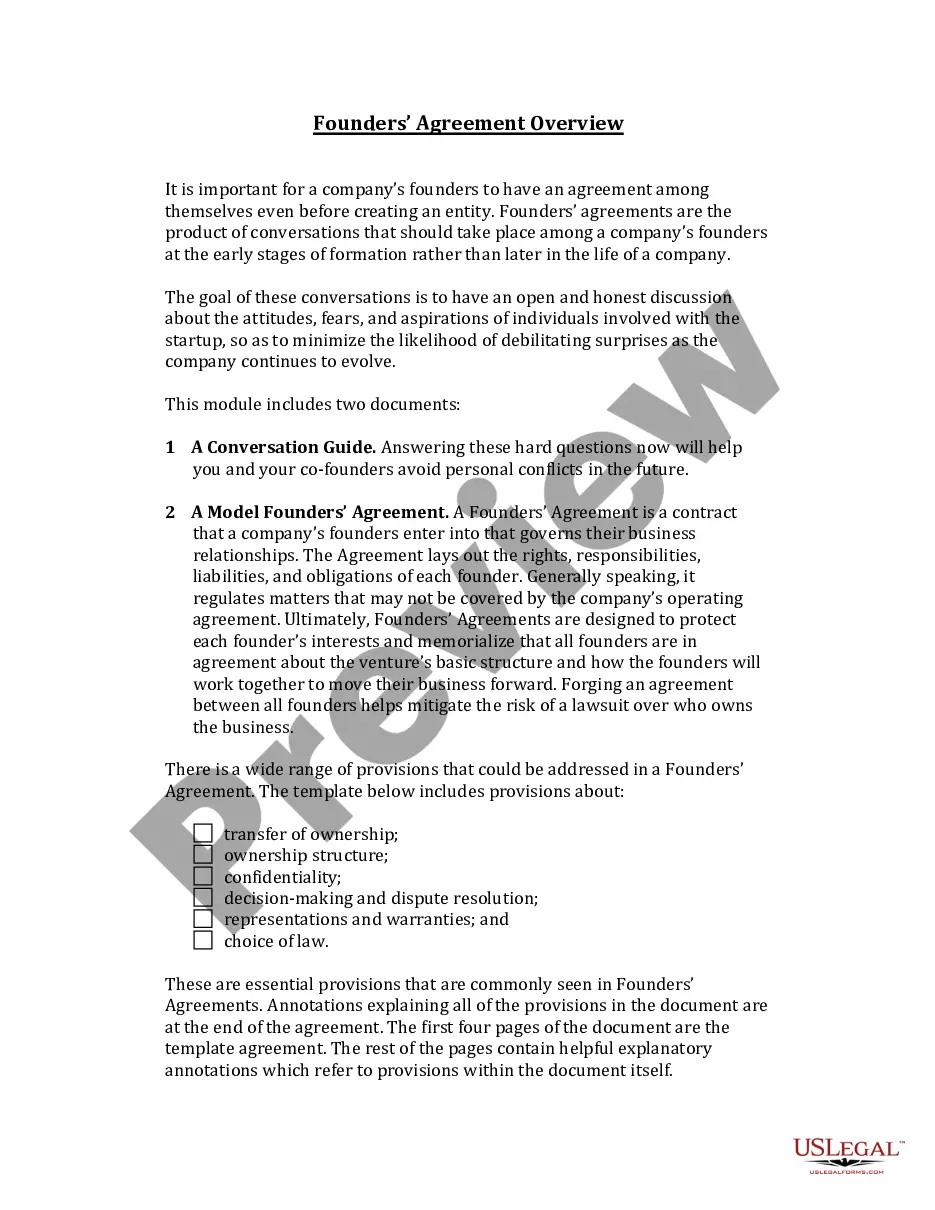
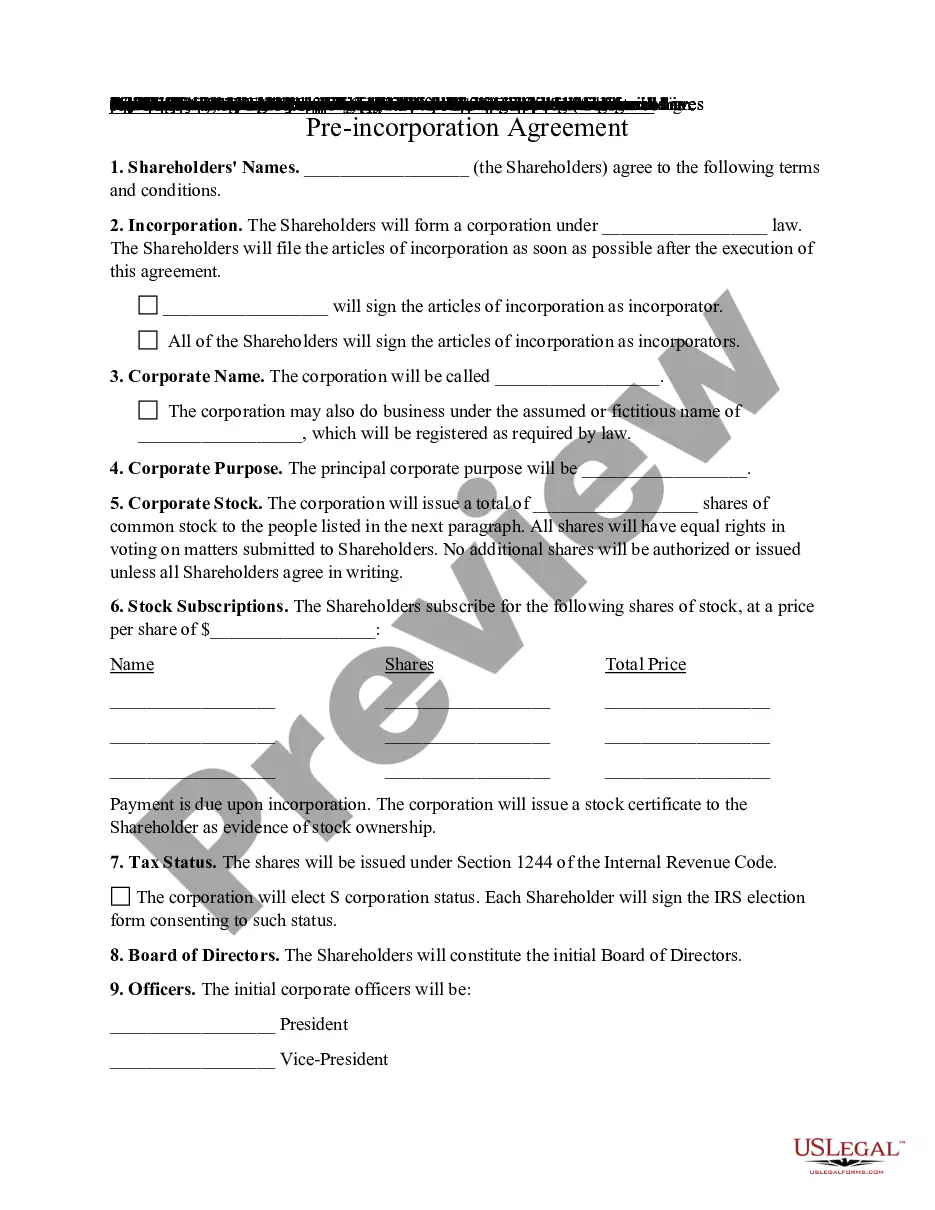
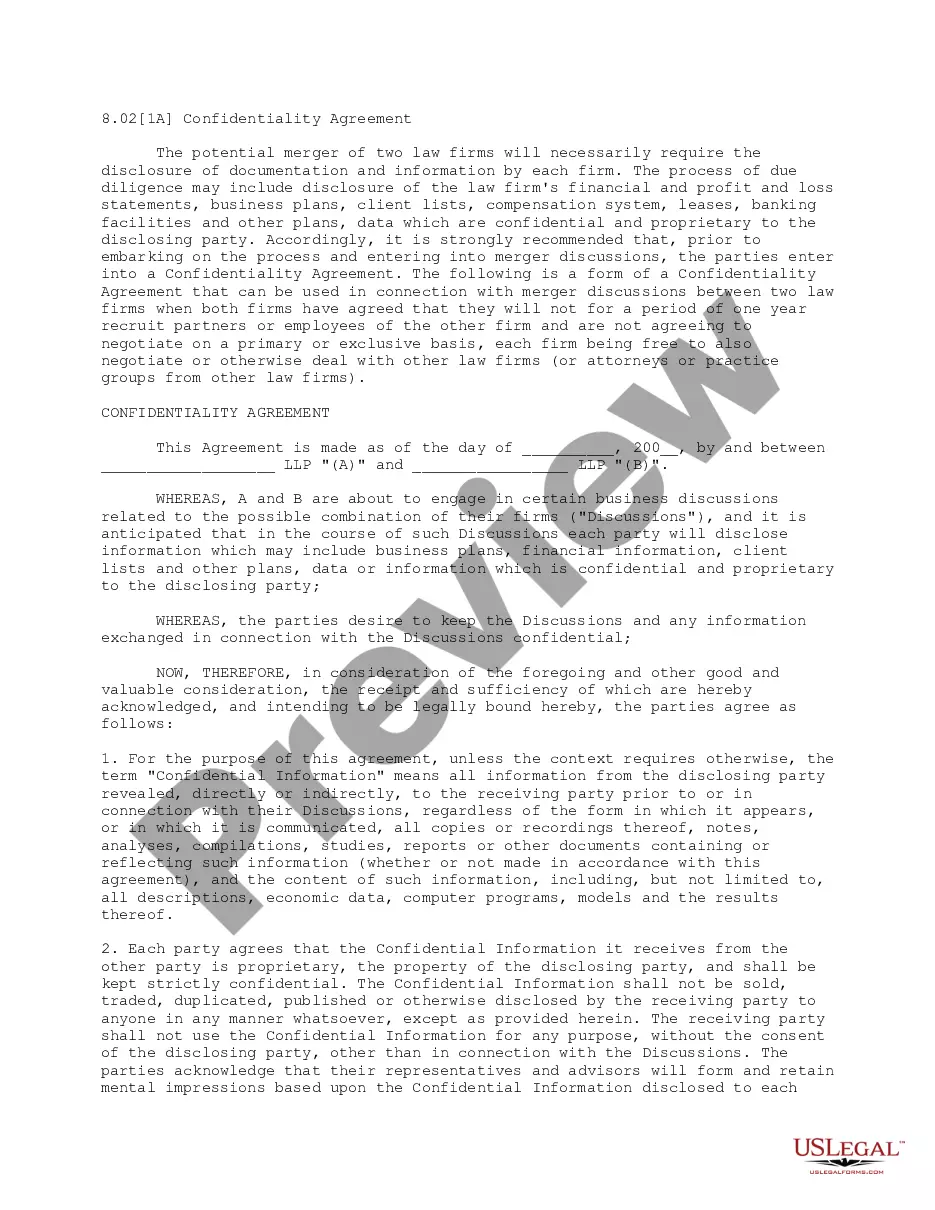
The Kentucky Pre-Incorporation Agreement, Shareholders Agreement, and Confidentiality Agreement package is essential for individuals looking to establish a corporation in Kentucky. This form outlines the foundational agreements between individuals before the corporation is officially formed, including the management structure, operational guidelines, and confidentiality terms. Unlike other corporate documents, this package specifically addresses agreements made prior to incorporation, ensuring all parties are aligned on expectations and responsibilities from the start.
Key parts of this document
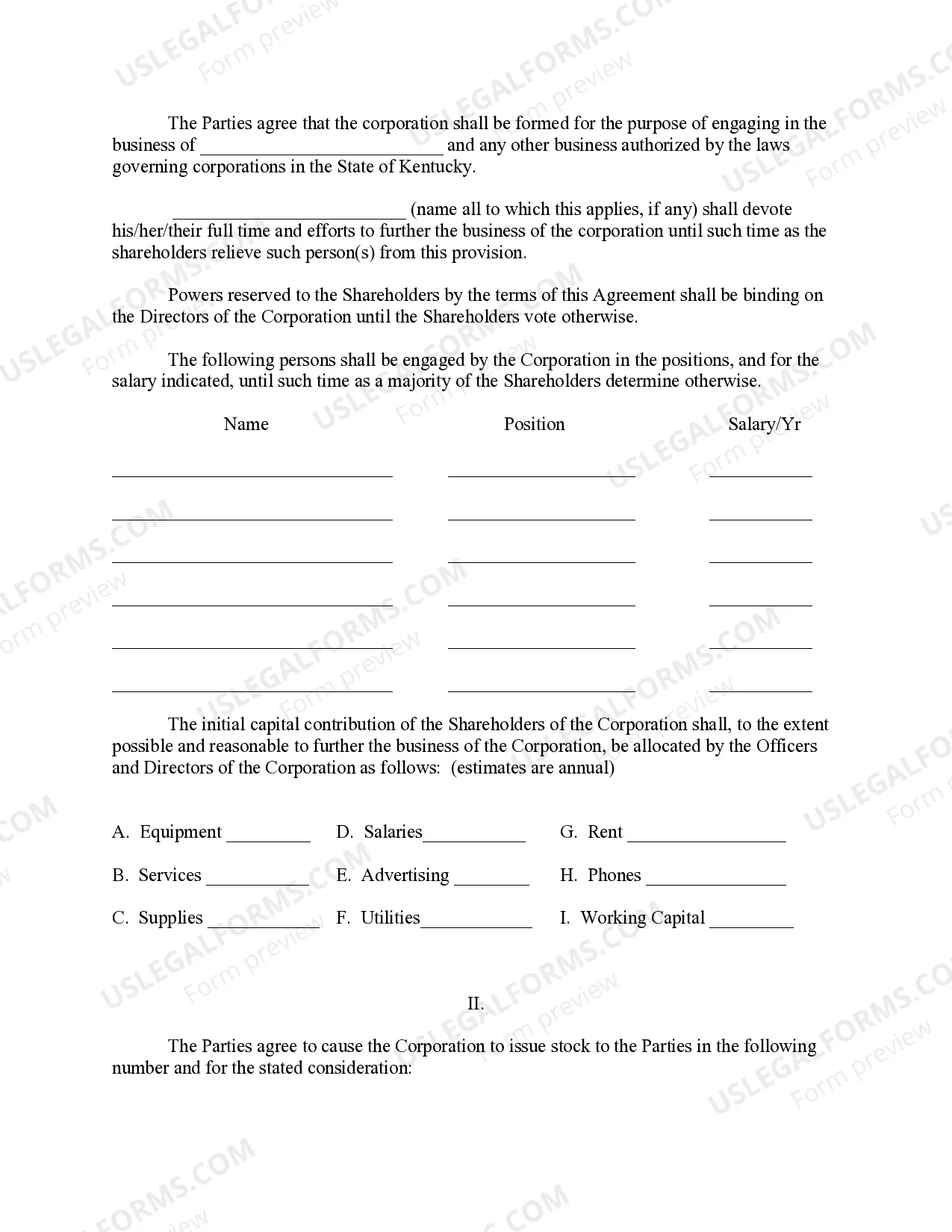
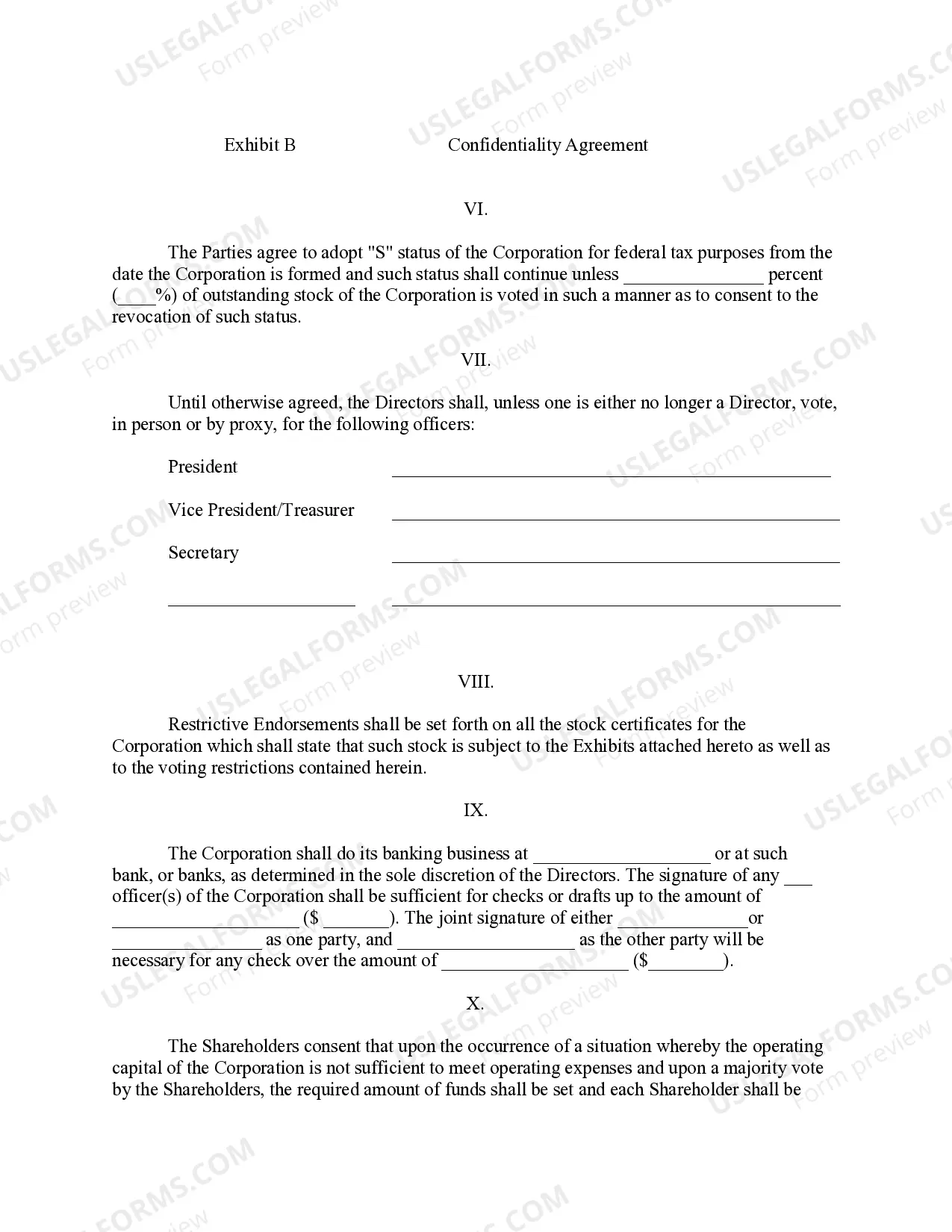
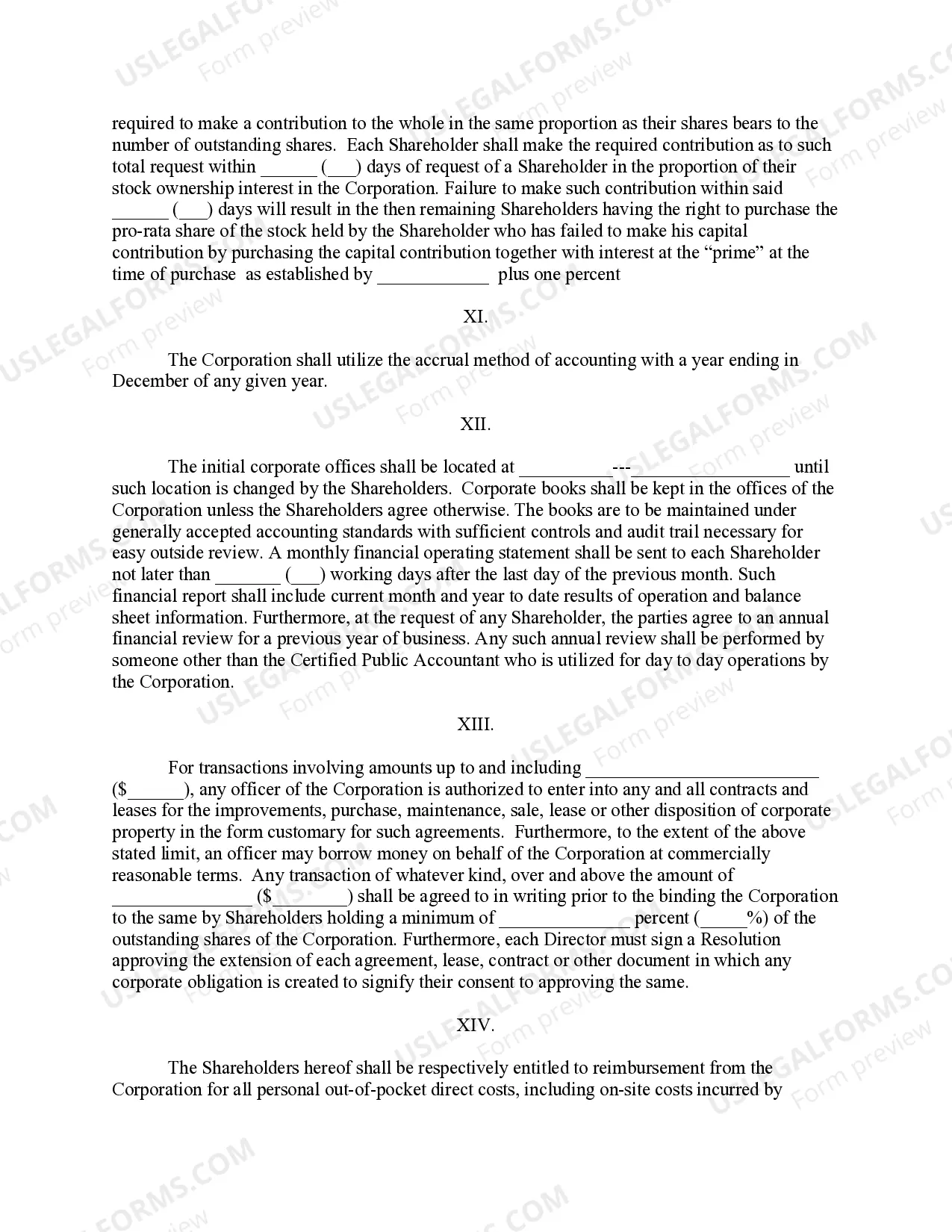
- Pre-incorporation agreement outlining management and operational terms.
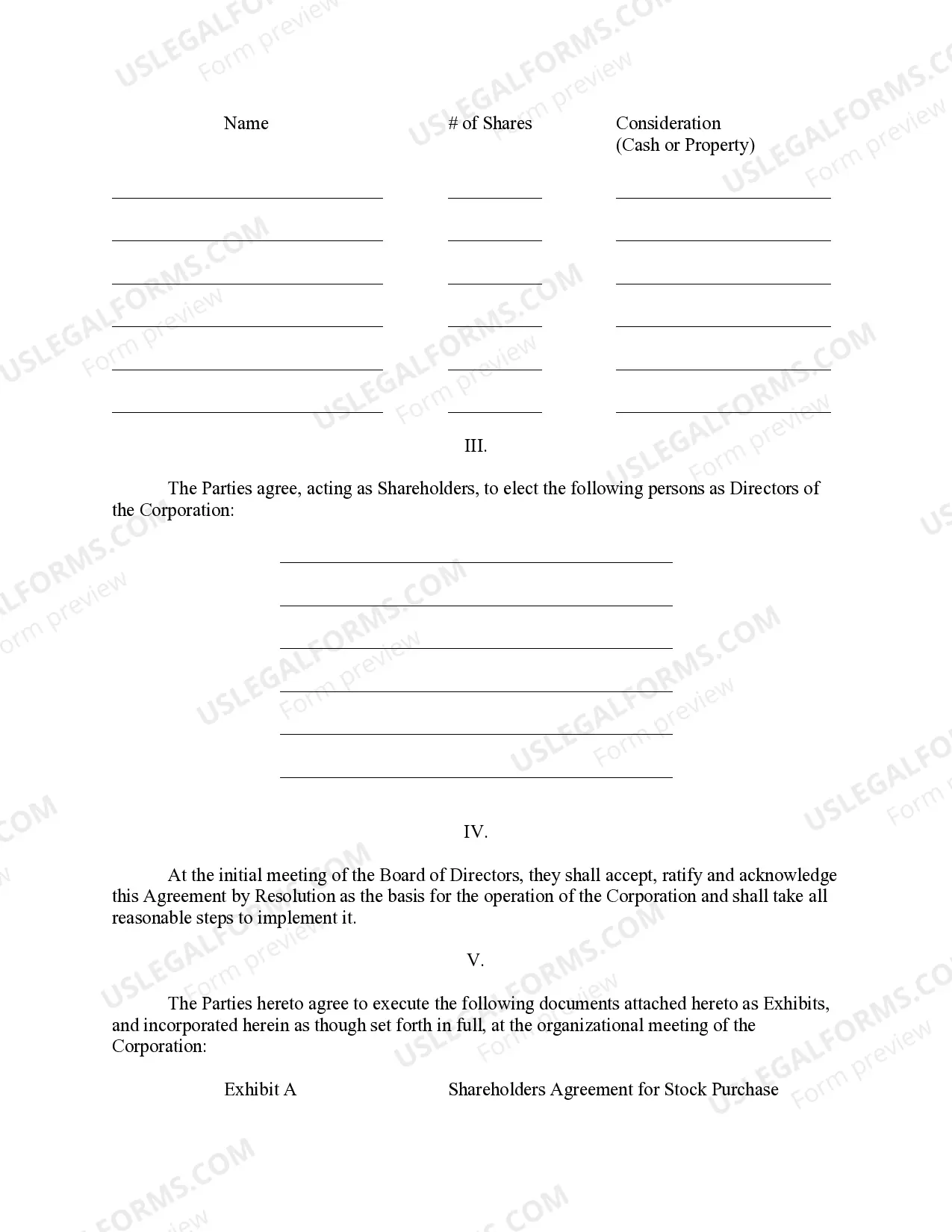
- Shareholders agreement stipulating procedures for buying and selling shares.
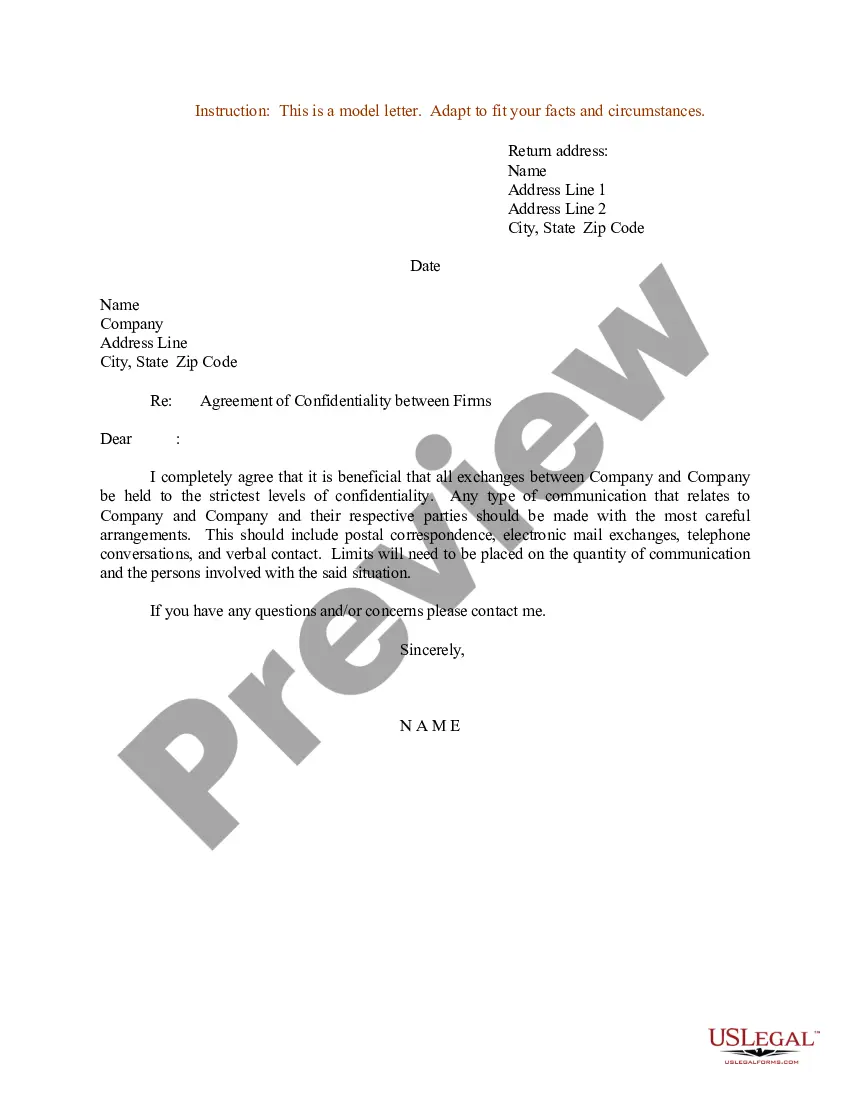
- Confidentiality agreement detailing the protection of sensitive corporate information.
- Provisions for the election of directors and the distribution of shares.
- Financial contribution expectations and operational costs allocation.

Situations where this form applies
This form is needed when individuals come together to establish a corporation in Kentucky. Use it to ensure that all founders agree on how the corporation will operate, the roles of the shareholders and directors, and how confidential information will be handled. It is critical during the pre-incorporation stage to minimize disputes and set clear expectations prior to official formation.
Who needs this form
- Individuals planning to form a corporation in Kentucky.
- Business partners who will be shareholders in the new corporation.
- Founders who wish to outline the management and operational structure before incorporation.
- Parties involved in the exchange of sensitive corporate information.
Instructions for completing this form
- Identify the parties involved in the agreement, including their names and addresses.
- Specify the proposed name of the corporation and ensure it is available in Kentucky.
- Outline the operational purpose of the corporation and the roles of each founder.
- Detail the share distribution among shareholders and the terms of stock sales.
- Include signatures from all parties to formalize the agreements.
Notarization guidance
In most cases, this form does not require notarization. However, some jurisdictions or signing circumstances might. US Legal Forms offers online notarization powered by Notarize, accessible 24/7 for a quick, remote process.
Get your form ready online
Our built-in tools help you complete, sign, share, and store your documents in one place.
Make edits, fill in missing information, and update formatting in US Legal Forms—just like you would in MS Word.
Download a copy, print it, send it by email, or mail it via USPS—whatever works best for your next step.
Sign and collect signatures with our SignNow integration. Send to multiple recipients, set reminders, and more. Go Premium to unlock E-Sign.
If this form requires notarization, complete it online through a secure video call—no need to meet a notary in person or wait for an appointment.
We protect your documents and personal data by following strict security and privacy standards.

Make edits, fill in missing information, and update formatting in US Legal Forms—just like you would in MS Word.

Download a copy, print it, send it by email, or mail it via USPS—whatever works best for your next step.

Sign and collect signatures with our SignNow integration. Send to multiple recipients, set reminders, and more. Go Premium to unlock E-Sign.

If this form requires notarization, complete it online through a secure video call—no need to meet a notary in person or wait for an appointment.

We protect your documents and personal data by following strict security and privacy standards.
Common mistakes
- Forgetting to include all essential parties in the agreement.
- Failing to specify the ownership structure and roles clearly.
- Neglecting to outline the terms for confidentiality adequately.
- Assuming default rules apply without verifying state-specific regulations.
Advantages of online completion
- Conveniently download and complete forms at your own pace.
- Edit easily to customize terms that fit your specific situation.
- Reliable access to legal documents that comply with Kentucky law.
- Secure storage of your completed documents for future reference.
Legal use & context
- The agreements created are binding and enforceable under Kentucky law.
- Terms must comply with corporate laws in Kentucky to ensure validity.
- Having clear pre-incorporation agreements can help prevent disputes among shareholders.
Key takeaways
- This form package is crucial for establishing clear agreements among founders before incorporation.
- It helps streamline the formation of a corporation and sets expectations for management and confidentiality.
- Specific to Kentucky, this form ensures compliance with state laws governing corporate governance.
Looking for another form?







Form popularity
FAQ
In practice, this means that all patient/client information, whether held on paper, computer, visually or audio recorded, or held in the memory of the professional, must not normally be disclosed without the consent of the patient/client.
Name, date of birth, age, sex and address. current contact details of family, guardian etc. bank details. medical history or records. personal care issues. service records and file progress notes. individual personal plans. assessments or reports.
Workplace confidentiality refers to any confidential information that you come across in the course of business. There are three main types the personal information of customers. employee information that managers collect, and. proprietary information
Confidentiality in the context of health and social care intrinsically means not disclosing information about a client to anyone who should not know or does not need to know.
Confidentiality refers to personal information shared with an attorney, physician, therapist, or other individuals that generally cannot be divulged to third parties without the express consent of the client.While confidentiality is an ethical duty, privacy is a right rooted in the common law.
As a legal term, confidentiality refers to a duty of an individual to refrain from sharing confidential information with others, except with the express consent of the other party.
What is Confidentiality? The principle of confidentiality is about privacy and respecting someone's wishes. It means that professionals shouldn't share personal details about someone with others, unless that person has said they can or it's absolutely necessary.
Justify the purpose(s) Don't use patient identifiable information unless it is absolutely necessary. Use the minimum necessary patient-identifiable information. Access to patient identifiable information should be on a strict need-to-know basis.
Workplace confidentiality refers to any confidential information that you come across in the course of business. There are three main types the personal information of customers. employee information that managers collect, and. proprietary information