Kansas Revocation of Statutory Equivalent of Living Will or Declaration
Understanding this form
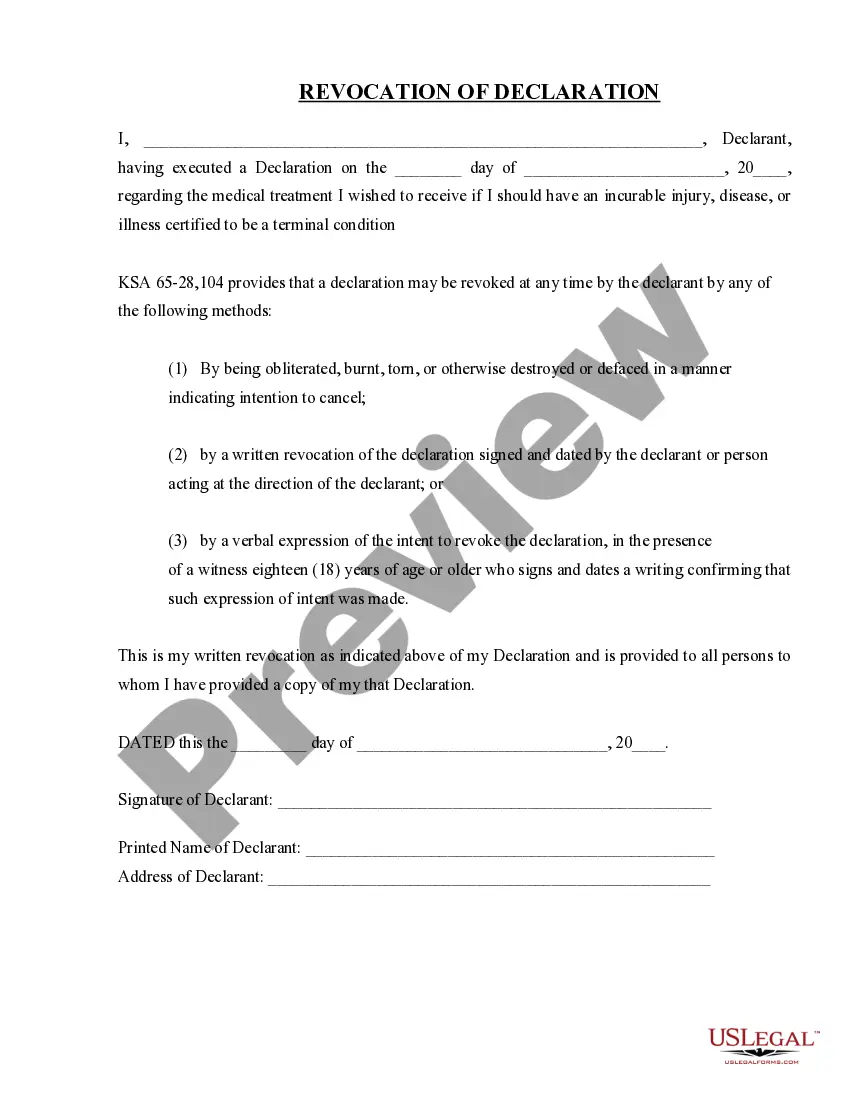
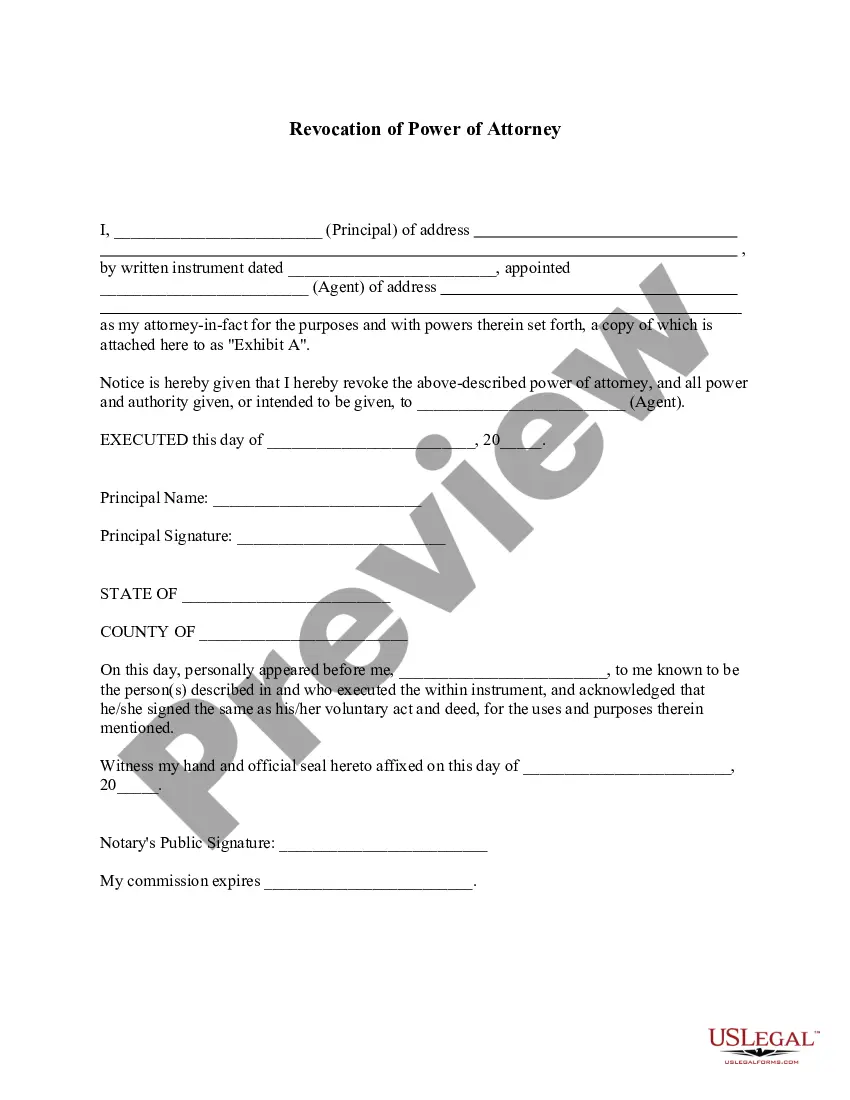
The Revocation of Statutory Equivalent of Living Will or Declaration is a legal document that allows an individual to revoke a previously executed Declaration regarding their medical treatment preferences. This form specifically refers to the earlier Declaration that outlines the individualâs wishes on life-prolonging measures in the event of a terminal condition. Unlike the original Declaration, this revocation clearly states the intent to cancel that document, ensuring that healthcare providers and family members are aware of the change.
What’s included in this form
- Declarant's name and information.
- Date of the original Declaration execution.
- Methods of revocation, including written, verbal, or physical destruction of the Declaration.
- Signature of the Declarant.
- Date of signing the revocation form.
Situations where this form applies
This form is used when an individual decides to revoke a previously signed Declaration regarding their medical treatment preferences. It may be necessary to issue a revocation in situations where a person changes their mind about how they want to be treated in a medical emergency, perhaps due to changes in health, relationships, or personal beliefs. It is essential to ensure that all relevant parties who received the original Declaration are informed of the revocation.
Who this form is for
- Individuals who have previously executed a Declaration regarding medical treatment preferences.
- Persons wishing to change or cancel their decisions about life-prolonging treatments.
- Those seeking to ensure their current wishes are clearly communicated to healthcare providers and family members.
Steps to complete this form
- Start by entering your full name as the Declarant.
- Indicate the date of the original Declaration that you wish to revoke.
- Choose a method of revocation: write, destroy, or express verbally in front of a witness.
- Sign and date the revocation form.
- Distribute copies of the revocation to all parties who received the original Declaration.
Does this form need to be notarized?
This form does not typically require notarization unless specified by local law. However, it's advisable to keep a record of the revocation and ensure that any required witnesses are present during the signing process for complete validity.
Get your form ready online
Our built-in tools help you complete, sign, share, and store your documents in one place.
Make edits, fill in missing information, and update formatting in US Legal Forms—just like you would in MS Word.
Download a copy, print it, send it by email, or mail it via USPS—whatever works best for your next step.
Sign and collect signatures with our SignNow integration. Send to multiple recipients, set reminders, and more. Go Premium to unlock E-Sign.
If this form requires notarization, complete it online through a secure video call—no need to meet a notary in person or wait for an appointment.
We protect your documents and personal data by following strict security and privacy standards.

Make edits, fill in missing information, and update formatting in US Legal Forms—just like you would in MS Word.

Download a copy, print it, send it by email, or mail it via USPS—whatever works best for your next step.

Sign and collect signatures with our SignNow integration. Send to multiple recipients, set reminders, and more. Go Premium to unlock E-Sign.

If this form requires notarization, complete it online through a secure video call—no need to meet a notary in person or wait for an appointment.

We protect your documents and personal data by following strict security and privacy standards.
Common mistakes to avoid
- Failing to date the form correctly.
- Not signing the form or omitting the Declarantâs full name.
- Failing to notify individuals who received a copy of the original Declaration.
Why complete this form online
- Convenience of immediate download and access to the form.
- Editability to ensure precise personal details and preferences.
- Reliable templates drafted by licensed attorneys to ensure legal compliance.
Legal use & context
- The revocation form serves to protect the declarant's current medical wishes and avoid potential conflicts in care preferences.
- It is essential for family members and healthcare providers to have access to the most current directives to ensure proper treatment.
Summary of main points
- The Revocation of Statutory Equivalent of Living Will or Declaration allows individuals to cancel their medical treatment preferences.
- It is important to inform all relevant parties of the revocation.
- Follow the specific instructions for completing and distributing the revocation form to ensure legal acceptance.
Looking for another form?
Form popularity
FAQ
A living will becomes effective when your primary physician decides that you can no longer make your own healthcare decisions. If you are ill or injured and cannot express your healthcare wishes, and your doctor certifies this fact in writing, your living will takes effect.
Decide what property to include in your will. Decide who will inherit your property. Choose an executor to handle your estate. Choose a guardian for your children. Choose someone to manage children's property. Make your will. Sign your will in front of witnesses. Store your will safely.
A living will, also called a directive to physicians or advance directive, is a document that lets people state their wishes for end-of-life medical care, in case they become unable to communicate their decisions. It has no power after death.
Drafting the will yourself is less costly and may put you out about $150 or less. Depending on your situation, expect to pay anywhere between $300 and $1,000 to hire a lawyer for your will. While do-it-yourself will kits may save you time and money, writing your will with a lawyer ensures it will be error-free.
A living will is a legal document that informs doctors and medical caregivers what medical care you want if you are unable to communicate due to an accident, severe illness, dementia or coma. It also guides your family to make decisions about sustaining your quality of life that you would agree with.
A 2004 survey by , which provides online legal information, found that 36 percent of Americans have a living will. Even when people have filled out living wills, doctors often ignore them. Good deaths are fewer than bad deaths, says Rev. Dr.
A living will is a written, legal document that spells out medical treatments you would and would not want to be used to keep you alive, as well as your preferences for other medical decisions, such as pain management or organ donation.
You do not need a lawyer to make a living will, although you can get one from a lawyer if you prefer to. Every state has its own requirements for making a living will, so if you make one on your own, make sure you find a form that meets your state's requirements.
A living will is a vital part of the estate plan.But your family cannot override your living will. They cannot take away your authority to make your own treatment and care plans. In fact, you always retain the right to override your own decisions.