Kansas General Power of Attorney for Care and Custody of Child or Children

Overview of this form
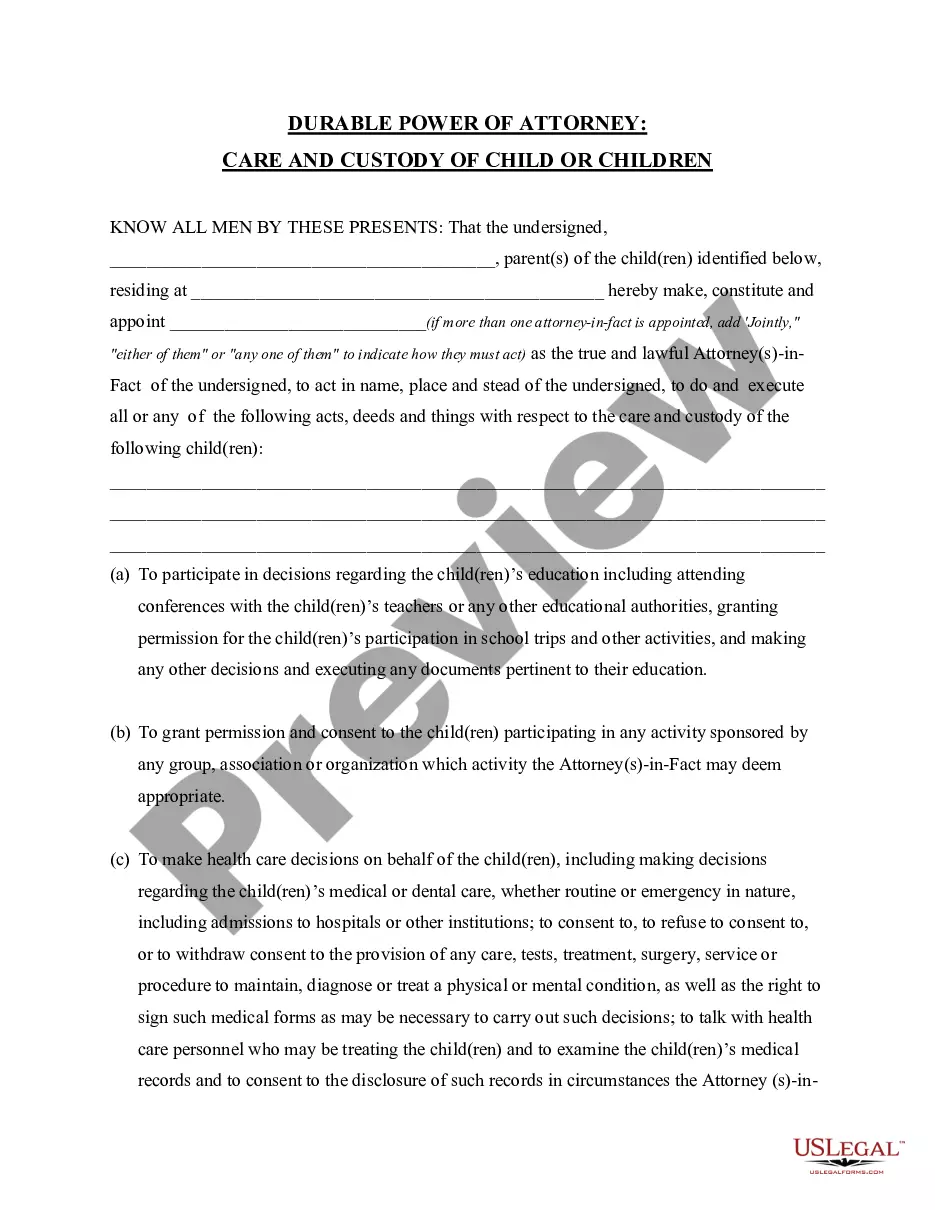
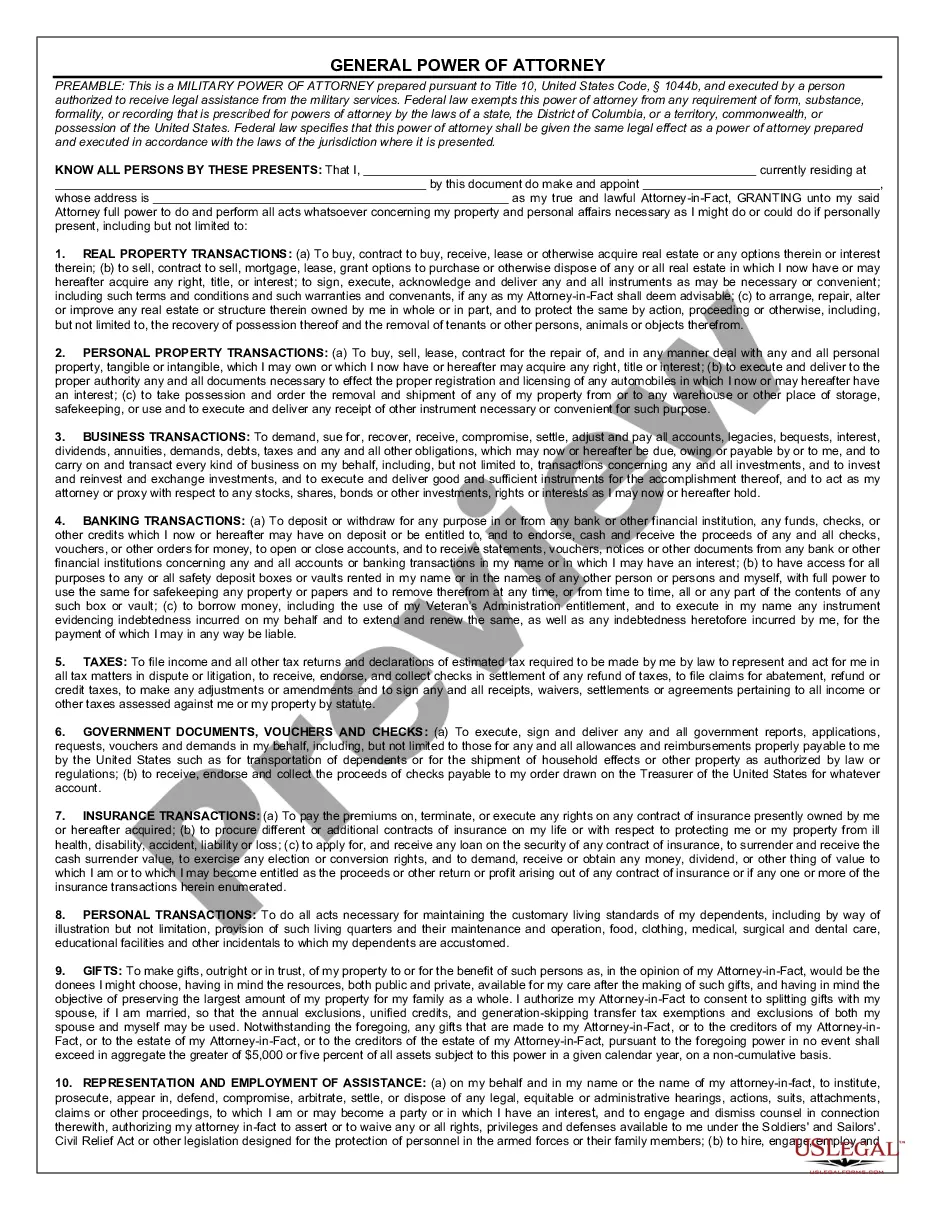
The General Power of Attorney for Care and Custody of Child or Children is a legal document that allows a parent or guardian to appoint an attorney-in-fact to make decisions regarding the care and custody of their child or children. This form differs from standard power of attorney forms because it specifically relates to the rights concerning the childâs health care, education, and welfare. It ensures that someone the parent trusts can act on their behalf in these crucial areas.
Main sections of this form
- Identification of the parent or guardian and the child or children involved.
- Appointment of one or more attorneys-in-fact to act on behalf of the parent or guardian.
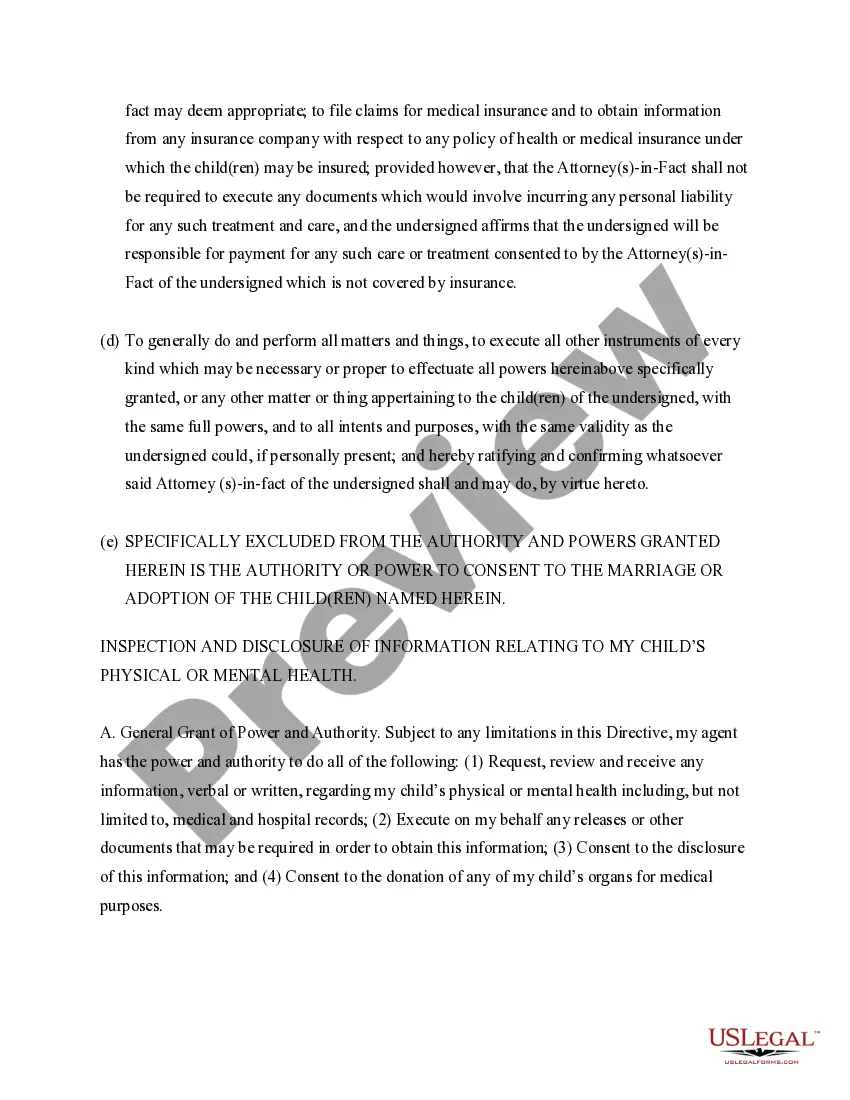
- Defined powers related to education, health care, and general welfare of the child or children.
- Exclusions such as authority to consent to marriage or adoption of the child or children.
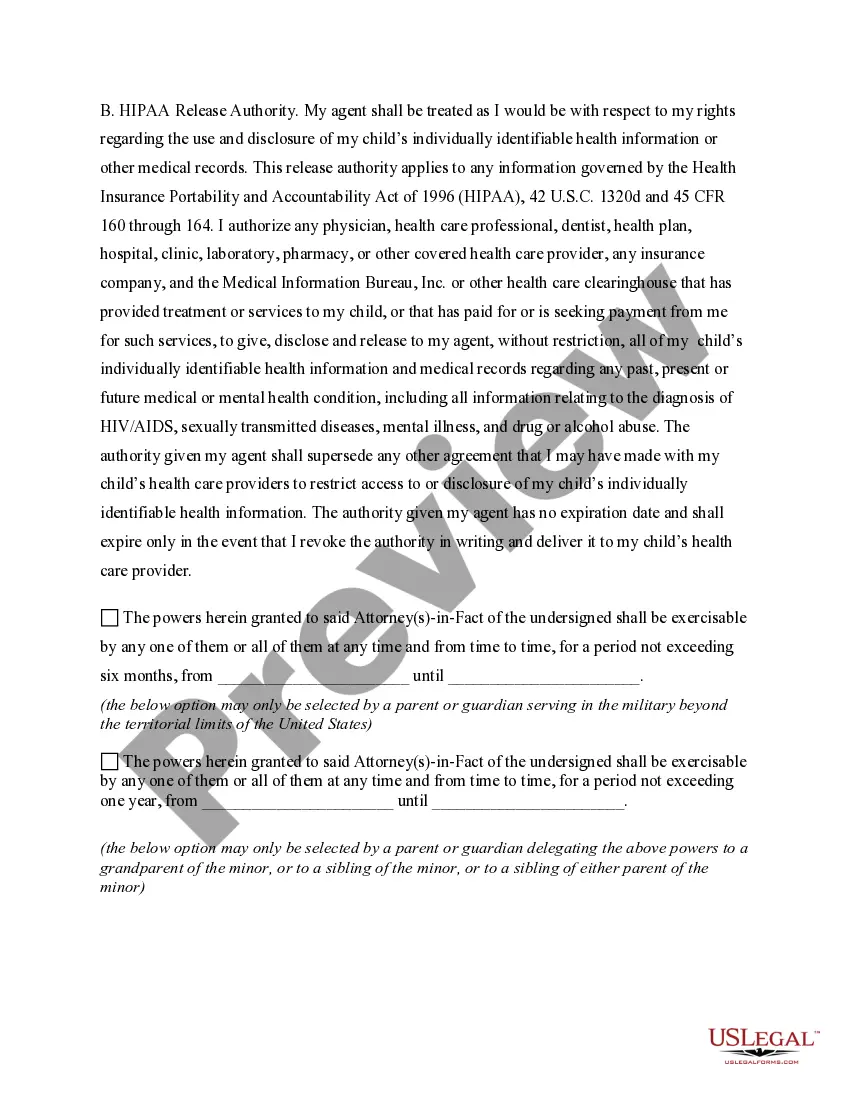
- Explicit statement of the duration of the power granted, up to one year or longer under certain conditions.
- Notarization requirement to validate the document.





Common use cases
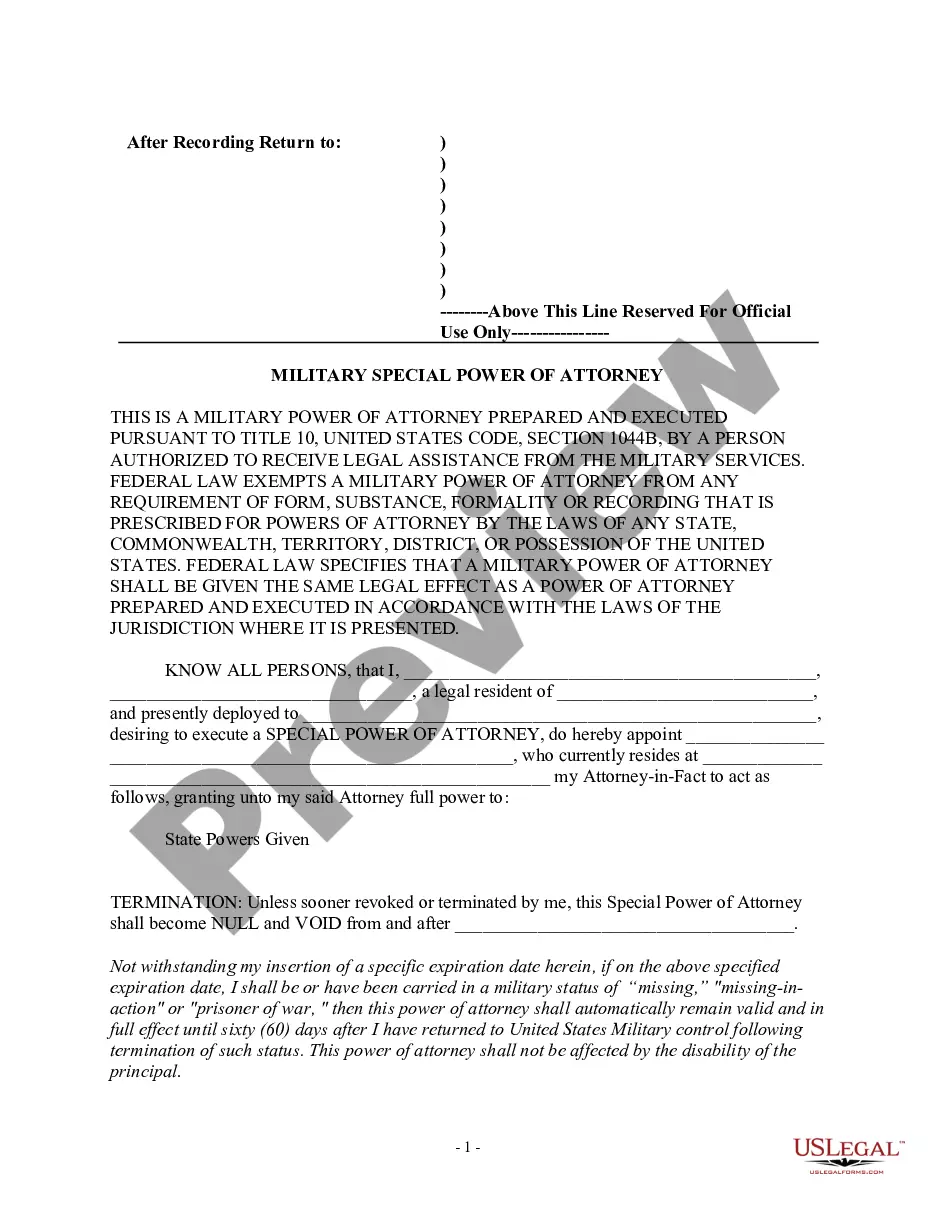
This form is useful in various situations, such as when a parent is temporarily unable to care for their child, such as during travel, military deployment, or medical issues. It allows the appointed person to make decisions related to the child's health care and education in the parent's absence, ensuring the child's needs are met without delay.
Who needs this form
- Parents or guardians needing to delegate authority temporarily.
- Individuals traveling for an extended period who want to ensure their child's care.
- Military personnel who are stationed away from home.
- Guardians of children who may need medical or educational decisions made while they are unavailable.
How to prepare this document
- Identify the parent or guardian granting the power of attorney and the child or children involved.
- Designate one or more attorneys-in-fact and specify how they can act (jointly or individually).
- Define the scope of the powers granted, including decisions about education and health care.
- Clearly articulate the duration of the powers, indicating start and end dates.
- Sign the document in the presence of a notary public to ensure its legality.
Does this form need to be notarized?
Yes, this form must be notarized to be legally valid. This requirement ensures that the signature is authenticated, adding a layer of protection against misuse. US Legal Forms provides an integrated online notarization service for your convenience, allowing you to complete this step securely via a video call without the need to travel.
Get your form ready online
Our built-in tools help you complete, sign, share, and store your documents in one place.
Make edits, fill in missing information, and update formatting in US Legal Forms—just like you would in MS Word.
Download a copy, print it, send it by email, or mail it via USPS—whatever works best for your next step.
Sign and collect signatures with our SignNow integration. Send to multiple recipients, set reminders, and more. Go Premium to unlock E-Sign.
If this form requires notarization, complete it online through a secure video call—no need to meet a notary in person or wait for an appointment.
We protect your documents and personal data by following strict security and privacy standards.

Make edits, fill in missing information, and update formatting in US Legal Forms—just like you would in MS Word.

Download a copy, print it, send it by email, or mail it via USPS—whatever works best for your next step.

Sign and collect signatures with our SignNow integration. Send to multiple recipients, set reminders, and more. Go Premium to unlock E-Sign.

If this form requires notarization, complete it online through a secure video call—no need to meet a notary in person or wait for an appointment.

We protect your documents and personal data by following strict security and privacy standards.
Typical mistakes to avoid
- Failing to clearly specify the powers granted to the attorney-in-fact.
- Not including the names of all children involved.
- Overlooking the notarization requirement, which may invalidate the document.
- Using vague terms that could create confusion about the authority granted.
Benefits of completing this form online
- Easy access to legally vetted templates tailored for your needs.
- Immediate downloads allow for quick preparation and use.
- Convenient editing features help customize the document for your specific situation.
- Reliable legal security by obtaining essential documents without the hassle of traditional legal consultations.
Legal use & context
- This form creates legally binding authority for the designated agent.
- It is crucial for the designated agent to act in the best interests of the child.
- Usage of this form may be subject to state-specific regulations regarding custody and parental rights.
Key takeaways
- The General Power of Attorney for Care and Custody of Child or Children allows designated individuals to make important decisions on behalf of a child.
- Proper completion requires notarization and clear definitions of authorized powers.
- Consider this form when you anticipate being temporarily unavailable to care for your child.
Looking for another form?


Form popularity
FAQ
The custody of a boy or an unmarried girl below the age of 18 years and above the age of 5 years shall be given to the father of the child as he is considered to be the natural guardian and only after his death, the custody shall be given to the mother.
Drug or alcohol abuse. Physical abuse or neglect. Mental health issues. Money issues. Stability of the home.
The most important factor in deciding who gets custody is the best interests of each child. To find out what is in a child's best interest, judges consider these factors, among others:children's physical and mental health. physical and mental health of the parent who wants custody.
If you have sole physical custody, it is not legal for the other parent to take your child from you. Sometimes taking your child from you is a crime, like "parental kidnapping." But if you are married, and there is no court order of custody, it is legal for the other parent to take your child.