Kansas Commercial Building or Space Lease
About this form
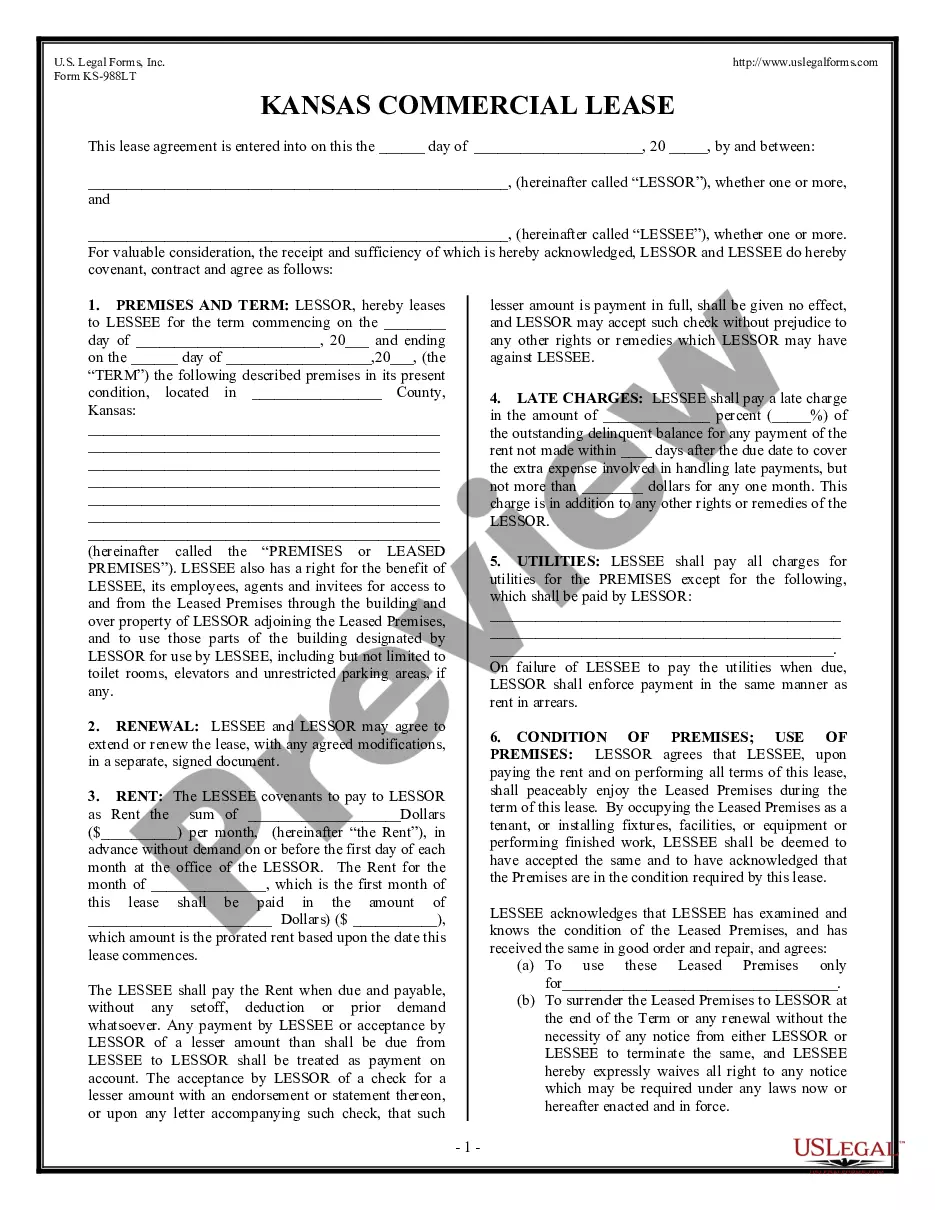
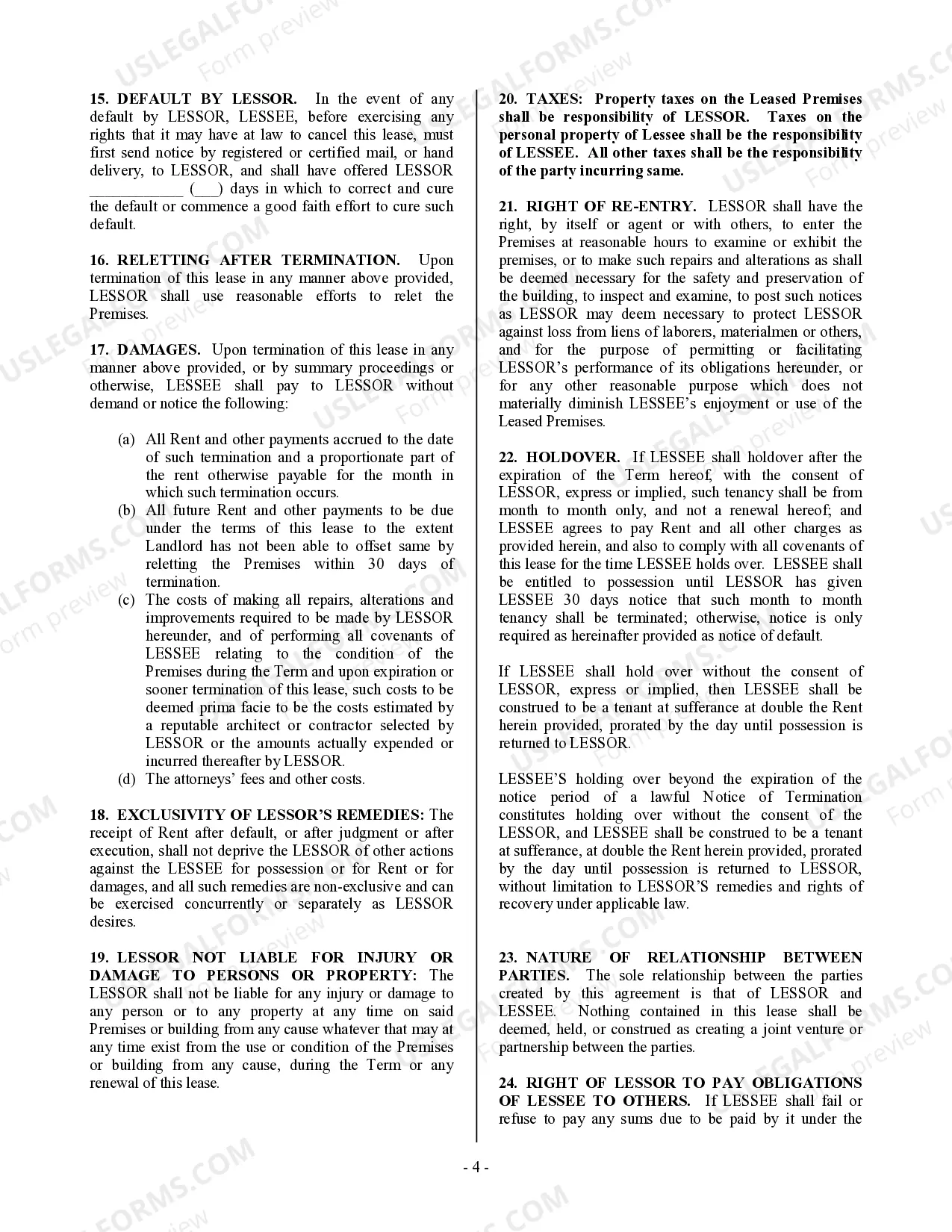
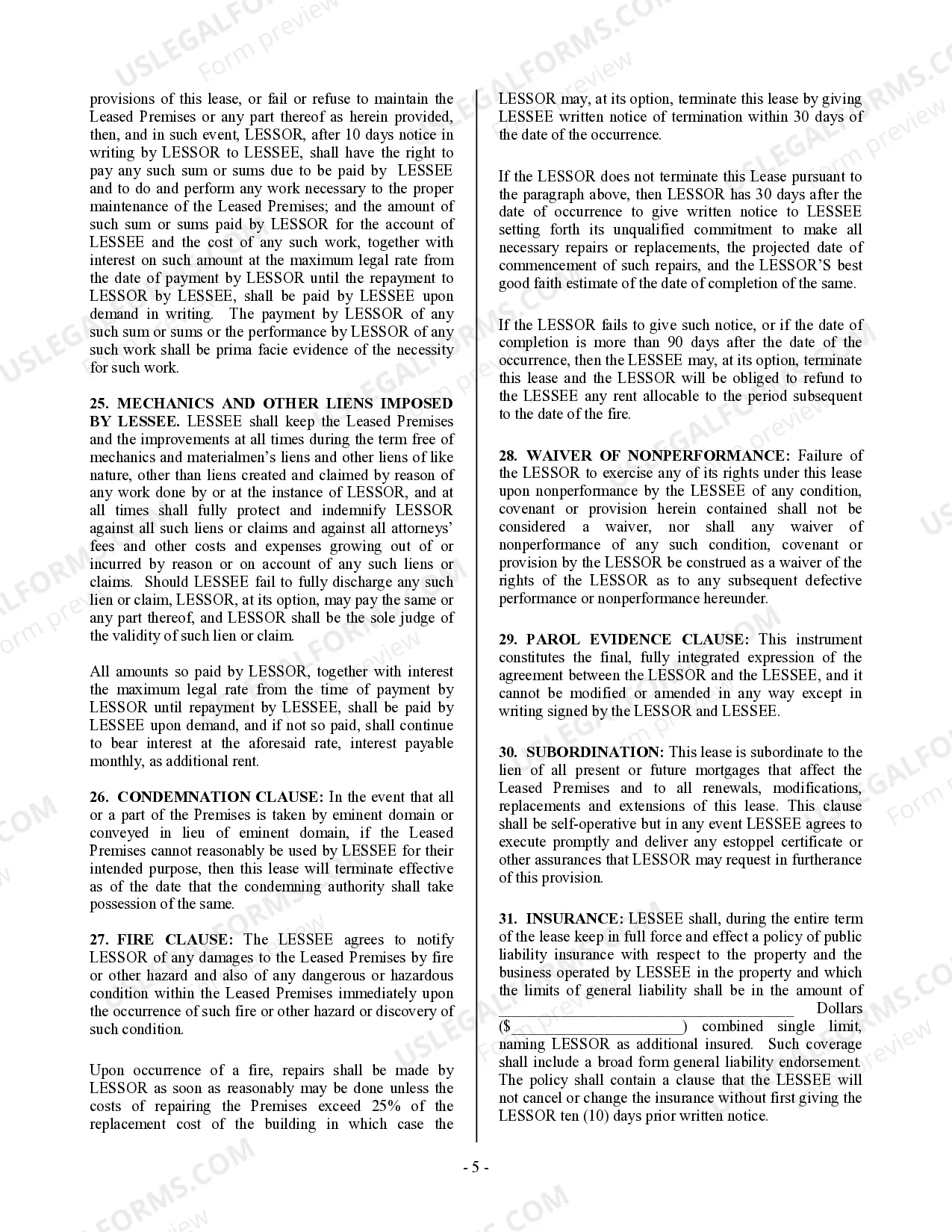
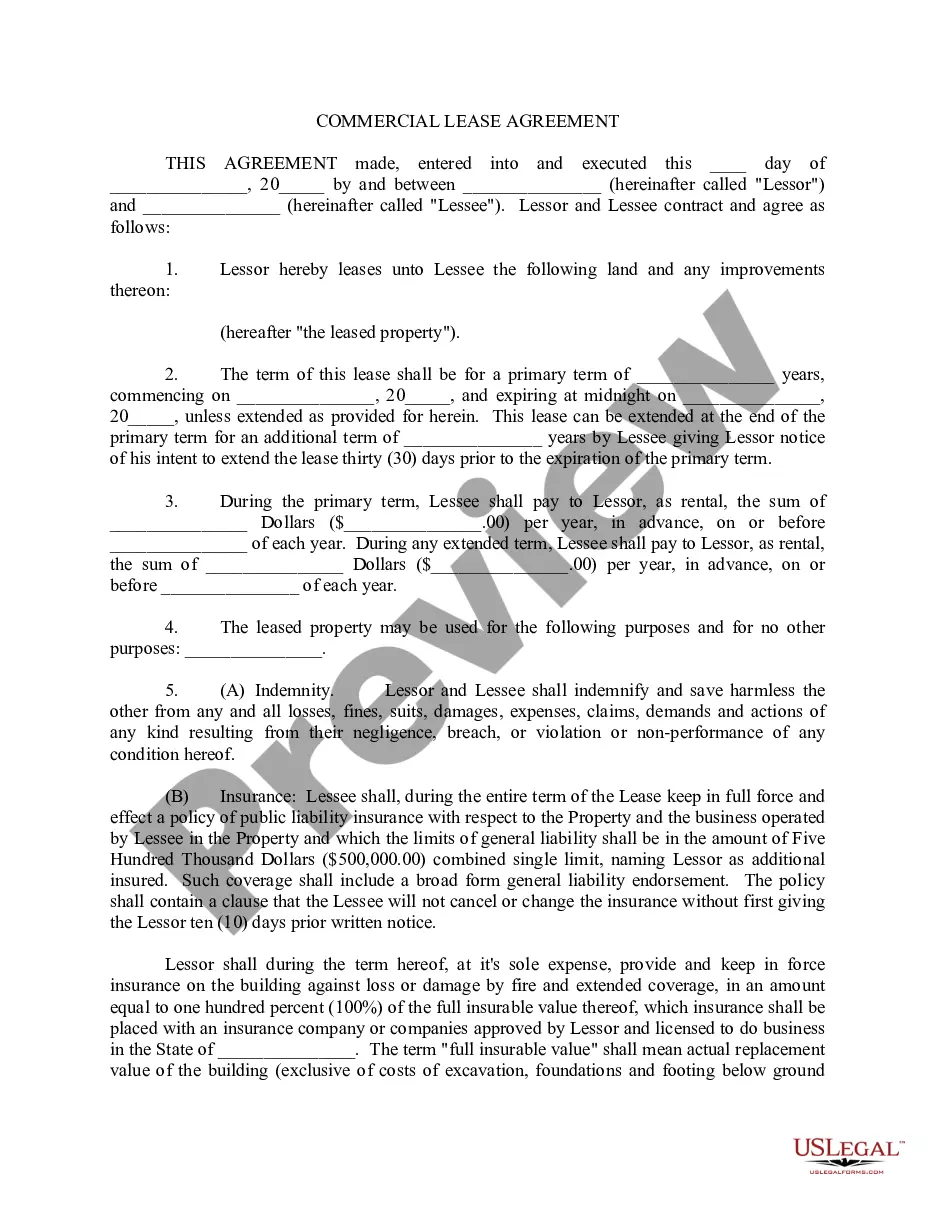
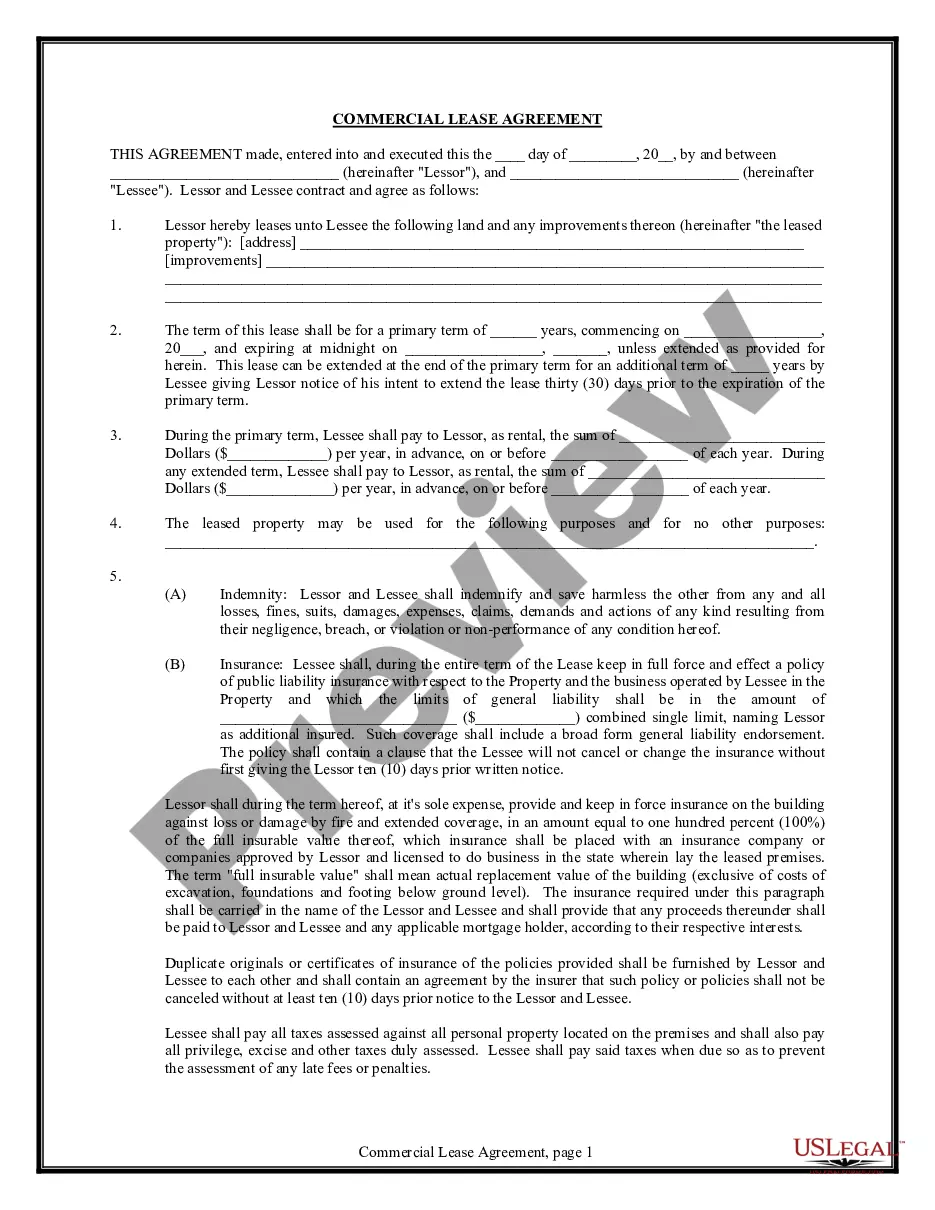
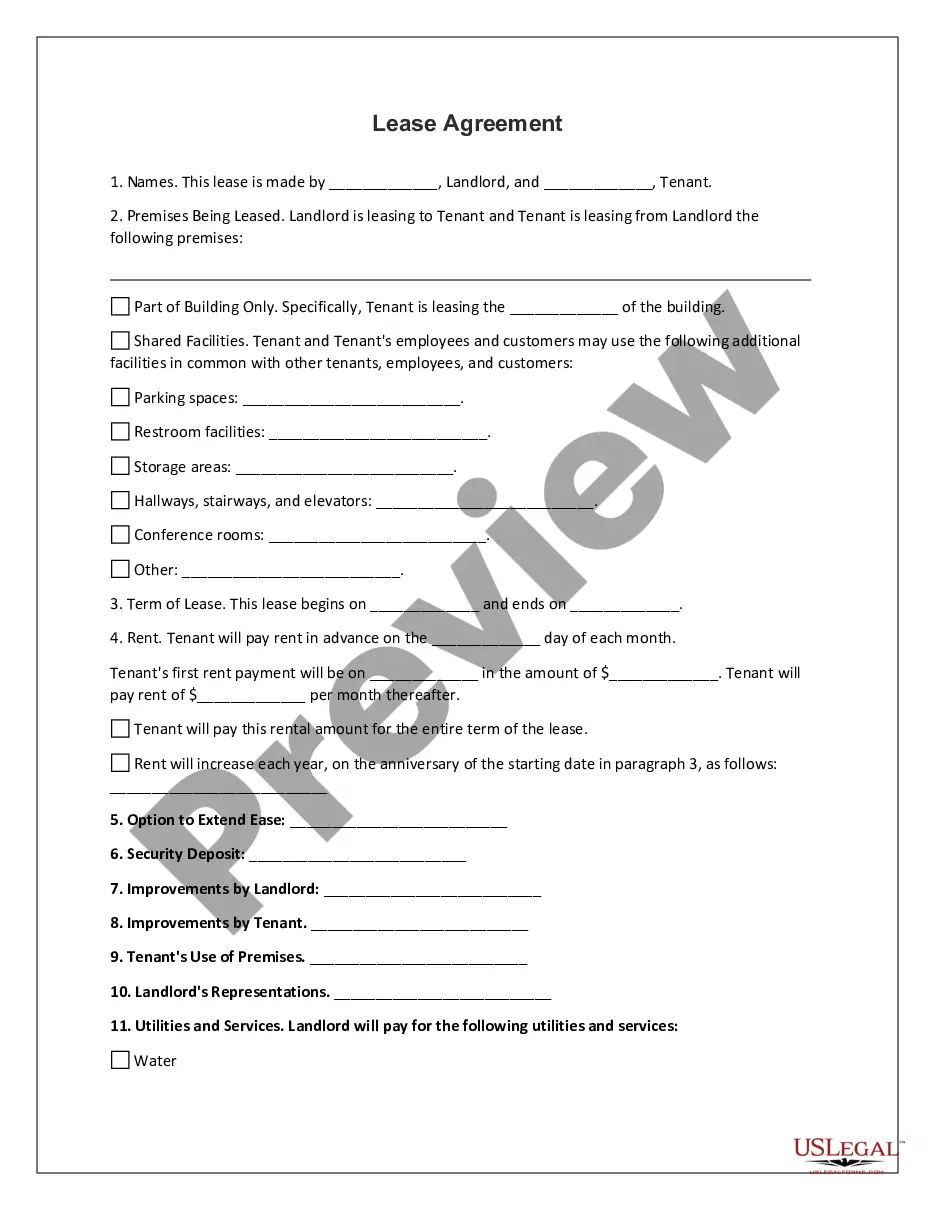
The Commercial Building or Space Lease is a legal document used for leasing commercial properties in Kansas, suitable for various business purposes, such as offices or retail. This lease is comprehensive, outlining terms such as rent payment, landlord and tenant obligations, maintenance responsibilities, and procedures for lease termination. Its detailed nature helps to protect both the lessor (landlord) and lessee (tenant) by clarifying expectations and legal requirements, distinguishing it from simpler rental agreements.
What’s included in this form
- Lease term details, including start and end dates
- Rent payment structure and late fee provisions
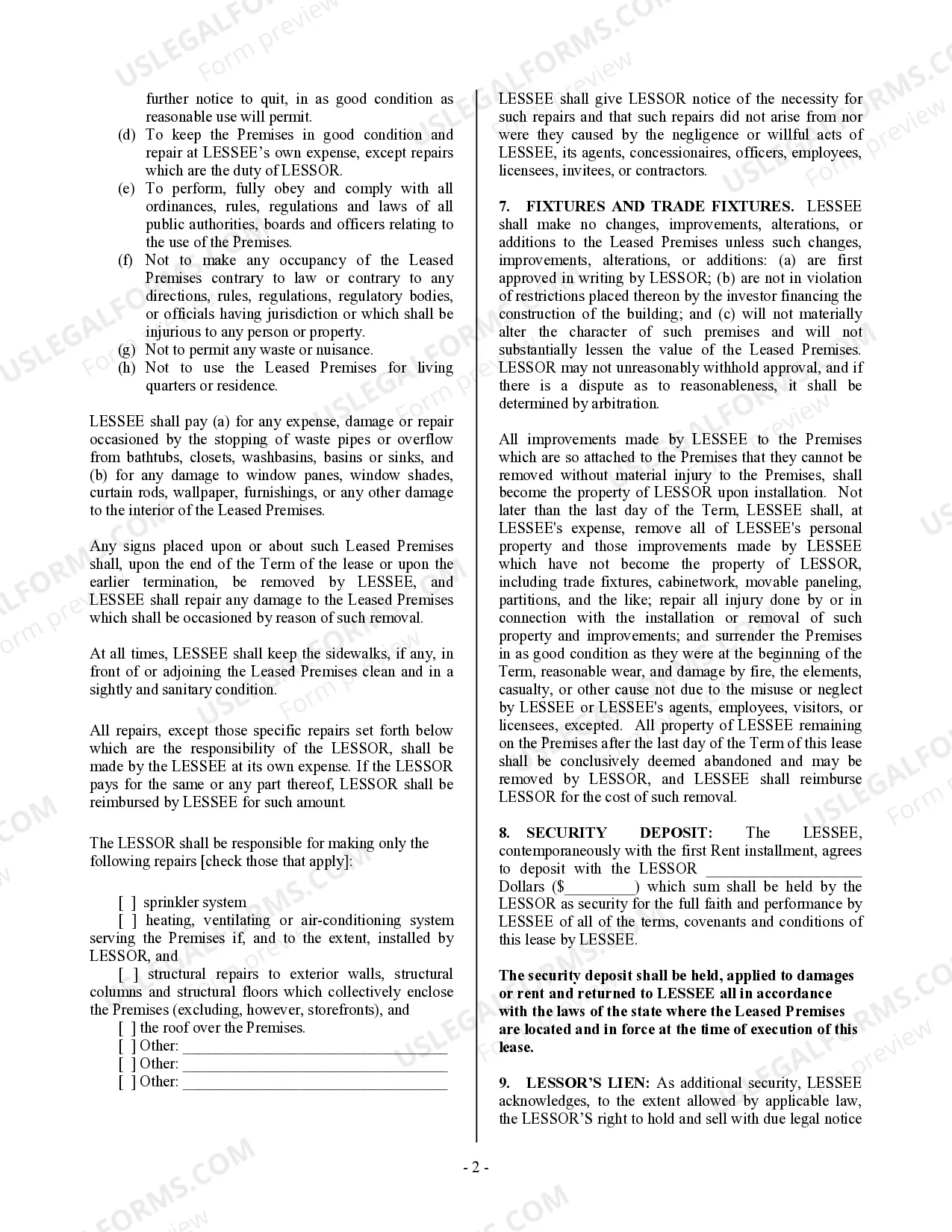
- Conditions for utilities and maintenance responsibilities
- Security deposit requirements and return conditions
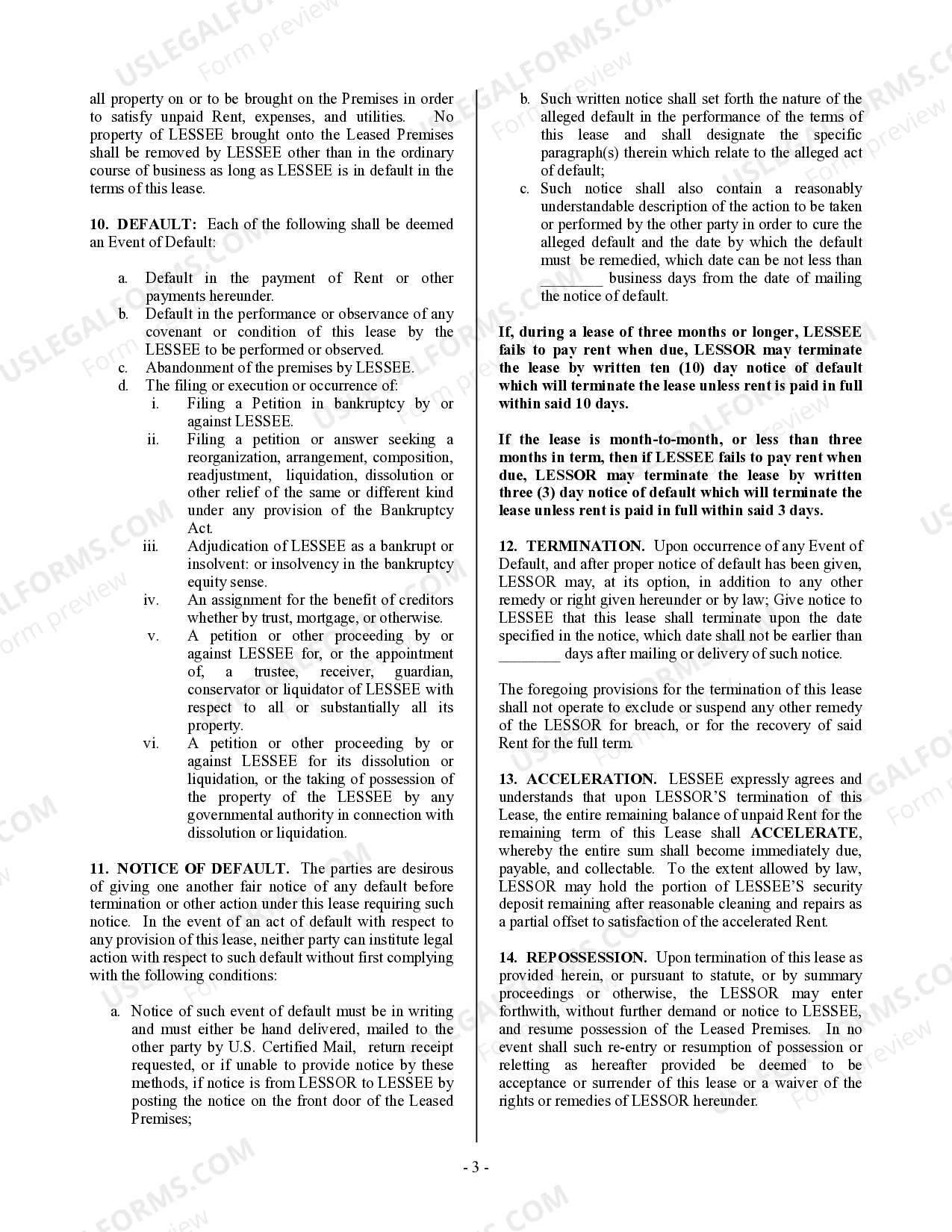
- Rights and obligations regarding default and termination
- Clauses addressing repairs, alterations, and insurance responsibilities

Common use cases
This form is essential when entering into a rental agreement for commercial property in Kansas. It should be used by landlords and businesses looking to formalize a lease for office space, retail locations, or any other commercial usage. Situations include expanding a business, relocating to a new commercial space, or renegotiating lease terms for an existing property.
Who this form is for
- Business owners seeking to lease commercial space
- Landlords renting out commercial properties
- Real estate professionals managing commercial leases
- Legal experts needing a standard lease framework for clients
How to prepare this document
- Identify the parties involved: enter the names of the lessor and lessee.
- Specify the property: describe the leased premises along with its location.
- Enter the lease term: include the start and end dates of the lease agreement.
- Detail the rent amount: indicate the monthly rent and any initial pro-rated payments.
- Outline responsibilities: clarify which party will handle utilities and maintenance.
- Sign and date: ensure both parties sign the lease to make it legally binding.
Notarization guidance
Notarization is required for this form to take effect. Our online notarization service, powered by Notarize, lets you verify and sign documents remotely through an encrypted video session, available 24/7.
Get your form ready online
Our built-in tools help you complete, sign, share, and store your documents in one place.
Make edits, fill in missing information, and update formatting in US Legal Forms—just like you would in MS Word.
Download a copy, print it, send it by email, or mail it via USPS—whatever works best for your next step.
Sign and collect signatures with our SignNow integration. Send to multiple recipients, set reminders, and more. Go Premium to unlock E-Sign.
If this form requires notarization, complete it online through a secure video call—no need to meet a notary in person or wait for an appointment.
We protect your documents and personal data by following strict security and privacy standards.

Make edits, fill in missing information, and update formatting in US Legal Forms—just like you would in MS Word.

Download a copy, print it, send it by email, or mail it via USPS—whatever works best for your next step.

Sign and collect signatures with our SignNow integration. Send to multiple recipients, set reminders, and more. Go Premium to unlock E-Sign.

If this form requires notarization, complete it online through a secure video call—no need to meet a notary in person or wait for an appointment.

We protect your documents and personal data by following strict security and privacy standards.
Mistakes to watch out for
- Failing to specify the lease term clearly
- Not addressing maintenance responsibilities adequately
- Omitting important details about utilities and late fees
- Neglecting to include signatures from both parties
- Overlooking state-specific legal requirements
Advantages of online completion
- Convenience of downloading and filling out the form from anywhere
- Editability allows for customization to fit specific lease terms
- Reliability of a legal template drafted by licensed attorneys
- Quick access to necessary legal language and clauses
Looking for another form?
Form popularity
FAQ
Residential real estate can be purchased with far less money largely due to its lower price points, while commercial real estate requires a lot more money up front and has stricter lending requirements to obtain financing. Both residential and commercial investing take knowledge and experience.
For office buildings that include retail space, the 2019 edition of Chain Store Age's annual survey of retail build-outs put the average cost at $56.53 per square foot.
To calculate the value of a commercial property using the Gross Rent Multiplier approach to valuation, simply multiply the Gross Rent Multiplier (GRM) by the gross rents of the property. To calculate the Gross Rent Multiplier, divide the selling price or value of a property by the subject's property's gross rents.
To calculate the value of a commercial property using the Gross Rent Multiplier approach to valuation, simply multiply the Gross Rent Multiplier (GRM) by the gross rents of the property. To calculate the Gross Rent Multiplier, divide the selling price or value of a property by the subject's property's gross rents.
Any type of property, whether it's commercial or residential, can be a good investment opportunity. For your money, commercial properties typically offer more financial reward than residential properties, such as rental apartments or single-family homes, but there also can be more risks.
Commercial properties are good investment opportunities to earn regular income as they offer high rental rates compared to residential properties.However, rental income and price appreciation depends on many factors such as current market trends, location, social and physical infrastructure.
Because commercial properties are usually larger, in more central locations and often with more extensive services and resources than residential properties, they are more valuable than houses where people live.Location is the prime determinant of the cost to lease a commercial property.
For commercial property investors, yields are typically much higher than residential property. Yields from commercial property can be anywhere from 5% to 10%. Meanwhile, residential property is known for yields between about 1% and 3%. The main reason for the difference is found in the lease agreement.
Typically, commercial space is evaluated at $X per square foot, and that rate times the rentable square feet for your space determines your monthly rent.