What Is Termination At Will? Understanding Employment Agreements
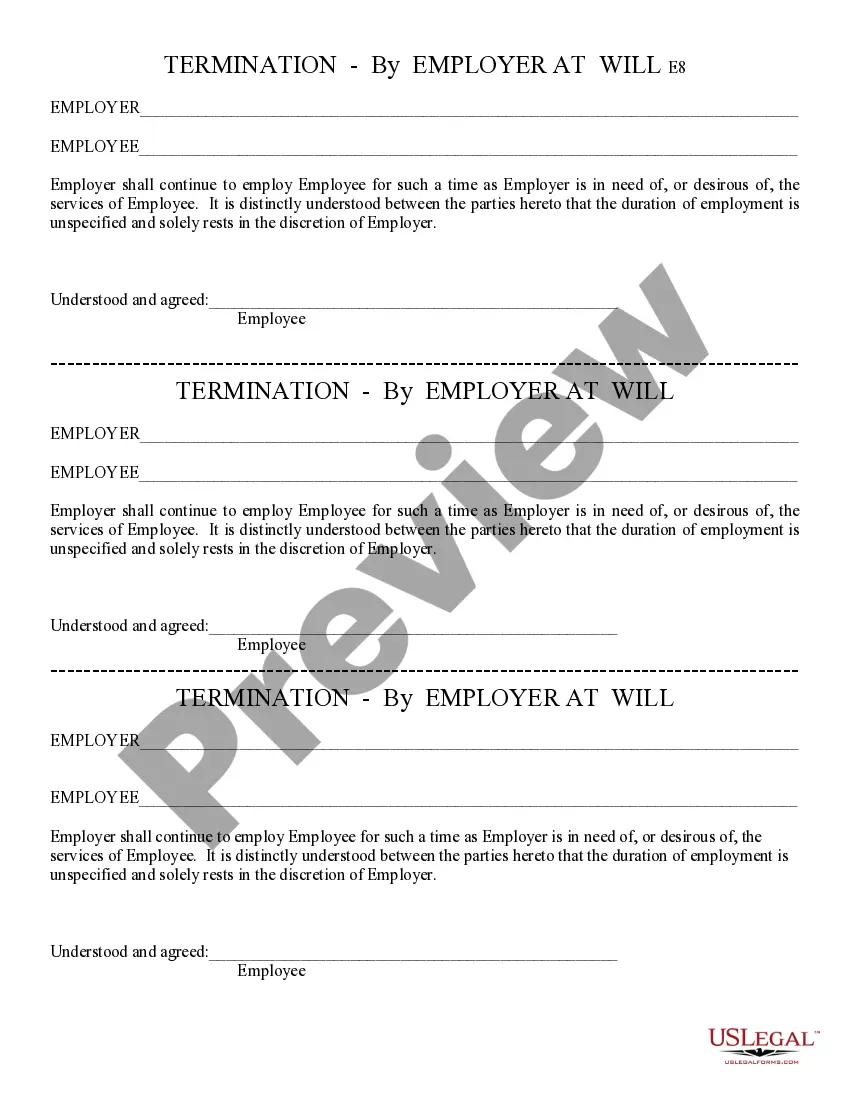
Termination at will refers to an employment arrangement where either the employer or the employee can end the employment relationship at any time, without needing to provide a specific reason. This type of agreement offers both parties the flexibility to terminate employment as circumstances change.
Legal use and context
This concept is grounded in employment law and is prevalent in many jurisdictions. However, it is essential to understand that certain protections may limit termination at will. For instance, laws against discrimination or retaliation may prevent employers from terminating an employee for specific reasons. It’s important to be aware of the specific laws that apply in your state or country.
Who should use this form
This form is suitable for employers who wish to establish a clear understanding with their employees regarding the terms of employment. It is also beneficial for employees who want to ensure their rights are recognized in an at-will employment scenario. Having this form formalizes the agreement and can provide clarity in any potential disputes.
Key components of the form
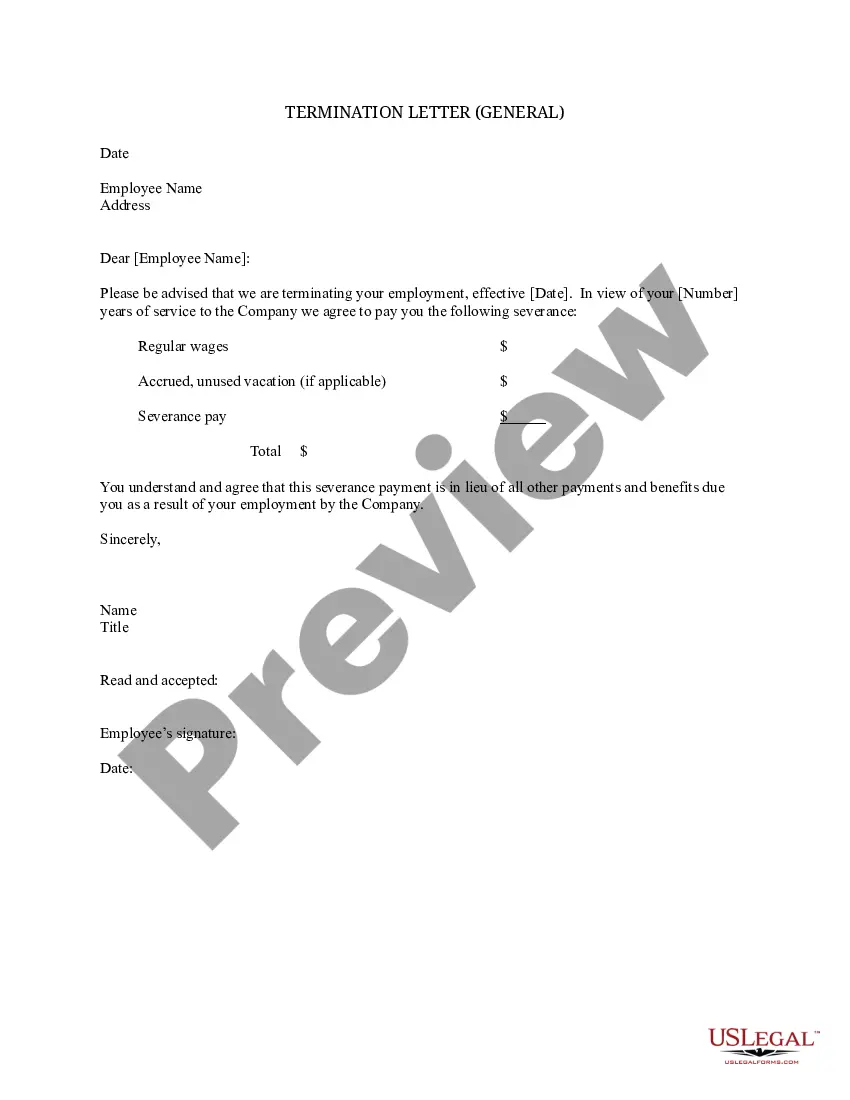
The Termination at Will form typically includes several key components:
- Employee Information: Details such as the name and position of the employee.
- Termination Clause: A statement outlining the at-will nature of the employment relationship.
- Notice Requirements: Instructions regarding how much notice is required to terminate the employment.
- Signatures: Signature areas for both the employer and employee to make the agreement binding.
Common mistakes to avoid when using this form
To ensure the effective use of the Termination at Will form, avoid the following mistakes:
- Failing to provide clear notice requirements can lead to misunderstandings.
- Not including all necessary parties' signatures may render the form unenforceable.
- Using vague language can result in different interpretations of the contract.
What documents you may need alongside this one
When completing the Termination at Will form, consider having the following documents ready:
- Any previous employment agreements or contracts.
- Employee handbooks or policy documents relevant to termination.
- Documentation of performance reviews or disciplinary actions, if applicable.
Key takeaways
Understanding termination at will is crucial for both employees and employers. It allows for flexibility in employment relationships while also necessitating clear guidelines to prevent disputes. By using the Termination at Will form, both parties can ensure that they acknowledge their rights and obligations under this employment arrangement.