What is Scrivener's Affidavit? A Detailed Guide
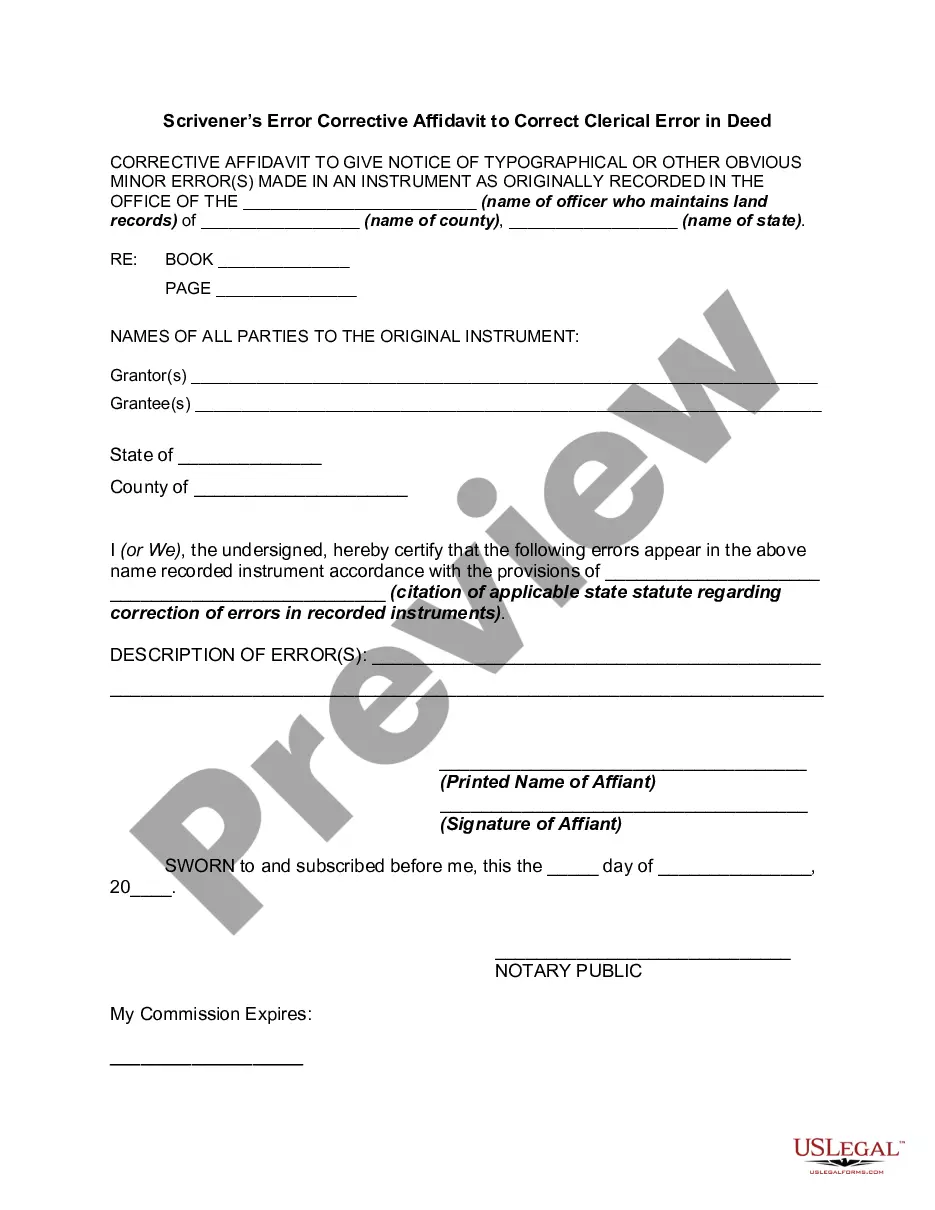
A Scrivener's Affidavit is a legal document used to correct errors in public records, typically related to property deeds. This affidavit serves as a formal declaration made by the attorney or scrivener who prepared the original deed. It asserts the accuracy of the information and clarifies any mistakes in the deed's description or terms.
Who should use this form
This form is essential for attorneys, title companies, or individuals involved in correcting a deed. Anyone who notices errors that impact property rights, such as incorrect descriptions, dimensions, or names, should consider filing a Scrivener's Affidavit to ensure that public records accurately reflect the intended legal agreements.
Key components of the form
The Scrivener's Affidavit typically includes several vital elements:
- Affiant's details: The name and credentials of the attorney or scrivener.
- Original deed information: Reference to the specific deed being corrected, including its date and recording details.
- Description of error: A clear explanation of the mistakes found in the original deed.
- Corrective statements: Updated and accurate information that replaces the incorrect details.
- Notary acknowledgment: Signature and seal of a notary public verifying the affidavit.
Common mistakes to avoid when using this form
When completing a Scrivener's Affidavit, be mindful of the following common errors:
- Inaccurate information: Ensure all details about the property and errors are correct and precise.
- Missing signatures: Both the affiant and the notary must sign the document. Incomplete forms may be rejected by recording offices.
- Improper notarization: Confirm that the notary public is authorized in your jurisdiction to avoid issues with the affidavit's validity.
What to expect during notarization or witnessing
When preparing to notarize a Scrivener's Affidavit, follow these steps:
- Gather identification: The affiant must present valid identification to the notary.
- Sign in person: The affiant should sign the affidavit in the presence of the notary to ensure the document is legitimate.
- Notary's role: The notary will verify the identity of the affiant, witness the signing, and affix their seal to the affidavit.
What documents you may need alongside this one
In addition to the Scrivener's Affidavit, consider preparing the following documents:
- Original deed: Provide a copy of the original deed that contains the error.
- Property description: Documentation that supports the correct property description.
- Identification: Copies of the identification of the affiant, as well as the notary's stamp and signature for the affidavit.
Key takeaways
A Scrivener's Affidavit is a vital tool for correcting errors in property deeds. It is crucial for attorneys and others to complete it accurately, ensuring all necessary components are in place to maintain clear and legal property records. Avoid common mistakes and understand the notarization process to ensure the affidavit is legally binding.