What Is an Environmental Indemnity Agreement and Why Is It Important?
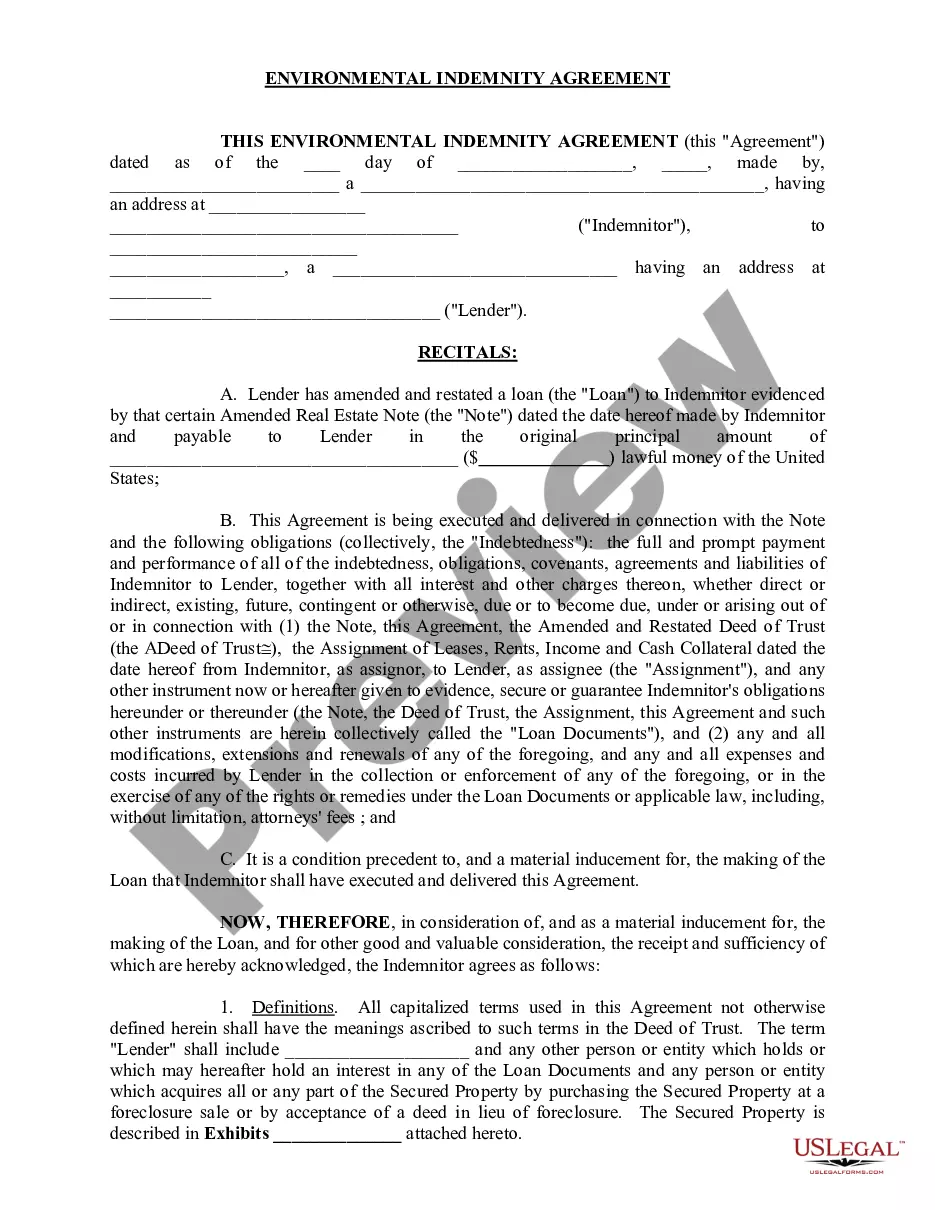
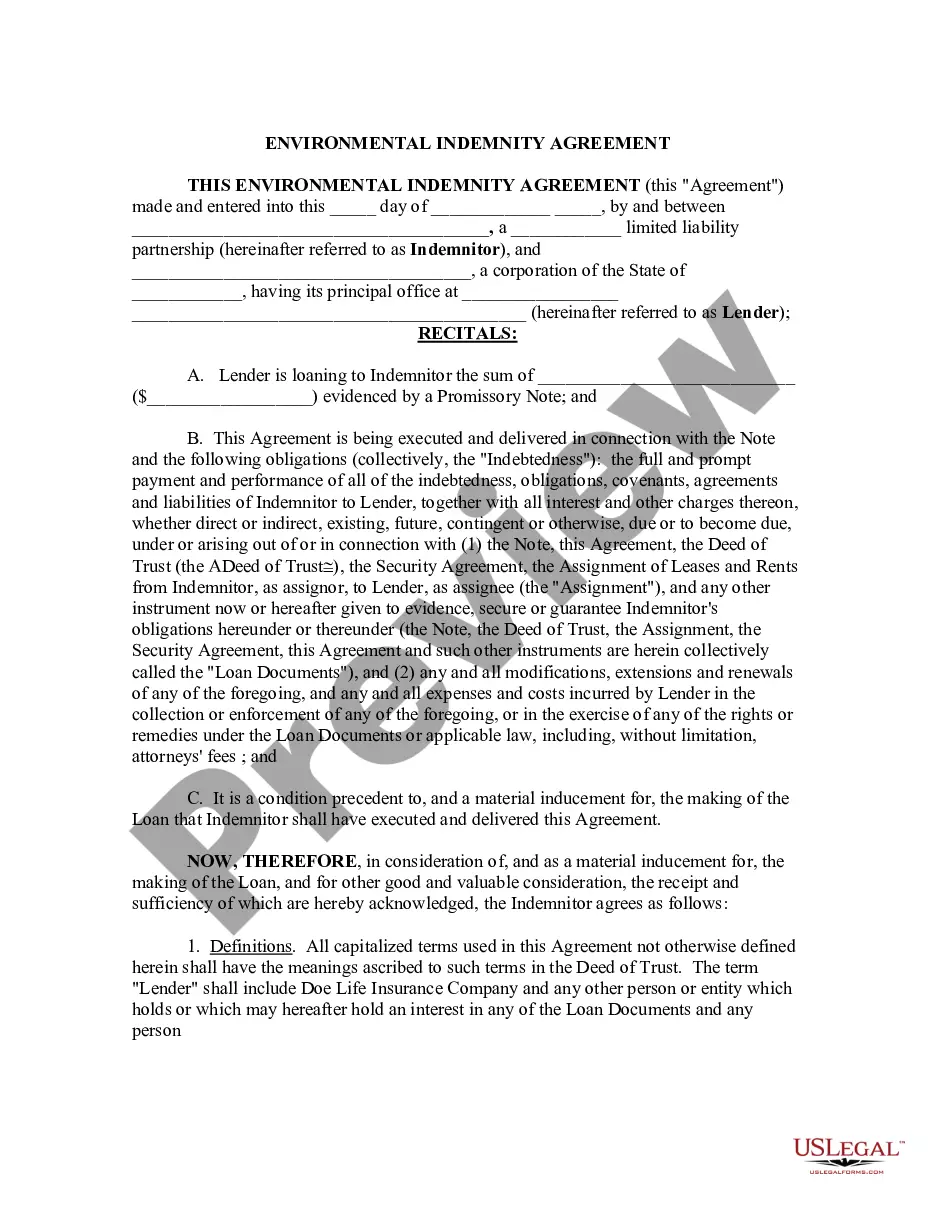
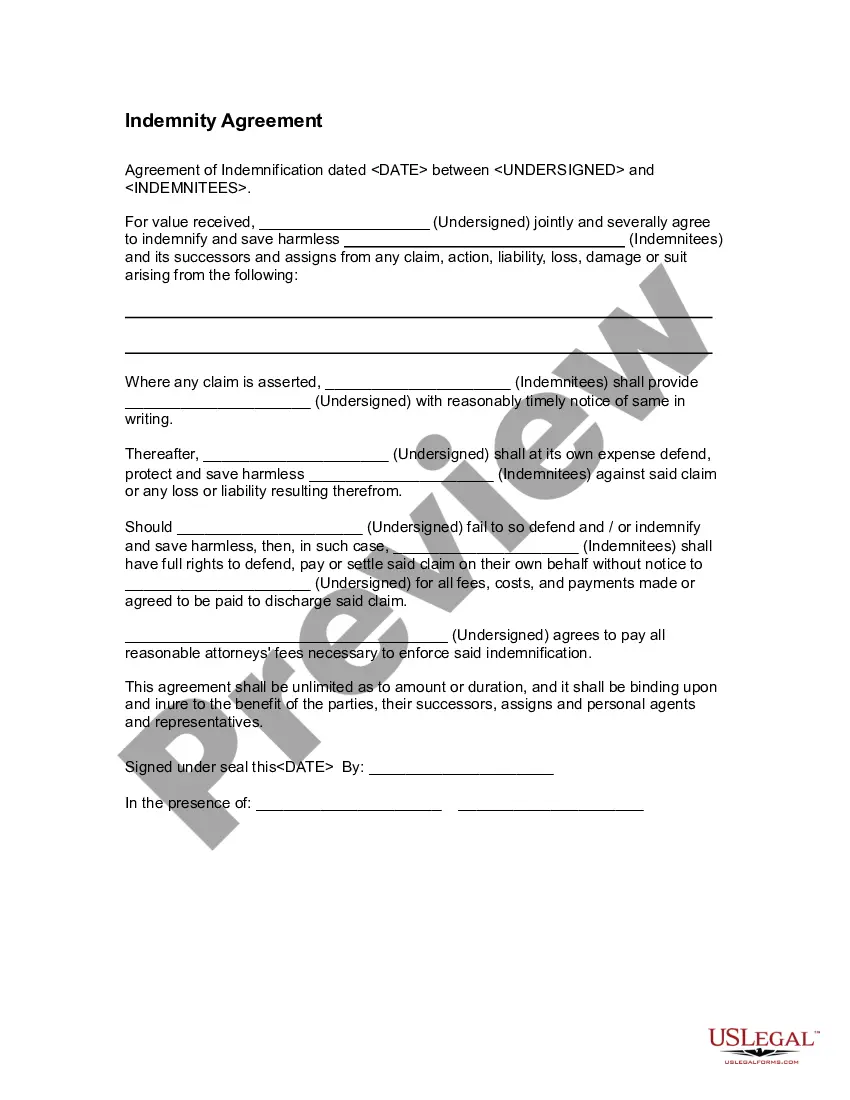
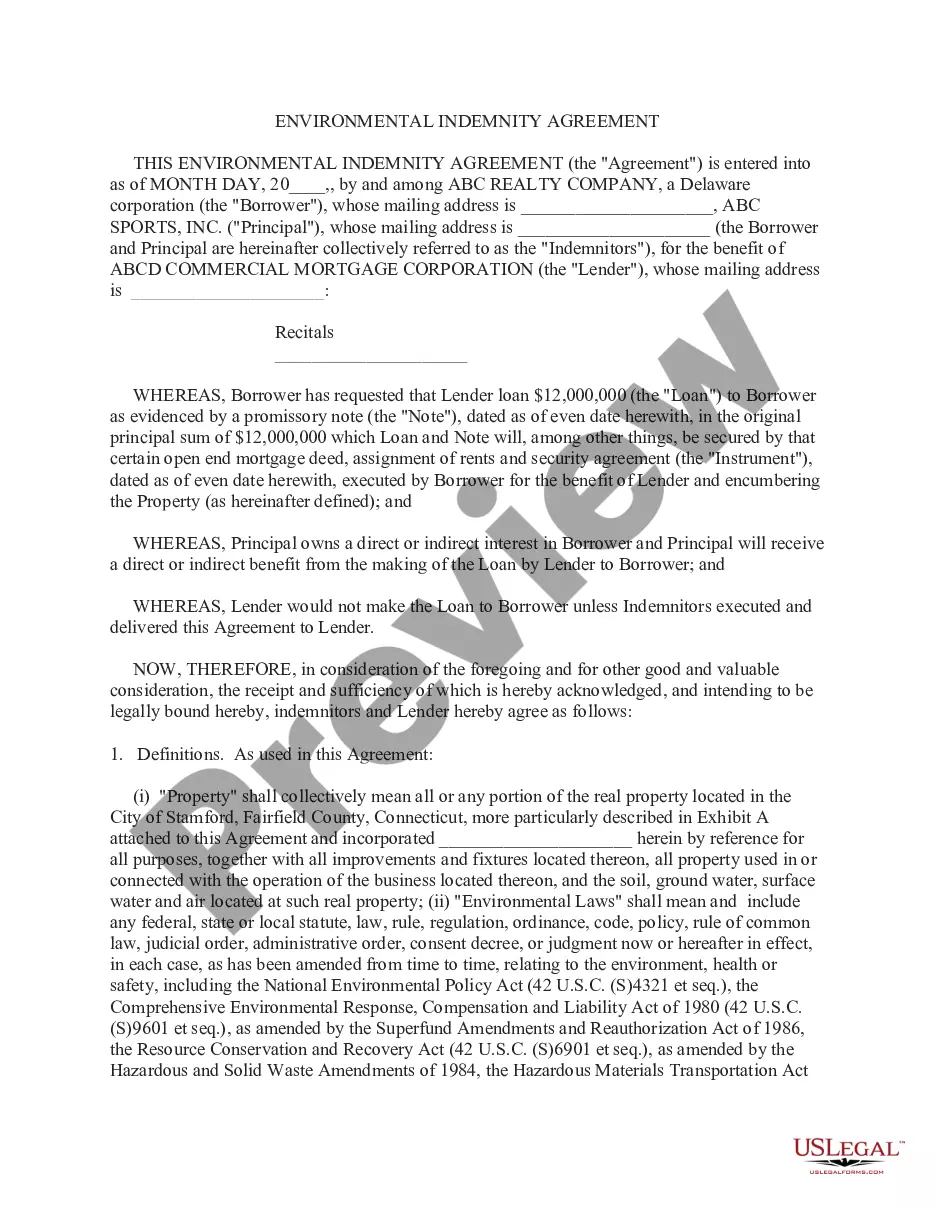
An Environmental Indemnity Agreement is a legal contract that primarily protects lenders, such as banks, from potential liabilities associated with environmental issues that may arise from a property. It typically ensures that the borrower, referred to as the Indemnitor, agrees to indemnify the lender against any losses or claims related to environmental contamination or violations of environmental laws.
Who should use this form
This form is generally recommended for individuals or entities that are securing financing for property development or acquisition. It is particularly useful for borrowers who may be involved in industries with a higher risk of environmental liability, such as real estate development or manufacturing. Additionally, lenders may require this form to protect their investment in the property.
Key components of the form
The Environmental Indemnity Agreement includes several critical elements:
- Definitions: Specific terms related to environmental laws and contaminants.
- Indemnification Clause: The obligation of the Indemnitor to cover any expenses related to environmental issues.
- Representations and Warranties: Assurances provided by the Indemnitor about the property’s conditions.
- Covenants: Ongoing obligations of the Indemnitor, such as compliance with environmental laws.
- Bank's Rights: Rights enjoyed by the lender that are additional to the loan documents.
Common mistakes to avoid when using this form
When completing an Environmental Indemnity Agreement, it is crucial to avoid the following mistakes:
- Inadequate disclosure: Failing to provide complete and accurate information about the property’s environmental history.
- Ignoring state laws: Not considering specific state environmental regulations that may impact the agreement.
- Overlooking timelines: Not adhering to the specified deadlines for compliance or notification under the agreement.
Legal use and context
Environmental Indemnity Agreements are commonly used in real estate transactions, particularly when financing is involved. They serve as a precautionary measure for lenders against potential environmental liabilities that may arise post-transaction. This form is particularly important in transactions involving industrial properties or abandoned sites where environmental contamination may be a concern.
What to expect during notarization or witnessing
When notarizing an Environmental Indemnity Agreement, you can expect the following:
- Identity Verification: The notary will verify the identity of the Indemnitor by checking government-issued identification.
- Signature Acknowledgment: The Indemnitor will sign the agreement in the presence of the notary, affirming the authenticity of their signature.
- Notary Journal Entry: The notary may record the transaction in their journal, noting the details of the agreement and the parties involved.